


Ever felt that traditional leadership styles just don’t cut it when it comes to building a truly motivated and loyal team? You’re not alone. Many leaders are shifting to the servant leadership style, a unique leadership approach that flips the script.
In the servant leadership paradigm, the focus isn’t on the leader’s power but on empowering the team to reach their full potential. If you’re looking to boost team morale, drive real results, and create a work culture that thrives, this guide to servant leadership is just what you need.
Servant Leadership

 Summarize this article for me please
What Is Servant Leadership?
Servant leadership is a leadership philosophy that focuses on serving others as the primary goal of leadership. Inspiring leaders often prioritize listening and supporting their teams, embodying the essence of servant leadership.
This leadership style, introduced by Robert K. Greenleaf in the 1970s, emphasizes serving others over asserting authority. A servant leader starts with a desire to serve and then chooses to lead, unlike others driven by power or material gain. Think Mahatma Gandhi, Mother Teresa, or Martin Luther King Jr.
The philosophy behind servant leadership redefines traditional leadership roles. It focuses on the importance of service, empathy, and collaboration in achieving individual and organizational success.
Summarize this article for me pleaseKey Principles of Servant Leadership
What sets servant leaders apart? It’s not merely about ‘being nice’ or ‘helping out’; it involves specific behaviors that prioritize the team over themselves. Servant leadership research tells us that these behaviors foster future leaders and support long-term organizational success.
Here are the key principles that can transform your leadership and your team.
- Empathy: A servant leader listens to team members who are struggling and explores flexible solutions instead of pushing for deadlines. Such empathy is a key leadership skill. It creates happier, more productive employees who feel valued and supported
- Altruism: Have you ever seen a leader roll up their sleeves and jump into the trenches? This is how servant leaders showcase altruism by prioritizing the success of others. They often step in to help ease workloads or advocate for resources
- Ethics and morality: Servant leaders adhere to their values, even when it’s difficult. They demonstrate transparency in leadership by making tough decisions like admitting a project mistake to clients. This builds trust and encourages honest communication
- Commitment to growth: Servant leaders focus on the long-term development of their team members, offering training programs and constructive feedback. This commitment not only helps employees grow professionally but also nurtures future leaders
- Building community: Servant leadership is collaborative leadership. When a team feels like a community, teamwork and innovation thrive. By organizing brainstorming sessions and team-building activities, servant leaders encourage open communication and drive collective success.
Adopting these principles will help employees feel genuinely supported. When this happens, their performance and loyalty skyrocket as well.
Read More: How Emergent Leadership Helps Teams Grow
Summarize this article for me pleaseDefining the Servant Leader
Servant leaders seek to serve the team to achieve real results rather than just giving orders. Let’s explore the traits, skills, and behaviors that distinguish a servant leader and how they manifest in real situations.
Humility
Ever had a leader who wasn’t afraid to admit when they were wrong? That’s humility in action. When celebrating success, they highlight team members’ contributions rather than taking credit. This humility encourages team members to take risks and share ideas without fear of judgment.
Active listener
When the team struggles with a new workflow, a servant leader organizes open forums to gather honest feedback. They listen to each concern before collaborating on solutions, making team members feel valued.
Emotionally intelligent at work
One of the core traits of a servant leader is emotional intelligence. Understanding and responding to their team’s emotions is their superpower. Whether it’s sensing frustration or celebrating achievements, they build trust and rapport.
Delegative
Servant leaders avoid micromanaging and empower their team. Instead of dictating every step of a campaign, they delegate tasks based on individual strengths. This autonomy fosters innovation and ownership.
Also Read: The Top 10 Task Delegation Software
Empowering
Servant leadership is deeply rooted in team leadership—leading not from the top but from within. By valuing every voice, servant leaders create strong, cohesive teams that thrive.
Encouraging teamwork and shared goals
Unlike traditional leaders, who make all the decisions, servant leaders share power and involve the team in decision-making. They hold brainstorming sessions where everyone contributes to project goals, championing junior team members’ ideas to stakeholders and demonstrating that great insights can come from any level.
Mentorship-oriented
Servant leaders prioritize the growth of their team members through regular, constructive feedback. They utilize employee feedback tools for one-on-one meetings to discuss strengths, areas for improvement, and career aspirations, showing team members they are valued contributors, not just cogs in the wheel.
By embracing these qualities, servant leaders create a culture where everyone feels heard, empowered, and motivated. When the team thrives, the organization does too.
Read More: How to Be a Great Mentor at Work
Servant leadership compared to other leadership styles
A servant leader prioritizes the team’s needs over their authority. They share power and foster individual growth.
Leaders who use a traditional top-down leadership style focus on control and immediate goals. In contrast, servant leaders emphasize trust, collaboration, and long-term success through employee development.
This shift from control to empowerment sets servant leadership apart from other styles. For example, transformational leadership emphasizes inspiring change, but it may still operate from a top-down approach.
In an organization or a team, the servant leadership model outlines the following roles and responsibilities:
- Putting the team’s needs first: Instead of prioritizing organizational goals or the leader’s objectives, servant leadership ensures that the personal and professional needs of employees are addressed first
- Empowering team members: Servant leaders focus on enabling individuals to perform at their best by offering support, resources, and opportunities for growth
- Removing obstacles: Leaders proactively clear roadblocks that hinder team performance, ensuring that employees can focus on their core responsibilities
- Fostering a supportive environment: By creating a culture where employees feel valued and heard, servant leaders build a motivated team that’s committed to achieving organizational success
Also Read: How to Use a Coaching Leadership Style
Summarize this article for me pleaseServant Leadership Theory
Are traditional leadership styles hindering your connection with your team? The servant leadership theory offers a different approach.
The servant leadership model is based on foundational actions like:
- Focusing on team needs: Leaders create a supportive atmosphere when they prioritize what the team requires. This enhances motivation and engagement
- Encouraging open communication: Regular check-ins allow leaders to connect with their team and address any concerns
- Providing constructive feedback: Servant leaders actively seek input and discuss growth opportunities
Servant leadership centers on the idea that effective leaders prioritize the needs of their team members to foster a collaborative and motivated work environment. Servant leaders also drive both the personal and professional growth of employees so that they feel valued and empowered.
This leadership style is more than a feel-good philosophy. When your team’s needs are prioritized, you drive their growth and lay the foundation for long-term organizational success.
Summarize this article for me pleaseImplementing Servant Leadership in Real Life
Wondering how to bring servant leadership into your daily work? You can do this with small, consistent actions that show your team you’re in their corner. Let’s break down some real-life strategies to make this happen and how tools like ClickUp—a versatile project management platform—can support your journey.
Build open communication channels
Think about the last time a team member hesitated to speak up. Maybe they had a great idea but feared it wouldn’t be heard. Servant leaders create spaces where communication flows freely.

By fostering an open communication style in leadership, you encourage team members to share what’s working, what’s not, and how you can help. These conversations signal that you’re genuinely invested in their experience.
💡Pro Tip: Life can get busy; ensure you’re there for your team members by creating Recurring Tasks in ClickUp for one-on-one conversations and quick check-ins. You could also share your ClickUp Calendar with them so they know when you’re available for a chat
Delegate with purpose
One of the best things you can do for your team’s growth is to let them take on responsibility. Knowing how to delegate tasks effectively not only distributes work but also gives members a sense of ownership in the project’s outcome. It helps you develop your team’s ability to collaborate, strategize, and lead.

Instead of assigning tasks arbitrarily, you could use ClickUp Tasks to match responsibilities with each member’s strengths.
Let’s say you’re launching a new campaign. Assign the planning phase to the analytical thinker and the creative aspects to the visionary. Then, step back and give them the freedom to let them run with it.
Set clear goals
Without clear leadership goals, your team might feel lost or unsure of their direction. A servant leader lays out the path ahead.

Use ClickUp Goals to set measurable, team-oriented goals and share them with all relevant stakeholders. For example, if you’re working toward improving customer satisfaction, a possible goal could be to reduce response times by 20% within the next quarter.
A defined target helps teams know where to focus their efforts.
Offer ongoing feedback
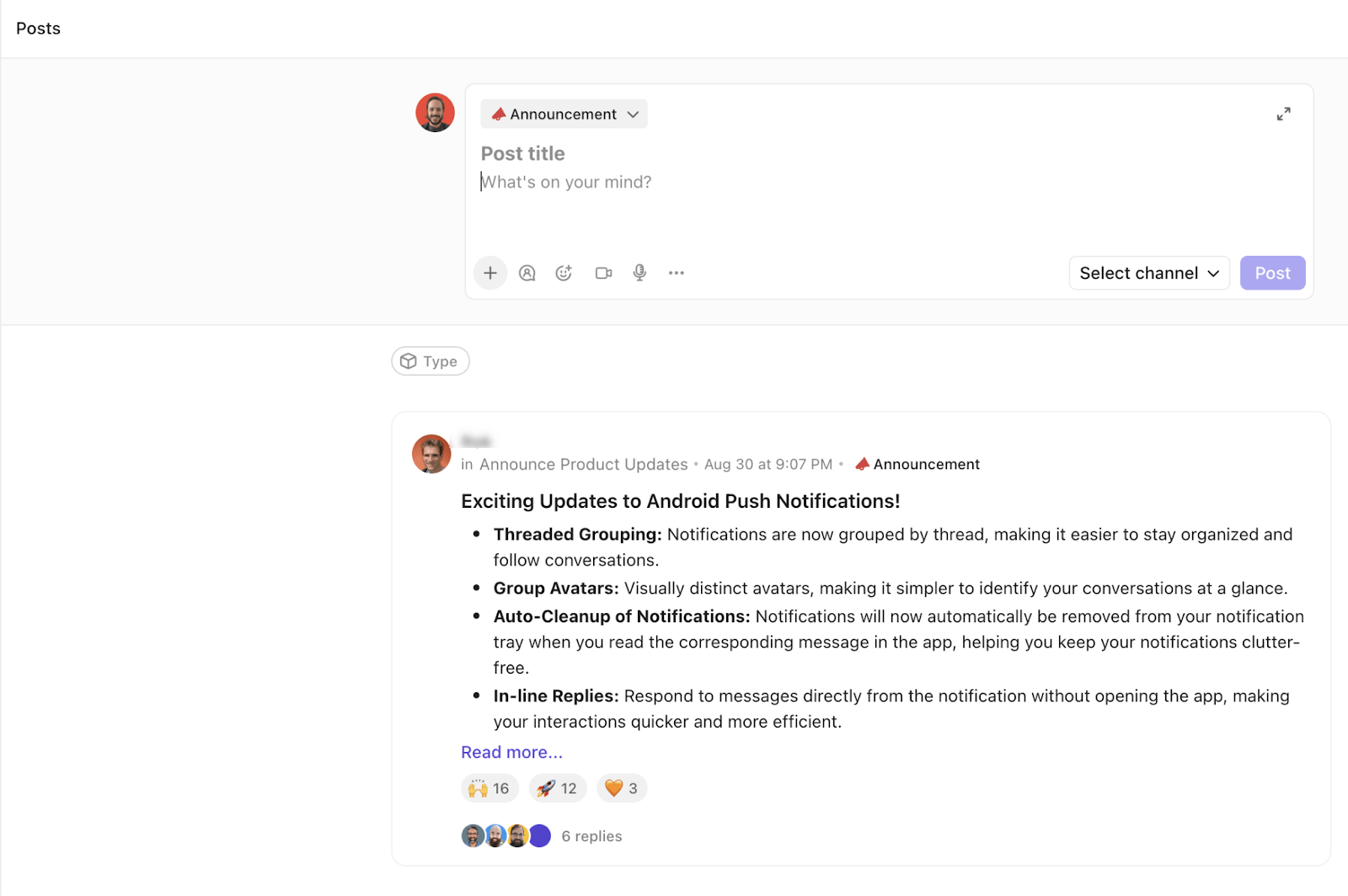
We’ve all been part of those once-a-year reviews that feel more like a formality and don’t tell us much. Effective servant leaders provide regular, actionable feedback.
An easy way to give your team helpful feedback is to use ClickUp Chat. Because you can connect tasks and chats, your feedback will always be contextual and relevant.
Add your feedback directly to the specific task, share kudos in a group chat, or even set up a weekly audio or video call to discuss the week’s outcomes with your team.
Another way to provide consistent feedback is by using the ClickUp Employee Feedback Template.
It’s designed to facilitate monthly check-ins, helping you highlight wins, discuss areas for improvement, and prioritize growth. It enables leaders to maintain an ongoing conversation that keeps personal development on the radar, showing employees that their growth is a priority—not just an annual checkbox.
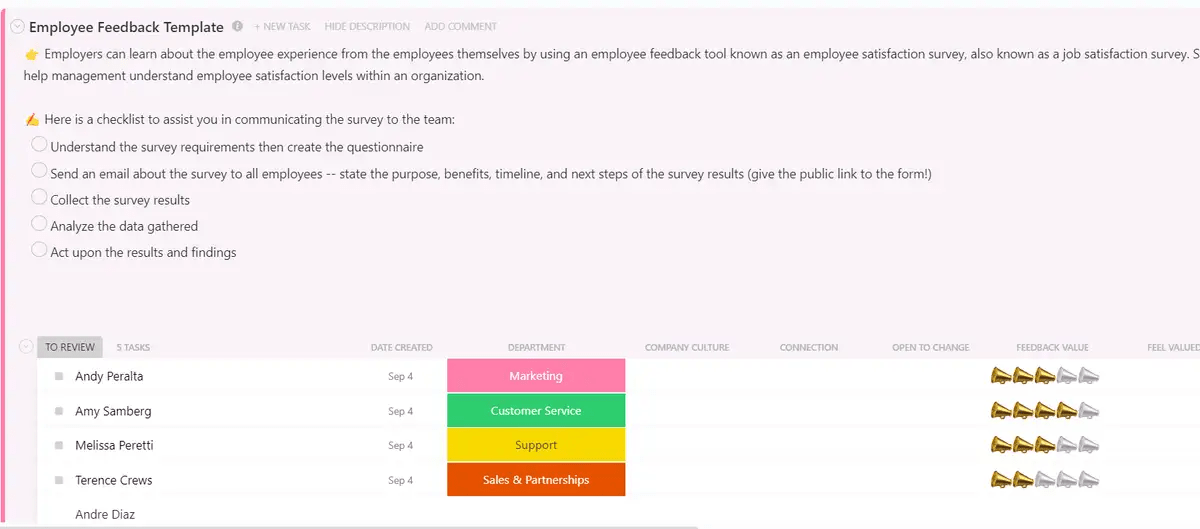
Here’s how the ClickUp Employee Feedback Template benefits you:
- Facilitates regular check-ins: Schedule and document monthly feedback sessions, ensuring that employee development remains a continuous focus
- Tracks progress easily: Keep a clear record of employee performance, achievements, and areas for development over time
- Provides tailored feedback: Customize the feedback to address individual strengths and areas of growth, aligning with both personal and team goals
- Boosts team morale: Help employees feel valued by improving their skills with consistent and constructive feedback
Remove obstacles
If you’ve seen your team struggle with too many tasks or unclear priorities, it’s your job to remove those roadblocks.
Servant leaders motivate their team through support and encouragement instead of being authoritative. They recognize team members’ efforts, celebrate their wins, and provide the needed resources.
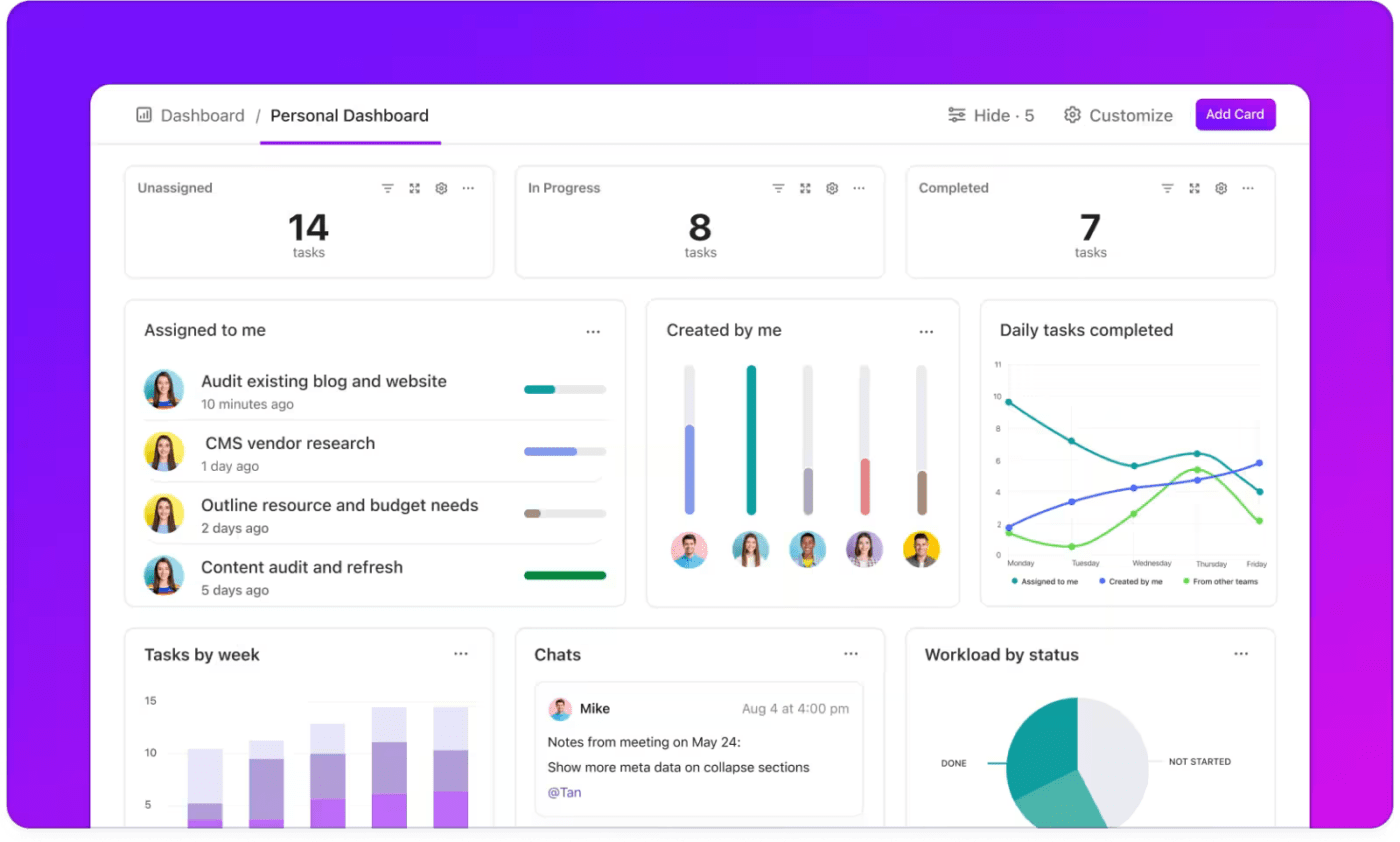
Use ClickUp Dashboards to get a bird’s-eye view of the workload. Notice that one member is buried under minor tasks? Reassign some of their workload using the Workload View or automate it so that they can focus on high-impact activities.
Celebrate wins
Servant leaders make celebrating successes a habit. Recognizing achievements fosters a positive work environment.
Try the ClickUp Team Management Plan Template. It helps you stay organized and provides a structured way to document and celebrate team accomplishments.
Whether you’re wrapping up a tough project or hitting key milestones, this template allows you to track achievements, give recognition, and maintain momentum.
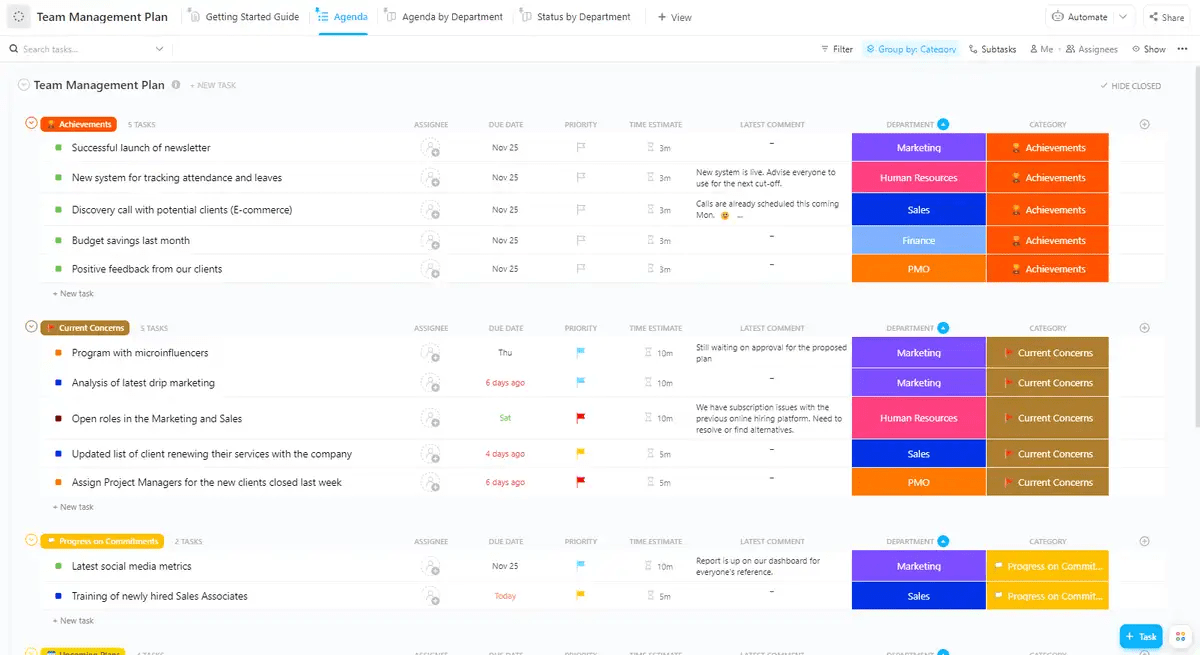
With the ClickUp Team Management Plan Template, you can:
- Document achievements: Easily track and record team successes, helping you give recognition when it’s deserved
- Boost morale: Regularly celebrate wins to appreciate and motivate team members
- Maintain project visibility: Keep the whole team aligned by documenting individual and collective achievements in one place
- Improve team collaboration: Highlight successes to foster a collaborative atmosphere
By implementing these strategies, you’re not just ‘telling’ your team you care—you’re ‘showing’ them. And that’s what servant leadership is all about—being the kind of leader who listens, supports, and helps others grow.
Summarize this article for me pleaseExamples of Servant Leadership
It’s one thing to talk about servant leadership; it’s another to see it in action. Let’s explore two real-life scenarios where servant leadership changed the game for teams:
Cheryl Bachelder, Popeyes Louisiana Kitchen
As CEO, Cheryl Bachelder transformed Popeyes Louisiana Kitchen by adopting a leadership style centered on trust, respect, and team-building. She prioritized the needs of franchisees and employees, fostering a culture of collaboration that fueled the company’s successful return from the brink of bankruptcy.
Bachelder inspired her team to achieve their goals by focusing on their strengths while encouraging innovation and risk-taking. Through her commitment to servant leadership, she set clear expectations for performance and provided the necessary support to help her team meet those objectives.
This approach improved company performance and built a sustainable, people-centered organization.
Howard D. Schultz, Starbucks
Starbucks’ former CEO, Howard Schultz, demonstrated servant leadership by fostering an environment that was kind and supportive of staff members.
He instituted free college tuition for staff members, developed ethical sourcing procedures, and offered complete health benefits to both full-time and part-time employees. His going above and beyond for employees resulted in improved customer service and business growth.
This took Starbucks from 275 locations in 1993 to over 34,000 by 2022.
Summarize this article for me pleasePros and Cons of Servant Leadership
Servant leadership can be a game-changer, but it’s not without its challenges. Let’s explore the benefits and potential pitfalls so you can decide if this approach is right for you.
Benefits of servant leadership
Implementing servant leadership has numerous positive outcomes for employees as well as employers:
- Maintains a balance between support and autonomy: Critical thinking and autonomy are encouraged while support is provided whenever required. When team members are empowered and involved, they are more likely to take responsibility for their roles
- Improves decision-making: The team is involved in decision-making, gathering diverse perspectives to arrive at the best solutions
- Promotes introspection: Team members grow both personally and professionally as this leadership promotes self-reflection and development
- Fosters strong team culture: Openness creates a supportive culture where everyone feels safe to express ideas and concerns, knowing their leader—and their teammates—have their back
- Increases productivity: A culture of trust boosts job satisfaction, leading employees to enjoy their work. This positively affects job performance and leads to higher productivity
- Fosters innovation: An environment that supports open communication encourages team members to share creative solutions and take risks without fear of criticism. This gives rise to diverse perspectives that can result in better innovations and effective problem-solving
- Creates stability: Employees who experience growth under servant leadership tend to remain loyal, reducing turnover rates. This creates a stable workforce, which in turn enhances an organization’s reputation as a desirable workplace
Addressing the criticism of servant leadership
Despite its growing popularity, servant leadership is not without its critics. Skeptics of the servant leadership theory argue that this approach may come with many challenges.
Let’s analyze the shortcomings of servant leadership and see how we can overcome them.
Perceived weakness in authority
When leaders appear overly accommodating, it may undermine their ability to enforce accountability and make tough decisions, impacting team cohesion.
✅Solution: Communicate roles and responsibilities clearly while setting boundaries when team input is sought.
💡Pro Tip: Assigning tasks to team members in ClickUp ensures clear ownership
Time consumption
This is the time invested in supporting team development. It may lead to decreased focus on strategic initiatives, potentially hindering organizational growth.
✅Solution: Improve feedback processes with structured check-ins. Use technology for communication and setting and tracking goals. Harnessing technology can improve team development while maintaining strategic focus and saving time.
💡Pro Tip: Save executive bandwidth by getting ClickUp Brain to automate updates and progress reports about team activity and notify you when action is required
Decision-making delays
In fast-paced environments, delays in decision-making can result in missed opportunities and frustration among team members, affecting morale.
✅Solution: Identify critical decisions that require team input versus those that can be made independently, and delegate authority to trusted team members. Create SOPs for your most common or frequently faced issues.
💡Pro Tip: Collaboratively create, update, and share SOPs and decision matrices with team members using ClickUp Docs
Limited empirical support
The lack of rigorous research may lead to skepticism among stakeholders regarding the implementation of servant leadership practices, potentially undermining its credibility.
✅Solution: Conduct internal studies to gather data on servant leadership’s effectiveness within the organization to justify its implementation.
💡Pro Tip: Run quick surveys and polls internally to get inputs using ClickUp Forms
By addressing these shortcomings, organizations can enhance the effectiveness of servant leadership and reap its benefits.
Summarize this article for me pleaseBuilding a People-First Culture With Servant Leadership
Servant leadership seeks to foster a team that feels seen, heard, and valued. By prioritizing your team’s needs, you boost their performance and loyalty, motivating them to excel with the assurance that their leader supports them.
Implementing the servant leadership approach is easier with the right leadership tools. Start small with regular check-ins, active listening, and feedback-backed decisions. Leadership development programs centered on servant leadership principles can also show leaders how to better serve their teams.
As leaders seek positive change, adopting servant leadership can transform your organization. ClickUp simplifies this with features like Task Management for delegation, Goals for team milestones, and Dashboards for tracking progress.
Ready to build a people-focused culture? Try ClickUp today to empower your leadership journey and help your team thrive.

Everything you need to stay organized and get work done.
