
Radical Candor Examples: How Trust and Open Communication Can Transform Work


Sorry, there were no results found for “”
Sorry, there were no results found for “”
Sorry, there were no results found for “”
As a boss, your job is to ensure that work is going according to plan. You must also look after your employees. How do you strike a balance between these two often conflicting notions? ⚖️
That’s what the book Radical Candor: Be a Kick-Ass Boss Without Losing Your Humanity tries to figure out. It was written by Kim Scott, who was a CEO coach for well-known companies such as Dropbox and Twitter.
Radical candor is a communication style that combines being compassionate and direct. It aims to improve work culture and help leaders break free from toxic patterns that hinder their teams’ progress.
In this article, we’ll describe the key concepts from the book, exploring their impact on the workplace. We’ll also share some real-life radical candor examples and give tips on implementing the wisdom in your leadership role.

To help us understand the concept of radical candor, Kim Scott has designed a 2×2 matrix. The two axes of the matrix are:
Below, we’ll explore each of the four matrix quadrants.
Manipulative Insincerity is the least desirable of all four quadrants. It implies dishonest communication—flattering people to their faces and talking badly behind their backs. This type of behavior often stems from the desire to win the popularity contest or gain a political advantage. In any case, it’s toxic and represents the demise of a healthy workplace culture. ☠️
Some leaders focus only on the results without considering that they’re speaking to a live human being. Such leaders display what the book author calls Obnoxious Aggression or front-stabbing. This behavior revolves around brutal honesty that shows no signs of compassion, which is ultimately unhelpful. It causes the person on the other end to feel attacked and stifles their motivation. 🙁
On the other side of the matrix, we have Ruinous Empathy. This behavior sacrifices honesty for cordiality. It often results from the fear of hurting someone’s feelings or the desire to be considered a “good boss.” A person with this trait provides vague, sugar-coated feedback or avoids it altogether. Although comforting, this behavior hinders people’s ability to grow and develop their skills. 🛑
When you combine Caring Personally and Challenging Directly, you get Radical Candor. The word radical means thorough, impacting the fundamental nature of something, while candor is another word for honesty.
The author describes Radical Candor as feedback that’s kind, clear, specific, and sincere. She also highlights that challenging people is an excellent way to show that you care about them. 🙏
Radical candor has the potential to transform a company’s culture and, subsequently, its output. Here are some benefits you can expect after switching to this communication model:
Pro tip: The right tools make efficient communication and improved performance easier. ClickUp is an all-in-one project management platform that automates manual tasks, increases work visibility, and cultivates transparent and effective teamwork.

Below, we’ll share two real-life stories with Radical Candor to demonstrate its influence on individuals and companies.
Joe Dunn, an evangelist, shared a story from when he was a young project manager. As many do, he was arguing with the software architect about a task—the architect wanted to do it slowly and deliberately, whereas Joe wanted him to deliver as soon as possible. A while into the horn-locking session, the software architect walked out. Joe was sure he’d proved his point and gotten his way until he was confronted by his boss, Jim, who had been listening to the argument.
Instead of praising his confidence and perseverance like Joe expected, Jim condemned his approach. He explained that even though Joe got things done, he did them by behaving like a bully and made it clear that he must drop this approach. 💢
Jim had previously helped Joe in times of need, so Joe thought highly of him. His words left a huge mark on Joe and stuck with him for a long time.
By supporting Joe, Jim proved that he cares for him. His immediate and honest response was his way of challenging Joe directly. This situation demonstrates how powerful feedback can be when it’s direct and backed by trust.
Zenhub is a company best known for its agile project management tool that shifted the standards of modern software development. In its book, Better Software & Stronger Teams Zenhub shared its experience with the Radical Candor method.
The company’s internal engineering team realized that they were stuck in a rut. They all cared a lot about their work but didn’t want to get into conflicts, so they only commented on the positives and never the problems. As a result, they were repeating the same mistakes, which cost them a lot of money. 💸
After coming across Radical Candor, they realized they needed to improve their performance reviews. They upgraded their existing post-Sprint retrospective meetings to include candid conversations about what went wrong and what they should improve in the next Sprint. They used the start, stop, or continue strategy and root cause analysis to examine their problems and behaviors.
Pro tip: If you want to implement these techniques through performance review templates, you may enjoy the ClickUp Start Stop Continue Template and the ClickUp Root Cause Analysis Template.
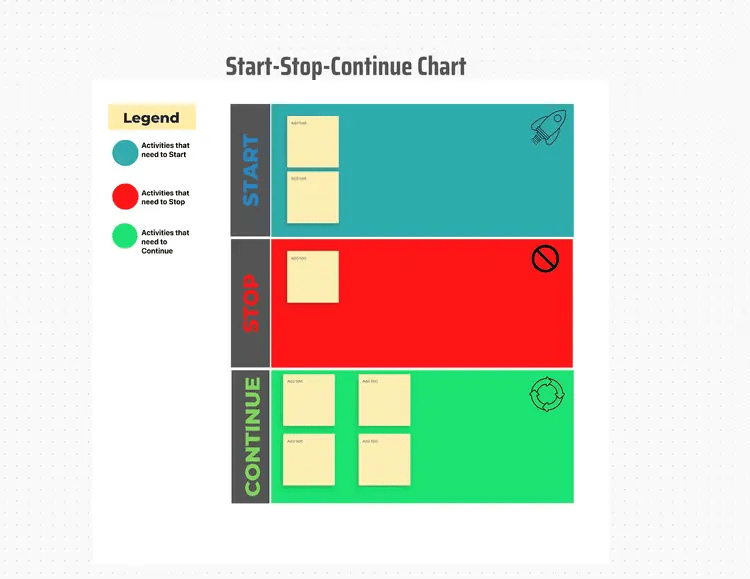
By practicing Radical Candor, the Zenhub team could achieve higher agility, address issues faster, and improve their mentoring process. Mistakes became opportunities to learn and teach. The mindset shift was so apparent that interns were enhancing the code of senior team members.
A switch to a radical candor mindset can’t happen overnight. It requires a lot of observation, self-reflection, and restraint. It also needs to occur across the team to achieve a significant impact. You should start with yourself and then spread the knowledge when the opportunities to do so arise. 📣
If you’d like to practice this methodology with your team, here’s what you can do:
Today’s software engineering teams have to be flexible to keep up with the high demand, short deadlines, and remote work culture. That’s why so many of them today embrace the Agile, Scrum, and DevOps methodologies. Radical Candor can be a powerful catalyst for many of their principles.
In Agile, iterative improvement happens through continuous feedback. Radical Candor implies direct and honest communication, allowing teams to resolve issues quickly, adapt to ongoing changes, and produce the highest results possible. 🥇
Radical Candor also aligns with Scrum values, with trust lying at the heart of both approaches:
The DevOps framework aims to improve collaboration throughout the product’s lifecycle—from planning to deployment. Specific teams, such as development and operations, often work in silos, which leads to severe problems down the line. They can break this communication barrier with the help of Radical Candor.
As we’ve seen in Zenhub’s example, this model can transform how Agile teams and companies operate, helping their employees work more efficiently and independently.
Bonus read: Explore the DevOps vs. Agile concepts in this guide.
According to Gallup’s 2023 report, only 23% of U.S. employees trust the leadership of the organizations they work for. Low trust in leadership and among team members usually results in a tense atmosphere, frequent conflicts, and high turnover.
Trust is the foundation of collaborative work. Team members who trust each other feel comfortable voicing concerns, sharing ideas, and taking risks. By doing so, they can not only hit their goals but also exceed them. 🥅
Trust has to be earned, though. Here’s what you can do to build trust and strengthen work relationships:
According to Kim Scott, feedback should be HHIIPP—acronym for:
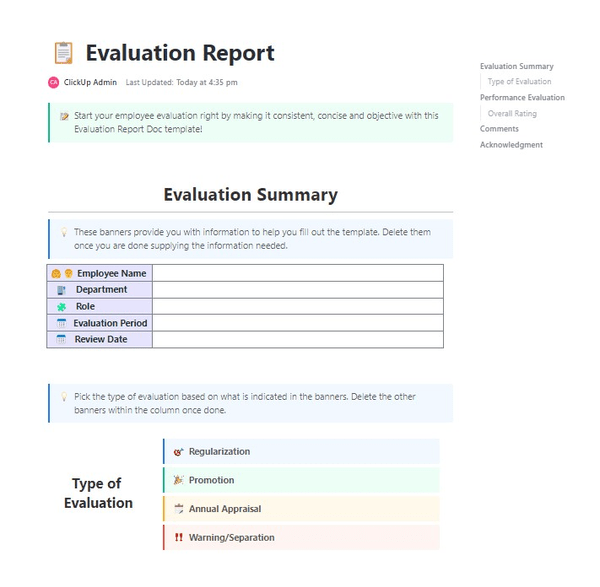
Pro tip: Use the ClickUp Evaluation Report Template to collect and organize your thoughts on long-term employee performance so you can deliver effective feedback.
The most notable downside of the Radical Candor model is the difficulty of implementation. It requires a lot of introspection and emotional intelligence, which you can’t teach easily. It also needs to happen across the team or organization.
You can’t expect people to magically become better communicators overnight. You should provide education, training, and support to help everyone adapt to the new approach. It’s also important to raise awareness about potential biases and learn how to overcome them.
Radical Candor is not a one-size-fits-all solution. Not all cultures, teams, and team members are the same. You must be flexible in its implementation so as not to force it on anyone who doesn’t feel comfortable with it.
When you’re trying to be direct, there’s a chance someone will interpret your efforts as brutal honesty and feel upset. In those cases, being sensitive and clarifying your intentions is essential. Some people need more time and support to adapt to frequent and direct feedback than others.
Radical Candor is a constant balancing act. You must attempt to show that you care personally without slipping into Ruinous Empathy and challenge directly without resorting to Obnoxious Aggression. As you get feedback, fine-tune your approach to get the desired effect.
A project management tool like ClickUp streamlines team management, allowing you to focus on developing your relationships and communication. Learn how you can use ClickUp to collaborate seamlessly with your team.
ClickUp acts as an all-in-one workspace for you and your team. Break down work into tasks and subtasks, assign them, and define the expectations for each in the task descriptions. Keep all of your team members’ information in one place—from payment details and documentation to 360° feedback results.
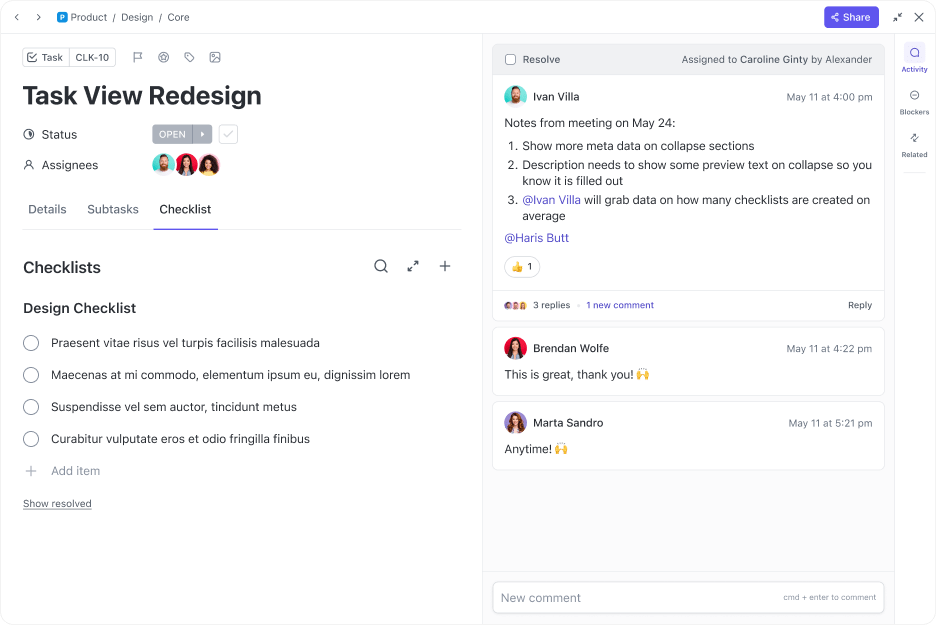
Visualize different aspects of your work with over 15+ views:
Build your ClickUp Dashboard using over 50 cards and track performance—from work in progress (WIP) to the various stages of the employee onboarding process. 📊

ClickUp Whiteboards are an excellent tool for process mapping, brainstorming, and communicating big ideas to a team. For example, you can introduce the concept of Radical Candor to your employees or create relevant internal documentation by illustrating the matrix on the Whiteboard. ✏️

If you want to create a wiki where all team members can learn about proper communication methods, use ClickUp Docs. Format the text so it’s skimmable and proofread it with the help of ClickUp Brain, the platform’s AI assistant.
Although you should ideally provide feedback in person or via video call, you can use ClickUp’s Chat view for quicker everyday communication. Create Chats for any purpose, from casual team-wide water cooler conversations to personal one-on-one check-ins. Embed spreadsheets, webpages, and other attachments for reference.📎

Make implementing Radical Candor one of your next HR goals and let it transform your team management and feedback processes. This approach enables you to foster open communication and build trust, laying the groundwork for successful collaboration. If you work in an Agile, DevOps, or Scrum environment, Radical Candor will fit in perfectly with your existing conventions.
Implementing this approach is an ambitious endeavor, but ClickUp makes it more feasible with its comprehensive collaboration features. Try the platform for free and uncover the secrets to being a kick-ass boss! 🥊
© 2025 ClickUp



