


All good things must come to an end eventually, and as any product manager knows, the next best thing is always around the corner. Whether you work in software development or manufacturing, you’re likely juggling several products at once, all at different stages of their lifecycles.
It gets a little confusing after a while, doesn’t it?
After all, a squeaky, shiny new product has different needs than a less-exciting legacy product you plan to sunset next year.
Product lifecycle management (PLM) software helps you manage a product from concept and design all the way through launch and retirement. Designers and engineers use PLM solutions the most, but they’re common tools in software product development processes, too.
Product lifecycle management software gives everyone—including nontechnical stakeholders—more visibility into what’s going on with all of your products, without the technical jargon. Used wisely, PLM software speeds up time to market, boosts product quality, and (our personal favorite) skyrockets profitability. ?
In this guide, we’ll give you a few tips on how to find a quality lifecycle management tool and share our top eight fave picks for busy product managers.
8 Best Product Lifecycle Management Software in 2024

 Summarize this article for me please
What Should You Look for in Product Lifecycle Management Software?
The eight product lifecycle management tools in this guide will get you far. We’ve focused on product lifecycle management software that offers key features like:
- Backlog management: As a product owner, it’s your job to sift through backlogged feature requests and bugs to improve the customer experience. But if you have dozens (or even hundreds) of products, the backlog grows pretty fast. Opt for a PLM system that streamlines your backlog
- No-code tools: Not everyone knows how to code. Some coding might be necessary for more technical software applications but look for options that come with no-code tools. This makes the platform accessible to nontechnical folks and makes technical workers’ lives easier
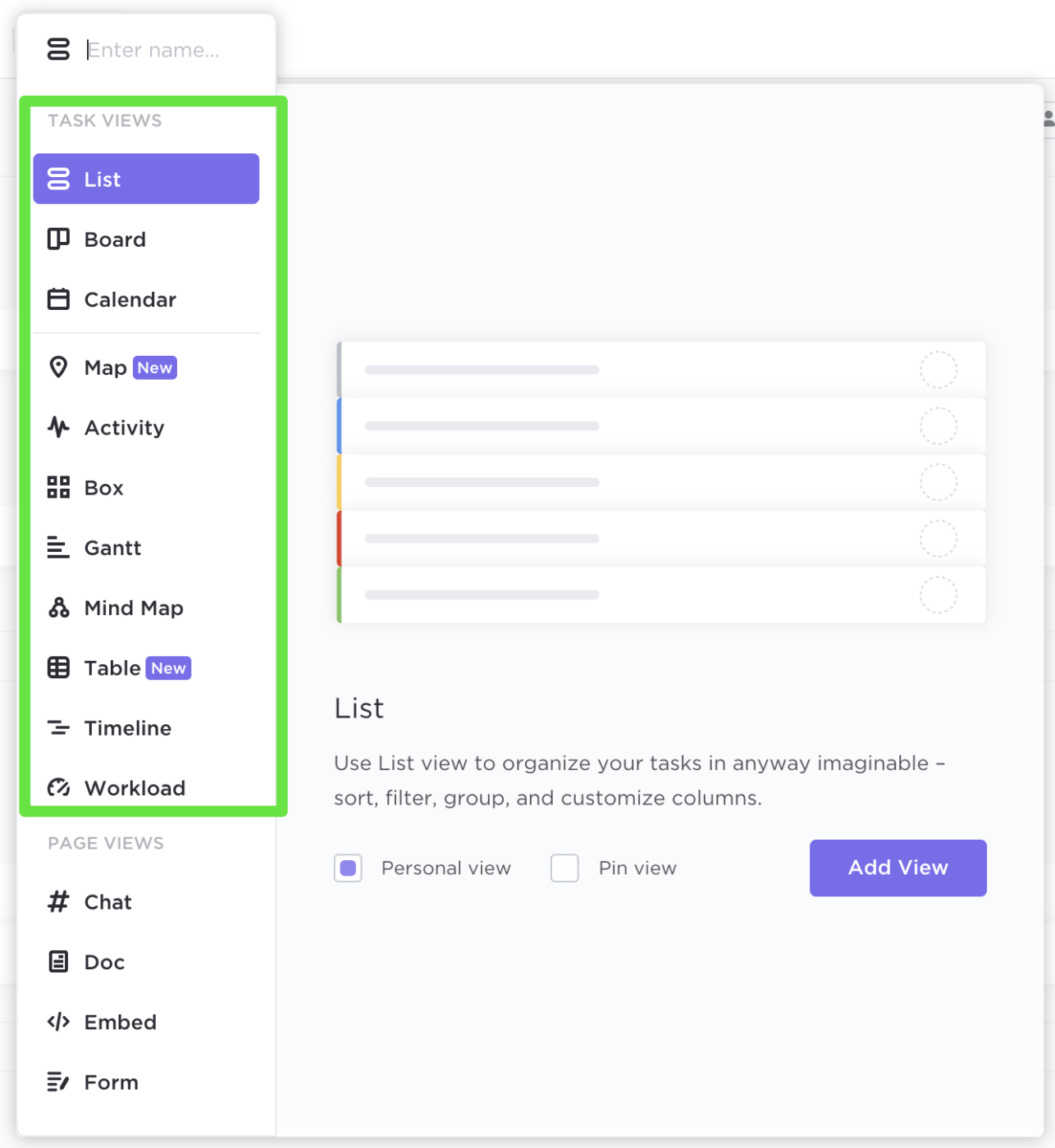
- Visualizations: Visuals make your product lifecycle more digestible—especially if you’re managing a lot of products at once. Go with a product lifecycle management solution that visualizes your workflows, tools, sprints, automations, and more in one place
- Useful tools and integrations: Who says you need separate tools to manage the entire product lifecycle? Get a platform that does it all. Maybe it includes an AI product description writer or marketing software integrations to blend product creation with product promotion. Don’t settle; there are lots of helpful options to choose from
Summarize this article for me pleaseThe 8 Best Product Lifecycle Management Software to Use
Need to find the best PLM tool? Don’t spend hours digging through the internet for a reputable vendor; we did the research for you, pal.
Check out this list to choose the best product lifecycle management software for your business.?
1. ClickUp
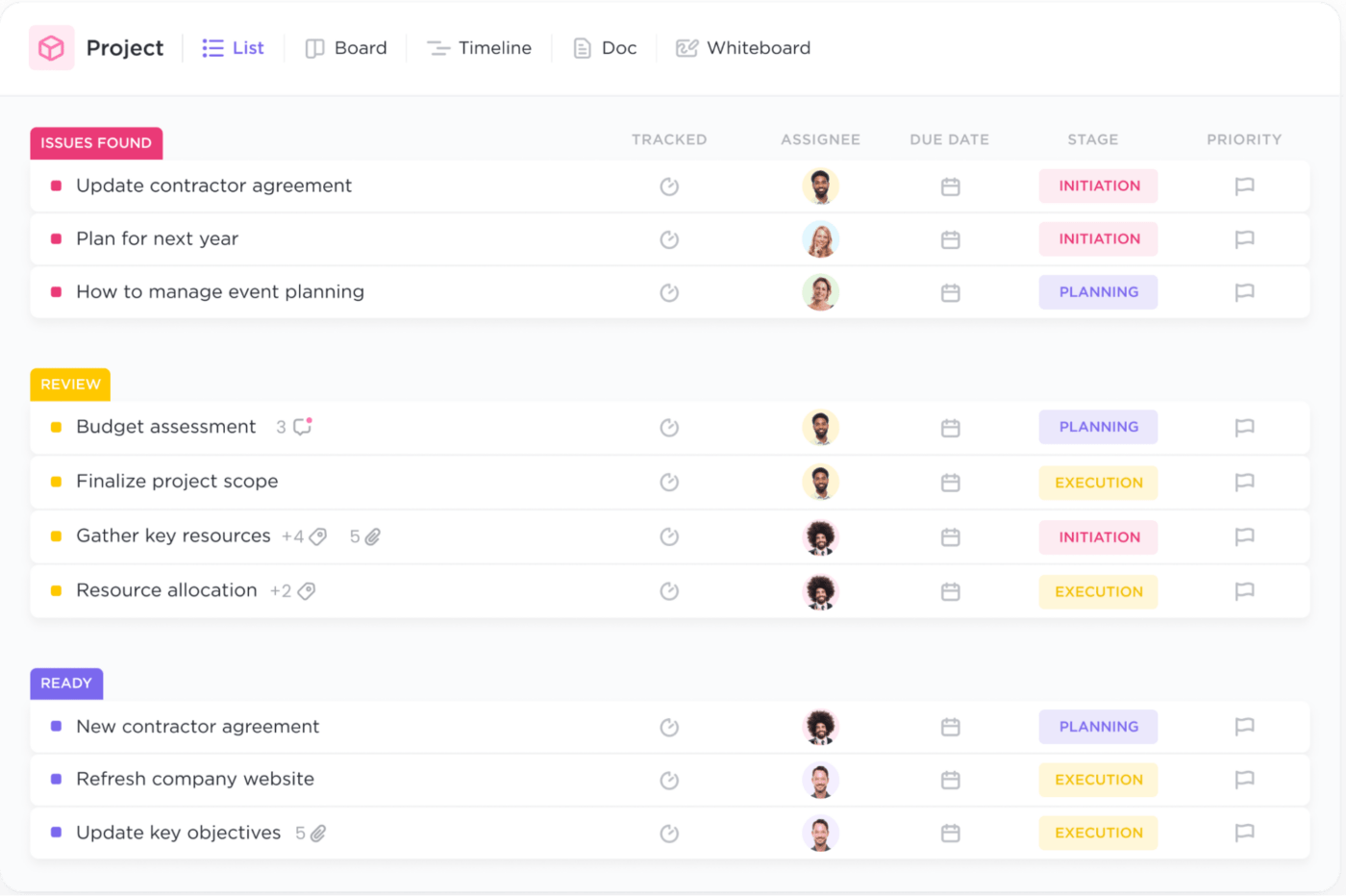
Not to brag, but ClickUp for Product Management is the Swiss Army knife of PLMs. If you can dream it up, we have a tool, template, or feature for it.
As a product lifecycle management solution, ClickUp aligns product mapping, collaboration, and agile-friendly sprint visualizations to do better work in less time.
ClickUp is different from any other PLM on the market because it integrates Docs, Roadmaps, Goals, Tasks, Whiteboards, and more into the DevOps workflow. Instead of telling your team to flip between a dozen tools to perform a single task, you can keep everything in ClickUp to save time and break down silos.
With Roadmapping, you collect feedback and sprints, visualizing them within a single product roadmap—and the pretty colors don’t hurt, either. Since all of your Docs and Whiteboards are on the same platform, you keep your roadmaps, brainstorming sessions, and product designs in one place for simpler collaboration.?
All ClickUp dashboards and reports are totally customizable, so you can get as high-level or as granular as you like. Add widgets for the key performance indicators that matter most to you so you don’t need to dig for important product information ever again.
ClickUp best features:
- Collaborate in real-time with team members and other departments with Goals, Docs, and Whiteboards across powerful project management tools
- Automatically move tasks between team members: No more manual handoffs in the development process
- Product strategy templates for your product lifecycle
- Use ClickUp AI to create solid product plans and documentation in just a few minutes
- Quickly visualize your product statuses and team performance with customizable dashboards and reports for software development or test management teams
ClickUp limitations:
- Some ClickUp features are only available to premium users
- Some users say ClickUp has so many features it can be intimidating to use at first
ClickUp pricing:
- Free Forever
- Unlimited: $7/month per user, paid annually; $10/month per user, paid monthly
- Business: $12/month per user, billed annually; $19/month per user, paid monthly
- Enterprise: Contact for pricing
- ClickUp AI is available on all paid plans for $5 per Workspace member per month
ClickUp ratings and reviews:
- G2: 4.7/5 (8,300+ reviews)
- Capterra: 4.7/5 (3,700+ reviews)
2. Jira
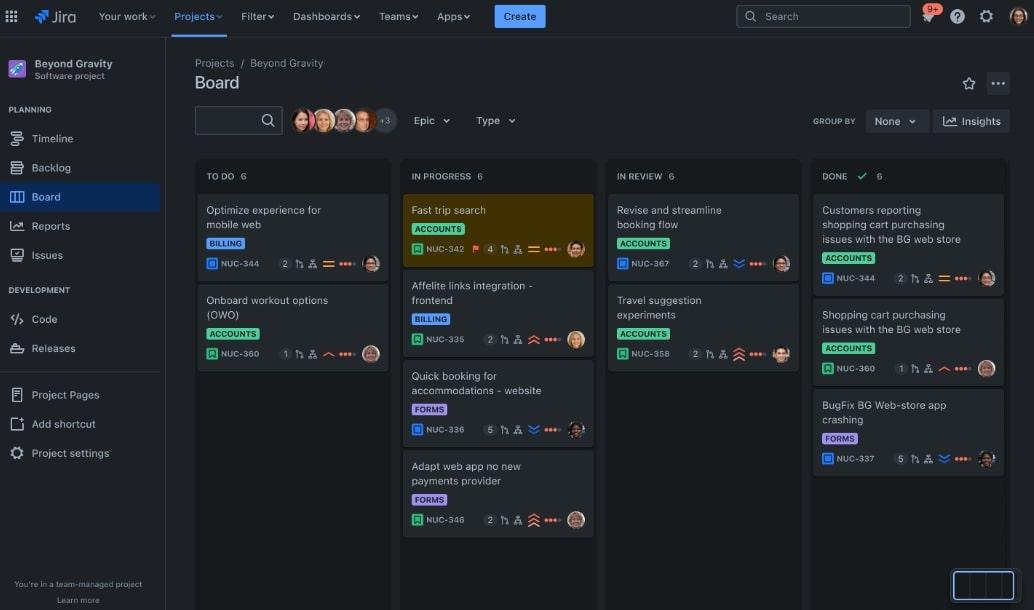
Jira is primarily a software dev tool designed for agile workflows, but it works for waterfall methodologies, too.
If you’re a developer, this is the product lifecycle management solution for you. Jira mimics the look and feel of in-person agile teams and scrums, so it’s also helpful for remote software teams.
In Jira, you create user personas and stories, track issues, and assign tasks to your team. The platform is super-customizable, so feel free to change it up as needed to fit your workflows and specific software development lifecycle.
Plus, Jira integrates with a lot of third-party apps via the Atlassian Marketplace, so integrations are just a click away.
Jira best features:
- No-code automation features, like triggers, save time
- Pull in real-time visual data on your products
- Manage agile tasks in a digital Kanban board
Jira limitations:
- Jira is designed for software development teams, so if you aren’t a software team, it probably doesn’t make sense to use this tool
- Jira is complex to use and has a high barrier to entry for project management software
Jira pricing:
- Free
- Standard: $7.75/user, up to 35,000 users
- Premium: $15.25/user
- Enterprise: Contact for pricing
Jira ratings and reviews:
- G2: 4.3/5 (5,400+ reviews)
- Capterra: 4.4/5 (13,200+ reviews)
Check out these Jira alternatives!
3. Oracle Agile PLM
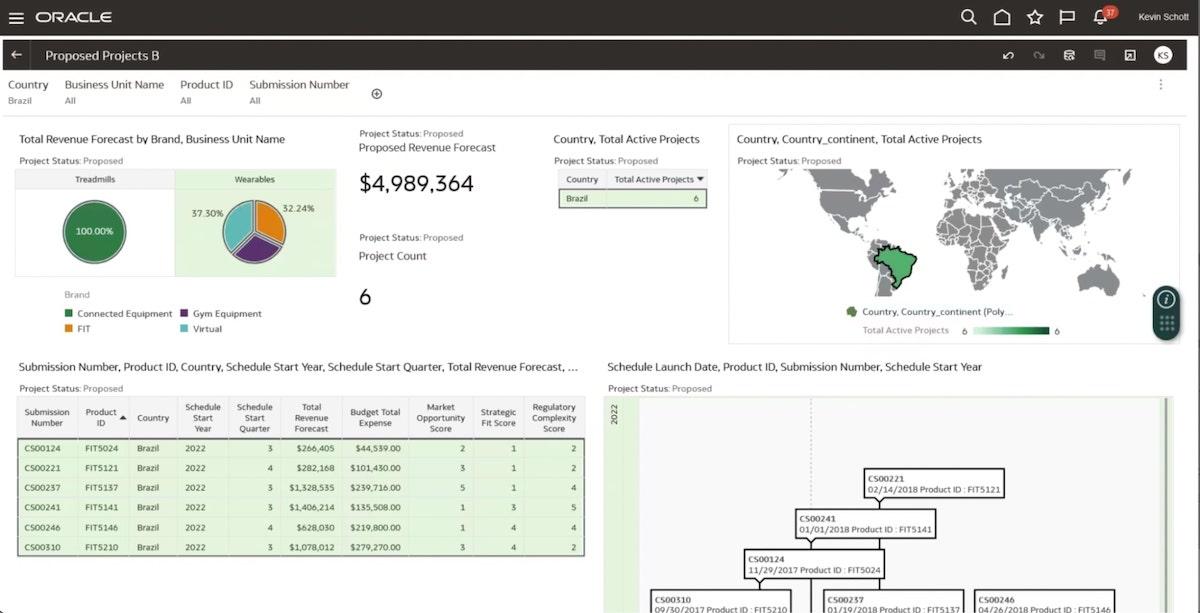
Are you an Oracle company? If so, try Oracle’s Agile product lifecycle management software for size.
This is a cloud PLM, so your team can access it from just about anywhere. It makes the most sense for teams that rely on a bevy of product-related information—like real-time data or bug reports—to standardize and structure data.
Oracle is more popular with enterprise companies because it organizes a large amount of complex data without compromising performance. Use this platform to centralize product document management, root cause analyses, and product development across your business.
Oracle Agile PLM best features:
- Oracle PLM integrates well with other Oracle solutions, so if you’re already using Oracle, this is a shoo-in
- Reduce new product introduction risks by creating product requirements documents for all product lines
- Enforce regulatory compliance at every stage of the software development lifecycle by adding your standards to Oracle
Oracle Agile PLM limitations:
- Oracle has a lot of bells and whistles, so it’s tough for beginners to use
- There isn’t a free or freemium version for its project management tools
Oracle Agile PLM pricing:
- Contact for pricing
Oracle Agile PLM ratings and reviews:
- G2: 4.0/5 (60+ reviews)
- Capterra: 4.2/5 (20+ reviews)
4. New Relic
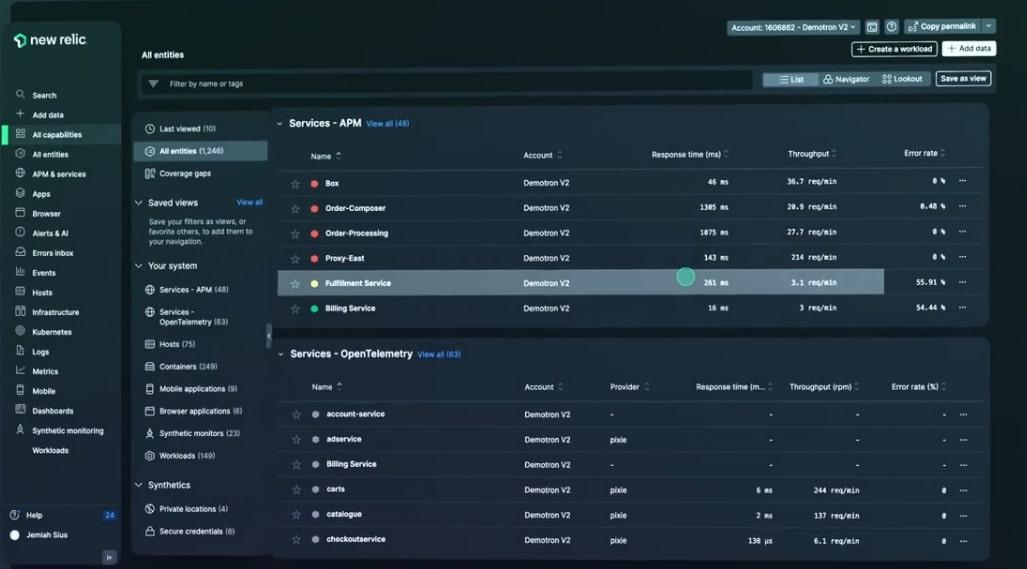
New Relic is an application lifecycle management (ALM) solution designed for software engineering and manufacturing processes. This ALM tool specializes in simplifying telemetry data, which is information pulled from Internet of Things (IoT)-enabled devices.
New Relic is more of a fit for manufacturing aerospace or automotive parts, but software development teams swear by its robust features. It can manage application development, stop errors, and optimize the user experience.
We also like its integrated application lifecycle management security features, which are perfect for mission-critical companies that can’t have a cyber breach. ?
New Relic best features:
- New Relic offers a free tier with generous features, so you can try it before you buy
- Release management and version control give you more context on every product
- New Relic has 600+ integrations
- New Relic Grok is an AI observability assistant that simplifies telemetry data with natural language processing, a la ChatGPT
New Relic limitations:
- New Relic is a good fit only for highly technical teams and fields with a strict development process
- Some users say the platform lags and has access issues
- Others say the licensing costs are too high
New Relic pricing:
- Standard: Free for one full-platform user; $99/month per additional user, up to five users
- Pro: $349/month per full-platform user, billed annually
- Enterprise: $549/month per full-platform user, billed annually
New Relic ratings and reviews:
- G2: 4.3/5 (400+ reviews)
- Capterra: 4.5/5 (160+ reviews)
5. Productboard
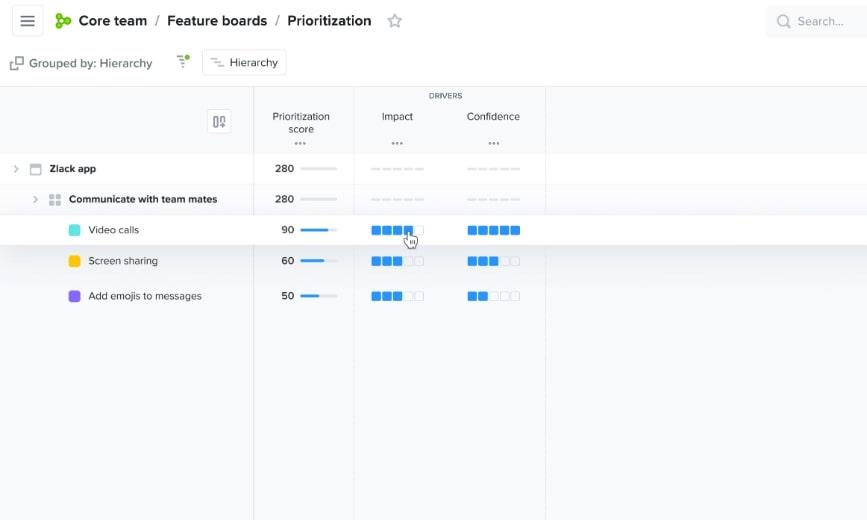
Productboard is a unique type of product lifecycle management software because it gives the customer a voice at every stage of the product lifecycle. Most businesses use a separate customer feedback platform to do this, but Productboard marries feedback with tasks and priorities.
Productboard aligns teams—even across different departments—with a single roadmap and standardized work practices.
With Productboard, you co-create products alongside your customers. If a customer requests a certain feature, the software weighs the importance of the feature request alongside the customer’s level of importance (like their annual recurring revenue, size, etc.) to help you prioritize new features and fixes.
Productboard best features:
- Productboard offers a free trial
- Productboard uses data-driven ranking to automatically prioritize important items: No more guesswork
- Productboard AI quickly analyzes feedback to streamline product feedback for easier test management efforts
Productboard limitations:
- Productboard doesn’t include task management. Its third-party integrations for application lifecycle management are also lacking
- Some users say the platform lacks customization and flexibility
Productboard pricing:
- Essentials: $20/month per user, billed annually
- Pro: $80/month per user, billed annually
- Enterprise: Contact for pricing
Productboard ratings and reviews:
- G2: 4.3/5 (220+ reviews)
- Capterra: 4.7/5 (140+ reviews)
Check out these Productboard alternatives!
6. PTC Windchill
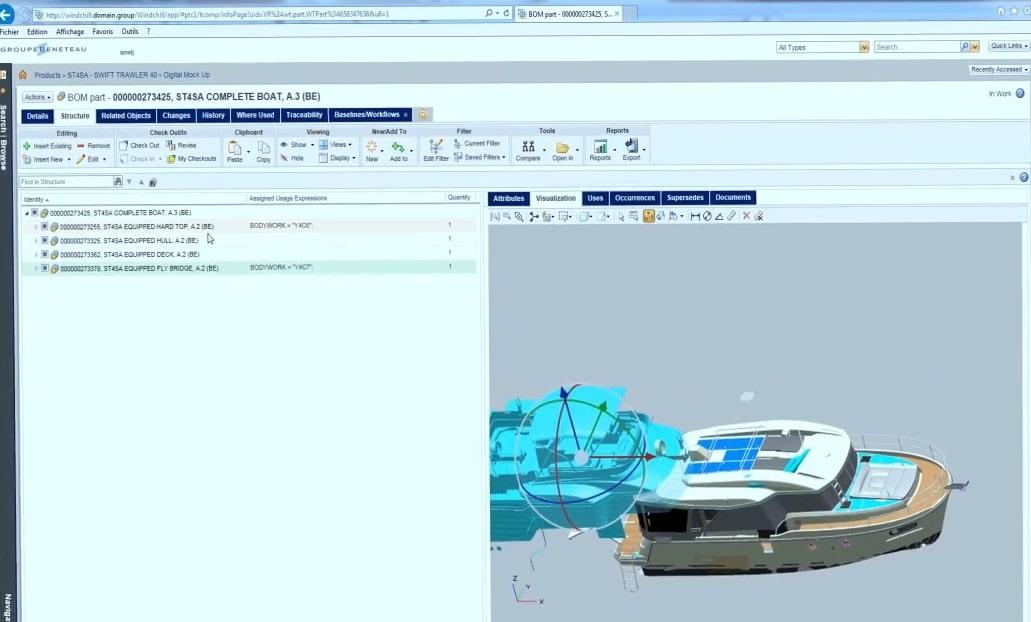
PTC’s Windchill PLM is helpful for a range of use cases, but it really shines in the physical product space. This software is for cross-functional teams that work remotely or at different manufacturing centers across the world.
Windchill can be as technical or as simple as you want it to be. Its Non-Expert Packages simplify PLM content to make the technology more accessible to all teams in the development process.
Windchill can be either on-premises or cloud-based. It even integrates with enterprise resource management (ERP) software to pull all of your product data into one place.
PTC Windchill best features:
- Windchill offers add-ons to make the platform more relevant to your role, industry, or tasks
- View product data in 2D, 3D, and even augmented reality
- Conduct product data management and dynamic visualization in real time
PTC Windchill limitations:
- It has a steep learning curve for some software projects
- Windchill could be too expensive for a small business development team
PTC Windchill pricing:
- Contact for pricing
PTC Windchill ratings and reviews:
- G2: 4.0/5 (80+ reviews)
- Capterra: 4.5/5 (2 reviews)
7. Upchain
Upchain is an Autodesk product that connects people, data, and business processes in one platform. It bills itself as a single source of truth for all product data, which is no small feat. ?
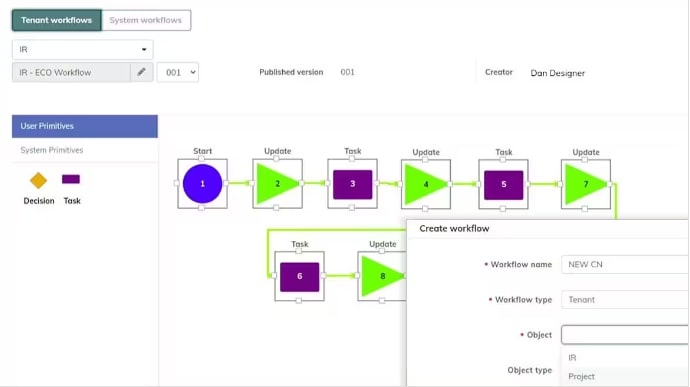
We like Upchain’s drag-and-drop modular process and workflow builder. There’s no need to code anything: Just visualize the product lifecycle with a few clicks, and you’re good to go.
Upchain also comes with lots of different versions and offers solutions for enterprise teams, design engineers, and even nonengineering teams that need something less technical.
Upchain best features:
- Upchain allows for computer-aided design (CAD) integrations, application programming interface connectivity, and integrations with enterprise resource planning (ERP) and customer relationship management data
- Upchain comes with a mobile version for on-the-go access
- Give everyone in your organization access to CAD files even if they don’t have a CAD license
Upchain limitations:
- It only offers a web-based app
- Upchain has some limitations with processing technical product documents
Upchain pricing:
- Contact for pricing
Upchain ratings and reviews:
- G2: 4.3/5 (100+ reviews)
- Capterra: 4.0/5 (1 review)
8. Siemens Teamcenter
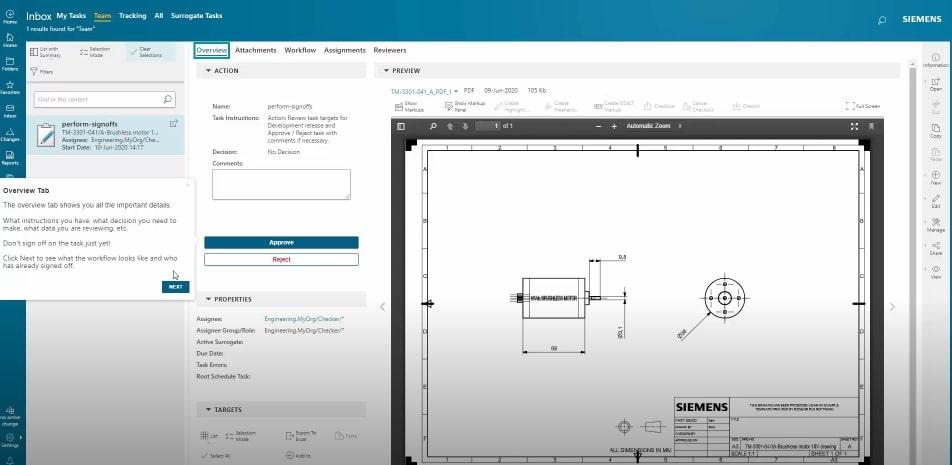
Siemens Teamcenter covers every stage of lifecycle management, from requirements to design and visualization to connectivity.
This is a powerful PLM that comes with nifty functionalities like digital twins. Not every company will need this, but it’s great if you want to cheaply simulate physical prototypes in a digital environment. Used wisely, digital twins significantly speed up the design phase.
Teamcenter is available on-premises, on the cloud, or even as a software as a service (SaaS) solution. It bills itself as a solution for both small businesses and enterprises, although it’s probably more of a fit for big enterprises because of its integration with other Siemens technologies.
Siemens Teamcenter best features:
- Siemens offers add-on components for 3D software development, CAD, and performance prediction software
- Manage product costs from within the PLM
- Pull real-time PLM analytics to keep your team on target
Siemens Teamcenter limitations:
- Some users report issues with deployment and usability
- Teamcenter doesn’t offer a free or freemium option
Siemens Teamcenter pricing:
- Contact for pricing
Siemens Teamcenter ratings and reviews:
- G2: 4.3/5 (280+ reviews)
- Capterra: 4.3/5 (80+ reviews)
Summarize this article for me pleaseDitch Spreadsheets: Use ClickUp for PLM
Your customers demand faster, more innovative products. Since management processes are becoming more complex by the day, it’s high time to give your team the gift of a solid product lifecycle management software solution.
The most efficient and time-saving option on this list is ClickUp. Thousands of businesses rely on ClickUp to write product descriptions with AI, share product documentation, and visualize agile workflows in the same dashboard.
But we know seeing is believing. Sign up for a ClickUp account now to propel your team—it’s Free Forever, no credit card required. ✨


Everything you need to stay organized and get work done.

Recent Articles
Notion vs. Google Docs: Which One Actually Helps You Write in 2026? 
Notion vs. Google Docs: Which One Actually Helps You Write in 2026?
10 Best ChatGPT Alternatives We Tested for Work in 2026 
10 Best ChatGPT Alternatives We Tested for Work in 2026
