

Communication is so much more than transmitting information. Whether it is interpersonal relationships or professional partnerships, effective communication sustains everything.
In the professional world, business communication takes various forms in different settings. You have external communication with customers, internal communication among teams, written communication to commit ideas to paper, and verbal communication to exchange ideas.
Navigating this labyrinth of different types of business communication can get tricky. One slip-up and things might fall like a house of cards.
Alright, not always. But communication breakdowns can have far-reaching effects!
We’re here to help you explore the different types of business communication and how you can use them to achieve organizational excellence.
How to Enhance Business Communication: Types, Tools, and Strategies

 Summarize this article for me please
Decoding Business Communication: What, Why, and How?
Business communication is the exchange of ideas, information, or instructions within or outside a company. It fosters collaboration, cultivates relationships, and achieves organizational goals. When done right, effective business communication boosts decision-making, problem-solving, and workplace productivity.
In fact, good business communication promises the following benefits:
- Clear and timely information empowers employees and decision-makers to make informed choices
- Transparent, two-way communication reinforces work culture, kindles team spirit, and fosters positive relationships
- Purposeful communication brings teams to the same page and improves the chances of the company’s success
- Efficient messaging and communication streamline processes and reduce errors to drive productivity and employee morale
- Getting to share opinions and ideas and feeling heard and valued by others improves employee engagement
- Open dialogues promote knowledge sharing and innovation, especially when dealing with complex problems or challenges
- Clear, proactive, and value-loaded external business communication fuels customer satisfaction and builds loyalty
Now, you may wonder how your business can enjoy the above benefits. Well, to achieve your business communication goals, ensure that it adheres to the following principles of the 7Cs:
7Cs of business communication
- Clarity: Be clear so that the receiver understands the message
- Conciseness: Keep the message brief and to the point
- Concreteness: Ensure the message is specific and supported by facts
- Correctness: Eliminate errors in grammar, spelling, punctuation, or factual information
- Coherence: Structure the message to be logical and organized
- Completeness: Capture all necessary information within the message
- Courtesy: Maintain a polite tone for the receiver and contact at a considerate time
Summarize this article for me pleaseThe Different Types of Business Communication
Let’s explore different types of business communication based on the communication methods. We’ll explore a few indicative channels or styles for every business communication type:
Verbal communication
Verbal communication relies on spoken words to convey the message. It is a dynamic form of communication that often takes place in real time and attracts immediate feedback or response. Some common verbal communication types include:
Face-to-face meeting
Face-to-face conversations are the most direct forms of internal and external communication, done verbally and involving the physical presence of the sender and receiver.
They are vital for cultivating relationships, resolving conflicts, and communicating complex information. Face-to-face conversations are also great for informal communication—think water cooler chat or exchanges around the photocopier.
- When to use: Discussing sensitive matters, building team spirit, and providing feedback
- Example: A manager holds a one-on-one face-to-face meeting with an employee to discuss career development opportunities
- Limitations: Can be time-consuming and impractical for large and/or geographically dispersed teams
Phone calls
Phone calls are a convenient form of business communication when face-to-face communication is not possible. They facilitate real-time conversations where you can quickly exchange ideas or information.
- When to use: Holding quick discussions, following up on action, and engaging to stay on top of mind
- Example: A sales representative hops on a call with a prospect to get a feel of the lead status
- Limitations: Have become increasingly annoying in the age of spam marketing, and the lack of nonverbal cues can result in misunderstandings
Presentations
Presentations aim to deliver information to an audience in a structured format. They employ a combination of different media types while conveying complex ideas, persuading, informing, or inspiring said audience.
- When to use: Conducting training sessions, sharing project updates, delivering sales pitches, and launching new products/services
- Example: A marketing manager grooms the sales team on a new product and associated strategies
- Limitations: Preparation and delivery is time-consuming, and there’s limited opportunity for the audience to interact freely
Stand-up meetings
Stand-up meetings are short, daily meetings where team members share updates on their work and discuss any obstacles. Such team communications are primarily used for coordination and horizontal communication.
- When to use: Maintaining project momentum, identifying dependencies, and addressing issues promptly
- Example: A daily stand-up meeting for an agile development team building a platform
- Limitations: May feel rushed or superficial if not managed effectively
Written communication
Written communication involves transmitting information or ideas through the written word. It’s a formal and precise form of business communication that requires careful planning, coherence of thought, and editing. While it once required strong, powerful skills, tools like Generative AI make written communication more accessible and effortless.
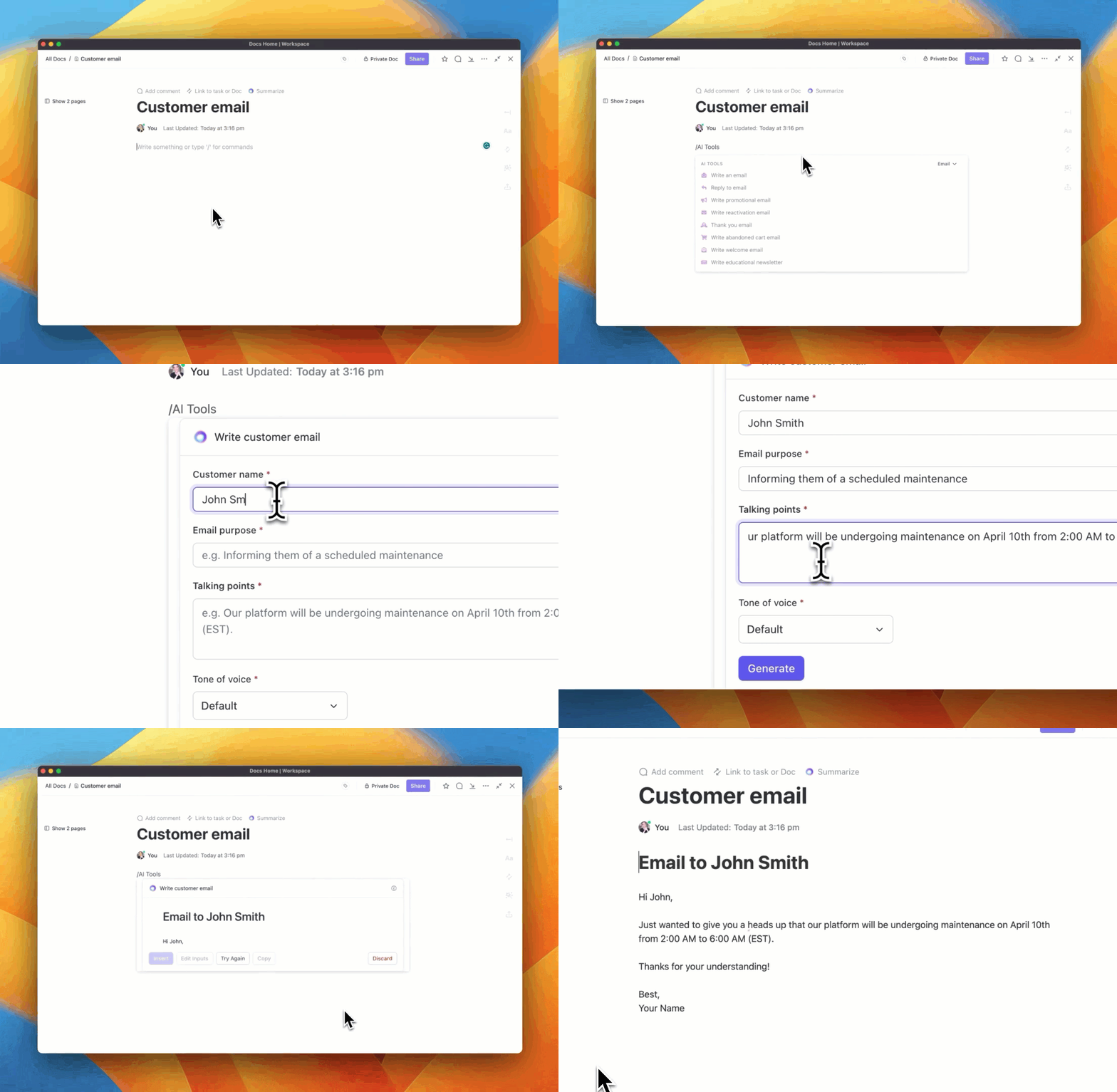
Email is the most popular form of written business communication. It’s highly versatile and can be used for all types of business communication—internal and external, downward and upward, horizontal and lateral.
- When to use: Providing information, making requests, confirming details, and sharing updates
- Example: A team leader sends a project update email to senior management
- Limitations: Can be a hassle to compose. Requires a thoughtful approach to articulate information without ambiguity
💡 Pro Tip: Use ClickUp Brain to craft effective and tailored emails instantly or create templates for specific communication types.
Reports
Reports are formal documents containing findings and other relevant information in a structured format. Direct reports are often used for upward and lateral communication.
Aside from the written word, reports may use visual communication through instruments like graphs, infographics, etc., which can break up walls of text. Such rich media content also makes the information accessible and easy to digest while upping employee engagement.
- When to use: Sharing project progress, research findings, financial performance, and employee performance reports
- Example: A finance department presents quarterly financial report
- Limitations: Compiling reports is time-consuming and may seem excessive and unnecessary in the current age of interactive dashboards
Letters
Letters are formal written documents. These are typically used for official correspondence with external parties, making them a form of external communication.
- When to use: Communicating formally with clients, customers, or external stakeholders
- Example: A company sends a letter of complaint to one of its vendors
- Limitations: Is not as effective and real-time as an email and can be time-consuming to compose
Press releases
Press releases are used to make mass announcements or shine the spotlight on a major event or milestone. Such external communication helps generate awareness and brand-building. However, press releases cast a wider net of audience rather than hyper-targeted business communication.
- When to use: Educating external stakeholders, highlighting achievements, and sharing newsworthy information
- Example: A company may publish a press release while announcing a partnership with another company
- Limitations: Appeals to a wider audience, which may not be relevant to the purpose of the business communication. Requires expert written communication skills
Non-verbal communication
Nonverbal communication is often an overlooked component of business communication. However, it plays a complementary role in effective verbal communication. In fact, professionals in marketing and sales tend to rely largely on nonverbal communication styles to gauge the situation and pivot their strategies.
Body language
Body language includes somatic expressions displayed through postures, gestures, and eye contact. It helps convey information relating to the emotions, attitudes, and intentions of the sender or receiver.
- When to use: Building rapport and driving engagement during face-to-face interactions
- Example: Crossed arms may reflect anger, defensiveness, or disagreement during a conversation
- Limitations: Easy to misinterpret, especially when not in accordance with the spoken word
Facial expressions
Facial expressions are yet another medium for expressing or gauging emotions and attitudes. They offer greater perspective and display the level of employee engagement or involvement in the conversation.
- When to use: Conducting in-person meetings or virtual meetings
- Example: Smiling during an interview to make yourself appear friendly and approachable
- Limitations: Bears cultural connotations and can be masked or faked
Tonality and voice
In business communication, the tone of voice dictates how a message may be perceived. Whether it’s a lecture or written words, the tonality and voice add to the effectiveness of “effective” business communication.
- When to use: Engaging in verbal or written communication
- Example: Using a confident and assertive tone while giving a presentation
- Limitations: May vary depending on the situation and can get tricky to control (requires sender and receiver to be on the same page)
Digital communication
Digital communication is the most omnipresent form of business communication today. It involves the use of electronic devices to exchange information. Since we’ve already covered a few digital communication types or variants (email, letter, etc.), we’ll skip past them.
Online chat
Online chat is a staple in hybrid workplace communication. It facilitates real-time, text-based communication, which is why it’s used for formal and informal communication.
- When to use: Quick problem-solving, brainstorming, and collaborating with team
- Example: Team members interacting with each other over an instant messaging platform
- Limitations: Bears informal connotation and may not be suitable for sensitive or confidential information
Video conferencing
Video conferencing is the virtual equivalent of face-to-face communication. The combination of audio-visual communication eliminates the need for physical presence while exchanging ideas and opinions.
In some cases, these video conferences may be recorded and circulated among those who could not participate. Such async video communication informs even those who could not participate in the live video conference for whatever reasons.
- When to use: Holding remote meetings, team briefings, one-on-ones, standups, presentations, and more
- Example: A project manager briefs team members on a project before commencement
- Limitations: Requires a stable internet connection and can get jeopardized due to technical issues. They also require appropriate equipment
Town hall
A town hall meeting is a large-scale gathering where leaders or management share information with employees. It is a form of internal business communication.
While town halls are primarily downward communication, they can also include elements of horizontal and upward communication. For instance, town hall meetings are often followed by Q&A sessions where participants may seek clarifications on issues discussed.
- When to use: To announce major company changes, address concerns, collect feedback, and boost employee morale
- Example: A company-wide town hall meeting to announce change in organizational policies
- Limitations: Is less interactive than smaller group meetings. It may also be difficult to address all questions and concerns
Comments and notes
Most workplace communication tools contain features for adding comments and notes. These written forms of business communication are used for quick, concise information sharing with due context. Apart from digital note-keeping, employees can also document the same by hand.
- When to use: Sharing quick feedback or suggestions, documenting action items or decisions, sharing brief instructions, and collaborating on projects
- Example: The marketing team adds a comment to a task to tag the sales department on a pending action
- Limitations: Difficult to track or reference in the future, may lack a formal tone, and physical notes can be misplaced
Summarize this article for me pleaseTips & Tricks for Effective Business Communication
Here are a few effective business communication strategies worth trying:
- Leverage technology in the form of workplace communication tools to facilitate business communication in synchronous and asynchronous communication method
- Tailor the message to the recipient’s level of understanding, roles, and preferred communication styles, especially in the case of external communication
- Select the appropriate communication channel depending on the message’s urgency, sensitivity, and need for interaction
- Front-load value for every message and eliminate fluff or any unnecessary details
- Practice active listening by paying full attention to the speaker, echoing the ideas back to them, asking clarifying questions, and sharing feedback
- Establish a single source of truth by centralizing communications. This avoids confusion and misunderstandings in business communication
- Collect and provide feedback on the existing communication setup to build stronger relationships
- Conduct regular training sessions on various communication skills, such as active listening, written language, body language, etc.
- Collect inputs on prevailing workplace communication challenges through feedback and surveys and address them proactively
Summarize this article for me pleaseCommunicate Clearly With ClickUp
If you’re tired of juggling multiple communication tools, tracking email trails, and chasing down information across different platforms, then it’s time to consolidate everything within a single business communication software.
You need a unified solution that streamlines business communication. In other words, you need ClickUp.
ClickUp is a one-stop shop for all your business communication needs. Use it to consolidate chats, projects, tasks, documents, and notes over a centralized platform. Enjoy seamless team collaboration, eliminate information silos, and unlock the potential of effective communication.
To deliver such results, ClickUp offers the following features:
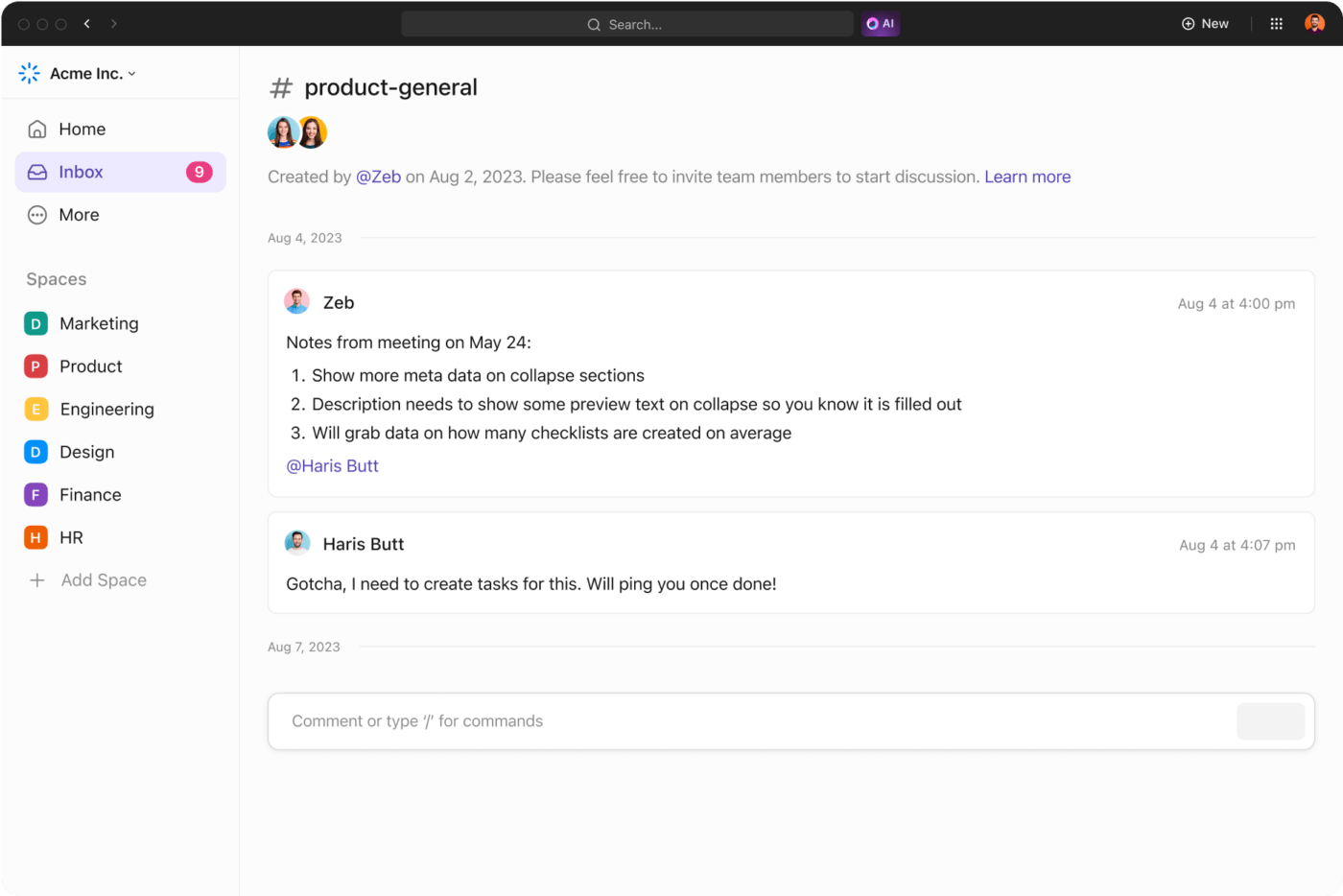
- ClickUp Chat View facilitates real-time conversations across organized channels, keeping discussions focused and on-topic. Assign tasks, mention team members, and track progress directly within the chat, turning conversations into actionable items

- ClickUp Docs allows teams to create, edit, share, and collaborate on documents without stressing over version control. Create various document types, including articles, guides, and wikis, and use rich text formatting, images, tables, and other elements to enhance your content
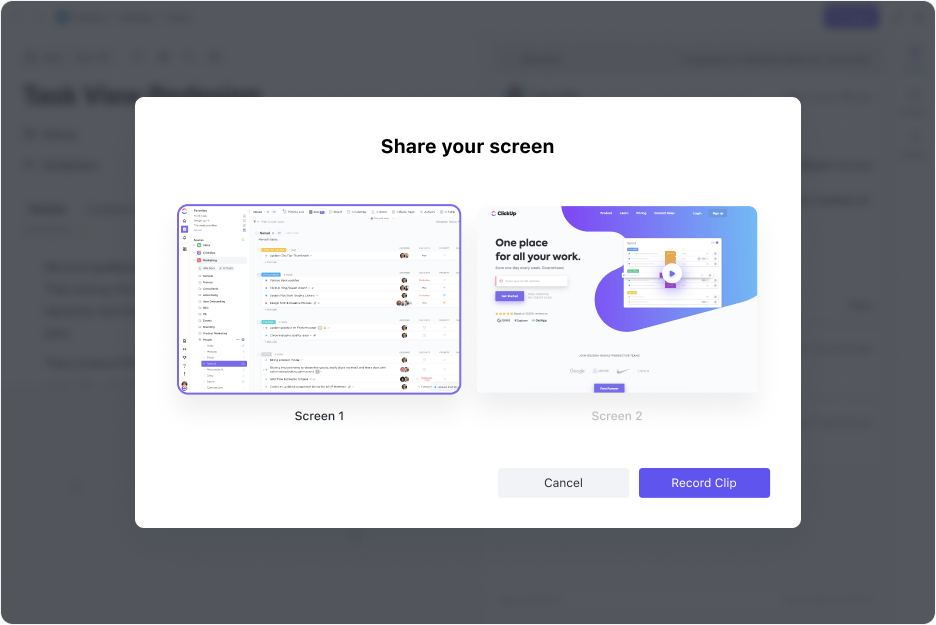
- ClickUp Clips helps share video updates and screen recordings, offering clear instructions and visual aids from within ClickUp. Foster better teamwork by sharing detailed insights, updates, and feedback through screen-recordings

- ClickUp Assign Comments enables the setting up of threaded comments on tasks, documents, and chats, providing for task assignments, capturing feedback, and keeping everyone in the loop
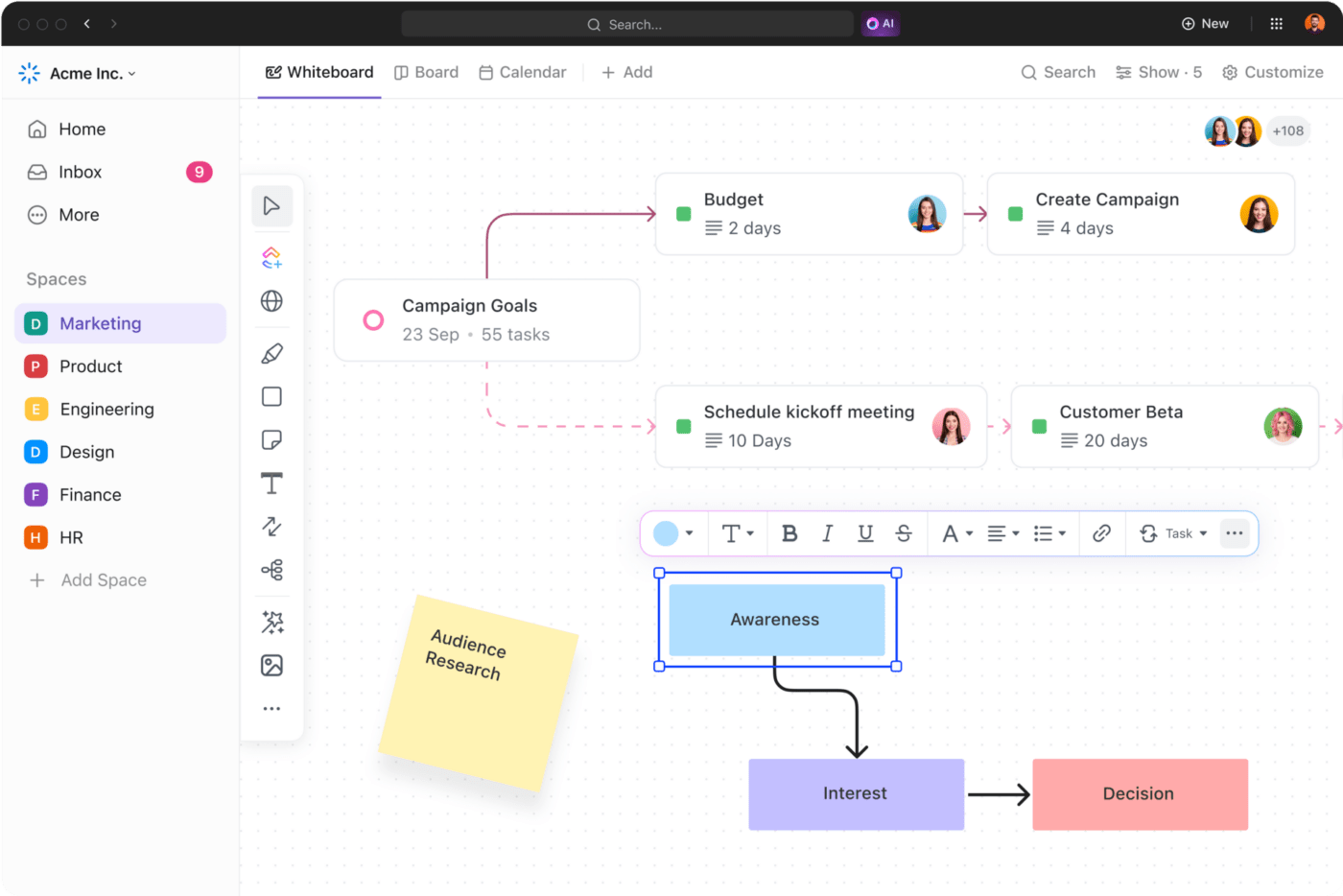
- ClickUp Whiteboards are perfect for capturing ideas, mapping out processes, and facilitating group discussions. Real-time collaboration allows multiple users to contribute simultaneously, sparking creativity and innovation
💡 Pro Tip: Easily launch tasks from your whiteboard ideations using ClickUp Tasks.
ClickUp further tops communication tools by offering an array of templates. Some examples of ClickUp templates to get you started include:

ClickUp’s Communication Plan Template helps you establish clear, standardized communication guidelines for knowledge transfer and information exchange.
Use this template to:
- Craft compelling messages and select the optimal channels to reach them
- Structure your communication efforts effectively
- Measure the overall impact of your communication strategy
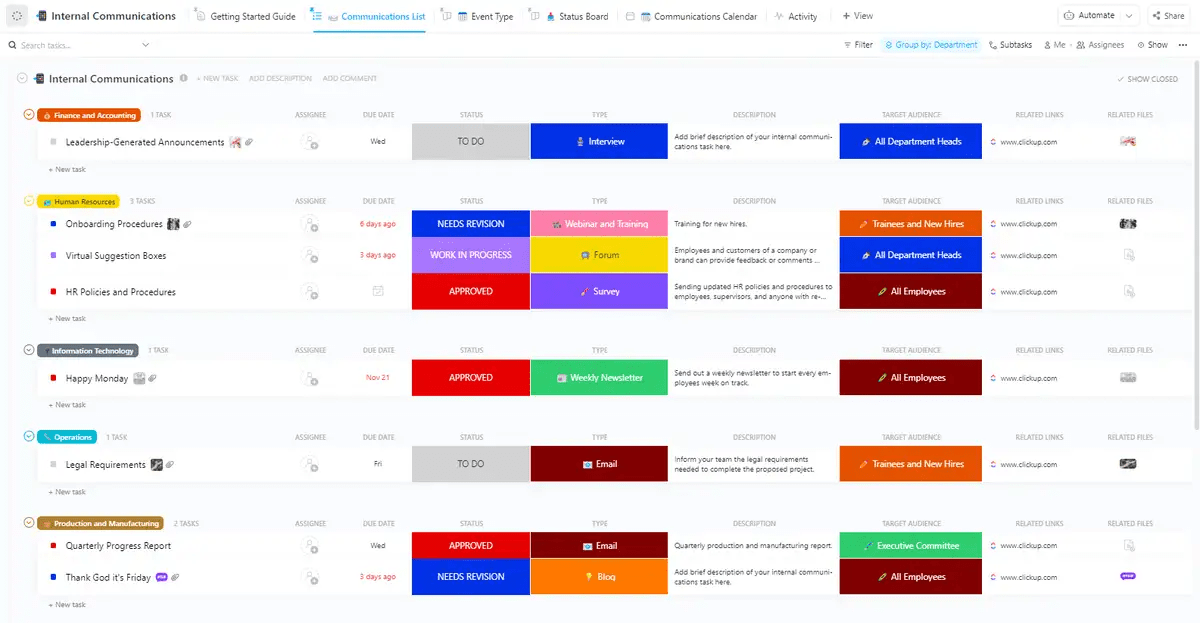
Use the ClickUp Internal Communication Template to craft strategic internal communication plans that will improve employee engagement, increase morale, and facilitate smoother information flow.
Use this template to:
- Centralizing communication: Organize conversations, announcements, and documents in a single location
- Facilitating team communication: Streamline communication with your entire team
- Enhancing transparency: Provide visibility into team-wide processes and initiatives
Summarize this article for me pleaseTake the Busyness out of Business Communication
To excel in business communication, you should focus on crafting clear messages, delivering them effectively, and understanding the limitations of your current communication tools. By doing so, you can enhance customer satisfaction, boost employee engagement, and strengthen relationships with stakeholders.
ClickUp offers a streamlined solution for improving both internal and external communication. With the platform’s suite of features like email, chats, clips, whiteboards, and comments, collaboration is just a click away!
Sign up now to experience the difference.
Summarize this article for me pleaseFAQs
What are the four types of communication in business?
The four main types of communication in business are verbal, written, non-verbal, and digital communication.
Additionally, business communication types can also be categorized as:
- Upward communication, which flows up the organizational hierarchy, that is, from employees to management
- Downward communication, which flows down the organizational hierarchy, that is, from management to employees
- Lateral communication, which occurs between peers or colleagues
- External communication, which involves interactions with parties outside the organization


Everything you need to stay organized and get work done.

Recent Articles
8 Communication Strategies That Actually Fix Team Chaos 
8 Communication Strategies That Actually Fix Team Chaos
ADHD Task Management: How to Build a System You’ll Still Use in a Month 
ADHD Task Management: How to Build a System You’ll Still Use in a Month

