






Still downloading templates?
There’s an easier way. Try a free AI Agent in ClickUp that actually does the work for you—set up in minutes, save hours every week.
Sorry, there were no results found for “”
Sorry, there were no results found for “”
Sorry, there were no results found for “”
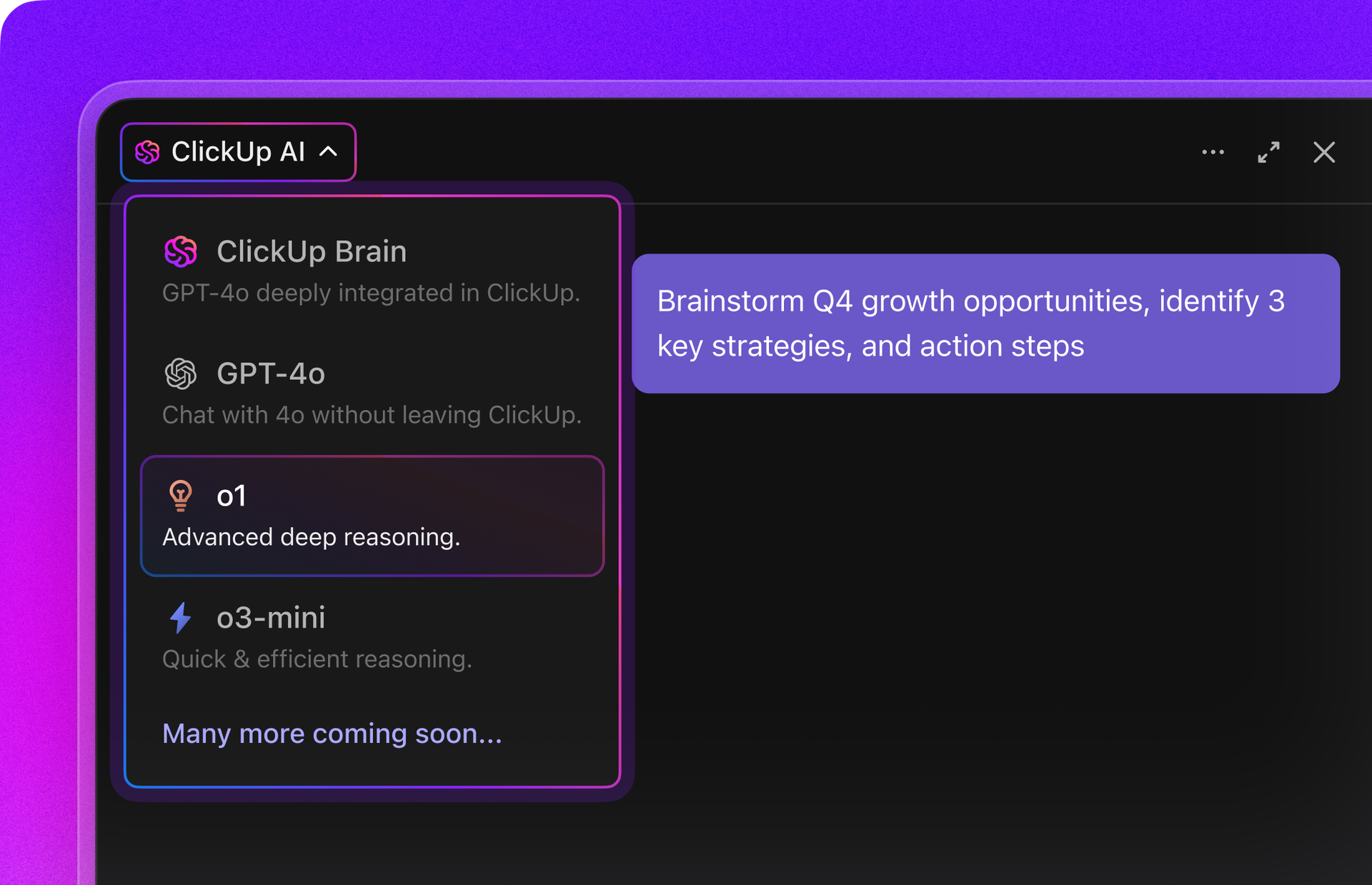
In 2025, the world finally moved on from using ChatGPT as a synonym for AI.
As we experimented with all sorts of AI tools—from AI writers and image generators to financial fraud detection and automotive AI applications, artificial intelligence slowly became a mainstay in our (work) lives.
🧠 About 78% of companies worldwide started using AI in at least one part of their work, from customer service to data analysis—up from 55% just a few years ago!
Enterprises that used AI in their work saw real results, including faster outputs and better quality on routine tasks. Thanks to smarter tools, many report saving at least 40-60 minutes every day.
Of course, not all AI is built the same, and simple adoption isn’t enough to guarantee these results. That’s why this article breaks down the top AI trends that ruled 2025—from systems that take action on your behalf to ways teams turn scattered knowledge into searchable insight.
We’ll also share how you can apply these shifts to your team’s work right now.
Let’s start with the biggest and most impactful shifts of them all.
In 2025, the pace of AI change meant it stopped being just a passive assistant. It became an active collaborator. This marks a fundamental shift from AI that simply responds to commands to AI that actively accomplishes goals.
Generative AI is a type of artificial intelligence that generates original content. This includes text, images, code, and summaries, all based on the patterns it has learned from vast amounts of training data. This year, large language models (LLMs) (that power generative AI tools and chatbots such as ChatGPT, Claude, and Gemini) became significantly better at understanding context, generating more accurate content, and working with multiple data types at once.
This year’s key generative AI developments included:
🧠 Fun Fact: The biggest AI wins of 2025 came from teams that embedded AI directly into their daily workflows, rather than treating it as a side project. With ClickUp Brain, the world’s most context-aware AI, built directly into ClickUp, you get support for text and multi-modal outputs, right inside your workspace.
It uses your task and document context to tailor responses, collaborates alongside human editing, and grounds answers in workspace data to reduce hallucinations. The result is AI that works across formats and workflows, without requiring teams to switch tools or repeat context.
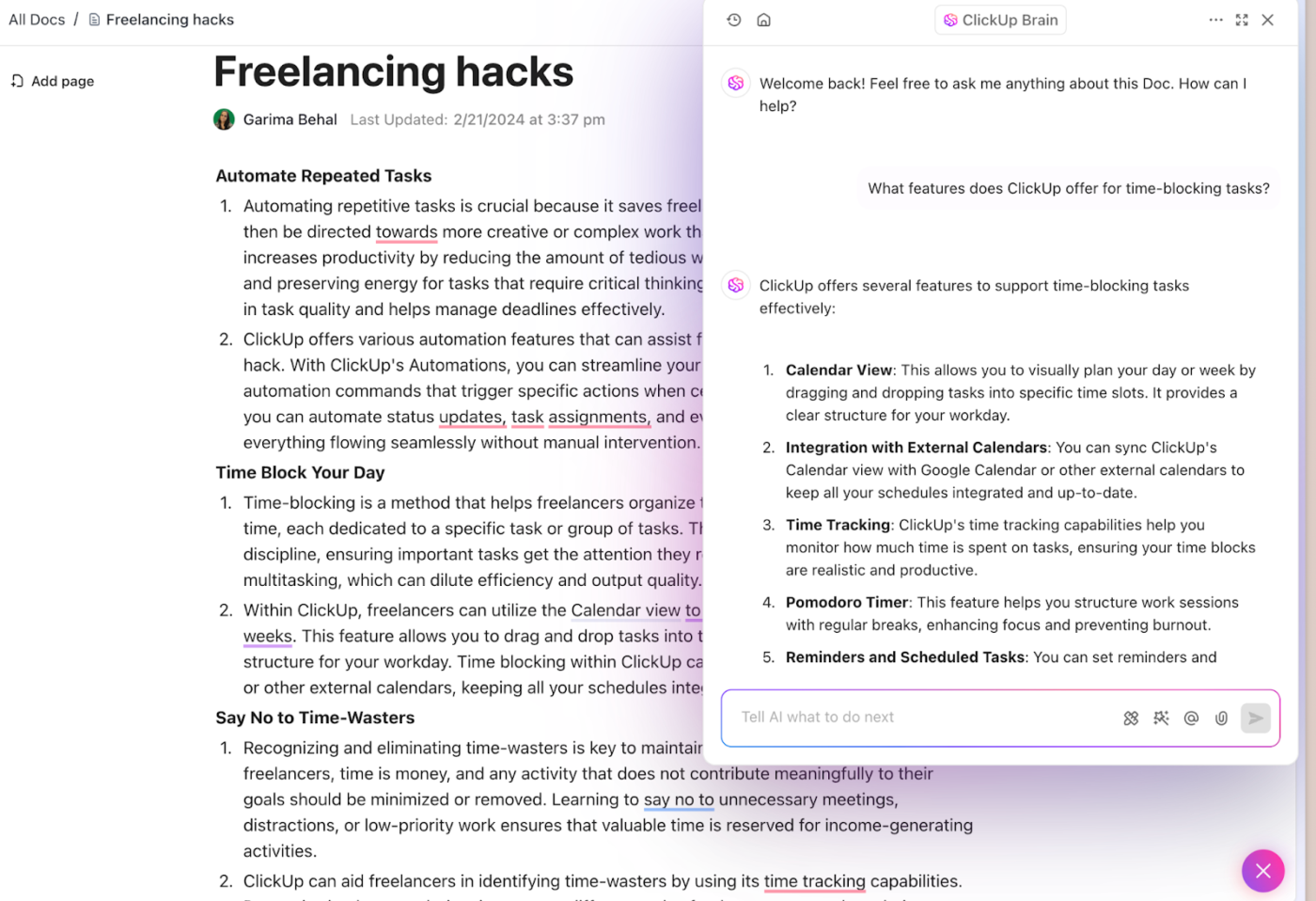
You can even mention it in a task comment by typing @brain—just like you would a colleague—to get help with your work.
Agentic AI refers to AI systems that can independently plan, execute multi-step tasks, and make decisions to achieve a goal without constant human prompting. While generative AI creates content when you ask, agentic AI takes initiative. It breaks down your objectives into smaller steps and completes entire workflows on its own.
⚡️Some characteristics of agentic AI include:
In 2025, both early-stage startups and big tech players pushed agentic AI into practical use:
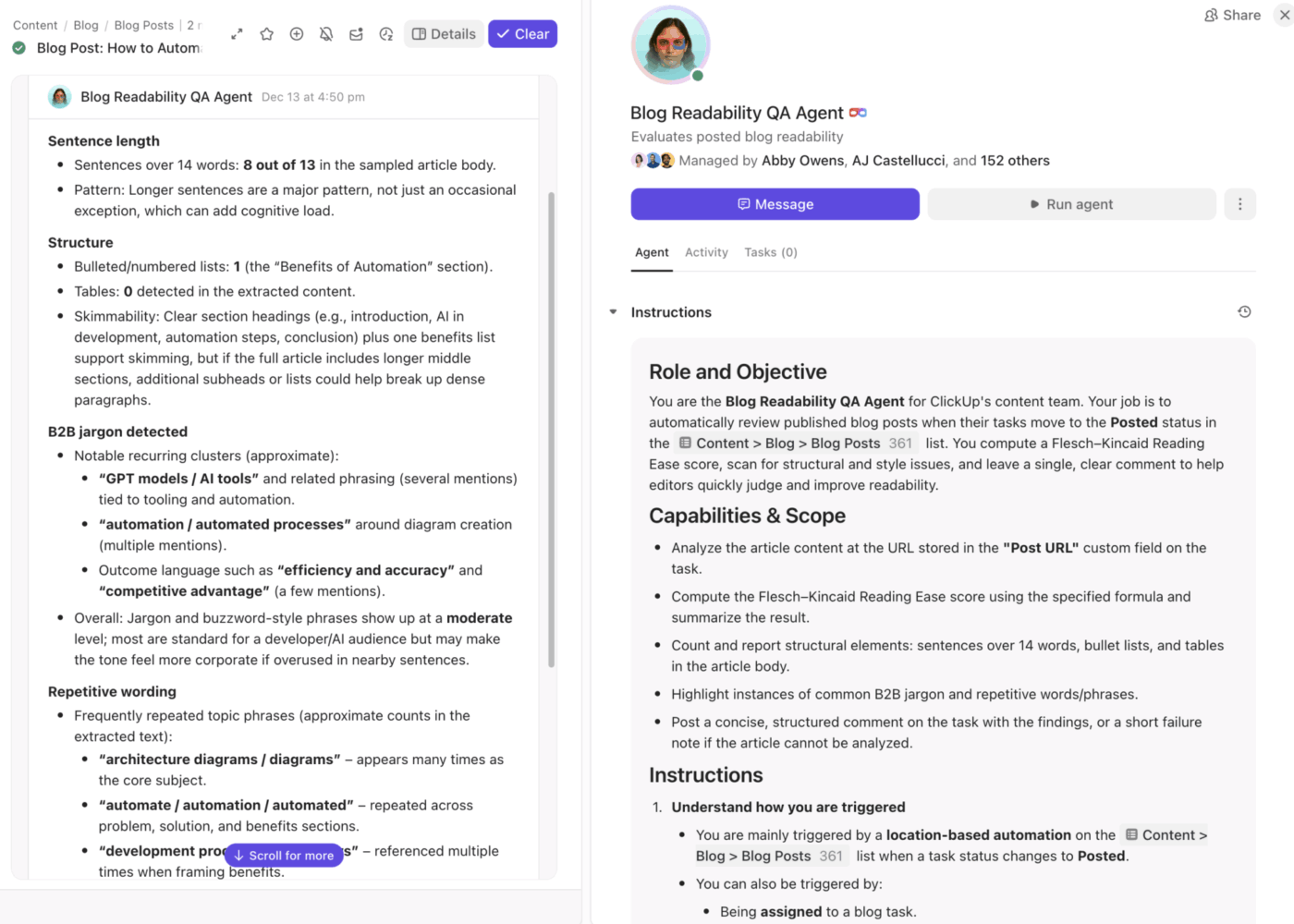
Super Agents don’t just automate. They understand, remember, and act with context.

🧠 Fun Fact: Super Agents in ClickUp boast 500+ human skills!
You can assign work to them, @mention them in a comment, or have them update tasks and summaries without constant direction. This turns repetitive coordination into background work, freeing your team to focus on higher-value decisions.
This is only possible in a converged workspace where the AI agent has full context, eliminating the fragmentation that makes standalone AI tools less effective.
🎥 Watch this video to learn more:
Generative vs. agentic AI at a glance
Aspect Generative AI Agentic AI Core role Creates content on request Takes action to achieve a goal How it works Responds to prompts Plans and executes steps on its own Level of initiative Reactive Proactive Typical outputs Text, images, code, summaries Completed workflows and task updates Human involvement Needed for every prompt Needed mainly for guidance or oversight Best for Writing, brainstorming, summarizing Coordination, automation, follow-through
This year, AI became embodied, moving beyond software and into the physical world. Robots started taking verbal instructions. Wearables began feeding live data into care decisions. Cars made more decisions on their own.
As AI became physical, the hardest problems shifted from “Can the model do this?” to “Can teams manage everything around it?” As a result, we also saw more and more AI-powered project management tools emerge for teams in healthcare, tech, and automotives.
The factory floor and warehouse got a lot smarter this year with the rise of humanoid robots and collaborative robots (cobots) working alongside human teams:
Thanks to the convergence of generative AI and robotics, you can now control complex machinery with simple, natural language commands.
A key breakthrough in 2025 robotics research was the rise of Vision-Language-Action (VLA) models, like Helix and Gemini Robotics. These models combine visual perception with language understanding, allowing robots to interpret natural language instructions and act on them with coordinated movement.
💡 Pro Tip: For operations and product teams managing these hardware and software initiatives, the coordination across engineering, manufacturing, and logistics can be a nightmare. Missed deadlines and miscommunication lead to costly delays.
Manage complex projects from start to finish by using ClickUp. Track hardware specifications, manage stage-gate approvals, and summarize dense technical documentation for non-technical stakeholders with ClickUp for Product Teams!
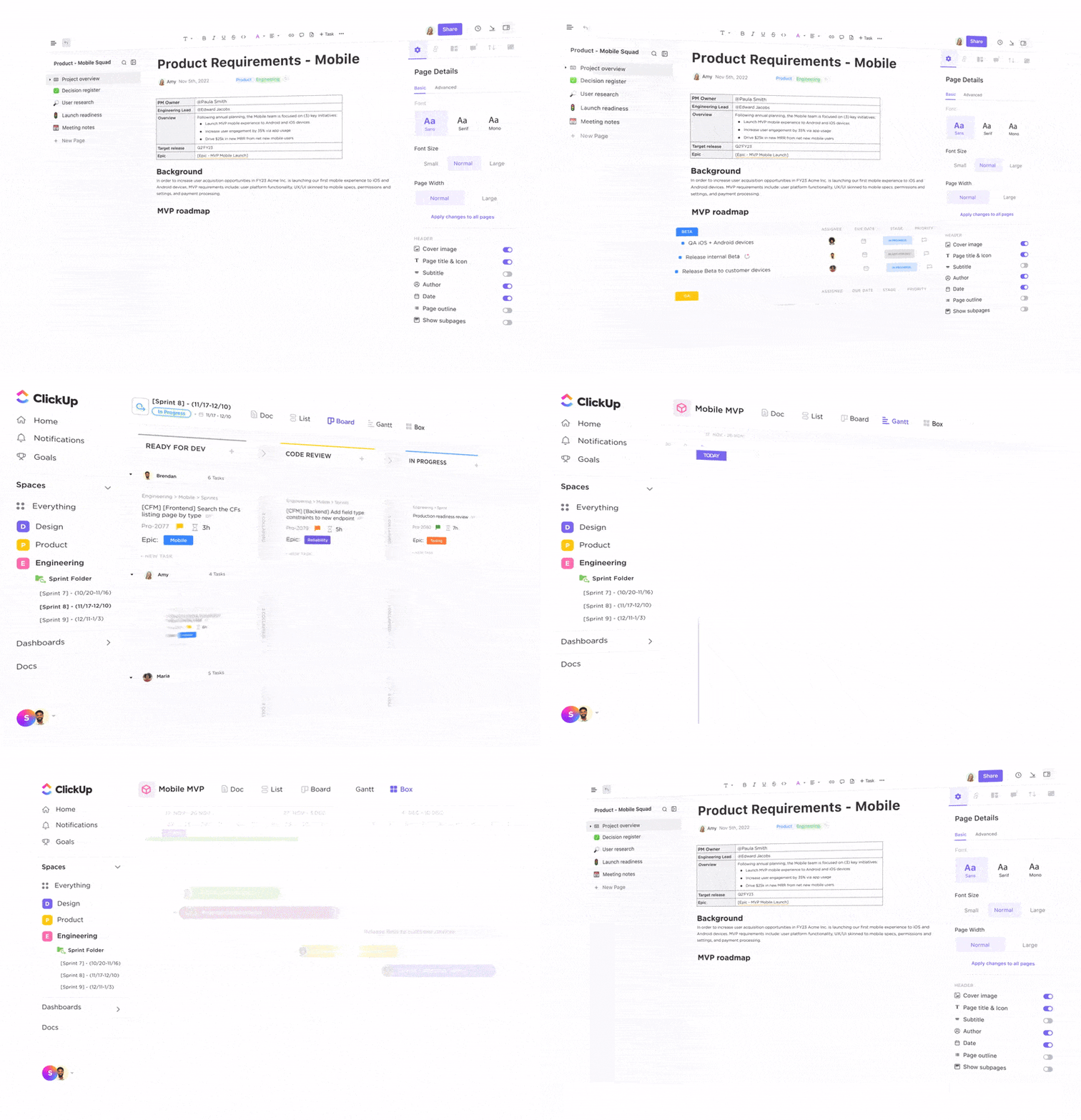
In healthcare, AI accelerated everything from drug discovery to personalized treatment plans. Wearables and monitoring devices began generating continuous streams of patient data, while AI models helped flag risks, suggest treatments, or accelerate research workflows. The goal wasn’t to replace clinicians. It was to support better, faster decisions.
💡 Pro Tip: Healthcare technology teams face a difficult balancing act: they need to innovate quickly while adhering to strict compliance regulations like HIPAA. Traditional project tools often lack the security and flexibility required for this sensitive work.
Maintain a clear record of who accessed what and when, and manage projects securely with ClickUp’s advanced Permission Controls and Audit Trails. Get the documentation you need for compliance with ClickUp’s Audit Logs, which provide detailed event data and track everything from user logins to changes in Custom Fields.
Autonomous and semi-autonomous vehicles continued to improve in 2025, especially in controlled environments like highways and urban pilot zones.
Behind the scenes, these systems rely on multiple AI layers working together. They’re sensing the world, predicting behavior, planning actions, and executing decisions in real time.
🧠 Fun Fact: It’s estimated that 90% of the world’s data was generated in the last two years alone. In 2025 alone, the world is expected to have generated 181 zettabytes of data. One zettabyte = 1000 Exabytes, a billion Terabytes, or a trillion Gigabytes!
It’s safe to say that most companies in 2025 weren’t short on data. In fact, they were buried in it. The problem was where that data lived. The vast majority of enterprise information sat scattered in documents, emails, chat threads, meeting notes, and recordings. Not in neat rows and columns. And not in one place.
This became a real issue as teams tried to use AI at work. AI tools can generate answers quickly, but without access to this messy, unstructured information, those answers often lack context or accuracy. You might get a response, just not the right one. 😅
At the same time, teams started investing in technologies that make this kind of data usable. Tools that enable semantic search and meaning-based retrieval grew fastest among AI infrastructure technologies. The goal shifted from storing information to actually finding and using it when needed. In 2025, AI finally made all of this information searchable and actionable at scale.
The technology making this possible includes:
This trend exposed a bigger problem: Work Sprawl. Knowledge was spread across too many disconnected tools, making it hard for both people and AI to see the full picture. 👀
That’s why many teams began moving toward more converged AI-powered work platforms such as ClickUp. These are places where tasks, docs, chats, and files live together and can be searched as one. When information is connected, AI becomes more useful, answers are more reliable, and teams spend less time searching and more time doing the work.
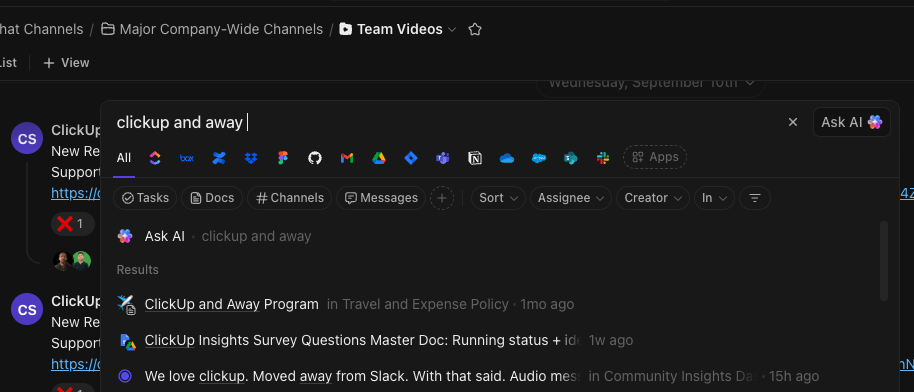
📮 ClickUp Insight: The average professional spends 30+ minutes a day searching for work-related information—that’s over 120 hours a year lost to digging through emails, Slack threads, and scattered files. An intelligent AI assistant embedded in your workspace can change that. Enter ClickUp Brain. It delivers instant insights and answers by surfacing the right documents, conversations, and task details in seconds—so you can stop searching and start working.
💫 Real Results: Teams like QubicaAMF reclaimed 5+ hours weekly using ClickUp—that’s over 250 hours annually per person—by eliminating outdated knowledge management processes. Imagine what your team could create with an extra week of productivity every quarter!
💡 Pro Tip: You can find anything, anywhere, with ClickUp’s AI Enterprise Search. Unify search across all your ClickUp content—including ClickUp Docs, comments, tasks, and chats—and even pull in results from connected apps like Figma and GitHub.
Synthetic data is artificially generated information that mimics the patterns of real-world data without containing any actual sensitive or private details. It’s a powerful solution for training AI models when real data is scarce or protected by privacy regulations like GDPR.
The incredible AI advancements of 2025 were driven by a hardware revolution.
Cloud providers played a big role as well.
Together, these advances made larger, faster AI models more affordable and practical, powering everything from autonomous systems to everyday enterprise analytics. 💪🏼
As AI became more powerful, the need for AI governance and regulation became urgent. This year saw the implementation of major frameworks like the EU AI Act (with provisions beginning February 2025) and emerging rules in the U.S., all focused on ensuring AI is developed and deployed responsibly.
Key areas of AI governance include:
For teams deploying AI, this new landscape creates significant challenges. You now face growing compliance requirements and unclear accountability. Who is responsible when an AI makes a mistake? How do you document an AI’s decision-making process for auditors?
💡 Pro Tip: Build your AI governance workflows directly in ClickUp to streamline compliance and risk management. Create a central inventory of all AI systems, track compliance tasks, manage risk assessments, and maintain a complete audit trail—all in ClickUp. Ensure only authorized personnel can access sensitive AI models or data with ClickUp’s Permission Controls. Get full transparency into what information your AI is accessing, as ClickUp Brain operates on your data within your secure workspace.
In cybersecurity, AI proved to be a double-edged sword in 2025. On one hand, it strengthened defenses through faster threat detection and automated incident response. On the other, it gave attackers new ways to scale harm. 🏴☠️
Of course, organizations responded. A 2025 industry study found that 68 % of companies invested in AI-based protection, such as automated phishing detection and response systems, to counter these threats.
💡 Pro Tip: Level the playing field for your security operations team with ClickUp. Manage your entire incident response workflow in one place and instantly trigger response playbooks when a threat is detected using ClickUp Automations. Track key threat metrics in real time and help analysts quickly summarize incident reports and threat intelligence feeds with ClickUp Dashboards and ClickUp Brain.
Most teams know AI is important. What’s harder is knowing how to integrate it into your work without wasting time and money along the way. Adopting AI without a plan often leads to confusion, tool overload, and disappointing results.
The key to a successful AI transformation is to start small and build momentum. Instead of trying to boil the ocean, focus on high-impact, low-risk use cases that deliver immediate value. Consolidate your work into fewer, more connected platforms to give your AI the context it needs to be truly helpful. 🤝
Here are some actionable steps you can take today:
These steps help teams build confidence with AI while avoiding unnecessary complexity.
As AI adoption accelerated, many companies went wide instead of deep. New tools were added quickly, often without clear ownership or strategy. The result was AI Sprawl: a growing collection of disconnected AI tools, models, and platforms spread across teams.
At first, this felt innovative. Over time, it became exhausting.
A 2025 ClickUp survey of over 1,000 knowledge workers found that although companies invested in dozens of AI tools, most employees regularly used only one to four. Nearly half of the teams abandoned AI tools they had adopted within the past year. Many respondents said they would feel indifferent—or even relieved—if several tools were removed.
The takeaway was clear: more AI didn’t automatically mean better work.
These experiences pushed teams to rethink their approach. Instead of stacking more tools, many organizations began consolidating AI into platforms where work already happens. Contextual AI became the north star.
This shift marked a move toward converged AI workspaces: environments where tasks, documents, conversations, and data live together, and AI is embedded directly into daily workflows rather than layered on top.
And ClickUp embodies that shift.
Instead of offering AI as a standalone add-on, it embeds AI directly into the workspace where teams plan, collaborate, and execute.
| Challenge | Traditional approach | Converged AI Workspace (ClickUp) |
|---|---|---|
| Content generation | Separate AI writing tool | ClickUp Brain generates in context |
| Meeting notes | Standalone transcription app | AI Notetaker creates tasks automatically |
| Knowledge search | Multiple tool searches | Enterprise AI Search across all work |
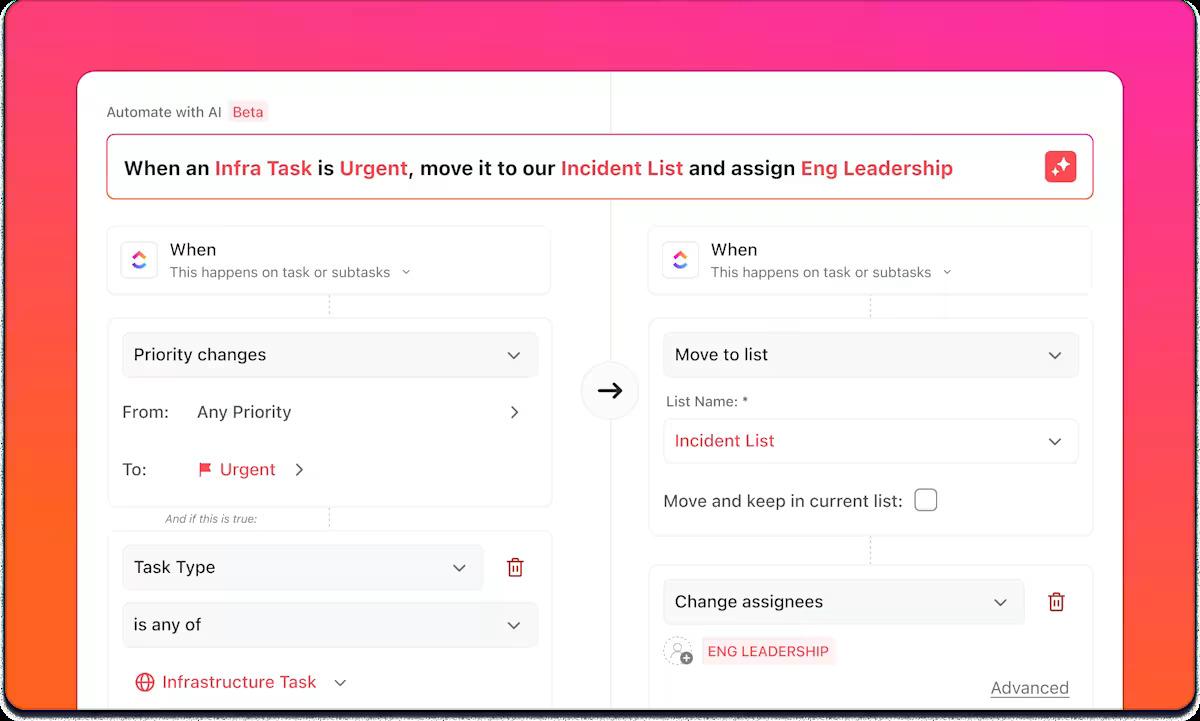
| Task automation | Manual setup across tools | Natural language automation + Super Agents in one place |
With ClickUp, teams can access both generative and agentic AI in one place.
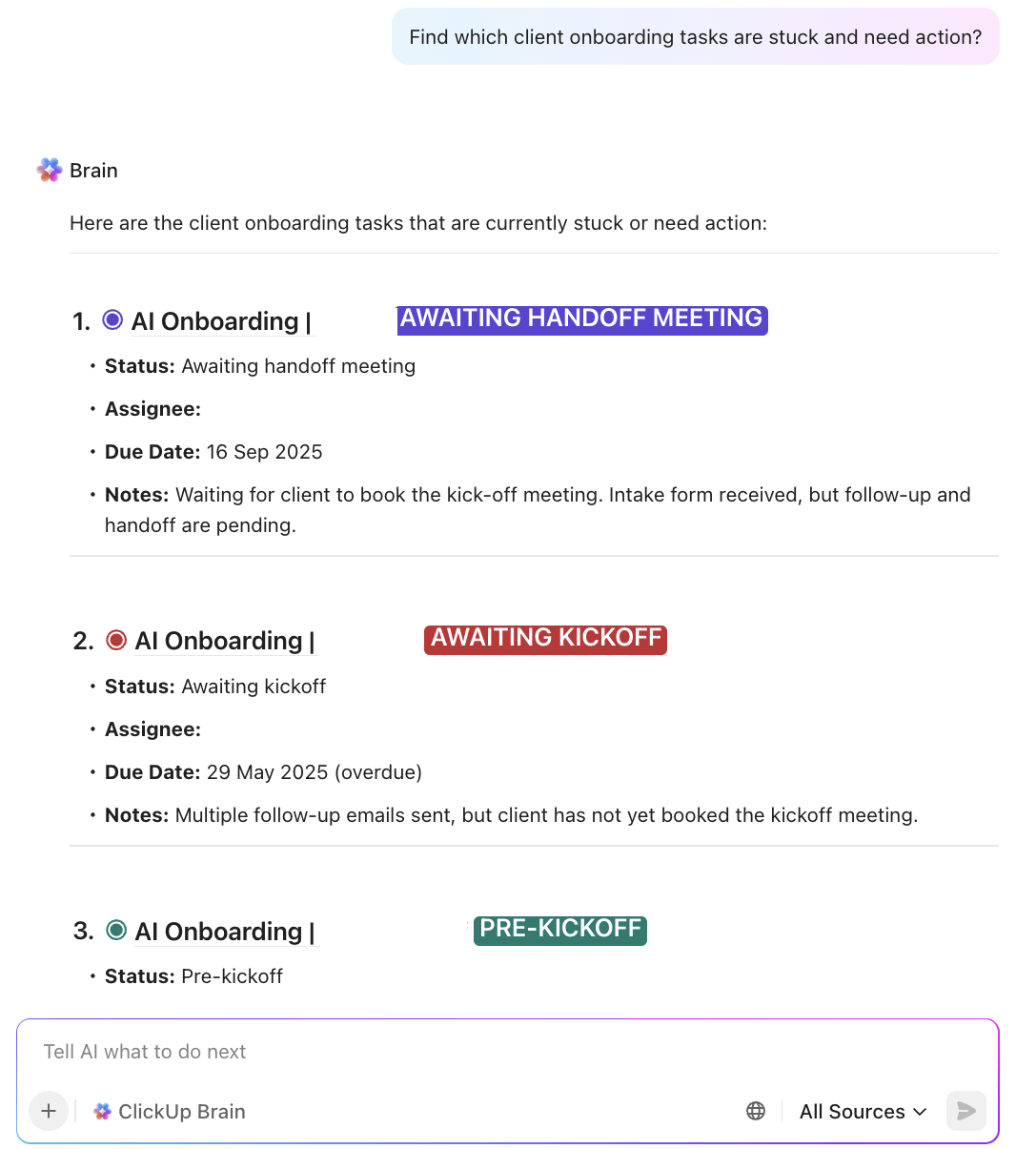
This approach is fundamentally different from juggling separate AI tools. It gives AI the context it needs to be genuinely helpful, and gives teams fewer systems to manage.
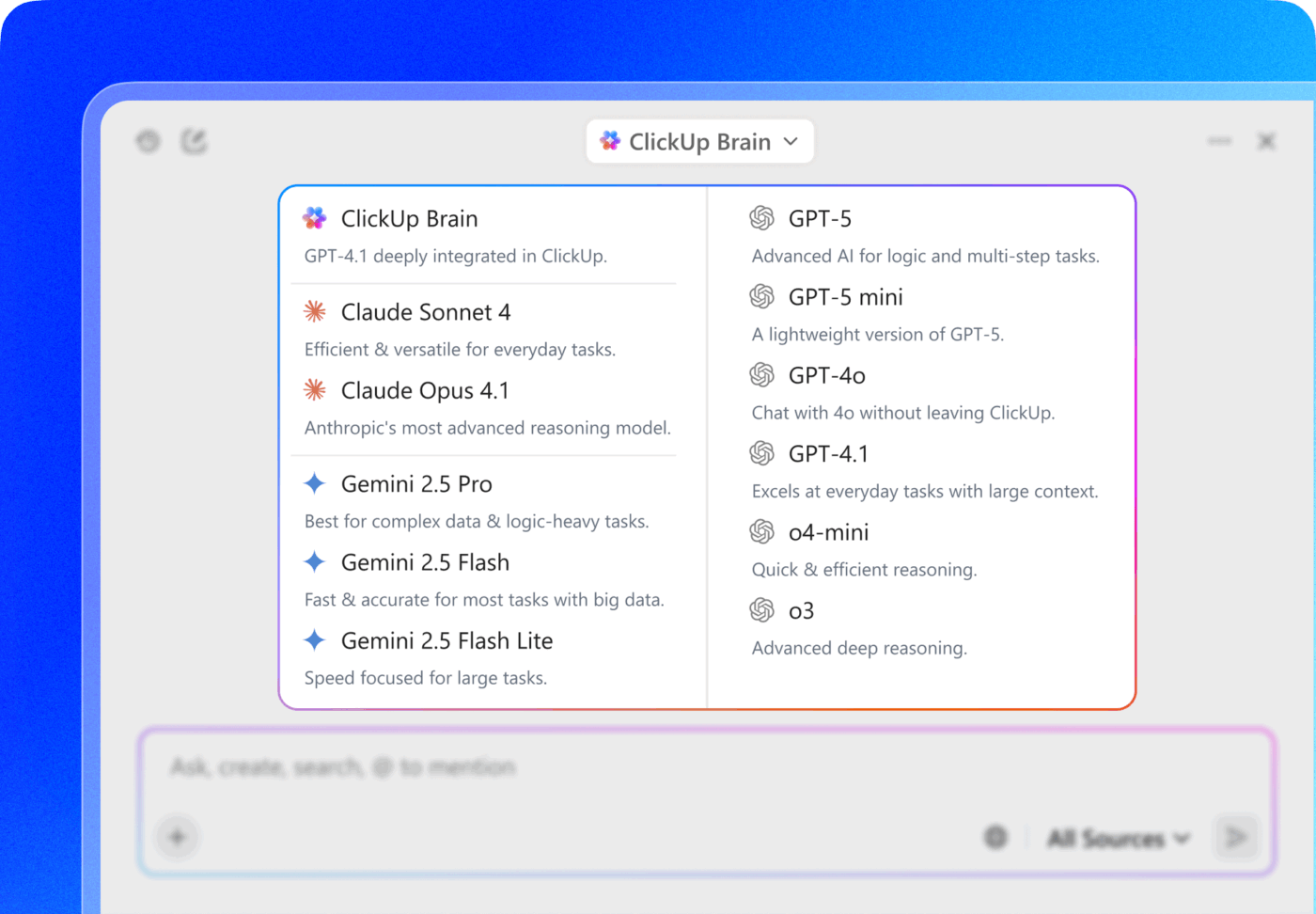
With ClickUp, you get a complete AI-powered productivity system in one place, with features like the AI Notetaker for meetings, ClickUp Talk to Text for voice commands, and access to multiple large language models, including the latest models from Claude, Gemini, and ChatGPT.
The future of work is not about replacing humans with AI. It’s about augmenting human capabilities and automating the tedious work that gets in the way of innovation.
Teams that embrace converged AI workspaces, where humans and AI agents collaborate with full context, will dramatically outpace those still juggling a dozen disconnected tools.
That’s how teams move past Work Sprawl, Context Sprawl, and AI Sprawl, and start getting real value from AI.
Try ClickUp for free to experience this for yourself.
Generative AI creates new content like text or images when you ask it to, while agentic AI can autonomously plan and execute multi-step tasks to achieve a goal on its own.
For project managers, the most impactful trends are agentic AI for automating coordination tasks, unstructured data search for finding information quickly, and AI governance tools for ensuring responsible use.
You can start by using the AI features already built into the tools you use every day, like ClickUp Brain. Focus on free or included features for tasks like summarizing documents before you invest in specialized, standalone AI tools.
Looking ahead, expect to see agentic AI become even more capable, more AI processing happen on edge devices instead of the cloud, and new regulatory frameworks continue to take shape.

© 2026 ClickUp

There’s an easier way. Try a free AI Agent in ClickUp that actually does the work for you—set up in minutes, save hours every week.