Sorry, there were no results found for “”
Sorry, there were no results found for “”
Sorry, there were no results found for “”
Ever kicked off a project only to realize halfway through that expectations aren’t aligned, deadlines are slipping, and the budget is spiraling out of control? 😵💫
Studies show that only 29% of projects are completed successfully, while the rest suffer from scope creep, miscommunication, or lack of clear objectives.
The solution? A well-defined project scope. 🎯
It sets boundaries, aligns teams, and ensures your project stays on time, within budget, and meets expectations. Without it, you’re flying blind!
This guide will walk you through what a project scope is, why it’s essential, and how to write one effectively (without the headache!). 💪
Build a clear, client-ready scope of work in minutes with our free Scope of Work Builder.
A project scope is defined as all the work required to complete a project successfully. It outlines specific goals, deliverables, tasks, costs, and deadlines. This clear framework ensures project managers know what’s expected, keeping the project on track and within budget.
📌 While project scope defines ‘what needs to be done,’ scope management helps project managers determine ‘how it will be controlled.’
Here’s a side-by-side comparison:
| Aspect | Project Scope 🎯 | Scope Management 🛠️ |
| Definition | A detailed outline of work and project deliverables | The process of defining, controlling, and monitoring scope |
| Purpose | Sets project boundaries and expectations | Ensures the project stays on course |
| Focus | What needs to be done | How changes and challenges are handled |
| Outcome | Clear project objectives | Controlled changes and minimized scope creep |
💡 In short, defining project scope is just the first step. Managing it properly is what ensures success!
Scope creep in project management is a phenomenon that occurs when changes or additions to the original objectives of a project are made, either with or without the approval of key stakeholders and project managers.
It can be the stuff of nightmares for project managers, finance and accounts teams, and stakeholders alike.
Even with a well-defined scope, challenges can arise. Here are some common pitfalls that project managers often face:
🔍 Did You Know? 📊 A study by PMI found that poor project scope management is a leading cause of project failure, affecting 35% of projects!
Here are the top benefits of defining your project scope clearly and from the get-go ⬇️
Let’s break down how to define your project scope document in the right way to ensure smooth execution and successful delivery 👇
Clear objectives and goals are the foundation of any well-defined project scope.
Project objectives are specific, measurable outcomes that your project aims to achieve. They define what success looks like and ensure every step you take is purposeful. On the other hand, project goals are broader aspirations that describe the project’s overall mission.
While objectives are detailed and specific, goals give a high-level idea of the desired result.
For example, if you are launching an e-commerce website,
To ensure your objectives and goals are rock solid, follow these best practices:
When done right, this ensures alignment, efficiency, and success throughout your project life cycle.
Once you’ve set clear objectives and goals, determine what you need to achieve them. This is where creating a resource plan becomes crucial.
A resource plan outlines all the resources—people, equipment, materials, and budget—required to complete your project. It details:
Here’s how to create a resource management plan:
To make resource planning even more efficient, you can use work breakdown structure templates to help break projects down into manageable phases.
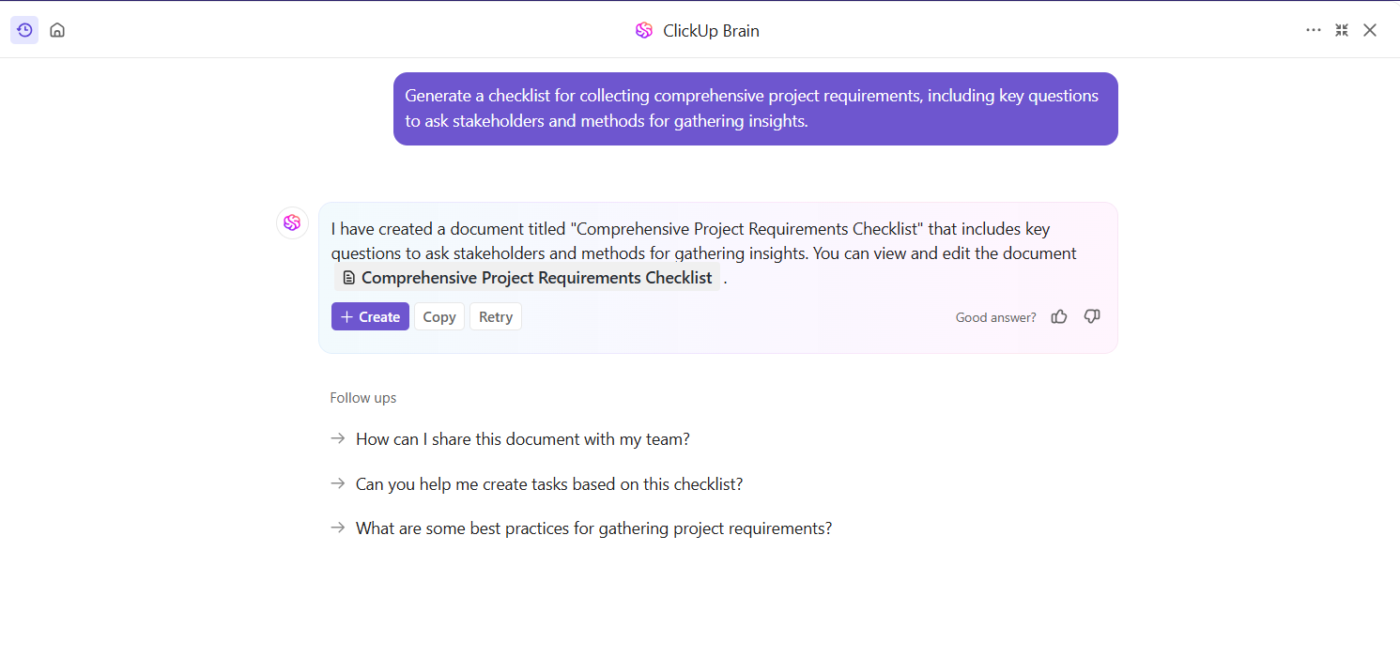
70% of project failures are due to poor requirement gathering. Collecting comprehensive project requirements ensures the final deliverable aligns with stakeholder expectations and project goals. The clearer the picture, the smoother the process!
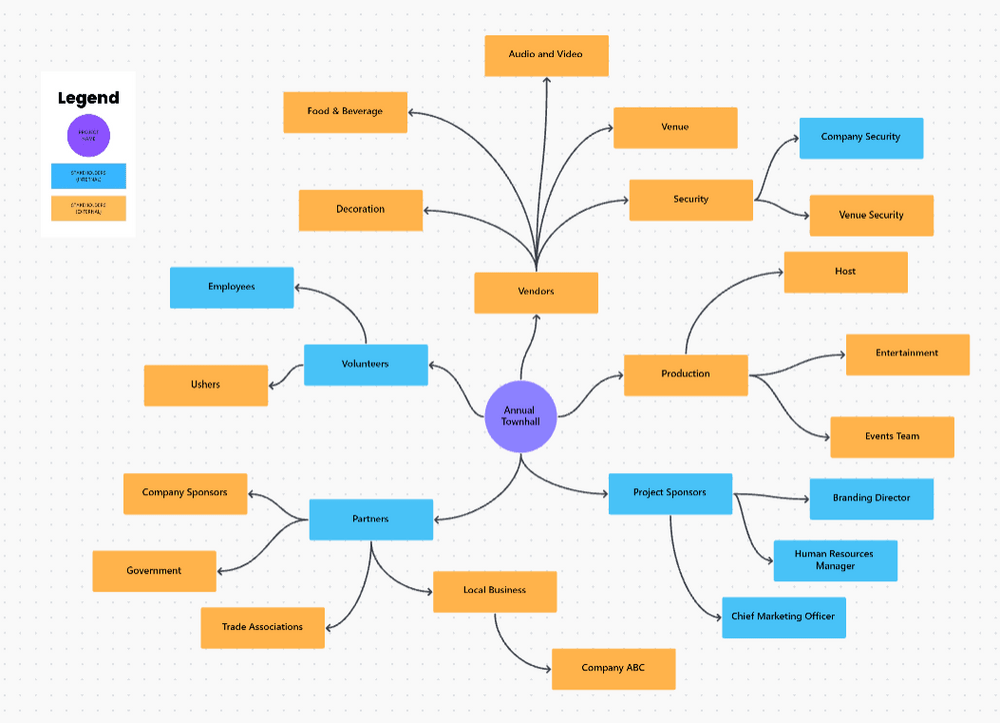
To collect additional project requirements:
💡 Pro Tip: Use the “MOSCOW method” (Must have, Should have, Could have, Won’t have) to prioritize requirements with stakeholders before project kickoff.
ClickUp Brain instantly summarizes stakeholder inputs, highlights missing details, and organizes insights in your project scope document for better decision-making.
Now it’s time to create a project scope statement that defines the project’s objectives, project deliverables, boundaries, and key milestones. It’s a reference point for stakeholders and project managers, helping manage expectations and guide decision-making.
So, what are the key elements of a project scope statement?
💡 Pro Tip: When defining your project scope, create a visual ‘Scope Boundary Map’ using a simple two-column format that outlines what’s ‘In Scope’ and ‘Out of Scope’ for each deliverable.
If you need a project scope example, consider a website redesign where ‘In Scope’ includes UI updates and mobile responsiveness, while ‘Out of Scope’ might exclude backend system changes.
62% of successful projects have strong stakeholder involvement.
Start by keeping stakeholders informed about the project’s objectives, scope, and expected outcomes right from project inception. This helps build trust and confidence in the project. However, this doesn’t mean bombarding them with endless reports—regular updates, short meetings, and clear, concise documentation go a long way toward keeping everyone aligned.
Next, secure stakeholder buy-in by clearly demonstrating the project’s value. Show how it benefits the company, solves a problem, or meets a business goal. Stakeholders who see a direct positive impact are more likely to support it.
If there are concerns, be open to feedback and willing to adjust the project’s scope where necessary. When stakeholders feel heard and included, approval becomes a natural step rather than a hurdle.
In project management, change is inevitable. Projects must adapt, whether it’s a shift in client requirements, market conditions, or unforeseen challenges. But without a structured approach, these changes can lead to confusion, delays, and budget overruns.
That’s why a change control process is essential.
It’s a formal procedure for identifying, evaluating, and managing changes in a project’s scope, timeline, or resources. It ensures every proposed modification is thoroughly assessed and approved before implementation, maintaining the project’s integrity and alignment with its original objectives.
56% of project failures are due to poor communication.
When done right, sharing and communicating the scope statement ensures all relevant stakeholders (project team members, clients, and management) are aligned and working towards the same goals.
Some of the best ways to share and communicate the project scope statement include:
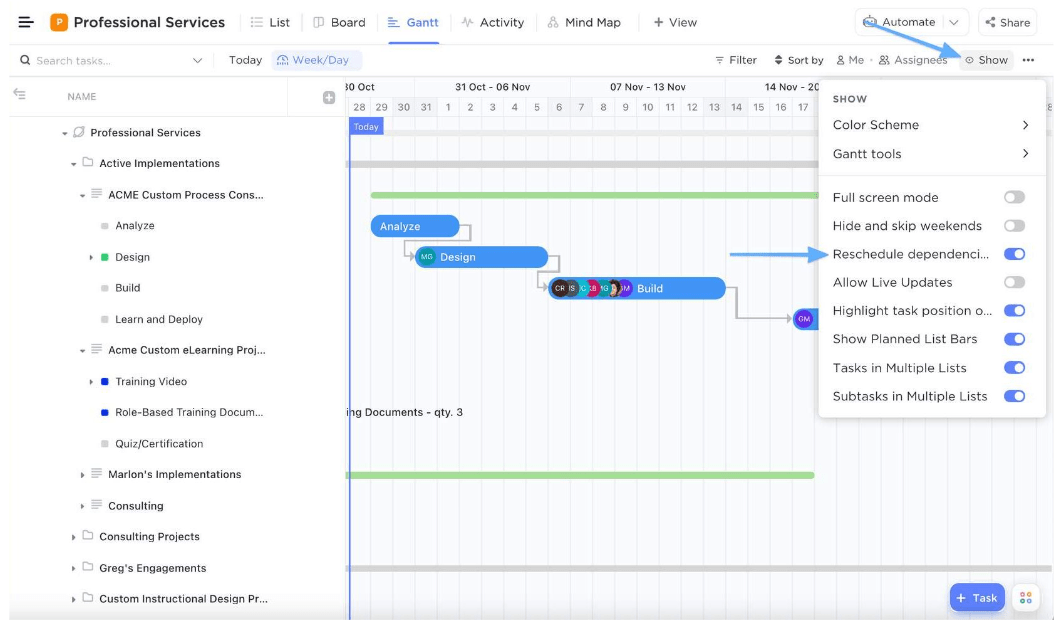
Regularly check your project scope statement. To effectively monitor it, here’s what you need to do:
Without a clear scope, priorities shift, and teams end up working on things that were never planned. This is when you need a solution that helps you define, track, and manage project scope seamlessly to keep everything on course.
Enter ClickUp, the everything app for work. From project scope templates to built-in collaboration, automation, and knowledge management—all powered by AI—ClickUp gives you complete control over your project’s boundaries.
Let’s see how:
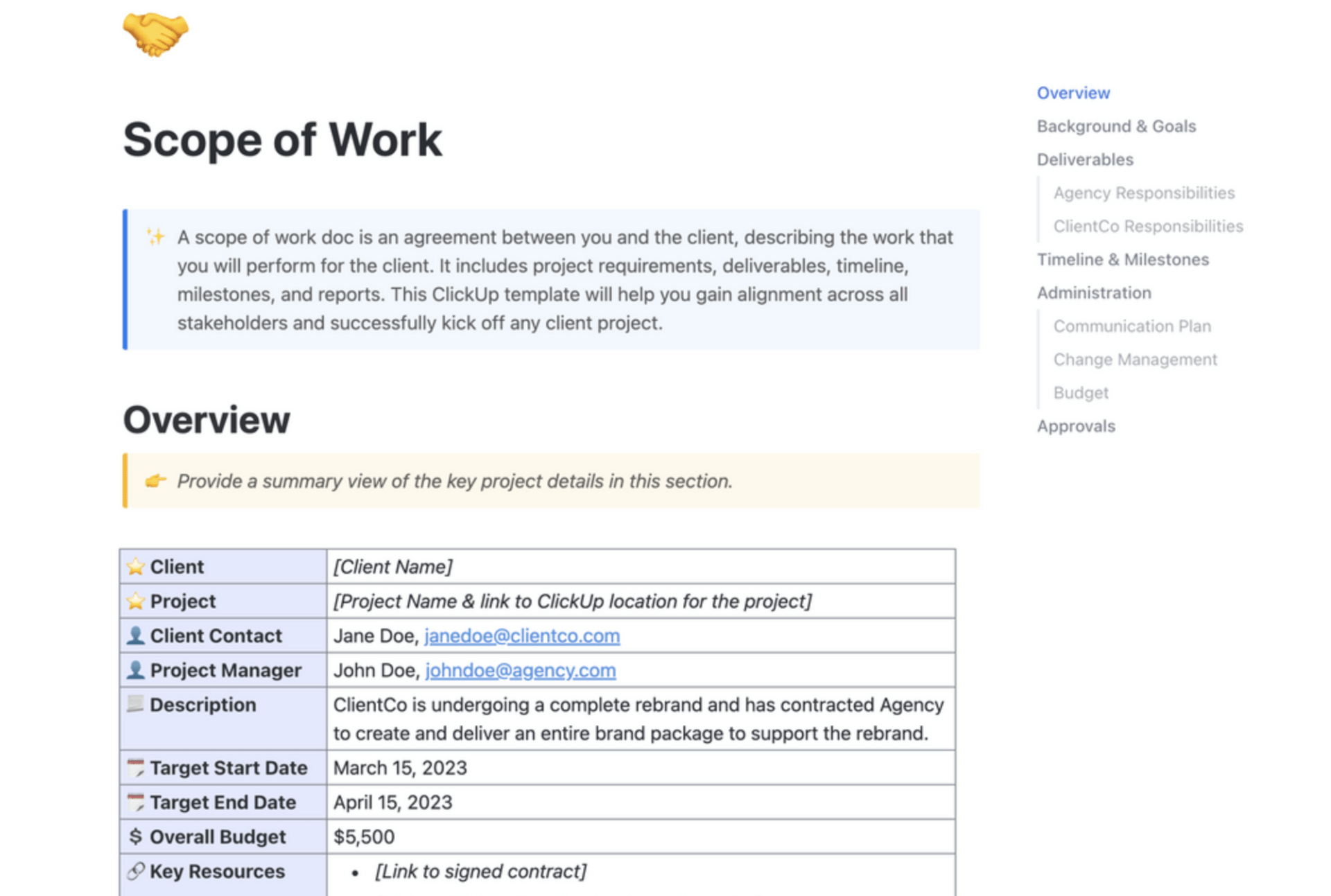
A Scope of Work (SOW) Template is essential for defining project objectives, deliverables, and timelines. Without it, team members may not fully understand their project roles, leading to misalignment and wasted effort.
ClickUp’s Scope of Work Template provides a structured framework to ensure clarity and efficiency from day one.
The highlights of this project scope template include:
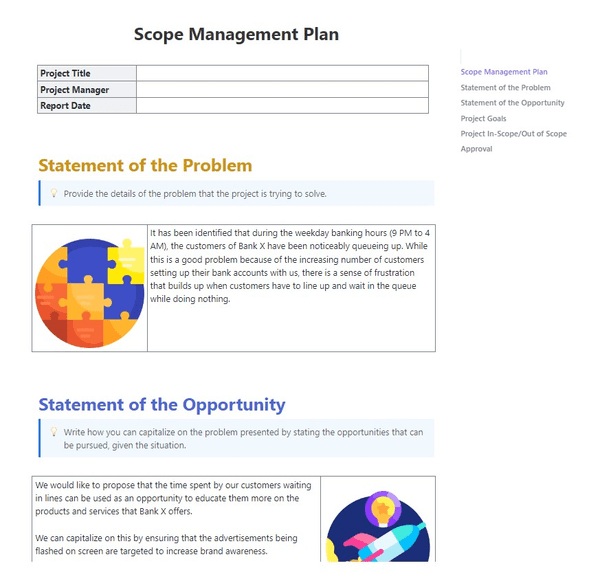
Even better, ClickUp’s Scope Management Plan Template provides an easy way to define, control, and monitor your project’s scope while keeping everything in one place.
In a nutshell,
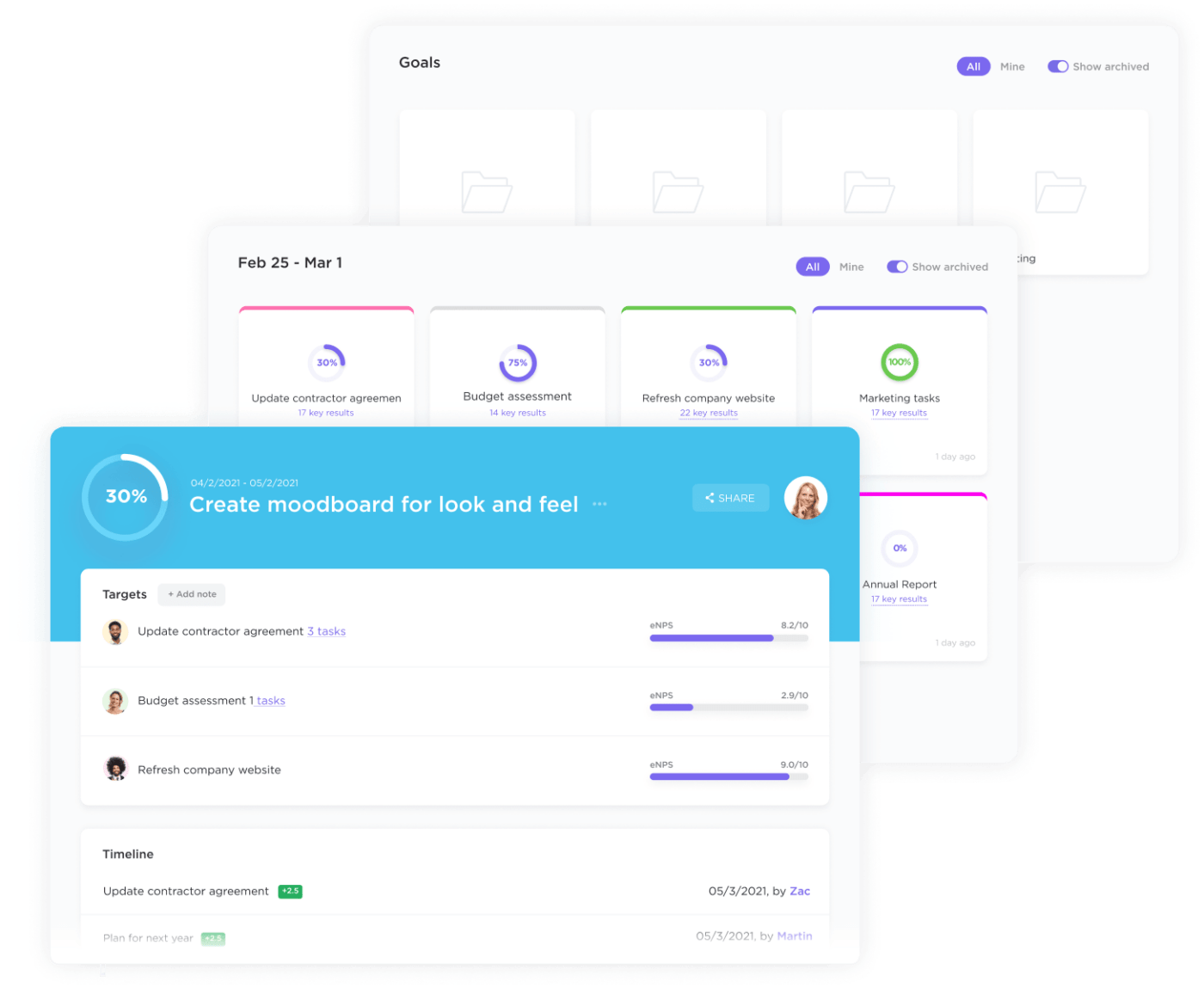
ClickUp provides powerful features that help teams define, track, and monitor scope effectively in one place.
Without proper task management software, teammates may not know what’s included in the project scope and what’s not. ClickUp’s Task Management feature ensures:
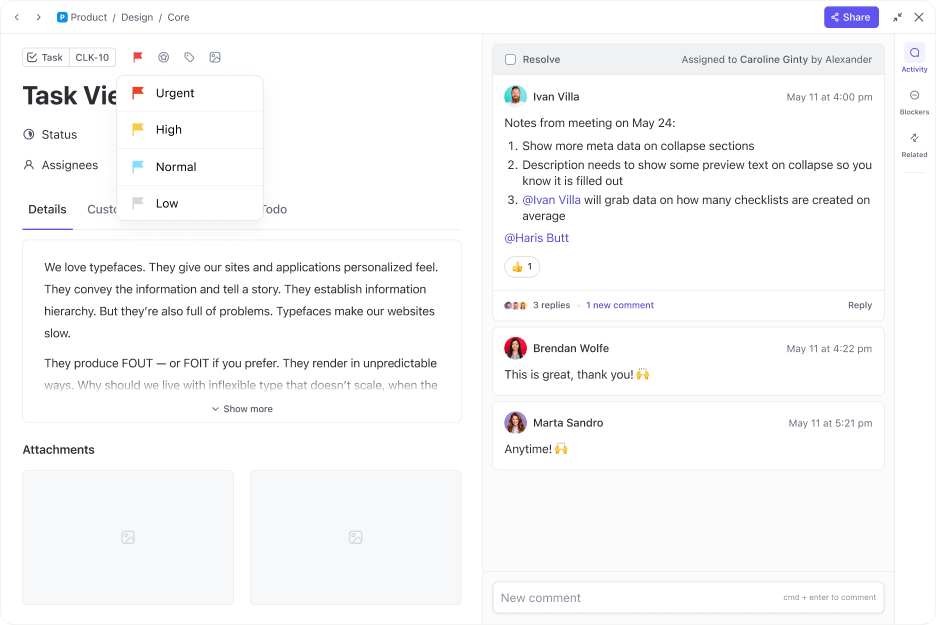
💡 Example: If you’re developing a marketing project website, ClickUp helps assign tasks to designers, developers, and testers, ensuring everyone knows their exact role in the scope.
📮ClickUp Insight: 92% of knowledge workers risk losing important decisions scattered across chat, email, and spreadsheets.
Without a unified system for capturing and tracking decisions, critical business insights get lost in the digital noise. With ClickUp’s Task Management capabilities, you never have to worry about this. Create tasks from chat, task comments, docs, and emails with a single click!
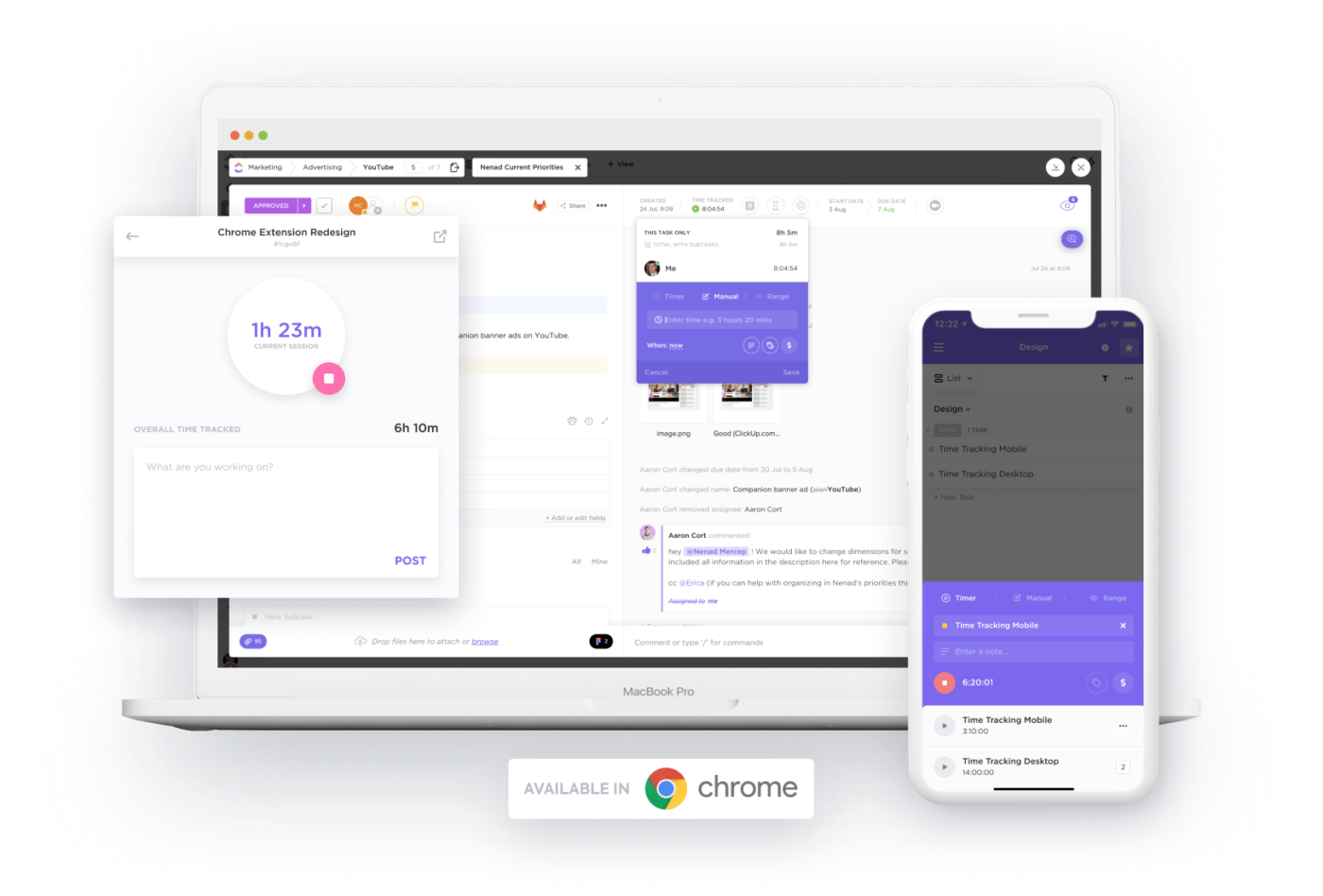
Keeping a project within scope and budget requires efficient resource planning. ClickUp Time Tracking allows teams to:
ClickUp Custom Dashboards provide real-time insights into project scope, helping teams:
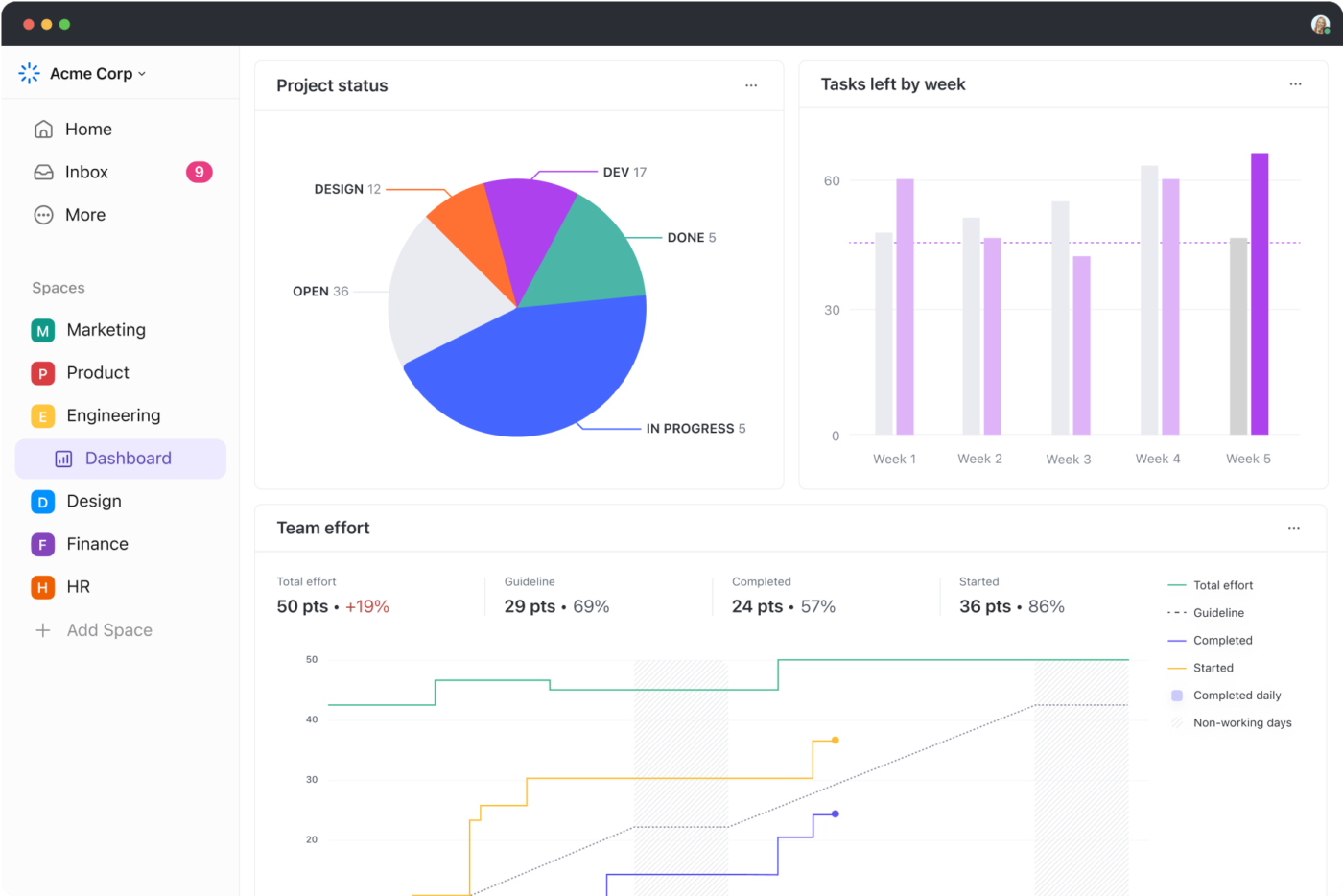
💡 Example: If a project expands beyond its initial scope, a Scope Creep Dashboard can highlight areas where work has exceeded original agreements.
Looking at the most successful project management examples, you’ll see that a well-managed scope leads to better outcomes, fewer delays, and smoother execution.
Here are some tips to help you manage project scope effectively:
Agile methodologies, especially scrum project management, are great for managing changes flexibly. For example, practices like daily stand-ups and retrospectives encourage constant communication and quick feedback.
Break the project into small, manageable two to four-week cycles where teams focus on specific project deliverables.
ClickUp has everything you need to manage sprints, track tasks, and keep your project management team on the same page.
With the right tools and best practices, you can keep your project on track, avoid scope creep, and confidently meet deadlines.
ClickUp makes it easier by providing ready-to-use templates, scrum-friendly workflows, and real-time tracking right under one roof. Whether you’re managing tasks, updating project scope statements, or handling project planning, ClickUp keeps everything organized and clear. No more miscommunication or last-minute surprises!
So, why juggle multiple tools when ClickUp has it all?
Sign up for ClickUp today! 🙌

Manasi Nair
Max 15min read

Praburam Srinivasan
Max 16min read

Sudarshan Somanathan
Max 23min read

© 2026 ClickUp