Sorry, there were no results found for “”
Sorry, there were no results found for “”
Sorry, there were no results found for “”
Are you struggling to deliver projects on time and within budget? You’re not alone.
According to McKinsey, 45% of large IT projects exceed their budgets, 7% miss deadlines, and 56% fail to deliver the expected value.
What’s the missing piece? The project discovery phase — a foundational step many teams overlook. Skipping this step isn’t saving time; it’s inviting failure. Without it, teams dive into execution blind, unaware of user needs, project goals, or market challenges.
A well-executed and thorough discovery phase is really your roadmap to success. It lays the groundwork for smoother transitions, fewer surprises, and outcomes that exceed expectations.
In this blog, we’ll explore why the discovery phase is crucial and how to leverage it for your next project. Read on! 🚀
The discovery phase of a project is the critical first step in any project, where clarity, alignment, and strategy come together to create a solid foundation for success.
It’s the stage where the project’s vision is transformed into a clear, actionable plan, outlining goals, defining scope, and identifying key requirements. This phase ensures that all stakeholders are aligned on expectations, resources, business requirements, and timelines, setting the stage for a seamless execution process.
In this regard, a Proof of Concept (PoC) is essential for validating an idea’s feasibility before fully committing resources. It allows teams to test the viability of concepts in a controlled setting, identify potential risks, and build stakeholder confidence by providing evidence that the project can succeed.
Interesting Fact: Investing more time in discovery reduces project failure risks by 75%, leading to better outcomes. This thorough preparation helps identify potential issues early, aligns stakeholders on goals, and ensures the project is built on a strong foundation. 📈
📍 Example: When planning an e-commerce app, you’d assess customer needs, get user stories, list must-have features, and outline potential challenges like scalability. Skipping this phase risks unclear expectations and costly delays.
Among the many phases of project management, the discovery phase is critical for setting clear objectives, aligning stakeholders, and identifying potential risks early.
📍 Example: A SaaS company undergoing a discovery phase identifies that its target audience prefers mobile-first solutions. This insight helps prioritize features that cater to user needs, leading to a higher adoption rate post-launch. However, without clearly defined project boundaries, the development timeline can easily extend, delaying the launch.
Skipping the discovery phase may seem like a time-saver, but it often leads to costly mistakes that can jeopardize the success of your project. Here’s why ignoring this crucial step can have dire consequences:
➡️ Also Read: How to Optimize the Stage Gate Process
A successful discovery phase in software development hinges on involving the right participants. Their combined expertise ensures that the project starts off on the right foot, with clear direction and alignment.
🔎 Did You Know? In the mid-20th century, project management evolved rapidly with the introduction of key tools like PERT and CPM, revolutionizing how complex projects were managed. The Work Breakdown Structure (WBS) was also created, offering a structured way to tackle big projects.
Every successful software project starts with a well-defined roadmap. This phase ensures all stakeholders are aligned on the project’s scope, goals, and limitations, providing a solid foundation for smooth development.
Here’s a step-by-step breakdown:
Assemble a diverse team with the right mix of skills and perspectives to drive the process effectively.
Clarity in business goals sets the direction for the entire project. Without a clear vision of what you’re trying to achieve, even the best-laid plans can fail.
📍 Example: For a product launch, your goals should include thoroughly understanding your target audience, identifying their key pain points, and developing a competitive strategy that sets your product apart in the market. This ensures that your product not only meets the needs of your audience but also stands out in a crowded market, giving it a higher chance of success.
Knowledge is power when it comes to making informed decisions. To build a strong foundation for your project, focus on the following areas:
Put yourself in the customer’s shoes to ensure seamless experiences throughout their interaction with your product or service.
➡️ Also Read: Project Development Strategies: Step-by-Step Guide
Set clear criteria to measure the success of your project, incorporating both qualitative and quantitative metrics for a comprehensive evaluation. By defining these benchmarks early, you can track progress and make data-driven decisions that guide your project to success.
🔎 Did You Know? IBM found that fixing defects post-launch costs 15x more than addressing them during early project planning stages.
Turn ideas into visuals. Wireframes and prototypes make abstract concepts tangible. These tools help stakeholders and developers understand the product’s structure and flow.
This step minimizes the risk of pursuing unviable ideas, saving time and resources later on.
Recognizing potential risks early helps avoid major roadblocks later. This includes technical challenges, stakeholder misalignment, or market disruptions.
Bonus Tip: Wondering how to avoid scope creep?
Here are some strategies to follow:
Using tools during the discovery phase ensures better organization and decision-making.
Effective tools help prioritize tasks, track progress, and foster team collaboration, reducing miscommunication and inefficiencies.
💡 Pro Tip: Use ClickUp’s High-Level Project Plan Template to optimize the project discovery phase with powerful tools like its List, Kanban, and Timeline views, offering a comprehensive overview of tasks and deliverables. It will help you stay organized, align your team, and track progress efficiently from start to finish.
Properly executing the discovery phase ensures project goals are well-defined, realistic, and achievable. It lays the groundwork for seamless execution and successful project outcomes, and helps identify and eliminate potential roadblocks early.
Here are some best practices to optimize this crucial step:
Involve team members from diverse departments to create a holistic project foundation.
➡️ Also Read: Best Free Product Discovery Templates
AI tools simplify management, allowing your team to focus on innovation and strategy. Ensure to leverage AI to reduce manual tasks and enhance efficiency during the discovery phase.
Consistent communication boosts productivity and minimizes misunderstandings.
Organized data makes replicating successful projects and avoiding past mistakes easier, and properly archiving insights helps improve future discovery processes.
Your project discovery phase deserves precision, creativity, and efficiency. Prototyping and design tools bring your project’s vision to life. They allow you to visualize, test, and refine ideas quickly.
Project management and collaboration tools are indispensable for structuring the discovery phase effectively. They help you stay organized and foster teamwork.
Using these tools simplifies coordination, reduces miscommunication, and ensures every stakeholder remains engaged throughout the discovery process.
In this regard, ClickUp, the everything app for work, stands out as a dynamic solution for seamless team collaboration and project management. By centralizing all your projects, knowledge, tasks, and communications in one intuitive platform, it empowers teams to optimize workflows, save time, and maximize productivity.
Overall, with ClickUp’s project management solutions, you can optimize the discovery phase, enhance collaboration, and ensure successful project execution.
Here’s a snapshot of how it can optimize your discovery phase:
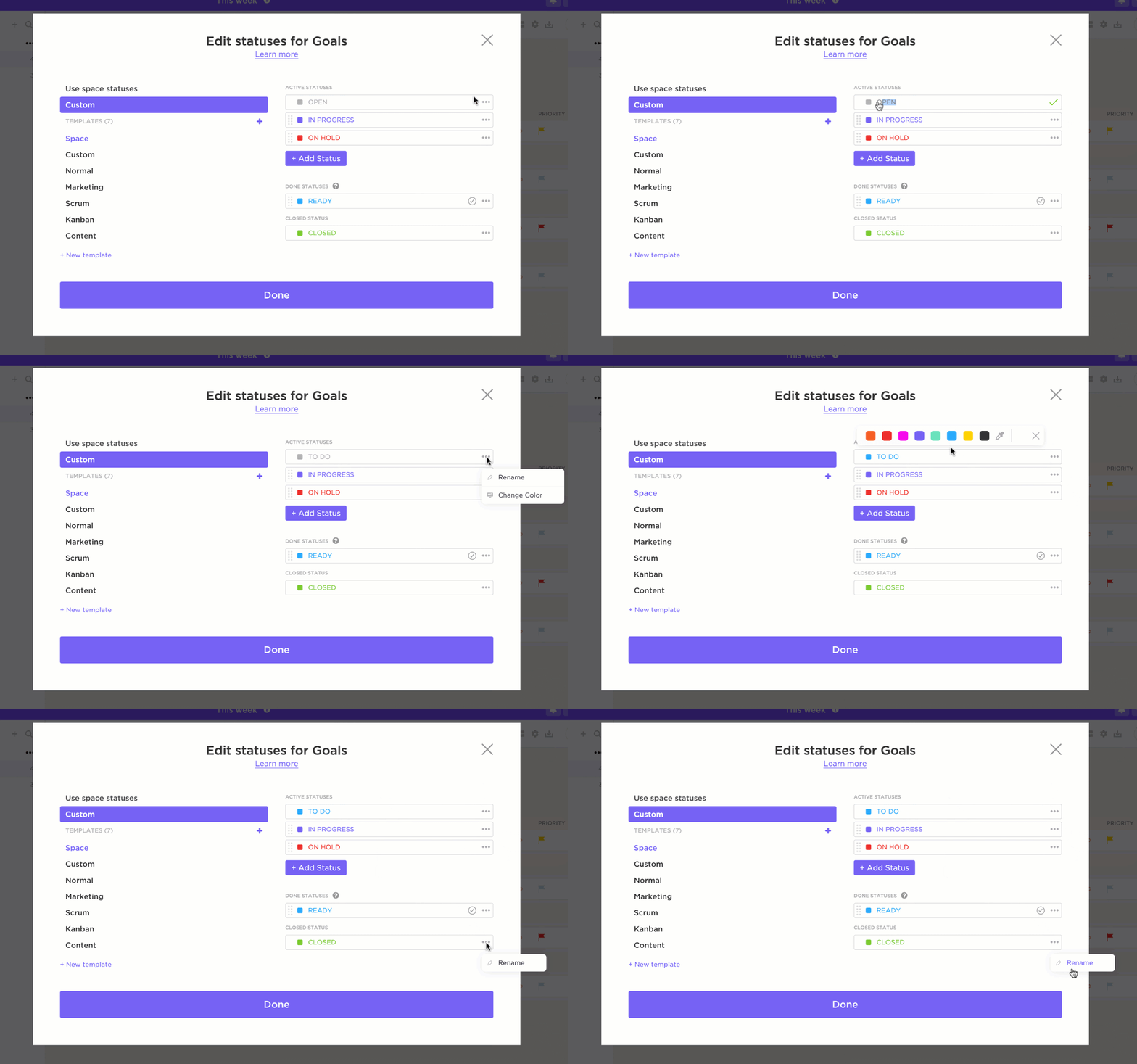
With ClickUp Tasks, you can easily structure creative sessions by breaking down ideas into actionable tasks. It helps you visualize progress through Kanban boards, track updates in real time, and ensure accountability.
It also lets you organize ideas under relevant categories and prioritize tasks to create a clear roadmap, keeping the team aligned and focused on achieving optimal results.
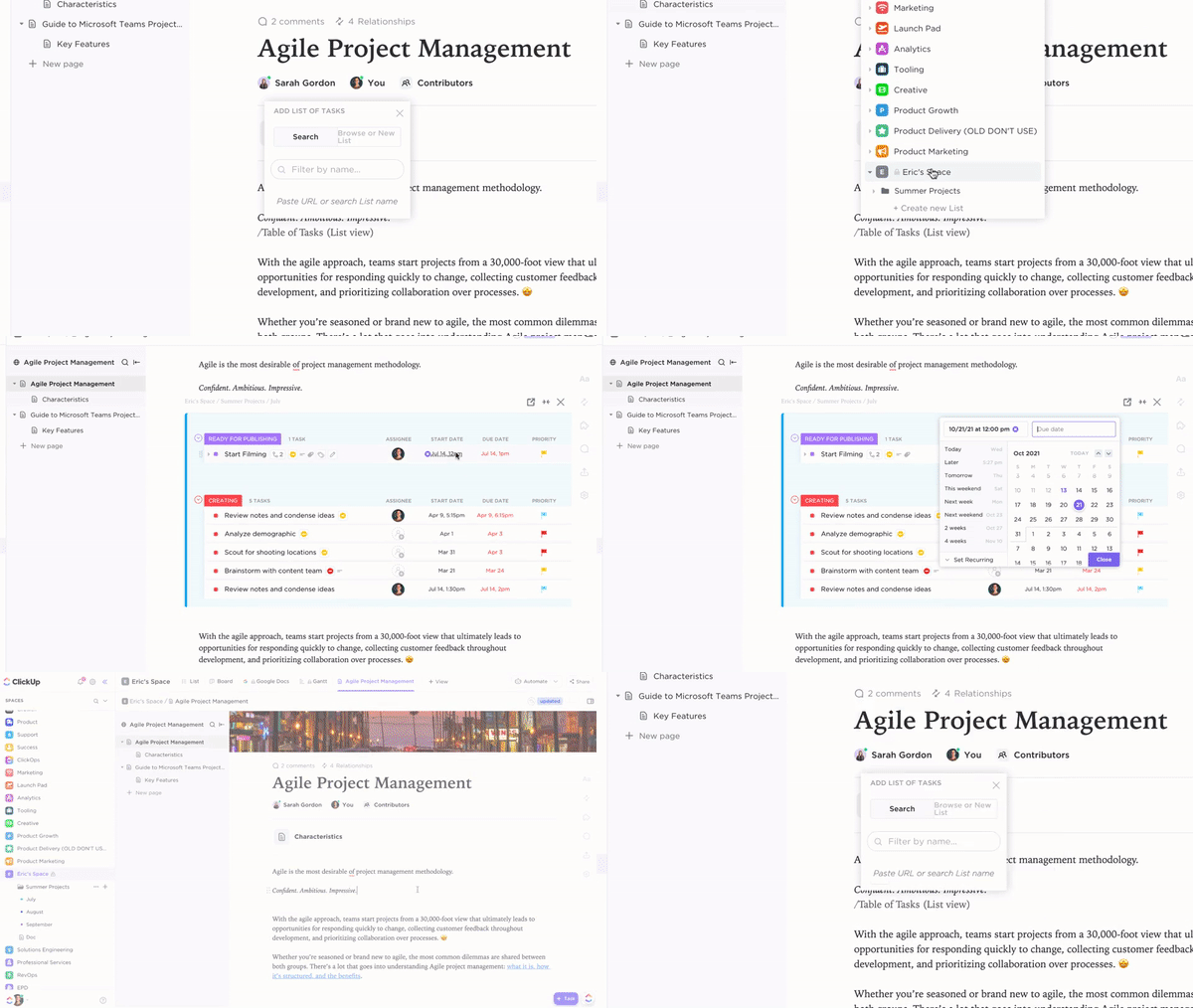
Additionally, you can enable teams to draft, edit, and finalize project plans together in one workspace using ClickUp Docs. It lets you document notes, meeting highlights, or detailed plans in a centralized location accessible to the entire project team.

With ClickUp Whiteboards, you can create mind maps or flowcharts in real time. You can also visualize concepts and turn them into project tasks instantly.
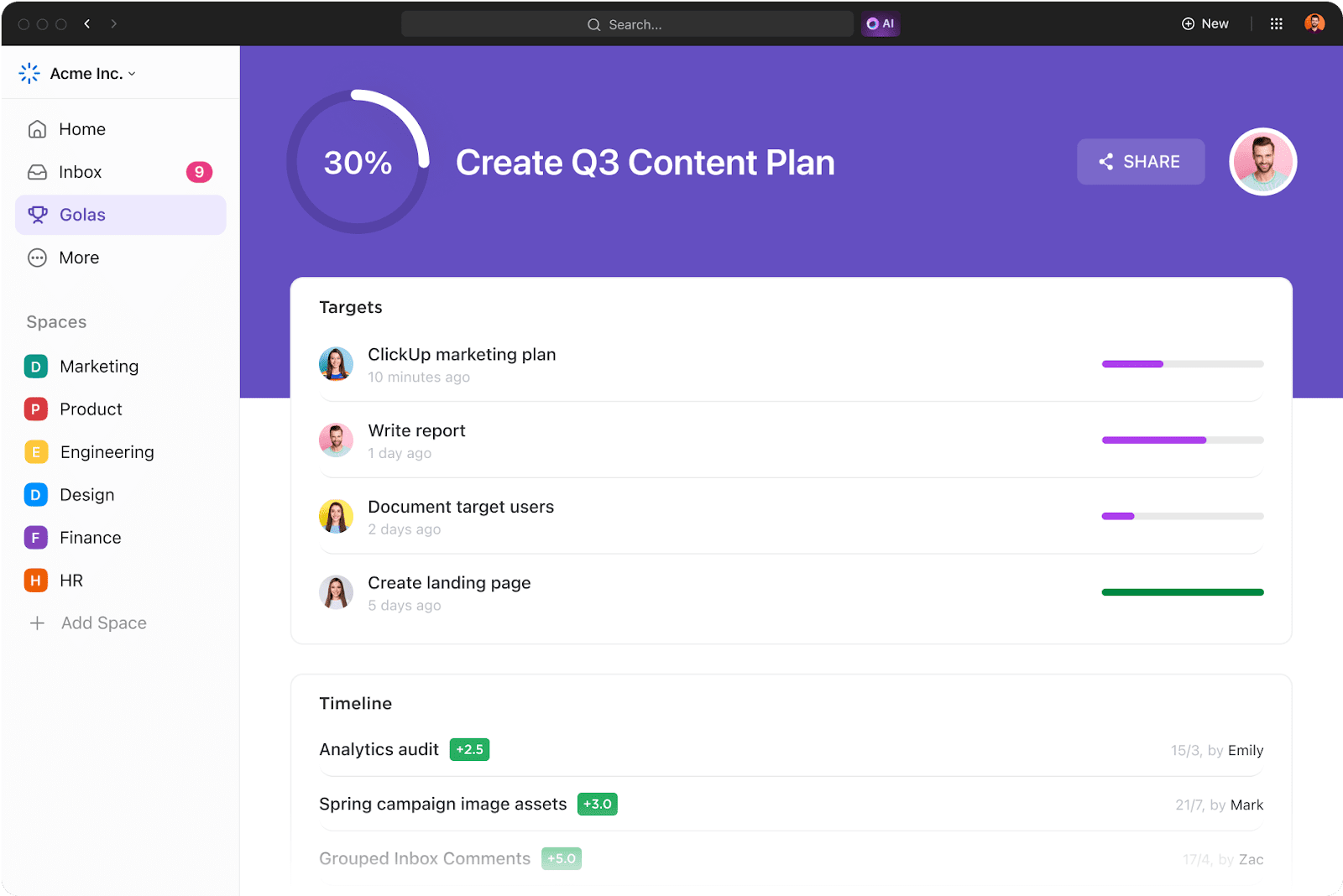
ClickUp Goals helps you define and track project goals with advanced features like target setting, progress tracking, and alignment across teams. This ensures everyone stays on track and understands their contributions to larger project milestones.
Overall, this clarity and structure prevent misdirection and ensure that resources are utilized effectively throughout the discovery phase.
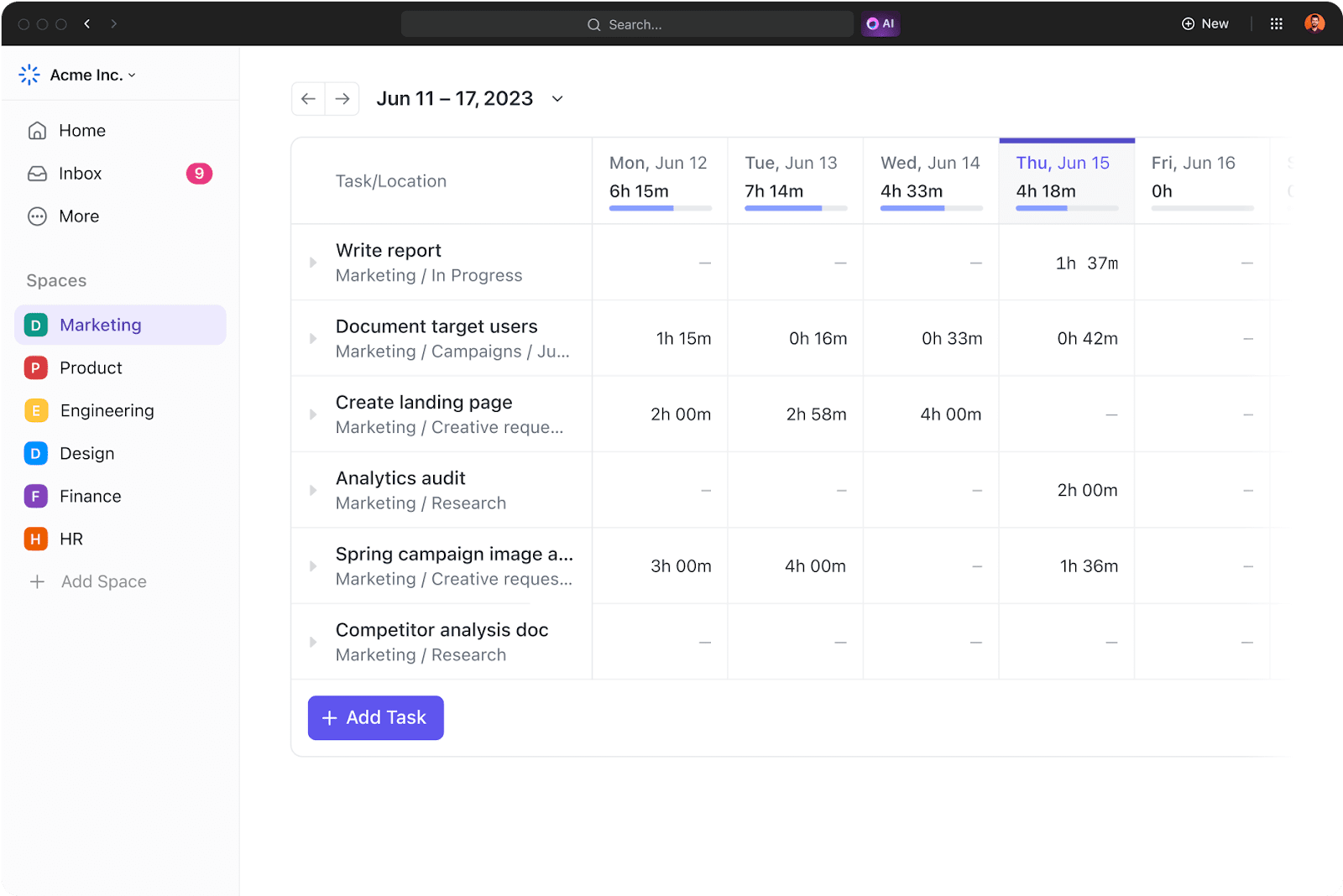
ClickUp’s Project Time Tracking helps monitor and manage time spent on tasks, providing valuable insights into project progress, productivity, and resource allocation.
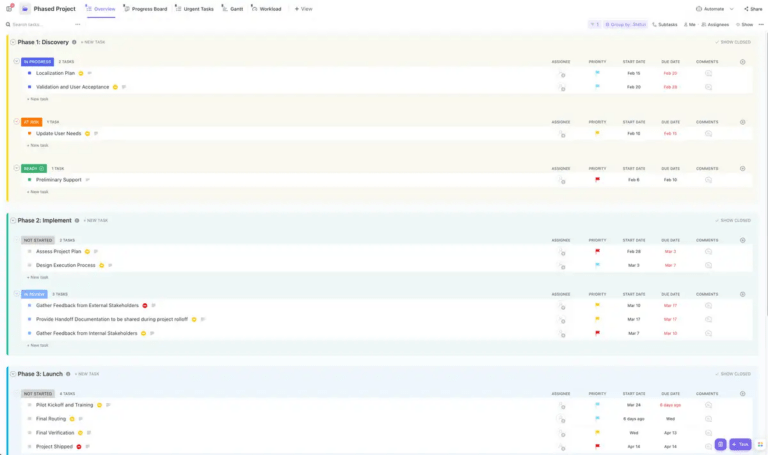
Additionally, if you’re wondering how to break large projects into manageable stages, ClickUp’s Phased Project template simplifies this process. It helps you stay organized, track progress effectively, and manage time efficiently. The template is beginner-friendly, customizable, and can be set up in seconds.
💡 Pro Tip: Use ClickUp’s High-Level Project Plan Template to optimize the project discovery phase with powerful tools like its List, Kanban, and Timeline views, offering a comprehensive overview of tasks and deliverables. It will help you stay organized, align your team, and track progress efficiently from start to finish.
When it comes to assessing the effectiveness of the discovery phase, it’s crucial to measure whether the initial goals, objectives, and expectations have been met.
The project discovery phase sets the stage, paving the way for a seamless transition into actionable steps for product development and implementation.
The post-discovery phase begins with transitioning to the development phase of the software development lifecycle.
This structured approach ensures a smoother handover and reduces rework during the development process.
Next, define the Minimum Viable Product (MVP) and plan a lean, efficient software development team process.
➡️ Read More: 10 Free Software Development Plan Templates to Use
A successful project begins with a strong foundation, and that starts with an effective discovery phase. It’s the critical step that clarifies your goals, sharpens your vision, avoids costly mistakes, delivers user-centered designs that captivate your audience, and maximizes ROI through smarter, data-driven planning.
In this regard, ClickUp helps you plan your project discovery phase more effectively, execute swiftly, and achieve better results.
With its intuitive features and templates, you can maintain organized, seamless workflows, ensuring every idea becomes an actionable plan. Plus, ClickUp’s integrations with Slack, Google Drive, Figma, and more centralize your operations, reducing scattered communication and boosting efficiency.
Why leave success to chance when you can structure it with confidence? Start now-sign up for ClickUp and turn project management into your superpower!

Sudarshan Somanathan
Max 22min read

Praburam Srinivasan
Max 23min read
Praburam Srinivasan
Max 21min read

© 2026 ClickUp