Sorry, there were no results found for “”
Sorry, there were no results found for “”
Sorry, there were no results found for “”
Let’s get real. Work-life balance? Not the way you’ve been told.
You’re not struggling because you ‘need better boundaries’ or ‘should prioritize self-care.’ You’re struggling because work bleeds into everything.
⏳ You wrap up a meeting just in time to microwave your cold coffee for the third time.
📲 You promise to log off early, but you’re glued to your phone, checking one last email.
🧠 Your kid tells you about their day, but your mind is still on that email you forgot to reply to.
No morning routine or productivity hack will fix the mental load if you don’t take control of it.
So, let’s talk about real solutions. The kind that doesn’t involve quitting your job, waking up at 4 AM, or pretending you have superhuman willpower.
When people say ‘work-life balance’, they usually mean work without losing your mind and life without getting fired. Cute concept. Completely outdated.
Traditional work-life balance looked like this:
☑️ Work 9 to 5
☑️ Come home, spend time with family
☑️ Forget about work until tomorrow
But for most professionals today, that model is about as realistic as a ‘fax machine making a comeback’. Now, work pings us at all hours, ‘urgent’ tasks pop up during the weekly date night, and there’s always someone who couldn’t come to a party because they had a meeting to attend.
Balance is more about mental management now vis-a-vis time management.
Today, the struggle goes above and beyond long hours. It centers on:
🚨 The expectation to be ‘always available’ (because who really turns off notifications?)
📉 The guilt of choosing one priority over another (Work late? Bad parent. Log off early? Bad employee.)
🔄 The never-ending mental tab switch—’ Did I reply to that email? When’s that deadline? Oh no, I forgot to order groceries.’
🧠 Fun Fact: Work-life balance might sound like a Millennial buzzword, but its roots go way deeper. Flashback to the 1980s when the Women’s Liberation Movement started pushing for flexible schedules and maternity leave.
Turns out that the struggle to juggle work and life isn’t new; it’s just rebranded for every generation.
To solve your time management challenges, build your work-life balance around what actually matters to you.
A healthy work-life balance is important for everyone, whether you are a young adult entering the workforce or an experienced professional.
📮ClickUp Insight: 92% of knowledge workers use personalized time management strategies. However, most workflow management tools don’t yet offer robust built-in time management or prioritization features, which can hinder effective prioritization.
ClickUp’s AI-powered scheduling and time-tracking features can help you transform this guesswork into data-driven decisions. It can even suggest optimal focus windows for tasks. Build a custom time management system that adapts to how you actually work!
➡️ Read More: How to Achieve Work-Life Integration
Most work-life balance advice sounds great in theory but falls apart the moment an urgent email lands in your inbox at 8 PM. You’ve got to actively push back to stop thinking about work all the time.
Let’s break it down into a step-by-step process.
Most people chase balance without knowing what it even means for them. Be clear on what you’re aiming for; otherwise, you’re just rearranging your chaos instead of fixing it.
Here’s how to do it:
Telling yourself you’ll ‘log off by 6’ is nice, but if your team treats your boundaries like suggestions, they’ll never stick.
The key? Make your boundaries visible and non-negotiable with direct and honest communication. No vague ‘I try to avoid late meetings.’ Be firm: ‘I’m unavailable after 6 PM unless the building is on fire.’ (And even then, it depends.)
This way, you can be more productive even after work.
Here’s how to do it:
You’re probably drowning in work, not because there’s too much of it, but because it’s all over the place. Work messages, endless email chains, a mental to-do list that keeps you up at night.
By organizing tasks, prioritizing with intention, and setting boundaries, you create a clear roadmap for your day. This reduces mental clutter, boosts productivity, and helps you tackle what truly matters instead of reacting to every ping and email.
Here’s how to do it:
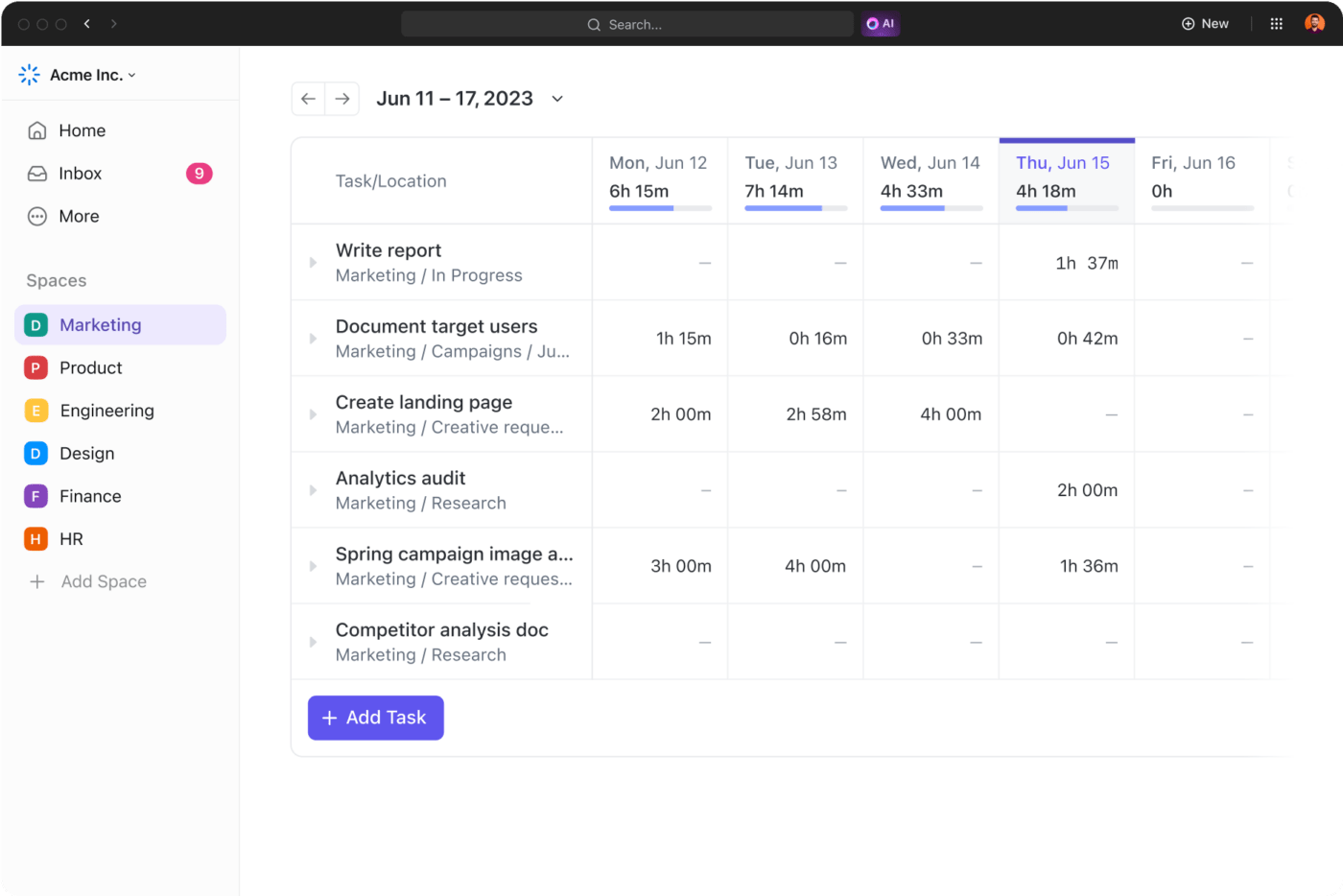
ClickUp’s Time Management Suite includes all the tools you need to visualize schedules, allocate resources, set realistic expectations, and track how time is actually spent. The centralized system keeps everyone in your team on the same page with easy Due Date Remapping and Drag and Drop Scheduling.
You can:
🔁 Use recurring tasks with reminders for family commitments, just like work meetings
⏱️ Try time blocking to batch similar tasks, scheduling dedicated time for emails, reports, and deep work
📆 Customize your calendar to fit your workflow and keep both work and life priorities visible, creating weekly schedules or one for months
🌟 Bonus Tip: Set at least an hour to review your prioritized and time-blocked schedule at the end of each week. Identify what worked, what didn’t work, and adjust your approach for the next day.
This iterative process helps refine your planning strategy and saves you time.
Ever finished work but still felt mentally at the office? That’s your brain holding onto unfinished tasks.
The solution? Leave work at work by automating, delegating, and closing open loops before they can accompany you home.
Here’s how to do it:
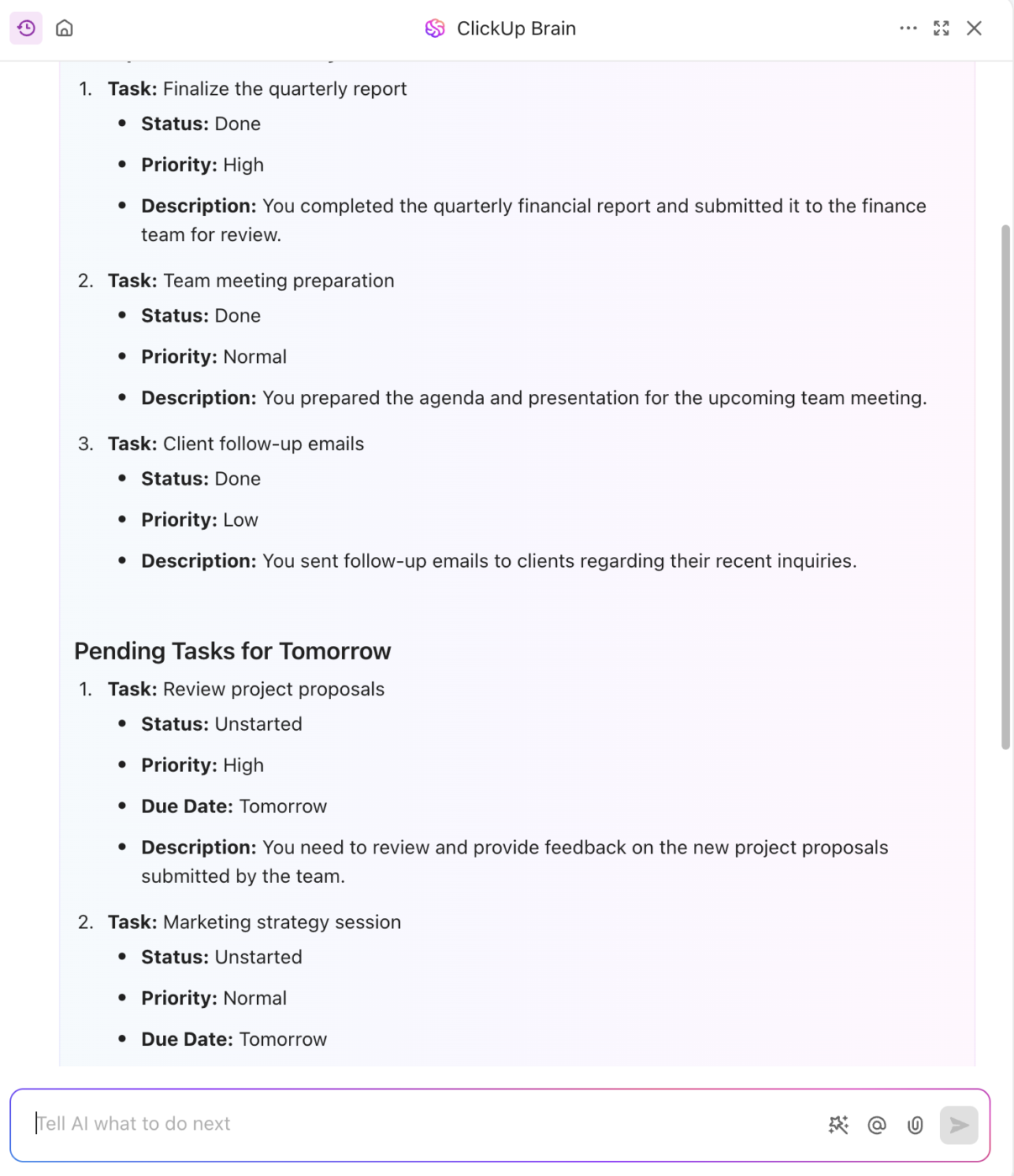
Still need help creating a routine that sticks? Ditch manual to-do lists of what’s done/what needs to be done. Make ClickUp Brain a part of your shutdown ritual.
Brain’s neural networks connect everything within your workspace, so you can ask it to give you a rundown of all the tasks you completed, create a to-do list for the next day, generate summaries of meetings happening outside of your work hours, and help organize your workspace so you can manage time and tasks better.
Some weeks, work will take over. Other weeks, family members will need more of you.
The goal isn’t to get balance ‘right’ every single day—it’s to ensure you’re not drifting into burnout.
Here’s how to do it:
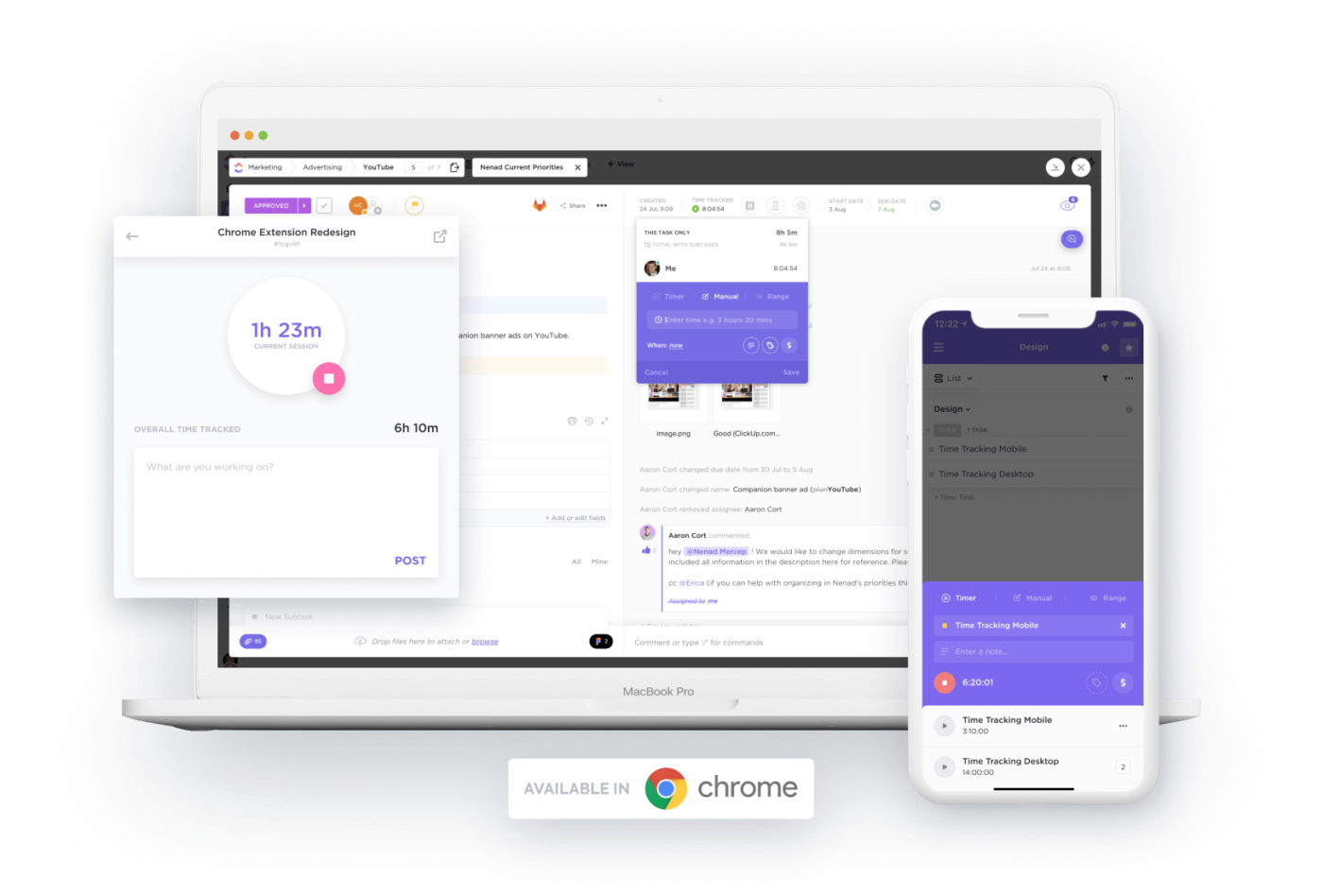
Track your time across devices (desktop, mobile, or web) using ClickUp’s Project Time Tracking Solutions. Link tracked time to tasks, add notes for clarity, and prioritize tasks based on time spent to identify bottlenecks.
You can also:
⏱️ Start and stop time from any device with the global time, adding time retroactively (especially helpful in creating work-from-home schedules)
📊 Improve time management by filtering tracked time by date, status, priority, and tags and generating custom reports
Friendly Reminder: That said, nothing comes before your mental health. If work starts taking over your life, don’t hesitate to seek professional help.🌻
And here’s another silver lining: Achieving work-life integration isn’t just on you. Your workplace plays a huge role, too. Even the best personal strategies crumble in a culture that glorifies overwork.
Work-life balance isn’t a perk, a buzzword, or just the employee’s problem to solve. People don’t quit because they can’t handle pressure; they quit when work is an endless treadmill with no off switch.
The fix: Effective HR strategies that give teams the structure, tools, and breathing room to thrive without burning out.
Most managers have no idea who’s overwhelmed until someone burns out or hands in their resignation. By the time a top performer says, ‘I can’t do this anymore,’ they’ve already been drowning for months. The problem? Limited workload visibility.
Here’s what you can do:
ClickUp Workload View provides a real-time look at who’s buried in work and who actually has capacity. You can monitor resource allocation with dashboards to ensure projects run on realistic timelines, not wishful thinking.

Meetings about meetings. Last-minute ‘urgent’ requests. Unclear priorities that force employees to guess what actually matters. This is why people are exhausted. Organizations need to get intentional about what really needs attention.
Here’s what you can do:
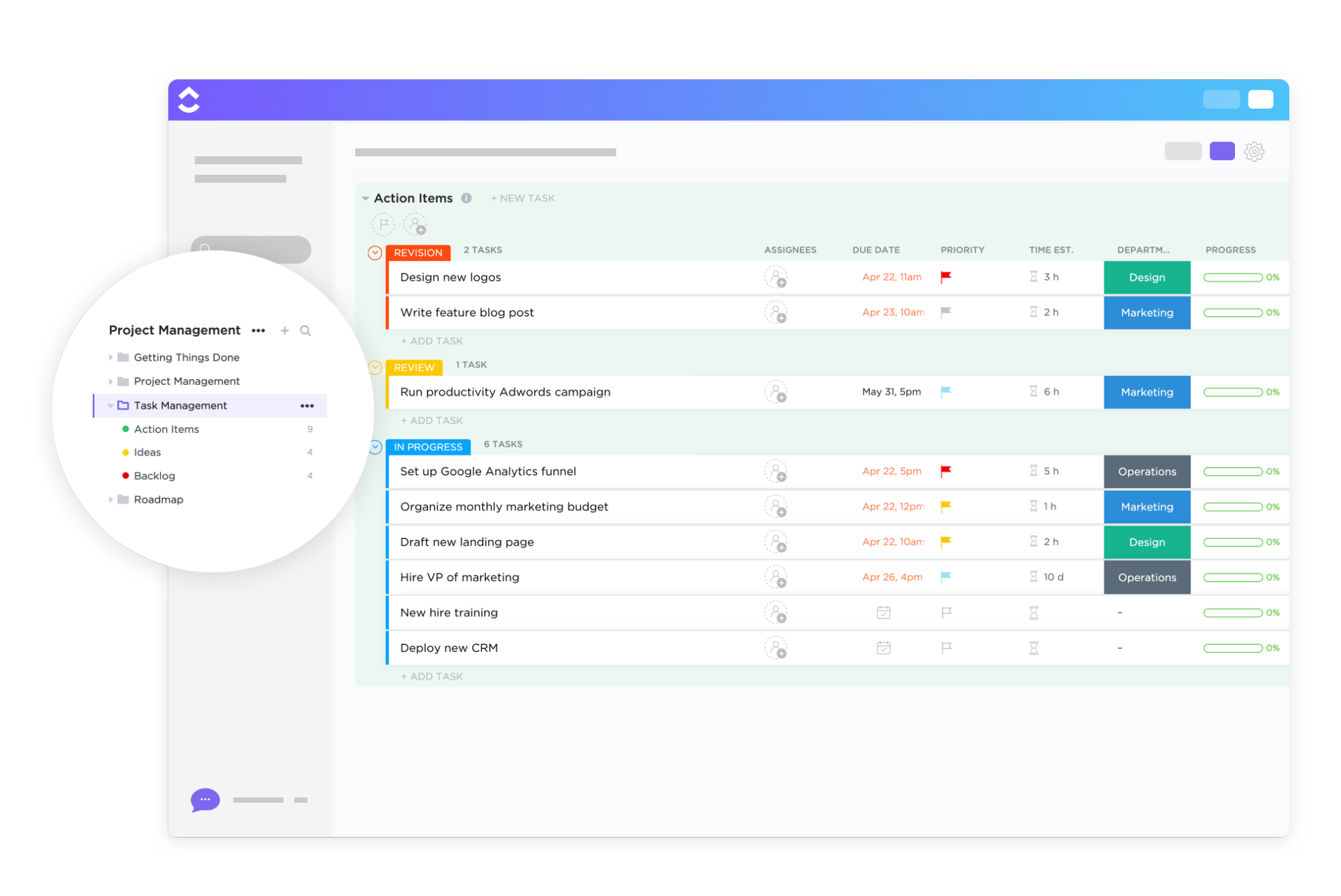
If you want a ready-to-use framework to visualize workloads and ensure responsibilities are distributed well, get ClickUp’ Task Management Template.
It helps organize tasks by status, priority, or department and track progress based on bandwidth and task status.
Use the List View for detailed task organization, the Board View for Kanban-style planning, and the Box View to manage workloads. The Calendar View further helps schedule tasks flexibly, while Custom Fields keep you informed about assignments, deadlines, and time estimates.
Bonus Tip: Sort your tasks by priority and then by time estimate to see the most important and imminent tasks in your workflow.
It’s not enough to say, ‘We care about work-life balance.’ If employees feel like they can’t take a break without falling behind, you need a better support system.
If you want your best people to stay, build a workplace that works for them.
Here’s what you can do:
Bonus Tip: Want more inspiration on how to boost morale and productivity at work? For ideas like unlimited PTOs, four-day work weeks, and more, explore these work-life balance examples.
Achieving a sustainable work and family life balance pays off in the long run. From improved productivity to greater employee retention, the benefits ripple across both personal and professional spheres.
If you had something to say to me on Tuesday afternoon at 4:55, you had better say it on the way to the parking lot. If there was a crisis, we are going to wrap it up by 5:00. Those Tuesday nights kept me sane. And they put the rest of my work in perspective
Data confirms the same. According to Gallup’s State of the Global Workplace 2023 report, only 23% of employees worldwide feel engaged at work—meaning they are enthusiastic and involved in their jobs—matching the record high from 2022.
However, the majority of employees remain disengaged: 62% are not engaged, meaning they do the bare minimum and lack motivation, while 15% are actively disengaged. 🫢
The consequences of fatigue in high-stakes professions are hard to ignore. A 2025 Medical Defence Union (MDU) survey revealed that nearly 90% of doctors feel sleep-deprived at work, a 20% rise since 2022. 41% experience weekly sleep deprivation, and 35% say tiredness impacts their ability to treat patients safely—up from 26% in 2022.
Chronic stress doesn’t just cause short-term discomfort. It increases the risk of health problems, like high blood pressure, heart disease, diabetes, depression, and anxiety. Without intervention, these effects can damage relationships and career growth. Preventative strategies, such as work-life balance, are key to avoiding burnout and the long road to recovery.
Studies indicate that work-life balance negatively affects turnover intention. Employees with better balance are less likely to seek new jobs, reducing turnover rates and associated costs.
Work-life balance is a constant battle. Juggling endless tasks, meeting shifting deadlines, and never truly ‘logging off’ can drain the life out of your personal time. Without structure, burnout feels inevitable.
Here’s where ClickUp can help.
Automation can handle the mundane tasks, freeing up your brain for the big stuff. AI and integrations help you streamline workflows across platforms. At a managerial level, leadership dashboards give you clear, real-time insights into team health.
Instead of reacting to burnout and stress, ClickUp allows you to proactively manage workloads, making work-life balance a sustainable reality.
Sign up for ClickUp for free and start taking control of your tasks, time, and life.

Sudarshan Somanathan
Max 22min read

Manasi Nair
Max 20min read
Sudarshan Somanathan
Max 17min read

© 2026 ClickUp