






Still downloading templates?
There’s an easier way. Try a free AI Agent in ClickUp that actually does the work for you—set up in minutes, save hours every week.
Sorry, there were no results found for “”
Sorry, there were no results found for “”
Sorry, there were no results found for “”
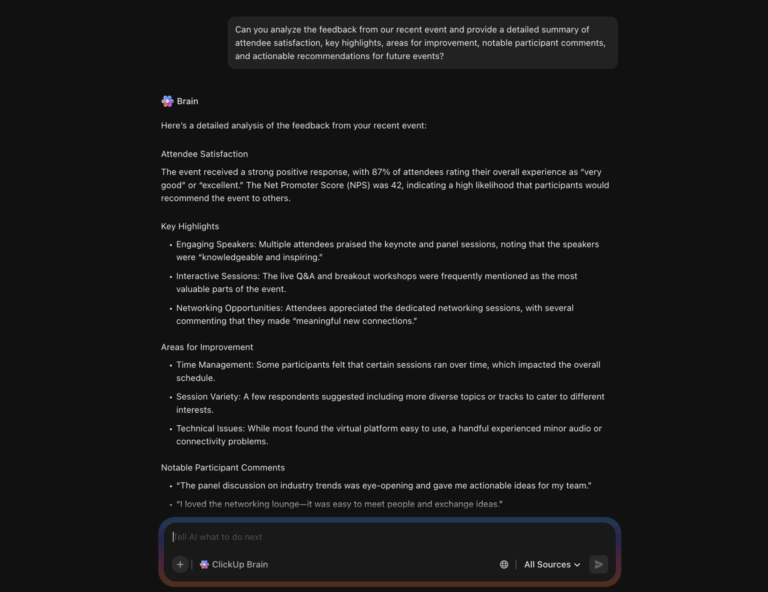
Every event ends with the same question: what did people actually think? Event managers pour months into planning logistics, coordinating vendors, and crafting agendas—yet understanding whether attendees found the experience valuable often comes down to a handful of survey responses collected days after everyone has gone home. By then, the details have faded, the emotions have cooled, and the insights you desperately need have slipped through the cracks.
AI for event feedback is changing this equation entirely. Instead of relying on post-event surveys with dismal response rates, modern event teams can now capture attendee sentiment in real time, analyze thousands of open-ended comments in seconds, and transform raw feedback into actionable strategies for their next event. Whether you’re running a corporate conference, product launch, or community workshop, AI-powered feedback tools help you understand what worked, what didn’t, and what your audience truly wants. Combined with the right project management software for events, these insights become the foundation for continuous improvement.
This guide explores how AI is revolutionizing event feedback collection and analysis—from chatbot-driven surveys that capture insights during the event to sentiment analysis that decodes the emotions behind every comment.
The events industry has entered a new era of accountability. Stakeholders want proof that their investment delivers measurable returns, and attendees expect experiences tailored to their preferences. Meeting these expectations requires more than gut instincts or assumptions—it demands systematic feedback collection and rigorous analysis.
Understanding attendee satisfaction goes far beyond knowing whether people enjoyed the keynote speaker. Comprehensive feedback reveals pain points in your registration process, highlights which sessions resonated most strongly, and uncovers networking opportunities that attendees valued. This granular understanding helps event planners make targeted improvements rather than sweeping changes based on incomplete information.
The challenge is that attendees experience events holistically—their satisfaction reflects everything from the quality of the coffee to the ease of finding the right breakout room. Traditional feedback methods often miss these nuances because they ask generic questions long after the details have faded from memory.
📌 ClickUp Insight: 89% of event planners rely on feedback to improve their events, yet most struggle to collect enough responses to draw meaningful conclusions. The timing and method of feedback collection dramatically impacts both response rates and data quality.
Event ROI extends beyond ticket sales and sponsorship revenue. It includes brand awareness, lead generation, customer retention, and relationship building—metrics that are notoriously difficult to quantify without direct attendee input. Studies indicate that the average ROI for events ranges between 25% and 34%, but determining where your specific event falls on that spectrum requires proper evaluation.
Feedback data connects the dots between what you invested and what you received in return. When attendees report that a particular session helped them solve a business problem, or that a networking opportunity led to a valuable partnership, you have concrete evidence of event impact that resonates with stakeholders and justifies future budgets.
Traditional feedback collection faces a fundamental timing problem. Post-event surveys sent days after an event struggle to achieve response rates above 20-30%, and the responses they do capture reflect faded memories rather than real-time reactions. Attendees forget specific moments that frustrated or delighted them, defaulting to general impressions that lack actionable detail.
Manual analysis compounds the problem. When you do collect open-ended feedback, analyzing hundreds or thousands of comments requires hours of tedious reading and subjective interpretation. Important themes get buried, subtle patterns go unnoticed, and the insights arrive too late to influence your next event’s planning.
Artificial intelligence addresses the fundamental limitations of traditional feedback methods by enabling real-time collection, personalized interactions, and automated analysis at scale. These capabilities are reshaping how event professionals gather and interpret attendee insights.
AI-powered chatbots can engage attendees during the event itself, capturing feedback while experiences are fresh and emotions are authentic. Unlike static survey forms, chatbots conduct conversational interactions that feel natural and unobtrusive. They can ask follow-up questions based on initial responses, probe deeper into specific issues, and adapt their approach based on the attendee’s engagement level.
This real-time capability transforms feedback collection from a post-event afterthought into an integrated component of the event experience. Attendees can share thoughts about a session immediately after leaving the room, report logistical issues as they encounter them, and express enthusiasm while the excitement is still palpable.
🔍 Did You Know? 68% of users value chatbots for their convenience and quick response times. When applied to event feedback, this preference translates to higher response rates and more detailed responses compared to traditional survey methods.
Generic surveys treat all attendees identically, asking the same questions regardless of which sessions they attended or what role they play in their organization. AI enables dynamic survey flows that adapt based on registration data, session attendance, and previous responses. A first-time attendee receives different questions than a returning participant; someone who attended technical workshops sees questions relevant to that content rather than generic prompts.
This personalization improves both response rates and data quality. Attendees feel that their time is respected when questions are relevant to their specific experience, and the resulting data provides more actionable insights because it connects feedback to specific touchpoints.
Open-ended feedback contains the richest insights—the specific complaints, the unexpected praise, the suggestions that could transform your next event. But analyzing thousands of free-text responses manually is impractical. AI sentiment analysis processes this unstructured data automatically, identifying whether comments express positive, negative, or neutral sentiment and clustering them around common themes.
Modern sentiment analysis goes beyond simple polarity detection. It can identify the intensity of emotions, distinguish between constructive criticism and genuine dissatisfaction, and recognize sarcasm or irony that might mislead simpler analysis methods. By March 2025, companies could track sentiment across platforms in real time with 88% accuracy, compared to 73% in early 2024.
Live Q&A sessions, panel discussions, and focus groups generate valuable feedback that often goes uncaptured. AI transcription tools convert these conversations into searchable text, enabling analysis of spontaneous attendee reactions and questions. The questions attendees ask during sessions reveal their priorities, concerns, and knowledge gaps—information that rarely appears in formal surveys.
Transcription also preserves the nuance of verbal communication that gets lost in written responses. When attendees describe their experience in their own words, they reveal emotional context and specific details that structured survey responses cannot capture.
AI-powered feedback systems deliver advantages that compound over time. As you collect more data and refine your analysis approaches, the insights become increasingly valuable for event optimization.
The speed advantage is immediately apparent. What previously required days of manual review now happens in minutes. AI can process thousands of survey responses, chat logs, and social media mentions simultaneously, delivering actionable summaries while the event is still fresh in everyone’s minds. This rapid turnaround enables course corrections during multi-day events and immediate follow-up with attendees who reported problems.
Accuracy improves because AI applies consistent analysis criteria across all responses. Human reviewers naturally introduce bias—their interpretation of comments varies based on mood, fatigue, and preconceptions. AI maintains the same analytical framework whether it’s processing the first response or the ten-thousandth.
The depth of analysis expands dramatically. AI can identify subtle patterns that human reviewers miss: correlations between session attendance and satisfaction scores, demographic variations in feedback themes, or trends that emerge only when comparing data across multiple events. These patterns inform strategic decisions that generic feedback summaries cannot support.
💡 Pro Tip: Start with a focused AI feedback pilot on a single event before rolling out across your entire event portfolio. This approach lets you refine your question design, train your analysis models, and demonstrate ROI to stakeholders without overwhelming your team.
Perhaps most importantly, AI feedback analysis scales without proportional increases in time or resources. A small team can analyze feedback from events of any size, removing the constraint that previously forced event professionals to choose between thorough analysis and timely results.
Implementing AI-powered feedback requires thoughtful planning across the entire event lifecycle. Each phase presents distinct opportunities to capture insights and distinct requirements for your AI tools.
Effective feedback collection begins before attendees arrive. During this phase, you configure your AI-powered survey tools, design question flows, and establish the triggers that will automate feedback collection throughout the event.
Start by defining what you need to learn. Are you primarily interested in content quality, logistical execution, networking effectiveness, or overall satisfaction? Your objectives shape both the questions you ask and the analysis frameworks you apply. Use your event management platform to segment attendees based on registration data, enabling personalized survey flows from the first interaction. The right form builder software makes this customization straightforward.
Configure automated reminders that prompt attendees to provide feedback at strategic moments. AI can optimize reminder timing based on patterns from previous events—sending prompts when response rates historically peak and avoiding times when attendees are typically in sessions or traveling. Consider using questionnaire templates as starting points to accelerate your survey design.
The event itself presents the richest feedback opportunities. Attendees are engaged, experiences are fresh, and the logistical infrastructure for communication is already in place. Your AI systems should capture insights through multiple channels simultaneously.
Live polling during sessions captures immediate reactions to content. These quick interactions—typically single questions that take seconds to answer—achieve response rates far exceeding post-event surveys because they’re integrated into the session experience rather than requiring separate effort. Think of them as pulse surveys applied to event contexts, capturing sentiment at the moment it’s most authentic.
AI chatbots can engage attendees throughout the event via your event app, SMS, or messaging platforms. These conversations capture both solicited feedback (responses to specific questions) and unsolicited observations (comments attendees share spontaneously). The chatbot can route urgent issues to staff immediately while logging all interactions for later analysis.
Social media monitoring adds another layer of real-time insight. AI tools track mentions of your event hashtag and brand, identifying sentiment trends and specific feedback that attendees share publicly but might not include in formal surveys.
After the event concludes, AI transforms raw data into structured insights. Analytics dashboards aggregate feedback from all sources—surveys, chatbot conversations, social media, session polls—into unified views that reveal patterns across the entire attendee experience.
Theme clustering automatically groups similar comments, highlighting the issues that appear most frequently and the topics that generate the strongest emotional responses. Rather than reading thousands of individual comments, you can review thematic summaries that capture the essence of attendee sentiment.
Comparative analysis becomes possible when you apply consistent AI analysis across multiple events. You can track whether satisfaction improved after implementing changes suggested by previous feedback, identify recurring issues that require systematic solutions, and benchmark performance against your own historical data.
📌 ClickUp Insight: Gartner predicts that by 2025, over 75% of organizations will have invested in real-time feedback systems. Event teams that implement these systems now gain competitive advantage through deeper attendee understanding.
Collecting and analyzing feedback delivers value only when insights drive action. This final phase connects analysis results to concrete planning decisions for future events.
Prioritize issues based on both frequency and impact. A problem mentioned by many attendees demands attention even if the sentiment isn’t intensely negative; a problem mentioned by few but described with strong emotion may indicate a serious issue affecting a specific segment. AI scoring can help rank issues by their likely influence on overall satisfaction and repeat attendance.
Create feedback loops that close the circle with attendees. When you make changes based on feedback, communicate those changes to the people who provided input. This recognition encourages future participation and demonstrates that feedback produces real results. Document these improvements in your event planning templates so lessons learned carry forward to future events.
The right tools transform AI feedback collection from concept to reality. While many platforms offer feedback capabilities, the best solutions integrate feedback into broader event management workflows rather than treating it as a standalone function.
ClickUp provides a comprehensive solution that connects event feedback to all other aspects of event management within a single workspace. Rather than collecting feedback in one tool and managing event logistics in another, ClickUp brings everything together so insights flow directly into action.
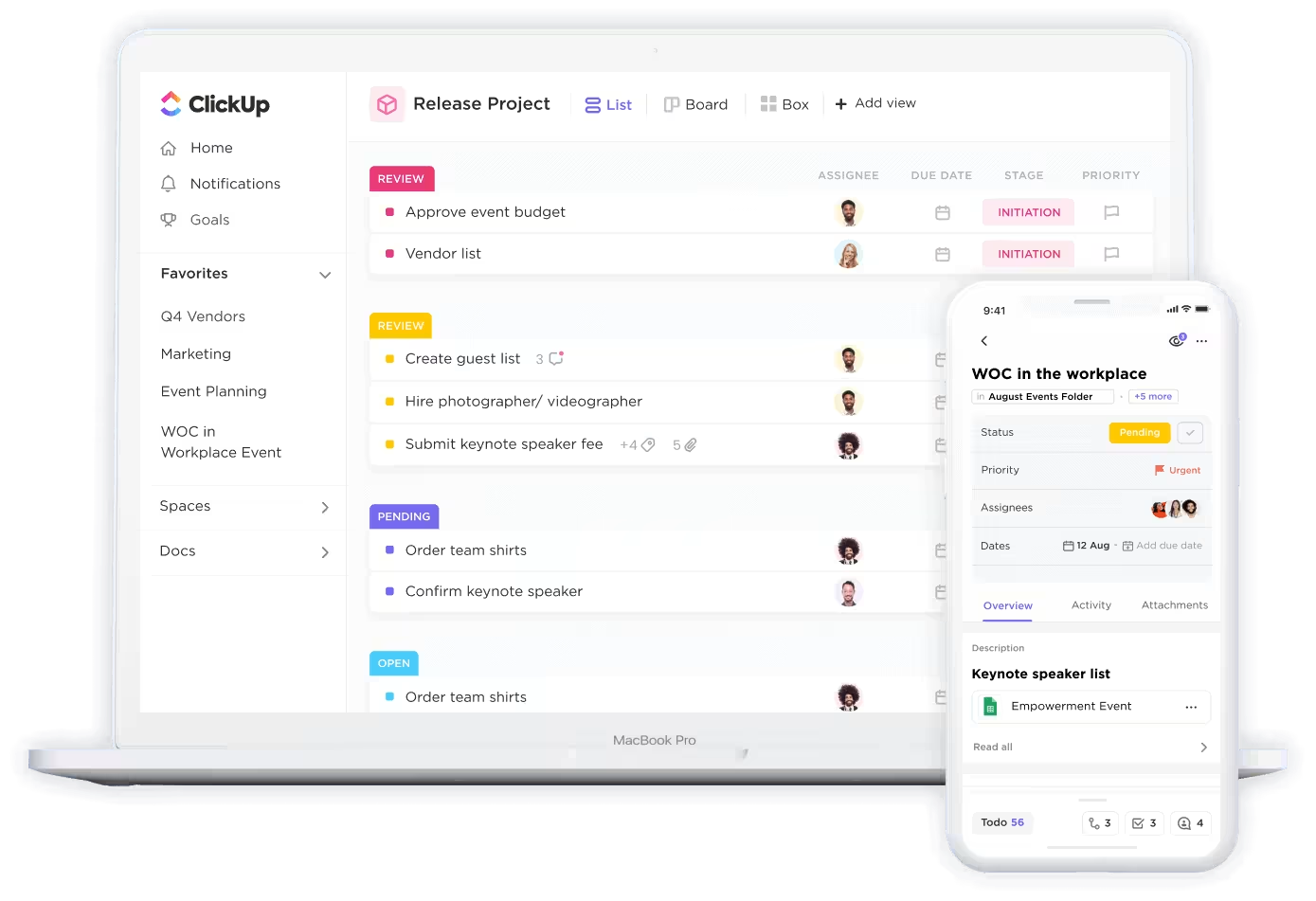
ClickUp Forms enable you to create customized feedback surveys tailored to your specific event and audience. Unlike generic survey tools, Forms integrate directly with your event project, automatically converting responses into trackable tasks. When an attendee reports an issue, ClickUp can create a follow-up task assigned to the appropriate team member with all relevant context attached. Explore feedback form templates to find starting points that match your event type.
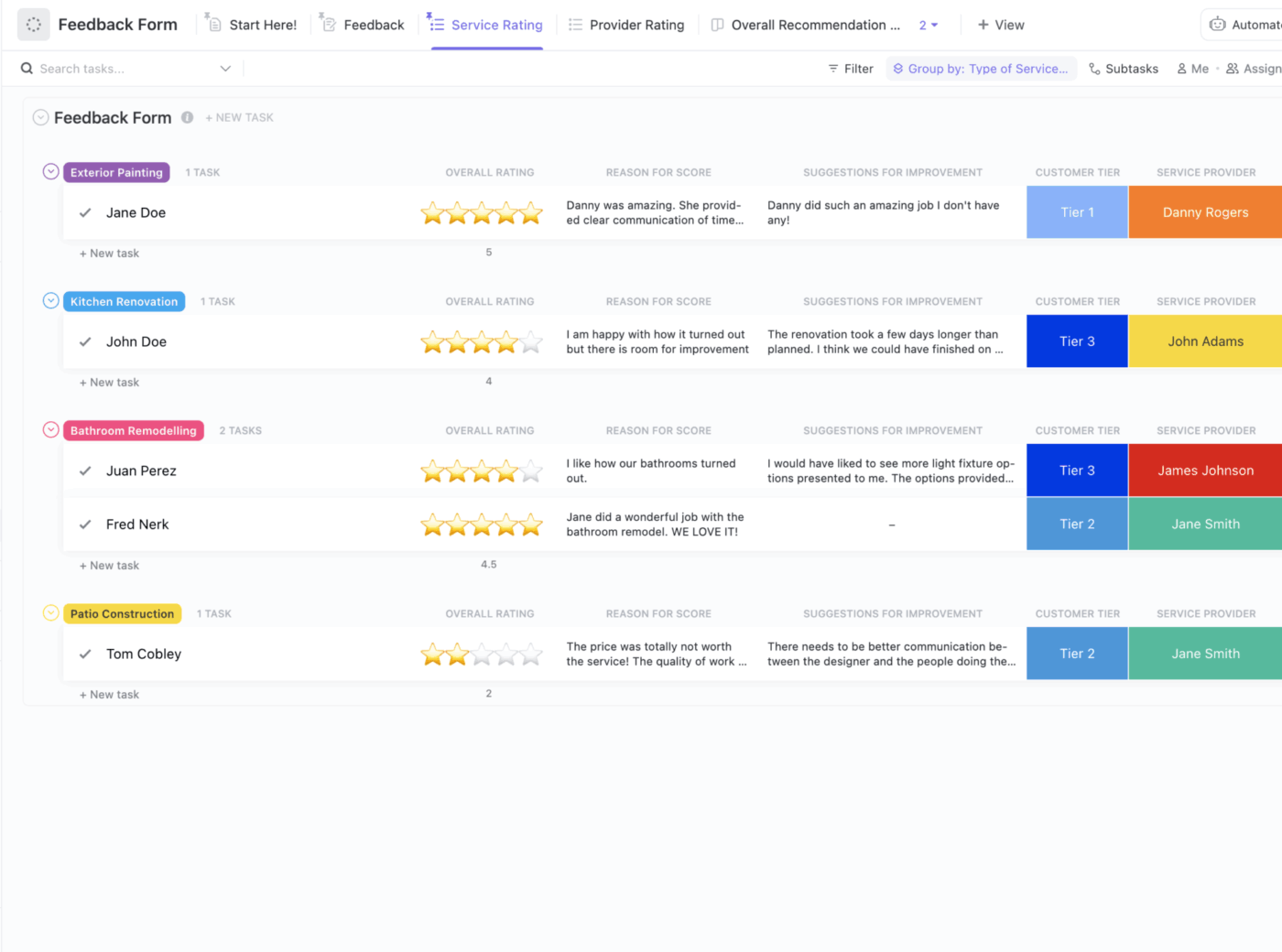
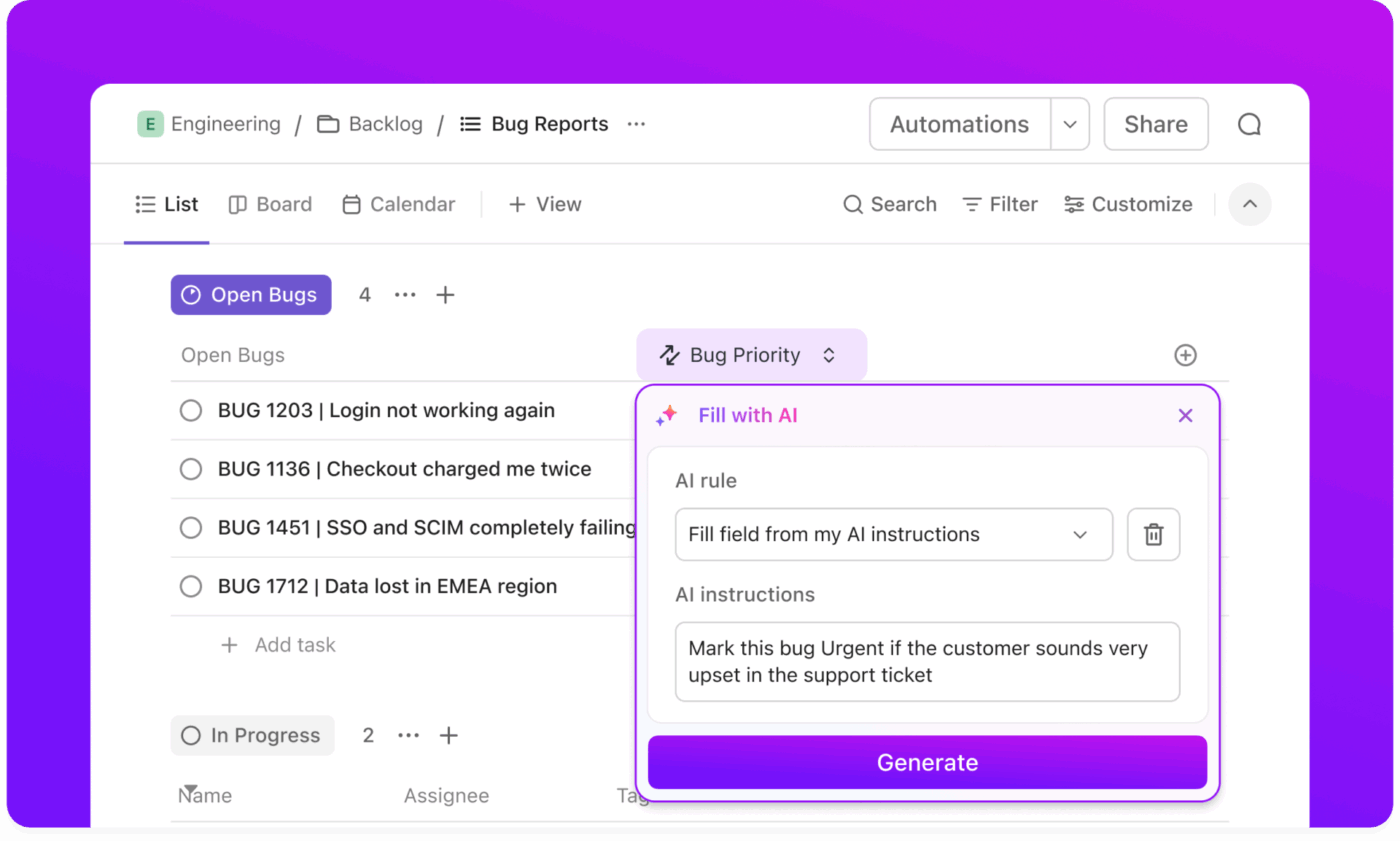
ClickUp Brain, ClickUp’s AI assistant, supercharges your feedback analysis. It can summarize large volumes of responses, identify common themes, and surface sentiment patterns across all your feedback data.
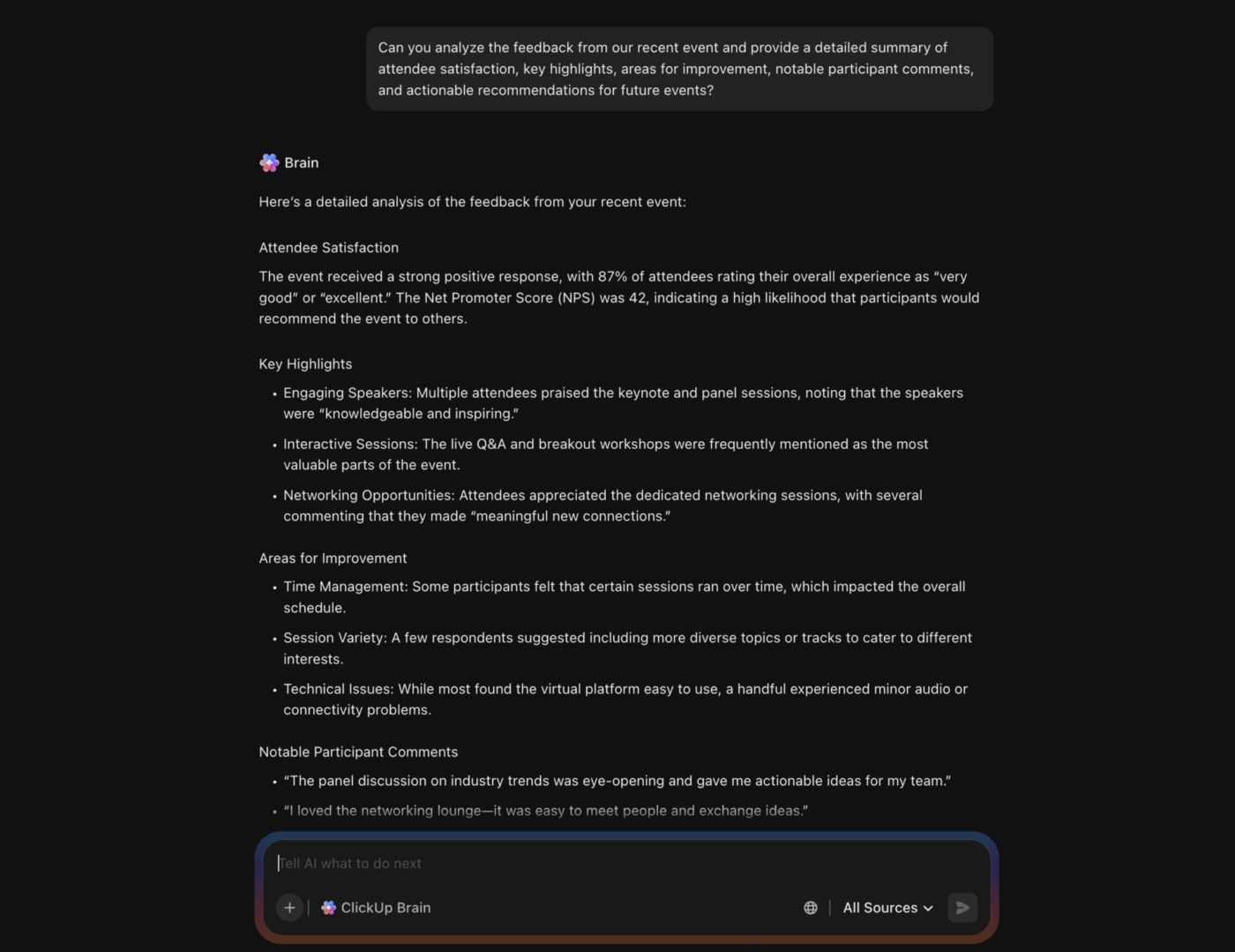
Ask questions like “What were the top complaints about registration?” and get accurate, contextual answers in seconds rather than hours of manual review.
Key capabilities for event feedback:
ClickUp Forms capture attendee responses through branded surveys distributed via email, QR codes, or embedded links. The conditional logic capability enables personalized question flows that adapt based on previous answers, improving both response rates and data quality.
ClickUp Dashboards visualize event performance metrics and feedback trends in real time. You can track response rates, sentiment scores, and theme frequencies as data arrives, enabling mid-event adjustments and immediate post-event analysis.

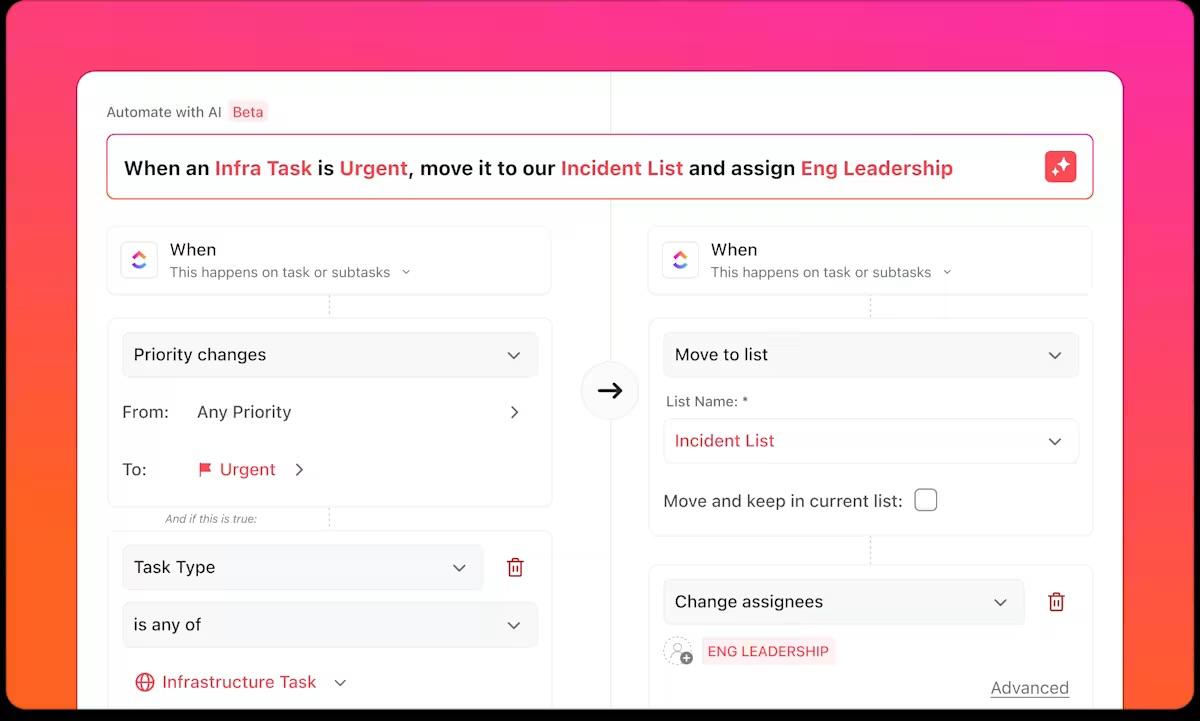
ClickUp Automations eliminate manual handoffs between feedback collection and action. Configure rules to automatically notify team members when negative feedback arrives, create tasks for follow-up when specific issues are mentioned, or update project statuses based on feedback milestones.
Qualtrics XM offers enterprise-grade sentiment analysis with sophisticated statistical capabilities. Its Text IQ technology uses NLP to extract insights from unstructured feedback, automatically categorizing themes and detecting sentiment nuances. The platform excels at complex research methodologies but requires significant training and comes with premium pricing suited to large organizations.
Typeform creates conversational survey experiences that feel more engaging than traditional forms. Its AI analyzes response patterns to identify engaged respondents and can adjust question paths based on previous answers. The platform integrates well with other tools but focuses primarily on collection rather than deep analysis.
SurveyMonkey provides accessible AI-powered analysis features including sentiment detection and theme extraction. Its extensive template library includes event-specific options, and benchmark comparison allows you to measure results against industry standards. The platform balances ease of use with analytical capability, making it suitable for teams new to AI-powered feedback.
AI feedback tools have proven their value across diverse event types and organizational contexts. These examples illustrate the practical impact of AI-powered feedback collection and analysis.
Corporate conferences have used AI chatbots to conduct real-time pulse checks throughout multi-day events. When chatbot conversations revealed widespread confusion about session locations during day one, organizers immediately improved signage and deployed additional staff to high-traffic areas.
Product launch events have deployed sentiment analysis to gauge audience reactions in real time. As attendees shared thoughts via live polls and chat, AI tracked sentiment trends that revealed which product features generated excitement and which sparked concern. This immediate insight enabled presenters to adjust their emphasis during Q&A sessions and provided product teams with genuine user reactions unfiltered by formal feedback structures.
Trade show organizers have used AI to analyze feedback across hundreds of exhibitor booths. Rather than relying on generic satisfaction scores, AI theme clustering identified specific booth elements that correlated with positive experiences—interactive demonstrations outperformed static displays, and exhibitors who offered hands-on product trials received dramatically higher ratings. These insights informed booth design guidelines that improved exhibitor satisfaction in subsequent years.
Association events have leveraged AI transcription to capture member feedback from town hall sessions and focus groups. The spontaneous comments and questions raised during these sessions revealed priorities and concerns that members rarely mentioned in formal surveys. AI analysis of transcribed content identified emerging themes months before they would have appeared through traditional feedback channels.
AI capabilities continue advancing rapidly, and event feedback applications will evolve accordingly. Several emerging trends point toward even more sophisticated feedback collection and analysis in the coming years.
Predictive analytics will move beyond describing what happened to forecasting what will happen. AI systems will analyze feedback patterns to predict which attendees are at risk of not returning, which sponsors are likely to increase their investment, and which content themes will generate the most interest at future events. These predictions will enable proactive engagement rather than reactive responses.
Multimodal analysis will expand beyond text to include voice, facial expressions, and behavioral signals. AI systems will analyze the tone and emotion in spoken feedback, track engagement signals from video recordings, and correlate verbal feedback with behavioral data like session attendance and dwell time. This richer data will reveal insights that text analysis alone cannot capture.
Integration with broader experience platforms will connect event feedback to ongoing customer relationships. Rather than treating event feedback as an isolated data stream, organizations will incorporate it into unified profiles that inform all customer interactions. An attendee’s event experience will shape their subsequent marketing messages, sales conversations, and support interactions. Using a CRM for event management creates the foundation for this integrated approach.
Real-time adaptation will enable events to respond to feedback instantaneously. AI systems will monitor sentiment during sessions and adjust elements like room temperature, lighting, or even content pacing based on audience reactions. This closed-loop feedback will transform events from static experiences to dynamic ones that continuously optimize for attendee satisfaction.
💡 Pro Tip: Start building your AI feedback capabilities now, even if your initial implementation is basic. The data you collect today becomes training data for more sophisticated analysis tomorrow. Organizations that wait for “perfect” AI tools will find themselves years behind competitors who began learning from AI-powered insights earlier.
AI transforms event feedback from a post-event chore into a strategic advantage that shapes every aspect of event planning and execution. By enabling real-time collection, automated analysis, and actionable insights, AI helps event teams understand their audiences deeply and improve continuously.
The technology is accessible today. You don’t need enterprise budgets or dedicated data science teams to benefit from AI-powered feedback. Tools like ClickUp bring sophisticated capabilities within reach of event teams of any size, integrating feedback collection and analysis into the same workspace where you manage all other aspects of your events. For a comprehensive guide on leveraging AI throughout your event workflow, explore how to use AI for event planning.
The organizations that embrace AI feedback now will build compounding advantages. They’ll accumulate data that trains increasingly accurate analysis models, develop institutional knowledge about what their audiences truly value, and create feedback cultures that continuously improve event experiences.
Get started with ClickUp to centralize your event planning, feedback collection, and AI-powered analysis in one converged workspace.
How does AI improve event feedback collection?
AI improves event feedback through multiple mechanisms. Chatbots enable real-time collection during events when experiences are fresh, dramatically increasing both response rates and response quality. Personalized survey flows adapt questions based on attendee data, making surveys feel relevant rather than generic. Automated reminders optimize timing based on historical response patterns. Together, these capabilities address the fundamental challenges of traditional feedback—poor timing, generic questions, and low response rates—that have limited feedback utility for decades.
Can AI analyze qualitative feedback like comments or chat logs?
Yes, AI excels at analyzing unstructured qualitative data. Natural language processing enables AI to read thousands of comments, identify sentiment, and cluster them around common themes in minutes rather than the hours or days manual analysis requires. Modern AI can distinguish between constructive criticism and genuine complaints, detect sarcasm and irony, and identify the emotional intensity behind comments. This capability transforms open-ended feedback from a data management headache into a rich source of actionable insights.
What are the best AI tools for event feedback?
The best tool depends on your specific needs and existing workflow. ClickUp provides the most integrated solution, combining feedback collection through Forms with AI-powered analysis via ClickUp Brain and direct connection to event project management. For enterprise-scale research, Qualtrics offers sophisticated statistical analysis and industry benchmarking. Typeform creates engaging conversational surveys with AI-powered response analysis. SurveyMonkey provides accessible AI features with extensive event-specific templates. The key is choosing a tool that integrates with your broader event management workflow rather than creating another isolated data silo.
How can AI event feedback boost ROI?
AI feedback boosts ROI by enabling faster, more accurate insights that drive better decisions. Real-time analysis during events allows immediate course corrections that improve attendee experience while the event is still happening. Automated theme clustering reveals the highest-impact improvement opportunities, focusing resources where they’ll generate the greatest satisfaction gains. Predictive capabilities help anticipate attendee needs before they become complaints. Perhaps most importantly, AI dramatically reduces the time required to analyze feedback, freeing event teams to act on insights rather than process data.
Can AI provide real-time insights during an event?
Absolutely. AI-powered tools can monitor multiple feedback channels simultaneously—live polls, chatbot conversations, social media mentions, and session ratings—and surface insights as they emerge. Dashboards can display sentiment trends that reveal whether energy is building or flagging, alert staff when negative feedback clusters around specific issues, and compare current metrics to historical baselines. This real-time visibility enables event teams to make adjustments during the event rather than discovering problems only during post-event analysis.

© 2026 ClickUp

There’s an easier way. Try a free AI Agent in ClickUp that actually does the work for you—set up in minutes, save hours every week.