

Even in the middle of omnipresent digital transformation, HR rarely calls dibs. As a result, HR departments regularly feel stuck in a slow lane while the business races ahead.
You’ve certainly tried best practices, strategies from renowned HR books, and implemented HR software. If none of that gave you the results you desire, agile HR might be the answer.
In this blog post, we explore what agile HR is and how you can implement it in your organization for better performance.
How to Implement an Agile HR Strategy | ClickUp

 Summarize this article for me please
What is Agile HR?
Agile HR is a new approach to the human resources functions, inspired by agile software development methodologies. It incorporates agile/Scrum frameworks to create a more adaptable, collaborative, and iterative HR practice to align with modern business management.
Agile HR teams focus on:
- Granular structure: Breaking down big projects into smaller, manageable tasks, executed in short cycles known as sprints
- Customer centricity: Focusing on the needs of the recruiting management (internal customer) and the candidate
- Feedback loops: Actively collecting feedback from all stakeholders and adapting to emerging demands based on insights
- Collaboration: Prioritizing cross-functional collaboration across business, finance, HR, and other teams
If that seems like something you’ve always done, let us show you the subtle differences between agile and traditional HR.
Summarize this article for me pleaseWhat’s the Difference Between Agile and Traditional HR?
Simply put, traditional HR is similar to the waterfall method of development, while agile HR is like, well, agile. If you’re unfamiliar with those terms, here’s a quick recap of Agile vs waterfall.
Now, let’s see how agile and traditional HR differ.
| Agile HR | Traditional HR | |
|---|---|---|
| Goal | Enhancing agility and innovation | Compliance, workforce performance, and minimizing risks |
| Structure | Flexible and adaptable | Rigid and hierarchical |
| Collaboration | Cross-functional collaboration and empowerment | Predefined organizational structures with department silos |
| Decision-making | Decentralized decision-making | Centralized decision-making |
| Process | Iterative and incremental | Sequential and linear |
| Focus | Customer-centric, focus on delivering value to both internal and external stakeholders | Internal operations-centric, with a focus on administrative tasks and compliance |
| Adaptability | High with the ability to gather feedback and adjust strategies accordingly | Low with difficulty responding to changes in the external environment and market demands |
Summarize this article for me pleaseThe Benefits and Challenges of Agile HR
Agile HR transforms the way recruiters, candidates, managers, department leaders, and the C-Suite approach people management. It modernizes human resources planning and practice. This has significant and powerful benefits.
Employee engagement: By involving employees in decision-making processes, encouraging feedback, and providing opportunities for Agile learning, this method creates a sense of ownership and belonging among employees.
Recruiter performance: Agile HR enables recruiters to work closely with hiring managers, minimizing assumptions and points of failure. It expands collective knowledge, dramatically improving recruiter outcomes.
Job satisfaction: An agile approach enables cross-functional teams to take on varied roles and contribute to meaningful projects. This eliminates employees feeling stagnant or bored with their roles—bringing in much-needed liveliness consistently.
Retention: Agile HR practices like personalization, continuous improvement, 360-degree feedback, cross-functional collaboration, etc. can increase retention rates.
Summarize this article for me pleaseChallenges Agile HR Teams Face
Even though the benefits are plenty, implementing agile HR isn’t devoid of challenges. Some of the most common challenges human resources teams face are as follows.
Cultural shift: Embracing agile is a change in culture, mindset, and everyday behaviors. Resistance to that change across the organization needs to be overcome.
Resource allocation: Agile HR initiatives require time, budget, and skilled personnel. Organizations may face challenges in allocating these resources effectively, especially if they are operating with limited capacity or competing priorities.
Integration with existing systems: Legacy systems may not support the agility and flexibility required by agile HR, leading to inefficiencies and bottlenecks. Organizations need to invest in updating or replacing outdated systems and ensuring seamless integration with agile HR practices.
By proactively addressing these challenges and leveraging the benefits of agile HR, organizations can create a more agile, responsive, and people-centric function that hits its HR KPIs and drives organizational success.
 Summarize this article for me please
The Role of Agile in HR
Agile HR isn’t a simple tool or process change. It is a fundamental way in which HR teams think, talk, and act. Here’s how Agile values can be adapted to suit the HR function.
Agile HR for recruitment
Gone are the days of lengthy job postings and interview processes. Agile HR focuses on attracting top talent quickly. This might involve agile tactics, such as:
- Using social media for targeted outreach instead of a wide-reaching job posting
- Pair interviewing, like pair programming to streamline conversations
- Automating processes of accepting applications, scheduling interviews, sending email updates, etc., with relevant tools
Agile HR for employee engagement
The agile HR model fosters a culture of employee ownership and engagement, using agile artifacts and processes.
- Feedback loops on all employee-related activities to stay close to the customer’s need
- Open communication channels to share ideas and insights
- Digital and open collaboration
Agile HR for performance appraisal
Say goodbye to annual reviews! The agile HR approach emphasizes continuous performance management with goal setting, regular check-ins, and a focus on development conversations over evaluation. It fundamentally transforms talent management as a practice.
Agile teams would have monthly and quarterly reviews instead of yearly. They break down annual goals into smaller parts for each week/month. They prioritize 360-degree feedback.
Agile HR for employee retention
Agile HR fosters a culture of learning and development. It empowers employees to grow within their roles and provides innovative opportunities for career advancement.
It empowers them to identify and pursue opportunities within the organization, even if not in direct line of sight from their current work.
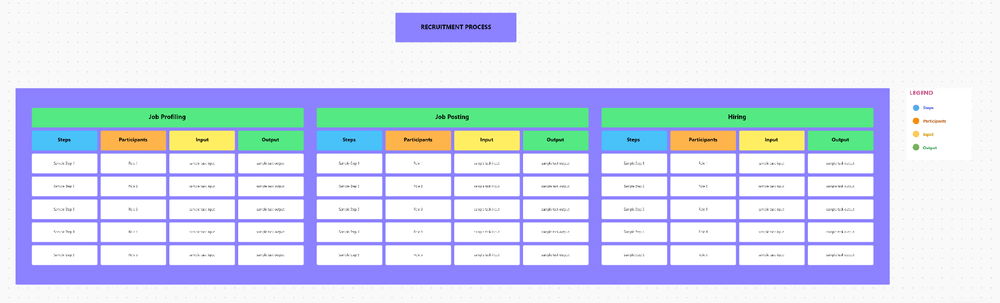
Need a hand getting started? Use any of these free HR templates.
 Summarize this article for me please
Agile HR Methodologies
Now, there are some principles of agile, like feedback focus, delivering in increments, and collaboration over competition, that can be easily implemented in traditional HR practices.
However, agile HR needs to do a little more than that. It needs to go beyond piecemeal practices and embrace a wholesome approach. Some of the commonly followed models are:
1. Scrum
Scrum software development is a time-boxed framework that breaks down large projects into short sprints of two weeks. If you’re an HR practitioner leading projects, like developing a new onboarding program or revamping the performance review process, Scrum is a great structure to adopt.
To successfully implement HR projects the Scrum way:
Think in sprints: Break down work into small, manageable parts that can be completed in 1-2 week sprints.
Create a backlog: Accept requests from business teams and organize them in a clearly prioritized backlog.
Prioritize: Use a process similar to user stories to prioritize the tasks that need to be completed in each sprint.
Run standups and retrospectives: Hold daily standup meetings to discuss plans for the day and clear blockers. Discuss successes and failures in sprint retrospectives.
Measure progress: Set up sub-tasks to roll up into tasks and projects so you can track progress effectively.
2. Kanban
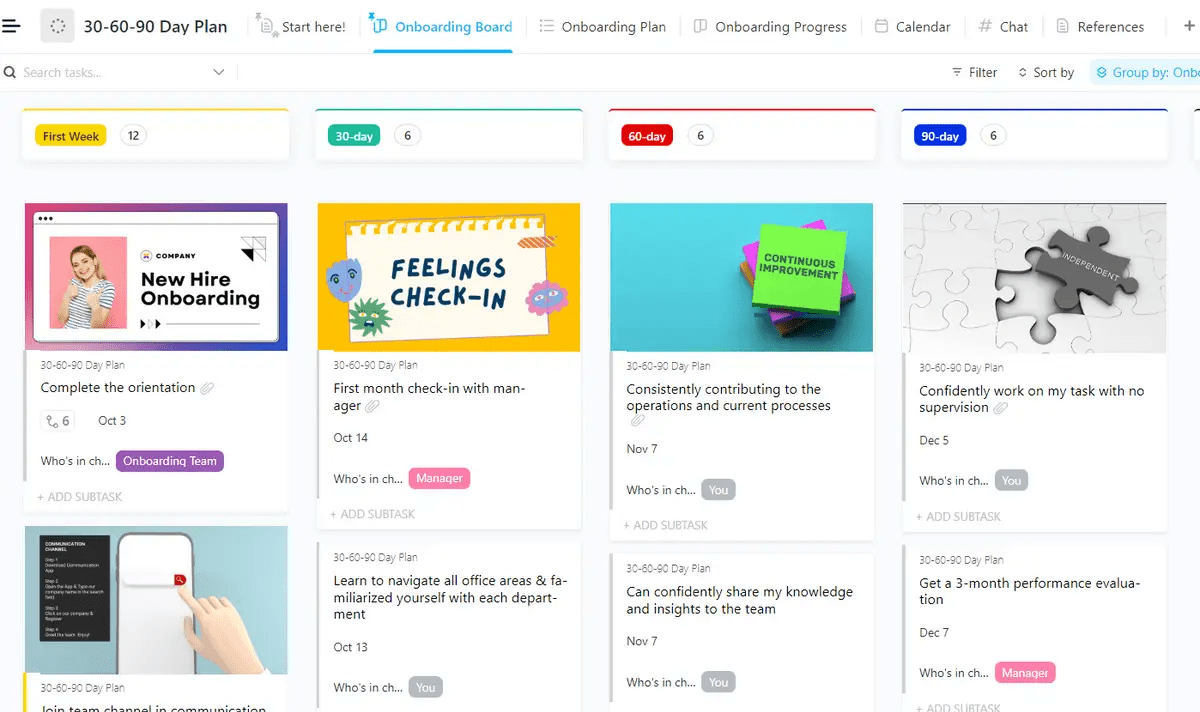
Kanban utilizes a visual board to manage workflow. Tasks are represented by cards that move across different stages (e.g., to-do, in progress, done). HR teams can set up their Kanban boards for the purposes most relevant to them, such as a hiring pipeline for each role.
To make the most of Kanban, consider the following.
- Map process: Break down every process into stages that can be paid on a Kanban board
- Identify parameters: Make a list of things you need for each task, like assignee, deadline, acceptance criteria, etc.
- Work in flow: Train teams to think of tasks as a flow from one stage to another
3. DevOps
DevOps software development is built on team empowerment, automation, and continuous improvement. These principles can be applied to DevOps by:
- Embracing tech and creating self-service portals for employees to access HR resources (e.g., benefits enrollment, policy documents)
- Automating routine tasks like expense claims, leave approvals, etc.
- Integrating with other systems like payroll or performance management for a holistic view of the workforce
- Continuously improving based on performance, feedback, observations, and emerging expectations
Bonus: A primer on DevOps vs. Agile
4. Minimum viable product
In software, this means creating a stripped-down version of a product or service to gather early feedback and iterate quickly. For agile HR teams, it can be extremely useful, especially in change management programs.
If you’re considering a new compensation structure, you can pilot it on a smaller scale (e.g., a new department or team) before rolling it out to the entire organization.
This allows for quick adjustments based on real-world user experience and avoids wasting resources on agile HR management that might not resonate with employees.
Irrespective of which model of agile HR you choose, you need an implementation plan. You’re in luck!
Summarize this article for me pleaseImplementing Agile HR on Your Team
Ready to transform your HR team into an agile powerhouse? Here’s a step-by-step guide to get you started and streamline the process.
1. Assess and align
Gather data: Begin by understanding your team’s current state and desired future state. Conduct surveys, focus groups, or one-on-one conversations. Create Agile documentation to identify strengths, weaknesses, and opportunities for improvement.
Define your goals: Align HR goals with overall business objectives. What are the key HR metrics you want to improve? Use the SMART goals framework to increase your chances of achieving them.
Don’t know where to start? ClickUp’s Agile Team Roadmap Template can help visualize your place within the larger organizational context.

2. Build your agile HR team
Assemble the team: When selecting HR team members to pilot your agile HR initiatives, consider skills, experience, and willingness to embrace change. Those already familiar with Agile and approve of its methods might be your best bet.
Get out of their way: Agile works only when built on empowerment. Empower your agile teams to be self-managed and encourage them to make decisions among themselves.
3. Embrace agile practices
Choose your framework: Select an agile methodology (Scrum, Kanban, etc.) that best suits your HR processes.
Outline your practices: Design how you’re going to practice agile HR, what artifacts you’ll maintain, and which processes you’ll follow

Make agile practices visible and accessible to ensure that your team embraces them enthusiastically. Use the ClickUp HR Handbook Template to create your go-to guide for all things agile HR.
Step 4: Implement and iterate
Communicate: Inform your agile HR team members of the change in how you work. Discuss both the philosophy and the action items. Encourage them to disagree and debate with them actively.
Break down work into sprints: Divide larger projects into manageable chunks with clear goals, deadlines, and acceptance criteria.
Be transparent: Make information accessible and easy to absorb with visual tools like ClickUp’s Kanban boards. This way, everyone will always have a clear view of work in progress.
Gather feedback and adapt: Collect feedback in both formal and informal ways. Formally, conduct surveys or interviews to gauge performance.
Informally, observe how people are reacting to the change. Identify what they’re enjoying and what they hate. Seek to understand their agile HR mindset. Slow down or accelerate the adoption of agile HR based on feedback.
Summarize this article for me pleaseLaunch Your Agile HR Practice With ClickUp
Agile HR management is a journey, not a destination. While initially a software development paradigm, today, agile principles are commonly followed in a wide range of functions, and HR is slowly embracing them too.
To drive this organizational change towards agile HR, you need an armor of sharp tools. ClickUp is designed to be exactly that.
With robust project management, customizability, collaboration, and more, ClickUp is the perfect partner in your Agile transformation journey. See how ClickUp can help you build a high-performing agile HR team!


Everything you need to stay organized and get work done.

Recent Articles
8 Communication Strategies That Actually Fix Team Chaos 
8 Communication Strategies That Actually Fix Team Chaos
ADHD Task Management: How to Build a System You’ll Still Use in a Month 
ADHD Task Management: How to Build a System You’ll Still Use in a Month
10 Best Agile Tools for Sprints, Estimation, and Retros 2026
10 Best Agile Tools for Sprints, Estimation, and Retros 2026
