


Every tech startup faces a common challenge in its growth journey: great business and product potential but no clear path to hitting its growth targets. Every department seems to have its own goals, but none are tied back to a bigger picture.
Enter OKRs (Objectives and Key Results)!
When a founder sets clear objectives and measurable outcomes, the growth team can quickly shift its compass and work in a particular direction.
The result? A sharper focus and faster growth. If you want to drive similar results, check out these OKR examples for growth that can steer your team in the right direction. 🧭
OKR Examples for Growth: How to Set and Implement Them

 Summarize this article for me please
What Are Growth OKRs?
Growth OKRs are specific goals designed to drive a company’s expansion and success. They focus on measurable outcomes that directly impact growth, such as increasing customer acquisition, boosting revenue, or enhancing product development.
Unlike traditional OKRs that might address general objectives or operational efficiency, growth OKRs hone in on strategies that propel the business forward.
This targeted approach allows teams to concentrate on what truly matters, making it easier to prioritize initiatives that support the company’s growth.
🔍 Did You Know? The concept of OKRs originated at Intel in the 1970s and was later popularized by Google, where they played a key role in scaling the company’s operations.
Importance of OKRs for growth
OKRs play a crucial role in driving growth within an organization. They keep teams focused on high-impact goals that can significantly influence the company’s trajectory.
Growth OKRs ensure that all departments align around key business drivers, such as customer acquisition, sales revenue, retention, and product development.
Measurable outcomes form the backbone of growth OKRs. They allow teams to track progress and make data-driven decisions.
For example, a company might set an OKR to increase its marketing-originated customer percentage by 15%. Teams would then track new customer sign-ups directly tied to monthly marketing efforts. This approach turns ambitious goals into actionable milestones, accelerating overall business growth.
Summarize this article for me pleaseThe Benefits of Setting Growth OKRs
Setting growth OKRs can unlock several advantages for a business. Here are a few:
- Better focus: These objectives provide better focus, enabling teams to channel their efforts into key initiatives directly contributing to growth. With clear targets, distractions diminish, and all actions align toward specific outcomes
- Team Alignment: Growth OKRs also promote alignment across teams. When every department understands the overall objectives, they can coordinate their efforts effectively, ensuring a cohesive approach to meeting the company’s goals. This level of coordination minimizes miscommunication and improves collaboration
- Increased accountability: Each team member knows their responsibilities and the expected results. This clarity ensures that progress can be monitored and everyone’s committed to meeting targets
- Data-led decision-making: Growth OKRs foster data-driven decision-making. They allow businesses to track their progress and adjust based on real-time data
- Agility: It leads to greater agility, particularly in fast-changing markets, as teams can quickly respond to new challenges or opportunities with clear direction
🔍 Did You Know? Companies like Amazon and Netflix have integrated OKRs into their growth strategies long before OKRs became a buzzword, using them to streamline operations and drive innovation.
Summarize this article for me pleaseUnderstanding the Basics of Growth OKRs
Growth OKRs are built around a few key components that make them highly effective in driving business outcomes.
First, every objective should be clear and ambitious, providing direction for teams without being vague. However, it should be realistic enough that the team feels motivated rather than overwhelmed.
The second essential component is key results, which must be measurable. Key results quantify the objective’s success, allowing teams to track progress.
For example, an objective like ‘expand market presence’ might have key results like ‘increase customer acquisition by 20%’ or ‘secure 50 new partnerships.’ These results keep teams accountable and provide clear milestones to achieve.
Growth teams can particularly benefit from OKRs because they focus on metrics that directly drive expansion. For instance, a marketing team might set an objective to improve brand visibility, with key results like increasing social media engagement or improving SEO rankings.
This creates focus, ensuring teams prioritize efforts that yield the most impactful outcomes. Moreover, OKRs promote agility. In fast-paced environments, growth teams must be adaptable, and OKRs help by providing a flexible framework.
Regular check-ins and updates allow teams to adjust their approach, ensuring they stay on track to hit their targets despite changing market conditions or business needs.
🔍 Did You Know? OKRs and KPIs serve different purposes: OKRs focus on setting ambitious goals and driving growth through measurable outcomes, while key performance indicators (KPIs) track the ongoing performance of existing processes.
Summarize this article for me pleaseExamples of Effective Growth OKRs
To help you get started, here are some growth OKR examples that can inspire your strategy across different industries and departments. ✅
Product development OKRs
1. Objective: Improve product user retention
- Key result 1: Decrease user churn rate from 12% to 8% in the next quarter
- Key result 2: Increase feature adoption by 20% within six months
- Key result 3: Launch two user-requested features by the end of the quarter
2. Objective: Enhance product performance
- Key result 1: Reduce page load time to under two seconds for 90% of users
- Key result 2: Identify and resolve 95% of critical bugs within 48 hours
- Key result 3: Increase system uptime to 99.9% over the next quarter
💡 Pro Tip: Celebrate small wins. Even if an OKR isn’t fully met, acknowledging incremental progress can keep team morale high and cultivate a culture of continuous improvement.
Marketing OKRs
3. Objective: Expand brand visibility
- Key result 1: Grow organic website traffic by 40% over the next quarter
- Key result 2: Increase social media followers by 25% across all platforms
- Key result 3: Secure 100 mentions in industry-related publications
4. Objective: Generate qualified leads for sales
- Key result 1: Increase lead generation by 30% through content marketing efforts
- Key result 2: Achieve a conversion rate of 15% on all landing pages
- Key result 3: Grow email list subscribers by 5,000 over three months
Sales OKRs
5. Objective: Increase revenue from new and existing customers
- Key result 1: Close $1.5 million in new sales within the next quarter
- Key result 2: Increase average deal size from $20,000 to $30,000
- Key result 3: Shorten the sales cycle from 60 days to 45 days
6. Objective: Expand sales in new geographic regions
- Key result 1: Close 15 deals with new clients in APAC within six months
- Key result 2: Increase market share in Europe from 10% to 18%
- Key result 3: Onboard 5 new regional sales reps within 60 days
📖 Also Read: 10 OKRs for Startups to Grow Your Business
Customer success OKRs
7. Objective: Improve customer satisfaction and loyalty
- Key result 1: Increase customer satisfaction score (CSAT) from 75% to 90%
- Key result 2: Achieve an NPS score of 9+ within the next quarter
- Key result 3: Reduce customer churn rate from 10% to 6%
8. Objective: Boost customer lifetime value (CLV)
- Key result 1: Increase average CLV from $1,200 to $1,800 per customer
- Key result 2: Implement a loyalty program that retains 80% of high-value customers
- Key result 3: Reduce customer onboarding time from 30 days to 20 days
Engineering OKRs
9. Objective: Improve system scalability and performance
- Key result 1: Increase platform capacity to support 200,000 concurrent users
- Key result 2: Reduce server response time to under 1 second for 95% of users
- Key result 3: Implement automatic scaling to handle traffic surges within 3 months
10. Objective: Strengthen system security
- Key result 1: Achieve ISO 27001 certification within six months
- Key result 2: Resolve 100% of critical vulnerabilities within 24 hours of identification
- Key result 3: Conduct quarterly security audits and resolve all high-risk issues
Human resources OKRs
11. Objective: Attract and retain top talent
- Key result 1: Hire ten senior-level engineers in the next two quarters
- Key result 2: Increase employee retention from 85% to 92%
- Key result 3: Improve employee referral participation from 20% to 40%
12. Objective: Enhance employee engagement
- Key result 1: Boost the employee satisfaction score from 80% to 90%
- Key result 2: Launch a company-wide mentorship program with 100% participation from new hires
- Key result 3: Increase employee productivity index from 75% to 85% over the next quarter
Finance OKRs
13. Objective: Improve financial forecasting and budgeting
- Key result 1: Increase forecast accuracy from 85% to 95% for quarterly revenue
- Key result 2: Reduce budget variance from 10% to 5% over the next two quarters
- Key result 3: Implement automated financial reporting, reducing reporting time by 50%
14. Objective: Secure funding for growth
- Key result 1: Raise $10 million in Series B funding within the next six months
- Key result 2: Increase investor meetings by 30% over the next quarter
- Key result 3: Secure two strategic partnerships worth $1 million in capital
🤝 Friendly Reminder Limit the number of OKRs to avoid spreading your team too thin; focus on high-priority objectives for maximum impact.
Operations OKRs
15. Objective: Streamline operations to reduce costs
- Key result 1: Reduce operating expenses by 20% over the next quarter
- Key result 2: Automate 50% of manual processes to increase efficiency
- Key result 3: Decrease inventory holding costs by 15% through improved logistics
16. Objective: Improve supply chain efficiency
- Key result 1: Reduce shipping time from 5 days to 3 days
- Key result 2: Achieve a 98% on-time delivery rate for customer orders
- Key result 3: Implement a new inventory management system within 90 days
IT OKRs
17. Objective: Improve internal IT infrastructure
- Key result 1: Migrate 80% of services to the cloud within six months
- Key result 2: Reduce IT ticket resolution time from 48 hours to 24 hours
- Key result 3: Achieve 99.9% system uptime over the next quarter
18. Objective: Strengthen data security and compliance
- Key result 1: Implement GDPR compliance for 100% of customer data within 3 months
- Key result 2: Complete an external data audit with zero major findings
- Key result 3: Reduce the average time to detect and resolve security incidents from 6 hours to 2 hours
Customer support OKRs
19. Objective: Improve response time and customer satisfaction
- Key result 1: Reduce average response time from 4 hours to 1 hour
- Key result 2: Increase customer satisfaction with support interactions from 80% to 90%
- Key result 3: Implement live chat support, reducing resolution time by 30%
20. Objective: Boost first-contact resolution (FCR)
- Key result 1: Increase the FCR rate from 70% to 85% within the next quarter
- Key result 2: Train 100% of support staff on advanced troubleshooting techniques
- Key result 3: Reduce ticket escalation rate from 20% to 10% within three months
💡 Pro Tip: Involve the entire team when setting OKRs to ensure buy-in and commitment from all levels of the organization.
While defining OKRs is important, it’s not easy to maintain and track progress. That’s why using a tool is helpful. Let’s explore how ClickUp can come in handy.
Summarize this article for me pleaseSetting and Managing OKRs
ClickUp is a project management software that provides robust tools to make setting and managing OKRs efficient and transparent.
With ClickUp’s intuitive interface, teams can set clear goals, track performance, and ensure transparency across departments within one platform.
Let’s dive into its features below. 👇
ClickUp Goals
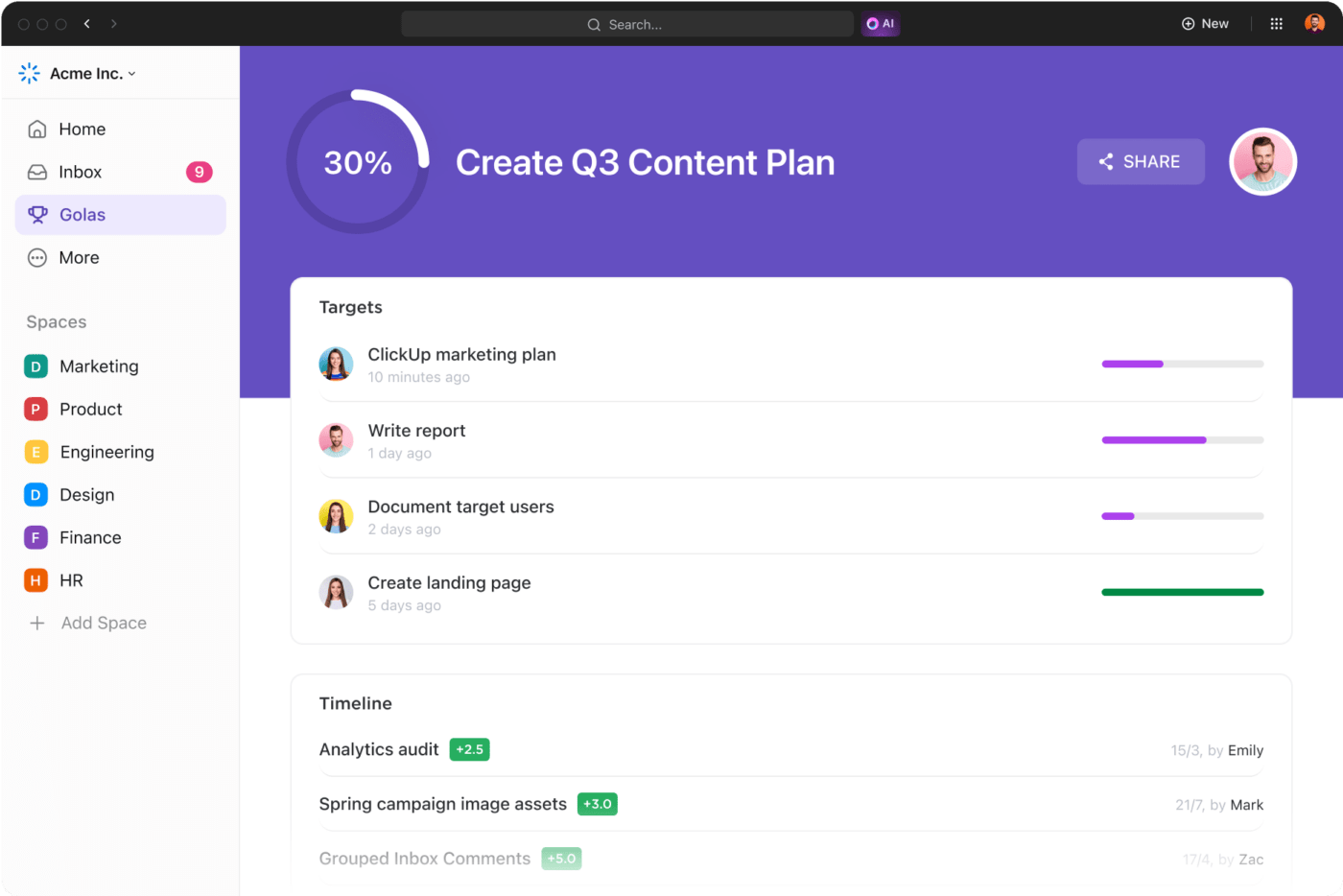
ClickUp Goals allows teams to break down larger objectives into smaller, actionable key results. These goals can be tracked in real time, giving a clear visual representation of progress.
Teams can set deadlines, monitor milestones, and focus on their growth targets.
If your team’s goal is to increase customer satisfaction, ClickUp Goals lets you set Key Results, such as improving response time by 30% and boosting feedback scores by 20%. Each Key Result is tracked with live progress updates, giving your team a visual snapshot of how close you are to hitting your main objective.
ClickUp Dashboards
Another key tool is ClickUp Dashboards, which offers a customizable overview of OKR progress.
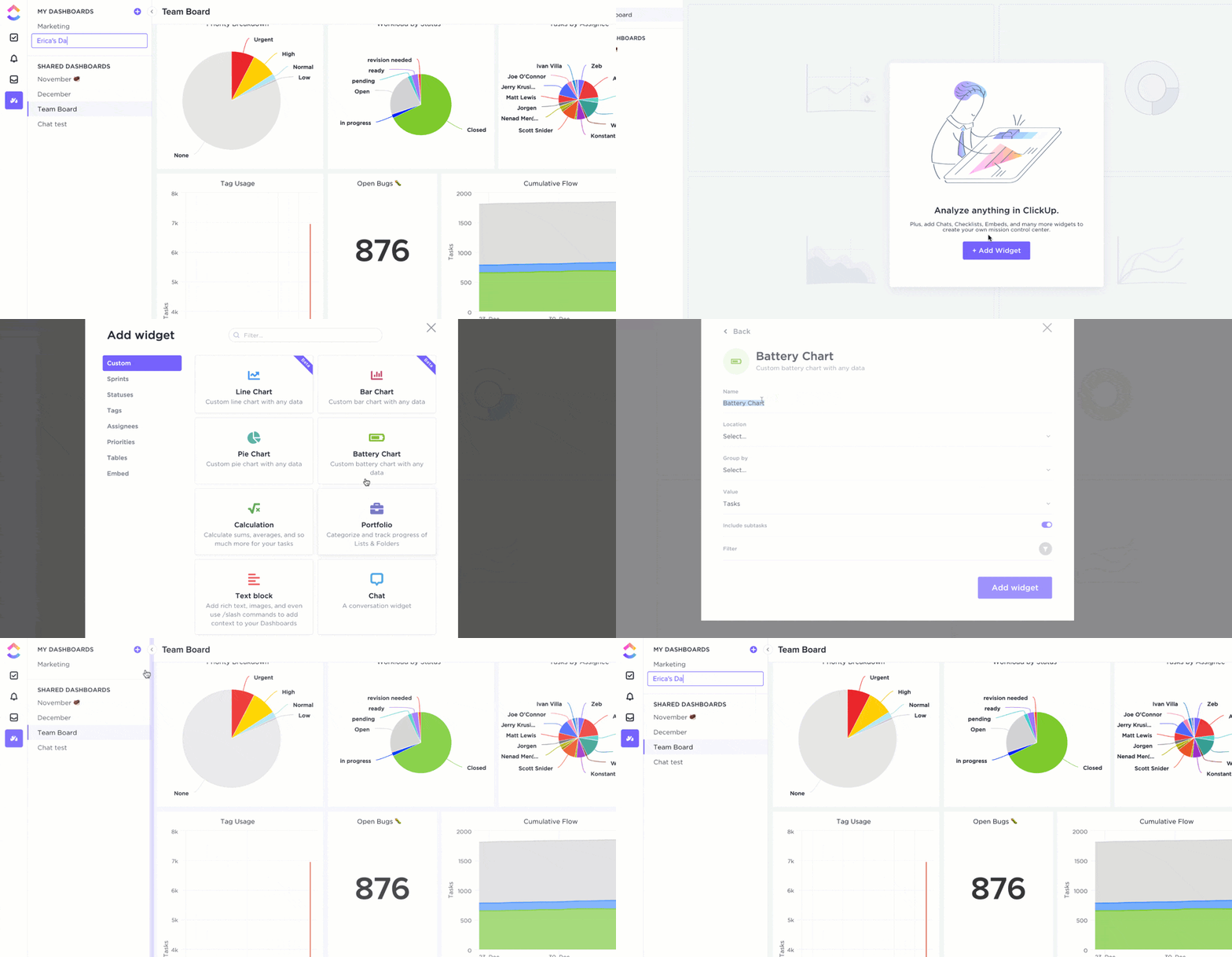
Teams can track performance through widgets displaying key metrics, deadlines, and progress. Dashboards facilitate easy identification of areas needing improvement and ensure that teams stay aligned with their objectives.
For example, a sales team could use ClickUp Dashboards to view monthly revenue, lead conversion rates, and individual sales targets in one place. This setup highlights lagging metrics, helping the team adjust strategies and focus on reaching their goals.
ClickUp also offers various OKR templates to support your initiatives.
ClickUp OKR Framework Template

The ClickUp OKR Framework Template makes goal-setting easy and efficient. You can customize objectives and key results to align with your team’s priorities.
The template allows you to create specific SMART goals that align with your business objectives. You can monitor progress in real-time, identifying any roadblocks early.
ClickUp Company OKRs and Goals Template
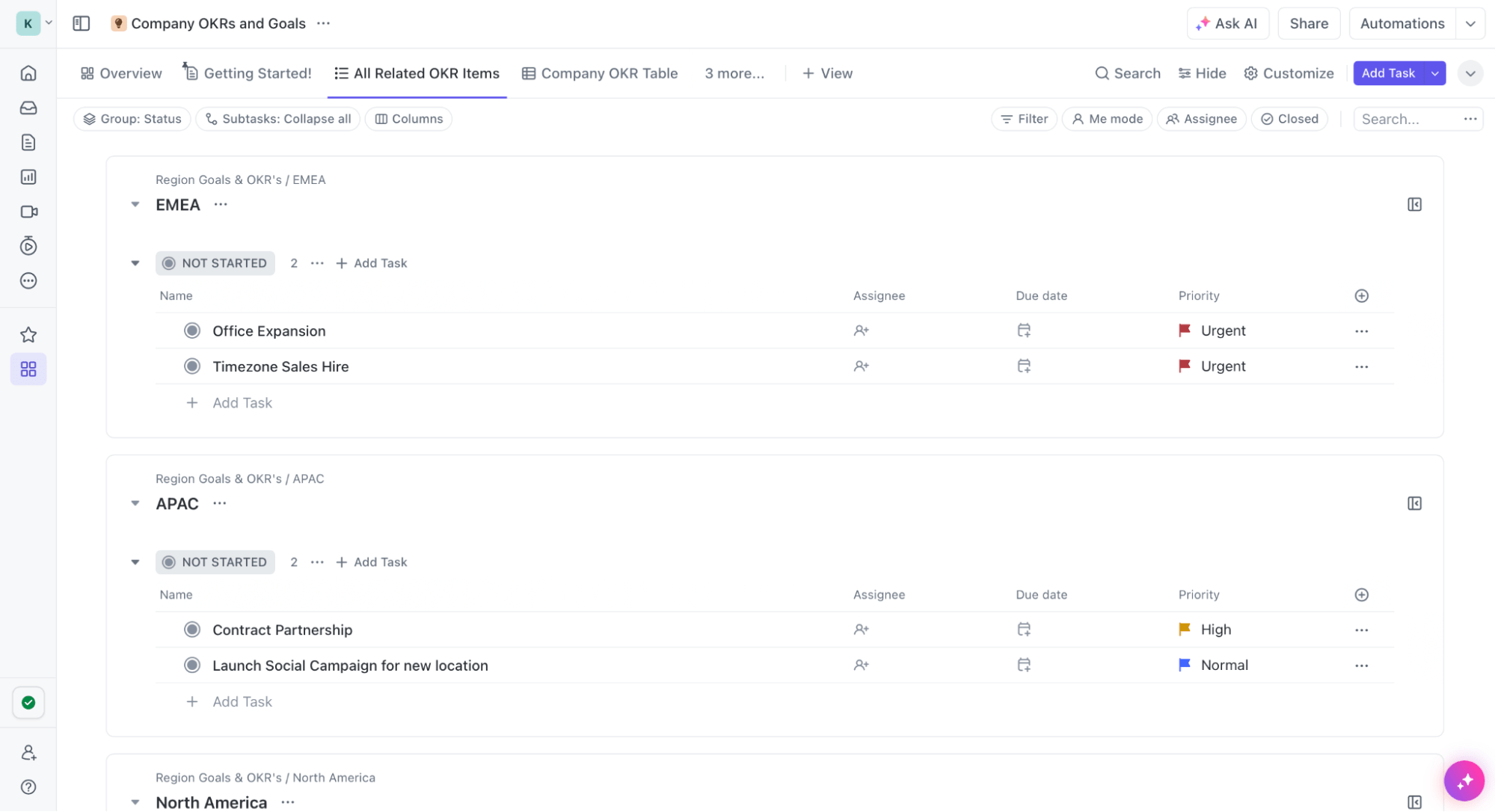
The ClickUp Company OKRs and Goals Template helps you efficiently organize and achieve company objectives. It stands out due to its flexibility and customization.
This template allows you to structure objectives at various levels—company, department, and team—ensuring alignment across the organization. Its adaptability enhances collaboration among team members, as everyone can access and contribute to the goal-setting process in a manner that resonates with them.
Implementing the OKR framework in your organization
Successfully implementing the OKR framework requires building a culture where goals are clear, measurable, and aligned across the organization.
Leadership needs to set objectives that contribute to company-wide goals so that teams understand how their efforts fit into the broader strategy. Encouraging team involvement fosters a sense of ownership and alignment toward these goals.
ClickUp’s collaboration features encourage this alignment.
ClickUp Chat facilitates real-time communication among growth team members. With Chat, everyone stays updated on progress and expectations. Teams can engage in quick conversations, resolve queries, and maintain transparency. No silos anymore!
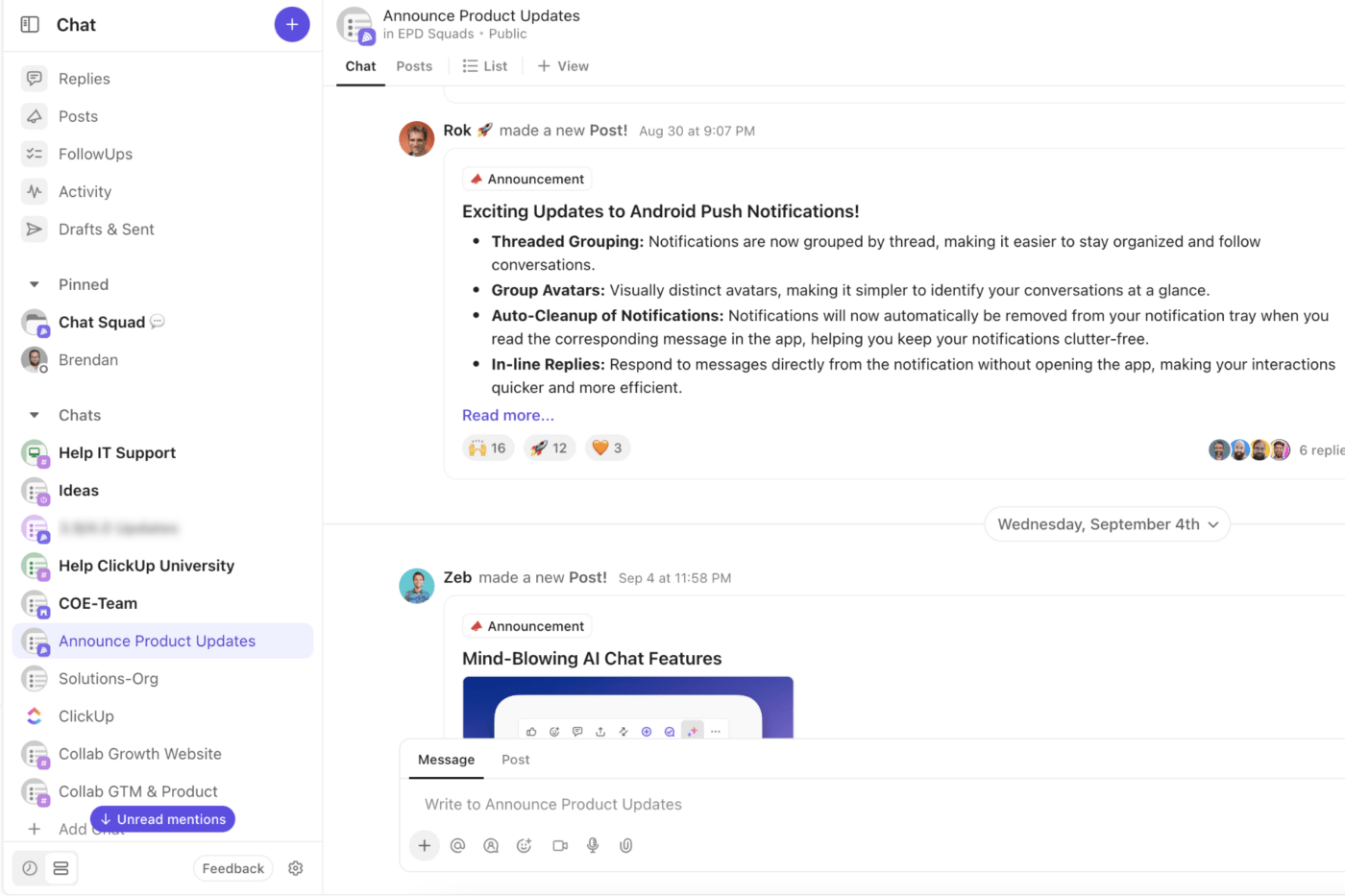
Chat connects conversations, tasks, and projects, bringing them together in a space where teamwork flourishes. Having all your important conversations centralized lets you immerse yourself in deep work, free from the anxiety of missing critical updates.
Additionally, ClickUp Assign Comments allows specific tasks to be assigned directly within comments, ensuring that every key result has clear ownership and responsibility.
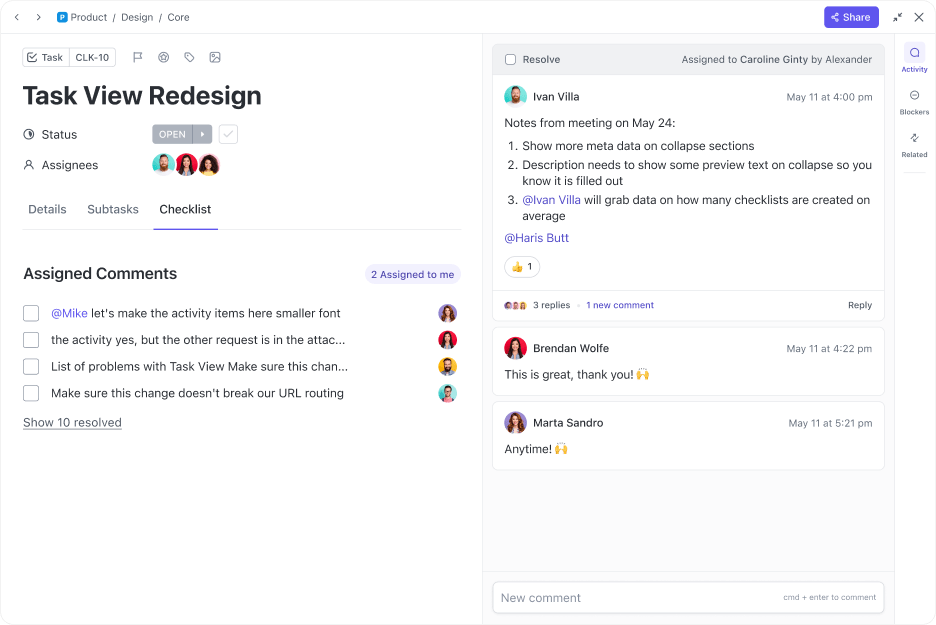
These features help organizations create a collaborative environment where objectives are clear, responsibilities are defined, and progress can be tracked at all times.
Let’s look at how Spekit, a digital adoption platform, used ClickUp for their goal-setting!
Spekitstruggled with project management and team alignment. The team integrated ClickUp to centralize tasks, boost visibility, and improve accountability. Using ClickUp’s customizable features, Spekit tailored task management to fit their needs, streamlined processes, and enhanced collaboration, leading to a big jump in productivity and efficiency.
Summarize this article for me pleaseBest Practices for Implementing Growth OKRs
To maximize the effectiveness of growth OKRs, organizations should follow these best practices:
Tip 1: Set stretch goals
Stretch goals push teams to go beyond their comfort zones, driving ambitious yet achievable growth. These goals inspire creativity and innovation, helping teams reach results that may have seemed out of reach.
However, while challenging, they should still be realistic to maintain motivation.
Tip 2: Focus on measurable results
Clear, quantifiable key results ensure that teams can track progress and evaluate success objectively. Vague goals lead to uncertainty, while measurable results provide a clear path forward, making it easier to monitor performance and adjust strategies as needed.
Tip 3: Ensure top-down and bottom-up alignment
Alignment between leadership and teams is critical for OKRs to work effectively.
Leadership should communicate company-wide objectives while team members contribute insights on how they can meet these goals. This two-way alignment ensures that everyone works toward the same end result with a shared understanding of priorities.
💡 Pro Tip: Keep your OKRs flexible enough to adjust in case market conditions or business priorities shift unexpectedly.
Tip 4: Foster cross-team collaboration
Growth OKRs often span multiple departments, making cross-team collaboration essential.
Encouraging shared objectives between teams, such as marketing and sales, helps break down silos and align efforts toward a common goal. This collaboration improves efficiency and accelerates growth planning.
Tip 5: Conduct regular progress reviews
Regular check-ins help teams stay on track and adapt quickly to changes.
Reviewing OKRs frequently allows organizations to identify potential roadblocks, adjust strategies, and celebrate incremental successes. This process ensures continuous improvement and keeps everyone aligned with the broader goals.
📖 Also Read: How to Set Marketing OKRs (With 30 Examples)
Summarize this article for me pleaseCommon Challenges in Growth OKRs
Setting and managing growth OKRs often come with challenges that can derail progress if not addressed effectively.
One common issue is setting overly ambitious goals, which can overwhelm teams and lead to frustration when those goals aren’t met.
Misalignment between departments also creates obstacles, as teams may pursue conflicting priorities, reducing the overall impact of OKRs. Additionally, tracking progress can be difficult without the right tools, causing delays and incomplete updates.
To tackle these challenges, ClickUp offers several features that simplify OKR management.
Assigning ClickUp Tasks directly to team members promotes clear accountability, making it easier to monitor key results.
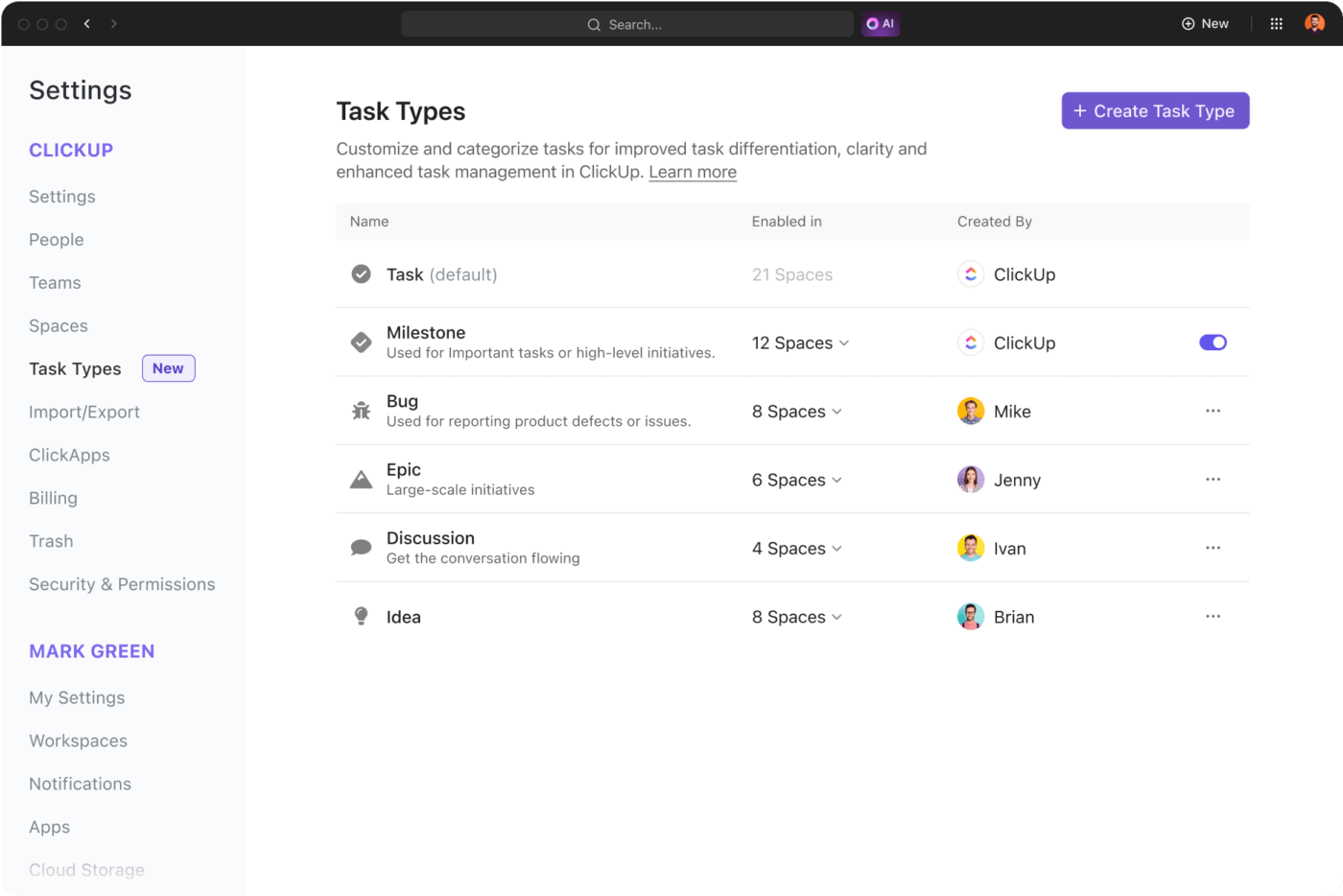
When tasks are assigned, each individual can track their progress, update their status, and prioritize their workload accordingly. Real-time reporting with Dashboards ensures every team member sees how much progress has been made, eliminating any confusion about the team’s current position.
Further, using Goals allows teams to set, track, and update OKRs seamlessly so everyone remains aligned and focused on shared outcomes.
💡 Pro Tip: Track OKR progress frequently (even month-on-month), not just at the end of the quarter, to ensure teams stay on track and can pivot when needed.
Summarize this article for me pleaseNail Your Growth OKRs with ClickUp
Growth OKRs provide a powerful framework for achieving ambitious business objectives. Clear goals help teams stay focused and aligned, ensuring everyone works toward the same measurable outcomes.
ClickUp’s features, like Goals for tracking progress and Dashboards for visualizing key metrics, make managing OKRs seamless. Real-time collaboration through Chat and Tasks ensures that responsibilities are clear and progress remains visible.
Waiting for the new year to set new OKRs? Don’t wait!
Get started with ClickUp for free to drive meaningful growth efforts across your organization.

Everything you need to stay organized and get work done.
