






Still downloading templates?
There’s an easier way. Try a free AI Agent in ClickUp that actually does the work for you—set up in minutes, save hours every week.
Sorry, there were no results found for “”
Sorry, there were no results found for “”
Sorry, there were no results found for “”
How do you know if your team is productive? Are your retention efforts working? Are labor costs creeping up without a clear ROI?
The answer lies in workforce management KPIs, metrics that clearly show what’s working and what needs adjustment.
When tracked effectively, these KPIs empower leaders to optimize human resource planning, reduce costs, and enhance employee engagement.
Let’s dive into the key metrics that drive smarter workforce management and better business outcomes.
Keeping workforce management running smoothly isn’t just about gut instinct. It’s about numbers.
Workforce management metrics give you a pulse on everything from productivity to employee engagement, helping you make smarter, data-backed decisions.
However, not all data is valuable. The real power comes from analytics that surface patterns, flag risks, and highlight opportunities for improvement.
When done right, workforce analytics don’t just provide insight; they deliver measurable cost savings.
👀 Did You Know? Businesses implementing robust workforce analytics can save up to 2.5% of their annual payroll spend by identifying inefficiencies and compliance risks. That money can be reinvested into better hiring, training, or employee experience programs.
By tracking the right workforce management metrics, HR teams can stay ahead of issues before they escalate.
Whether it’s monitoring productivity trends, attendance patterns, or cost fluctuations, these metrics ensure that data rather than assumptions drive workforce decisions.
For example, tracking absenteeism rates can highlight potential burnout risks, allowing managers to address workload distribution or engagement issues before they impact retention.
Monitoring schedule adherence helps optimize staffing levels, reducing unnecessary overtime costs while maintaining operational efficiency.
By leveraging workforce management metrics effectively, organizations can improve efficiency, enhance employee satisfaction, and align labor costs with business objectives.
📖 Also Read: Best Workforce Optimization Software
Workforce management KPIs can be grouped into several broad categories, each serving a different strategic purpose. Understanding these categories helps HR teams focus on the right data to drive better business decisions.
Productivity metrics measure the efficiency and effectiveness of your workforce. These provide insight into whether employees are meeting performance expectations and how well they are contributing to business outcomes.
Organizations with highly productive employees logically see higher profitability than those with low productivity. Tracking key metrics in this category can help identify underlying inefficiencies or gaps.
For example, if a company sees a steady decline in revenue per employee, it could indicate a training gap, inefficient processes, or disengaged employees—all of which need targeted interventions to boost output.
Attendance and scheduling metrics are vital for ensuring a balanced and productive workforce. These key performance indicators help businesses maintain optimal staffing levels, minimize disruptions, and control labor costs.
By monitoring factors like absenteeism, schedule adherence, and overtime, organizations can prevent issues such as employee burnout, last-minute coverage gaps, and unnecessary expenses.
Accurate tracking of these metrics enables managers to create efficient schedules, support employee well-being, and sustain overall operational efficiency.
Employee engagement isn’t just about job satisfaction; it’s a critical driver of business performance. Engaged employees bring higher energy, commitment, and innovation to their work, while disengaged employees contribute to absenteeism, turnover, and lower productivity.
🧠 Fun Fact: Organizations with highly engaged employees experience higher productivity, profitability, and sales than disengaged teams. There’s a strong correlation between employee engagement and overall well-being, reinforcing that a positive work environment directly impacts business success.
Tracking employee engagement metrics like Employee Net Promoter Score (eNPS), job satisfaction scores, and manager effectiveness ratings helps organizations understand how employees feel about their work and leadership.
A drop in engagement scores can indicate poor management, lack of career growth, or insufficient recognition, giving HR teams the data they need to take proactive action.
Organizations can create a more motivated workforce by prioritizing engagement KPIs, reducing turnover, and driving stronger business outcomes.
Labor costs are often a business’s biggest expense; without proper tracking, they can spiral out of control.
Workforce management involves more than ensuring employees are engaged and productive; it also involves maintaining financial sustainability.
Key cost metrics such as total cost of workforce (TCOW), labor cost as a percentage of revenue, and unplanned overtime rates help organizations balance competitive compensation and cost efficiency.
For instance, unexpected spikes in unplanned overtime could indicate scheduling inefficiencies, leading to burnout, payroll bloat, and compliance risks.
Similarly, a high workforce cost relative to revenue might suggest that labor expenses are outpacing business growth, requiring a reassessment of staffing models, automation opportunities, or workforce productivity initiatives.
By tracking and analyzing cost-related workforce data, businesses can make more strategic decisions, whether adjusting hiring plans or leveraging capacity planning templates and tools to control expenses while maintaining operational efficiency.
High employee turnover is more than just a staffing challenge; it’s a profitability killer. Every departure means increased hiring costs, lost productivity, and disrupted workflows. This is why monitoring turnover rate, first-year attrition, and internal mobility is critical to workforce management.
📌 Take IKEA, for example. Like many retailers, IKEA struggled with high turnover, especially in countries like the UK and Ireland, where half of all new hires left within their first year.
The cost of replacing each employee was estimated at $5,000, making turnover a major financial burden. Recognizing that pay alone wasn’t enough to retain employees, IKEA implemented a multi-pronged approach to improve retention:
The results? IKEA’s voluntary turnover globally dropped from 22.4% in 2022 to 17.5% by April 2024.
In the U.S., turnover decreased from one-third to one-quarter of its workforce.
These improvements weren’t just about keeping employees. They translated into higher productivity, lower hiring costs, and a more stable workforce.
This highlights an important lesson: Retention isn’t just an HR challenge; it’s a strategic business priority.
Companies that proactively monitor first-year attrition, internal mobility, and exit reasons can pinpoint areas for improvement and implement policies that keep employees engaged and motivated.
Whether through better pay, career growth opportunities, or improved scheduling, the key to reducing turnover is creating a workplace where employees want to stay.
Here are 20+ essential workforce management metrics, covering everything from hiring and retention to engagement and efficiency:
Measures the total revenue generated per employee to assess overall workforce efficiency. This KPI helps organizations evaluate how effectively their workforce contributes to the company’s financial performance.
Measures how quickly new hires reach full productivity, providing insights into onboarding effectiveness. This KPI helps identify gaps in training programs and streamline the onboarding process to accelerate employee performance.
Measures the percentage of tasks completed on time, reflecting individual and team productivity. This KPI highlights how effectively employees and teams manage their workload and meet deadlines.
Measures the percentage of an employee’s available time spent on productive work versus administrative tasks. This KPI provides valuable insights into how effectively employees allocate their time to high-value activities.
Calculates the percentage of workdays missed due to unplanned absences, helping to identify potential engagement or health issues. This KPI is essential for understanding the impact of absenteeism on productivity and team dynamics.
Measures how closely employees follow their assigned schedules, which is crucial for roles requiring strict time management. This KPI ensures that staff are available when needed, reducing coverage gaps and maintaining service quality.
Evaluates how often scheduled shifts are successfully covered, reducing last-minute staffing gaps. This KPI ensures adequate staffing levels to maintain smooth operations and service quality.
Tracks the amount of overtime worked, which can indicate understaffing or workload imbalances. This KPI helps organizations monitor the strain placed on employees and manage labor costs effectively.
eNPS gauges employee loyalty and likelihood to recommend the company as a great place to work. This KPI provides a clear snapshot of employee satisfaction and engagement, serving as a valuable indicator of workplace culture.
Measures employee feedback on leadership quality, a key driver of engagement and retention. This KPI provides insights into how well managers support, motivate, and guide their teams.
Aggregates employee sentiment data from pulse surveys, exit interviews, and performance reviews. This KPI offers a comprehensive view of overall employee happiness and workplace satisfaction.
Tracks the percentage of employees promoted or transitioning into new organizational roles. This KPI highlights opportunities for career growth and skill development, reflecting the organization’s commitment to employee advancement.
Monitors the percentage of employees engaging in professional development, reflecting a culture of continuous learning. This KPI helps gauge the organization’s commitment to skill enhancement and career growth opportunities.
A comprehensive measure of all labor-related costs, including salaries, benefits, and training. This KPI clearly explains the financial investment required to maintain and develop the workforce.
Evaluates workforce costs in relation to total revenue to maintain financial efficiency. This KPI helps organizations understand how much of their earnings are spent on labor, providing insights into cost management and profitability.
Calculates the cost of replacing an employee, including recruiting, onboarding, and training expenses. Understanding turnover costs can help businesses justify investments in retention strategies, such as improved engagement, career development opportunities, and workplace benefits, to minimize turnover and its associated expenses.
Assesses the total cost of hiring a new employee, factoring in recruitment, training, and onboarding expenses. This KPI provides a clear picture of the financial investment required to bring in new talent.
Differentiates between employees who resign versus those who are terminated. This KPI provides insights into the reasons behind employee departures, helping organizations assess workplace culture, job satisfaction, and performance management processes.
Tracks the percentage of new hires leaving within their first year, highlighting potential onboarding or cultural fit issues. This KPI provides valuable insights into the effectiveness of recruitment, training, and integration processes.
Identifies high-performing employees lost versus those who exited without significant business impact. This KPI helps organizations distinguish between turnover that affects performance and turnover that is more neutral or beneficial.
Measures the percentage of top-performing employees who remain with the company over a set period. This KPI highlights the organization’s ability to retain its most valuable talent, which is crucial for maintaining productivity and achieving long-term goals.
When organizations measure the right HR KPIs, they gain a competitive edge in optimizing workforce strategies, reducing costs, and improving employee experience. Here’s how:
💡Pro Tip: A drop in engagement scores, increased absenteeism, or declining productivity can signal burnout before employees quit. Companies that act on these insights by improving leadership, offering career development, or increasing flexibility see lower turnover and a more motivated workforce.
📖 Also Read: Employee Management Software for HR Teams
Tracking KPIs is only valuable if they drive action. Here’s how to make workforce metrics work for your organization:
📖 Also Read: How to Streamline Processes Using an HR Dashboard
ClickUp, the everything app for work, empowers HR teams to streamline workforce management, track performance metrics, and automate essential workflows.
The ClickUp Human Resources solution simplifies workforce KPI tracking with customizable views that allow HR teams to monitor attendance trends, performance benchmarks, and engagement scores in one place.
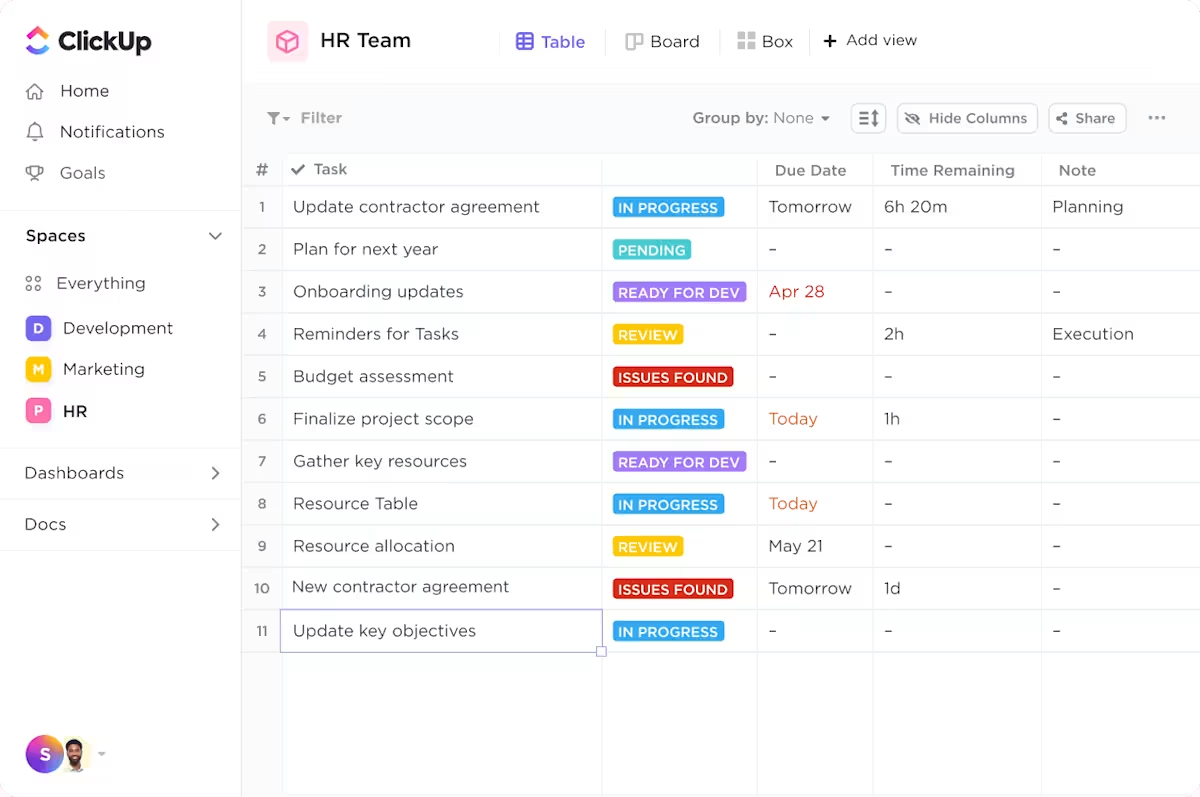
With a centralized hub for employee data and direct, confidential communication between managers and reports, HR leaders can easily spot red flags like declining engagement or performance dips before they escalate.
📮ClickUp Insight: While 60% of workers reply to instant messages in under 10 minutes, 15% take more than 2 hours to respond. This mix of lightning-fast replies and delayed responses can create communication gaps and slow down collaboration. With ClickUp, all your messages, tasks, and updates are in one place, ensuring no conversation is left hanging and everyone stays in sync, no matter how quickly—or slowly—they reply.
ClickUp also makes hiring and onboarding more efficient. Automated candidate tracking ensures recruiters don’t lose top talent in a cluttered pipeline, while structured onboarding checklists help new hires get up to speed faster.
By connecting recruitment insights with performance tracking, HR teams can reduce hiring bottlenecks and ensure every new employee transitions smoothly into a productive role.
The ClickUp Time Tracking Software helps leaders and HR teams gain clarity on workforce productivity and labor costs without relying on manual reporting. Employees can log time directly within tasks, while HR and managers get a real-time view of how work hours are spent across projects, departments, or individual employees.
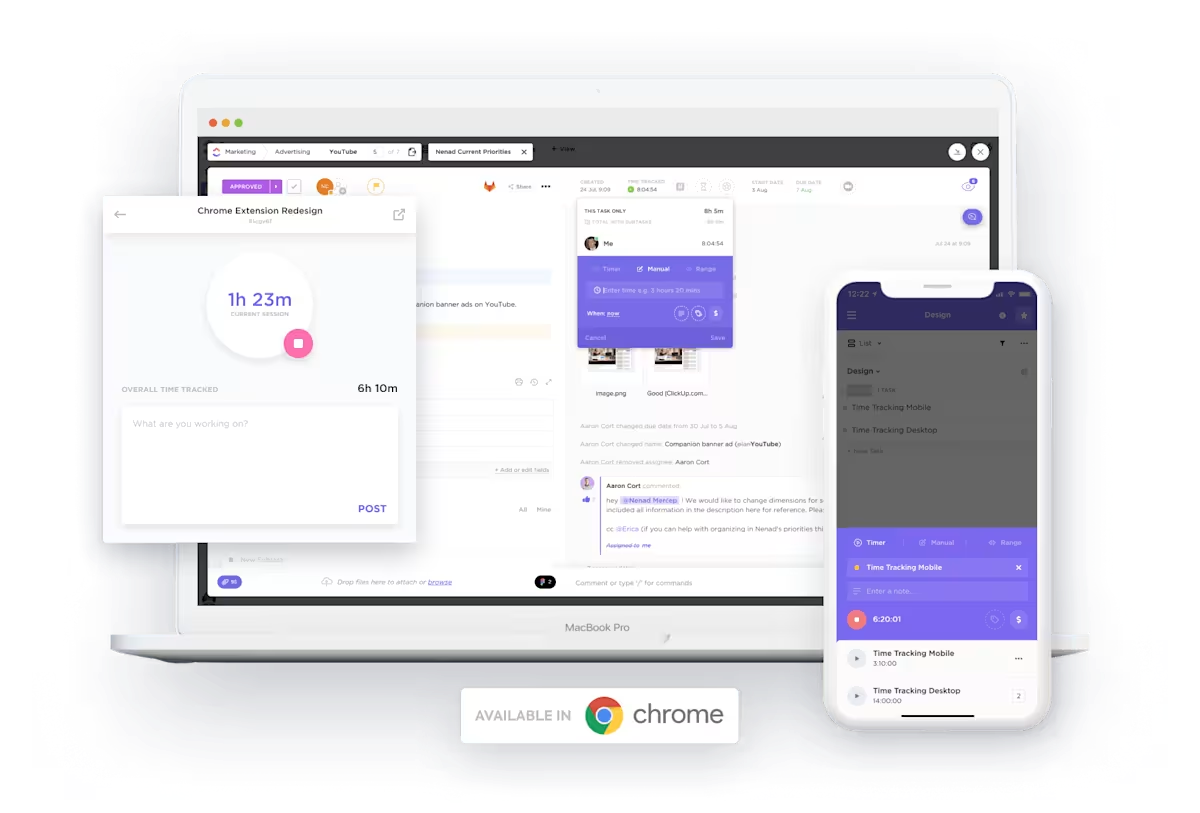
This ensures accurate payroll calculations, prevents excessive overtime, and helps identify workload imbalances before they lead to burnout.
By integrating time tracking with performance metrics, HR teams can measure efficiency trends, optimize scheduling, and ensure fair workload distribution.
Customizable ClickUp Dashboards give HR teams a real-time pulse on workforce metrics, from productivity and attendance trends to engagement levels and labor costs.
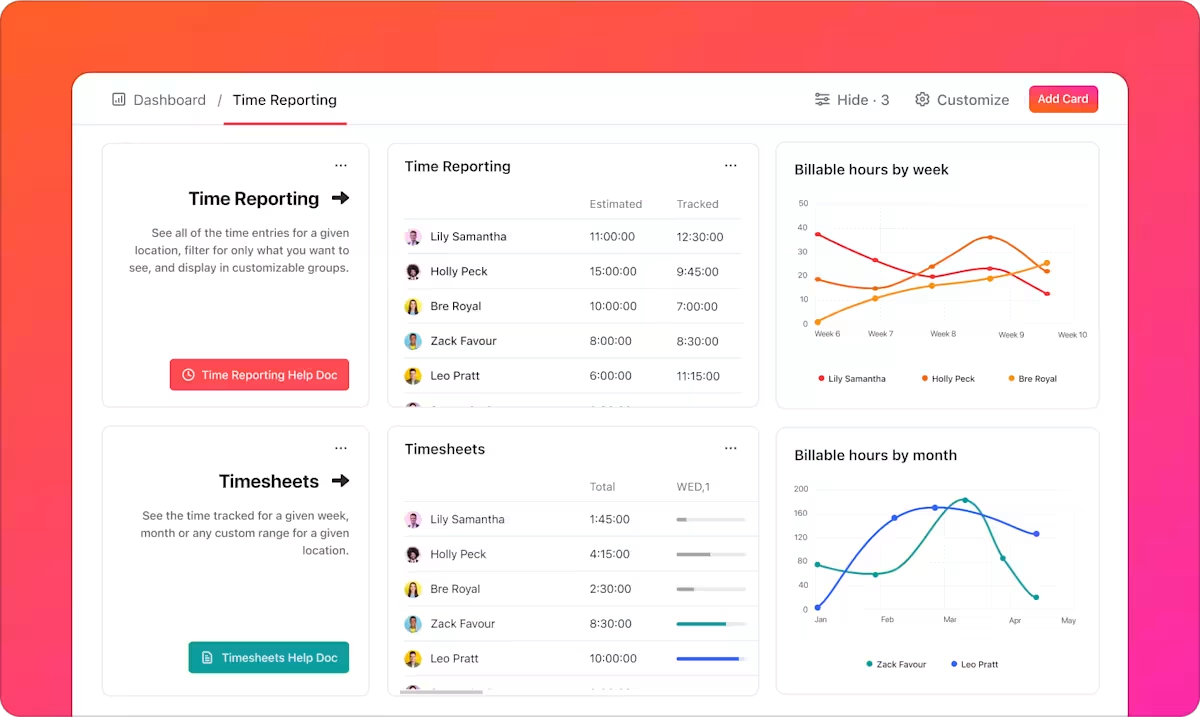
Instead of sifting through spreadsheets, HR leaders get visual reports that highlight key insights, helping them spot inefficiencies, predict turnover risks, and track hiring pipeline progress, all in one place. By tailoring dashboards to specific HR functions, teams can focus on what matters most.
Need to monitor recruitment progress? Add a widget for open roles, time-to-fill, and candidate status.
Want to track employee engagement? Display eNPS scores, satisfaction trends, and feedback summaries.
The ClickUp Goals feature transforms workforce KPIs from static numbers into dynamic, actionable insights.
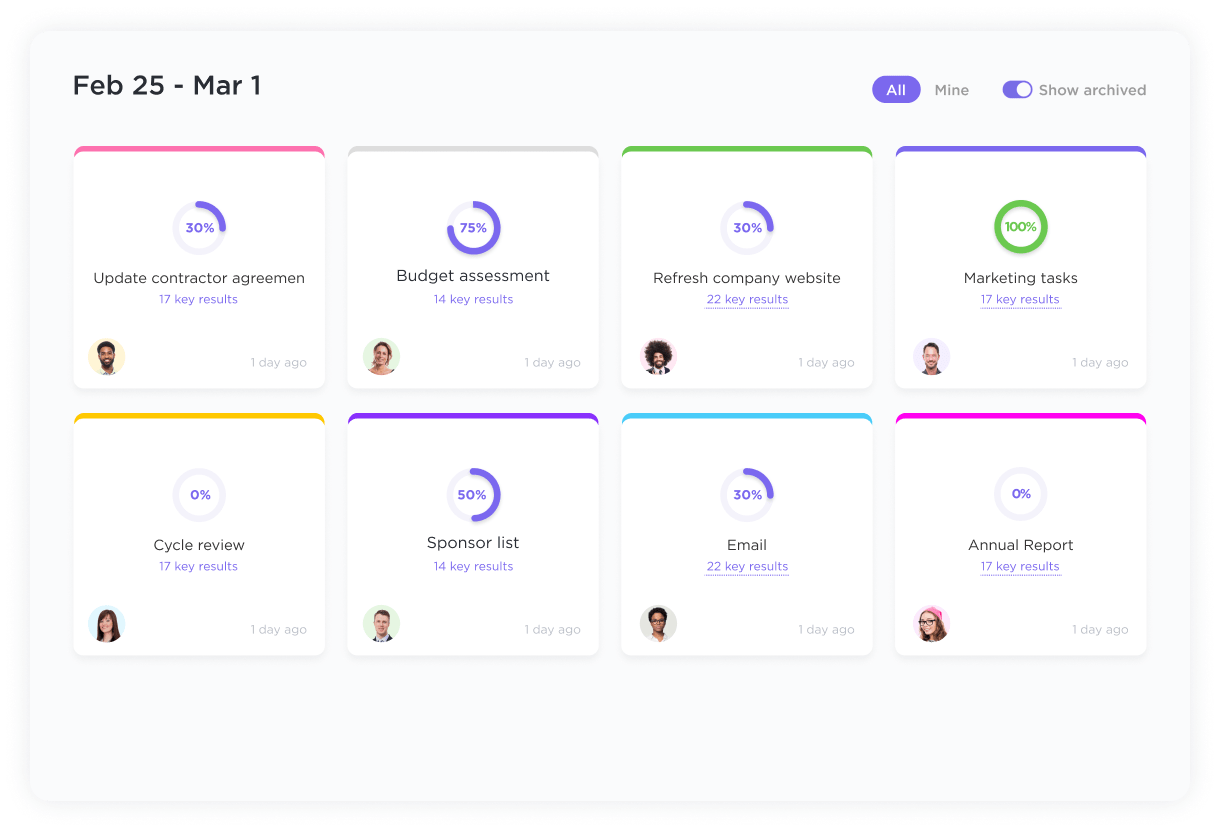
HR teams can set clear, measurable goals, such as productivity, employee retention, or training completion, and track progress in real time with automated updates.
By linking goals to specific tasks or milestones, organizations ensure alignment between workforce management efforts and business objectives.
With customizable targets, HR teams can monitor everything from hiring speed to employee engagement scores, making it easy to course-correct when needed. Progress roll-ups also consolidate related goals, offering a big-picture view of workforce performance at a glance.
Collaboration Detection on ClickUp transforms a fragmented, multi-tool struggle into a seamless, real-time experience.
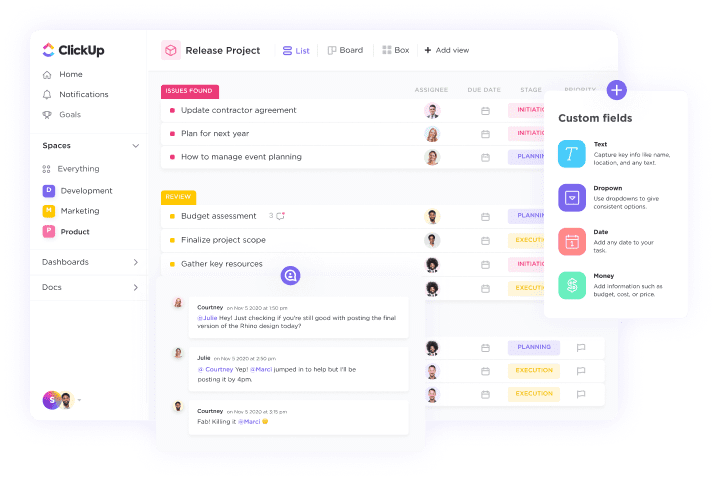
Whether your HR team is fine-tuning onboarding workflows, aligning on recruitment priorities, or reviewing performance data, ClickUp’s instant collaboration features keep everyone on the same page.
Live editing, real-time typing indicators, and instant status updates ensure no detail slips through the cracks. Team members can co-edit documents, add comments in tasks, and track changes as they happen, eliminating version control headaches and miscommunication.
Beyond collaboration, ClickUp Integrations support 1,000+ integrations, allowing HR teams to connect their workflows to essential tools like Slack, Microsoft Teams, Google Drive, and payroll software.
ClickUp offers several ready-to-use free HR templates to simplify workforce management. These templates make it easier for HR teams to track key metrics without starting from scratch.
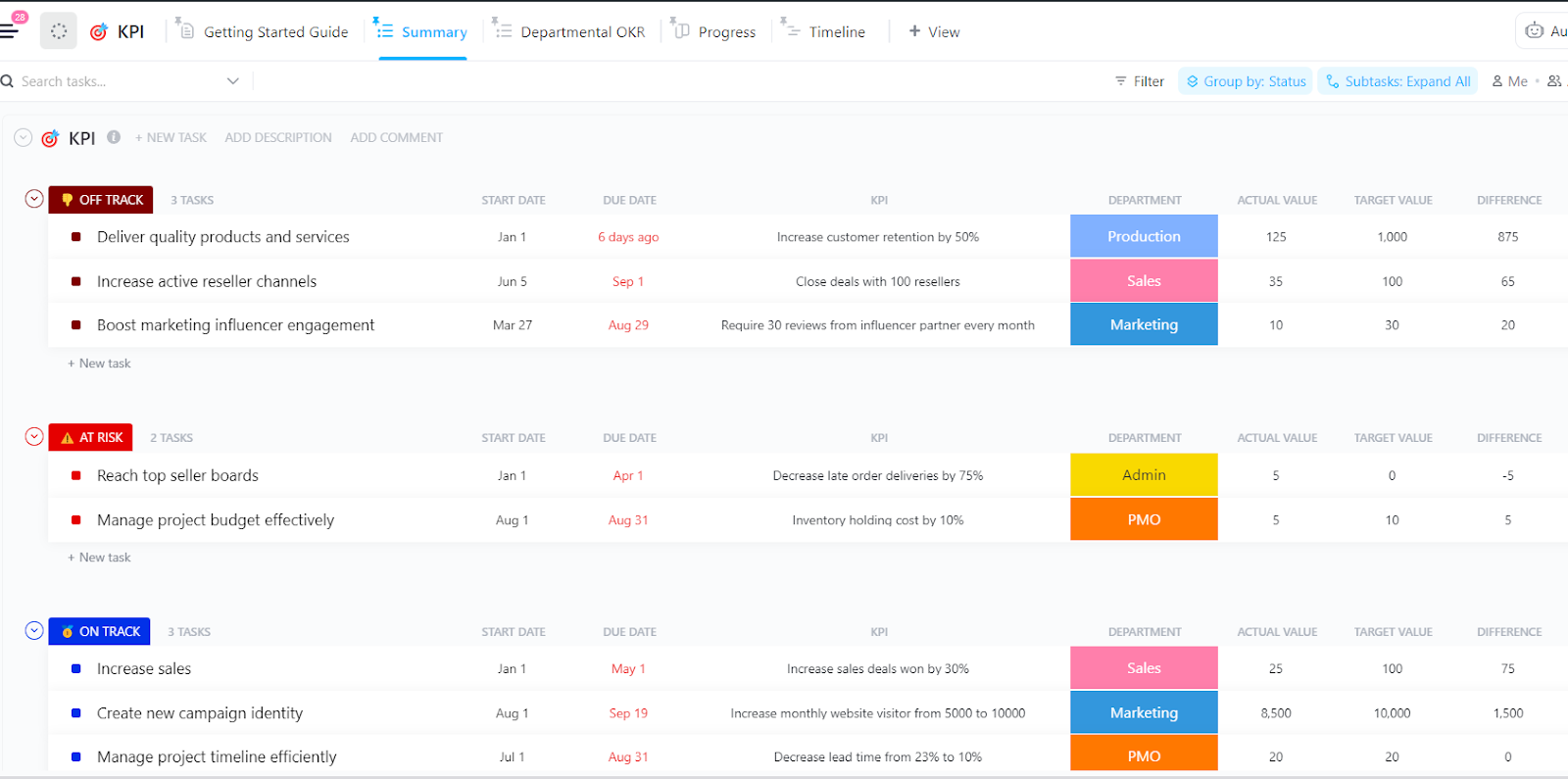
One such example is the ClickUp KPI Template, designed to make workforce performance tracking more efficient. The template offers powerful features like custom statuses, fields, and multiple views, allowing HR teams to monitor the key workforce management KPIs and metrics like employee productivity, retention, and engagement, all in one place.
With built-in automation and real-time updates, the template eliminates the need for manual tracking, ensuring HR teams always have the latest workforce data at their fingertips.
The visual dashboard helps HR teams analyze trends over time, identify performance gaps, and align HR strategies with business objectives.
The template also includes pre-built structures for departmental OKRs, progress tracking, and milestone setting, making it easy to measure success across different HR functions.
Managing a workforce isn’t easy, but having the right data makes all the difference. Workforce management KPIs help HR teams make informed decisions, whether it’s improving productivity, reducing turnover, or keeping labor costs in check.
But tracking these metrics shouldn’t be a hassle.
ClickUp simplifies workforce management by bringing everything into one place. With custom dashboards, goal tracking, time tracking, and seamless collaboration, HR teams can monitor key metrics in real time and take action faster.
Sign up for ClickUp today to streamline workforce management and make data-driven decisions with ease.

© 2026 ClickUp

There’s an easier way. Try a free AI Agent in ClickUp that actually does the work for you—set up in minutes, save hours every week.