
Sorry, there were no results found for “”
Sorry, there were no results found for “”
Sorry, there were no results found for “”
Resumes are a way for us to show prospective employers what we bring to the table.
And sure, the main intent of a resume is to showcase your professional skills, expertise, and educational background, but being successful at your job takes more than that.
Adding your hobbies and interests to your resume can position you as someone with a well-rounded personality who probably has multiple things in common with co-workers, teammates, and clients.
The ‘hobbies and interests’ section in your resume is a good place to showcase this. By listing the activities and interests that give you joy and relaxation, you give hiring managers a glimpse into who you are outside of the workday. They (and your future colleagues) can use that information to connect with you on a personal level.
A resume with diverse, varied interests also sets you apart from the competition and may even increase your chances of landing the job.
If you don’t know which hobbies and interests to include in your resume, then this guide is for you! 🫵
The short answer is yes! Hobbies and interests show prospective employers that you do productive things outside of work.
Consider a candidate who has a passion for rock climbing. When she lists it on her resume, it demonstrates her perseverance and the ability to work under pressure. It also shows her knack for problem-solving as she navigates her way up the wall. All qualities that are prized in an employee and that employers highly value.
Here’s how including a hobbies and interests section can take your resume from good to excellent:
Hobbies and interests also help you recover from work fatigue, enabling you to maintain a healthy work-life balance.
💡Pro tip: For students, working on side hustles and college projects would be a great addition to their resume as it highlights an entrepreneurial mindset.
Hobbies and interests might seem similar, but there are subtle differences between the two.
Let’s break it down further. 🛠️
These are the activities you engage in regularly. They often require a time commitment and involve skill development. Most importantly, hobbies bring you enjoyment. Think of activities like rock climbing, gardening, or playing the guitar. These pursuits showcase valuable transferable skills that employers seek.
For example, gardening demonstrates patience, attention to detail, and the ability to follow complex growing cycles. Playing the guitar highlights your dedication to practice, ability to learn hard skills (like reading music), and potential for teamwork if you play in a band.
These are topics or activities that pique your curiosity, but you might not actively pursue them as often. Perhaps you’re fascinated by astrophysics or enjoy reading travel blogs.
While your interests don’t necessarily highlight specific skills, they still hold value! They offer a glimpse into your personality and what excites you intellectually.
So, which belongs on your resume?
The answer: both, but strategically!
Important points to remember:
Understanding the difference between hobbies and interests can help you craft a resume that goes beyond just listing your experience. Adding them strategically to your resume helps weave a compelling story about your unique skills and who you are as a person.
We’ve established that hobbies can be great for enhancing a resume, but with so many options, where do you even begin?
The good news is, there’s a category for all kinds of personal interests!
Below are descriptions of popular hobbies and how they can improve your resume. 👇
💡Pro tip: The key is to choose hobbies that are relevant to the position you’re applying for. You must highlight the skills and qualities you possess because they implicitly symbolize good work habits.
If you don’t already have a set of hobbies and interests to add to your resume, using personal development tools to build them further can be a good starting point.
But if you’ve got an over-large list of hobbies and interests and don’t know which ones to showcase on your resume, here are some tips to ensure you make an impactful choice. ✅
Read the job description carefully. Pay close attention to the required skills and desired qualities. Then, study the company’s website and social media.
Get a pulse check on: What’s their work environment? Do they value collaboration or independent work styles? Do employees share their creative journeys on company blogs or LinkedIn profiles?
Look for clues that can help you tailor your hobbies and interests to resonate with the company culture.
For example, if you are applying for a marketing role at a startup, highlight your participation in a local hackathon (intellectual challenge and technology proficiency) to demonstrate your ability to thrive in a dynamic environment and work under pressure.
Some hobbies naturally lend themselves to specific industries.
Are you applying for a graphic design position? Mentioning your passion for photography (artistic interests) signals a sense of visual design, aesthetics, and the potential for creating compelling graphics.
For instance: You’re a recent graduate applying for a research assistant role at a scientific institution. Listing your love for astronomy (intellectual challenge) demonstrates your scientific curiosity and aligns perfectly with the institute’s focus.
While your resume is a platform to showcase your personality, it’s advisable to avoid listing hobbies that might be controversial or completely irrelevant to the job.
Stick to activities that paint you in a positive light and highlight your well-roundedness.
Here are some specific examples of how hobbies can align with different job roles:
Now that we have established that hobbies and interests are important, how do you craft and position them into an impactful section on your resume? 📑
Here are some tips to help you showcase your passions strategically:
The best practice is to create a separate ‘Interests’ section at the bottom of your resume. The term ‘Interests’ sounds professional and reflects your personality in the activities you enjoy.
Why does it work?
A dedicated ‘Interests’ section keeps your resume organized and visually appealing. It also signals to the hiring manager that you’ve put thought into showcasing your candidature from all sides.
There’s no hard and fast rule about including interests, but generally, it’s beneficial when:
💡Pro tip: If you’re transitioning to a new career, update your career map to list skills from your previous career that apply to the new field. Include both soft skills (like communication, leadership, and problem-solving) and hard skills (such as technical expertise or project management). Provide concrete examples of how you’ve used these skills in the past.
Don’t simply list your hobbies—take it a step further! Use bullet points with action verbs to describe your involvement and how these activities connect to valuable skills for the job.
Instead of just saying ‘rock climbing,’ write, ‘I like scaling challenging crags or hard rock climbing routes.’
This example tailors the hobby description to a marketing role by highlighting relevant skills:
Choose up to five impactful hobbies or interests that best align with the position you’re applying for. List your most relevant ones first to grab the hiring manager’s attention.
Why does it work?
Hiring managers typically spend less than a minute scanning resumes. By prioritizing your most relevant hobbies, you increase the chances they’ll see the skills you want to highlight.
Now, the big question is: How do you transform your hobbies and interests into a compelling narrative for your resume? One that showcases your unique personality and skills. This is where ClickUp steps in and becomes your resume-writing partner.
Forget static documents that leave your creativity stifled. Use ClickUp to craft your resume and get ready for that new job!
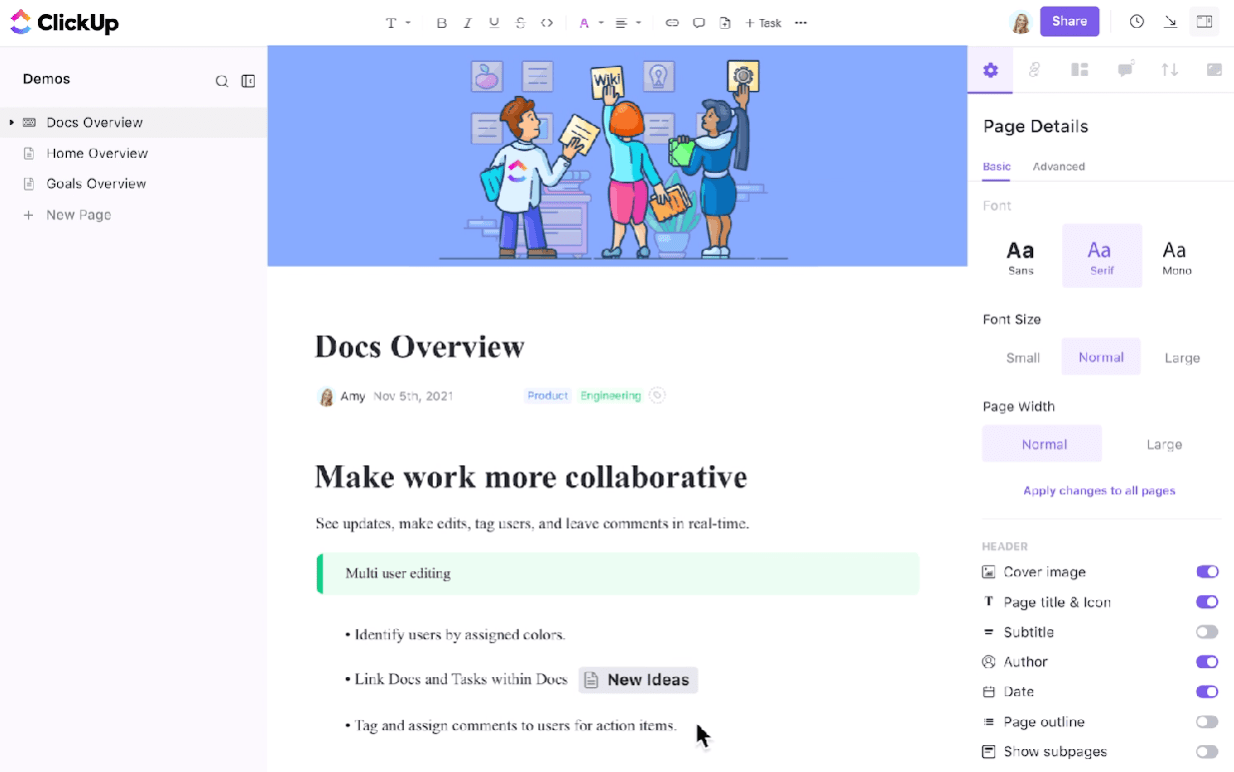
ClickUp Docs offers a dynamic workspace (read: a living document) to brainstorm, write, and refine the content for the ‘Interests’ section of your resume, or even all of it!
It helps you jump, leap, and explore beyond the limitations of traditional documents.
Here, you can freely brainstorm and jot down all your hobbies and interests, no matter how big or small. There’s no pressure for immediate perfection; just capture everything that excites you.
And if you hit a creative roadblock while crafting compelling descriptions that highlight the skills behind your hobbies? ClickUp assists you in overcoming writer’s block while building your resume as well.
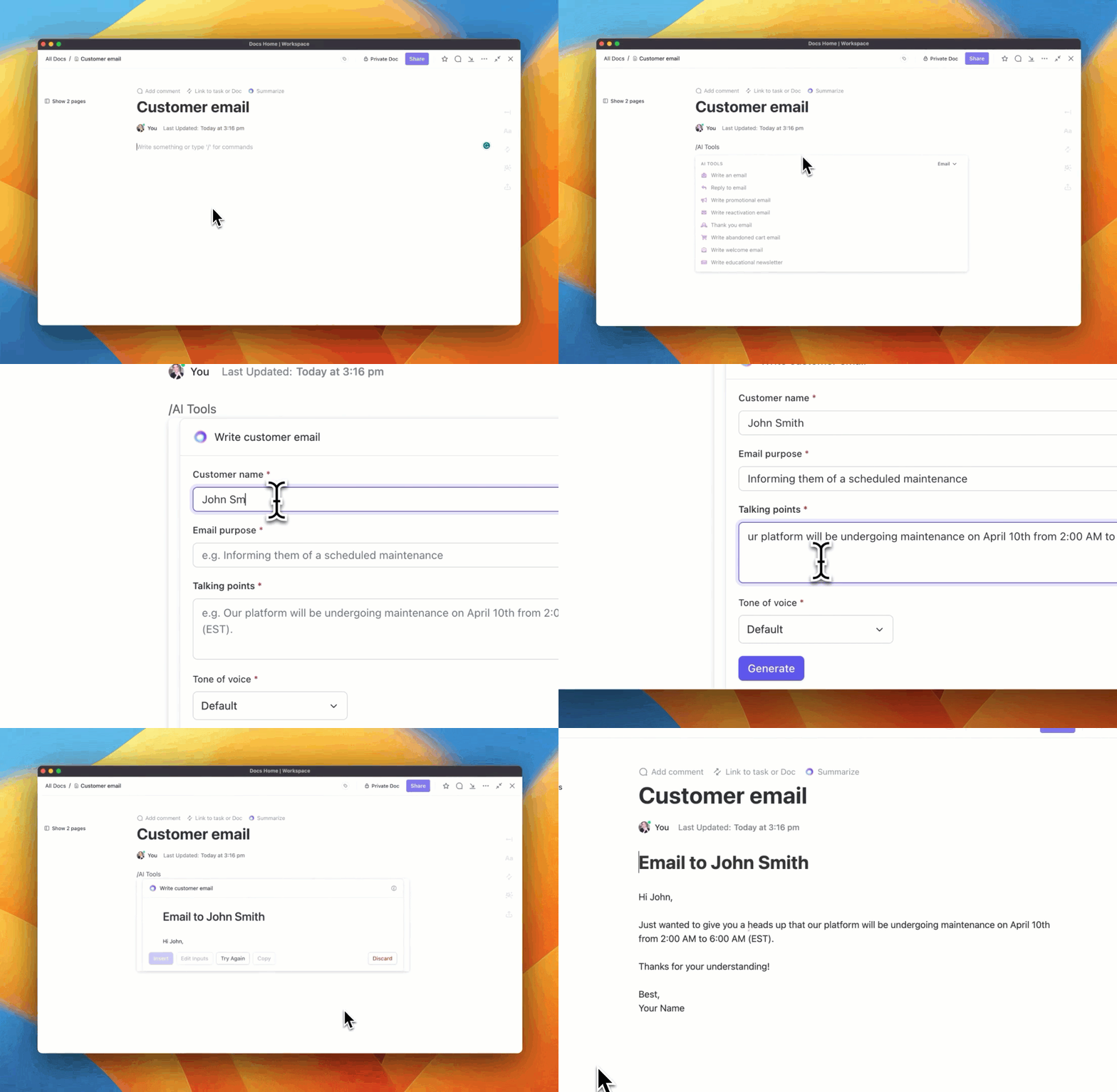
ClickUp Brain, your built-in AI assistant, ensures your descriptions are clear, concise, and impactful. Here’s how:

The real beauty of ClickUp Docs is its flexibility. As your experience grows and you apply for different jobs, you can easily edit your ‘Interests’ section. This allows you to tailor the descriptions to highlight the skills most relevant to each position.
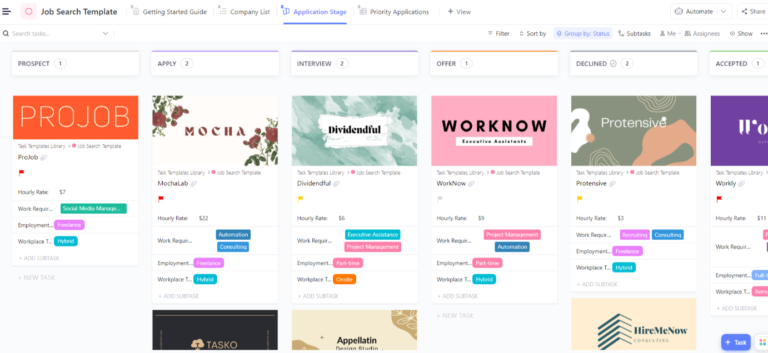
ClickUp’s Job Search Template is designed to organize your job search efforts and target the perfect opportunities.
Log all your job applications in one place, including company names, positions applied for, application dates, and even interview notes.
Curate a list of interesting job openings you come across during your search. Use this as a reference point when tailoring your resume and interests section for specific applications.
If you’ve researched companies that interest you, add your ratings to the template. This can help you prioritize applications and target companies that align with your work culture preferences.
Remember to choose hobbies and interests relevant to the job and use action verbs to highlight transferable skills. Here’s a list to choose from: 🗂️


The hobbies and interests section is your chance to show your future employers who you are beyond the workday. Carefully chosen hobbies and interests can help you stand out and make you a more desirable candidate.
Keep your interests relevant to the job, use strong verbs to showcase your achievements, and tailor it to each job application.
By using skills management software like ClickUp, you can effectively display your professional skills and experiences to create a holistic picture of your capabilities.
ClickUp Docs and Brain will quickly become your trusted writing companions in the job hunt. Meanwhile, ClickUp’s Job Search Template will keep your job search on track.
Boost your resume’s impact and get organized—try ClickUp for free today!

Manasi Nair
Max 20min read

Praburam Srinivasan
Max 14min read
Manasi Nair
Max 32min read

© 2026 ClickUp