
Sorry, there were no results found for “”
Sorry, there were no results found for “”
Sorry, there were no results found for “”
Your new employees need time—as long as 12 months in some cases—to learn the ropes of the organization and reach their full performance potential within a role. However, it’s crucial to set them up for success and give them clear goals to work toward.
This is where creating a 30-60-90 day plan is important. This is a structured onboarding plan for new hires, where goals and activities are spaced across 30-day, 60-day, and 90-day periods.
In this article, we’ll show you how to create this plan and contextually onboard new employees at every step of their onboarding journey.
A 30-60-90 day plan is exactly what it sounds like—it is a document that outlines critical milestones, actionable goals, and high-level priorities for new employees to achieve in the first 30, 60, and 90 days of their employment. The hiring manager of the new employee is responsible for creating one.
What the 30-60-90 day plan does:
The central concept of a good 30-60-90 day plan revolves around:
Before we learn how to create a 30-60-90 day plan, let’s first see what it involves.
What makes a 30-60-90 day plan great? For starters, it must immediately clarify the organization’s expectations from the new hire.
A great 30-60-90 day plan has five high-level elements:
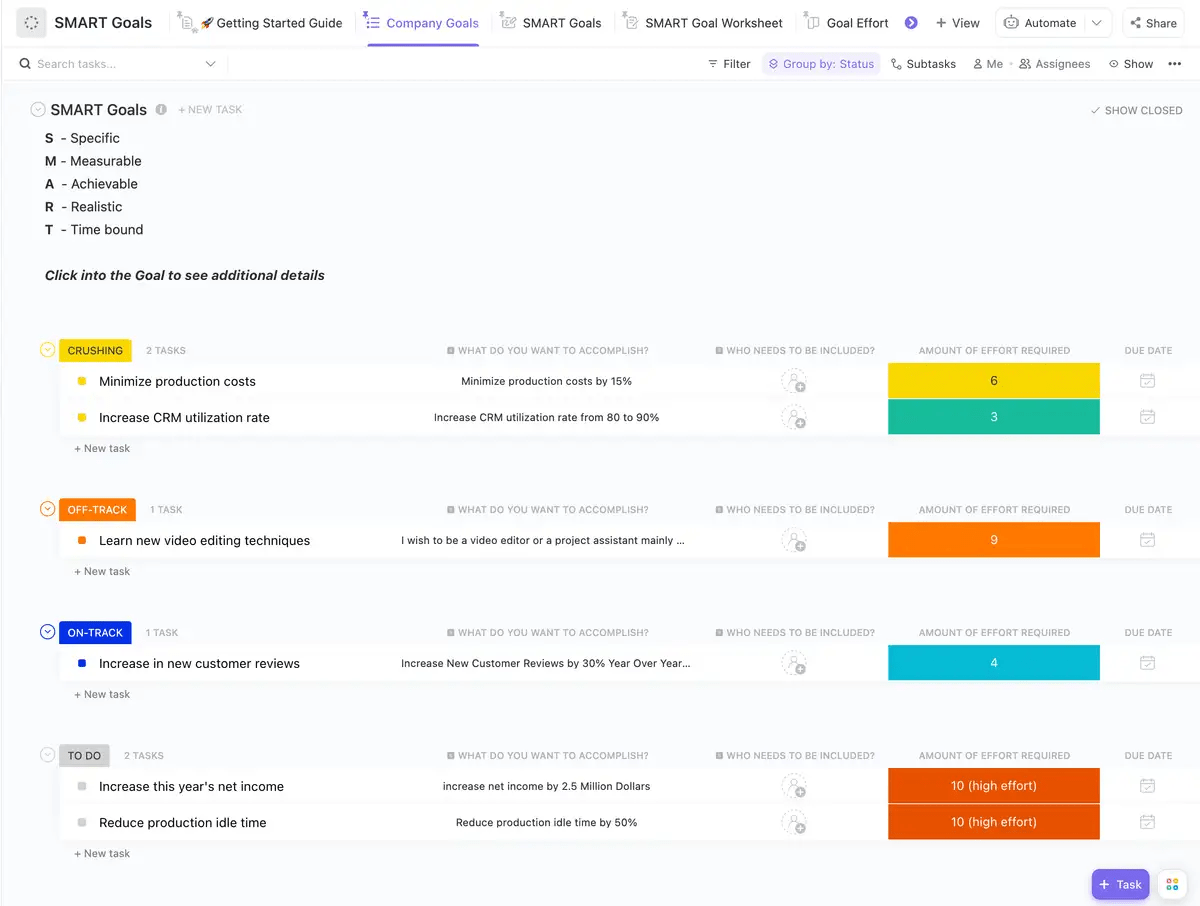
To make your 30-60-90 day plan workable, try writing SMART goals. Your 30-60-90 day plan should have specific objectives that are measurable, achievable, realistic, and time-bound:
Creating a 30-60-90 day plan is easy as long as you follow these five steps:
The company mission is the foundational bone of your 30-60-90 day plan. So, identify the company goals and milestones so the new employee understands their role in the larger scheme.
Write what you want the person to achieve in the first 30 days. As a thumb rule:

Map goals for the first 60 and 90 days, as you created goals for the first 30 days. Keep in mind the same rules as mentioned in the previous step.
Your 30-60-90 day plan is only as valuable as the supplementary resources you provide, such as:
The final leg is about evaluating the progress of the plan:
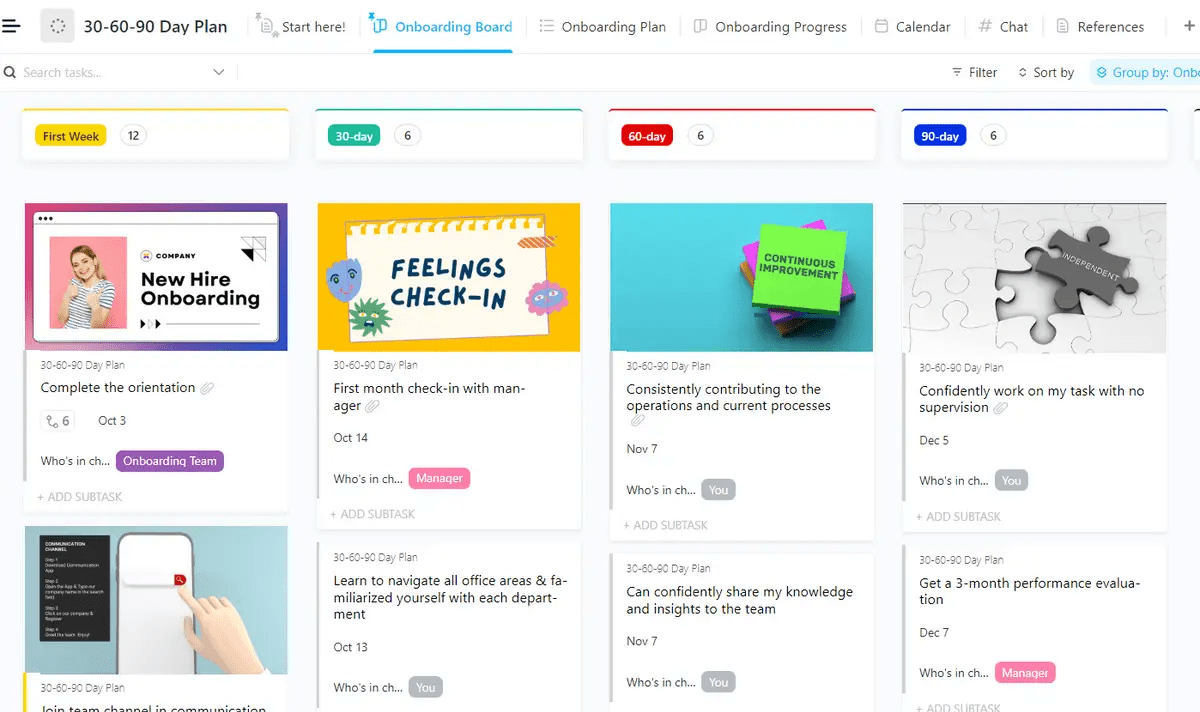
If all this seems like too much work, use ClickUp’s 30-60-90 Day Template to get started on your onboarding with one click:
This template ensures your new hires:
We’ve looked at how to create a 30-60-90 day plan. Let’s now understand how a hiring manager can use 30-60-90 day plans to improve their time management, employee retention, and recruitment processes.
Every 30-60-90 day plan looks different for different individuals. However, there are a few techniques you can leverage to gain time management benefits:

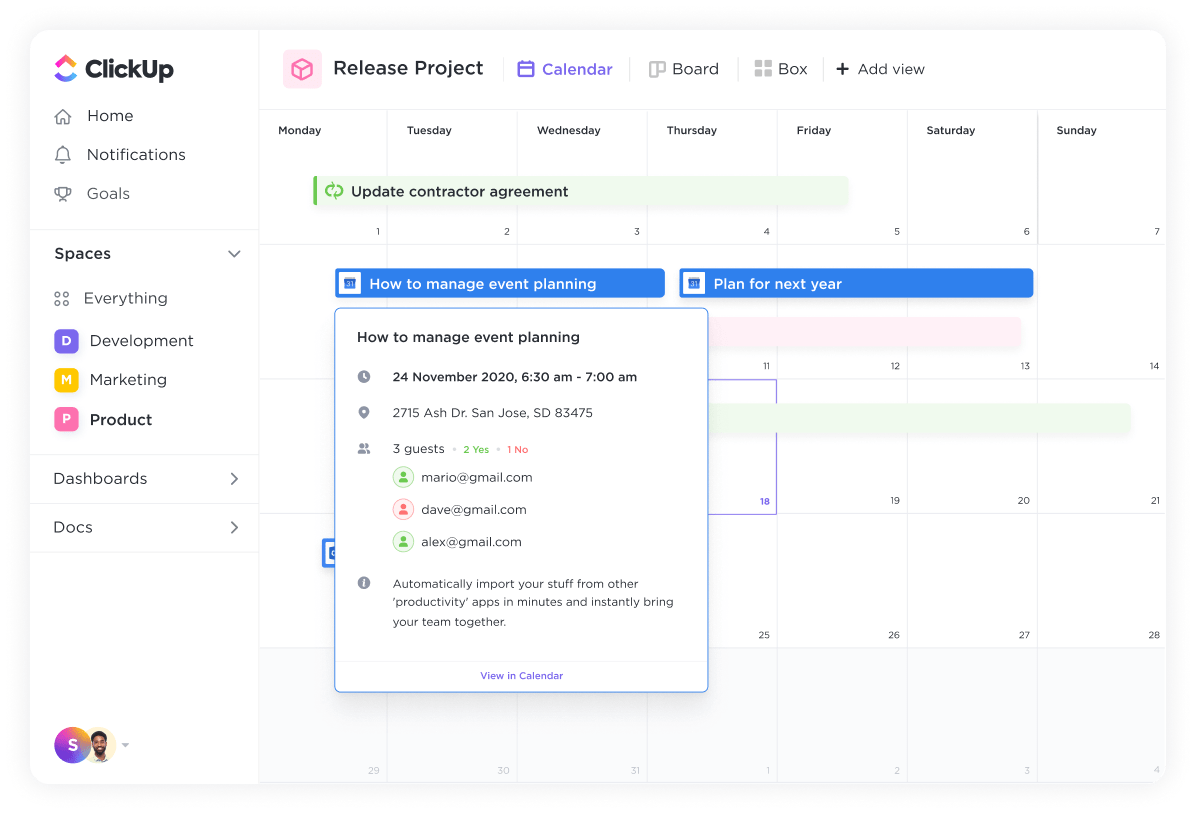
Stay on top of your monthly tasks and manage time like a pro with ClickUp Calendar View, which can be synced with your Google Calendar:
The 30-60-90 day plan enables you to create a lasting positive impression in the employee’s mind:
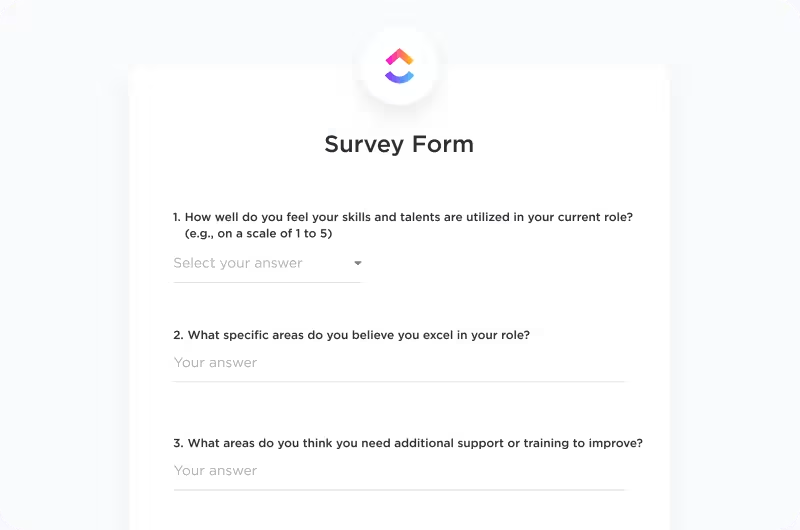
Related: Transition plan templates to simplify your job
From a hiring manager’s perspective, a 30-60-90 day plan can enhance the hiring and interview process significantly. Here’s how:
Related: Essential onboarding documents for new hires 📂
A 30-60-90 day plan is a blueprint of success—in that it identifies key milestones for new employees during their early employment days.
It draws parallels to a productivity plan—one that helps new team members:
Here are the top benefits of a 30-60-90 day plan:
A strategic onboarding plan is instrumental in boosting productivity; 61% of new hires feel prepared to take on a new role once they have undergone a structured onboarding.
The onboarding plan provides direction into how the new hire can get started quickly and offers one-click access to the right resources. The team understands what to prioritize and how to get help if they get stuck at any point in their onboarding journey:
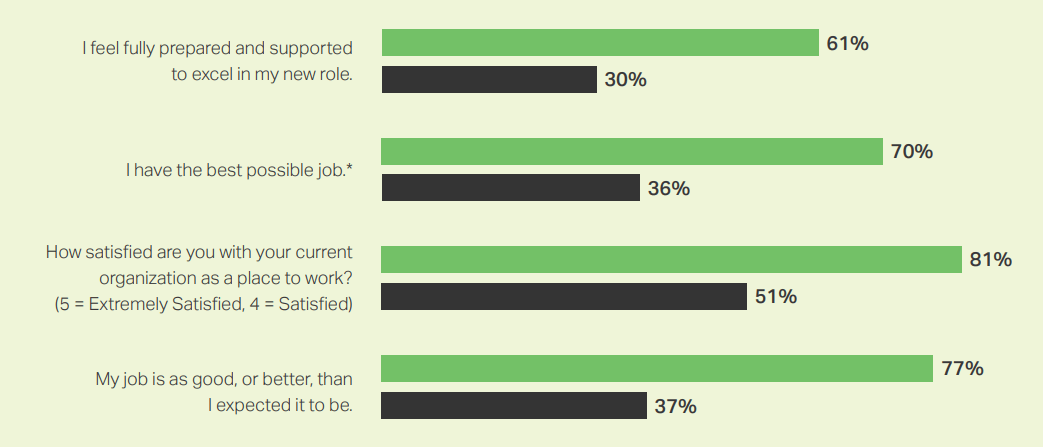
To help the new hire understand their role and get contextual help, use a 30-60-90 day plan template.
A seamless onboarding experience is possible with the involvement of the team.
The team should meet and get to know each other early to build a strong foundation. Integrate one-on-one calls within your onboarding process and help team members get to know their colleagues and stakeholders.
Remember, the idea is to start building important relationships early and create a sense of teamwork. Along the way, managers must also clarify goals and elaborate on how the organization’s goals fit into team and individual goals.
To give the employee’s a solid understanding of team activities and deliverables, use ClickUp Kanban Board view to show all team tasks and their progress at one glance:
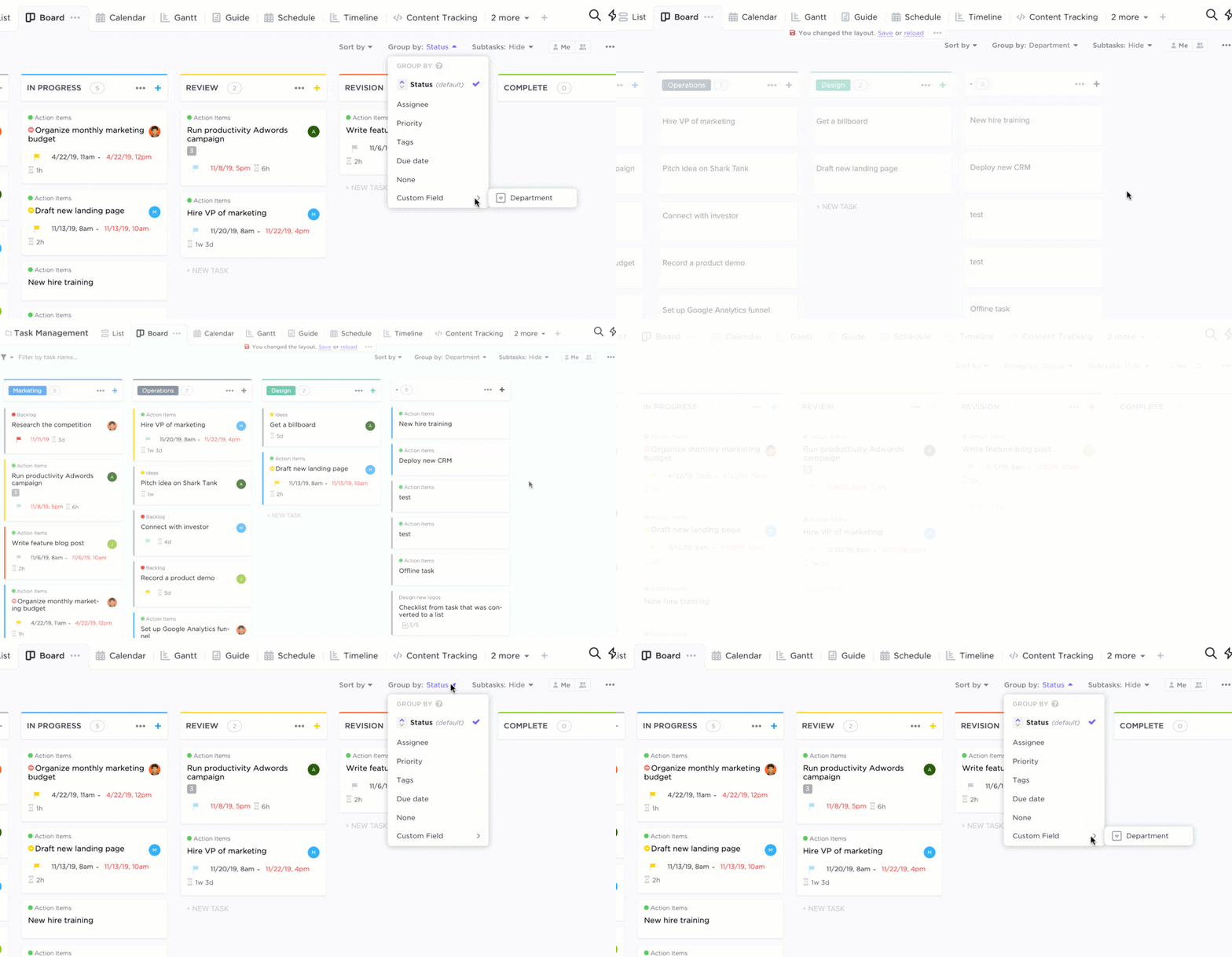
Around 61% of employees would prefer staying at their current organization for development and career growth:
But you can’t develop what you don’t assess, right? This is where a 30-60-90 day plan adds performance reviews into a manager’s calendar and ensures that new hires are reviewed periodically.
Consistent reviews allow for better assessments of new hires’ progress and performance. This, in turn, helps them improve their skills, perform optimally, and integrate well into the organization.
The data says it all— ‘The half of workers who get meaningful performance enablement—have far higher levels of optimism, confidence, engagement, and productivity than the half of employees who don’t.’
Managers can have structured performance review discussions with the new hire with the help of the ClickUp 1:1 Meeting Template.
This Docs template helps managers input and track relevant information for new hires. It includes pre-built pages for employee roles, expectations, and recurring meeting agendas. For even more organization, create nested pages within each page.
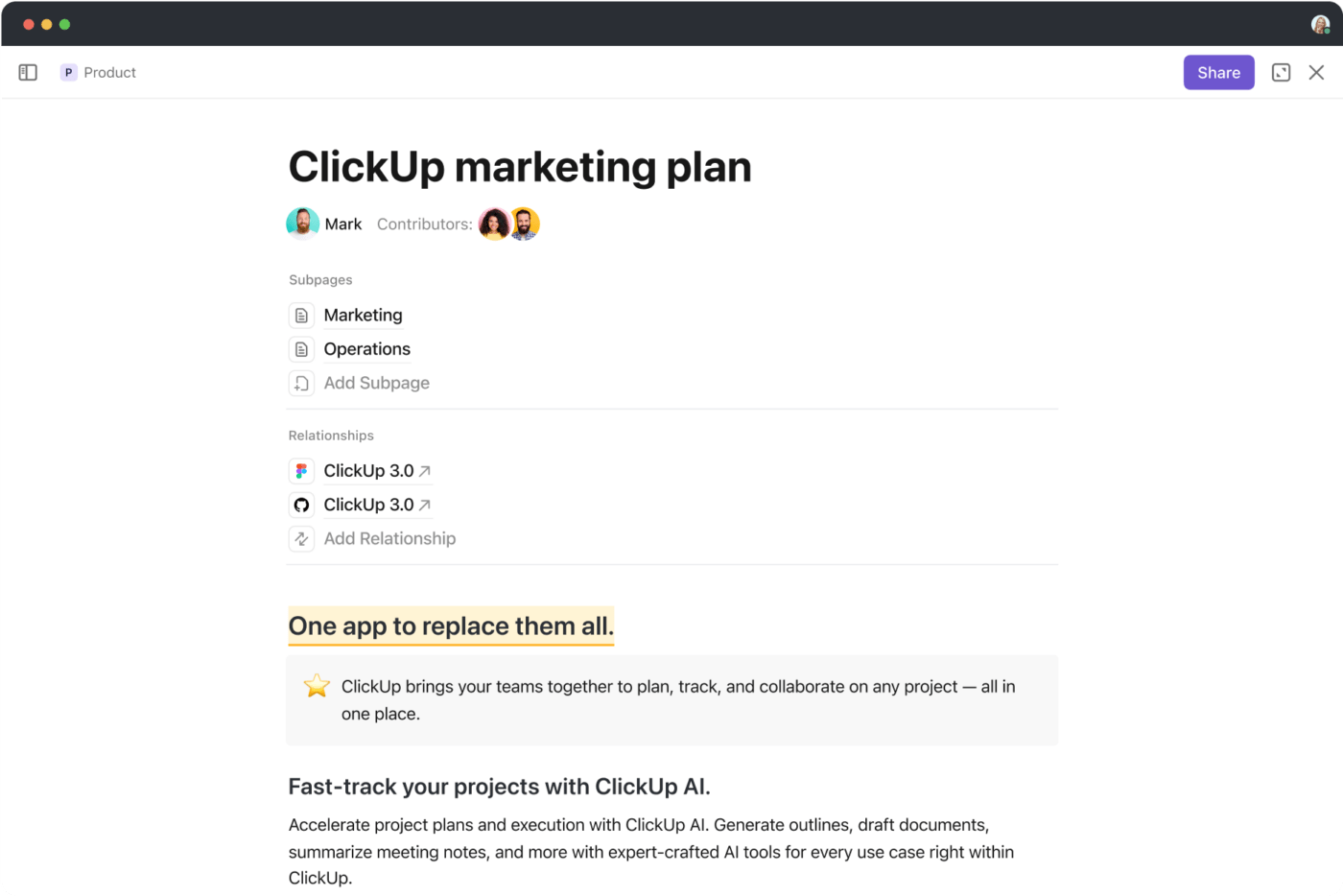
A 30-60-90 day plan details the initial three months of a new team member’s employment, introducing them to company policies, teamwork, and business objectives. It’s a surefire way to help your new hires get up to speed as they check off essential items at the 30-60-90 day milestones on their plan.
Get the newcomer off to a good start by ensuring they can access all the necessary documentation: company policies, team plans, organization chart, etc. Managers and HR teams can do this with shareable ClickUp Docs.
To make the 30-60-90 day plan useful, convert your plan into tasks for each 30-day period.
Use ClickUp Tasks to set up tasks and subtasks with their respective due dates:
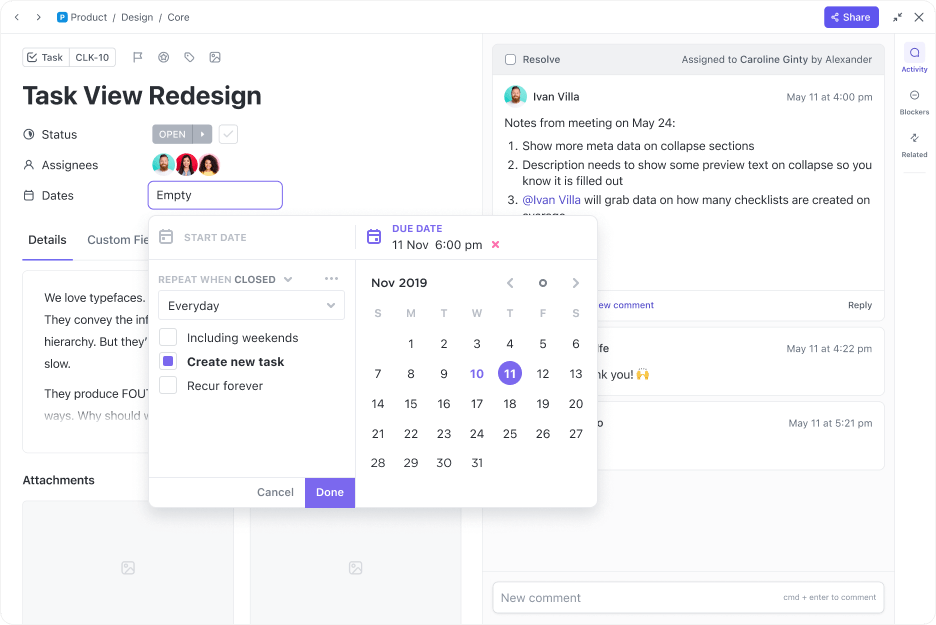
Once the deadlines are set, spoil the team with choices—let them view the tasks in multiple formats and filter tasks by priority as well as status:
You can also assign comments and link tasks with docs to ensure everyone is in the know at all times:

Finally, build full-fledged dashboards with your team goals and team effort metrics in place and visualize task progress easily:

A 30-60-90 day plan is many-sided, depending on who uses it and for what purpose.
But before we jump into that, let’s understand when to make a 30-60-90 day plan:
Using an operational plan template is a no-brainer for managers who want to bring their ideas to life from the start.
To elevate their management skills, managers must add discipline to their work style by creating a 30-60-90 day plan, which can look something like this:
Goal: To improve the team’s time management skills using an improved implementation process:
Goal: To assess how the team is progressing with their time management skills
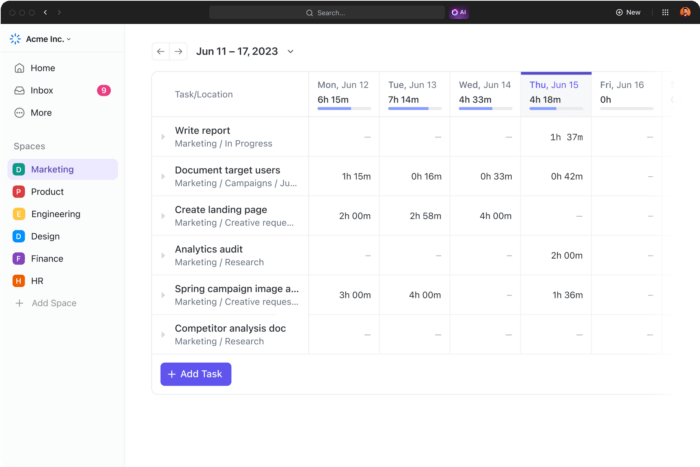
Goal: To establish a culture of optimized time management for future projects while maintaining quality:
Product managers can leverage free project management software to accelerate their work without compromising on productivity or quality.
Having a structured 30-60-90 day plan is instrumental in helping new product managers quickly grasp their responsibilities and make a positive impact. Here’s a sample plan for your ready reference:
To identify three key customer pain points and propose solutions in the next product iteration:

To have a validated prototype ready for implementation:
To successfully launch the updated product iteration and measure a 15% increase in customer satisfaction based on post-launch feedback:
Executives and senior management can also benefit from the 30-60-90 day plan.
Here’s a sample plan you can take inspiration from to improve operational efficiency by 20% and increase team alignment with company goals:
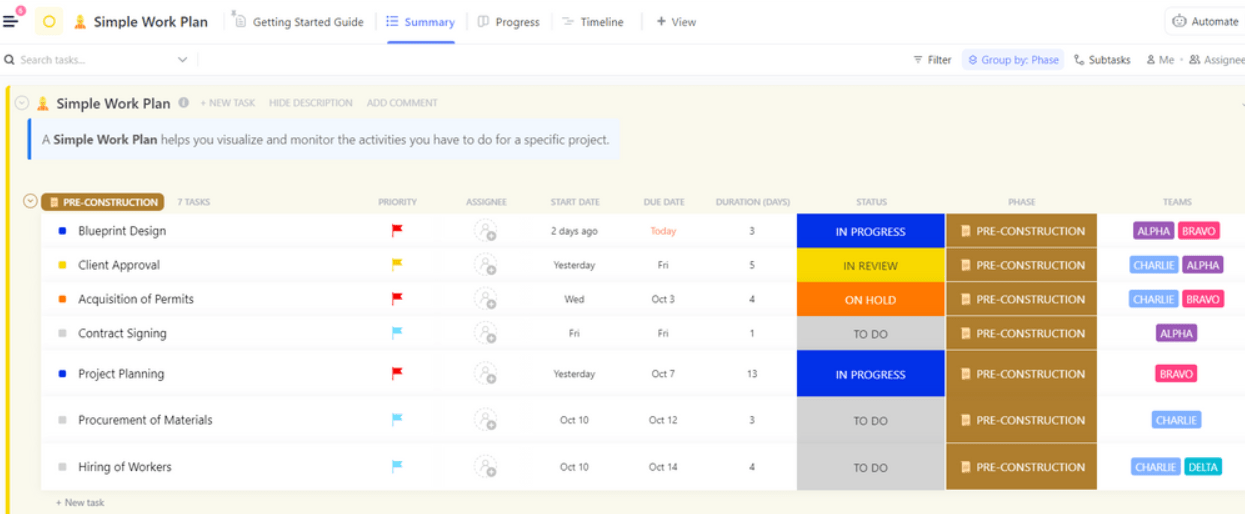
Sales managers are already familiar with using goal-tracking apps to achieve their monthly or quarterly goals. A 30-60-90 day plan drives better performance.
Here’s an example worth looking into:
A new sales manager joins the team. Their goal for the first 30 days should all relate to the learning phase, aka completing training modules, shadowing sales calls, and conducting one-on-one meetings with team members.
In the first 30 days, they focus on:
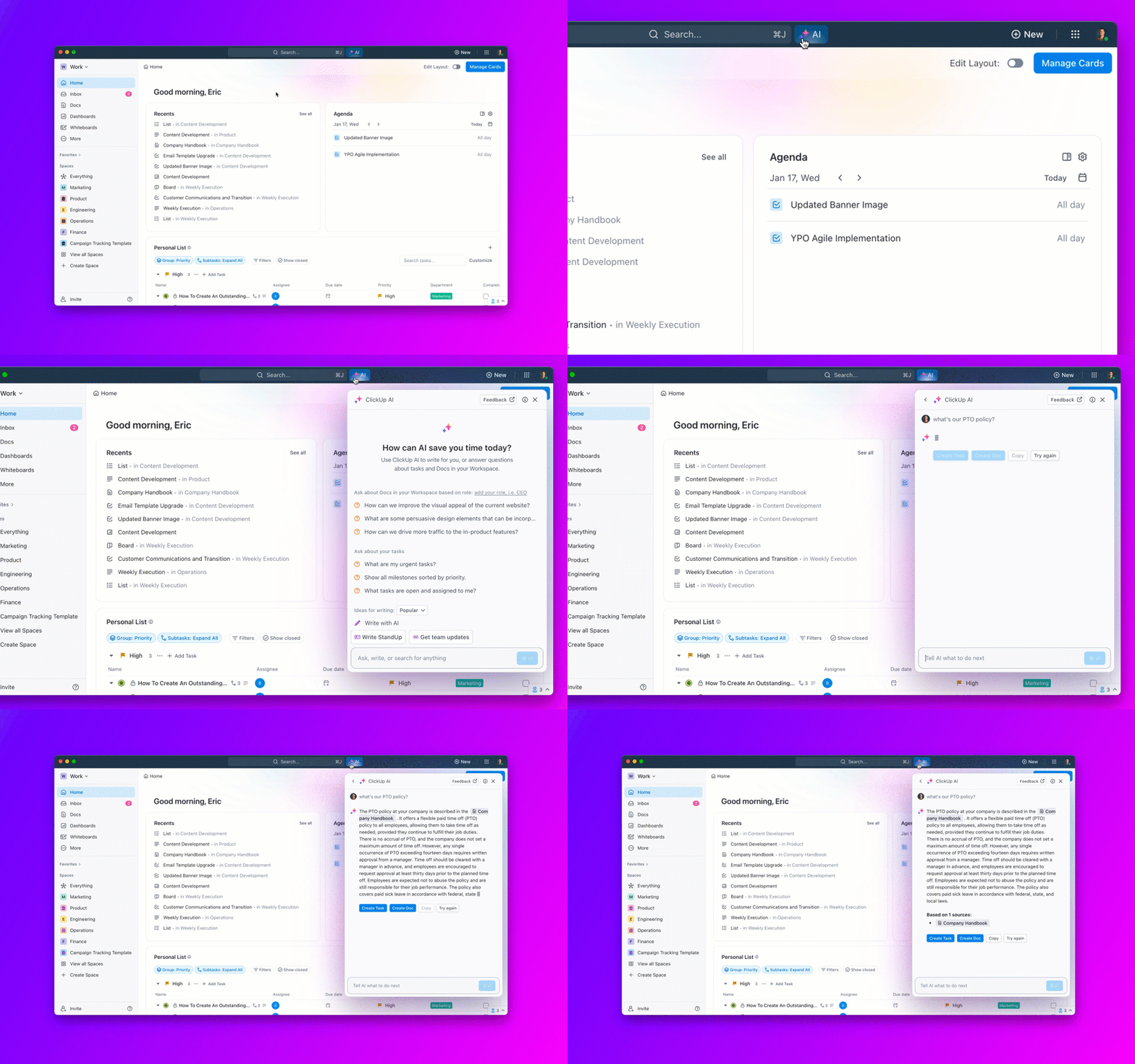
By day 60, the sales manager should have:
At the 90-day mark, the sales manager should have:
Data analysts can use a 30-, 60-, or 90-day plan to understand and improve the data analysis methodology at their organization.
Here’s an example for your convenience:
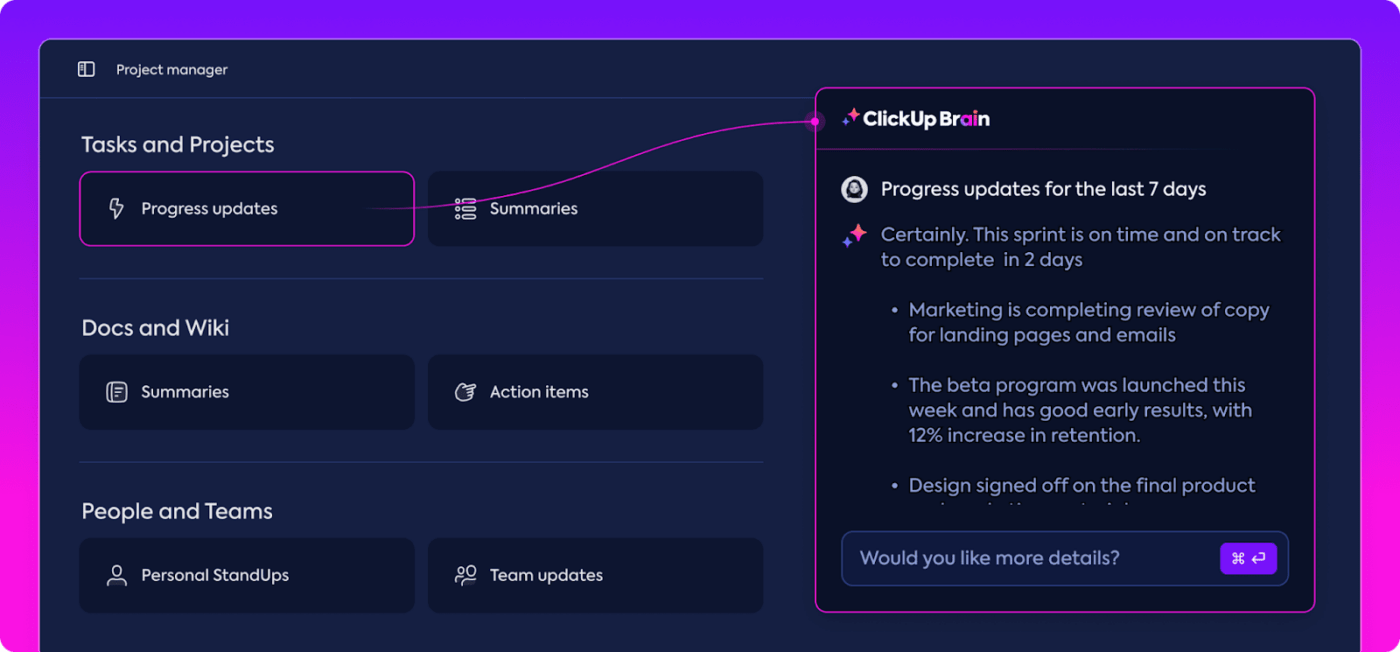
Newly hired IT managers must also have a 30-60-90 day plan ready to get an edge in a new business environment.
Here’s an example to help you create one:
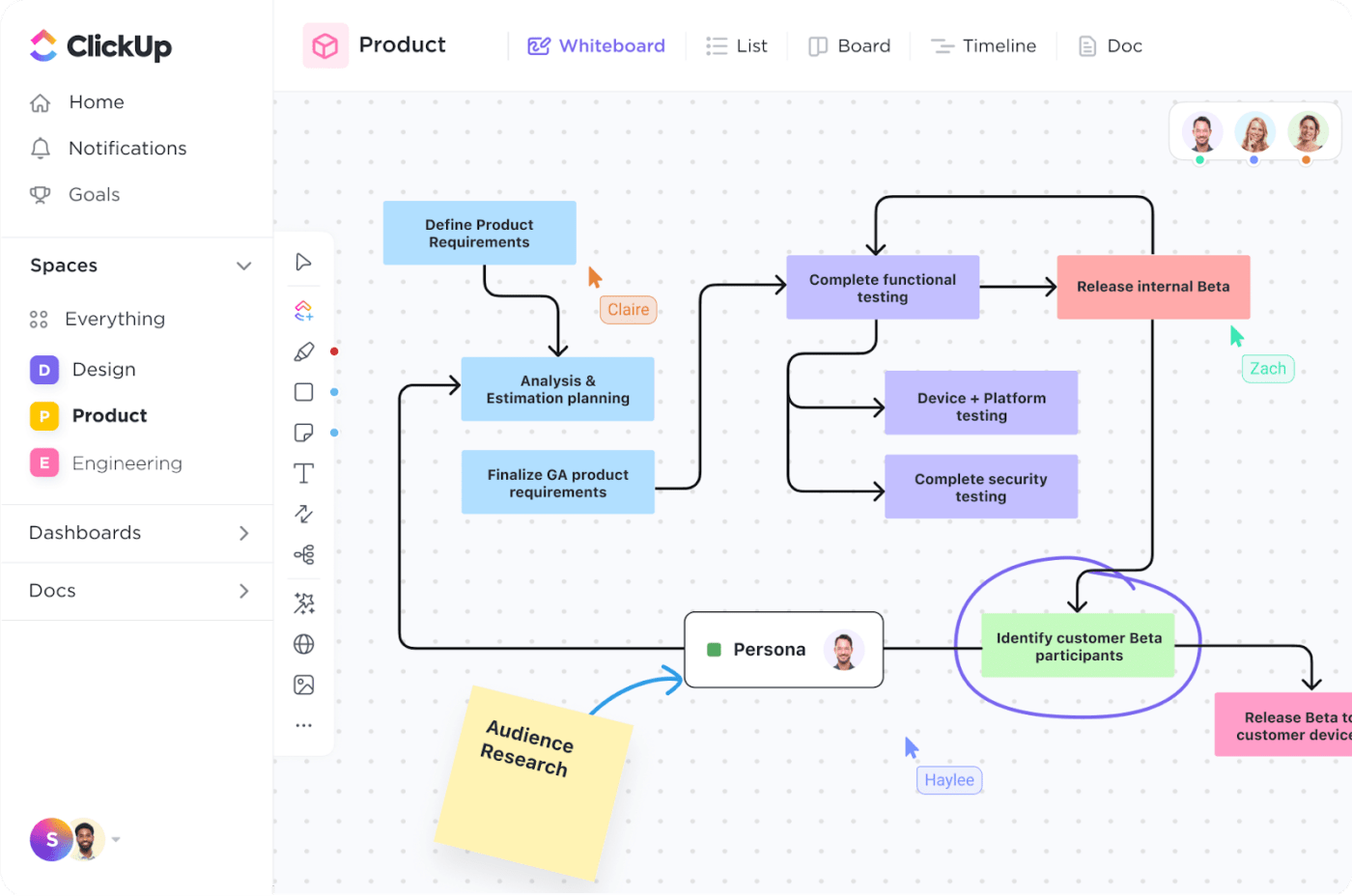
You could pen the best job description in the world, but new employees will still feel overwhelmed without an onboarding plan.
This is where a strategic 30-60-90 day plan can help new employees get going from day zero.
Here’s an example of a 30-60-90 day plan for new employees worth emulating:
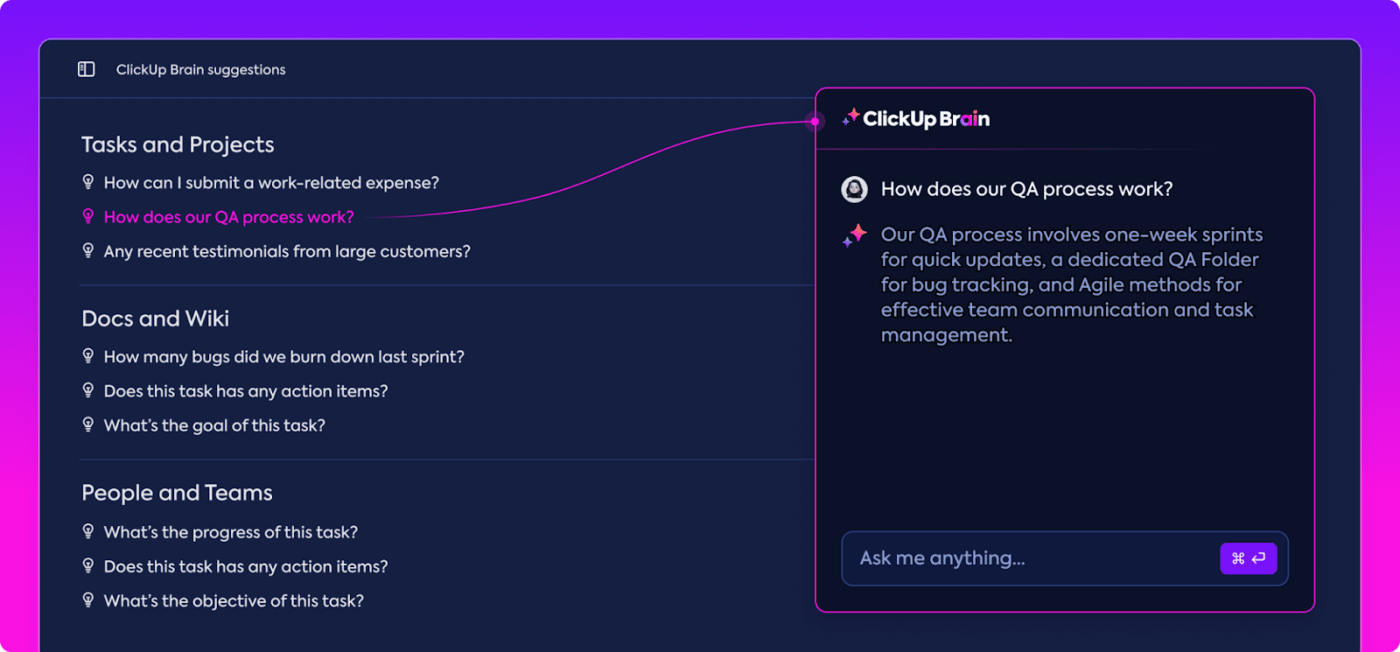
The 30-60-90-day plan is an asset within any employer’s toolkit. It allows hiring leaders to onboard new hires easily, drive periodic performance reviews, and (literally) show the potential candidates what’s expected of them in the first 90 days of employment (and beyond).
However, creating the plan right is as vital as ensuring new employees hit the ground running as soon as possible.
Use ClickUp to enable new employees to embrace change, work smart beyond the 90-day mark, and reflect on how they’re faring with a mindful, well-conceived 30-60-90 day plan. Sign up now for free!
A 30-60-90 day plan should include the company’s current goals and how the employee will achieve the milestones at the 30-, 60-, and 90-day marks. It should also include relevant resources, activities, and training that the new employee might need to get to the finish line.
Follow these steps to create a 30-60-90 day training plan:
Use these tips to improve writing your 30-60-90 day presentation:

Sudarshan Somanathan
Max 17min read
Sudarshan Somanathan
Max 20min read
Sudarshan Somanathan
Max 12min read

© 2026 ClickUp