








Still downloading templates?
There’s an easier way. Try a free AI Agent in ClickUp that actually does the work for you—set up in minutes, save hours every week.
Sorry, there were no results found for “”
Sorry, there were no results found for “”
Sorry, there were no results found for “”
Have you ever wondered how long it takes to form a habit? Whether it’s hitting the gym, eating healthier, or reading every day, habits shape our daily lives and influence our success. But forming a habit isn’t just about repetition—it’s about understanding the science behind behavior change and how small, consistent actions lead to lasting routines.
So let’s explore the factors that influence how long it takes to form a habit, debunk common misconceptions, and learn actionable strategies to build habits that last.
Habits are the automatic actions we perform without thinking, like brushing our teeth or checking our phones in the morning. However, building new habits or breaking old ones requires effort and insight.
Understanding habit formation can help you work smarter, not harder, to create positive changes that stick.
Habit formation is the process of turning deliberate actions into automatic behaviors through repetition and reinforcement. It’s why brushing your teeth or tying your shoes feels second nature today. But how does this transformation happen?
Cognitive science highlights how habits are stored in the basal ganglia, a part of the brain responsible for automatic actions like driving a familiar route.
Behavioral psychology explains that consistent actions linked to specific cues and rewards—such as associating a morning walk with increased focus—are key to habit formation.
Angela Duckworth, the author of Grit suggests that when individuals align their actions with deeply held beliefs, they recover from setbacks more effectively, leading to habits that endure over time.
For example, gym goers aiming for long-term health often sustain their exercise routines longer than those motivated solely by short-term goals.
Dr. Maxwell Maltz, a plastic surgeon and author, observed that patients often needed about 21 days to adjust to changes in their appearance or behavior. This insight led to the widely cited idea that consistent practice over three weeks can begin reshaping neural pathways, making a new action feel more instinctive.
For example, intentionally eating more fruit daily may feel forced at first, but after those initial weeks, it becomes less of a conscious choice and more of a natural part of your routine.
These perspectives offer a roadmap for creating habits that can transform your personal and professional life.
Also Read: How to Develop and Maintain Good Habits?
Understanding how habits form is key to making lasting changes in personal and professional life. At its core, habit formation is governed by specific psychological patterns and timelines that influence behavior.
The habit loop is the foundation of habit formation, consisting of three interconnected elements:
Whether it’s starting a new exercise routine or creating healthy habits at work, mastering the habit loop can make or break success.
Also Read: How to Create a Self-care Plan
The “21 days to form a habit” idea stems from Psycho-Cybernetics, but modern research reveals it’s not a one-size-fits-all timeframe. The 21/90 rule—suggesting 21 days for a habit to form and 90 days to integrate it into your lifestyle—works for simple habits like drinking more water.
However, complex behaviors like adopting a regular gym schedule or managing stress often take longer. Studies show habits can take anywhere from 18 to 254 days depending on factors like consistency, environment, and mental health.
Several factors affect how quickly you can form a new habit:
By understanding these dynamics, you can tailor your approach to building good habits and making them second nature. Whether it’s forming a new behavior, breaking bad habits, or focusing on progress, the science behind habit formation provides a clear roadmap to success.
Read More: 11 Micro Habits (And the Science Behind Them
The time required to form a habit varies based on several factors, including the habit’s complexity and personal consistency. While research provides guidelines, individual experiences often differ.
Consistency is the secret ingredient to habit formation. Repeating actions in a steady routine trains the brain to automate them. For example, following a specific morning schedule for tasks like stretching or journaling helps cement these practices into daily life.
Habits that offer long-term rewards often test patience. For instance, maintaining a fitness routine or a healthy eating plan might feel effortful without immediate results, but the eventual physical and mental benefits make it worthwhile. Developing habits with delayed gratification teaches persistence and builds stronger, long-lasting routines.
Understanding the flexible nature of habit formation allows you to focus on building good habits while avoiding the frustration of unrealistic timelines. Consistency, patience, and a focus on progress are key to making habits second nature.
Forming habits often comes with obstacles, but addressing challenges with tailored strategies ensures steady progress. Here’s how to overcome common hurdles and make habits stick.
Motivation fluctuates, especially when the rewards of your habit aren’t immediate.
Disorganized or chaotic settings can make habit-building feel unnecessarily difficult.
Taking on too much too quickly leads to burnout and a sense of failure.
Modern distractions often compete for attention, making it harder to establish routines.
By tackling these challenges head-on with actionable solutions, habit formation becomes a structured and rewarding process. Focus on sustainable progress, and over time, even complex behaviors will feel natural.
Tracking your habits is a proven way to stay consistent and accountable. Whether you prefer digital solutions or physical methods, habit-tracking tools make monitoring progress easier.
Digital tools often come with features like reminders, progress charts, and dashboards, offering actionable insights that help refine your habits over time.
To stay on top of your habits, setting measurable goals and tracking progress is essential. ClickUp Goals allows you to break down habits into specific, actionable objectives.
For instance, if you’re aiming to walk 10,000 steps daily, you can create a goal in ClickUp and monitor your progress in real time. This not only keeps you motivated but also gives you a clear understanding of how far you’ve come.
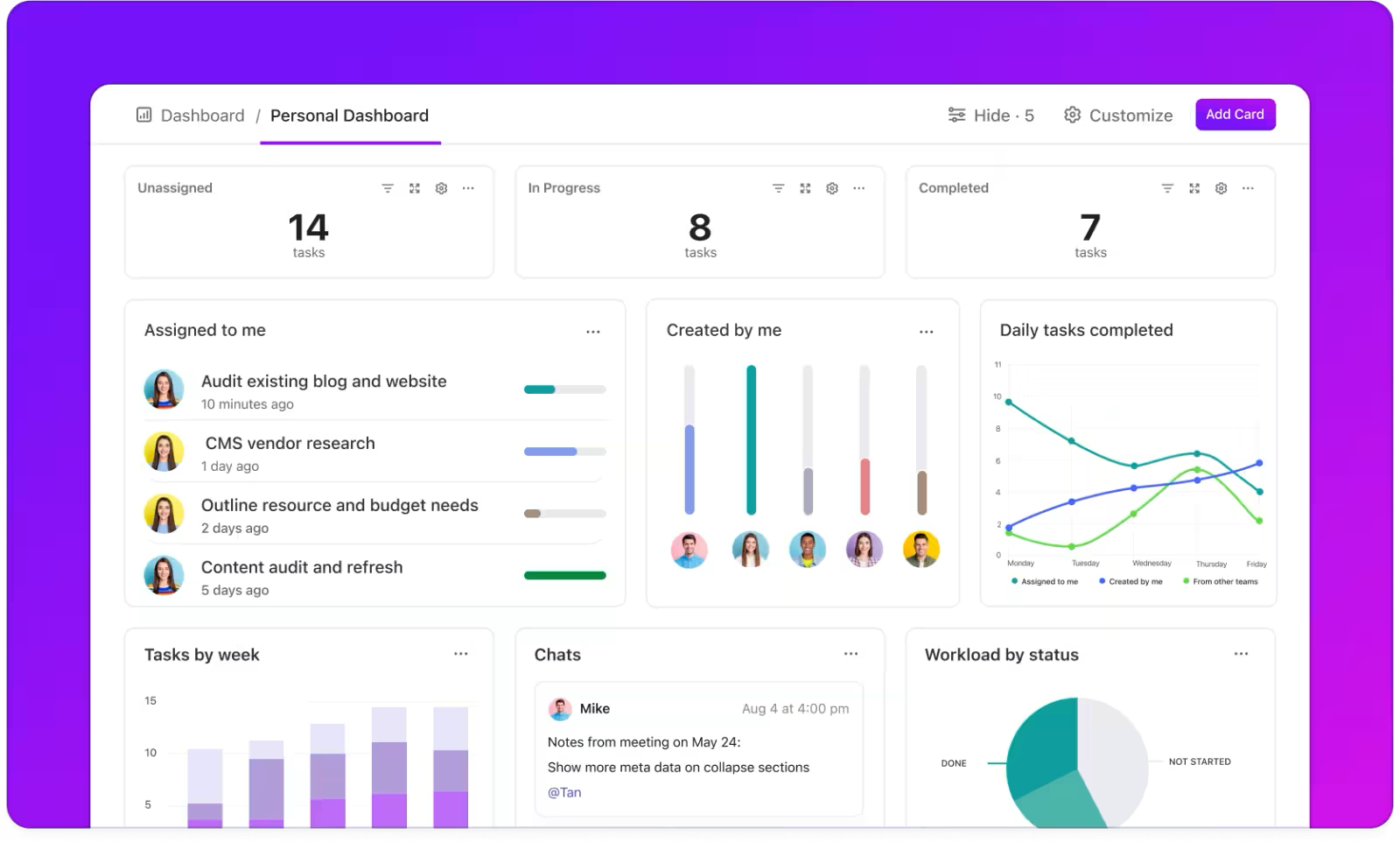
For a complete overview, ClickUp Dashboards enable you to visualize your performance metrics. Whether you’re tracking weekly exercise routines or monitoring professional milestones, the Dashboards feature helps you identify trends, make adjustments, and refine your strategies for even better results.
Consistency plays a crucial role in habit formation, and habit-tracking tools are designed to help you stay on track effortlessly. Using ClickUp Recurring Tasks, you can automate reminders for habits like “Stretch for 10 minutes” or “Prepare healthy meals.” This reduces the need for constant planning and ensures your focus remains on the habit itself rather than on remembering to do it.

Additionally, ClickUp Reminders provide timely notifications that help you maintain momentum even during busy schedules. These gentle nudges make it easier to incorporate habits into your routine without feeling overwhelmed.
The ClickUp Personal Habit Tracker Template further enhances this process by making habit tracking efficient and personalized. With this template, you can:
By combining intuitive features with flexible tools, ClickUp simplifies the process of habit tracking, helping you stay consistent and build routines that last.
Success lies not in perfection but in persistence—staying consistent, learning from setbacks, and celebrating small wins along the way. Healthy habits are the foundation of personal growth and productivity, shaping how we spend our time and achieve our goals.
By understanding the science behind the habit formation process, addressing challenges with tailored strategies, and using tools to track progress, you can create routines that align with your aspirations.
Ready to take control of your habits and achieve your goals? Sign up for ClickUp today!

© 2026 ClickUp

There’s an easier way. Try a free AI Agent in ClickUp that actually does the work for you—set up in minutes, save hours every week.