

Sorry, there were no results found for “”
Sorry, there were no results found for “”
Sorry, there were no results found for “”
Leadership isn’t one-size-fits-all.
At its essence, leadership involves guiding, influencing, and inspiring a group toward team goals. This includes setting a vision, making strategic decisions, delegating tasks, and being the role model that motivates others to contribute their best.
Leadership roles are fundamental—they form the backbone of a team’s structure. From visionaries charting the future to empathetic mentors nurturing talent, leadership takes many forms. These roles not only guide but also shape team dynamics, influence outcomes, and drive organizational success.
Understanding these diverse roles is key to effective leadership. Each role offers unique strengths and challenges that can be utilized to meet your team’s needs and achieve organizational goals.
In this article, we will explore ten key leadership roles examples and their strengths, illustrating why these roles are essential for impactful leadership. Read on!
Great leaders inspire, guide, and drive success. Whether you’re coaching a team, resolving conflicts, or making key decisions, strong leadership is about balancing strategy, communication, and innovation.
ClickUp helps leaders stay organized, delegate effectively, and drive results with goal tracking, collaboration tools, and project management—all in one place.
A leader is one who knows the way, goes the way, and shows the way.
Effective leaders, whether emerging or in a formal leadership position, embody a blend of qualities that enable them to guide, inspire, and influence their teams to help the organization succeed.
Essential traits include:
On this note, some leadership role examples include coaches who support team development, strategists who set long-term goals and develop strategies, and decision-makers who handle complex choices. Each of these roles benefits from the key traits mentioned, highlighting their importance for effective leadership.
Read more: How emergent leadership sparks growth
As a leader, you wear many hats—mentor, delegator, or otherwise, depending on the situation. Recognizing and developing these leadership roles enhances your adaptability and effectiveness.
Equally crucial is incorporating a human element. According to a Gartner survey, 90% of HR leaders agree that prioritizing the human aspects of leadership is essential for success in today’s workplace. Combining various leadership roles examples with empathy and connection leads to more impactful outcomes.
Here’s a quick overview of key leadership roles and their functions.
A coach or mentor is a leader focused on nurturing and developing the potential of their team members. They provide personalized guidance, share their expertise, and offer constructive feedback. Their role extends beyond organizational goals to include supporting the personal and professional growth of their employees.
As coaches, leaders focus on understanding each employee’s strengths, weaknesses, career aspirations, and challenges. They actively listen, ask insightful questions, and help individuals set realistic and achievable goals.
Coaches often have significant experience and are willing to offer their expertise to younger students. They possess strong leadership skills, such as communication, empathy, and positivity, that help them provide consistent support and feedback.
To excel as a coach, it’s important to get to know each team member well. Regular one-on-one meetings are crucial for this purpose. Use these sessions to explore work-related tasks, career goals, personal aspirations, and any challenges they may be encountering.
Additionally, help your team members establish measurable goals with clear deadlines and regularly track their progress. This approach highlights a genuine commitment to their development and promotes a supportive coaching relationship.

With ClickUp Goals, you can track the progress of each member’s personal and professional development. It also helps you set specific, measurable objectives, assign tasks contributing to these goals, and create task targets. This helps keep all goals organized in folders for easy access and ensures that everyone stays aligned and on track.
Read more: 11 Free goal-setting & tracking templates
A facilitator guides discussions, ensures meetings are productive, and encourages participation. They set the agenda, define goals, and create an environment where everyone can contribute.
This is an important managerial role that is responsible for ensuring all discussions are balanced and result in actionable outcomes. They are also responsible for keeping teams on track with their goals.
An example of this leadership role in play is when you act as a coordinator managing team meetings by creating agendas, guiding conversations, and ensuring that all participants have a chance to share their views. This approach helps keep discussions productive and ensures that meetings achieve their intended goals.
To excel as a facilitator, prepare and share a clear agenda before each meeting. This helps participants come prepared and keeps the discussion focused.
Use techniques like round-robin or breakout groups to encourage team members’ involvement. Additionally, consider incorporating brainstorming sessions to boost engagement and creativity.
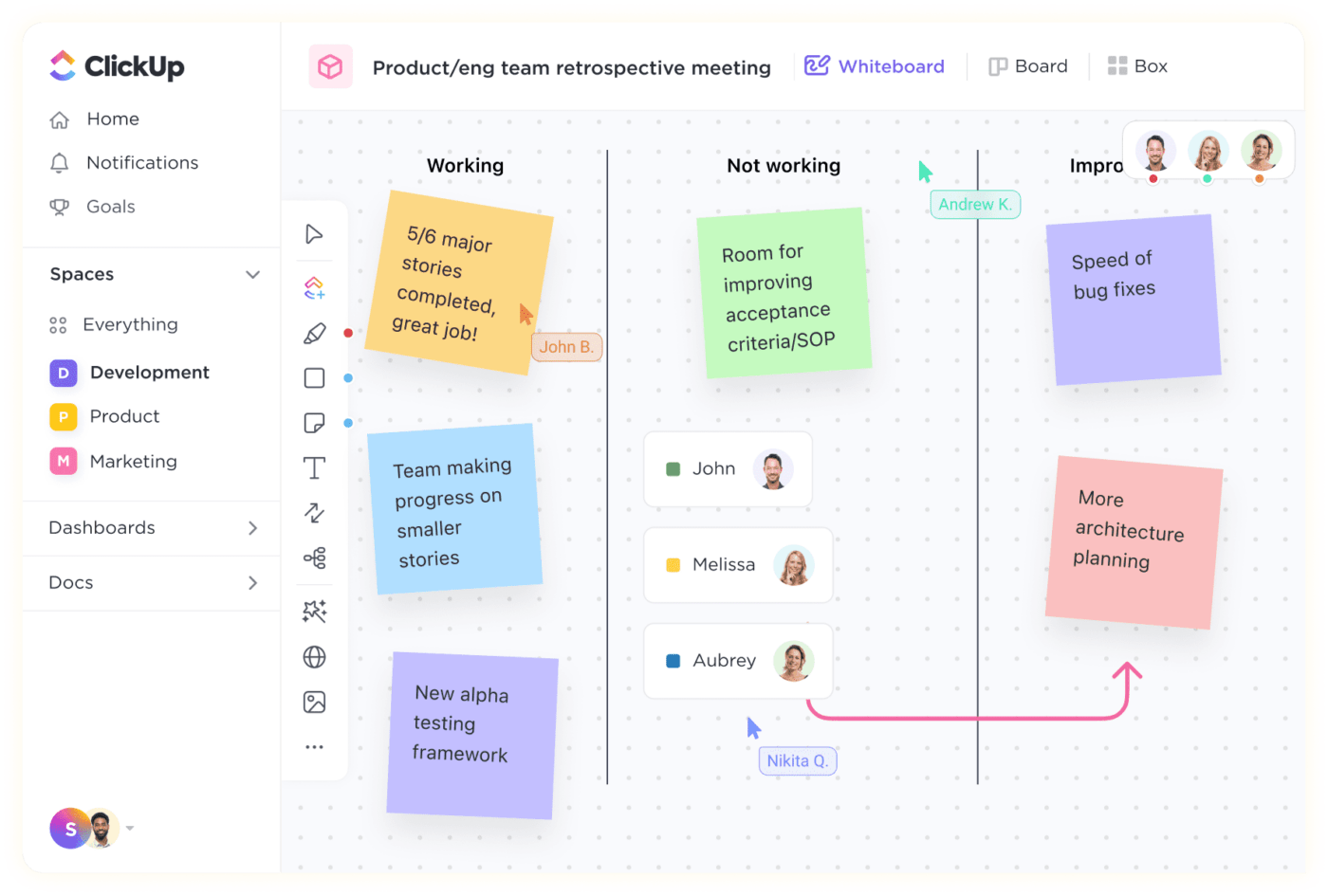
Use ClickUp Whiteboards to facilitate brainstorming sessions and map out ideas in real time. You can assign follow-up actions directly from the whiteboard, ensuring that every idea generated in the session is captured and acted upon. The whiteboard also allows you to add notes, link tasks or files for added context, or draw freehand, making discussions and meetings more effective and convenient.
If you just communicate, you can get by. But if you communicate skillfully, you can work miracles.
Effective communication is essential for team leadership. As a leader, you need to ensure clear and open communication throughout your team and the organization.
As a communicator, you need to effectively share the organization’s goals, vision, and expectations with your team while also being open to their feedback, concerns, and ideas. This requires proficiency in verbal, written, and non-verbal communication skills.
A great way to ensure transparency within your organization is to use a single platform for all communication.
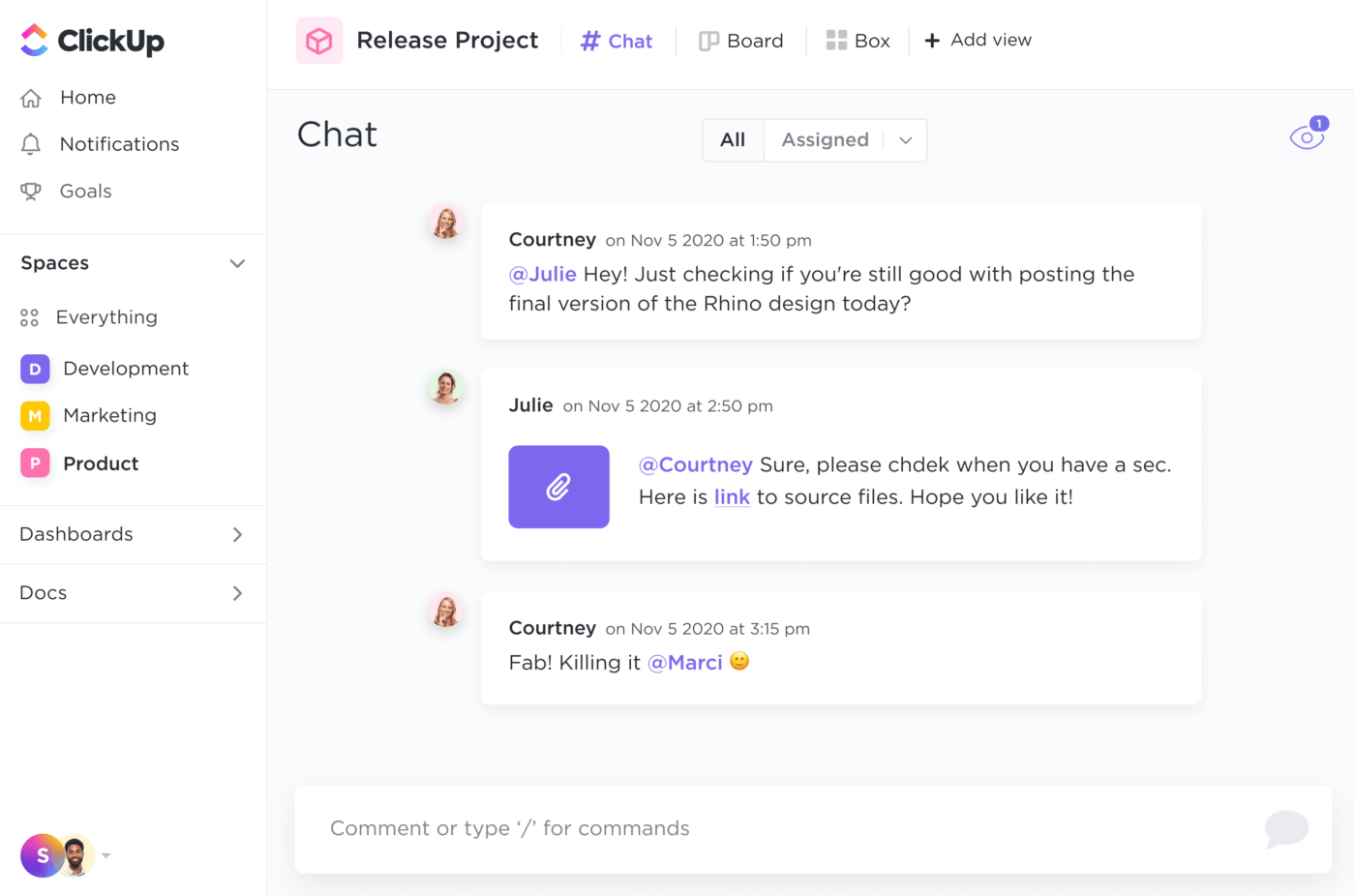
ClickUp Chat View centralizes all important conversations on one platform. It lets you share resources and updates, manage queries, assign action items with @mentions, and create chat views for specific tasks, boosting clarity. This way, it creates a streamlined communication environment, reduces the need for multiple tools, and ensures that all team interactions are organized and accessible.
You can be a successful communicator by practicing active listening. This involves fully concentrating on what is being said, listening to understand, and responding with empathy.
Also, articulate your own thoughts clearly and concisely. Use simple language, avoid jargon, and confirm that your message is understood by asking for feedback or clarification when needed.
Conflict resolution is a crucial leadership strategy. As a conflict resolver, you identify, address, and resolve issues within the team. This involves mediating disputes, understanding the root causes of conflicts, and finding mutually agreeable solutions.
To begin with, view conflicts as chances to have honest and open discussions. When resolving conflicts, focus on the issue, not the individuals. Additionally, encourage the parties involved to express their perspectives without assigning blame and work together to find a solution that benefits everyone.
After resolving the conflict, follow up to ensure that the issue is fully addressed and that no lingering tensions remain.
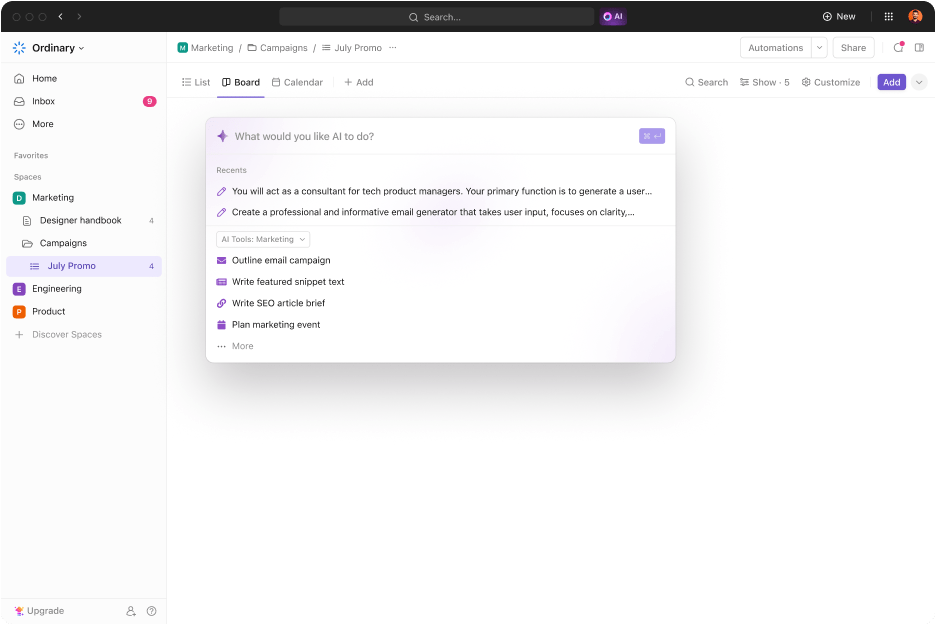
ClickUp Brain helps you draft internal policy documents for conflict management and resolution quickly. It also efficiently composes feedback emails, ensuring that your messages are constructive and appropriately toned. It also helps set the right tone for various communications, ensuring consistency across all forms of written communication.
Additionally, it assists in breaking down broad goals into manageable tasks and sub-tasks, providing detailed descriptions for team clarity. It also helps with writing project updates and generating standups automatically through your AI project manager.
The role of an innovator is to drive change, foster creativity, and implement new ideas within the organization. They experiment, identify new trends, and take calculated risks to improve processes and add more value.
This leadership role involves encouraging a culture of innovation where team members feel empowered to think outside the box and experiment with new approaches. They evaluate the potential impact of new ideas and carefully manage the implementation process to minimize disruptions while maximizing benefits.
A great example of this leadership role is that of a Chief Innovation Officer (CIO), who is responsible for spearheading new initiatives and driving technological advancements. The CIO encourages a culture of creativity within the organization, explores emerging trends, and guides the team through the development and adoption of innovative solutions.
To be an effective innovator, encourage brainstorming sessions where all ideas are welcome, no matter how unconventional.
Create a safe space where team members feel comfortable sharing their thoughts without fear of criticism. This openness often leads to breakthrough ideas that can transform your organization.
Effective decision-making is crucial to achieving success and maintaining stability in the organization. Leaders who excel in this role can navigate challenges, achieve success, and seize opportunities.
This role involves analyzing data, considering various perspectives, weighing risks, and making well-informed business decisions. Additionally, decision-makers establish frameworks for evaluating options, setting clear criteria, and ensuring decisions are made efficiently and effectively.
A prime example of this leadership role is that of a product development manager. They make key decisions on product features, positioning, and resource allocation. By analyzing trends and feedback, they ensure these decisions align with company goals and drive successful product outcomes.
To enhance your decision-making skills, practice being decisive and confident, especially under pressure. Gather comprehensive information before making decisions and involve your team when appropriate. Their insights can enhance your critical thinking and provide valuable perspectives in the long run.
A motivator’s role is to inspire and energize their team to reach peak performance. This involves understanding what drives each team member, whether it’s personal achievement, recognition, or contributing to a larger goal.
Motivators use positive reinforcement, set challenging yet attainable goals, and celebrate successes to keep the team motivated and engaged. They also play a significant role in maintaining team morale during challenging times.
To be an effective motivator, regularly acknowledge and celebrate both individual and team achievements. Even small wins deserve recognition, as they contribute to a culture of success.
Use ClickUp’s Recurring Tasks to set up regular feedback sessions so you don’t forget to schedule them. It lets you add reminders, change the status or frequency of the task, and even reschedule easily. In addition, you can give public recognition to employees using the comments and @mention features. This will boost their morale and foster a sense of accomplishment.
Effective delegation is a vital leadership skill. A delegator excels at assigning tasks and responsibilities based on team members’ strengths, skills, and workloads.
They ensure that tasks are distributed efficiently and that everyone understands their responsibilities. This role requires a deep understanding of each team member’s capabilities and the ability to trust them to complete their assigned tasks independently.
To improve your delegation skills, start by identifying tasks you want to delegate and matching them with the right team members. Once decided, clearly communicate the expectations and deadlines and provide them with the necessary resources and support.
Next, step back and allow your team members to take ownership of the task, checking in periodically to offer assistance if needed.
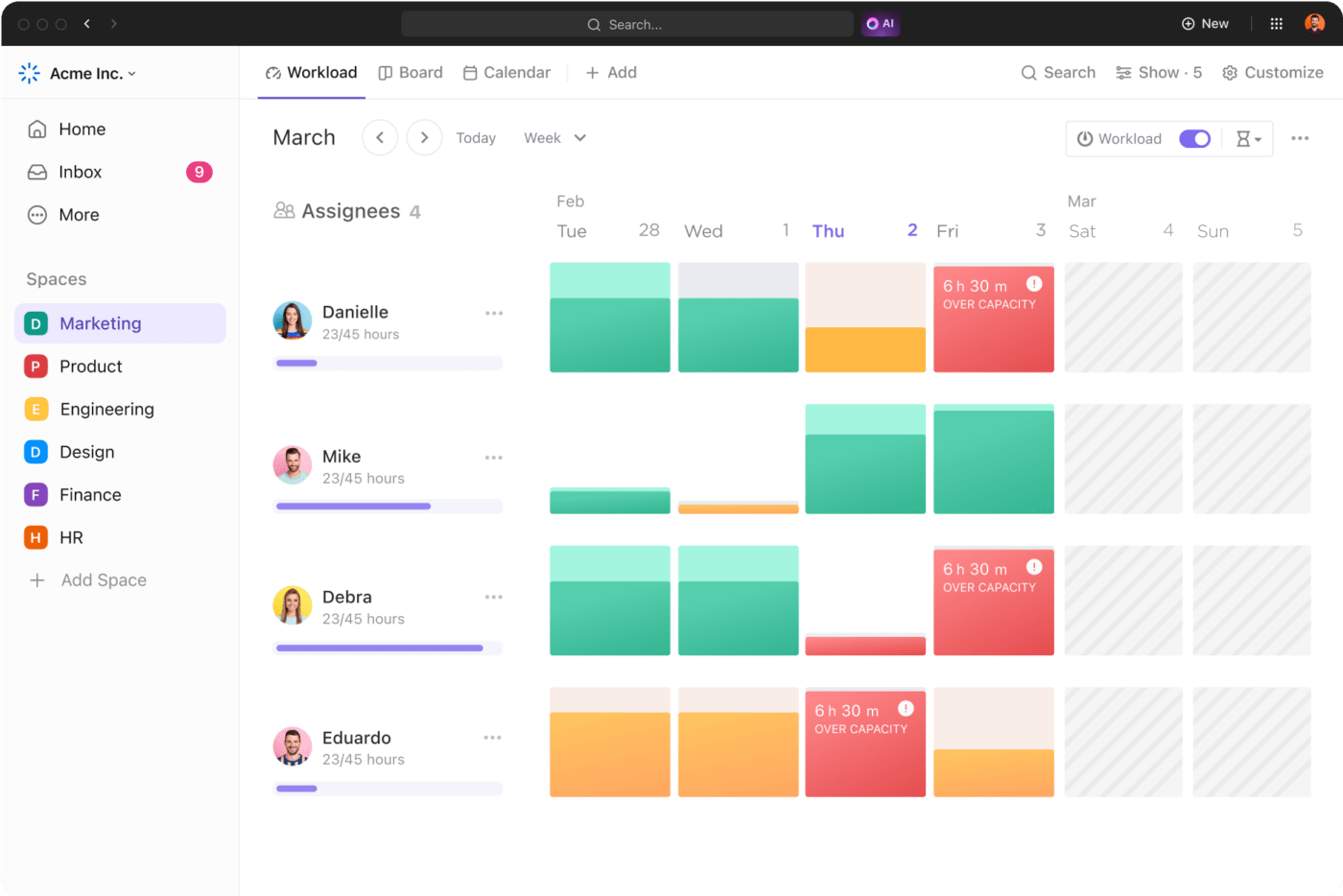
For effective delegation, use ClickUp Workload Views to monitor the distribution of tasks across your team, ensuring that no one is overwhelmed and that work is balanced efficiently. This also helps you add time estimates and task priorities to ensure your team knows their priorities. With this view, you can also identify where additional resources are required and allocate them.
Use ClickUp’s Team Management Plan Template to streamline the delegation process. This template helps you organize your team’s tasks, set clear expectations, and monitor progress in one place. You can outline team roles, set specific objectives for each member, and define accountability.
This way, it helps you to:
Bonus Tip: Use roles and responsibility templates to streamline delegation and clarify expectations. This will help you ensure everyone on your team understands their roles and contributes effectively in the long run.
A performance manager monitors, evaluates, and enhances team performance. This role includes setting clear expectations, offering regular feedback, and conducting performance reviews.
Performance managers mainly focus on tracking key performance indicators (KPIs) and using data to assess how well team members are meeting their goals. They also play a key role in identifying areas for improvement and implementing strategies to address them. This involves providing additional training, adjusting workloads, or setting new performance goals.
To be an effective performance manager, establish clear, measurable goals at the outset and communicate them to your team.
Also, make sure you provide regular feedback, both positive and constructive, to help team members stay on track and continuously improve. Use performance data to identify trends and address issues proactively.
Strategists excel at identifying problems and developing creative solutions. They set the long-term direction for the organization by analyzing internal and external factors, identifying opportunities, and creating actionable plans.
Strategists think critically and creatively to anticipate future challenges and ensure that the organization remains competitive. They communicate the strategy to the team, ensure that everyone understands their role in achieving it, and monitor progress to make adjustments as needed.
To be an effective strategist, regularly review and update your strategic plan to reflect changes in the internal and external environment.
Make sure you involve your team in the strategic planning process to ensure that they are engaged and aligned with the organization’s goals. Use scenario planning to anticipate potential challenges and develop contingency plans.
Mastering various leadership roles—whether as a coach, strategist, or decision-maker—can significantly influence your team’s success. Which of these leadership roles examples did you identify with the most?
Each leadership role presents a unique set of challenges and responsibilities. ClickUp is a powerful tool designed to help you address these challenges effectively.
With its comprehensive features and customizable templates, ClickUp streamlines task delegation, performance management, and strategic planning, ensuring that you can seamlessly manage and optimize your team’s efforts.
Whether you’re setting strategic goals or managing team performance, ClickUp integrates all leadership roles seamlessly into your workflow.
Sign up on ClickUp today!

Sudarshan Somanathan
Max 17min read
Sudarshan Somanathan
Max 20min read
Sudarshan Somanathan
Max 12min read

© 2026 ClickUp





