
Sorry, there were no results found for “”
Sorry, there were no results found for “”
Sorry, there were no results found for “”
Struggling to find the right candidates? Your job description might be the problem. Learning how to write a job description isn’t just about listing responsibilities. Rather, it is about attracting top talent, setting clear expectations, and making the hiring process more efficient.
A vague or jargon-heavy description won’t cut it. Let’s break down how to craft a job description that gets noticed by the right candidates.
Struggling to attract top candidates? Your job description might be the problem. Here’s how to refine it for better hiring results:
🚀 Sign up for ClickUp today to simplify job descriptions and hire smarter!
The most successful recruiters are those who are always learning and adapting to the changing needs of the industry.”
The job description is the first impression a candidate gets of your company. Vague or outdated job posting attracts the wrong applicants, leading to wasted time, poor hires, and high turnover.
A well-written job description acts as a filter, bringing in qualified candidates who fit both the role and your company culture.
Bonus: We have real-world job description examples coming up, along with best practices to help you write one that attracts top talent—keep scrolling!
✨ Fun fact on job descriptions ✨
Ever heard of nominative determinism? It’s the idea that people are naturally drawn to careers that match their names—like a Mr. Baker working in a bakery. Or a Miss Clearwater working as a hydrologist.
While it may sound like coincidence, it highlights how much job titles influence perception. If a title is unclear or too gimmicky, top candidates might not even realize the role aligns with their skills.
On the other hand, a strong job description benefits your hiring process in multiple ways:
Also Read: Best AI Recruitment Tools for Hiring Teams
An effective job description does more than fill a role—it sets up employees and the company for long-term success. Clarity, structure, and engagement make all the difference in attracting the best candidates while strengthening your company’s reputation in the talent market.
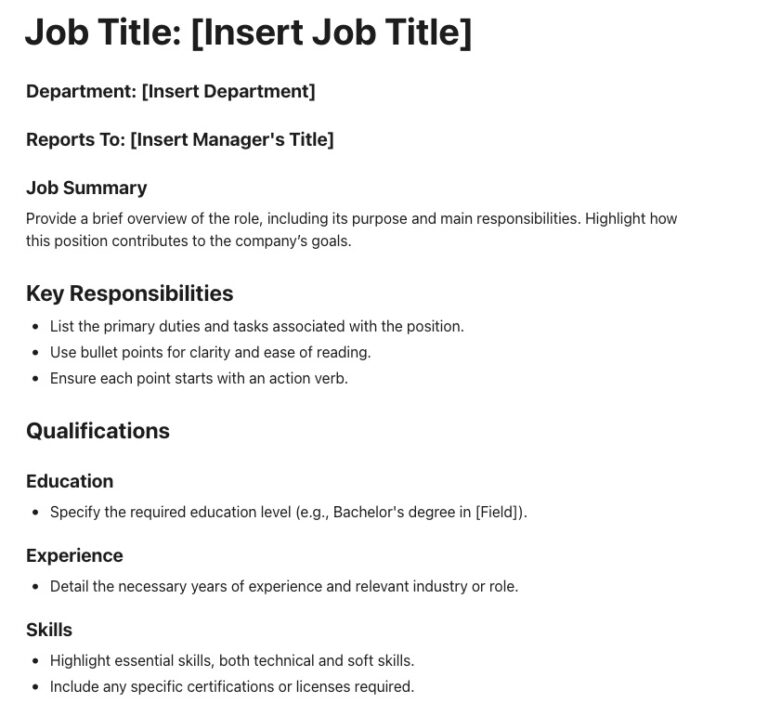
A job description should be more than a checklist of tasks. It needs to communicate the role’s purpose, expectations, and requirements. A strong structure ensures that job seekers understand the role at a glance while helping hiring managers filter through applicants effectively.
Here are the key elements every effective job description should include:
The job title should be specific, accurate, and aligned with industry standards.
❌Avoid vague titles like Marketing Ninja or Tech Guru—these might seem creative but can confuse qualified candidates and make the role harder to find in search results.
A short job summary follows, giving prospective candidates a quick snapshot of the role, its primary function, and how it fits into the organization.
Clearly outline the essential functions of the role. Focus on impact-driven responsibilities rather than an exhaustive task list. Instead of “Manage social media,” use “Develop and execute social media strategies on LinkedIn, X (Twitter), and Instagram to drive engagement.”
Keep it structured:
This section helps filter job seekers based on their relevant skills, experience, and education.
Break it down into:
Top candidates look for a workplace where they can thrive. Use this section to highlight your company culture, company mission, and what makes your organization unique.
A well-written job description sets clear expectations while giving candidates a reason to choose your company over others.
Read More: Questions & Guides for Hiring Managers
A job description shapes the quality of your applicant pool. If it’s too vague, overloaded with jargon, or missing key details, you’ll attract the wrong candidates—or worse, discourage great ones from applying. Clarity and structure make all the difference.
Here’s how to create a job description that stands out:
Before you start listing responsibilities and qualifications, take a step back and analyze.
If you’re unclear, the candidates will be too. A rushed or overly generic job description leads to mismatched hires, wasted time, and higher turnover.
The more precise and thoughtful this step is, the stronger your job description will be. Get this wrong, and you’ll either attract the wrong candidates or deter the right ones before they even apply.
A job title is the first thing candidates see, and it determines whether they click on your listing or scroll past. If it’s unclear, too long, or overloaded with buzzwords, the right people won’t find it.
A well-structured job title improves search rankings, attracts qualified candidates, and ensures your job posting reaches the right audience. If the title is misleading or hard to understand, the best applicants won’t even see it.
Candidates spend only a few seconds skimming job postings before deciding whether to keep reading. A dense block of text won’t hold their attention. A job summary should quickly explain the role’s purpose, its impact, and why it’s worth applying for.
A strong job summary sets the tone for the entire job description, making candidates eager to learn more.
A long, cluttered list of duties pushes candidates away. Instead of listing every possible task, focus on what actually matters and frame responsibilities in a way that emphasizes impact.
By structuring job responsibilities with precision, you help candidates visualize their contributions while making your job description more compelling.
A long list of requirements can turn away great applicants. The best candidates may not check every box, but they often bring valuable skills that aren’t listed. Instead of overwhelming job seekers, keep this section focused and realistic.
Being too rigid in this section limits your talent pool. Define what’s truly needed while leaving room for candidates who can grow into the role.
People always look forward to joining a positive workplace. If your job description is all about tasks and qualifications but says nothing about the environment, candidates won’t know if they’d actually enjoy working there.
Beyond compensation, candidates look for workplaces that foster growth and career development. Make sure your job posting reflects that.
A great job description loses its impact if it’s hard to scan. Candidates don’t have time to read dense paragraphs or decode jargon. If they can’t quickly understand the role, they’ll move on.
Here’s how to keep it clear and accessible:
If candidates have to work too hard to understand your job posting, they won’t apply. A clean, well-structured job description makes it easier for the right people to see themselves in the role.
A well-crafted job description brings in qualified candidates who understand the role and see value in joining your company. The more thought you put into its structure, the better your hiring outcomes will be.
Read More: 10 HR Challenges & Solutions for HR Teams
A well-structured job description should be clear, engaging, and informative while reflecting the company’s culture and expectations.
Here are three examples from different industries, each highlighting how a strong job description attracts the right candidates.
Job Title: Frontend Engineer
Job Summary:
We’re looking for a Frontend Engineer to build intuitive, high-performing user interfaces for our growing SaaS platform. You’ll work closely with our product and design teams to develop scalable web applications that enhance user experience.
Responsibilities:
Required Skills and Qualifications:
Company Overview and Culture:
At [Company Name], we believe in building technology that simplifies work. Our culture is fast-paced, collaborative, and innovation-driven. We offer remote flexibility, continuous learning programs, and a strong focus on work-life balance.
📌 Why this works:
This job description is clear and structured, highlights the tech stack to attract experienced engineers, and showcases the company’s culture and flexibility, making it appealing to top candidates.
Job Title: Marketing Manager, E-commerce
Job Summary:
Join [Company Name] as a Marketing Manager, where you’ll lead digital marketing strategies to drive online sales and brand growth. This role focuses on performance marketing, social media strategy, and data-driven decision-making.
Responsibilities:
Required Skills and Qualifications:
Company Overview and Culture:
We’re an innovative e-commerce brand specializing in [industry/product]. Our team thrives on creativity, experimentation, and a results-driven approach. We offer flexible schedules, remote work opportunities, and a collaborative work environment.
📌 Why this works:
This job posting clearly defines marketing channels, performance expectations, and growth opportunities, helping attract experienced marketers looking for a data-driven, creative role.
👀 Did you know? The concept of job descriptions has its roots in ‘Scientific Management,’ also known as Taylorism, developed by Frederick Winslow Taylor in the early 20th century
Taylor’s approach aimed to analyze and standardize workflows, leading to the creation of formal job descriptions to define specific roles and responsibilities.
Job Title: Registered Nurse, Emergency Department
Job Summary:
We’re seeking a Registered Nurse to provide high-quality patient care in a fast-paced emergency department. The ideal candidate thrives in high-pressure situations and is committed to delivering compassionate, efficient medical care.
Responsibilities:
Required Skills and Qualifications:
Company Overview and Culture:
At [Hospital Name], we prioritize patient-centered care, teamwork, and professional development. We offer competitive benefits, tuition reimbursement, and career advancement opportunities for dedicated healthcare professionals.
📌 Why this works:
This emphasizes the urgency and impact of the role, outlines required qualifications clearly, and highlights growth opportunities, making it attractive to experienced nurses looking for a fast-paced environment.
Each example is tailored to its industry, role expectations, and company culture while maintaining clarity and engagement.
A job description plays a key role in attracting the right talent, but writing one manually every time slows down the hiring process and leads to inconsistencies across roles.
The right tools streamline job description creation, making it easier to draft, edit, and manage job postings while ensuring they stay aligned with company needs.
A centralized system for drafting and storing job descriptions ensures consistency across departments. With ClickUp Docs, hiring teams can organize job postings in one place while using ClickUp Brain to refine language, eliminate redundancy, and improve clarity.
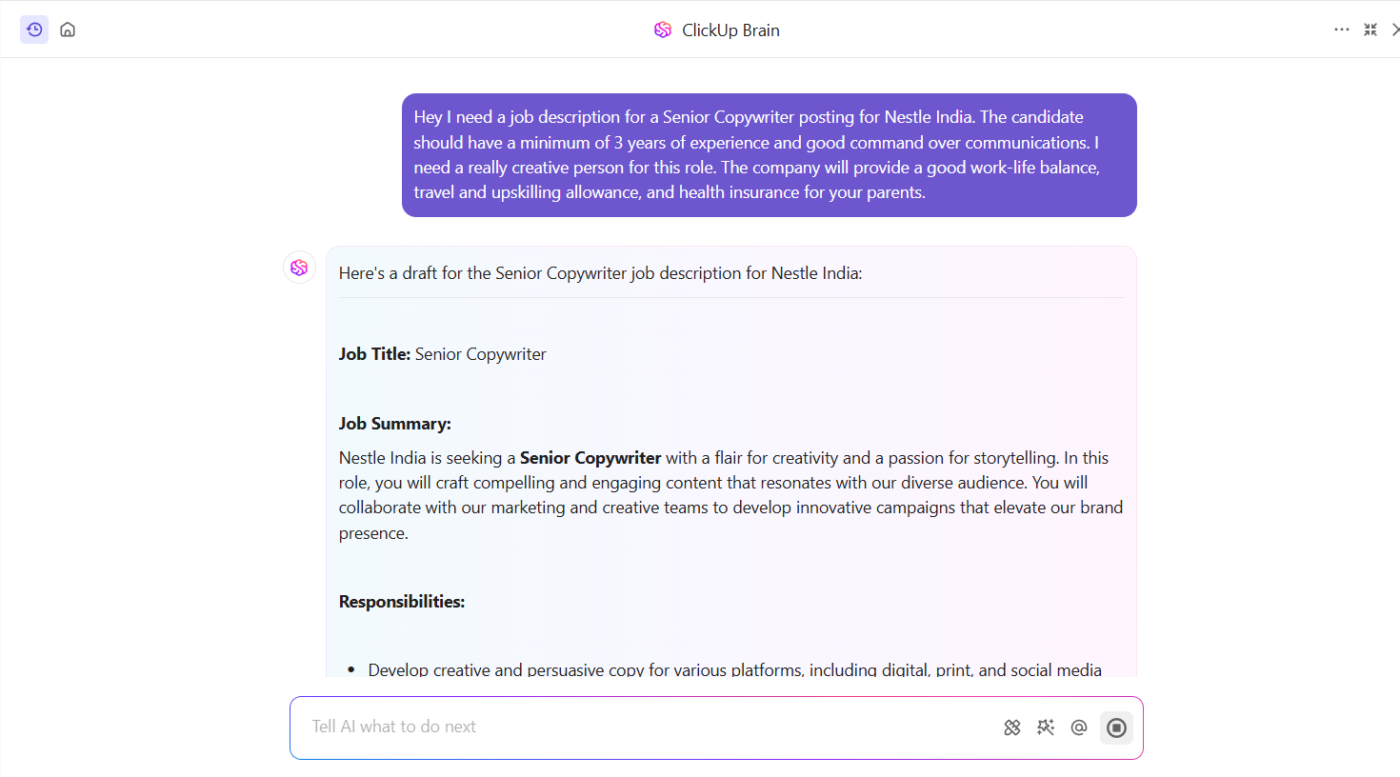
To power up the creation process of your job descriptions, you can use ClickUp Brain. This AI tool generates tailored content for your needs.
Read More: Best AI Content Writing Tools
Writing a job description requires input from multiple people—hiring managers, HR professionals, and department leads. ClickUp Tasks help streamline the process by breaking it into clear steps:
A structured approach to job descriptions helps hiring teams work faster while maintaining a cohesive brand voice across all job postings. With ClickUp’s Custom Templates, HR teams can:
You can use the ClickUp Job Description Template to churn out efficient job descriptions whenever required.
Creating a job description requires input from multiple teams. Without a structured collaboration process, job postings can get delayed or misaligned.
📮ClickUp Insight: About 41% of professionals prefer instant messaging for team communication. Although it offers quick and efficient exchanges, messages are often spread across multiple channels, threads, or direct messages, making it harder to retrieve information later
With an integrated solution like ClickUp Chat, your chat threads are mapped to specific projects and tasks, keeping your conversations in context and readily available.
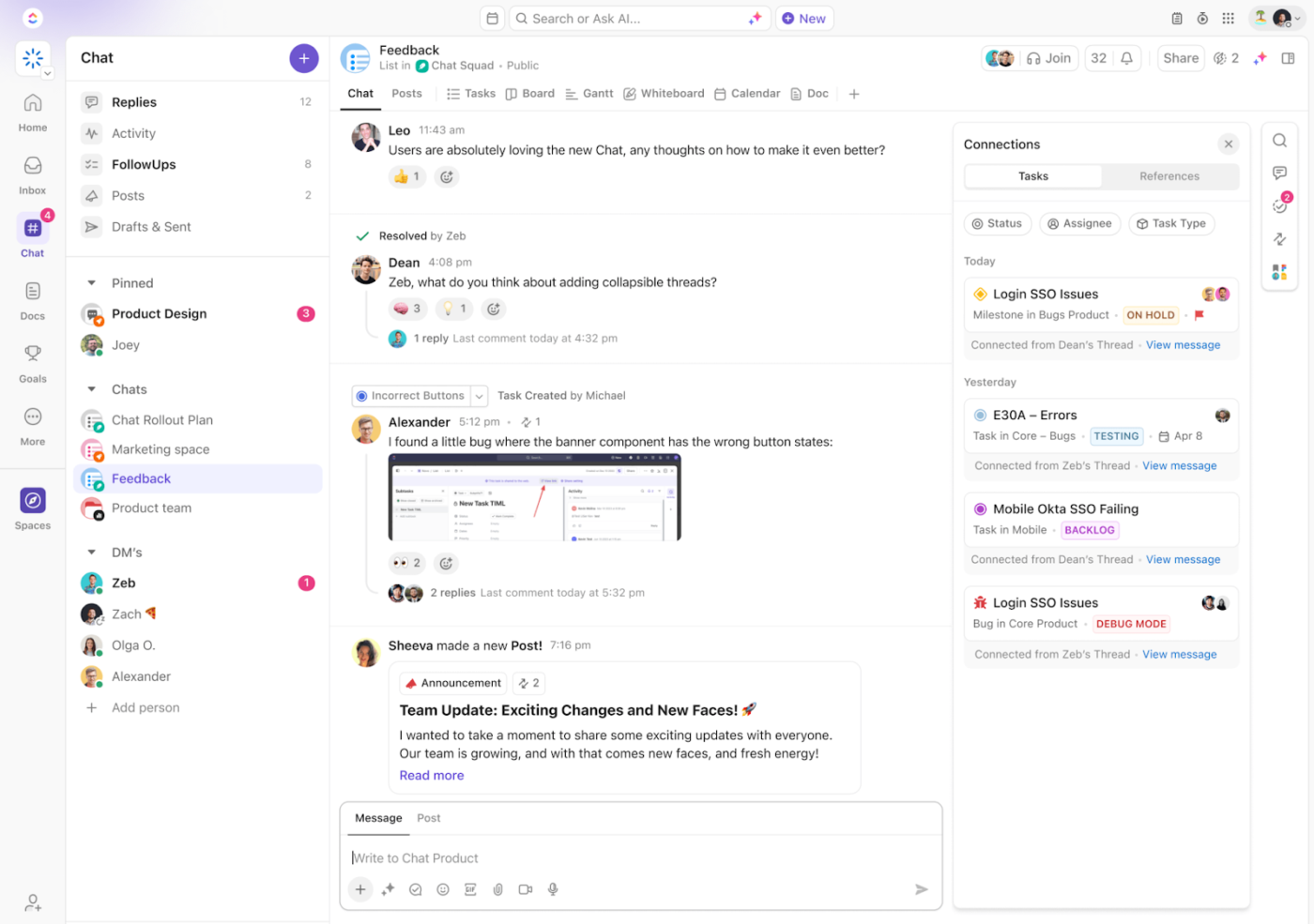
Bringing the right people into the process at the right time ensures that job descriptions are clear, accurate, and aligned with hiring needs.
A well-defined job description process should connect seamlessly with other HR tools like ATS (Applicant Tracking Systems), internal databases, and communication platforms.

ClickUp Integrations can help you integrate Google Drive, Slack, Outlook, and ATS platforms, ensuring job descriptions are easy to share, review, and post across multiple hiring channels.
With the right tools in place, HR teams can speed up job description creation, maintain consistency, and ensure that hiring managers create postings that attract the right candidates.
A job description that isn’t updated loses its impact. Roles evolve, skills shift, and company priorities change. If job descriptions don’t reflect these updates, hiring managers risk attracting the wrong candidates, setting unclear expectations, and creating misalignment within teams.
An outdated job description creates hiring inefficiencies and internal confusion. If employees are taking on responsibilities that aren’t listed or if key skills are missing, it’s a sign that an update is overdue.
Here’s when a review is necessary:
Most companies update job descriptions only when hiring, but this reactive approach creates delays.
To keep job descriptions accurate and useful, teams should:
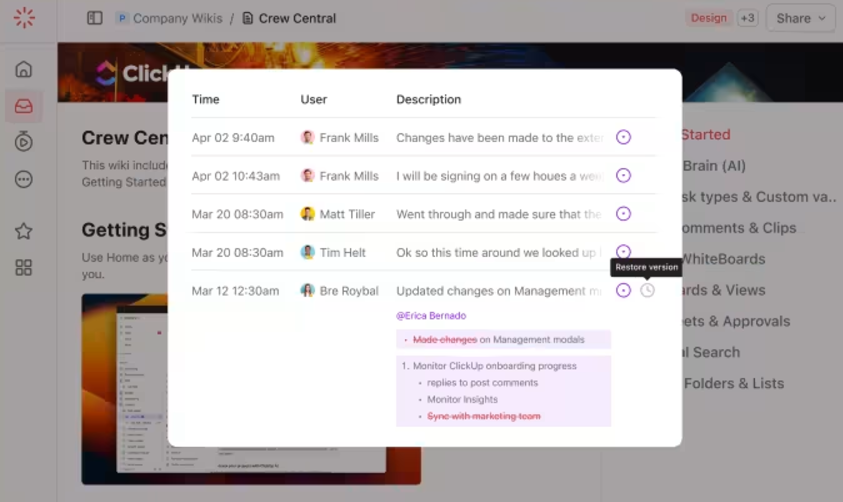
Tracking job description changes across multiple teams can be challenging. ClickUp Docs provide a centralized space to store, edit, and manage job descriptions, ensuring accuracy and consistency.
For version control and structured updates, the ClickUp Document Change Control SOP Template helps HR teams:
A well-maintained job description not only improves hiring outcomes but also keeps employees aligned with their roles, expectations, and growth opportunities. Keeping them updated ensures clarity, efficiency, and long-term success.
A compelling job description does more than fill a position—it ensures the right candidates apply, sets clear expectations, and outlines essential job duties.
Keeping a good job description structured and updated helps teams hire efficiently and build a workforce that aligns with company goals.
Sign up for ClickUp today to streamline job descriptions and improve your hiring process.

Sudarshan Somanathan
Max 29min read
Sudarshan Somanathan
Max 17min read

Manasi Nair
Max 21min read

© 2026 ClickUp




