






Still downloading templates?
There’s an easier way. Try a free AI Agent in ClickUp that actually does the work for you—set up in minutes, save hours every week.
Sorry, there were no results found for “”
Sorry, there were no results found for “”
Sorry, there were no results found for “”
Google has already trained 6 million educators on Gemini, and 74 million students now associate AI directly with the platform.
That scale means AI use is now embedded in coursework, marketing research workflows, and corporate writing processes.
But with widespread use comes scrutiny. Institutions want clarity on what was human-authored and what was AI-assisted. Proper citationequls protecting credibility. Whether you used Gemini to refine grammar, summarize research, or generate content for corporate purposes, too, documentation matters.
In this guide, we’ll break down how to cite Gemini correctly across APA, MLA, and Chicago formats, step by step.
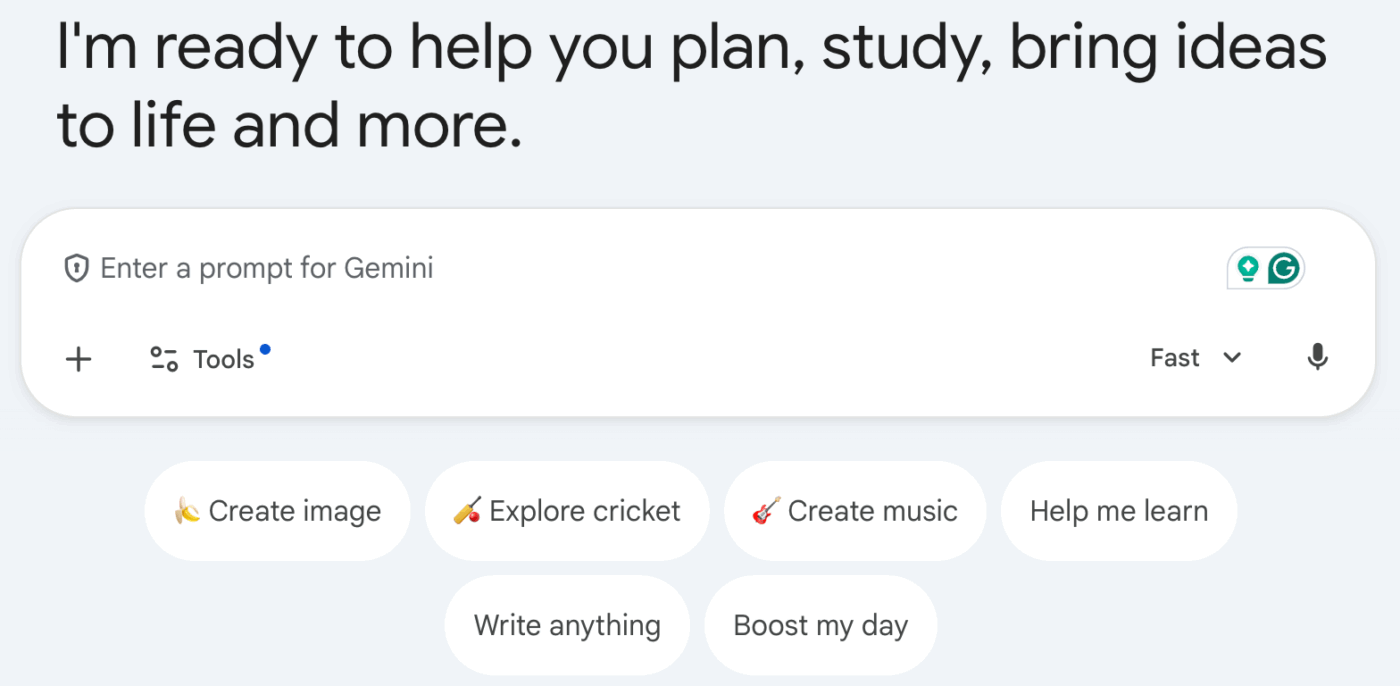
When you use Google Gemini or any other generative AI tools, proper citation is a must to maintain professional hygiene. Whether you’re refining high school grammar concepts or using generative AI chat to brainstorm, acknowledging AI use protects your credibility.
Here’s why it matters:
Citing AI builds clarity. And clarity builds trust.
📮ClickUp Insight: Only 10% of our survey respondents use voice assistants (4%) or automated agents (6%) for AI applications, while 62% prefer conversational AI tools like Gemini and Claude. The lower adoption of assistants and agents could be because these tools are often optimized for specific tasks, like hands-free operation or specific workflows.
ClickUp brings you the best of both worlds. ClickUp Brain serves as a conversational AI assistant that can help you with a wide range of use cases. On the other hand, AI-powered agents within ClickUp Chat channels can answer questions, triage issues, or even handle specific tasks!
When working in APA style, the key principle is retrievability. If the AI-generated text from Google Gemini cannot be accessed by others, APA treats it similarly to personal communication.
Use a parenthetical citation or narrative citation that includes the organization and year.
🔺Example: “Gemini can summarize complex research findings in seconds” (Google DeepMind, 2024).
📖 Also Read: How to Train Gemini on Your Own Data
If quoting exact text, include quotation marks and clarify context.
If citing the tool itself as an AI model or large language model, begin with the organization name.
🔺 Example: Google DeepMind. (2024). Gemini AI [Large language model]. https://deepmind.google/gemini
In APA’s general format, list this under your reference list titled “References.” If your institution requires version detail, include the version number or current version information.
This approach clarifies your AI use while aligning with the publication manual standards for software citation.
💡 Pro Tip: If you’re relying on multiple generative AI tools like Google Gemini, ChatGPT, or Claude, you don’t have to juggle tabs or switch platforms to stay productive. With ClickUp Brain MAX, you get contextual AI that actually understands your work environment.
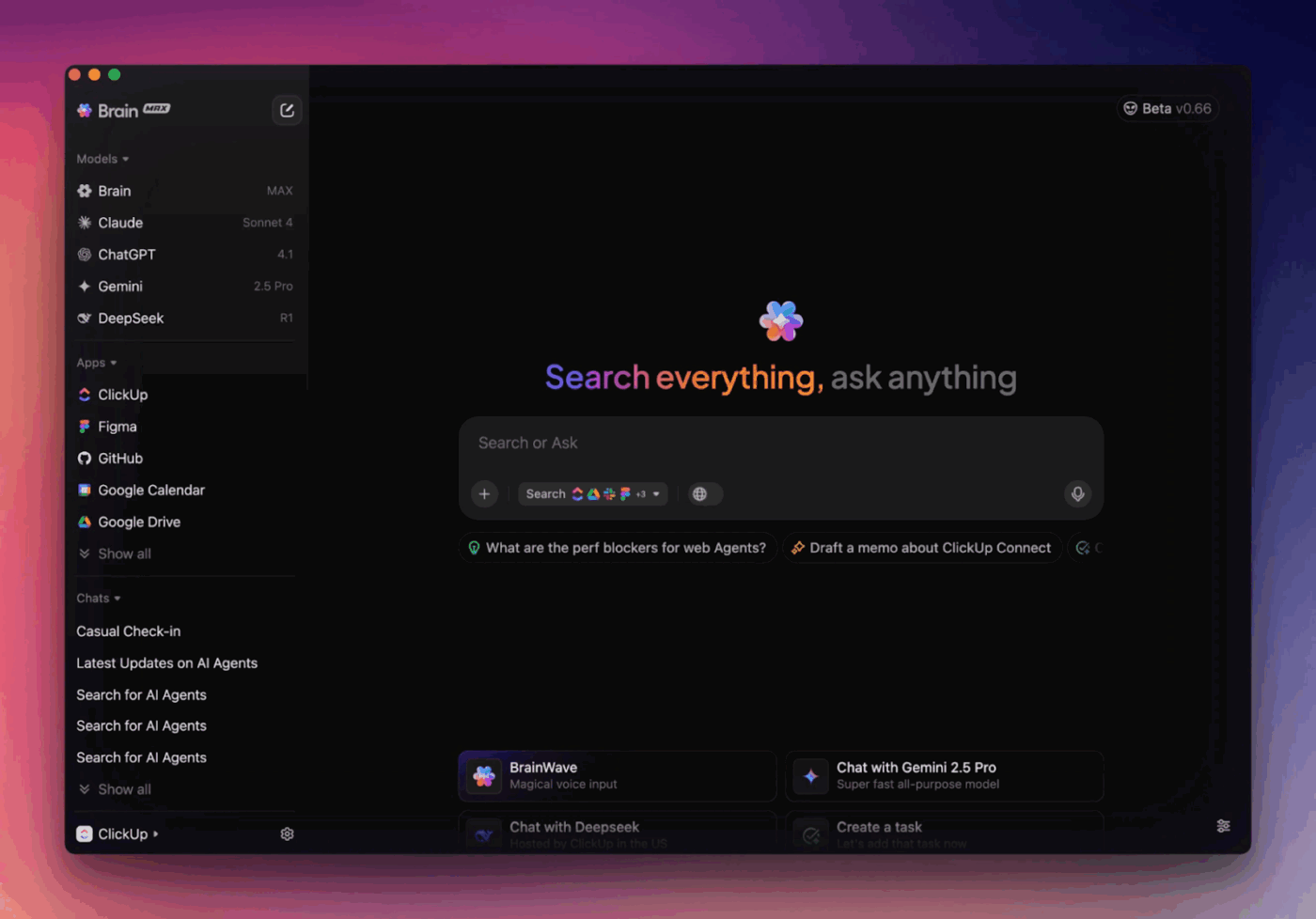
You can:
📖 Also Read: How to Cite AI Tools Like ChatGPT
In MLA style, common in humanities disciplines, the emphasis is on the container and the publisher.
MLA typically uses a brief text citation in parentheses. If referencing text generated from a generative AI chat, you may specify the tool name in the sentence and include a short citation.
🔺 Example: “Gemini is increasingly used for academic research.” (Gemini).
📖 Also Read: How to Use Gemini API in Your AI Workflows
In MLA, the general format for software citation starts with the author, italicize the title, and include the publication year and the organization. The URL comes last without the “https://” part.
🔺 Example: “Gemini AI.” Google DeepMind, 2024, https://deepmind.google/gemini
This entry appears in your works cited page. If relevant, you may include version information or the day, month, and version you accessed, especially if your school requires detailed documentation of generative artificial intelligence sources.
MLA focuses on clarity and consistency, ensuring your audience understands the source behind the AI-generated content.
📖 Also Read: How to Cite ChatGPT-Generated Text
In Chicago style, AI tools are commonly cited using a numbered footnote, especially when following the Chicago Manual notes-and-bibliography system.
Chicago often recommends describing the interaction.
🔺 Example: Text generated by Gemini, March 15, 2024, Google DeepMind, https://deepmind.google/gemini
📖 Also Read: How to Use Gemini Tasks & Boost Productivity
If you used a specific version large language model, include the version details for transparency.
🔺 Example: Google DeepMind. Gemini AI. 2024. https://deepmind.google/gemini
Chicago allows a slightly more formal citation structure, especially in academic research, so you can place it in the bibliography section. If your work includes AI-generated image outputs or analytical summaries, noting the tool, date, and context strengthens documentation.
Across all three citation styles, the goal remains the same: clearly acknowledge the generative AI system that contributed to your work while preserving academic integrity.
📖 Also Read: How to Use You.com AI for Research & Analysis
When you cite AI-generated content, version clarity matters. A large language model can evolve rapidly, and the output from one release may differ from another. That’s why documenting the version number or current version strengthens your citation.
Here’s where that information typically lives:
In many generative AI chat environments, the selected AI model appears near the chat header. This might reference a specific Gemini tier or a version large language model designation.
If you’re working through Google’s official materials, you may find version information listed in update logs or help documentation tied to the AI company.
📖 Also Read: Best GPTs for Research and Knowledge Discovery
If you accessed Gemini via API, the model name and version are usually logged in request details. This is especially important for academic research papers or a documented methods section.
If a precise version isn’t visible, include the access date in your citation. With generative artificial intelligence, even the same prompt text can produce evolving outputs over time.
📖 Also Read: How to Rewrite Content With Gemini
While Google Gemini is a powerful generative AI tool, it isn’t a substitute for human judgment.
Whether you’re drafting academic papers, analyzing data, or generating creative ideas, understanding the limitations of an AI model protects both your productivity and credibility.
Used thoughtfully, Gemini enhances workflows. Used uncritically, it can create gaps you’ll need to fix later
What’s better than having AI-powered assistance with Gemini?
Getting that same AI-powered support directly within a project management tool. So, you don’t have to constantly switch between apps and relieve yourself from AI sprawl, which eventually leads to work sprawl.
ClickUp, a converged AI workspace with versatile features, streamlines your research process and ensures integrity. Let’s explore how to make the most of it. 📈
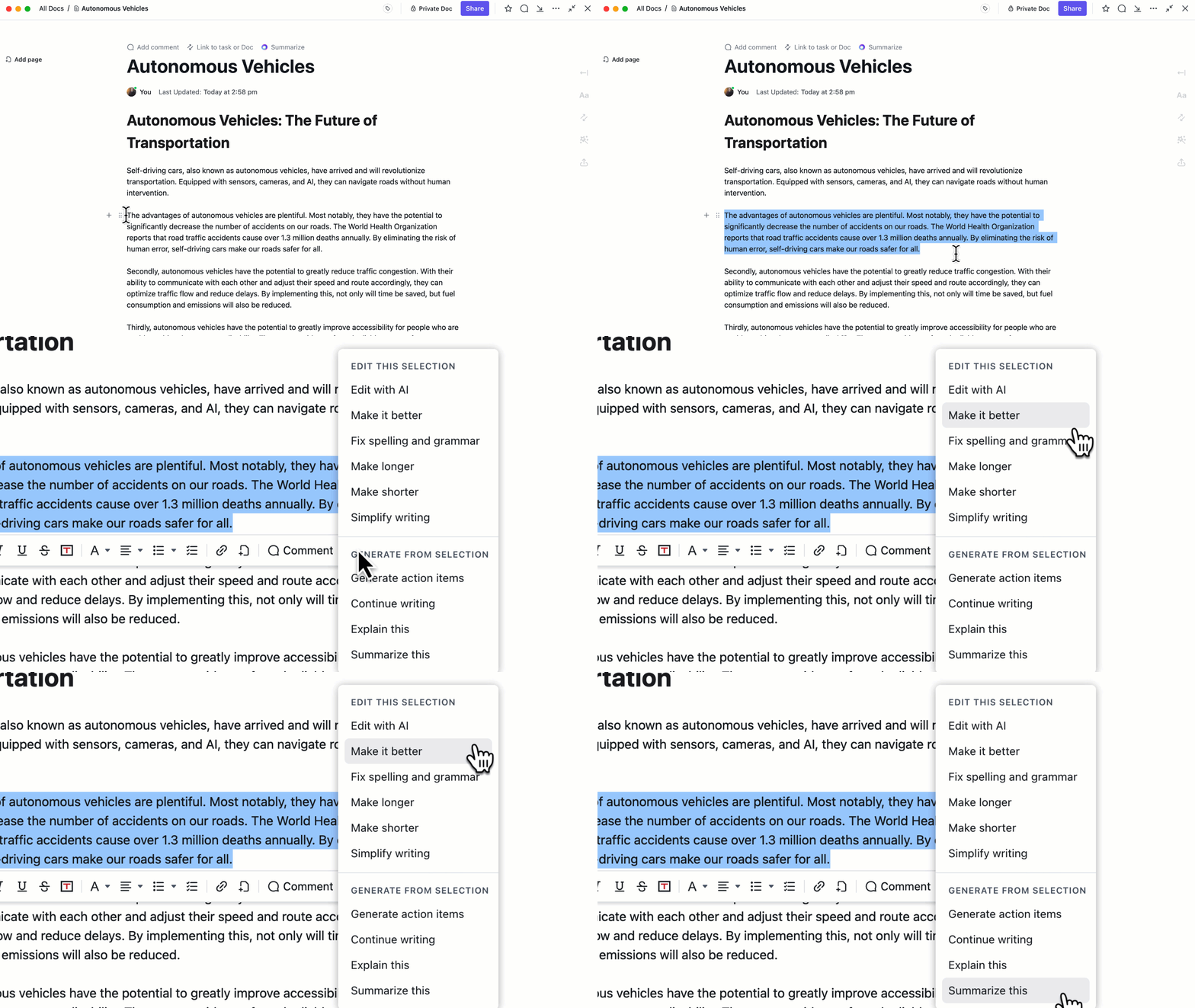
With ClickUp Docs, you can create and store your research materials in one central location. Whether you’re drafting an outline, keeping track of notes, or compiling data, ClickUp makes it easy to manage your work in a structured way.
You can quickly access everything you need and collaborate with others, all within the same workspace.
ClickUp Docs also enables you to store citations, organize them by type, and even attach or link to relevant notes. You can quickly reference sources when needed and never miss a citation.
What’s more, ClickUp Brain has a lot to offer as an alternative to Gemini.
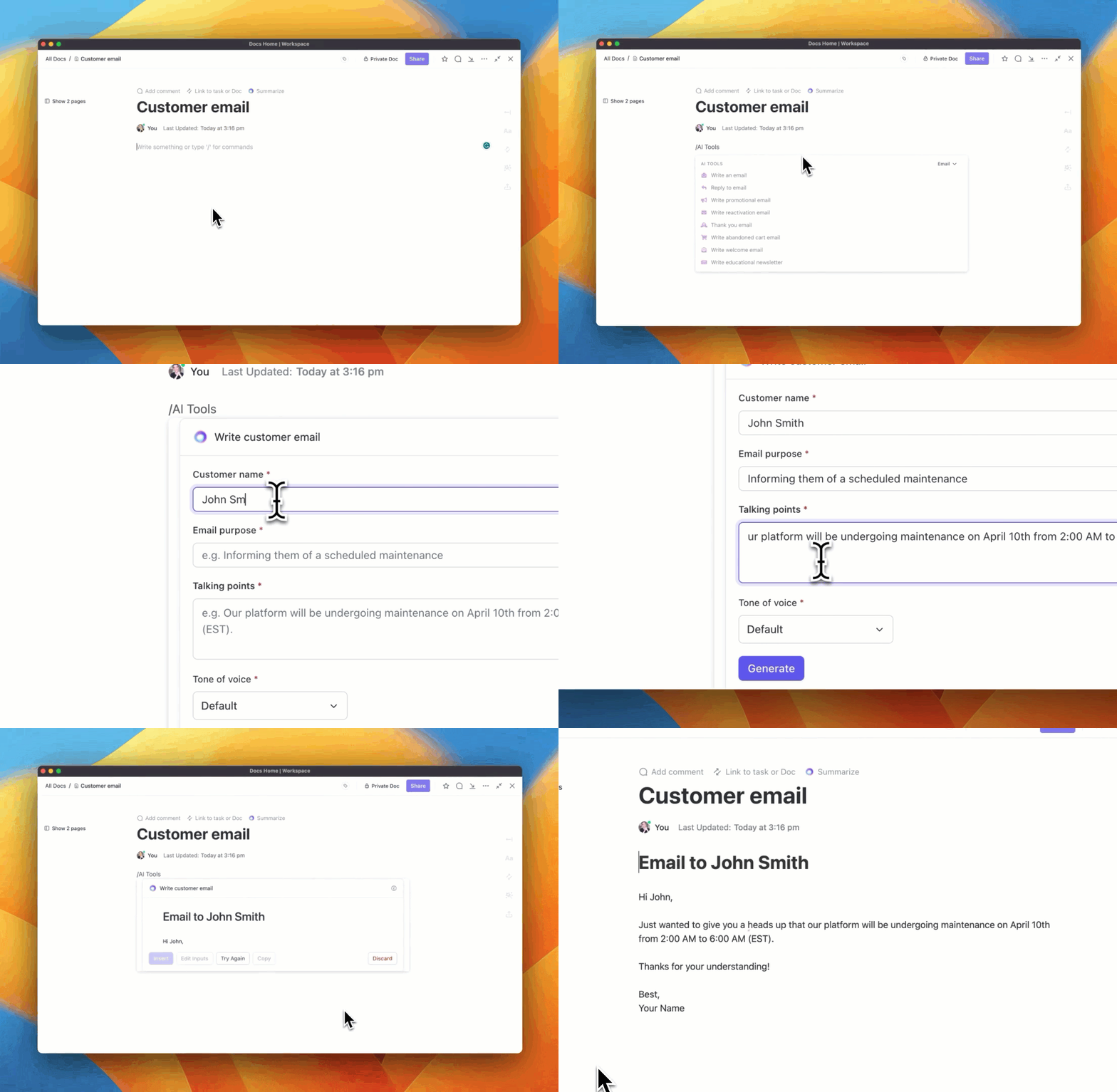
Formatting citations correctly can be time-consuming, but ClickUp Brain, an AI-powered assistant in your ClickUp workspace, makes it easy.
No matter which format you use, ClickUp Brain automatically formats your citations according to the style you choose.
💡 Pro Tip: You can use ClickUp Super Agents as your AI coworkers that are built right into your ClickUp Workspace. They show up just like teammates, because under the hood, they’re modeled as real users.
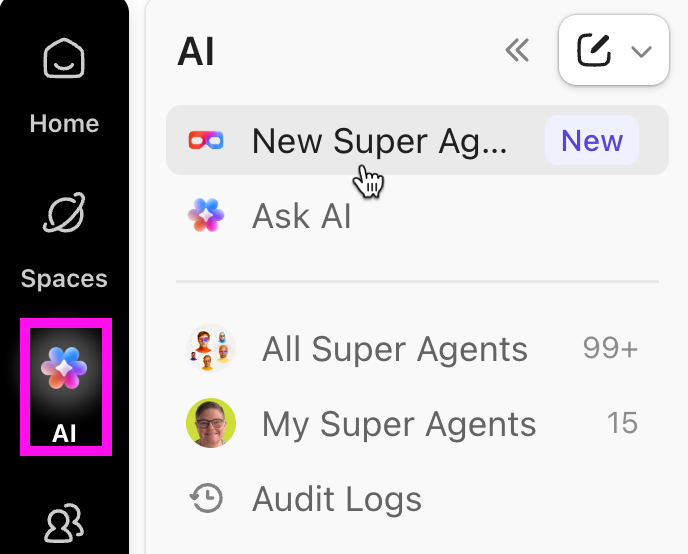
You can:
📖 Also Read: Best AI Tools for Technical Writing
Knowing how to cite Gemini is part of responsible AI literacy. Whether you’re documenting AI-generated text, adding a parenthetical citation, listing a source in your reference list, or formatting a numbered footnote under Chicago style, transparency protects your credibility.
As generative AI becomes embedded in classrooms and workplaces, clear acknowledgment of tools like Google Gemini isn’t optional—it’s professional best practice.
But citing correctly is only half the equation. You also need a structured workspace to organize drafts, research, prompts, and revisions without losing context.
That’s where ClickUp fits in.
Try ClickUp for free and bring clarity, accountability, and smarter AI workflows into your academic and professional writing.
To cite AI-generated images, include the tool name, company name, date, and description of the AI-generated image in your chosen citation styles. In APA or MLA, list it in your reference list or works cited, noting it was created by an AI image generator.
The main difference is the provider and the AI company behind the AI model. Google Gemini is developed by Google DeepMind, while ChatGPT is from OpenAI. Your citation should reflect the correct organization, version information, and access date for each tool.
In many academic settings, yes. Even if you only use generative AI tools for brainstorming, refining text generated, or light edits, transparency around AI use is encouraged. Some institutions allow you to simply acknowledge it in a note or methods section.

© 2026 ClickUp

There’s an easier way. Try a free AI Agent in ClickUp that actually does the work for you—set up in minutes, save hours every week.