






Still downloading templates?
There’s an easier way. Try a free AI Agent in ClickUp that actually does the work for you—set up in minutes, save hours every week.
Sorry, there were no results found for “”
Sorry, there were no results found for “”
Sorry, there were no results found for “”
Growth roadmaps are meant to give you clear direction and focus. But for many growth managers, these plans turn into obsolete lists of ideas soon after you launch them.
That’s because you work across different teams: product, marketing, engineering, and analytics. So if you don’t have a unified view of priorities, the strategic plan becomes a static document.
Here’s how you can build and manage growth roadmaps that adapt at the speed of your insights and execution.
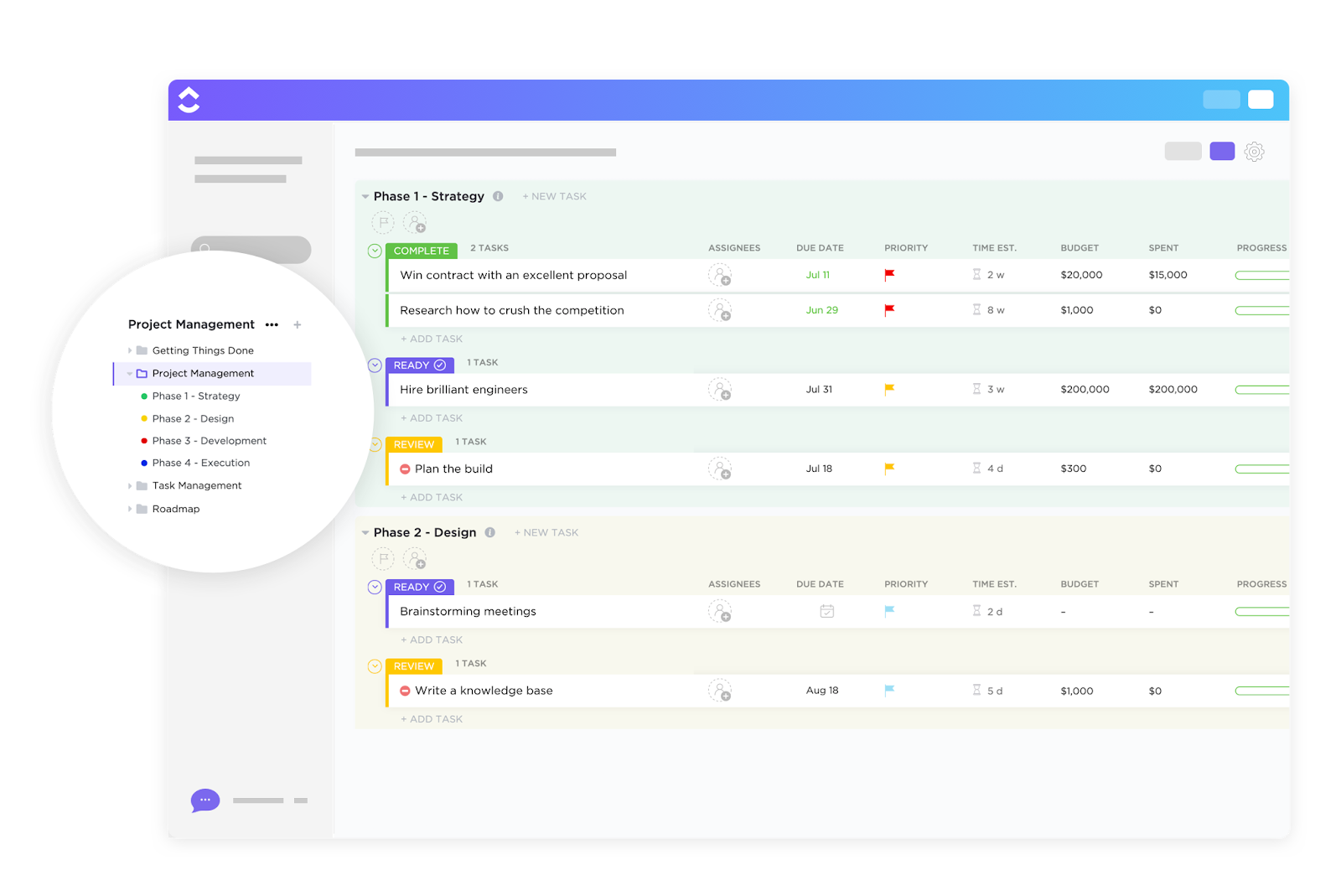
Use the ClickUp Project Request and Approval Template to set up and manage your growth roadmap instantly. This template includes Custom Fields for tracking metrics such as impact, cost, and probability, making it easy to prioritize the best initiatives. You can monitor progress using statuses such as Under Review, In Progress, and Approved, and visualize all growth initiatives across multiple views.
To understand how growth managers can manage growth roadmaps effectively, you must have a deeper understanding of all the friction points that you are likely to run into.
Growth managers are constantly pulled in two directions: holding the big-picture vision for the company, while managing the day-to-day hustle of keeping everything moving smoothly.
What makes this worse? Lack of visibility. 🔎
Instead of being one comprehensive system, the roadmap itself ends up scattered across different tools and documents:
Your growth team is always playing catch-up, hunting for information, and manually reconciling data rather than making decisions.
📌 Example: A manager looking at a task status in one tool has to click through three other applications and dig through 2-week-old emails to understand:
Another thing that throws teams off the same growth roadmap? Fragmented internal processes. Because teams are often rewarded based on their departmental KPIs (key performance indicators).
For example:
The content team publishes articles that drive traffic but don’t support the experiments you need to validate activation.
The acquisition team scales channels that bring in low-quality users because it improves CPA, even if retention drops. The product team ships features that are unrelated to your growth experiments.
Each team looks successful in isolation, but the combined effect is zero progress on the actual growth goals.
👀 Did You Know? Research from Mural indicates that 85% of go-to-market (GTM) teams experience misaligned priorities at least once a week or a month. In fact, 95% of respondents believe a centralized planning system that enables easy, cross-functional collaboration would be highly effective in improving how they execute their strategy.
📚 Read More: How to Implement Lean Project Management
When your product roadmap is scattered across multiple tools, it’s nearly impossible to create a priority list. Here, you lose the two core things you need for objective scoring:
But most importantly, it’s impossible because prioritization is a continuous process. ♾️
When you work on an initiative, chances are that the new information will invalidate your old hypotheses. Or maybe a viral industry trend, a regulatory change, or a sudden competitive move demands immediate attention. If you can’t pivot fast, you lose momentum.
📚 Read More: The Ultimate Guide to Scrum Project Management
Different teams use department-specific tools for their work, rather than having everything in a single place.
Tasks are tracked on a project management tool. Growth is measured via an analytics tool. And your growth or product roadmap is somewhere else.
For a growth manager, this means manually connecting the dots and regularly reviewing the entire roadmap. No wonder progress tracking becomes inefficient. This is work sprawl in action. And it’s costing companies a staggering $2.5 trillion in lost productivity annually.
📮 ClickUp Insight: Low-performing teams are 4 times more likely to juggle 15+ tools, while high-performing teams maintain efficiency by limiting their toolkit to 9 or fewer platforms. But how about using one platform?
As the everything app for work, ClickUp brings your tasks, projects, docs, wikis, chat, and calls under a single platform, complete with AI-powered workflows.
Ready to work smarter? ClickUp works for every team, makes work visible, and allows you to focus on what matters while AI handles the rest.
Let’s see what it looks like when planning, implementation, and analysis are done in isolation:
With limited room for feedback and learning, the whole process becomes a top-down mandate instead of a team effort, leading to diminished success.
Growth managers aren’t responsible for shipping features or launching campaigns in isolation. They’re accountable for orchestrating growth across teams, time horizons, and uncertainty.
A growth roadmap exists to support that responsibility, not to manage tasks.
| What growth managers are accountable for | Why this responsibility breaks down without a roadmap | What the roadmap fundamentally provides |
|---|---|---|
| Maintaining a single definition of growth | Teams interpret “growth” differently based on their KPIs | A shared frame of reference for what success means right now |
| Making growth tradeoffs visible | Decisions happen in private conversations and Slack threads | Transparency into why certain bets are prioritized over others |
| Carrying context across teams and time | Institutional memory resets every quarter | Continuity between past learnings, current bets, and future plans |
| Defending focus under constant pressure | Every new idea feels urgent and reasonable | A way to say “not now” without killing ideas permanently |
| Turning learning into organizational progress | Insights stay trapped in decks and postmortems | A persistent link between experiments and strategic direction |
| Preventing reactive growth work | Roadmaps become reactive lists of ideas | Intentional sequencing of bets instead of constant reshuffling |
| Acting as the connective tissue between teams | Growth managers become human routers | A system that holds alignment without constant intervention |
✅ Fact Check: According to Gallup, a staggering 47% of employees receive feedback from their manager a few times a year or even less. This lack of timely, frequent communication is not just frustrating; it’s actively detrimental. Gallup also found that when feedback is delivered so infrequently, it actually makes the employee’s performance worse about a third of the time.
Here’s a step-by-step guide for managing growth roadmaps correctly.
Start by defining your North Star Metric (NSM). This is the single, overarching metric that best captures the core value your product delivers to customers. It focuses on user value (the precursor to revenue).
For instance, Spotify’s NSM is not “number of new subscribers,” but “Time Spent Listening.” The more users listen, the more valuable the product is to them, and the higher the likelihood of retention and long-term revenue.
💡 Pro Tip: When identifying a north star metric, make sure it is:
Next, translate this high-level strategic vision into a measurable goal using Objectives and Key Results (aka OKRs):
Once you’ve defined the OKRs, define initiatives for your roadmap that, when executed, will directly achieve the key results. Remember, initiatives are still broad themes like “improve onboarding experience,” and not individual tasks like “change button color.”
📌 Example:
🧠 Fun Fact: The term North Star Metric is an intentional nod to the star Polaris, which sailors and travelers historically used for navigation. Just as Polaris provided a fixed, reliable point to determine a clear path forward, the North Star Metric provides the single, unwavering metric to steer all product and business decisions toward long-term growth.
Using spreadsheets to manage growth roadmaps in the era of digital transformations is like eating soup with a fork. It’s frustrating and impossible to keep track of.
Plus, roadmaps work better with a visual representation of how you’ll constantly evolve and a strategic approach to growing your business. Using rows and columns is simply not the best way to develop your roadmap.
When building yours, look for a tool that lets you easily build, share, and track your roadmap.
For starters, use ClickUp Whiteboards to brainstorm, create, and share a centralized growth roadmap.
The drag-and-drop canvas lets you map out your marketing and product roadmaps. Draw connections between shapes, add interactive elements, tag teammates, leave notes, and much more.
Add sticky notes, shapes, and images to capture brainstormed ideas, high-level themes, product lifecycle, strategic milestones, etc. Color-code, cluster, and label them for clarity
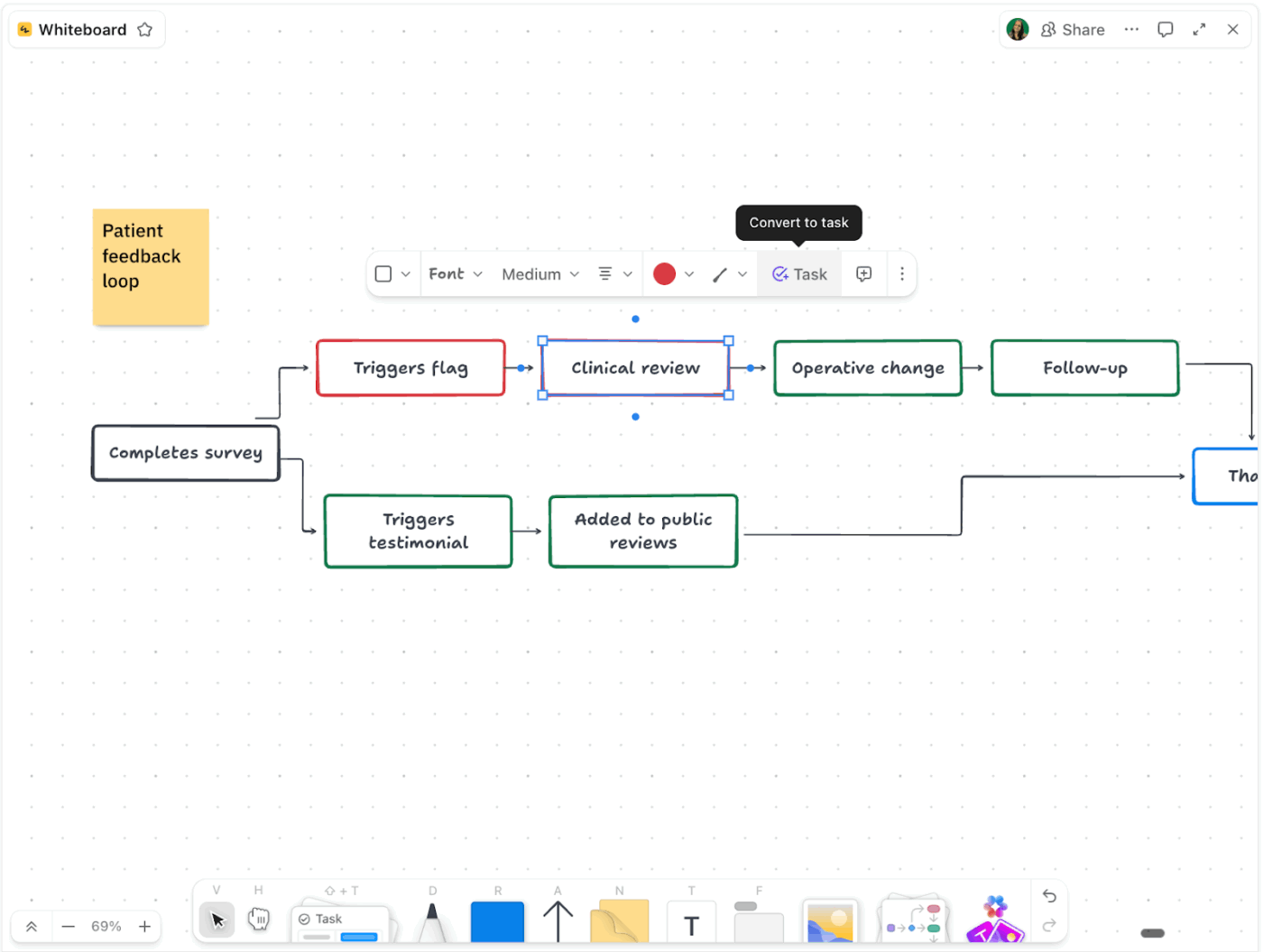
Now comes the best part. Multiple people can add, move, comment on, or edit the elements in the whiteboard simultaneously.
When the ideas are finalized, convert them into a Task within your Whiteboard. You can add task priority (Urgent, High, Normal, etc).
🛠️ Quick Hack: Use Cursor Chat to leave temporary, real-time messages right on your ClickUp Whiteboard. Just hit the / (forward slash) key, type your message, and drag it anywhere you want on the canvas. It’s designed for quick collaboration and automatically disappears, keeping the canvas clean.
Evaluate which growth initiatives offer the most value to customers and then build your prioritized list.
It’s best to adopt a standardized scoring framework here. This helps you put a number on the value of each initiative compared to the others.
Here are some popular scoring and prioritization methods you can try:
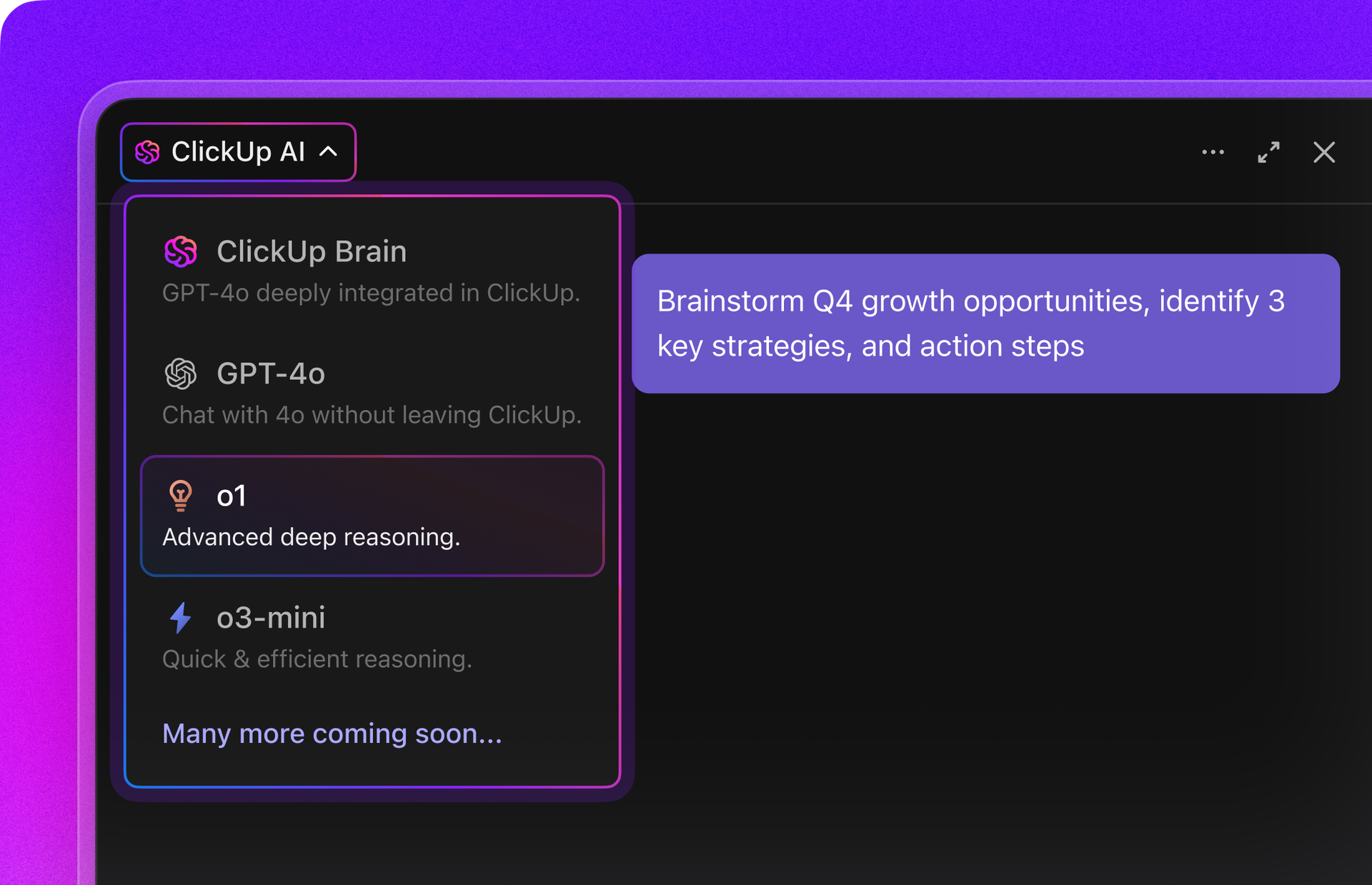
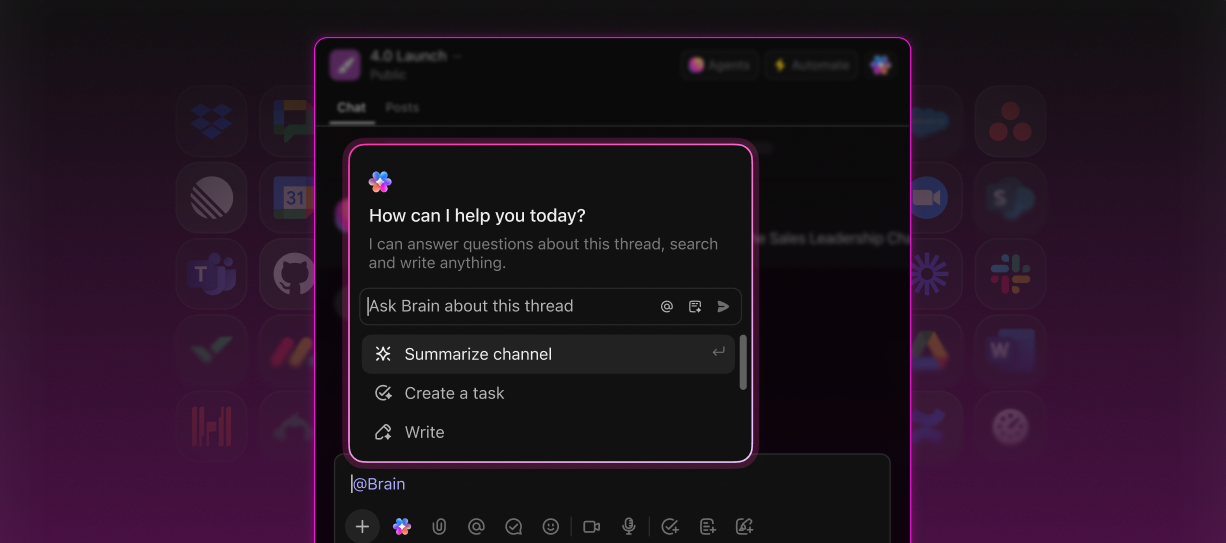
Manually adding prioritization to all initiatives is time-consuming and a nightmare. We have a better suggestion. Leverage ClickUp Brain, our powerful AI assistant, to analyze all your growth initiatives and categorize them based on relevance, potential impact, and urgency.
ClickUp Brain analyzes your historical company data, project briefs, growth roadmaps, unique selling points, meeting notes, team chats, and other available resources. It then suggests the key initiatives that best match your business goals and product vision.
⚡ Template Archive: Free Project Roadmap Templates in Excel & ClickUp
🚀 ClickUp Advantage: Supercharge prioritization with BrainGPT.
It is your desktop AI companion that pulls all your work context together—ideas, notes, tasks, experiments, and documents—so you can prioritize without bouncing between tools.
Use it to:
If you’re already drowning in AI tools, this video shows you how to bring them under control.
📚 Read More: Kanban Board Examples to Streamline Your Workflows
Clear ownership ensures that every initiative has one accountable person driving it forward. Without it, tasks bounce between teams, experiments stall, and priorities quietly die in the backlog.
Start by assigning:
As easy as this sounds, creating tasks and assigning them is actually tough, especially when you’re managing complex, long-term roadmaps. You need to constantly eliminate scope creep and make sure team members don’t get lost in a massive, flat task list.
To make this airtight, convert each initiative or experiment into a ClickUp Task. Add a clear owner, due date, priority, subtasks for execution, and dependencies for any cross-functional work.
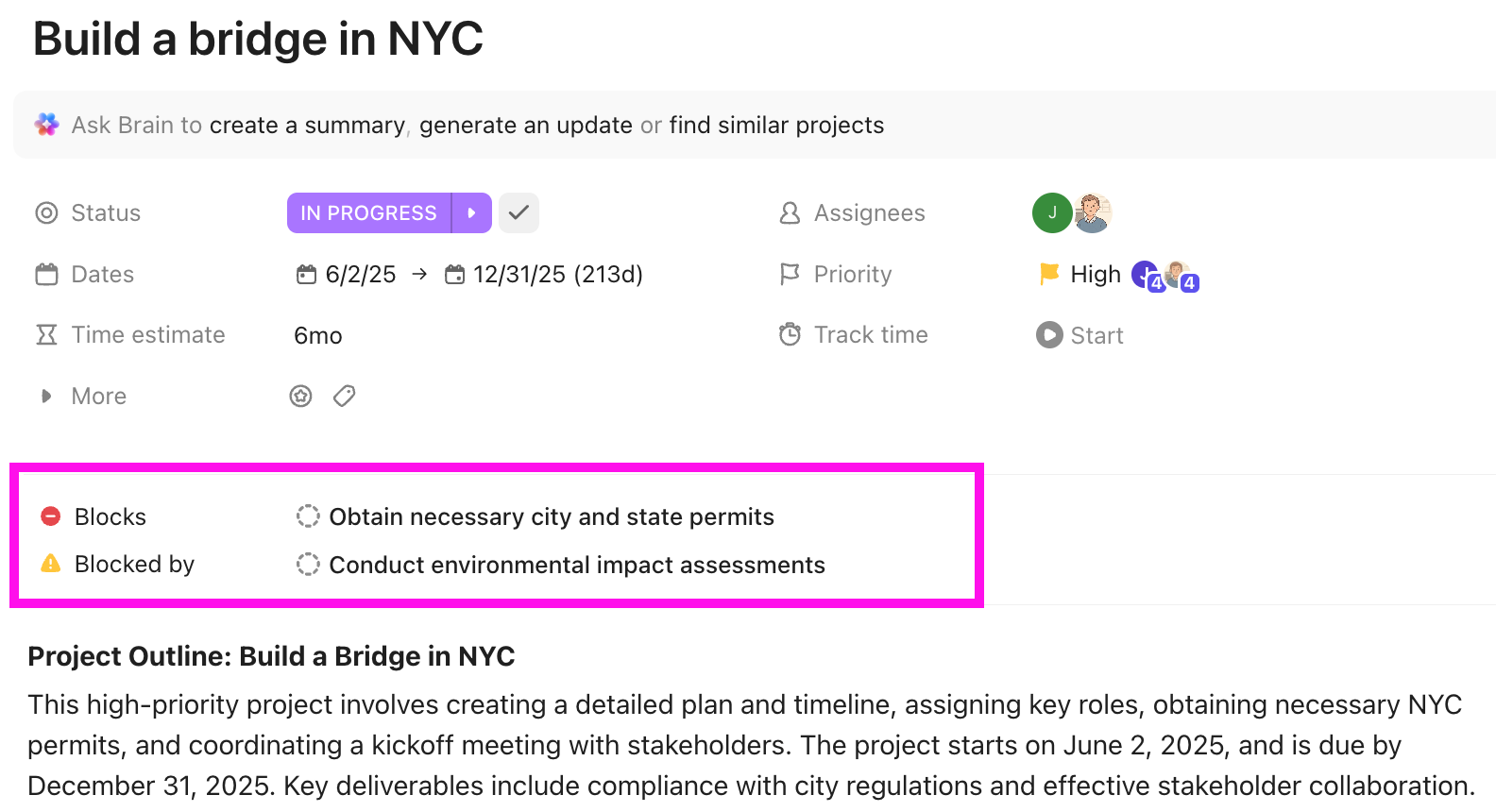
While Tasks act as the execution layer for your growth roadmap, take it a step further with the ClickUp Brain + Task combo. It helps you keep ownership clear, eliminate scope creep, and move initiatives forward without manual project chasing:
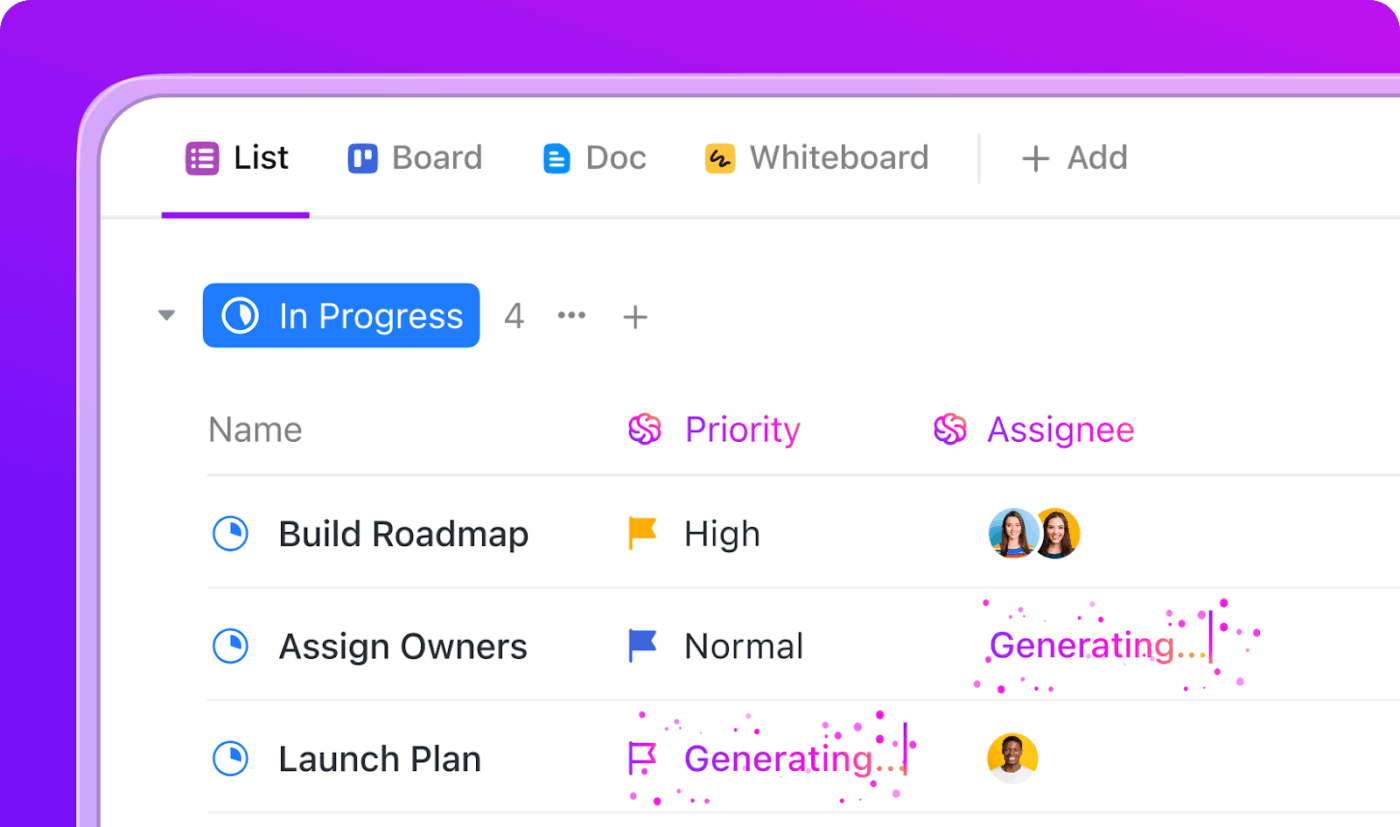
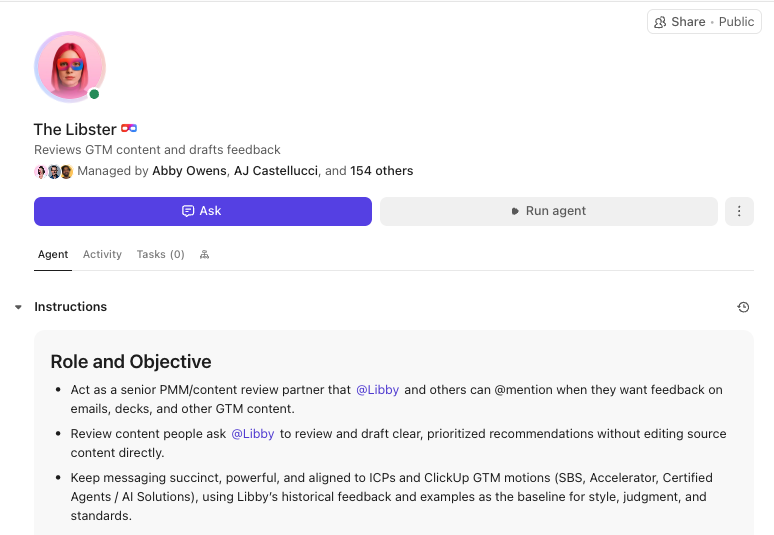
🚀 ClickUp Advantage: At this stage, Super Agents, and ClickUp Brain work together to transform manual workflows into logic-driven, self-adjusting sequences.
AI Agents act as intelligent automation partners. Instead of stacking triggers, conditions, and actions yourself, describe the outcome—and Brain can help to build out clear logic behind the scenes. Agents interpret context from tasks and comments, act autonomously, adapt to changing inputs, and drastically reduce setup time.
⚡ Template Archive: Free Waterfall Project Management Templates
Lastly, track both the impact of your growth plans and how well your team executed the initiatives in the first place. Be sure to look at:
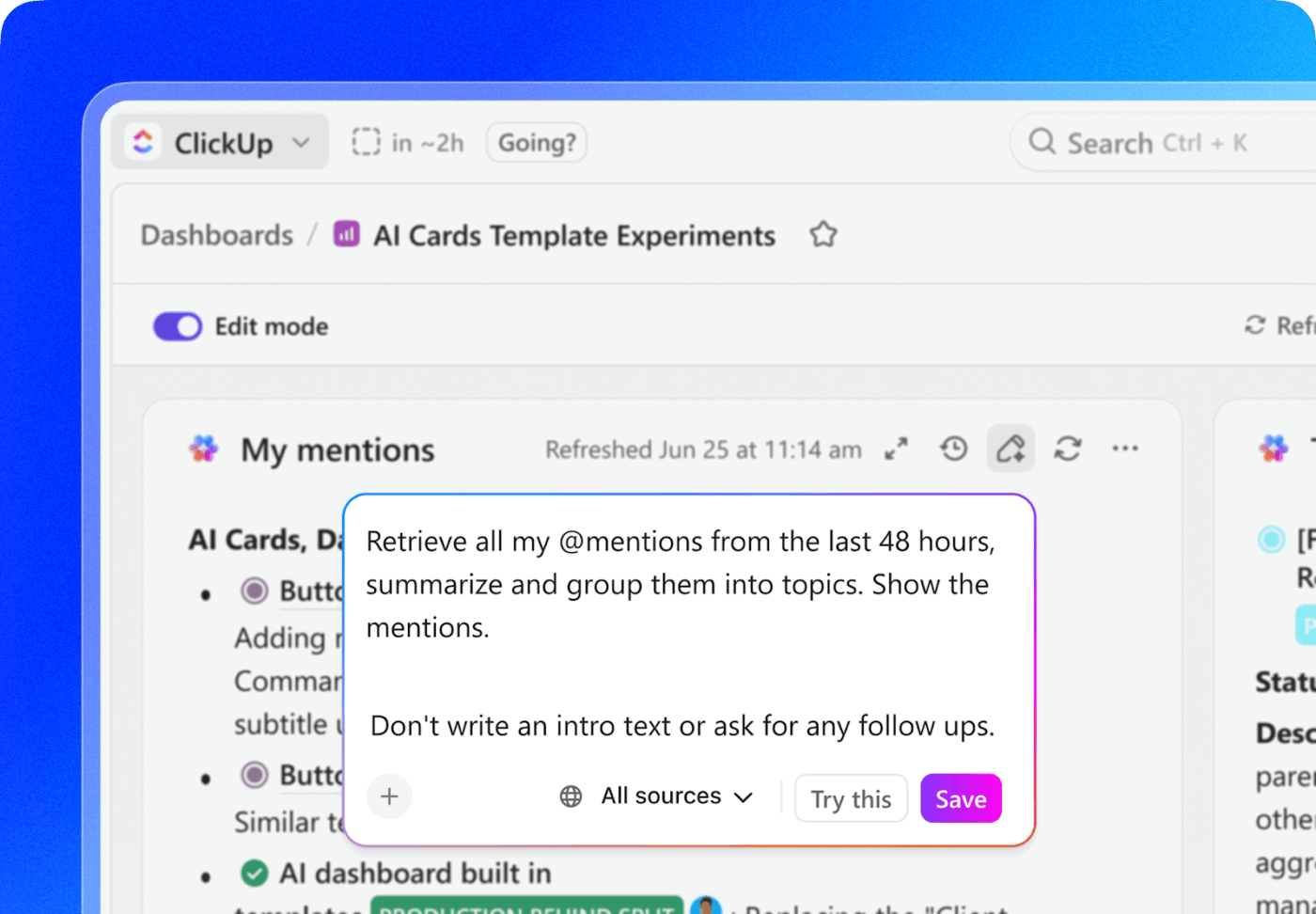
ClickUp Dashboards give you a high-level, real-time view of everything happening across your growth roadmap. Monitor experiment progress, owner accountability, and key metrics, all from one place.
⚡ Template Archive: Free Project Management Templates
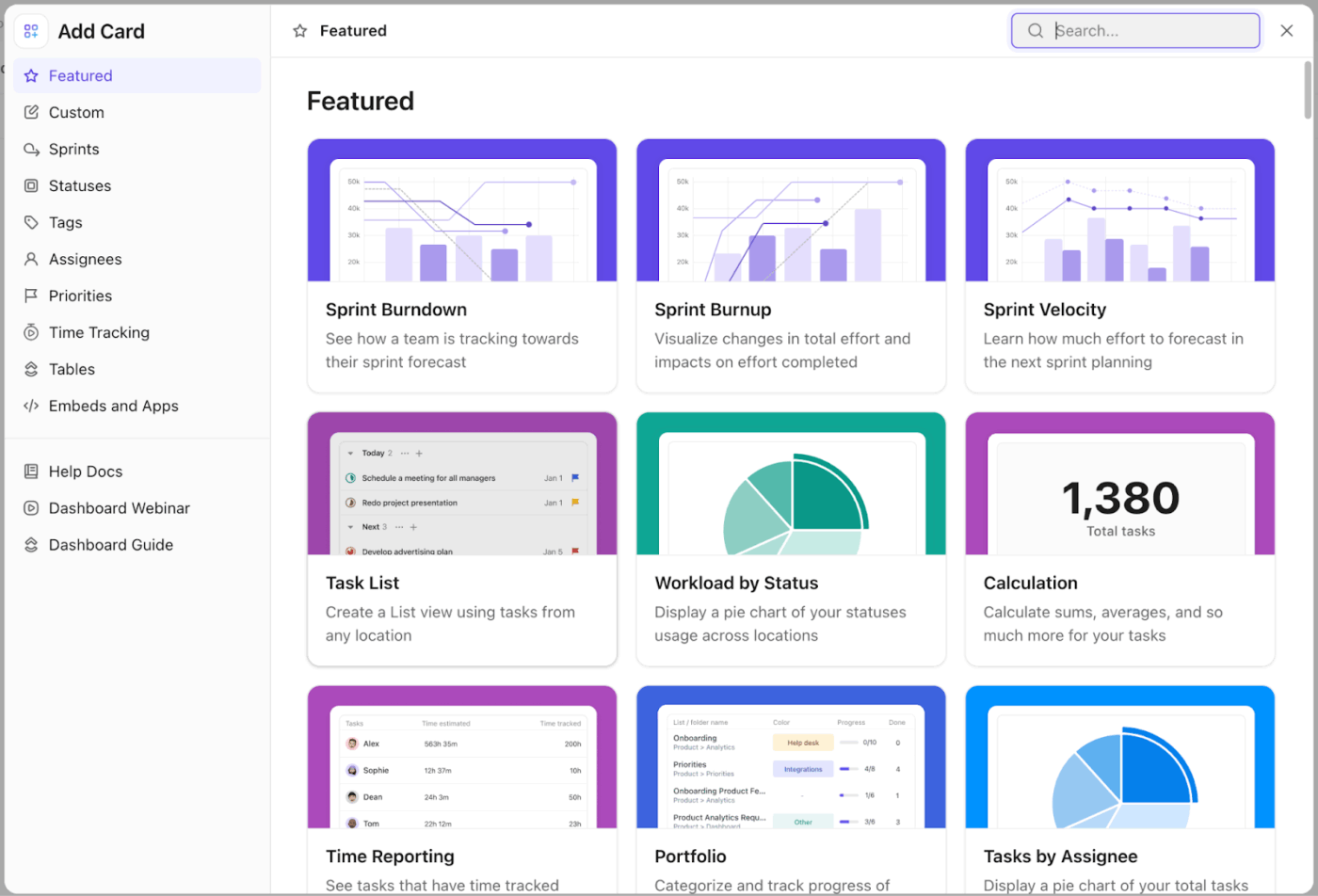
With ClickUp’s Cards, you can visualize every part of your growth roadmap the way you need. You get a card library with ready-made options to track progress, experiment velocity, workload, and performance across your roadmap.
📚 Read More: Scrum Tools for Agile Project Management
Once an initiative wraps up, the owner must provide a clear conclusion: was the hypothesis valid or invalid?
These learnings are then stored in a living document so you can use them for future roadmaps.
ClickUp Docs serves as that single, shared knowledge repository for all the learnings, retrospectives, and best practices discovered during roadmap implementation. Docs are searchable and accessible to everyone.
Here’s a bonus tip. Ask ClickUp Brain to summarize experiment outcomes and auto-link them to related Docs so your knowledge base grows with every cycle.
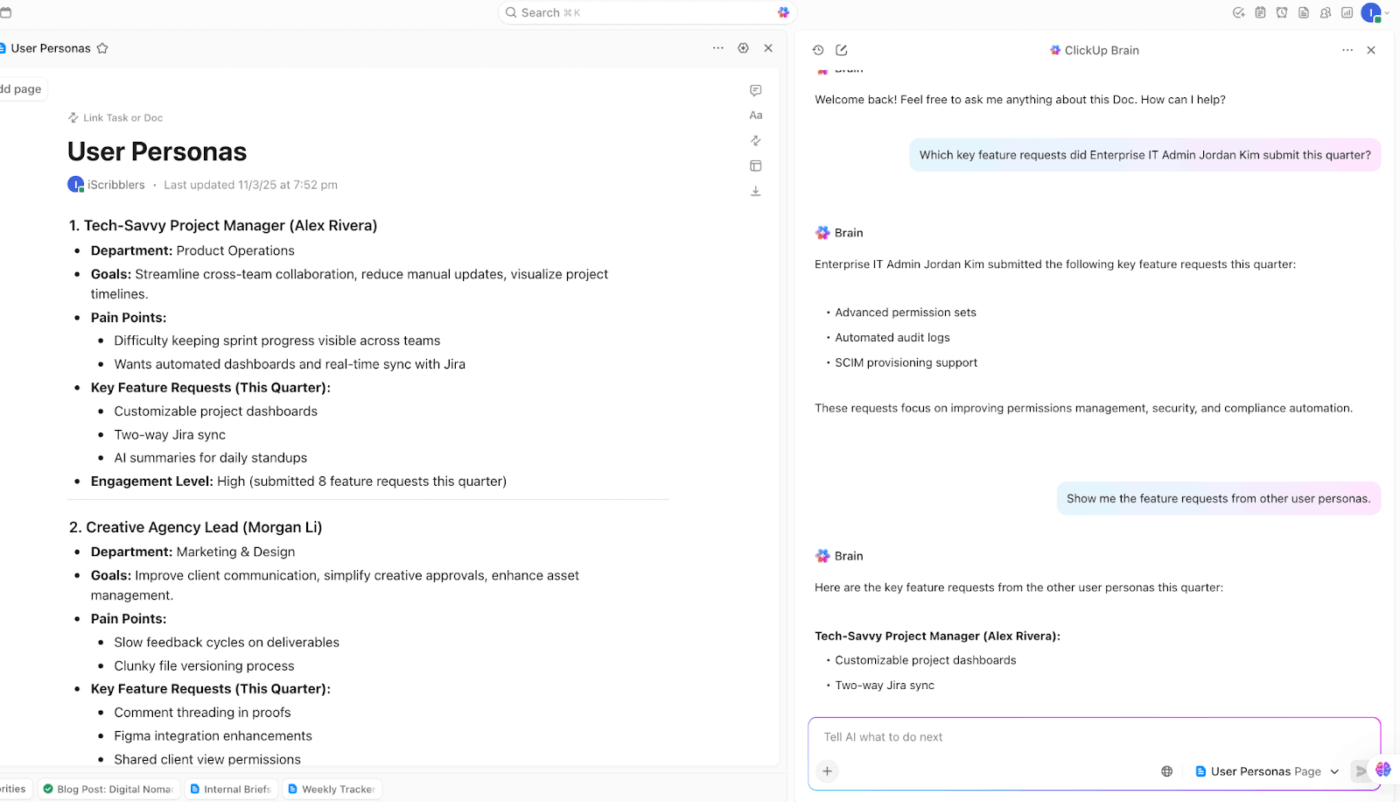
🛠️ Quick Hack: Got a key document that everyone treats as the “source of truth” (like your roadmap implementation guide)? Turn it into a Wiki! When teammates ask ClickUp Brain a question, the AI automatically prioritizes Wiki content over regular Docs. This means the answers they get are always pulled from your most verified, reliable information.
To learn how to create an AI knowledge base in ClickUp, watch this short video.
Managing your company’s entire roadmap is a massive responsibility that demands more than just good ideas. You need a structured, repeatable, and intelligent system that can turn strategic efforts into measurable results.
ClickUp solves this by giving you one integrated workspace not only to store your growth roadmaps, but also to do everything around them.
It’s the only place you need to plan your goals, visualize roadmaps, prioritize initiatives, assign tasks, track real-time progress, and document all the feedback.
✅ Sign up for ClickUp today and transform the way your company grows.
Managing a growth roadmap is critical because it enables you to maintain strategic alignment with long-term business objectives and to allocate resources efficiently in line with the company’s strategy. By systematically prioritizing and tracking growth initiatives, you can make sure your team is always working on the highest-leverage projects, preventing resource waste on low-impact ideas, and establishing a culture of accountability and data-driven learning.
ClickUp offers a centralized platform to help manage both long-term and short-term roadmaps for business growth, product management, product marketing, etc.
You can use ClickUp Docs to store information or knowledge related to growth roadmaps, ClickUp Goals to set OKRs, ClickUp Dashboards to monitor roadmap execution, ClickUp Tasks to allocate resources and responsibilities, and ClickUp Views to visualize progress in different ways (like Timeline, Calendar, Board, etc.).
The most common challenges include a lack of centralized visibility into the growth roadmap and its progress, misaligned goals across teams, difficulty prioritizing growth initiatives, inefficient tracking and updates, limited collaboration, and broken feedback loops.
Prioritizing initiatives helps you focus on projects that are most likely to deliver the highest ROI. Monitoring progress ensures that your strategy is executed correctly and that your roadmap remains relevant.
Together, they create a continuous loop: monitoring reveals what’s working, and that data then informs the next cycle of prioritization, allowing you to quickly iterate, adapt the roadmap, and maximize the chances of achieving the desired future state.

© 2026 ClickUp

There’s an easier way. Try a free AI Agent in ClickUp that actually does the work for you—set up in minutes, save hours every week.