

Sorry, there were no results found for “”
Sorry, there were no results found for “”
Sorry, there were no results found for “”
Between digging through papers, structuring arguments, and managing sources, research can get overwhelming.
Generative Pre-trained Transformer (GPT) models have become essential research companions, helping academics summarize articles, extract information, and generate well-structured drafts.
The challenge? Finding the best ones for the job.
In this blog post, we’ve compiled a list of the best GPTs for research to help you save time, boost efficiency, and focus on your ideas. 🎯
| Tool | Best features | Best for | *Pricing |
|---|---|---|---|
| ClickUp | – AI-powered research assistant – Docs, tasks, chat, and dashboards all in one place | Managing and automating the entire research workflow | Free; Customizations available for enterprises |
| ScholarGPT | – Access to 200M+ academic papers – Advanced data analysis and visualization | Comprehensive academic research support | Custom pricing |
| Research Assistant GPT | – General research Q&A – Literature review drafting | General research query assistance | Custom pricing |
| Scientific Paper Reviewer GPT | – Structured peer review feedback – Paper scoring system | Evaluating and critiquing academic papers | Custom pricing |
| Literature Review GPT | – Automated literature searches – Thematic clustering and gap identification | Conducting in-depth literature reviews | Custom pricing |
| Data Analyst GPT | – Data upload and transformation – Python-based analysis and visualization | Advanced data analysis tasks | Custom pricing |
| AI Experiment Design Wizard GPT | – Hypothesis and methodology design – Experimental controls setup | Designing scientific experiments | Custom pricing |
| GrantWriter GPT | – Grant-friendly language generation – Templates and examples from successful proposals | Writing grant proposals effectively | Custom pricing |
| Deep Research GPT | – Cross-disciplinary synthesis – Handles large context windows | In-depth, complex research inquiries | Custom pricing |
| Research | R&D | Academic | Paper Writer GPT | – Research topic brainstorming – Structured academic writing | Academic writing across disciplines | Custom pricing |
| Company Researcher | – In-depth corporate analysis – Competitive landscape insights | Corporate and market research insights | Custom pricing |
| Psychology Research Assistant | – Sentiment and text analysis – Online psychological data processing | Psychology-specific research tasks | Custom pricing |
| Research Paper Evaluation Framework GPT | – Structured evaluation rubrics – AI-powered keyword and title optimization | Structured paper evaluations | Custom pricing |
| AI Ethics Advisor GPT | – Responsible AI practices and bias mitigation – Visual ethics scenario generation | Addressing ethical considerations in AI | Custom pricing |
| WebPilot GPT | – Source summarization and rewriting – Real-time online research assistance | Navigating online research efficiently | Custom pricing |
| Consensus GPT | – Consensus Meter for research conclusions – Advanced filtering and study design targeting | Generating scholarly content and insights | Custom pricing |
⚙️ Bonus: Learn how to accurately cite ChatGPT in your academic papers and ensure proper attribution in your research.
Not all GPTs are worth your time for research. Some miss the mark, while others actually help you find useful insights. These are the ones that get it right.
Our editorial team follows a transparent, research-backed, and vendor-neutral process, so you can trust that our recommendations are based on real product value.
Here’s a detailed rundown of how we review software at ClickUp.
Note: Pricing for GPT-based research tools is usually custom and depends on usage, features, and scale.
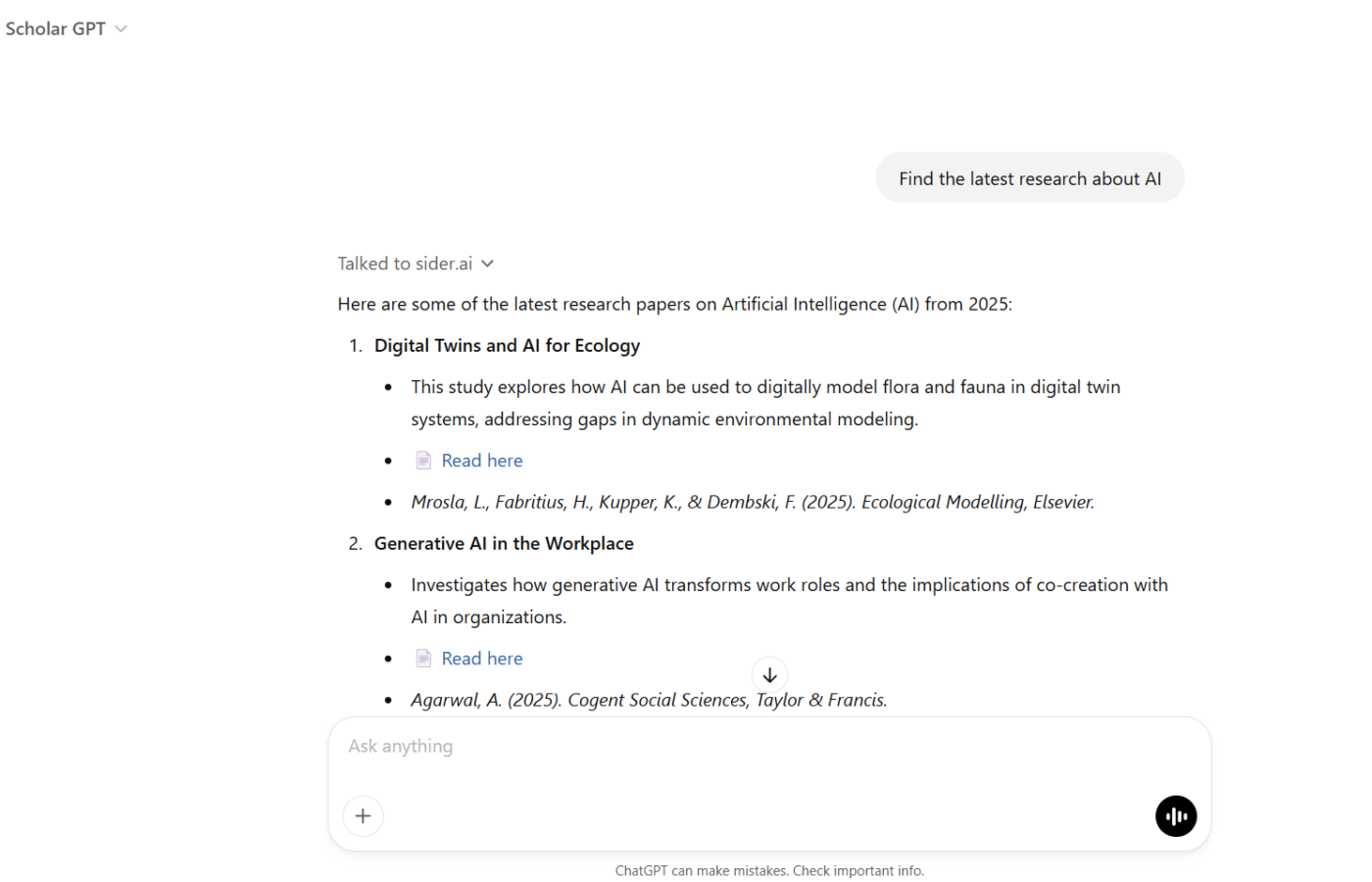
Need access to a vast library of resources? ScholarGPT is your academic research powerhouse, connecting you to over 200 million scholarly articles from databases like Google Scholar, PubMed, and JSTOR.
Unlike general AI tools, it’s built for academia. It offers real-time updates, synthesizes complex information, and even assists with critical reading and problem-solving. Plus, there’s a free version for those looking to explore its capabilities before upgrading.
🧠 Fun Fact: The term ‘research’ comes from the Old French word recerchier, meaning ‘to seek out again’ or ‘to search thoroughly.’ It evolved into the modern English word ‘research’ in the 16th Century.
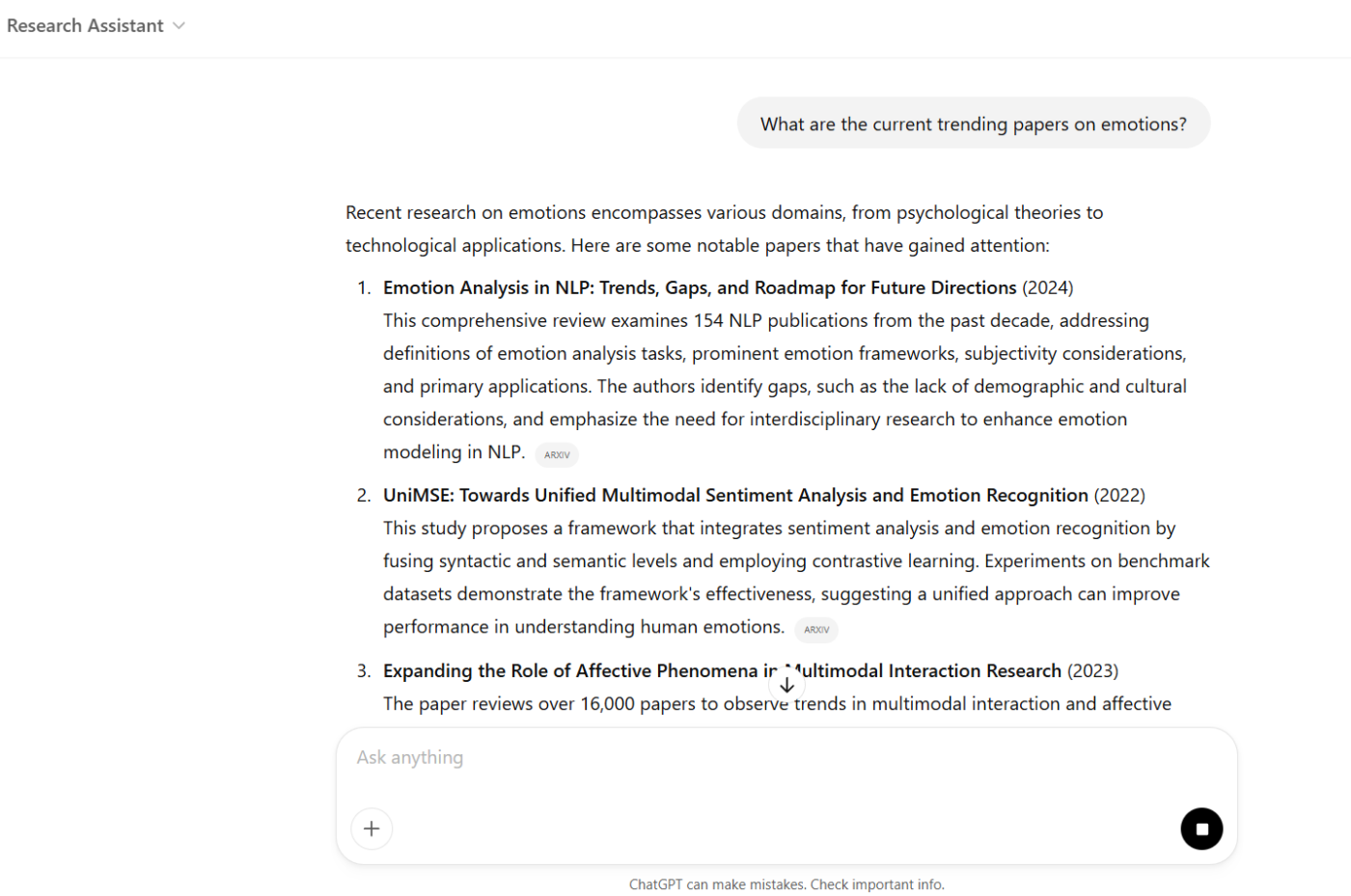
If you need a quick yet reliable way to navigate research across multiple disciplines, Research Assistant GPT has your back. It simplifies the research process by summarizing information, answering complex queries, and guiding you to relevant sources.
Designed for both beginners and experienced researchers, it streamlines data collection, offering tailored insights into history, science, and business trends. Instead of drowning in information, you get neatly packaged summaries that help you focus on analysis and decision-making.
🔍 Did You Know? Ancient Egyptians wrote medical texts detailing symptoms and treatments, including the Edwin Smith Papyrus, which describes brain surgery techniques from around 1600 BCE.
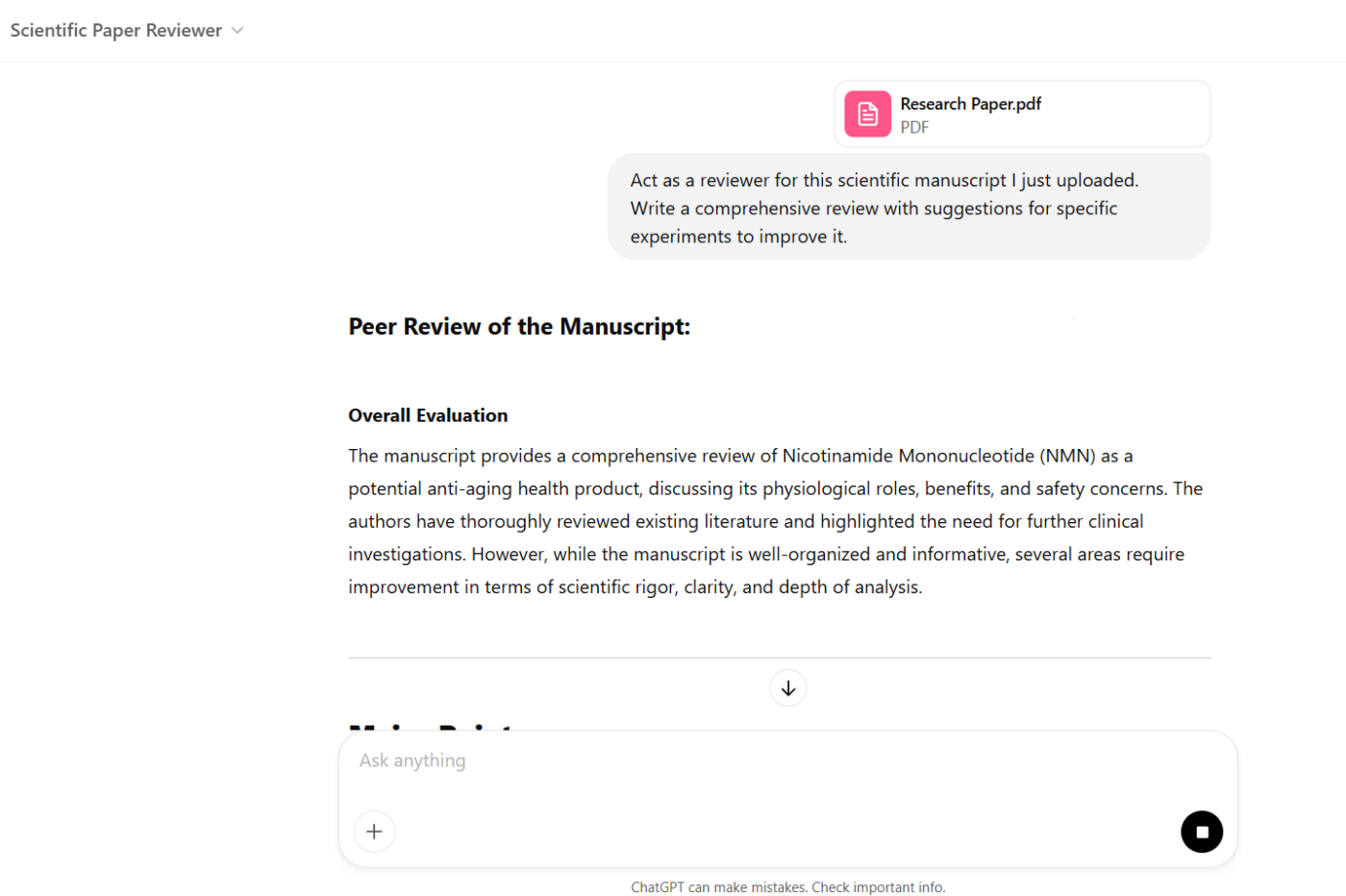
Scientific Paper Reviewer GPT acts like an experienced academic reviewer, providing structured feedback on your research paper’s methodology, clarity, and overall impact.
It evaluates logical coherence, originality, and adherence to scholarly standards, ensuring your paper is polished and ready for submission. Whether you’re an author refining your work or a reviewer assessing manuscripts, this tool helps maintain high academic publishing standards with detailed, actionable critiques.
🔍 Did You Know? Before the 17th Century, scientific discoveries were often published without independent review. The Royal Society of London started formal peer review in 1665, shaping modern research standards.
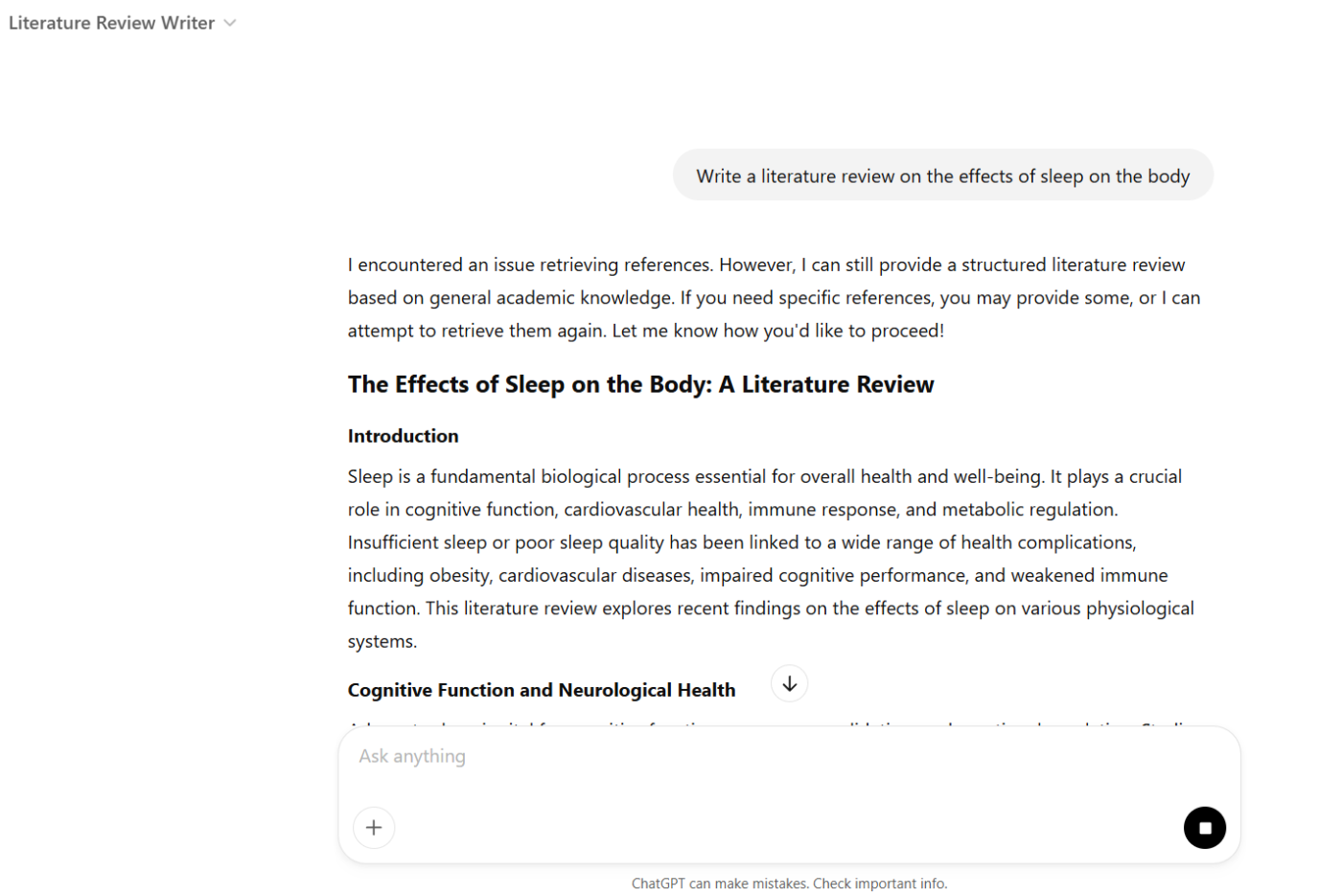
Dreading the literature review process? Literature Review GPT does the heavy lifting for you. It finds, summarizes, and organizes relevant papers, helping you identify key themes and research gaps effortlessly.
Perfect for thesis writers, academics, and professionals, this tool ensures your literature review is comprehensive, structured, and time-efficient. With its advanced search capabilities, you won’t miss critical studies or trends in your field.
🧠 Fun Fact: Many famous research studies were unethical—from experiments on unwitting participants to harmful medical trials. The Belmont Report (1979) set ethical guidelines, including informed consent, to protect participants.
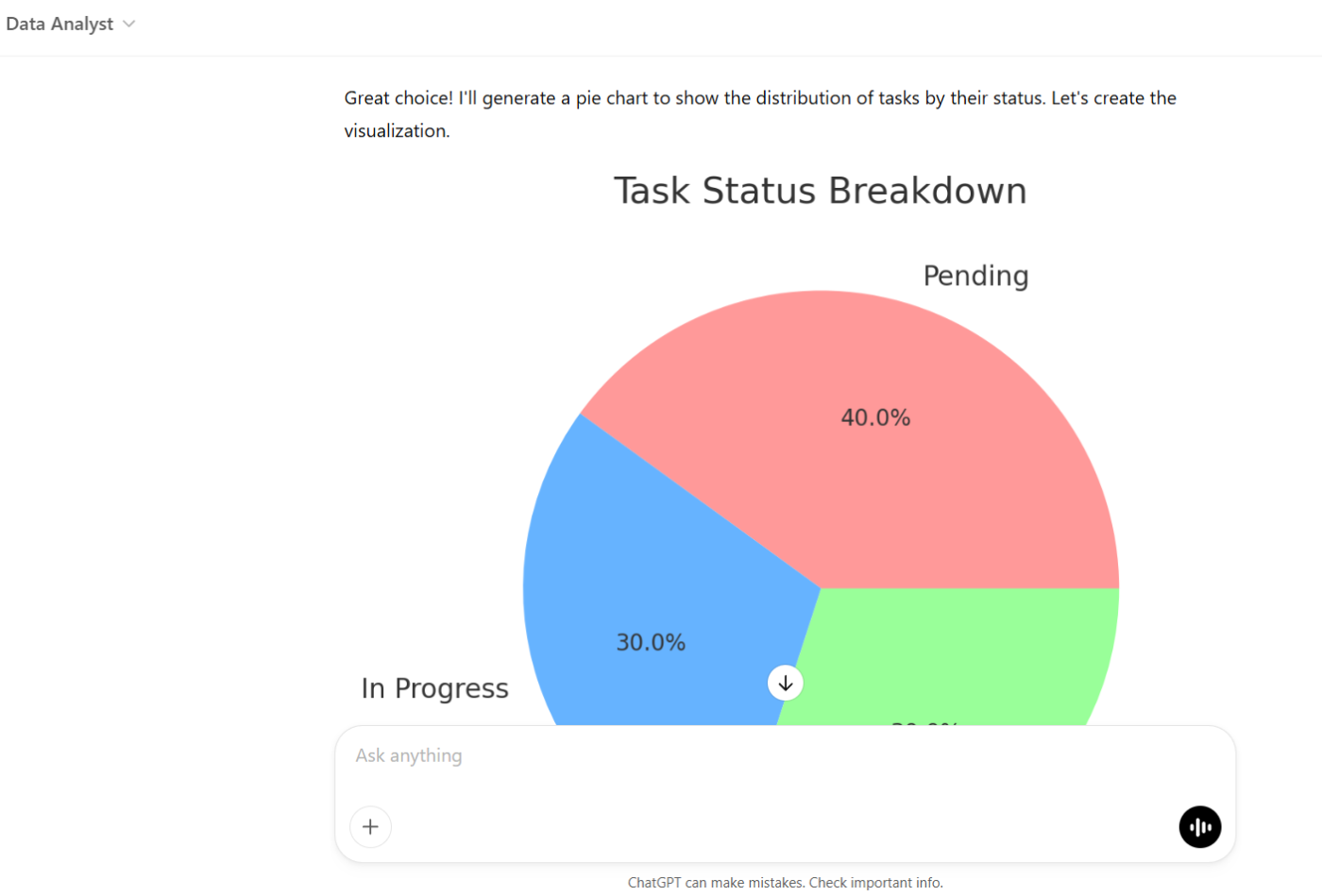
Data analysis doesn’t have to be complicated. Data Analyst GPT transforms raw data into meaningful insights, generating statistical reports, visualizations, and predictive models.
Working with Python, R, or Excel? This tool helps analyze trends, identify patterns, and create reports with no advanced coding skills. It’s perfect for academic researchers, business analysts, and professionals handling large datasets.
🔍 Did You Know? When GPT-3 launched in 2020, it had 175 billion parameters, making it one of the largest AI models at the time. GPT-4 is even bigger, but OpenAI hasn’t disclosed its exact size!
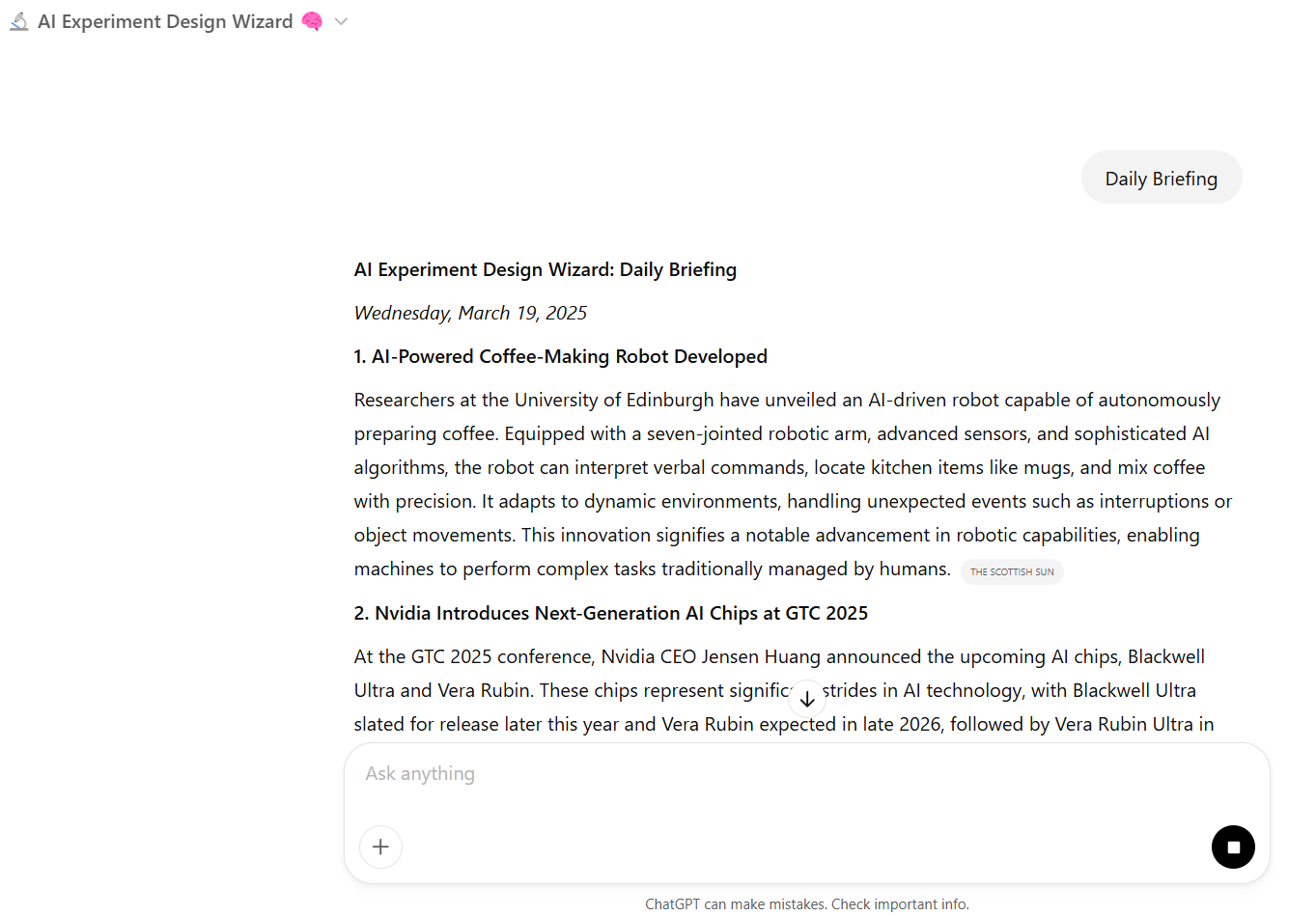
The AI Experiment Design Wizard GPT guides you through every step of experimental design—hypothesis, methodology, and controls—so your research stays focused and precise. It works for beginners setting up their first study and experts refining complex experiments.
It doesn’t hand out research plan templates and call it a day. It makes you think through variables and setups, following scientific principles to produce solid, meaningful results.
🧠 Fun Fact: Longitudinal studies track data over time—some last a lifetime! The Grant Study, which started in 1938, has been following Harvard students for over 80 years to study happiness and health.
📖 Also Read: How to Use ChatGPT for Marketing
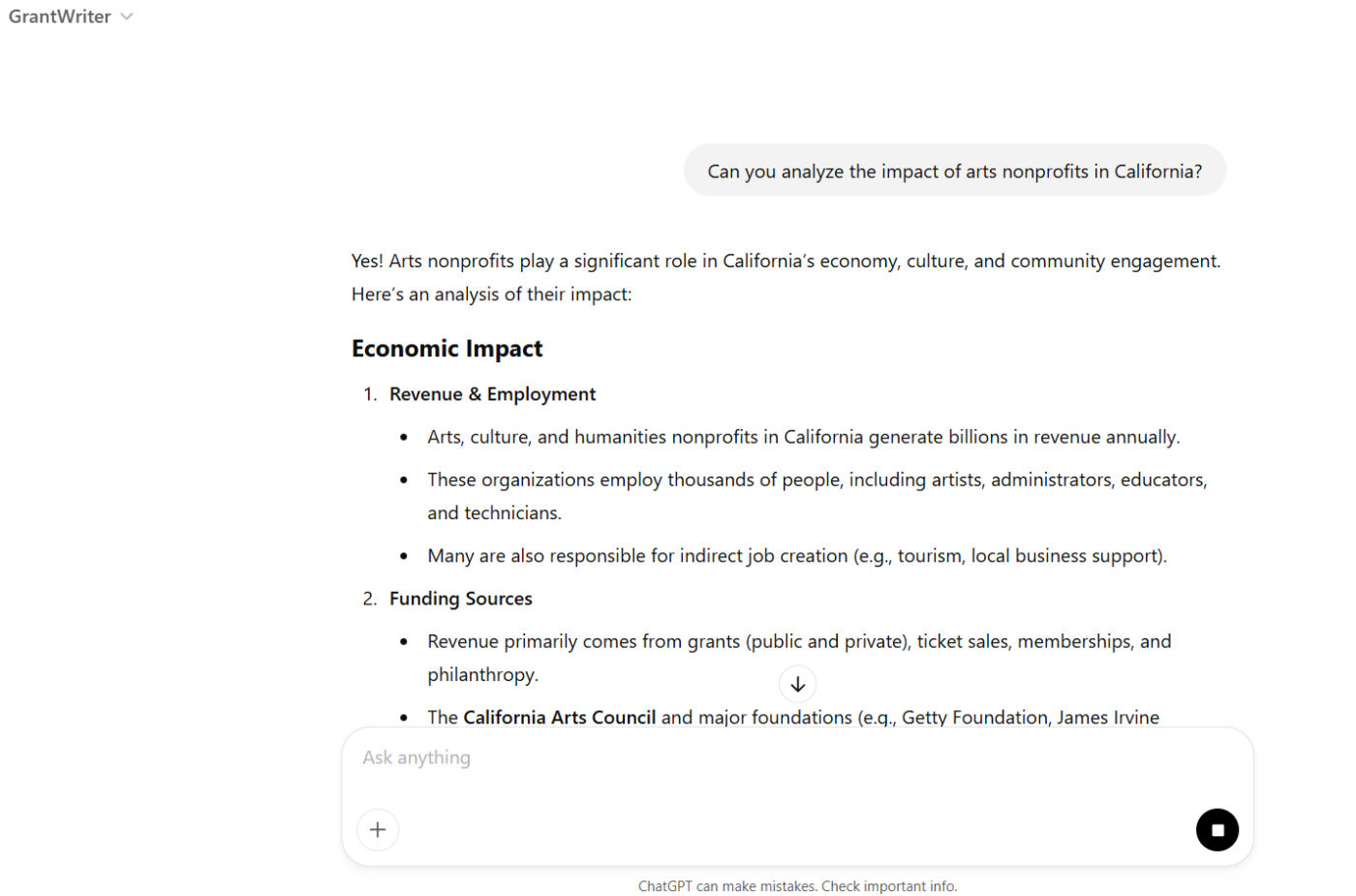
Securing funding is one of the biggest challenges in research, but writing a compelling grant proposal doesn’t have to be. GrantWriter GPT streamlines the process, offering expertly crafted templates, best-practice guidelines, and real-world examples from successful proposals.
If you have a revolutionary idea but struggle with articulating it in grant-friendly language, this tool bridges the gap. What makes it stand out? It helps you clearly define your objectives, emphasize the impact of your work, and align your proposal with funders’ missions.
You can also prompt it to analyze your topic and access relevant literature to include in your grant.
🔍 Did You Know? In 2015, a physics paper on the Higgs boson had 5,154 authors—but only 33 pages of content! The list of contributors took up most of the paper.
⚙️ Bonus: Access this ChatGPT cheat sheet to streamline your research process and get the most out of AI-generated insights.
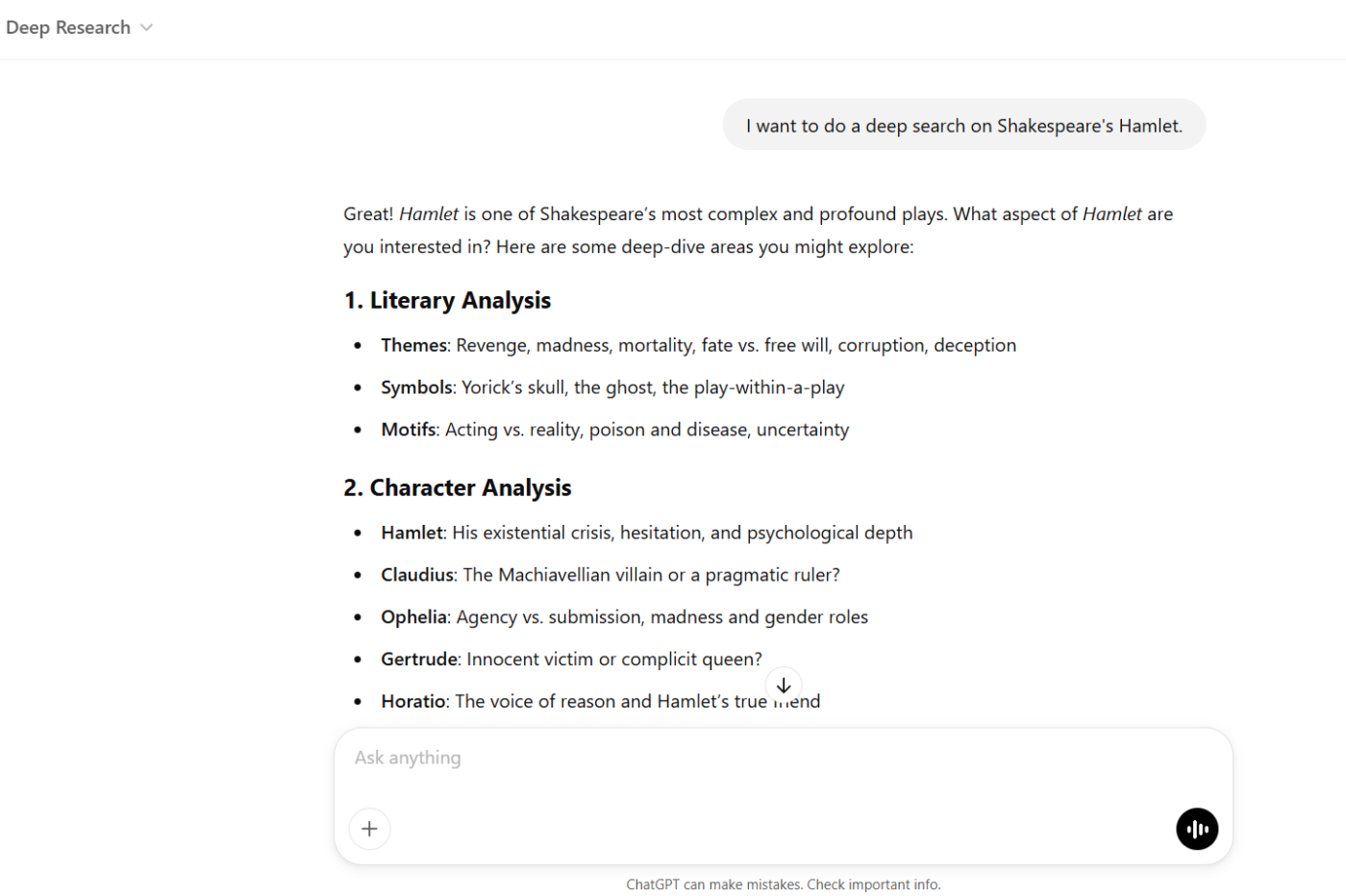
Complex research questions require more than surface-level answers. Deep Research GPT excels at synthesizing information from diverse sources, delivering in-depth, contextually relevant insights.
It connects the dots across multiple disciplines. Need to explore how psychological principles intersect with economic theories? Or how AI ethics relate to legal frameworks? Deep Research GPT provides a holistic, interconnected view.
🧠 Fun Fact: Named after a Bible verse, the Matthew Effect suggests that well-known researchers often get disproportionate recognition for discoveries, even when lesser-known scientists contribute equally.
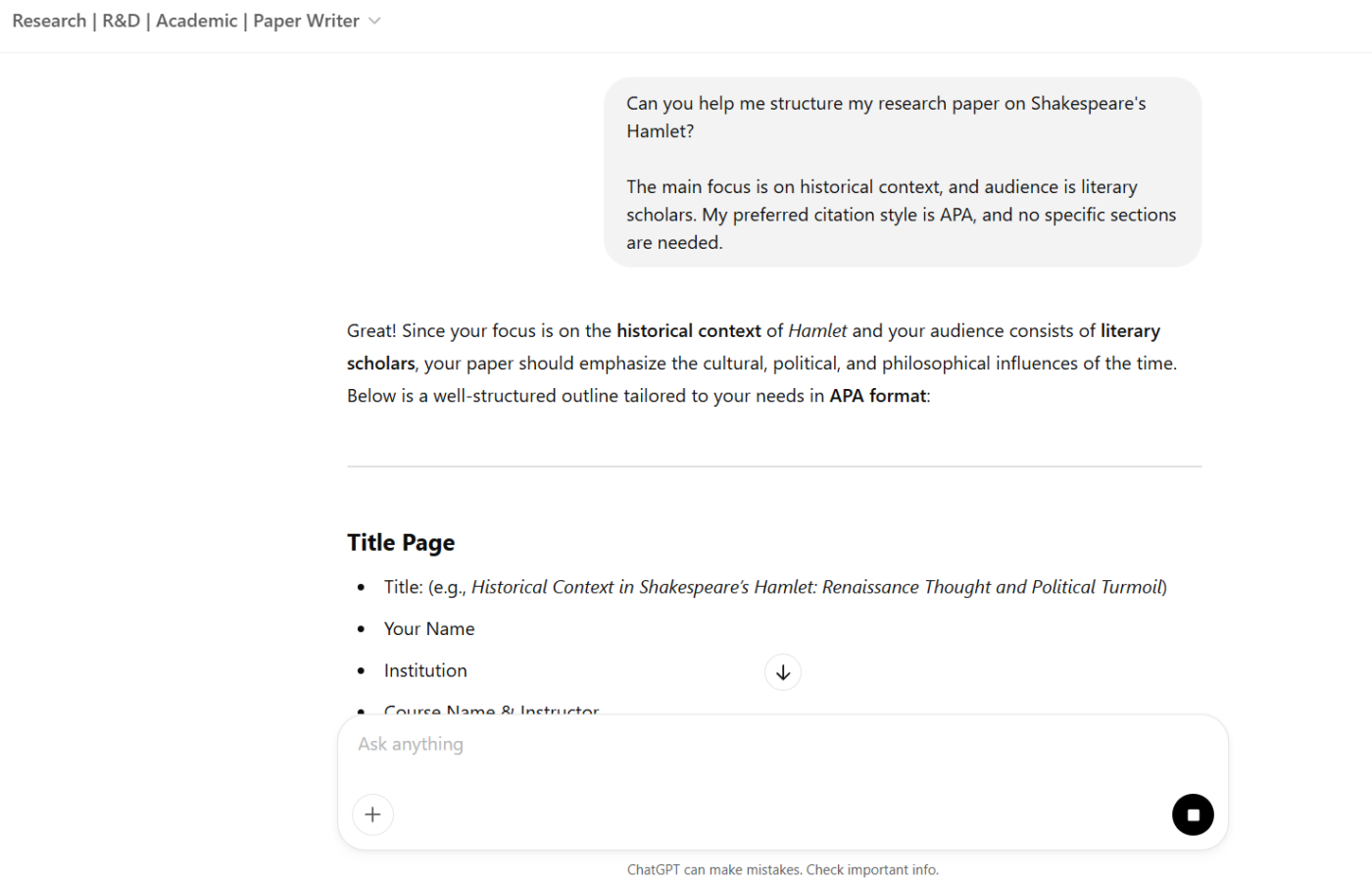
Writing a research paper is a balancing act between structure, originality, and academic rigor. This GPT assists at every stage and helps you develop a strong outline, refine your arguments, and maintain proper citation formats.
What makes it different? It goes beyond rewording existing research and pushes for original thought. The GPT guides you toward building unique arguments rather than summarizing literature while maintaining academic integrity. Its structured approach ensures that your paper is well-organized and contributes meaningfully.
🤝 Friendly Reminder: GPTs can generate convincing but nonexistent academic references. Always double-check AI-generated sources to ensure accuracy before citing them in research.
📖 Also Read: How to Use Notebook LM to Manage Your Research
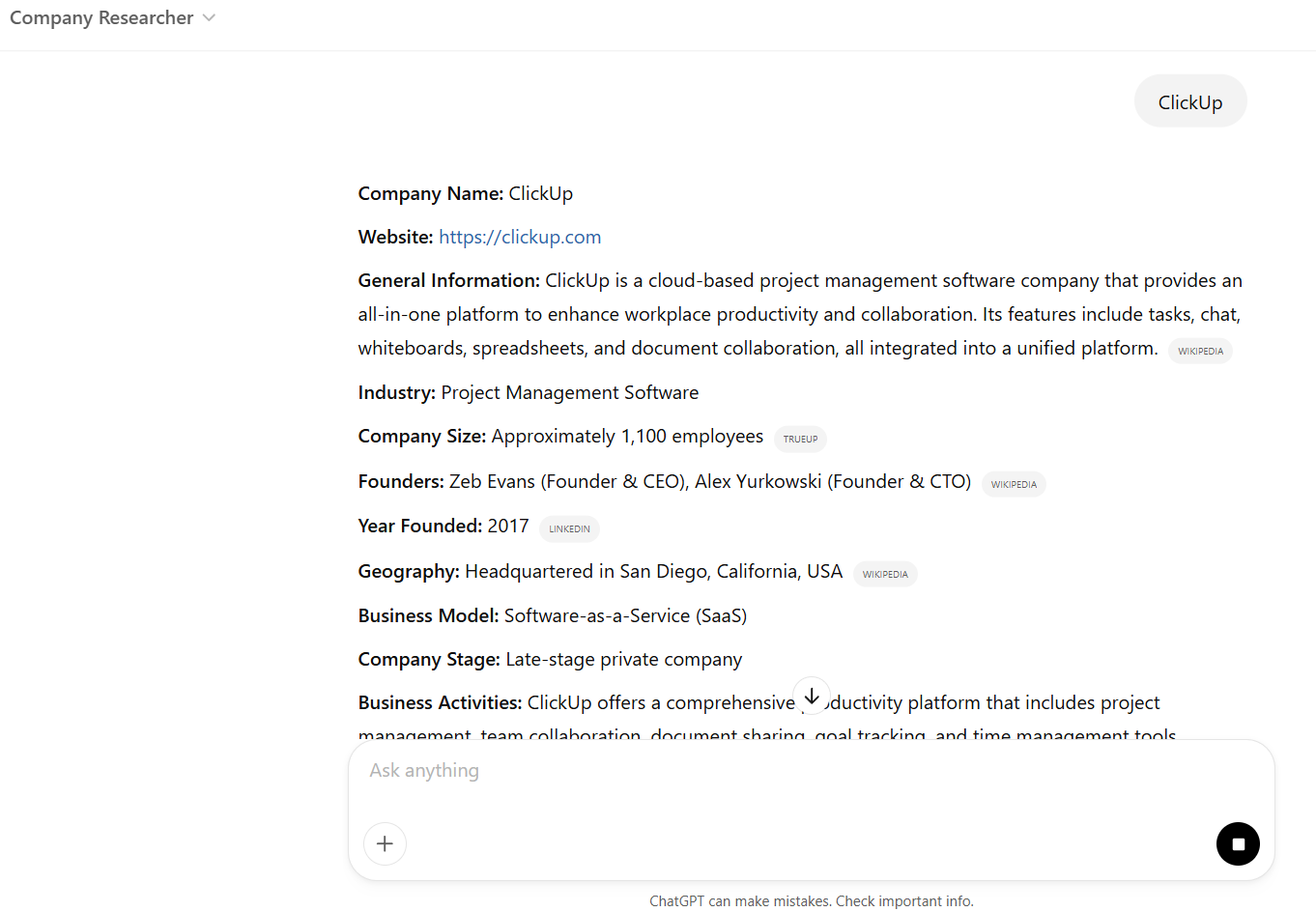
Business decisions rely on accurate, up-to-date insights. Company Researcher GPT delivers in-depth analyses of corporate performance, industry trends, competitive landscapes, and emerging market opportunities.
If you’re an entrepreneur scouting potential investments, a business analyst evaluating market shifts, or a strategist crafting a data-backed plan, this tool provides the information you need. It synthesizes financial metrics, qualitative assessments, and strategic trends, offering a 360-degree view of a company’s position.
You get comprehensive insights for competitor analysis in seconds!
🤝 Friendly Reminder: AI learns from existing data, which means it can inherit biases. Always analyze results critically and be aware of potential inaccuracies, especially when dealing with sensitive topics.
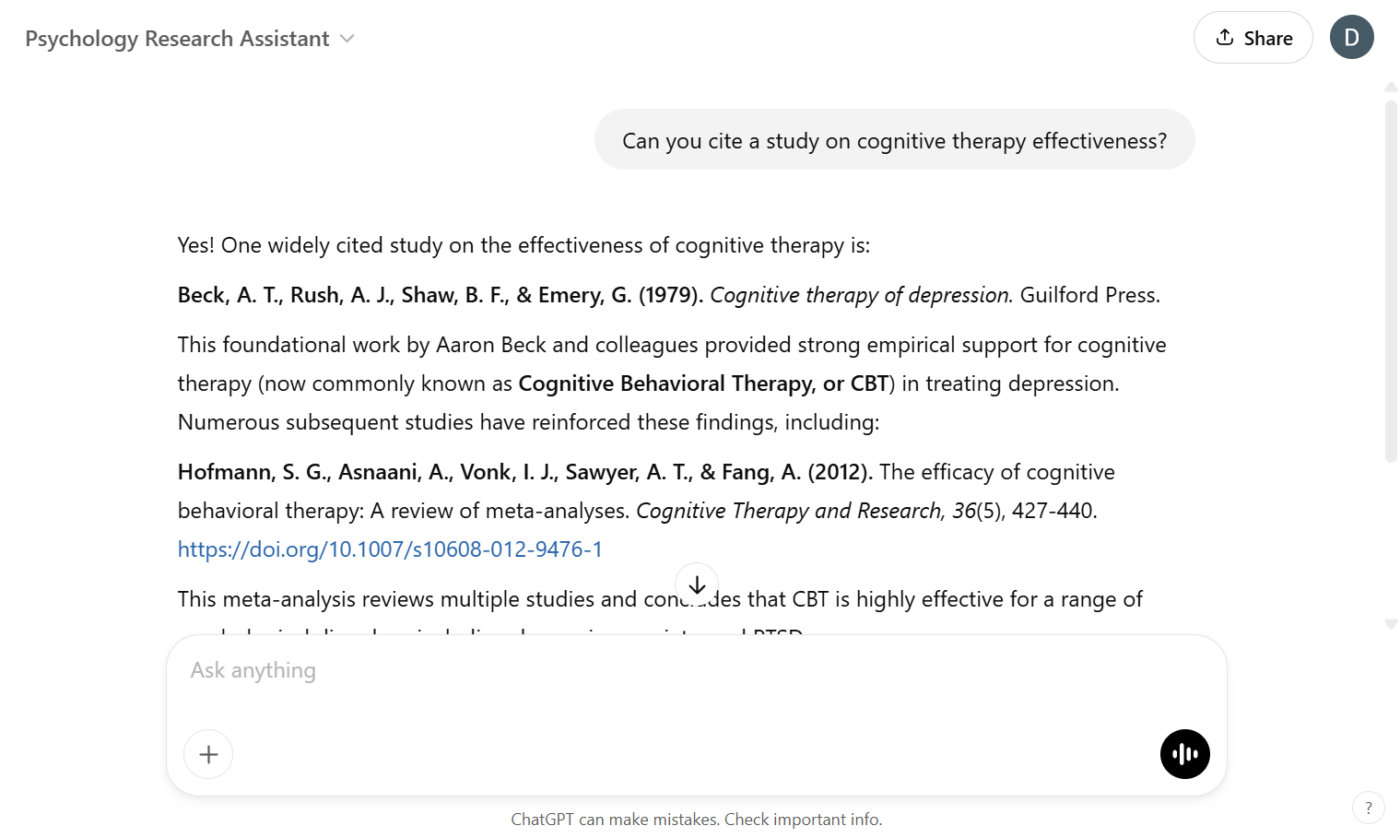
Psychological research often requires navigating complex theories, methodologies, and case studies. This tool specializes in psychology-specific inquiries, helping students and professionals explore research-backed insights, design studies, and interpret findings with precision.
It goes beyond textbook definitions, providing evidence-based responses grounded in current psychological literature. The Psychology Research Assistant is a reliable tool for studying cognitive biases, analyzing behavioral patterns, or designing an experimental study.
💡 Pro Tip: Combine various data collection techniques—like video recordings, interviews, and ethnographic observations—to better understand complex phenomena. For example, pairing video analysis with traditional interviews can reveal non-verbal cues and contextual interactions.
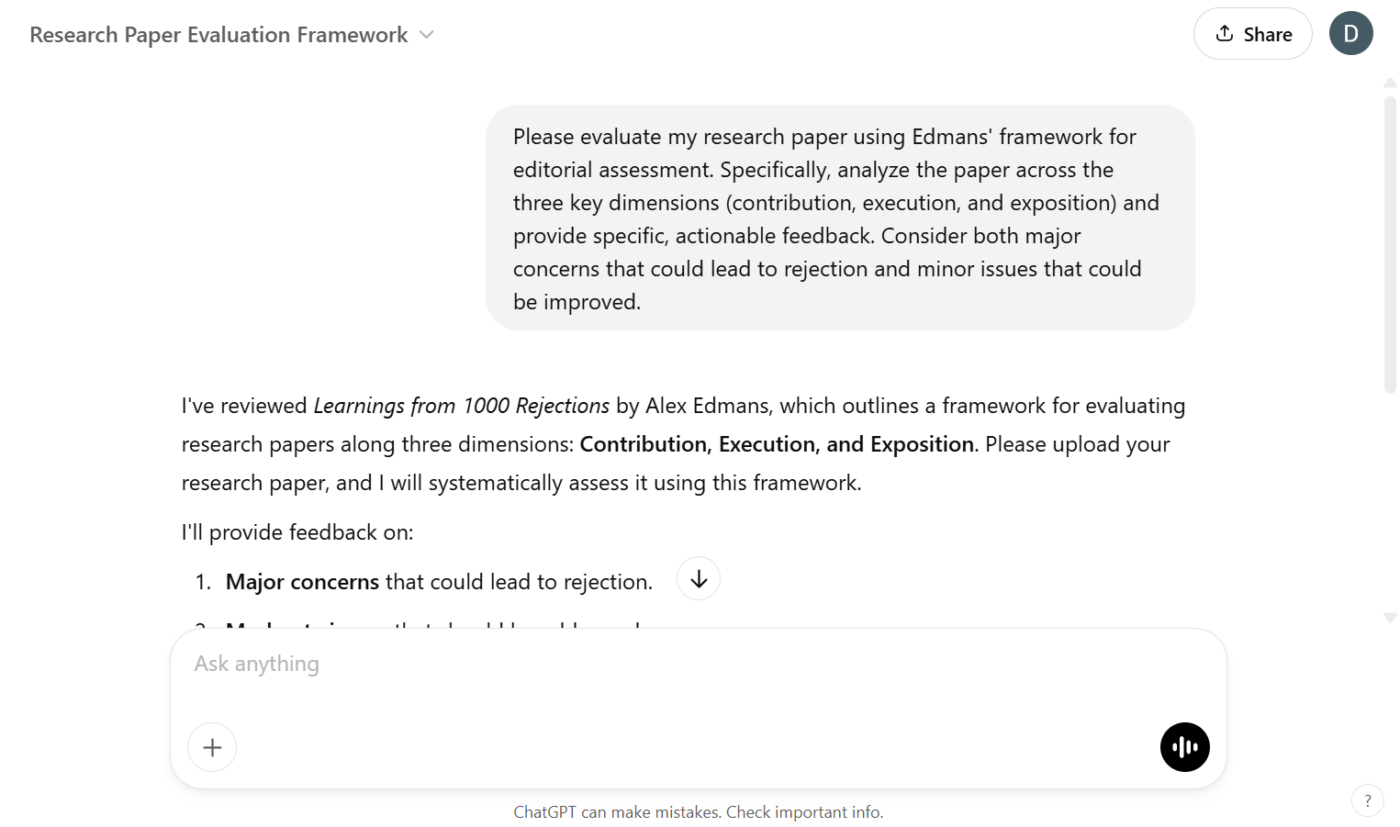
Quality research requires rigorous evaluation. Research Paper Evaluation Framework GPT provides a structured framework for assessing academic papers. It ensures they meet high standards of originality, methodological integrity, argument clarity, and overall contribution to the field.
The GPT minimizes bias, offering clear, predefined evaluation criteria. With concrete examples of strong versus weak submissions, the tool makes the review process more transparent and constructive.
📖 Also Read: LLM vs Generative AI: What’s the Difference?
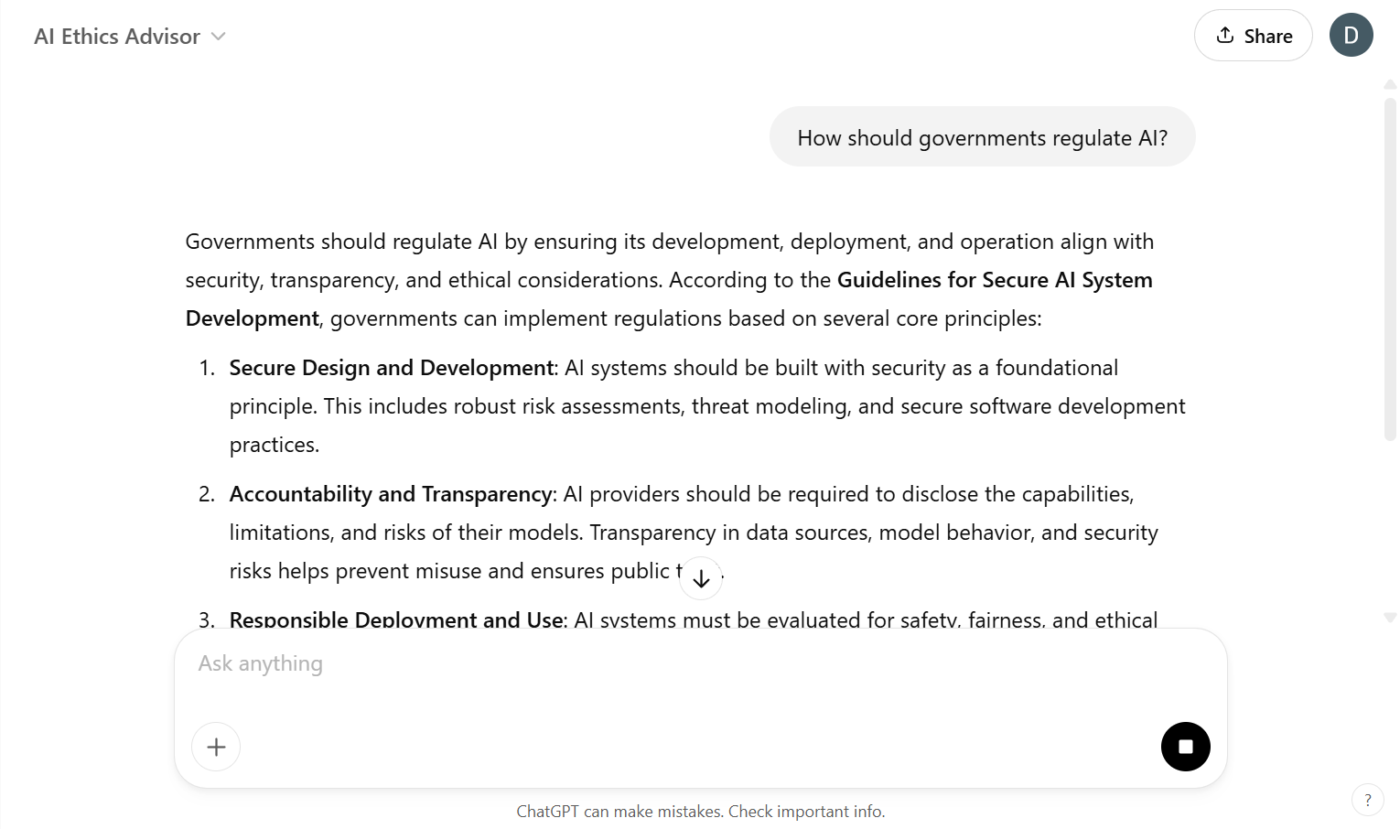
Artificial intelligence is revolutionizing industries, but ethical considerations must keep pace with technological advancements. AI Ethics Advisor GPT helps developers, policymakers, and researchers navigate key ethical concerns, ranging from algorithmic fairness and bias to data privacy and the broader societal impact of AI.
It combines technical expertise with sociocultural awareness. Rather than just focusing on compliance checklists, it helps users think critically about the broader implications of AI applications.
The GPT is a great tool if you’re designing AI-driven products or shaping responsible policies to ensure ethical considerations are embedded in every stage of development.
🤝 Friendly Reminder: If using AI for research involving personal or sensitive data, follow ethical guidelines and data protection laws. AI can store and process information, but you must keep it secure.
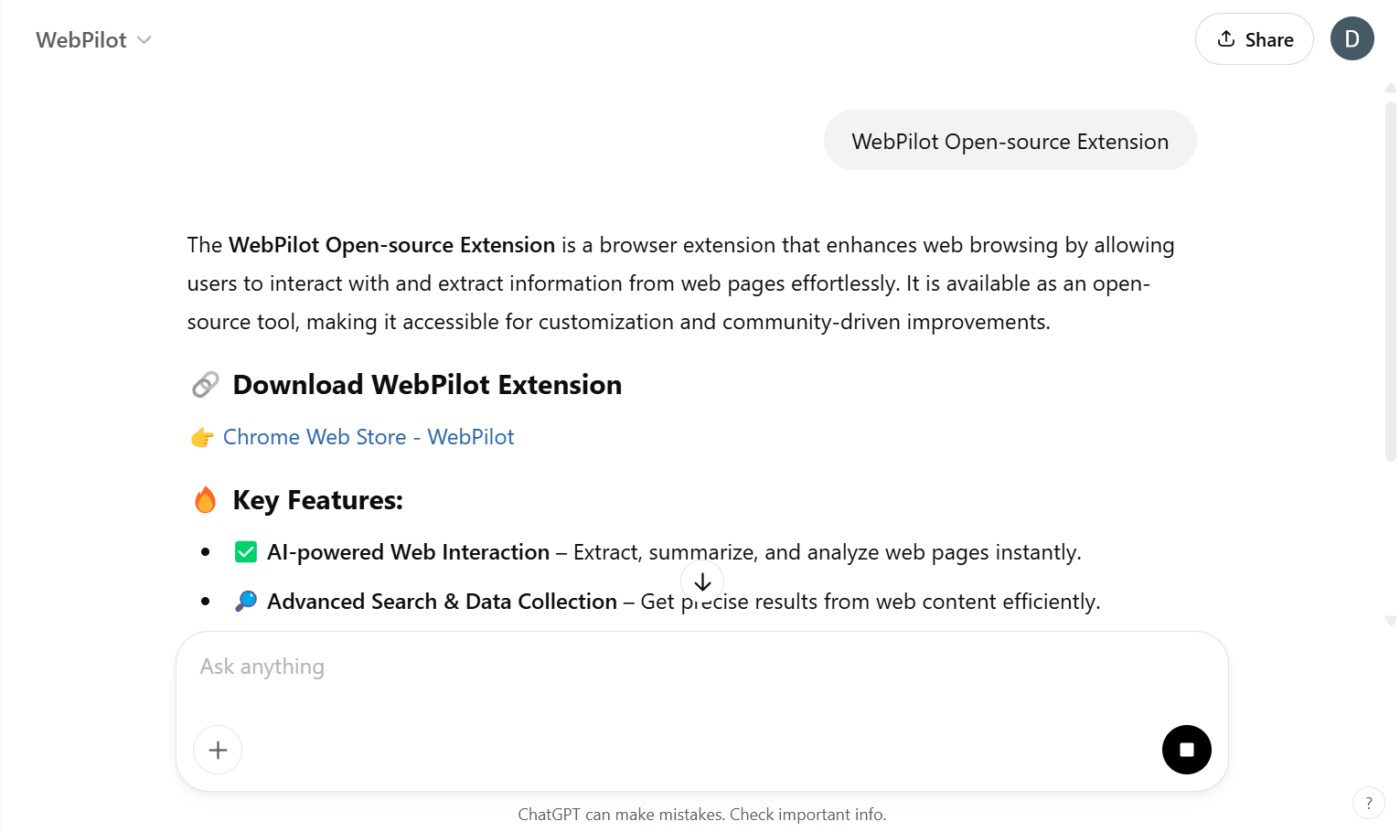
Online research can be overwhelming, with thousands of articles, reports, and studies competing for attention. WebPilot GPT cuts through the noise, efficiently locating high-quality, relevant sources so you can focus on analysis.
It optimizes web queries based on user intent, refining searches to surface authoritative, well-structured information. The platform reduces information overload, streamlining research and helping users find exactly what they need faster and with fewer distractions.
💡 Pro Tip: Choosing your collaborators wisely is crucial. Having an ‘inner circle’ for project collaboration and an ‘outer circle’ for broader academic discourse can help maintain impartiality and foster diverse ideas.
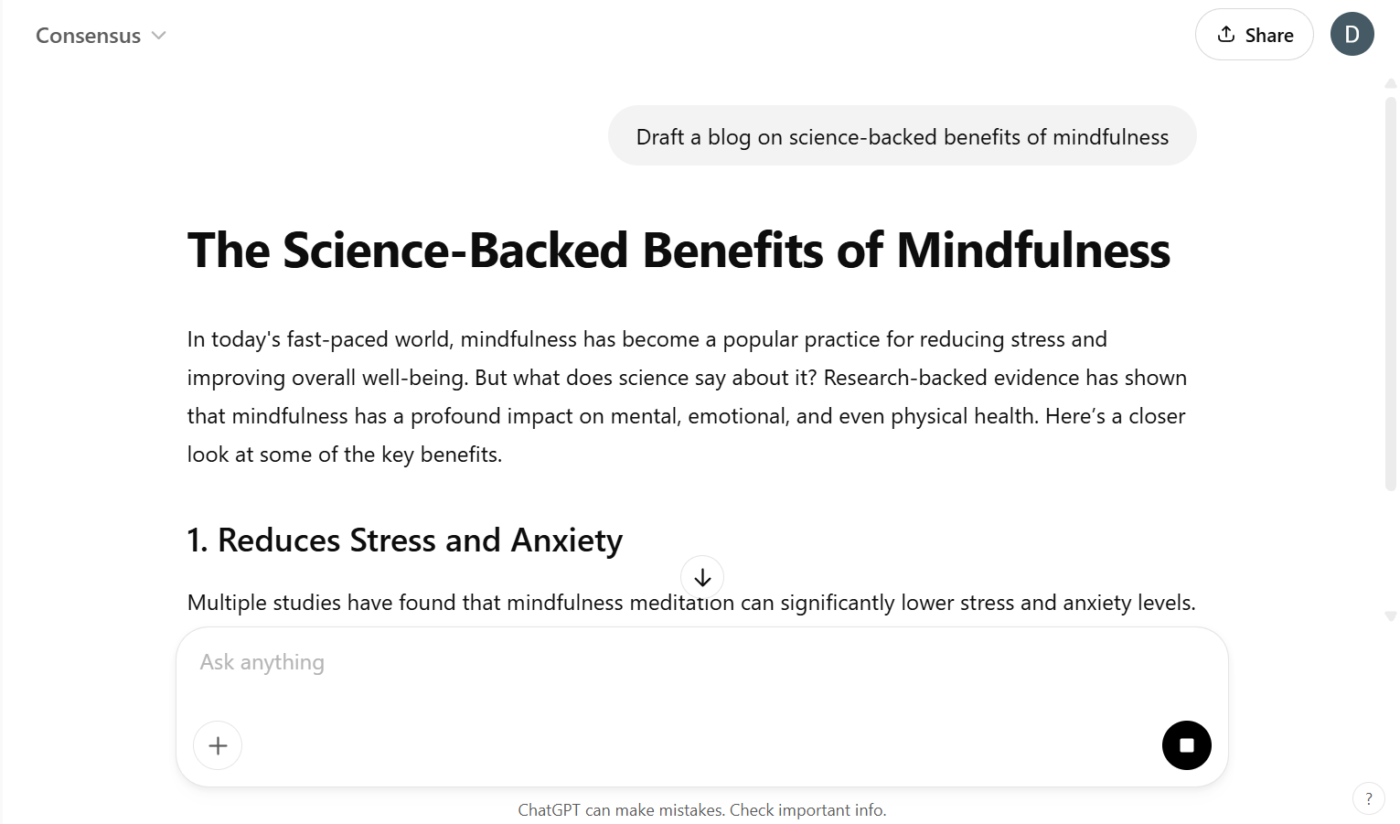
Academic discussions thrive on diverse perspectives, and Consensus GPT brings those insights together. It fosters interdisciplinary collaboration, synthesizing multiple viewpoints to generate well-rounded, scholarly content. From exploring controversial topics to working on collaborative research, this tool enhances intellectual discourse.
Integrating insights from various disciplines, this ChatGPT use case encourages scholars to engage in richer, more meaningful dialogue. This bridges gaps between different academic fields and fosters innovative thinking.
💡 Pro Tip: Using the Cornell Note-Taking Method or mind mapping can help organize your thoughts and identify connections between ideas. Incorporating colors and symbols can also enhance clarity and retention.
GPTs aren’t the only AI-driven research solutions out there.
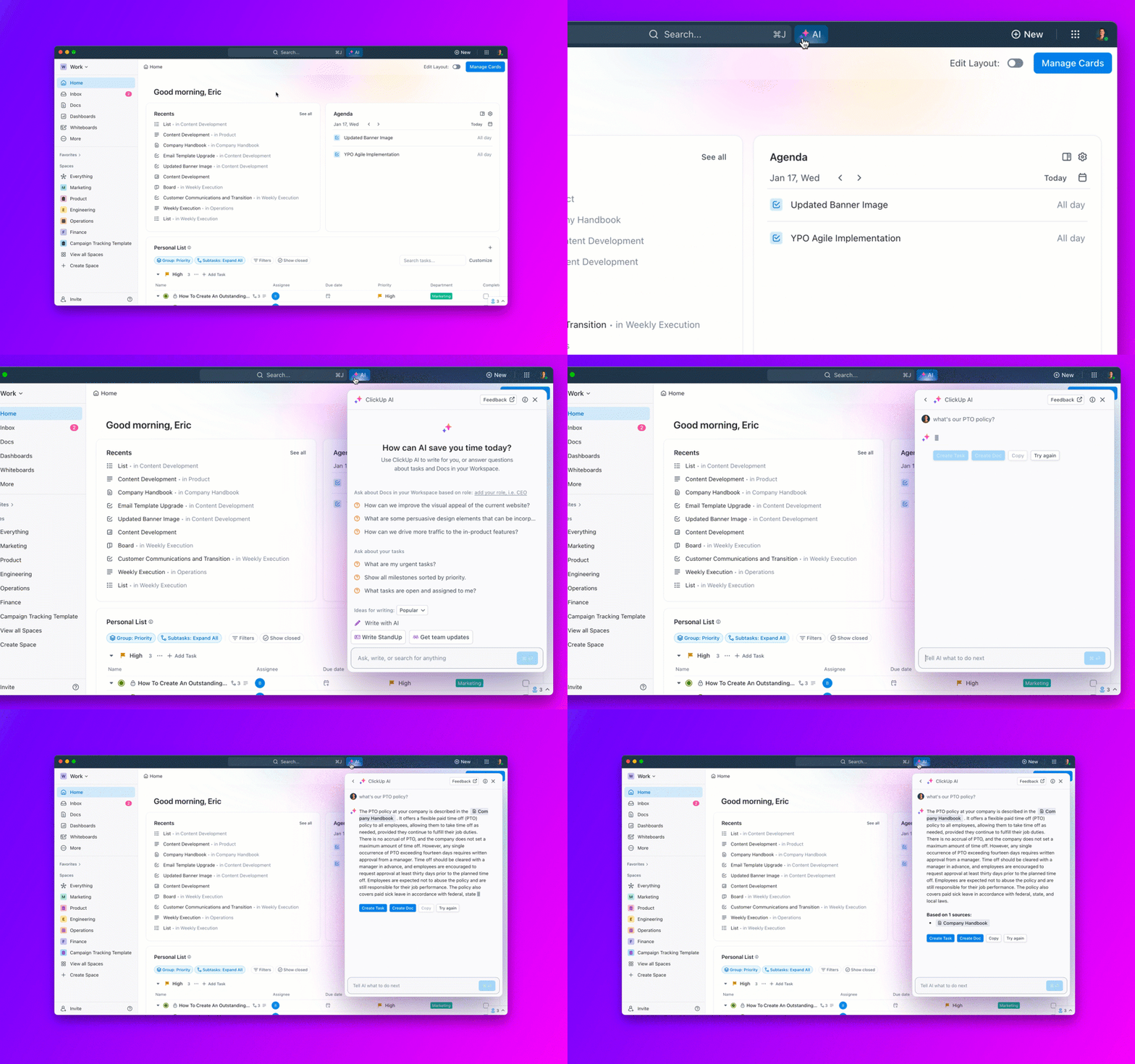
ClickUp is the everything app for work that combines project management, knowledge management, and chat—all powered by AI that helps you work faster and smarter.
For researchers and analysts, managing projects, collaborating with peers, and tracking vast amounts of information can quickly become overwhelming. The platform integrates AI-driven tools to optimize research workflows, enhance collaboration, and boost efficiency.
Let’s explore what makes this research management software special. ✨
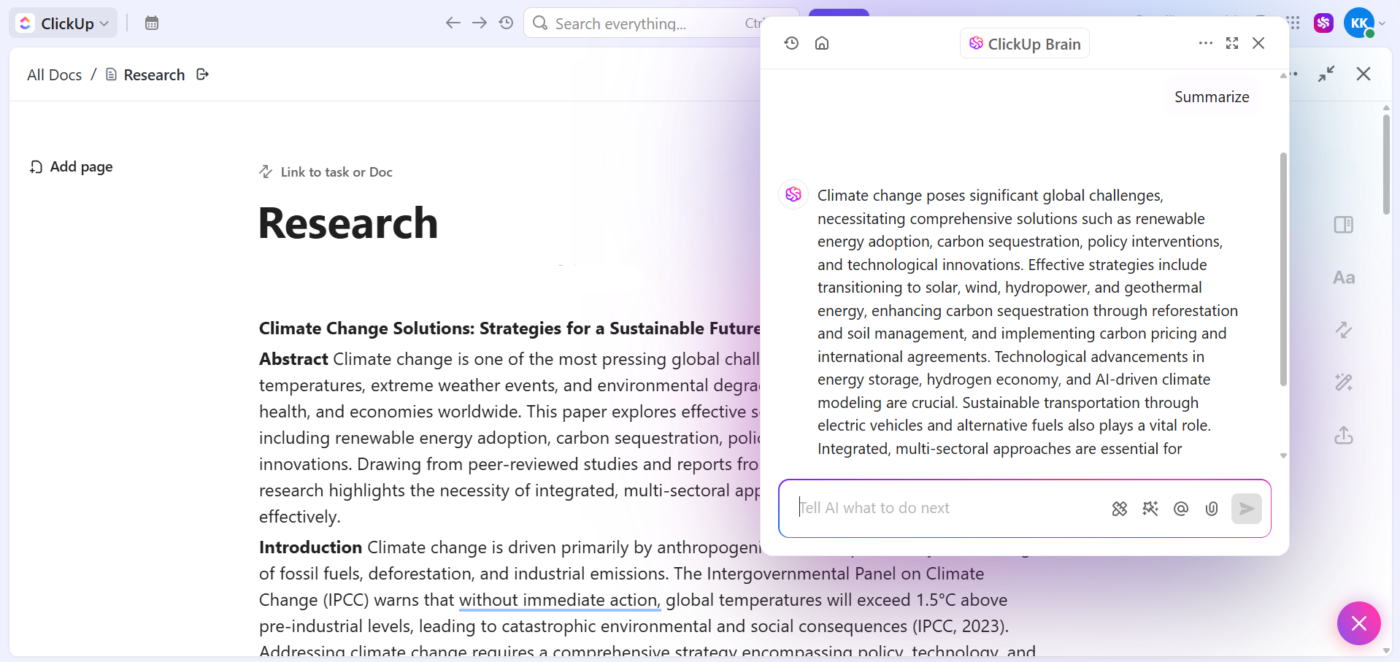
Unlike a general-purpose AI like ChatGPT, ClickUp Brain is deeply embedded in the ClickUp ecosystem, making it an indispensable research assistant.
Suppose you’re writing a grant proposal and need key findings from a 200-page clinical study. ClickUp Brain scans the document, extracts relevant data points, summarizes key conclusions, and formats them into a structured research brief. It also highlights gaps in the study, suggests sources for further validation, and organizes citations—all within your ClickUp workspace.
Need a project update before/after a team meeting? AI compiles real-time status reports, pulling progress updates, deadlines, and blockers from team discussions and task boards. It also creates tasks automatically. ClickUp AI Notetaker automatically transcribes and summarizes research meetings, interviews, or brainstorming sessions.
For example, after a meeting, it analyzes the conversation, assigns action items, sets deadlines, and links relevant documents, ensuring every follow-up task is clear and accounted for.
Automate and analyze like a pro with ClickUp Brain MAX: Imagine you’re collecting articles for a literature review. ClickUp Brain MAX can automatically organize them by topic, tag them, and even spot patterns—like which sources are most cited or what themes keep popping up.
⚡️ As a bonus, ClickUp Brain users can use external AI models like ChatGPT, Gemini, Claude, and DeepSeek right from their ClickUp Workspace.
For example, if you’re tracking “remote work productivity,” Brain MAX can highlight trends across your research, so you don’t miss the big picture.
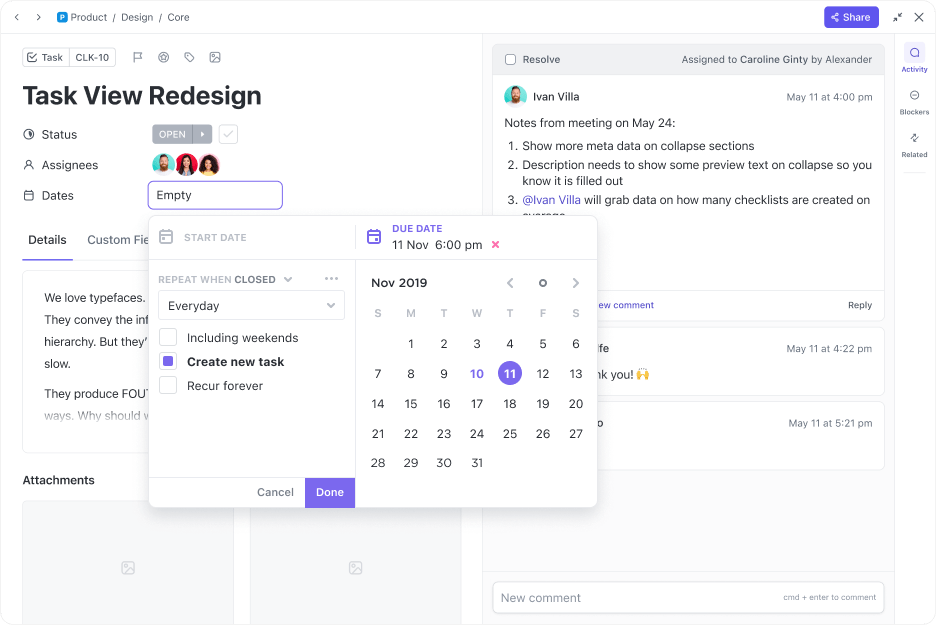
Researchers can create ClickUp Tasks for different project phases, assign due dates, and even break complex research activities into subtasks. Plus, with built-in time tracking and estimates, academics juggling multiple responsibilities can allocate their time efficiently.
For instance, a PhD candidate conducting a systematic review could create a task for ‘Data Extraction’ and subtasks for each research database (e.g., PubMed, Scopus, Web of Science). ClickUp Automations can notify other researchers when a task moves from ‘In Progress’ to ‘Completed,’ ensuring smooth handoffs.
You can also automate repetitive research tasks, data extraction, or literature monitoring using ClickUp’s AI Autopilot Agents.
Suppose you want to stay updated on the latest studies in your field. You can set up an AI Agent to automatically pull in new articles, tag them, and assign them to teammates for review. Or maybe you’re managing a team project—AI Agents can remind everyone about deadlines, send out updates, and even automate repetitive tasks like moving research notes to the right folder.
Long Nguyen Vu, Postdoctoral Researcher at the School of Electronic Engineering, Soongsil Univ., Seoul says:
Because of the synchronization between individuals, ClickUp helped us work on a unified design and workflow. As a result, each member was able to see their tasks more clearly towards the main goal of our team. Also there was no boilerplate procedure between members since we all agree to a simplified, unified interface.
📮 ClickUp Insight: 88% of people now use AI in some form, with an impressive 55% using it multiple times a day. As AI becomes a daily tool for professionals, its role in research, task management, and decision-making continues to grow.
ClickUp enhances these AI-driven workflows by embedding intelligence directly into your workspace. It extracts key insights from dense documents, compiles real-time project updates, and turns discussions into actionable tasks. It streamlines complex processes, allowing you to focus on high-impact work.
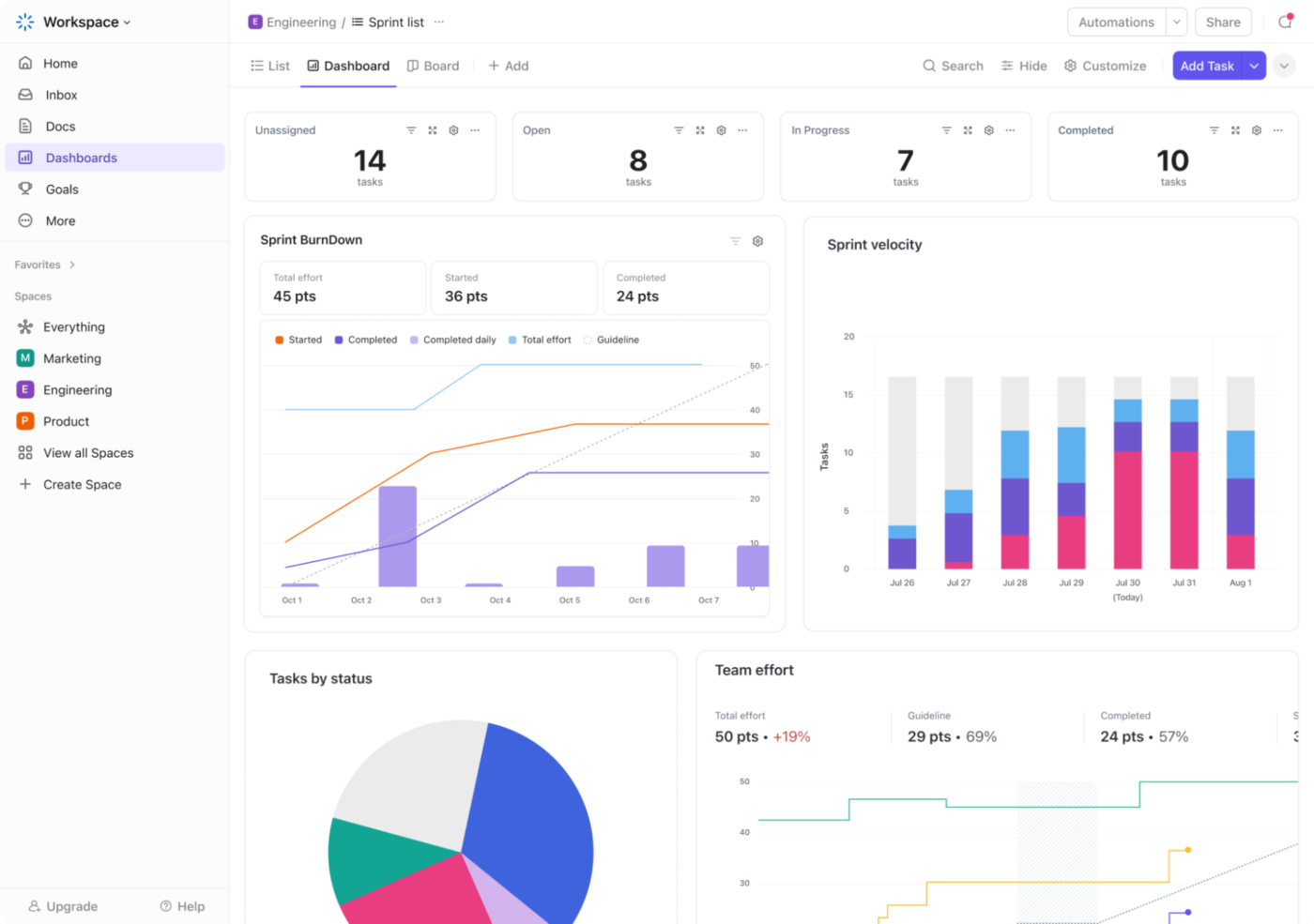
Research comes with a constant stream of data—funding details, project timelines, publication deadlines—and keeping it all organized can be a challenge.
ClickUp Dashboards pull everything into one place with customizable visualizations, making it easy to monitor funding, track milestones, and keep publication schedules on course. A clinical trial research team can create a Dashboard displaying participants, milestones, time estimates, and budget allocation.
For principal investigators managing multiple projects, Dashboards consolidate time tracking, pending tasks, and team workload insights, preventing bottlenecks.
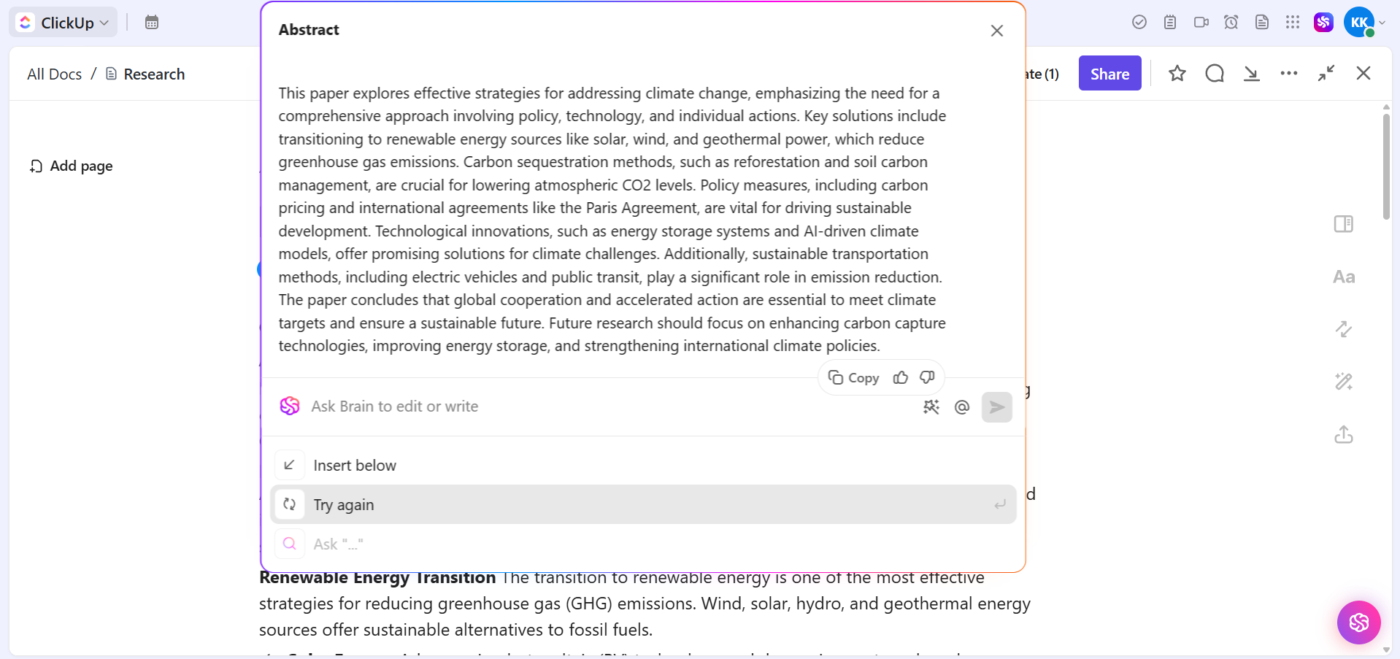
From literature reviews to funding proposals, ClickUp Docs transforms the way academic researchers collaborate on writing projects. The document collaboration tool integrates Tasks, meaning a research team working on a grant proposal can embed checklists with deadlines for each section.
Need a reference manager? ClickUp integrates with tools like Zotero and Mendeley, streamlining citation management. Furthermore, Brain can summarize key points, draft abstracts, or refine content tone based on intended audiences (e.g., policymakers vs. academic journals).
What’s more, Brain’s AI Knowledge Manager acts as an intelligent database for research teams. If a lab maintains research protocols in Docs, it can fetch the necessary guidelines instantly.
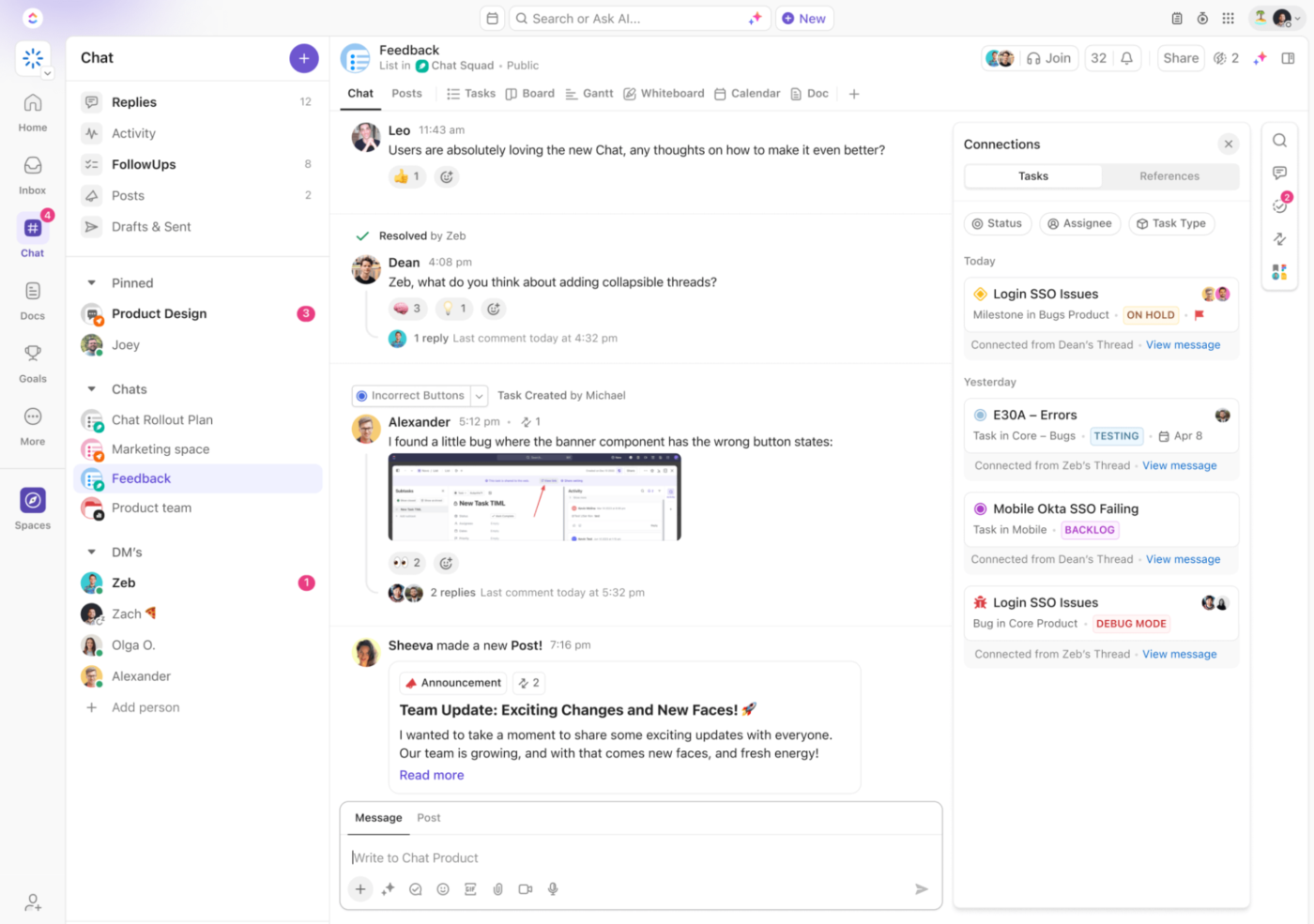
Academics often collaborate across institutions and time zones, making ClickUp Chat the go-to.
Chat is embedded within projects, allowing direct task creation from conversations to reduce toggle tax. For example, a research team discussing methodological concerns in a Chat thread can instantly convert a message into a task like ‘Revise Statistical Model,’ ensuring critical insights don’t get lost.
AI-powered chat summarization is especially useful for academics who miss meetings; it condenses long discussions into action items, saving time. Chat integrates video and audio calls for interdisciplinary collaboration using SyncUps with automatic transcription and highlights, ensuring alignment across research teams.
I believe the communication for our larger projects, between teammates has improved. Being able to get direct conversations on a specific task or subtask has helped quality and reduced confusion.
The ClickUp Market Research Template organizes everything in one place, from raw data to final insights. It provides a structured setup for using AI for market research, organizing data, spotting market trends, and uncovering opportunities to reach customers more effectively.
And, of course, boost that ROI.
Using ChatGPT for research should streamline your workflow, provide reliable information, and adapt to your specific needs. From analyzing complex studies to automating tedious tasks, the right GPTs can make all the difference.
Here’s what to consider when picking a GPT to apply ChatGPT for work. 👀
📖 Also Read: LLM vs Generative AI: What’s the Difference?
With these 15 research-focused GPTs, you have everything you need to generate insights faster than ever. But AI is just one piece of the puzzle. Managing data, collaborating with peers, and turning findings into action?
That’s where ClickUp shines.
Whether you’re organizing your literature reviews, tracking data analysis, or collaborating on a paper, ClickUp keeps everything in one place. With AI-powered features, custom dashboards, real-time document collaboration, and powerful automation, it streamlines your entire workflow from idea to publication.
Sign up to ClickUp for free today! ✅

© 2026 ClickUp





