Sorry, there were no results found for “”
Sorry, there were no results found for “”
Sorry, there were no results found for “”
Note: This guide is informational and not legal advice.
According to a 2025 survey of 286 legal professionals by LegalOn Technologies, legal teams spend an average of about 3.2 hours reviewing a single contract. For organizations processing hundreds of agreements annually, the math adds up quickly: thousands of hours consumed by repetitive document analysis that still misses critical issues.
This guide explains how to deploy AI for contract review in a way that actually holds up in practice. It covers how to choose the right tools, build usable playbooks, and integrate AI into existing workflows without adding administrative drag. The goal isn’t speed alone. It’s improving accuracy, reducing risk, and freeing legal teams to focus on work that requires judgment.
AI contract review delivers real value only when it stays connected to execution. When analysis happens in one tool and decisions live somewhere else, outputs may be faster, but bottlenecks remain. This is where ClickUp fits: it keeps review outputs tied to ownership, approvals, and follow-through. It keeps review outputs tied to ownership, approvals, and follow-through, not just the contract file.
AI contract review uses machine learning and natural language processing to extract key terms and clauses, compare them to approved standards, and flag risk for human review.
In practice, the workflow is straightforward. A contract is uploaded as a Word or PDF file. The system breaks it into clauses, identifies key terms, obligations, dates, and parties, and compares that language against company playbooks. Deviations, missing provisions, and compliance gaps are flagged, and many tools can suggest edits or apply tracked changes aligned to approved fallback language. A lawyer then reviews the output and makes the final decisions.
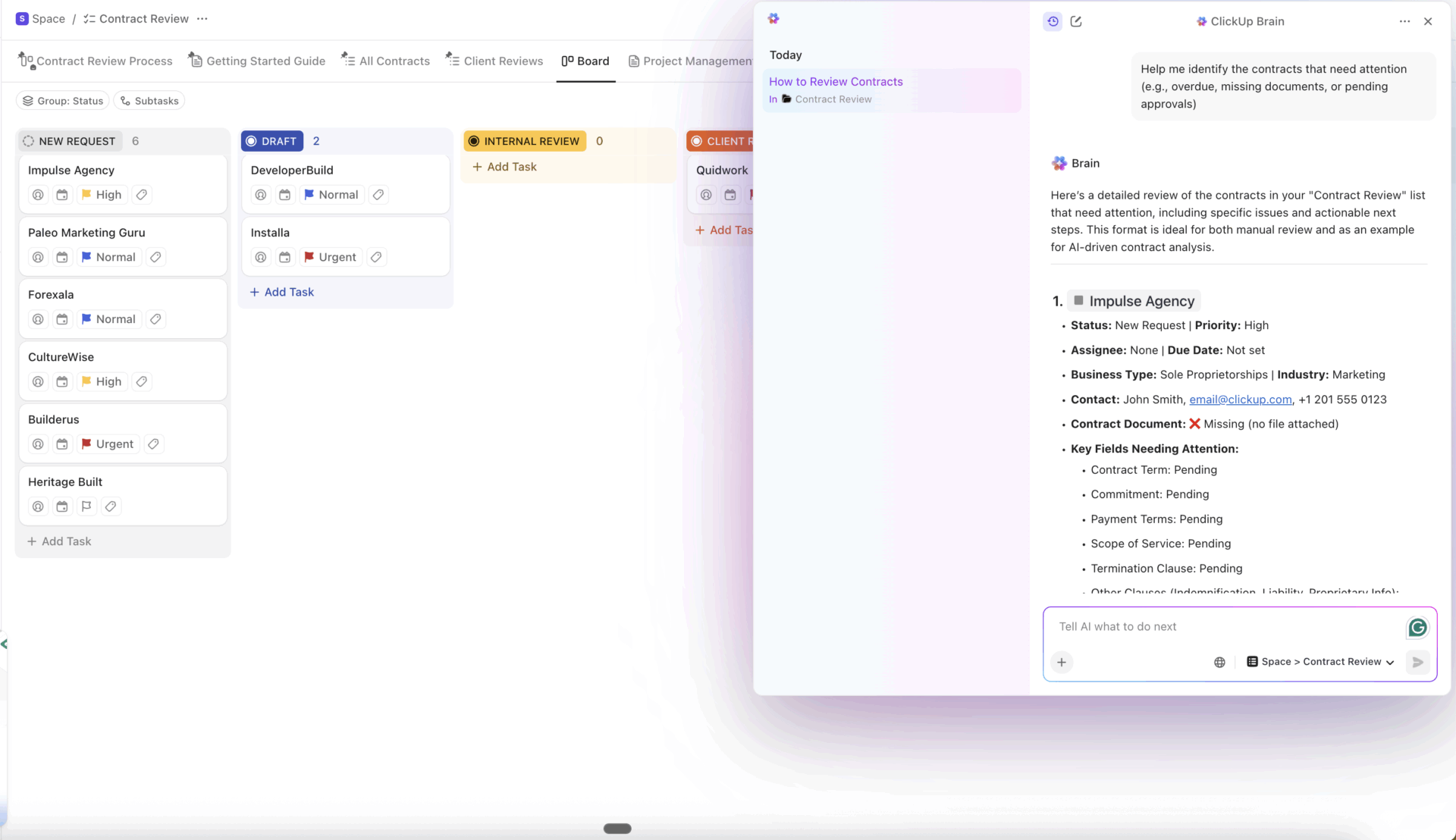
In ClickUp, ClickUp Brain can summarize flagged clauses into a reviewer-ready checklist and capture decisions next to the contract task, so approvals and next steps don’t get lost across email threads or separate docs.
The goal is not to replace legal judgment. AI handles the repetitive analysis so lawyers can focus on negotiation, risk assessment, and strategy. Used well, it acts as a force multiplier for legal teams.
One of the bigger failure points comes after analysis. When contracts sit in email, negotiation notes live in shared drives, and related tasks exist elsewhere, context breaks down. This context sprawl slows reviews and increases risk. Keeping contracts, tasks, and communication connected in a Converged AI Workspace helps preserve continuity across the entire contract lifecycle.
📮 ClickUp Insight: 83% of knowledge workers rely primarily on email and chat for team communication. However, nearly 60% of their workday is lost switching between these tools and searching for information. With an everything app for work like ClickUp, your project management, messaging, emails, and chats all converge in one place. It’s time to centralize and energize.
Now, let’s look at what AI contract review improves immediately, and what only improves when the workflow is connected end to end.
Manual contract review is a recipe for burnout and revenue leakage. When your team is exhausted from processing the same types of agreements repeatedly, they’re more likely to miss a problematic clause or let a compliance issue slip through. This isn’t just inefficient. It’s expensive, both in the billable hours consumed and in the cost of deals that stall at the finish line while everyone waits for legal approval.
Automated contract review tackles these problems directly, delivering meaningful improvements across multiple dimensions.
AI makes these benefits more reliable when it standardizes first-pass review, but only if its outputs include clear rationale, severity, and next-step guidance rather than generic “risk flags.”
Faster turnaround transforms your deal velocity. The most immediate benefit is speed. What once took days of manual review can often be completed in minutes. This acceleration matters because deals have momentum. When legal becomes a bottleneck, that momentum dies. AI-assisted review keeps agreements moving, getting you to signed contracts and revenue faster.
ClickUp Brain can compress long redlines into a decision summary so stakeholders see what changed, why it matters, and what needs approval.
Consistency eliminates the variability problem. Human reviewers, no matter how skilled, have different styles, different levels of focus on any given day, and different interpretations of what constitutes an acceptable risk. AI applies the same rigorous standard to every single document. The hundredth NDA gets the same level of scrutiny as the first. Nothing gets missed because someone was rushing to clear their queue before a meeting.
The key is consistency plus explainability, so reviewers understand why something was flagged and what the approved fallback is.
Cost savings appear in multiple ways. The obvious savings come from reducing reliance on external law firms for routine reviews. But the hidden savings are often larger: fewer delays mean faster revenue recognition, fewer missed issues mean lower liability exposure, and in-house counsel can focus on strategic work rather than document processing.
Enhanced compliance becomes automatic. AI acts as your compliance watchdog, ensuring every contract adheres to your internal policies and external regulations. Whether you’re dealing with GDPR requirements, industry-specific regulations, or simply your own negotiation standards, the AI checks for compliance on every single review.
Better data extraction unlocks contract intelligence. AI automatically pulls key data points like obligations, renewal dates, and performance metrics from your agreements. This creates a foundation for contract analytics that would be impossible to build through manual review.
For AI to be useful here, extracted terms should include context (what the term governs, who owns it, and what action it triggers), not just a raw field value.
🧐 Did You Know? Gartner predicts that by 2027, 50% of organizations will support supplier-contract negotiations with AI-enabled contract-risk analysis tools. The shift from manual to AI-assisted review isn’t a question of if, but when.
However, extracted data doesn’t help if it’s trapped in a silo. Turn renewal dates into actionable tasks with deadlines and assignees. Search across all your contract documents to find relevant language from past deals. The power of AI contract review multiplies when it connects to your broader workflow rather than existing as an isolated tool.
This is where teams get the most significant lift from a connected execution layer. Review outputs become owned next steps instead of an “AI report” that still requires manual follow-up.
There’s a common misconception that contract review is only for lawyers. The reality is that teams across your entire organization handle agreements, often without any legal training. Your procurement team signs vendor contracts. Sales negotiates customer deals. HR manages employment documents. When these teams operate without the right tools, they either create a massive bottleneck for your legal department or, worse, make risky decisions on their own.
AI contract review software is designed to empower these teams while maintaining proper oversight. The technology democratizes contract intelligence, giving non-legal users the ability to understand agreements while ensuring legal maintains appropriate control.
In-house legal teams use AI to process high volumes of NDAs, vendor agreements, and commercial contracts without burning out. Repetitive work is automated, freeing lawyers to focus on complex negotiations and strategic counsel.
Law firms leverage AI to accelerate due diligence for M&A transactions and manage more client work without proportionally increasing headcount. The technology creates leverage, enabling firms to manage larger portfolios more efficiently.
Procurement teams use AI to quickly review supplier contracts for compliance with company standards before any money changes hands. This prevents problematic terms from slipping through and creating issues downstream.
Sales and revenue teams use AI to accelerate customer contract negotiations. When a deal is hot, the last thing you want is a week-long legal review cooling everything down. AI-assisted review keeps deals moving while they still have momentum.
HR departments use the technology to efficiently process employment agreements, non-competes, and policy documents at scale. The consistency ensures every employee agreement meets company standards.
Finance teams rely on AI to ensure financial terms and payment obligations in contracts align with company budgets and forecasts. Catching problematic payment terms early prevents cash flow surprises later.
The real transformation happens when these teams stop working in isolation. When legal, procurement, sales, and finance operate in a single, connected workspace, handoffs become seamless. Context never gets lost because the tasks, documents, and conversations related to a contract stay linked from initiation to signature. AI can translate complex legal jargon into plain English summaries, so non-legal users can understand what they’re looking at, while legal still provides final approval.
💡 Pro Tip: Create a contract review workflow that routes agreements to the right people automatically based on contract type, value, or risk level. Standard NDAs might only need a quick AI review, while high-value customer agreements get full legal attention.
The market is flooded with AI tools making the same grand promises, making it genuinely difficult to distinguish reality from marketing hype. Teams get stuck trying to differentiate between full-blown contract lifecycle management platforms, simple standalone review tools, and generic AI that might “hallucinate” and invent legal information. Choosing the wrong tool doesn’t just waste your budget. It can create more inefficiency and risk than you started with.
To cut through the noise, focus your evaluation on criteria that actually matter for your use case.
Legal-specific training determines accuracy. Was the AI trained on a massive dataset of legal documents and vetted by attorneys, or is it a generic model that knows nothing about contract law? This distinction is critical. General-purpose AI can produce confident-sounding legal analysis that’s completely wrong. Purpose-built legal AI understands the nuances of contract language in ways that generic models simply cannot.
Data security is non-negotiable. Does the vendor hold critical security certifications, such as SOC 2 Type II, and is it GDPR-compliant? More importantly, will your confidential contract data be used to train their public AI models? The answer should be an absolute no. Your contracts contain sensitive business information, competitive intelligence, and confidential terms. That data cannot become training fodder for a model that serves your competitors.
Playbook customization enables your standards. Can the tool learn your organization’s unique negotiating positions and risk tolerance, or are you stuck with one-size-fits-all rules? Every company has different risk appetites and standard positions. AI that can’t adapt to your specific requirements will generate constant false positives and miss issues that matter to your business.
Integration capabilities prevent more silos. Does the tool connect with the systems your team already uses, or will it become yet another isolated application that creates more work? Tool sprawl is a real problem. Adding another disconnected app to your tech stack often creates more friction than value.
Ease of adoption determines actual usage. How steep is the learning curve, especially for non-legal users? A powerful tool that nobody uses provides zero value. Look for solutions that balance capability with accessibility.
The biggest danger is choosing a generic AI model for legal work. These tools can produce inaccurate information that sounds authoritative but could expose you to severe liability. Always opt for purpose-built legal AI tools designed specifically for contract analysis.
📮 ClickUp Insight: 88% of survey respondents use AI for their personal tasks, yet over 50% shy away from using it at work. The three main barriers? Lack of seamless integration, knowledge gaps, or security concerns. But what if AI is built into your workspace and is already secure? ClickUp Brain, ClickUp’s built-in AI assistant, makes this a reality. It understands prompts in plain language, solving all three AI adoption concerns while connecting your chat, tasks, docs, and knowledge across the workspace.
If you’re expecting AI to be a magic solution that completely replaces your legal team, reality will disappoint you. Over-relying on AI without understanding its limitations creates a whole new set of risks. Teams might blindly accept flawed AI suggestions or assume the tool catches every single issue. That assumption can be costly.
For responsible and successful adoption, you need to be honest about what AI cannot do.
Complex negotiations require human judgment. AI excels at spotting standard deviations from your playbook, but it can’t handle nuanced judgment calls or novel legal situations that require creative problem-solving. When a contract presents an unusual structure, a new type of risk, or strategic considerations that go beyond the document itself, human expertise remains essential.
Final authority must stay with humans. A human lawyer should always approve material edits, sign off on complex negotiations, and make the final decision on significant contracts. AI is a tool that informs decisions, not a system that makes them. The responsibility and liability for contract terms remain with the people who approve them.
Playbook quality limits AI quality. An AI review tool is only as smart as the playbooks it’s trained on. These playbooks require thoughtful initial setup and ongoing refinement as your company’s standards evolve. Garbage in, garbage out applies here just as much as anywhere else in software.
Contextual nuances escape AI understanding. AI won’t know the history of your relationship with a specific vendor, the unwritten understandings behind particular clauses, or the strategic context that makes certain terms acceptable in some deals but not others. That institutional knowledge and relationship context is where human experience proves irreplaceable.
The solution isn’t to avoid AI, but to deploy it as the powerful assistant it’s designed to be. Build a human-in-the-loop system in which AI handles initial analysis and flagging, while human experts make final determinations. This balanced approach delivers the speed of AI with the judgment of your best people.
💫 Real Results: Teams that implement AI contract review with proper human oversight report reducing review time by 60-80% while maintaining or improving accuracy. The key is treating AI as a tool that augments human capability, not one that replaces it.
So you’ve invested in a contract review tool. The problem? It’s sitting there unused, another disconnected application in your already cluttered tech stack. This is the classic tool sprawl trap. Disconnected tools create duplicate data entry, force constant context switching, and make workflows more complicated rather than simpler.
To avoid this fate, you need a deliberate integration plan. Don’t just adopt a tool. Embed it into the way your team already works.
Audit your current workflow before making any changes. Map out how contracts actually move through your organization today. Where do bottlenecks form? Where do handoffs get dropped? Understanding your current state reveals where AI can add the most value and where integration points matter most.
Identify high-volume, repetitive contracts for initial deployment. Don’t try to transform everything at once. Start with the easy wins: standard NDAs, simple vendor agreements, routine service contracts. These high-volume, low-complexity agreements offer the best return on AI investment and the lowest risk for getting started.
Build confidence in lower-stakes agreements. Before applying AI review to your multi-million dollar strategic partnerships, refine your process on lower-risk contracts. This gives your team time to understand how the AI works, calibrate your playbooks, and develop confidence in the system’s output.
Establish clear escalation protocols. Define exactly when an AI-flagged issue needs human review and who handles that escalation. This prevents both over-reliance (assuming AI catches everything) and unnecessary bottlenecks (escalating every minor flag to senior counsel). Clear protocols keep work flowing smoothly.
💡 Pro Tip: Use ClickUp Brain to standardize escalation notes (risk level, clause, recommended path) so legal receives a clean decision packet instead of scattered context.
Using ClickUp BrainGPT, reviewers can ask follow-up questions directly inside the contract task, such as “What changed from our standard fallback?” or “Who needs to approve this clause?” The responses stay tied to the contract record, eliminating side conversations and decision drift.
Train everyone who touches contracts. Make sure all users, especially non-legal staff, understand how to interpret AI output and when they absolutely need to involve the legal team. AI democratizes contract intelligence, but that democratization only works if people understand the tool’s capabilities and limitations.
Measure and iterate. Track key metrics like time savings per review, reduction in errors caught downstream, and overall cycle time improvements. This data proves ROI to leadership and reveals opportunities for process refinement.
📘 Also Read: How to Use AI for Document Review
Even with the right tool and a solid integration plan, teams can still fall into bad habits. The “set it and forget it” mentality is particularly dangerous. Over-trusting AI output, letting playbooks get stale, or skipping human review creates risks that undermine the entire investment. Getting maximum value from AI contract review requires building a culture of continuous improvement.
Human review of material edits is the golden rule. AI should flag issues and suggest changes, but a human expert must approve any substantive changes. This isn’t about a lack of confidence in the technology. It’s about maintaining appropriate accountability and catching the edge cases that AI will inevitably miss.
Treat AI suggestions as drafts: require a short “why” for each change so reviewers can validate intent, not just wording.
Regular playbook updates keep AI relevant. Your company’s standards and risk tolerance will change over time. New regulations emerge. Competitive dynamics shift. Business priorities evolve. Your AI’s training data needs to evolve alongside these changes. Schedule regular playbook reviews, ideally quarterly, to ensure the AI is flagging what actually matters today, not what mattered a year ago.
Feedback loops improve system performance. When the AI misses something important or makes an incorrect suggestion, don’t just fix it and move on. Use that information to calibrate and improve the system’s future performance. Every miss is a learning opportunity. Organizations that build robust feedback mechanisms see AI accuracy improve significantly over time.
Escalation paths must be crystal clear. Everyone on the team should know exactly when to stop and involve legal counsel. There should be no ambiguity about which issues require escalation. Document these thresholds and make them easily accessible to everyone who reviews contracts.
Security and audit trails are non-negotiable. Ensure your vendor complies with all data handling policies and that your system maintains a complete, unalterable audit trail of every review and approval. If you ever face a dispute about contract terms, that audit trail becomes invaluable.
🧐 Did You Know? Organizations that implement AI contract review with proper governance structures report not only faster review times but also improved compliance rates. The consistency AI brings to the review process catches issues that human reviewers, subject to fatigue and varying attention levels, sometimes miss.
AI contract review generates the most value when it integrates into a connected workspace rather than existing as another standalone tool. ClickUp brings your contract workflow together, connecting AI-assisted review with task management, document collaboration, and team communication in one unified platform.
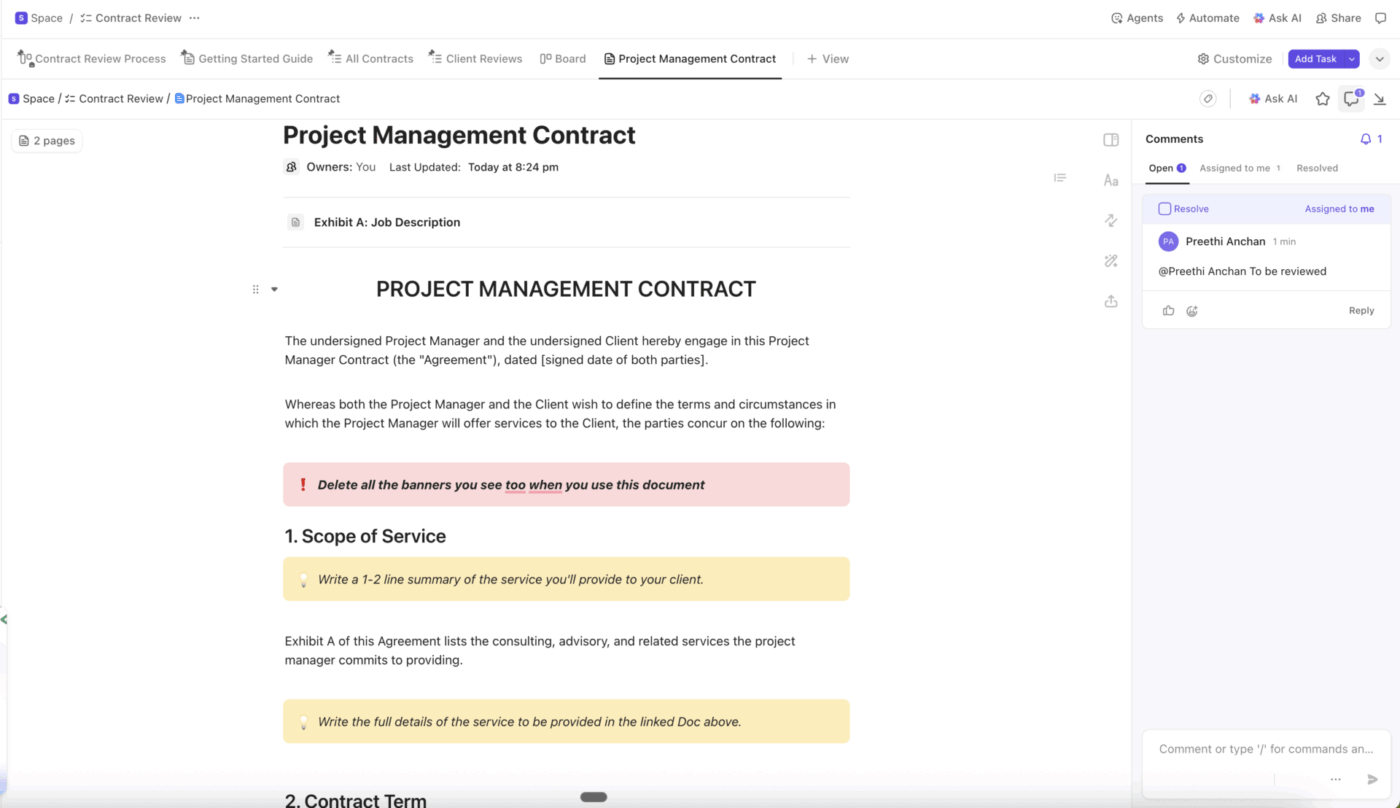
Your contract playbooks are living documents that need regular updates as standards change and lessons accumulate. ClickUp Docs provides the perfect environment for maintaining these critical references.
Build comprehensive playbooks that include your standard positions, acceptable fallback language, and escalation thresholds. Multiple team members can collaborate on playbook updates simultaneously, ensuring the collective wisdom of your legal team gets captured. Version history tracks every change, so you can see how standards have evolved and roll back to a previous version if needed.
Link playbooks directly to contract review tasks so reviewers always have the latest guidance at their fingertips. When someone identifies a gap or a new standard position, they can update the playbook immediately without switching tools or sending emails.
AI contract review identifies issues, but someone still needs to act on those findings. ClickUp Automations bridges the gap between analysis and action.
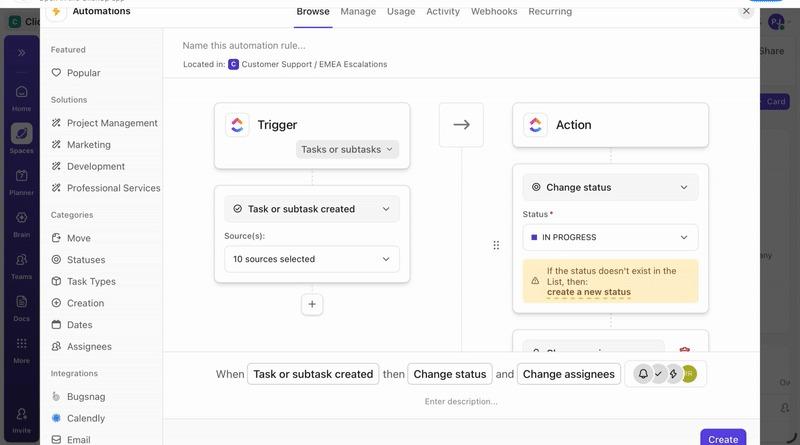
When a contract moves to “Ready for Review,” automations can create tasks, assign them to the right team members based on contract type or value, and set appropriate due dates. If AI flags high-risk issues, automations can immediately escalate to senior counsel, while routine contracts follow the standard path.
This automation eliminates the manual work of creating review tasks, assigning owners, and tracking progress. The system handles the administrative overhead while your team focuses on the substantive review work.
As contract volume grows, the failure point is rarely analyzed. It’s follow-through.
Super Agents help close that gap by monitoring contract workflows and acting on predefined conditions. Instead of relying on manual reminders or status checks, agents can surface stalled reviews, flag missing approvals, and prompt next steps based on risk level or contract type.
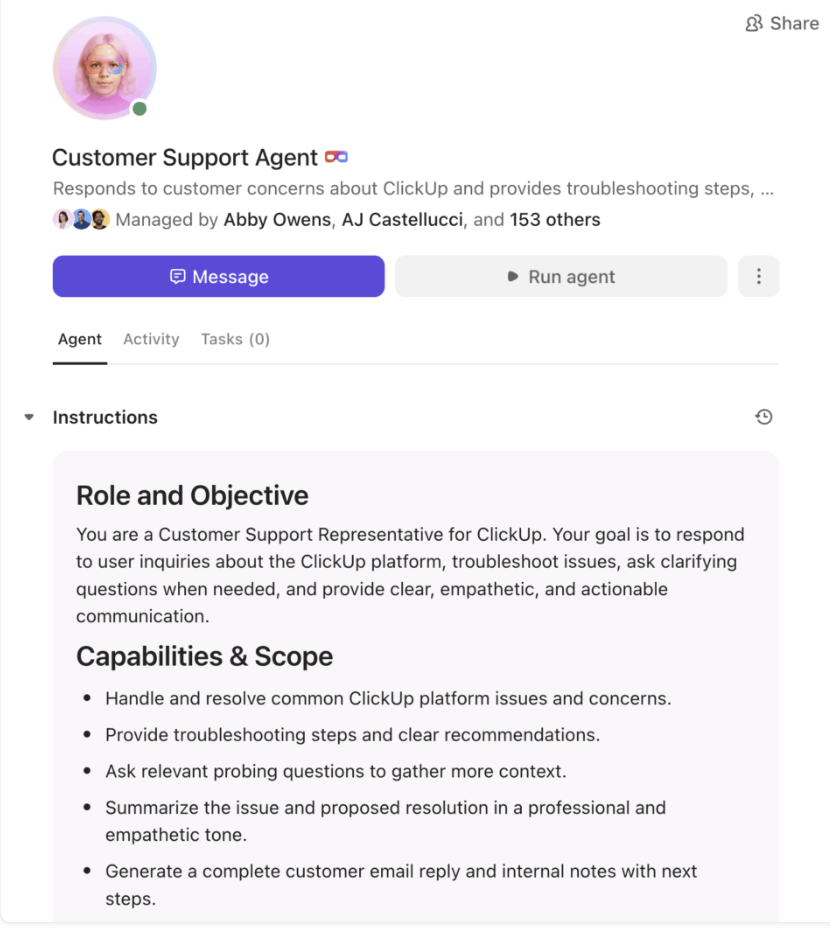
For example, an agent can detect when a high-risk clause has been flagged but not acknowledged within a defined window, escalate it to senior counsel, or notify stakeholders before a deal stalls. The result is consistent execution without adding operational overhead.
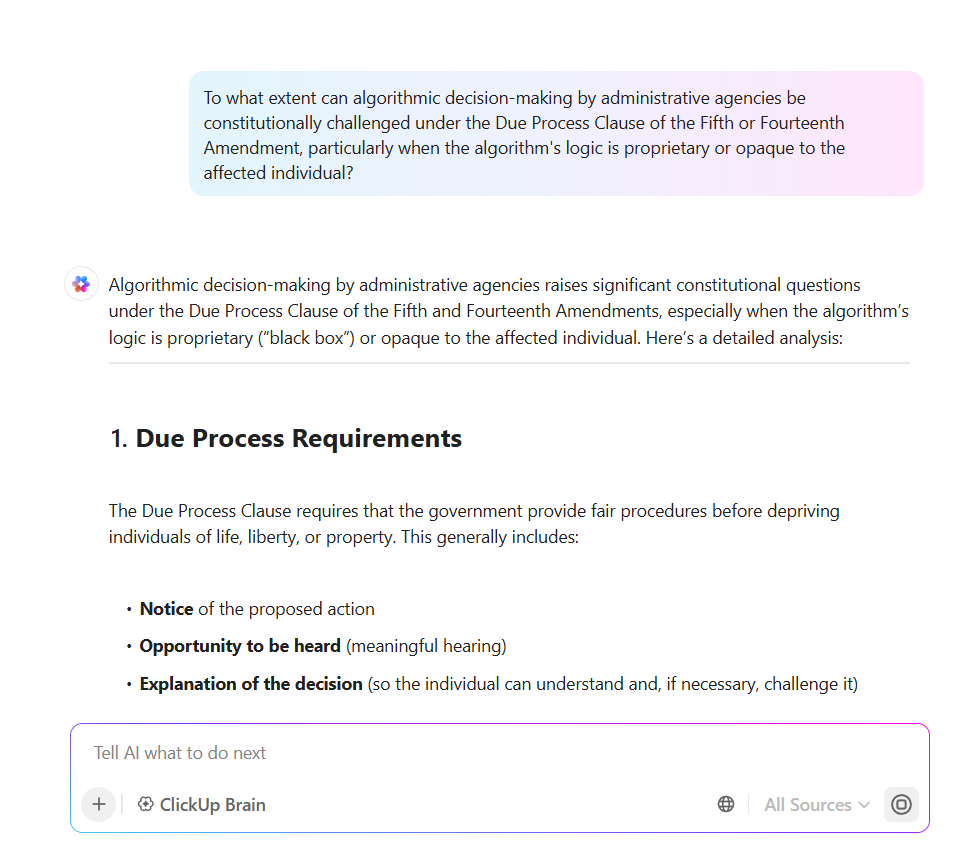
One of the biggest time sinks in contract review is searching for precedent. How did we handle this clause in the ABC deal? What language did we accept from this vendor last time? ClickUp Brain makes these searches instant.
Ask Brain questions in natural language: “What indemnification caps have we accepted from enterprise software vendors?” or “Show me the limitation of liability language from our partnership agreement with XYZ Corp.” Brain searches across all your contract documents and surfaces relevant results immediately.
This capability is compelling for non-legal users who need to understand contract terms without years of legal training. ClickUp’s AI tool can translate complex legal jargon into plain English summaries, making contracts accessible while ensuring legal still provides final approval on anything substantive.
Improving your contract review process requires visibility into how it’s actually performing. ClickUp Dashboards provide real-time insight into the metrics that matter.
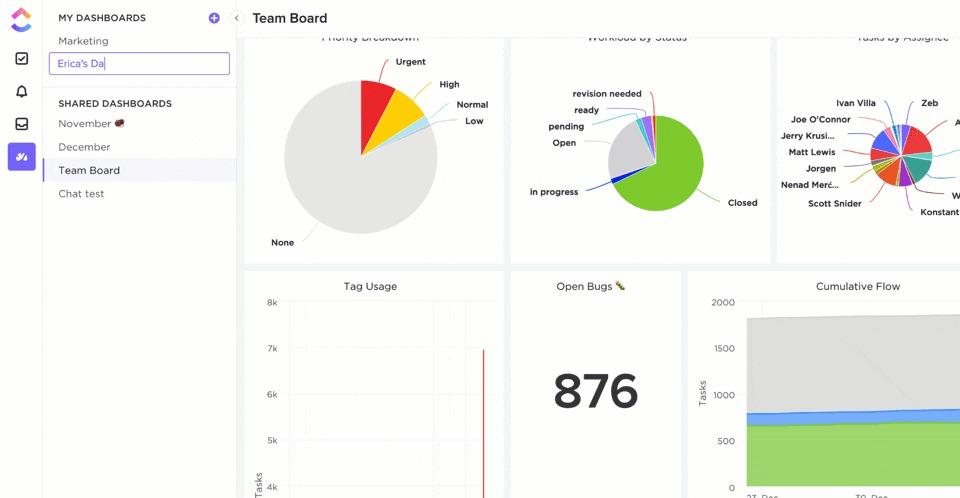
Build dashboards that track cycle time from contract receipt to signature, approval rates by contract type, common issues flagged by AI, and backlog status. These metrics reveal bottlenecks, identify opportunities for process improvement, and demonstrate the ROI of your AI investment to leadership.
When dashboards show that a particular contract type consistently takes twice as long as others, you’ve identified a target for process improvement. When AI-flagged issues cluster around a specific clause type, you’ve found a playbook gap to address.
Compliance and dispute resolution both require detailed records of who reviewed what, when, and what decisions were made. ClickUp maintains a complete history of every action on every contract task.
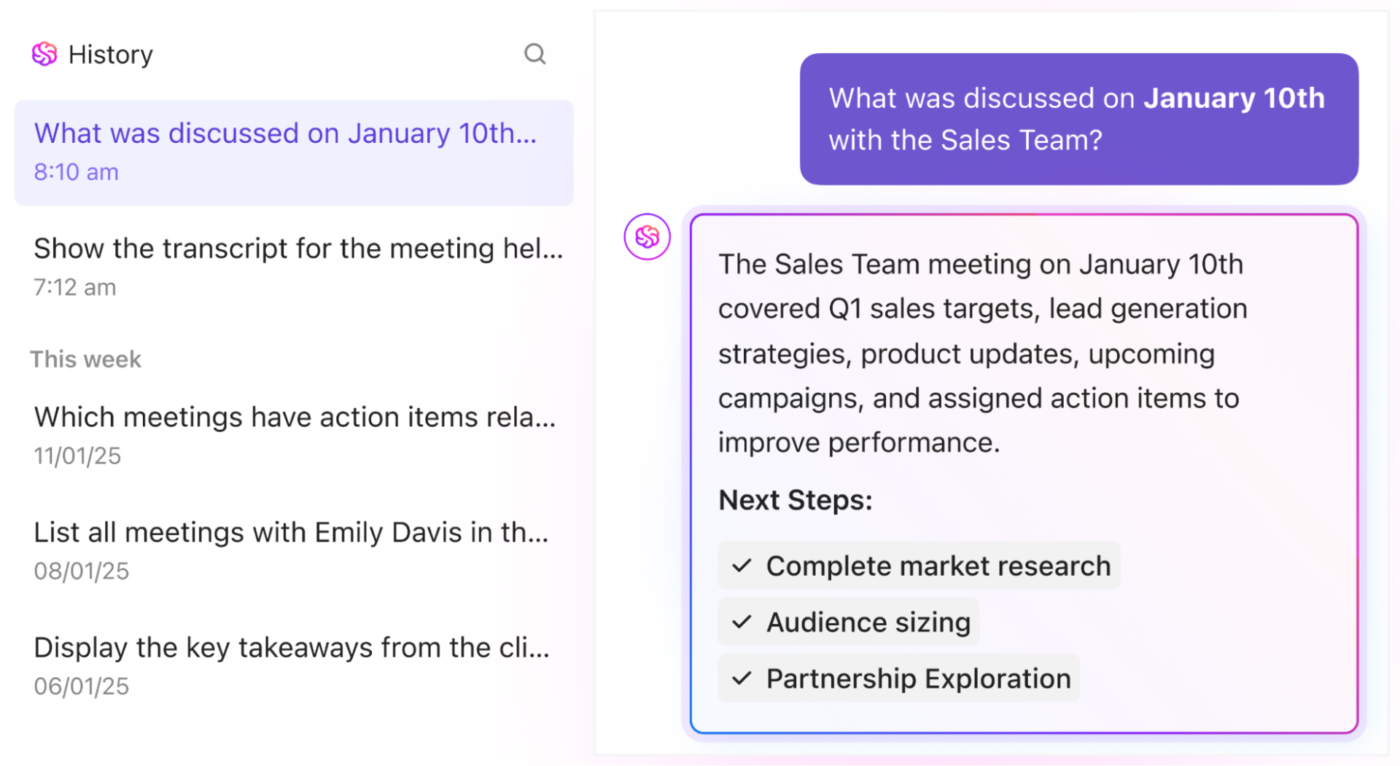
Every comment, status change, file upload, and approval gets timestamped and attributed. If questions arise months or years later about how a particular contract was reviewed and approved, the audit trail provides complete documentation. This record-keeping happens automatically as part of everyday workflow, requiring no additional effort from your team.
The ultimate test of any contract review system is whether it scales. A process that works for fifty contracts per month might break down at five hundred. ClickUp’s approach scales because the underlying structure remains consistent regardless of volume.
Templates replicate your contract review workflow instantly for each new agreement. Automations apply the same rules consistently across unlimited contracts. Dashboards aggregate metrics across any volume of work. The system that handles your current contract load works identically at ten times the volume.
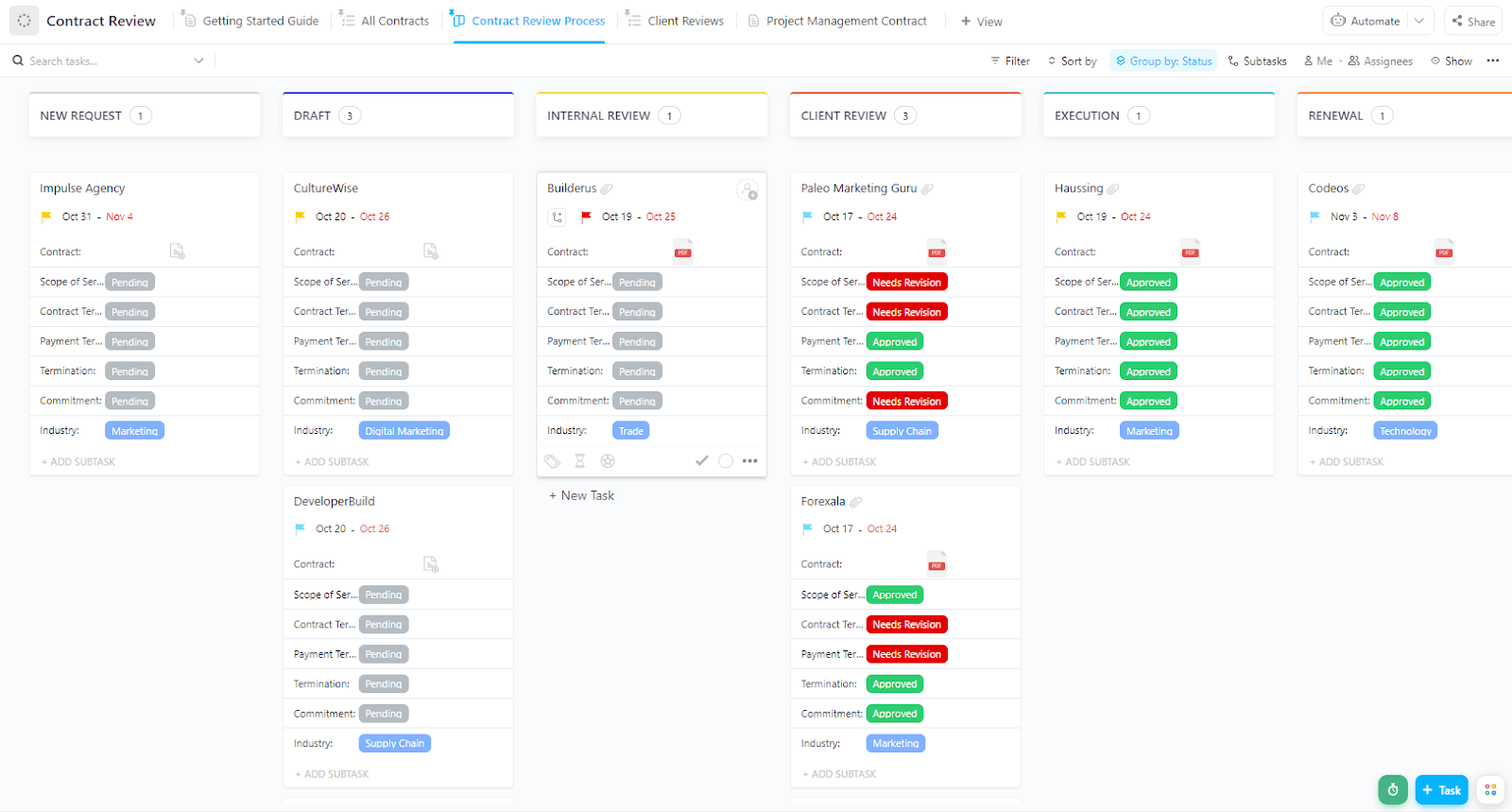
For example, this ClickUp Contract Review Template gives you an easy, structured way to manage and track the contract review process from start to finish. It helps legal teams, project managers, and business owners keep every clause, stakeholder update, and review step visible and organized so nothing slips through the cracks.
AI contract review succeeds when it empowers your team rather than trying to replace them. The smartest approach is starting with high-volume, low-complexity agreements and expanding from there as your team builds confidence. Integration into your existing workflows matters far more than any individual feature.
The best AI setups reduce downstream cost: fewer clarification loops, fewer rewrites, and faster approvals because the output is decision-ready.
Security and data privacy are non-negotiable considerations. Before committing to any tool, verify that the vendor has appropriate certifications and transparent policies about how your confidential contract data gets handled. Your contracts contain sensitive business information that cannot be used as training data for public AI models.
Teams that integrate AI contract review into a connected workspace see the biggest benefits. When contract data informs project planning, deadline tracking, and cross-functional collaboration, you unlock compounding value that isolated tools could never provide. The future of contract review isn’t just faster analysis. It’s smarter, more connected workflows that treat contracts as living parts of your business operations rather than static documents to be processed.
Ready to see how AI-powered contract review fits into your existing workflow? Get started for free with ClickUp to experience a connected workspace for contract management. ✨
📘 Also Read:
Absolutely. AI contract review tools are specifically designed to help teams like procurement, sales, and HR handle routine agreements without creating bottlenecks for the legal department. The AI can translate complex legal language into plain English summaries, making contracts accessible to non-specialists. That said, a lawyer should always approve any material changes, and clear escalation paths should define when non-legal users need to involve legal expertise.
Purpose-built tools are explicitly trained on legal documents and vetted by attorneys who understand contract law nuances. Generic AI tools can produce confident-sounding legal analysis that’s actually incorrect, a phenomenon called “hallucination.” Specialized legal AI also includes critical features like playbook comparison, risk scoring, and redline generation that generic AI simply doesn’t offer.
If you use ClickUp Brain in the workflow, keep it in “summarize, route, and clarify” mode unless your legal tool is the system generating clause-level analysis.
The key is choosing a tool that connects to your existing workspace rather than creating another silo. Look for solutions that automatically link contract review tasks to project timelines, team assignments, and approval workflows. Avoid the app sprawl problem by selecting AI capabilities that integrate with your existing tools rather than requiring yet another platform to manage.
AI dramatically improves the speed and consistency of contract review, but it should augment human expertise rather than replace it. An attorney should always provide final approval on significant edits and complex negotiations. The AI’s accuracy depends entirely on its training and configuration, which is why playbook quality and ongoing calibration matter so much. Think of AI as a competent assistant that handles the repetitive analysis while humans make the judgment calls.
© 2026 ClickUp