


Whether you’re working from home, the office, or a tropical island with a blurred-out Zoom background, you’re using team collaboration software to get the job done. ?
Team collaboration tools vary in complexity, functionality, and type, but they all share a common goal—to help teams work together better. While the work-from-home movement drove a ton of popularity to these tools, they’ve proven their worth!
Now, more than half of employers still use collaboration tools to communicate with employees, clients, stakeholders, and more. In fact, you probably already use real-time collaboration software in your daily work life.
And yet, efficient teamwork and communication are still some of the most challenging hurdles to overcome, especially for cross-functional teams.
If you’re in this boat, then it’s time for a change. ?
Since collaborative work management falls into such a broad and sweeping category, it’s increasingly difficult to find the tool that best serves your team’s work style, use case, size, industry needs, and processes. You’ve come to the right place, though!
We’ve already done our research and testing to bring you 15 of the best team collaboration software for any use case. No matter what you’re looking for from your next tool, we have the feature breakdowns, pros and cons, ratings, and reviews to kick off your software search on the right foot.
Best 15 Team Collaboration Software 2024 | ClickUp

 Summarize this article for me please
What Should You Look for in a Team Collaboration Software?
Team collaboration software goes far beyond a simple DM or quick email.
This means that finding the best collaboration tool for your team starts with thoroughly understanding what you’re looking for from the product: Ask yourself:
- What projects does the team work on? The collaboration tools that help construction project management teams greatly differ from those used by software engineers, and the same idea goes for HR departments vs sales teams.
- What’s the size of your team and budget? Many tools are priced per user, per month. So if you’re forking over $10 per user, per month for more than 200 people on software that people are resistant to use, you’re not going to see the immediate results you’re hoping for.
- What specific problem will this tool solve? Are you looking for a way to reach the team quickly or edit documents alongside each other? Your ideal tool may do one or both of these things!
The answers to these questions will point you in the right direction. But how do you tell the high-quality software apart from the rest? By looking for features like this:
- Threaded comments, chats, and instant messaging
- Assigned comments or @mentions
- Screenshots, screen recordings, or video meetings
- Highly visual custom statuses, project milestones, and task dependencies
- Collaborative or live-editing in documents, tables, tasks, and more
- Goal-focused features
- Digital whiteboard software or brainstorming features
- Multiple integrations
And more!
Yes, you can find all of these features in one team collaboration software. But not every tool performs these functions equally well, and we’re here to help you weed out the tools that just aren’t for you.
Summarize this article for me pleaseThe 15 Best Software for Team Collaboration
The possibilities are endless when it comes to efficient team collaboration software, so it’s nice to have the best tips, breakdowns, and software alternatives in front of you to guide your search!
Use this detailed list to compare features, pros and cons, pricing, and reviews of the 15 best collaboration software for every team.
1. ClickUp
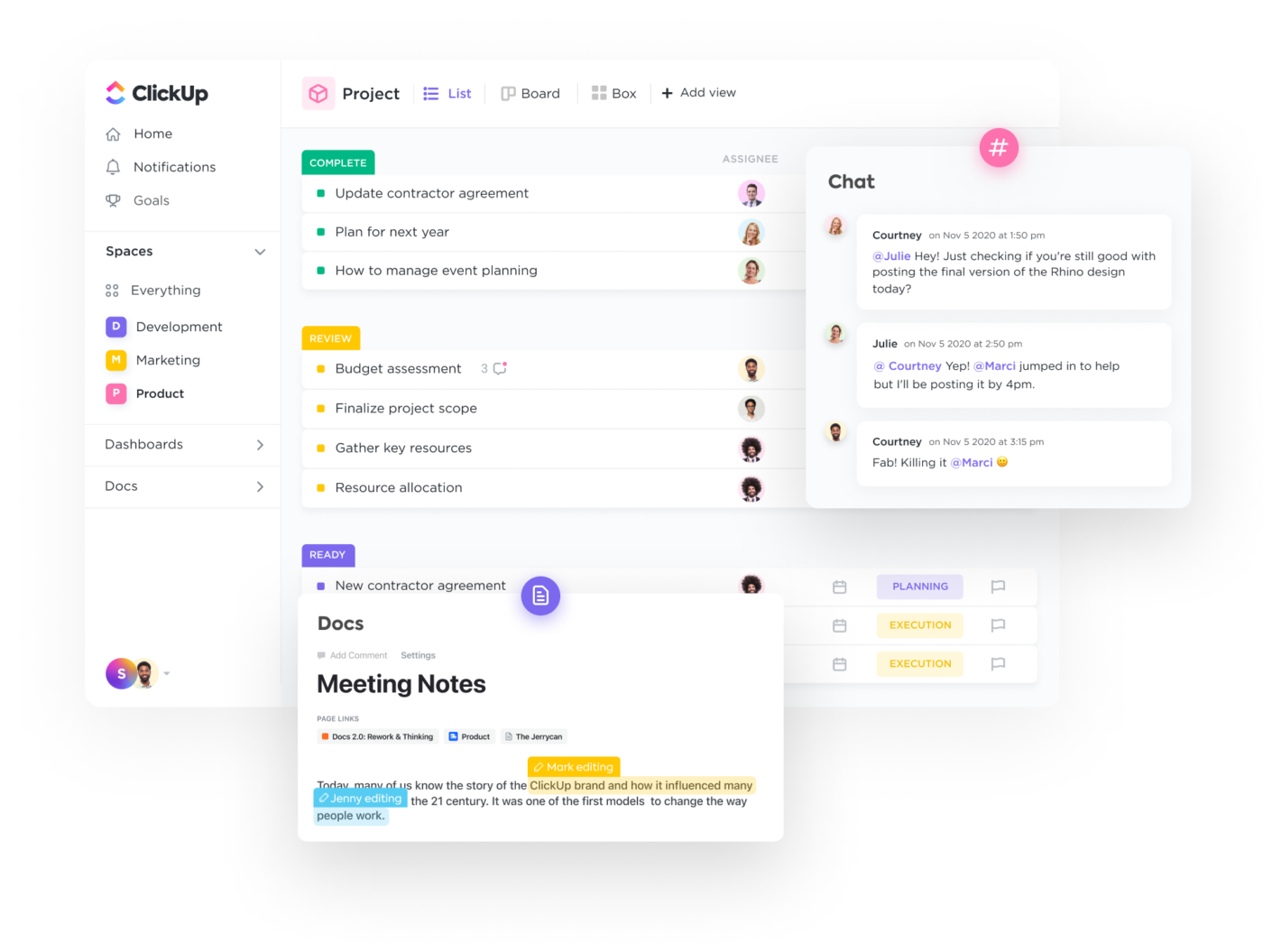
ClickUp is the only productivity tool powerful enough to bring all of your work together across apps into one centralized and collaborative platform. This tool provides wall-to-wall solutions for teams of any size with its rich set of customizable features to help you save time and streamline processes, whether you’re connecting with stakeholders, aligning on goals, or overseeing project timelines.
Collaboration is at the core of every ClickUp feature, with multiple built-in tools to develop ideas from start to finish alongside the team, then visually convey progress as you set your plans in motion. Plus, there are over 15 ways to view your work in ClickUp, including its unique Chat view to consolidate all relevant conversations into one convenient hub.
ClickUp best features
- Over 1,000 integrations with other work tools, including Zoom, Slack, Google Workspace, Microsoft Office, and more
- A dynamic Goals feature to align the team on OKRs and track progress in multiple ways
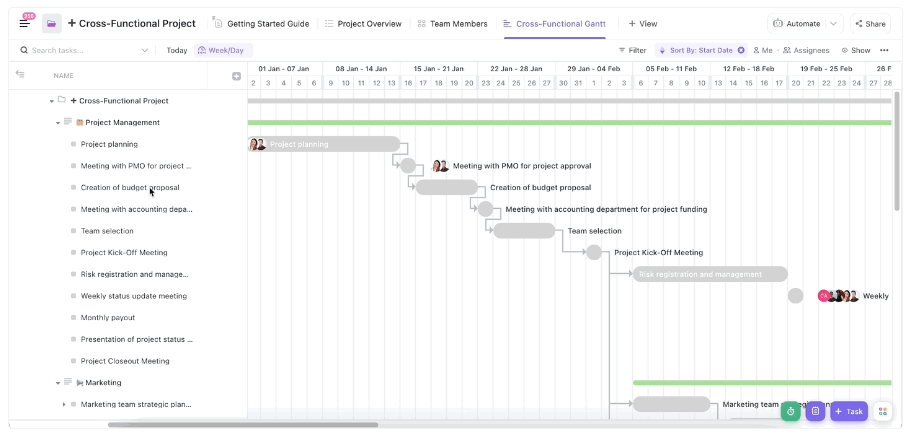
- Custom statuses and project Milestones to convey progress updates at a glance
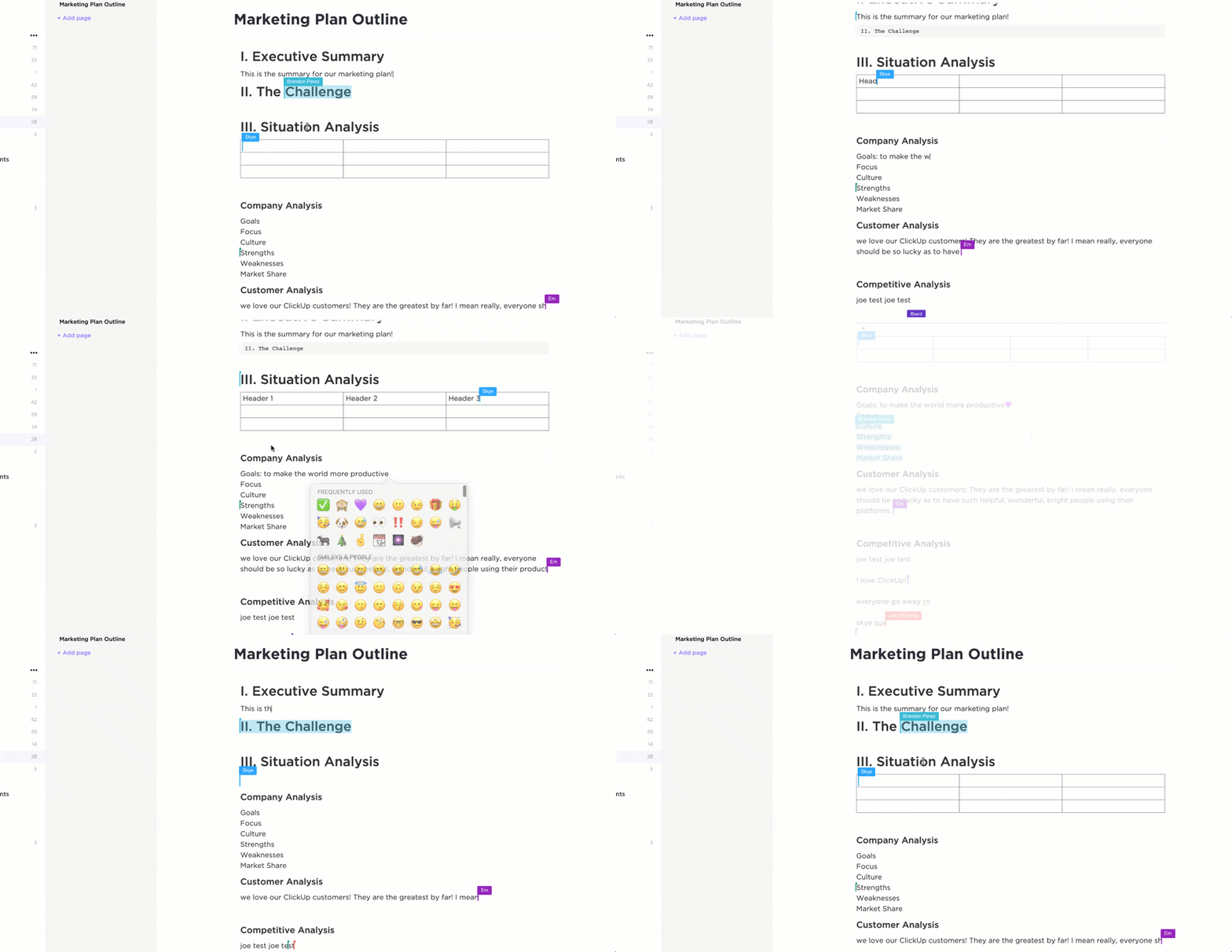
- Assigned and threaded comments in any ClickUp Doc, task, or ClickUp Whiteboard
- Multiple assignees on tasks for total transparency into all progress
- Free and accessible help resources, webinars, and online support
- A vast Template Library for every use case to collaborate with your team
ClickUp limitations
- So many powerful collaboration tools can pose a learning curve for some users
- Not all views are available in the mobile app…yet
ClickUp pricing
- Free Forever
- Unlimited: $7 per user, per month
- Business: $12 per user, per month
- Enterprise: Contact ClickUp for custom pricing
Ratings and reviews
- G2: 4.7/5 (5,670+ reviews)
- Capterra: 4.7/5 (3,540+ reviews)
2. Slack

One of Slack’s best features is secure, real-time messaging with team members, external partners, or customers. The platform’s direct messaging feature is useful when facing a deadline or trying to resolve an urgent issue.
Through group channels, team members can communicate, share updates, and provide feedback on projects. Even when working remotely, people can stay in touch and aligned. You can set up different channels for different topics, projects, or teams, making it easy to find relevant discussions.
Sometimes Slack channels will become cluttered. Multiple threads talking about the same project will require extra clarification. Constant interruptions take you away from deep work. For best results with Slack, connect it with other collaboration tools or task management software to boost productivity.
If you want to manage projects and tasks right within Slack, check out the Slack integration with ClickUp!
Slack best features
- System roles to classify a team member as an administrator to manage Slack accounts or non-administrator
- Channels to create central, shared spaces for conversations, files, and people
- Workflow Builder to automate routine actions and communication
- Huddles and clips with audio and video options
Slack limitations
- Limited customization options in individual settings
- Support for data loss prevention is an Enterprise plan feature
Slack pricing
- Free plan
- Pro plan: $7.25/month per person, billed yearly
- Business+ plan: $12.50/month per person, billed yearly
- Enterprise Grid plan: Contact Slack for pricing
Slack ratings and reviews
- Capterra: 4.7/5 (22,000+ reviews)
- G2: 4.5/5 (30,000+ reviews)
Compare Microsoft Teams Vs Slack and Slack Vs Asana!
3. Google Workspace (Docs, Sheets, Slides)
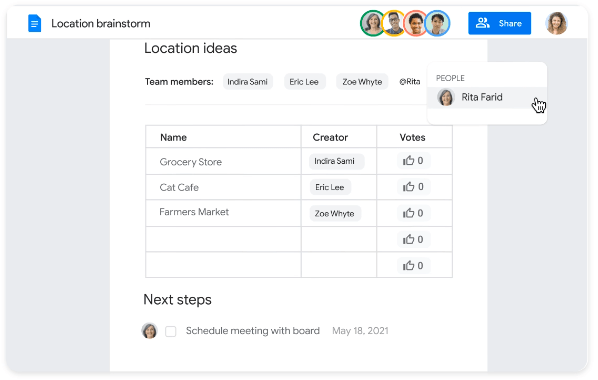
Google Workspace (formerly known as G Suite) is a collection of cloud-based collaboration tools offered by Google. Apps like Google Docs, Google Sheets, and Google Slides, allow remote team members to work together from anywhere at any time.
To collaborate in Google Docs, Sheets, and Slides, invite other people to view or edit a document by sharing a link or emailing an invitation. Once they have access, you will be able to see their cursor and any changes they make in real-time. You can also communicate with your collaborators using the built-in commenting and suggestion tools. The revision history also allows you to go back and see how the document has changed over time.
Check out the best Google Docs alternatives!
Google Workspace (Docs, Sheets, Slides) best features
- Easy-to-manage sharing controls with different permissions (edit, view, or add comments)
- Comment and edit in real-time with team members or external partners
- Unlimited revision history to undo any changes
- .docx, .pdf, .odt, .rtf, .txt, or .html formats
Google Workspace (Docs, Sheets, Slides) limitations
- Load times rely heavily on internet connectivity, especially with large files
- Predefined templates and layouts limit customization
Google Workspace pricing
- Docs, Sheets, and Slides are free with a Google account
Google Workspace ratings and reviews
- Capterra: 4.6/5 (40,000+ reviews)
- G2: 4.7/5 (14,000+ reviews)
4. Zoom

Zoom is a video conferencing platform for anyone to conduct virtual meetings, webinars, and video chat. It includes features such as screen sharing, recording, and breakout rooms, and it can be accessed through a web browser or through its mobile and desktop apps. The platform is designed to facilitate remote communication and collaboration, making it an ideal enterprise collaboration software choice.
One of the main benefits of Zoom is its ease of use. Zoom is user-friendly, and it does not require any specialized technical knowledge to set up and use. Additionally, Zoom offers a wide range of features which makes it a versatile tool for a variety of use cases, such as all-hands meetings, project planning sessions, and virtual events!
Zoom best features
- Team Chat to collaborate outside of virtual meetings and phone calls
- Curated Virtual Background library to personalize meetings
- Dedicated app marketplace, integrations, and APIs
- Online Whiteboard to brainstorm ideas
Zoom limitations
- The number of meeting participants is limited, even on paid plans
- Not suitable as a long-term project management tool
Zoom pricing
- Zoom offers Personal and Business paid plans depending on the industry or Zoom product needed
Zoom ratings and reviews
- Capterra: 4.6/5 (13,000+ reviews)
- G2: 4.5/5 (50,000+ reviews)
5. Figma
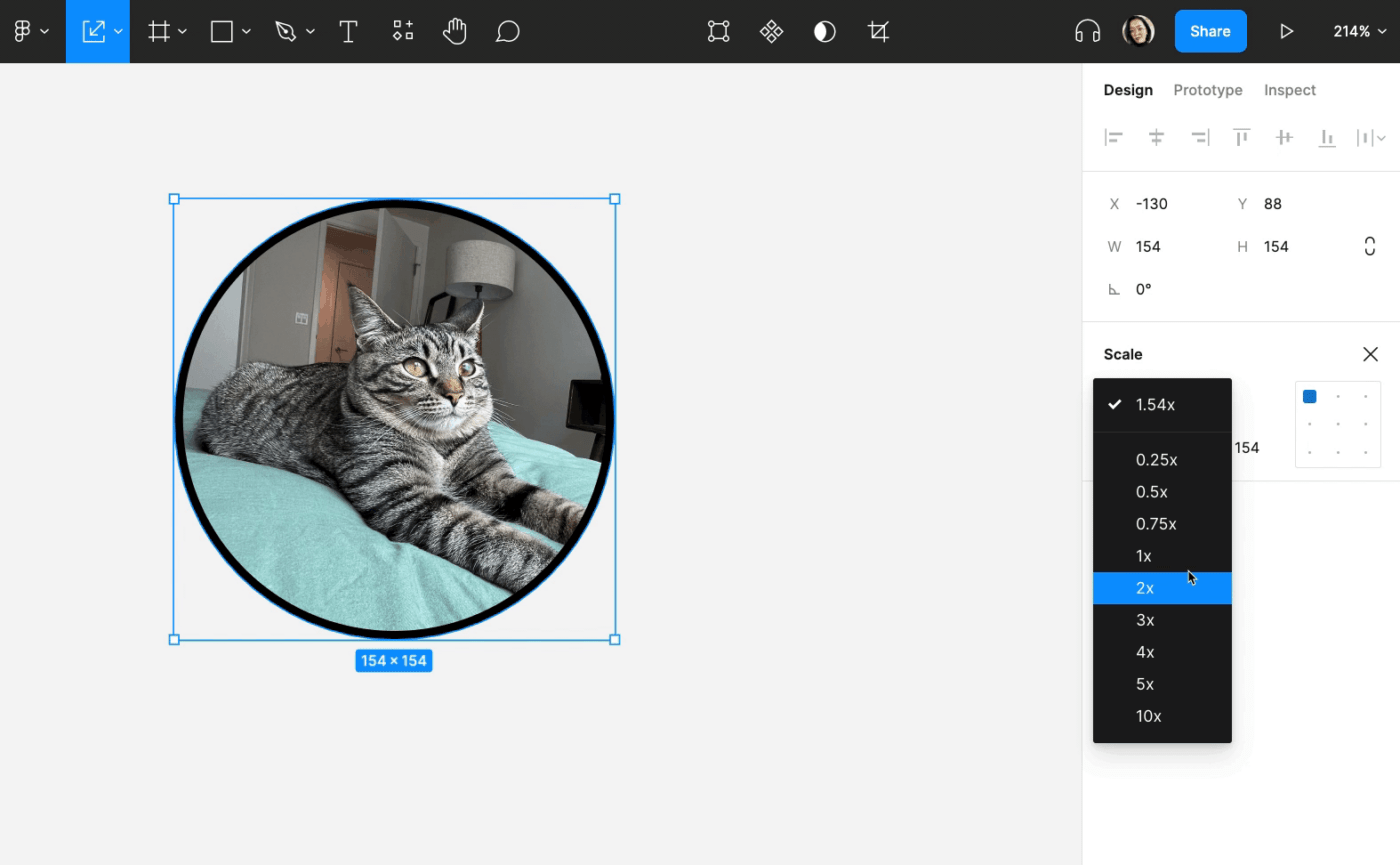
Figma is a browser-based interface design tool for teams to collaborate in real time on the development of websites, mobile apps, and other digital products. The platform aims to improve collaboration and productivity for design teams. It allows for easy sharing and feedback on designs to stay on the same page and iterate faster.
Another benefit of Figma is its accessibility. Figma is browser-based, so there is no need to download any software. You can work on your designs from anywhere and share designs with team members, stakeholders, and clients!
With Figma’s advanced functionality, designers can produce design specs, developer handoffs, and code exports, which makes it easier for developers to implement designs.
Figma best features
- Padding, direction, and spacing settings with Auto Layout to simply developer handoffs
- Modern pen tool to draw in any direction with Vector Networks
- Plugins and Widgets to create custom workflows
- Live links for easy sharing
Figma limitations
- Not suitable as a standalone task management tool
- Steep learning curve for team members (and external partners if required)
Figma pricing
- Free plan
- Figma Professional: $12/editor per month, billed annually
- Figma Organization: $45/editor per month, billed annually
- Enterprise: Contact Figma for pricing
Figma ratings and reviews
- Capterra: 4.7/5 (500+ reviews)
- G2: 4.7/5 (700+ reviews)
Check out these Figma alternatives!
6. Fellow
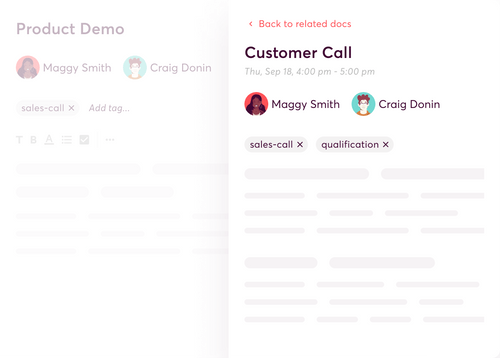
Fellow is a powerful AI meeting management tool designed to help you organize and run efficient, productive meetings. It’s easy to use, with an intuitive user-friendly interface for quickly creating agendas, assigning roles and resources, taking minutes, and much more. With Fellow, you can customize your meeting experience to fit the needs of your team or organization.
This tool lets team members collaborate in real time during the note-taking and editing process. For instance, multiple members can edit and comment on a document side-by-side, seeing each other’s changes as they are made!
Fellow best features
- 80+ free meeting agenda templates are accessible in Word and Google Docs
- Powerful Search functionality to find any doc or task quickly
- Native integrations and more through Zapier
- Unlimited docs and tasks in the free plan
Fellow limitations
- Advanced collaborative project management tools are paid features
- Limited customization options
Fellow pricing
- Free
- Pro: $7/user per month, billed annually
- Business: $10/user per month, billed annually
- Enterprise: Contact Fellow for pricing
Fellow ratings and reviews
- Capterra: 4.9/5 (30+ reviews)
- G2: N/A
7. ProofHub
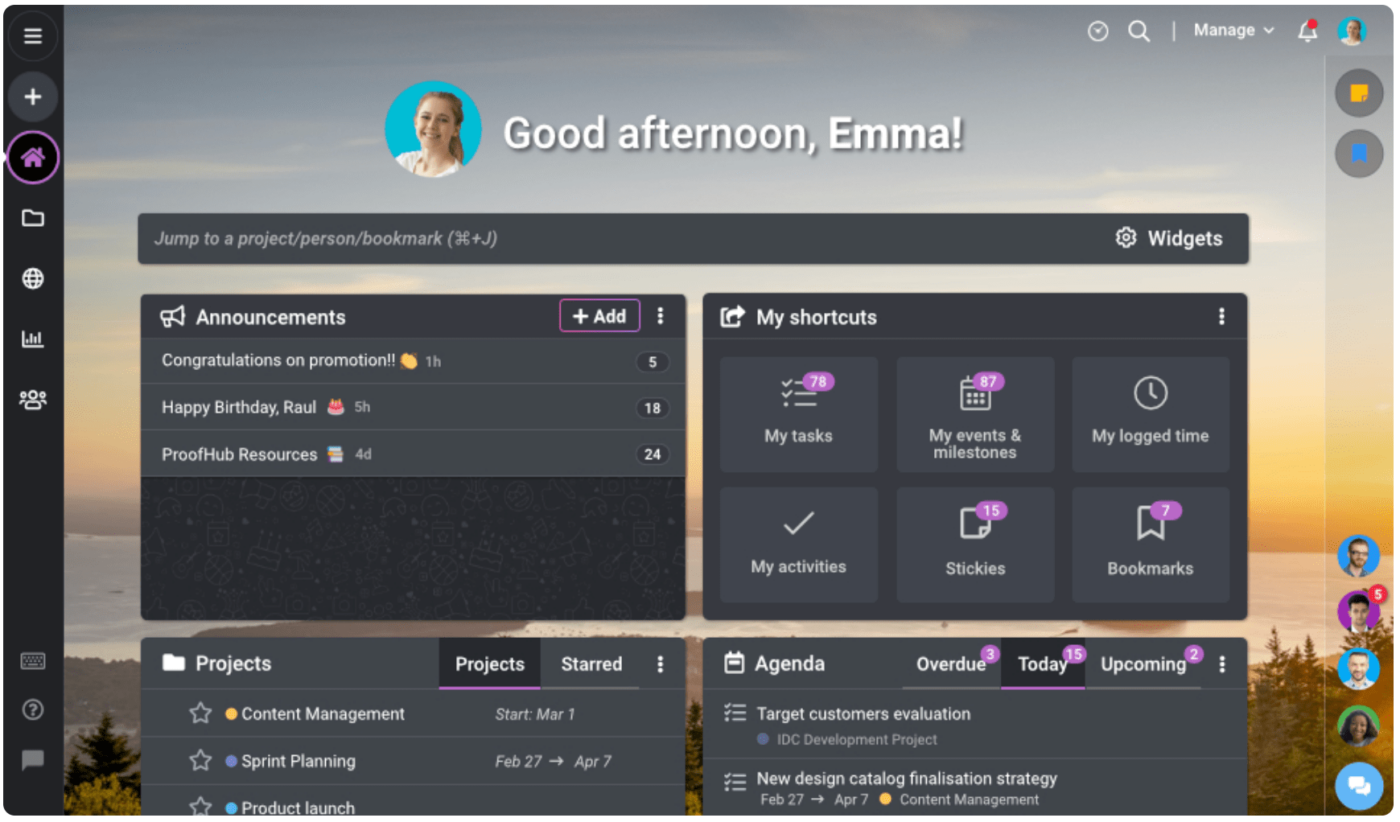
ProofHub is a web-based project management platform with task management, calendars, and file sharing. Team members can review the accuracy of documents and other files with its proofing services, streamlining the approval process.
All skill levels will be able to use the software since it is intuitive and easy to use. Also, it offers multiple customization options, including custom roles, permissions, and workflows, so that teams can customize the platform based on their specific needs. In addition, it can be used to access and share important files with other tools, including Google Drive, Slack, and Dropbox.
ProofHub best features
- Automatic reminders to schedule work on calendars
- High-level control over teams and projects
- Multiple assignees functionality
- Time tracking
ProofHub limitations
- A Small number of native integrations compared to other team collaboration software solutions
- Not suitable for agile project management
ProofHub pricing
- Essential: $45/month, billed annually
- Ultimate Control: $89/month, billed annually
ProofHub ratings and reviews
- Capterra: 4.5/5 (70+ reviews)
- G2: 4.5/5 (70 reviews)
8. Miro
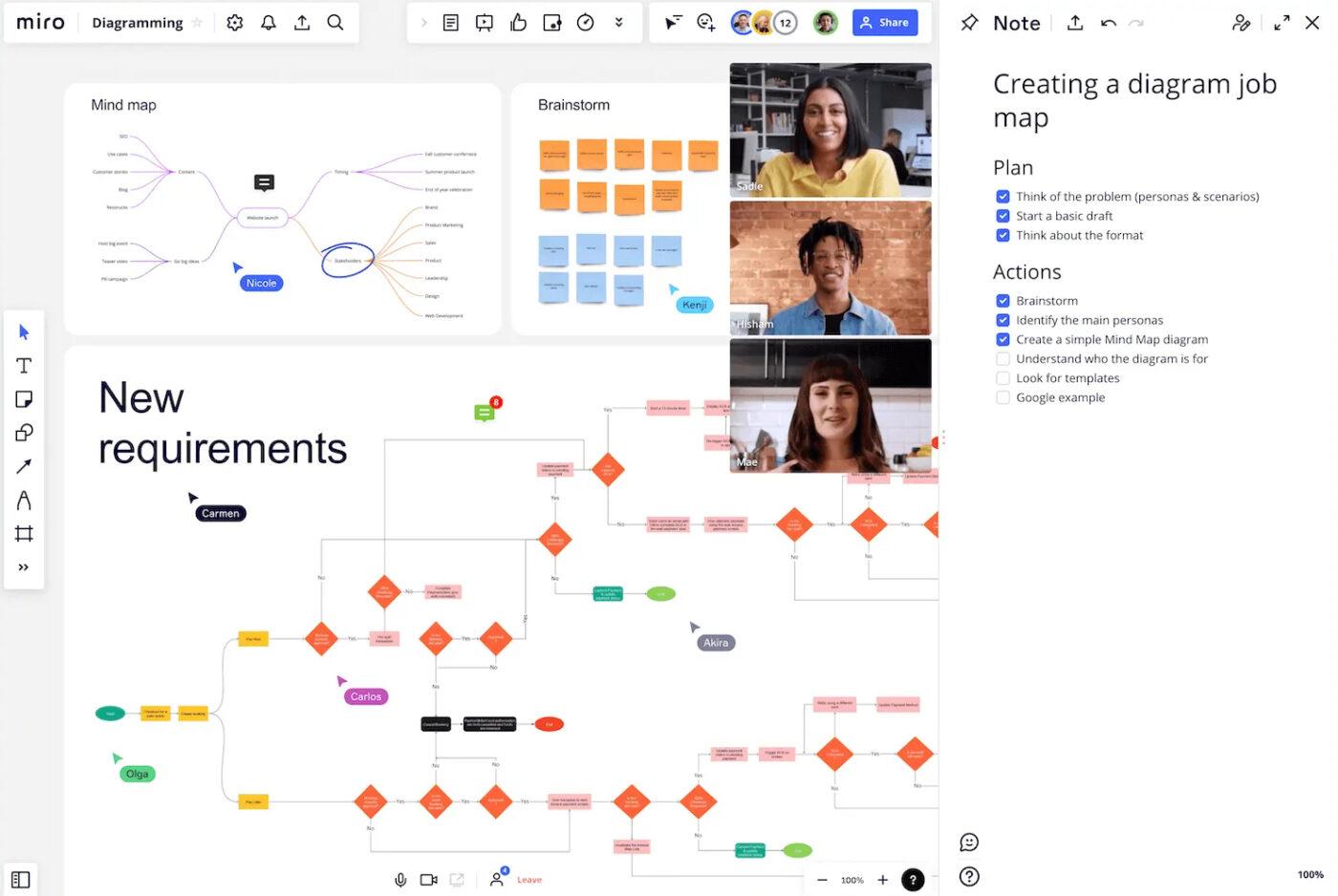
Miro is a cloud-based digital whiteboard platform designed for creative teams to collaborate on visual projects such as mind maps, process maps, user journeys, and wireframes. It includes features such as real-time collaboration, sticky notes, and a wide variety of pre-built templates and shapes to create beautiful diagrams.
Miro’s real-time collaboration tool allows multiple team members to work on the same board simultaneously, which helps to facilitate faster and more efficient brainstorming and decision-making. For instance, a product team can use Miro to work together on a customer journey map in real-time, enabling them to quickly make changes and get feedback without delays.
Miro best features
- Anonymous voting and live reactions
- 1,000+ expert and community-made templates
- Time tracking within the whiteboard
- Group stickies with clustering
Miro limitations
- Doesn’t support all platforms like Linux
- No task time tracking feature
Miro pricing
- Free plan
- Starter: $8/member per month, billed annually
- Business: $16/member per month, billed annually
- Enterprise: Contact Miro for pricing
Miro ratings and reviews
- Capterra: 4.7/5 (900+ reviews)
- G2: 4.8/5 (4,000+ reviews)
9. MindMeister
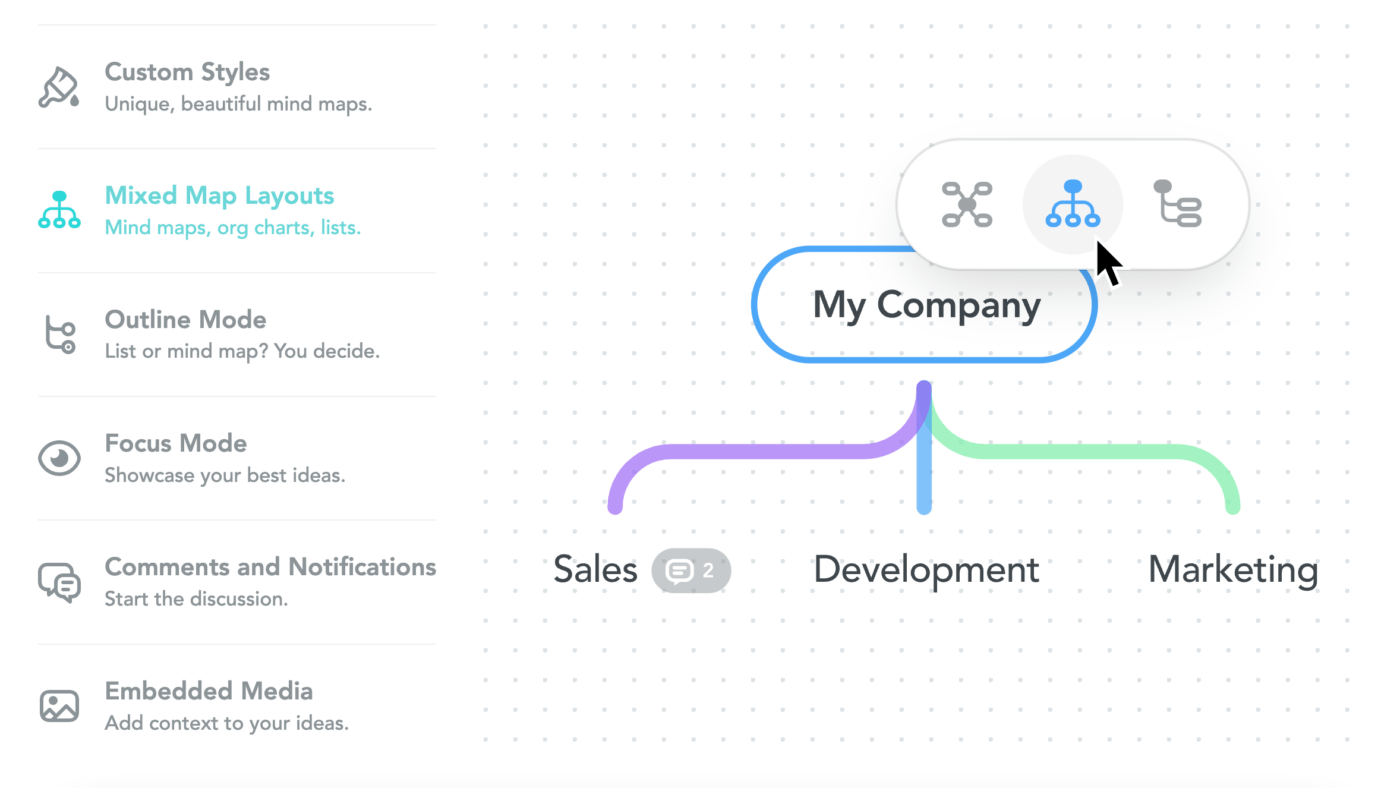
MindMeister is a web-based mind-mapping software that allows users to create, edit, and share visual diagrams of their ideas and thoughts. It is commonly used for brainstorming, project planning, and organizing information.
Mind maps are a way to visually organize information and ideas, and MindMeister allows users to create these mind maps online, making it easy to share and collaborate with others. You can invite others to edit their mind maps in real-time, making it an ideal tool for teamwork. This allows remote teams to work together on projects and ideas, regardless of their location.
Discover more MindMeister alternatives!
MindMeister best features
- Mixed Map layouts to build multiple diagrams
- Comments and notifications to create discussions
- Embedded media to add context to ideas
- Templates for brainstorming and strategy planning
MindMeister limitations
- Various exporting options are reserved for the expensive paid plans
- Limited integrations with other tools and apps
MindMeister pricing
- Basic: Free
- Personal: $4.99/month
- Pro: $8.25/month
MindMeister ratings and reviews
- Capterra: 4.7/5 (200+ reviews)
- G2: 4.3/5 (30 reviews)
10. Microsoft Teams
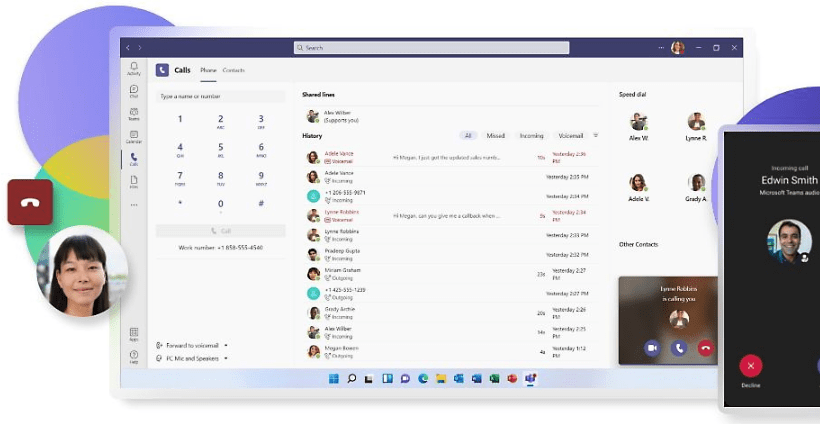
A cloud-based collaboration software developed by Microsoft, Microsoft Teams provides a comprehensive tool for teams to communicate, collaborate, and share files in one place. Teams can create channels for specific projects, departments, or topics, and members can join and leave channels as needed!
A channel offers members real-time text, audio, and video chat, the ability to share and edit documents, and the option to schedule and participate in online meetings. For example, a product marketing team could use a channel to coordinate the launch of a new product, where cross-functional partners can discuss ideas and collaborate on documents in real-time.
Microsoft Teams best features
- Calling, voicemail, and call transfers for group collaboration
- Whiteboard app for ideation and brainstorming
- Automatic sync and version history tracking
- Chats, tasks, and shared to-do lists
Microsoft Teams limitations
- Limited integrations with other non-Microsoft products
- Too many functionalities might get in the way of streamlining work
Microsoft Teams pricing
- Microsoft Project offers two paid pricing solutions depending on your team and software requirements: Business and Home
Microsoft Teams ratings and reviews
- Capterra: 4.5/5 (8,000+ reviews)
- G2: 4.3/5 (13,000+ reviews)
11. nTask
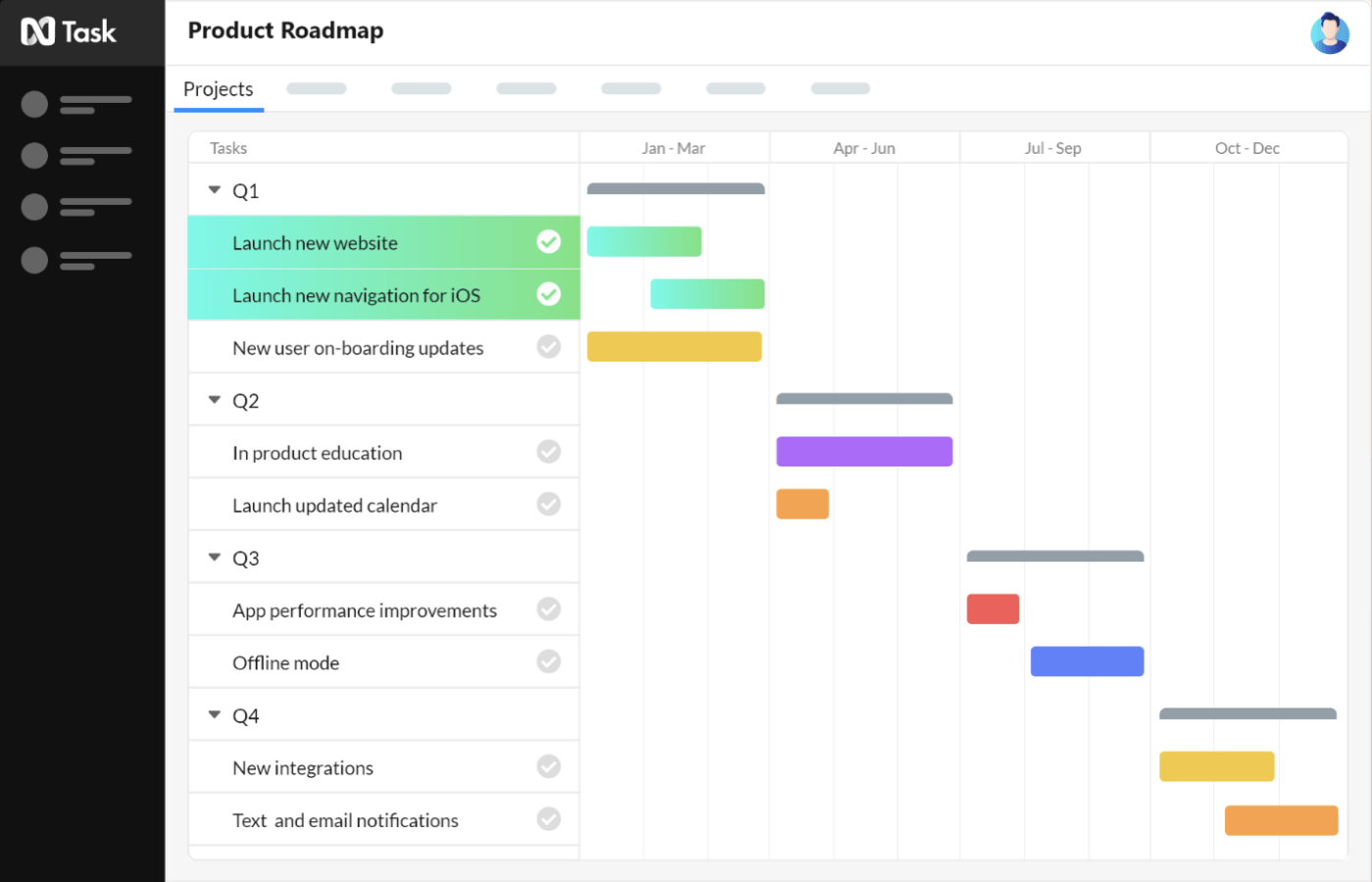
Task and project management platform nTask helps teams and individuals prioritize, manage, and collaborate on tasks in one place. In addition to task lists, Kanban boards, timelines, Gantt charts, time tracking, and customized dashboards, it also provides tools for effective team collaboration.
With nTask’s automated reminders and notifications system in place, teams stay informed of due dates and other important updates. For example, users can set up automated reminders to be sent out three days before a task is due.
nTask best features
- Gantt charts and task dependencies
- Document sharing and file management
- Time estimations
- Reply-Later
nTask limitations
- Attaching large files when sharing takes longer than normal
- Only suitable for teams with less than 50 team members
nTask pricing
- Premium: Starts at $20/month for 5 users
- Business: Starts at $60/month for 5 users
- Enterprise: Contact nTask for pricing
nTask ratings and reviews
- Capterra: 4.2/5 (100+ reviews)
- G2: 4.4/5 (10+ reviews)
12. Basecamp
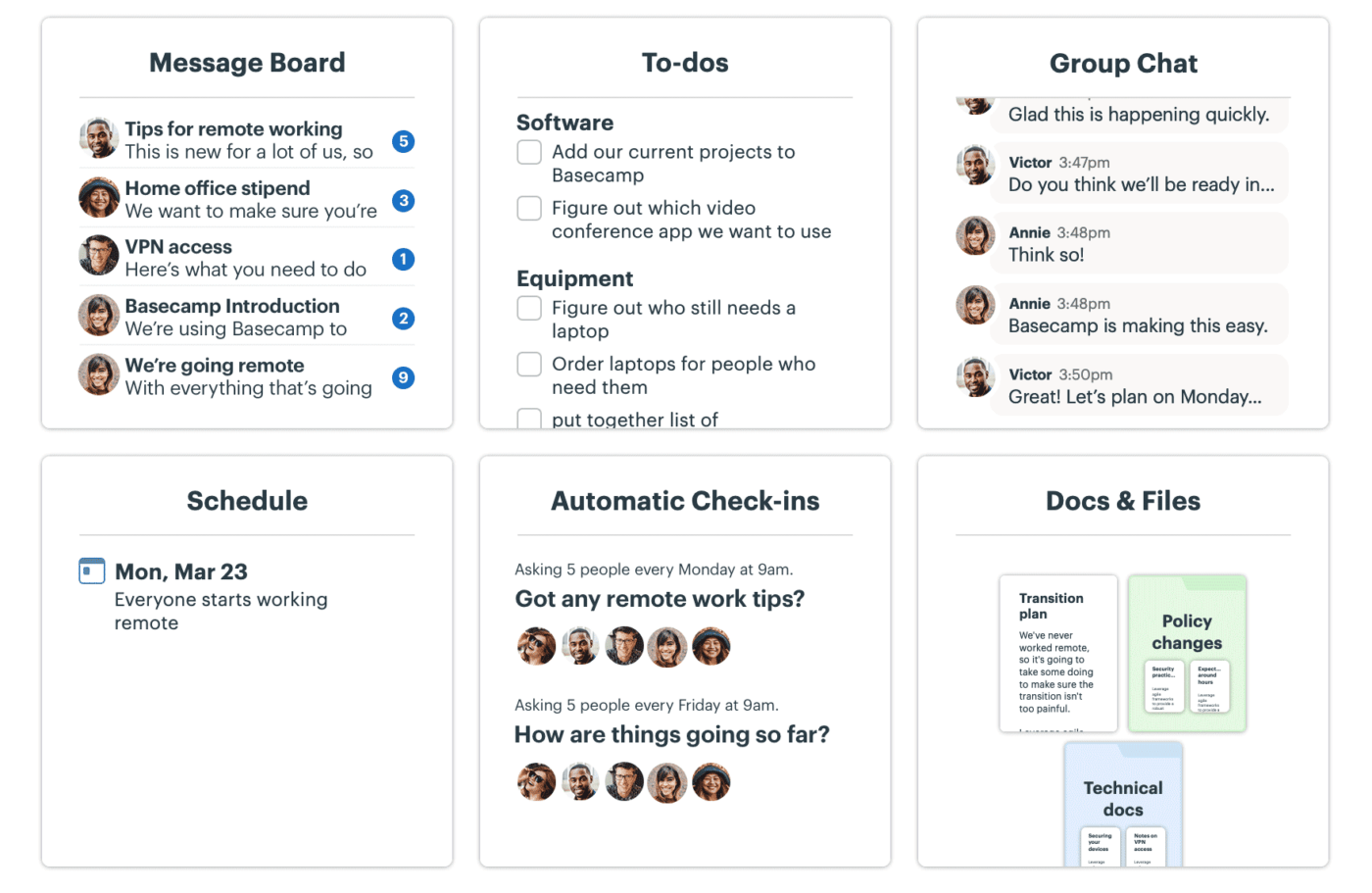
Basecamp is a project management tool for remote teams to centralize all of their work-related information and conversations in one place. Teams can create to-do lists, schedule events, and share files, making it easy for teams to stay on top of their work.
Additionally, Basecamp has a built-in message board and chat feature, allowing team members to communicate and share information in real-time. For example, team members can use the message board to share updates on their progress and ask questions, while the chat feature can connect quickly with other team members and discuss ideas.
Basecamp best features
- Hill Charts to visually see progress uphill or downhill over time
- The Hey! menu streamlines notifications in a single menu
- Check-in with an automatic poll for the team
- In-app individual or group direct messages
Basecamp limitations
- No task priorities (check out Basecamp alternatives)
- Limited progress tracking functionality
Basecamp pricing
- Unlimited users: $299/month, billed annually
- For freelancers, startups, or smaller teams: $15/month per user
Basecamp ratings and reviews
- Capterra: 4.3/5 (14,000+ reviews)
- G2: 4.1/5 (5,000+ reviews)
13. Monday.com
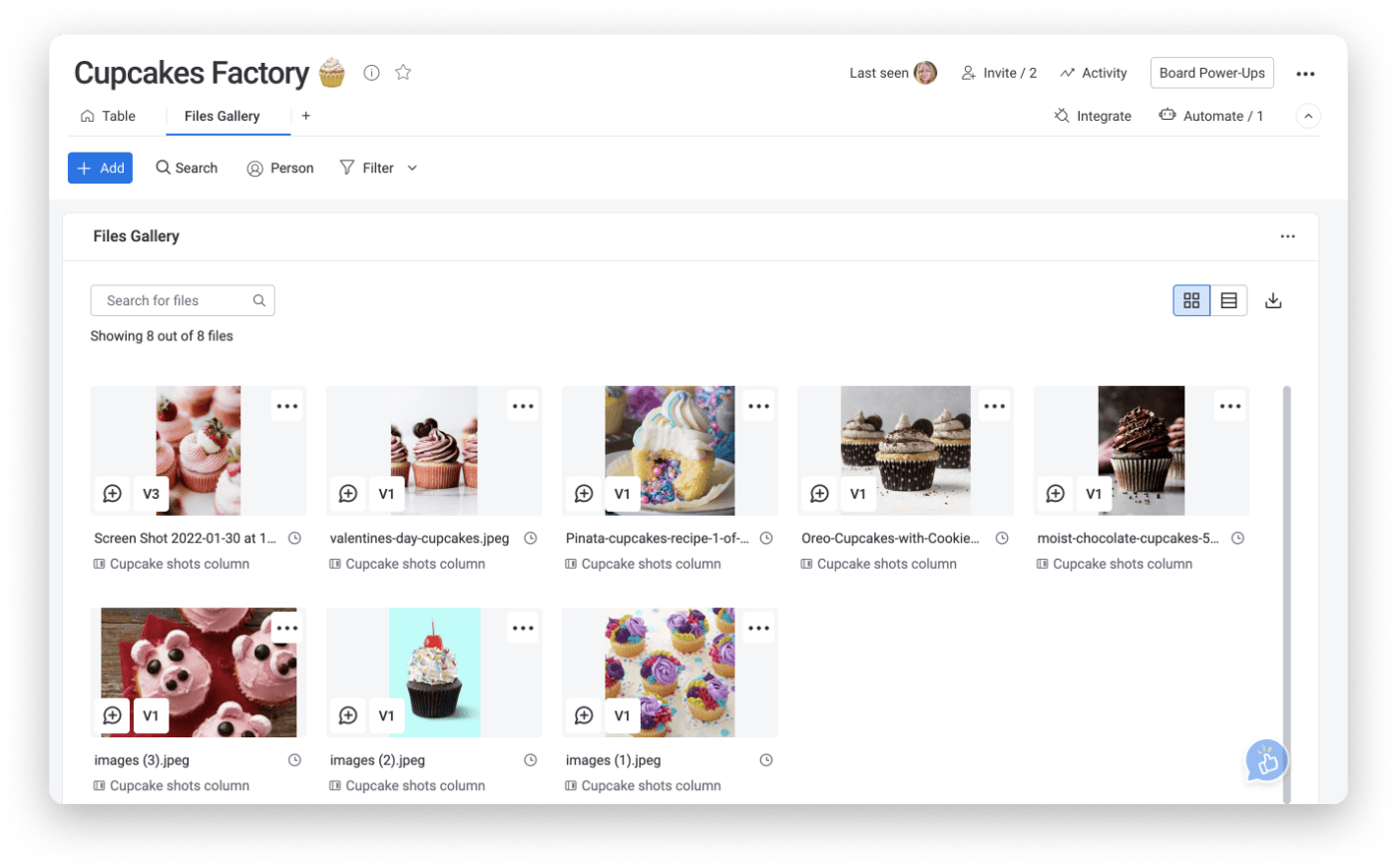
Monday.com is a cloud-based project management platform built for teams to collaborate, track progress, and improve communication. It gives managers the ability to easily assign tasks, set deadlines and milestones, delegate responsibilities, and monitor performance.
Additionally, it provides users with real-time visibility into their workflow so everyone can be on the same page about deadlines, expectations, and progress. Monday doesn’t offer a chat messaging feature, so integrations with tools like Slack, Microsoft Teams, or Zoom will help increase productivity.
Monday best features
- Customizable dashboards and automation
- Dependency tracking for managing projects
- Workload management
- Secure file storage
Monday limitations
- The Time Tracking Column feature is only available in the Pro and Enterprise plans
- Steep learning curve to familiarize with functions and interface (check out Monday alternatives)
Monday pricing
- Individual: Free forever
- Basic: $8/seat per month starting at 3 seats
- Standard: $10/seat per month starting at 3 seats
- Pro: $16/seat per month starting at 3 seats
- Enterprise: Contact Monday for pricing
Monday ratings and reviews
- Capterra: 4.6/5 (3,300+ reviews)
- G2: 4.7/5 (6,600+ reviews)
14. Flock
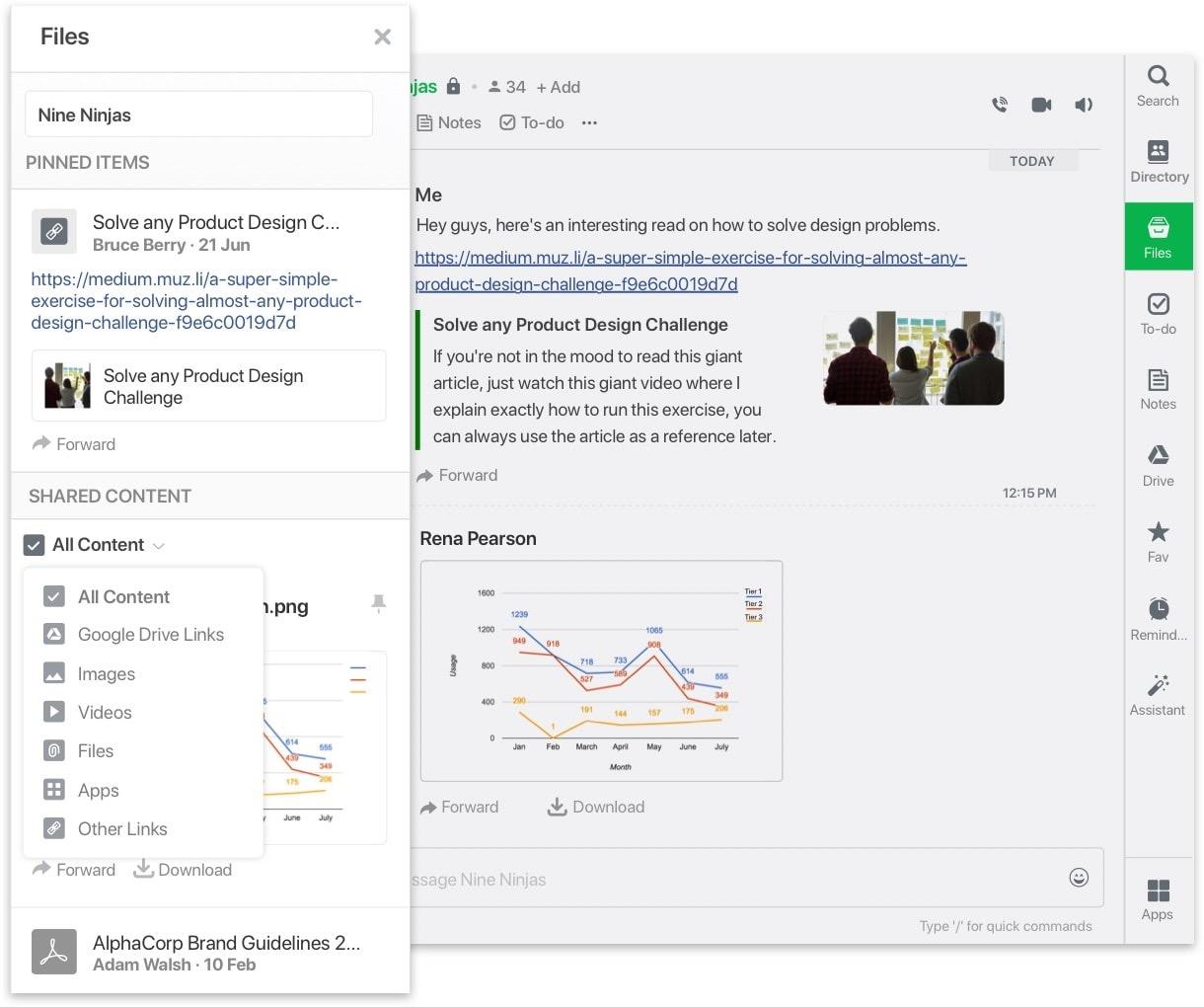
Teams can easily collaborate, communicate, and work together with the help of Flock, a cloud-based collaboration and communication platform. A variety of tools and features are available to users, including chat, video conferencing, file sharing, project management, and task tracking.
Flock also provides users with an intuitive, user-friendly platform that makes it easy for teams to stay connected, even when they are working remotely. It also helps to ensure that everyone is on the same page and working towards the same goal!
Flock best features
- Polls within channels with an option to respond anonymously
- In-app video conferencing for one-on-one or team meetings
- Attachment Picker button to share files
- Public and private message channels
Flock limitations
- Advanced customization options are reserved for Enterprise-level plans
- Steep learning curve to build a stable and consistent team workflows within the platform
Flock pricing
- Free
- Pro: $4.50/month per user
- Enterprise: Contact Flock for pricing
Flock ratings and reviews
- Capterra: 4.5/5 (300+ reviews)
- G2: 4.4/5 (200+ reviews)
15. Airtable
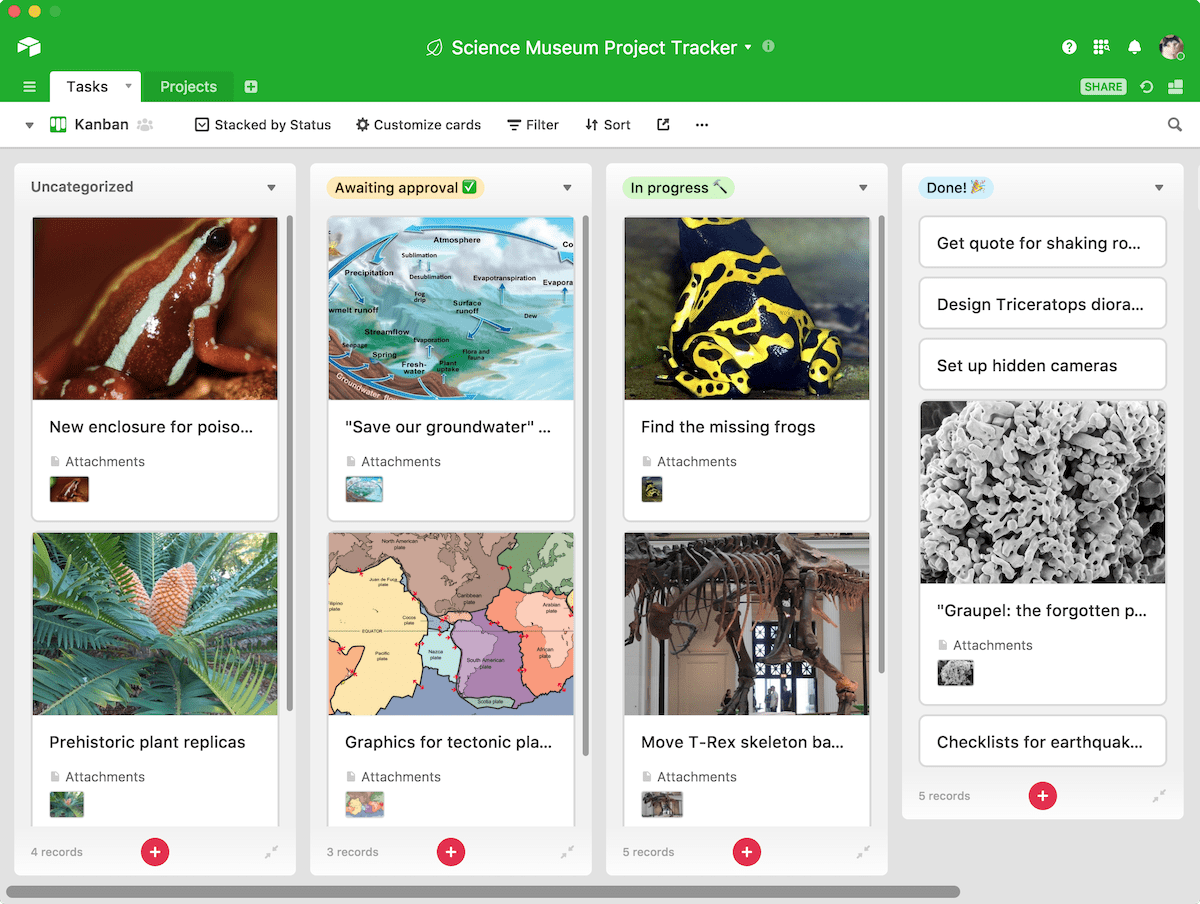
Airtable is a web-based software that allows users to create and manage databases in a spreadsheet-like format. It combines the functionality of a database with the ease of use of a spreadsheet, making it a popular tool for data management and organization.
Airtable helps team collaboration by providing a central location for storing and managing information that can be easily accessed, shared, and edited by multiple team members.
In Airtable, project managers can structure and organize data in a way that makes sense for their teams by creating custom fields, forms, and views. By creating a custom field for storing a record’s “priority” status, the user can filter views and sort tables to identify high-priority items quickly.
Airtable best features
- Extensions to create dashboards of charts, graphs, and top-line metrics
- Data syncing with other platforms and apps to streamline information
- No-code interface to group or sort data
- Javascript functionality to expand automation
Airtable limitations
- Limited ability to handle separated team and individual workflows (check out Airtable alternatives)
- Basic time tracking feature compared to other team collaboration tools
Airtable pricing
- Free plan
- Plus: $10/seat per month, billed annually
- Pro: $20/seat per month, billed annually
- Enterprise: Contact Airtable for pricing
Airtable ratings and reviews
- Capterra: 4.7/5 (1,000+ reviews)
- G2: 4.6/5 (2,000+ reviews)
Bonus: Airtable Vs. Coda | Airtable vs Monday
Summarize this article for me pleaseBenefits of Collaboration Software for Your Team
Collaboration software is a game-changer in the modern workplace. It brings teams together, fostering seamless communication and efficient task management. Here are just some of the benefits companies can expect from using collaboration software:
- Enhances Teamwork: Facilitates sharing of ideas, files, and updates in real time, eliminating the need for constant meetings and email threads.
- Centralizes Project Management: Enables task assignment, tracking, and updates, ensuring transparency and boosting accountability within the team.
- Facilitates Remote Work: With cloud-based tools, team members can access work from anywhere, anytime, supporting productivity regardless of geographical distances.
- Integrates with Other Business Software: Streamlines workflow by reducing the need to switch between multiple apps, allowing more focus on core tasks.
- Promotes Efficiency, Transparency, and Flexibility: Ultimately driving business success.
Summarize this article for me pleaseUnify Your Team With Collaboration Software
The benefits of team collaboration software make it a must-have tool for any team—no matter where you’re working from. The trick is finding software with enough features and functionality to remedy the challenges teams face together on a daily basis.
The only solution? ClickUp. ?
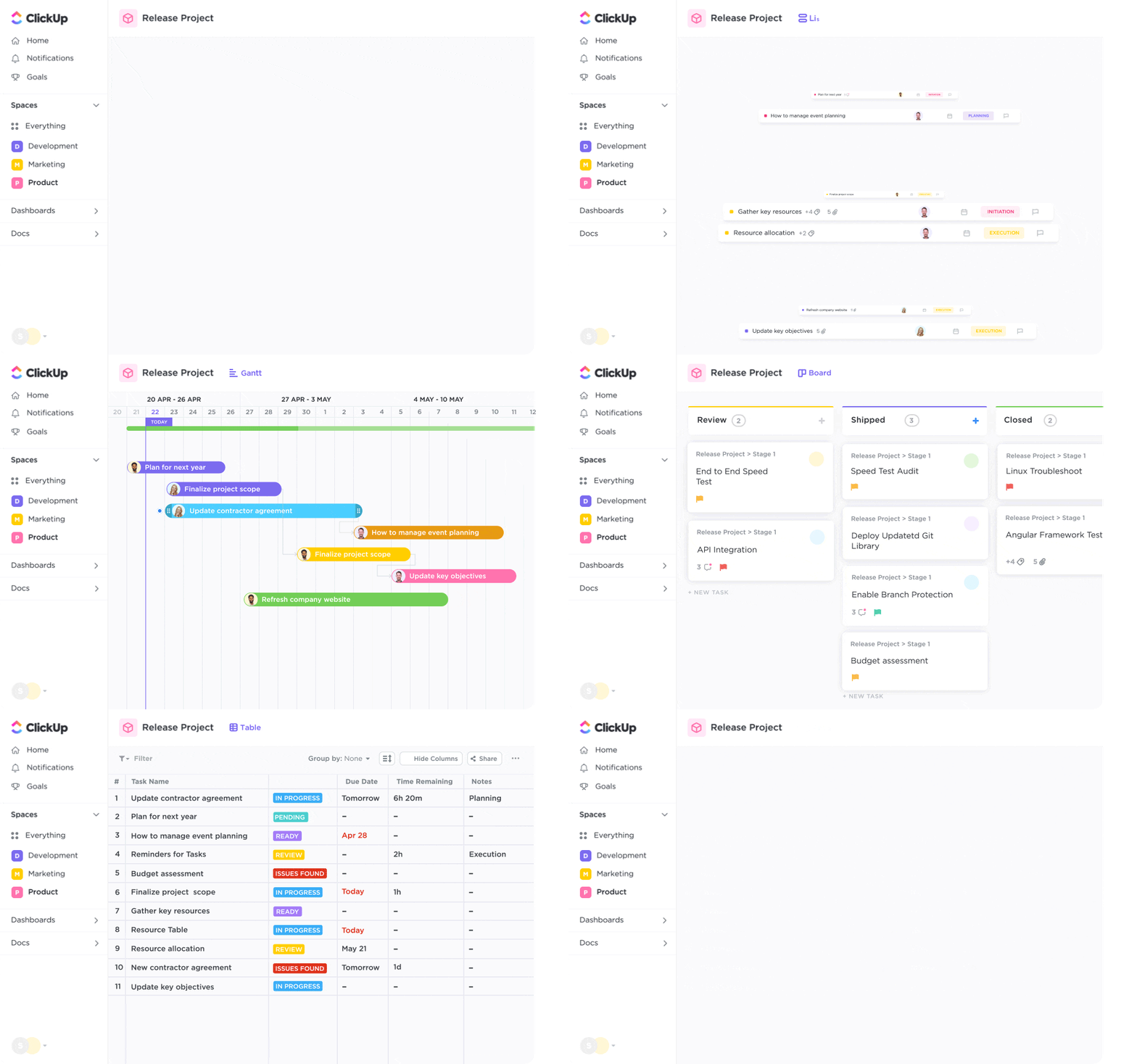
ClickUp is the only tool on this list that provides a fully transparent and collaborative workspace for teams to oversee project progress, plan tasks, and communicate more efficiently from virtually anywhere in the world.
With in-app chat, hundreds of customizable features, and over 1,000 integrations to consolidate all of your work, ClickUp is the ideal team communication software across the board.
So, what are you waiting for? Sign up for ClickUp today and watch your collaboration improve beyond belief.


Everything you need to stay organized and get work done.

Recent Articles
7 Best Zoom Alternatives in 2026: Free Plans and Meeting Limits 
7 Best Zoom Alternatives in 2026: Free Plans and Meeting Limits
How to Create a Fillable Form in Microsoft Word (With Templates)
How to Create a Fillable Form in Microsoft Word (With Templates)
