Fuel Your Career Growth: 30 Insightful Informational Questions to Ask

Sorry, there were no results found for “”
When exploring career options, it’s normal to feel uncertain about which path is right for you.
Informational interviews are a valuable way to gain insights from industry professionals and determine if a particular career is the right fit.
Preparation is essential in this regard—no one wants to waste time, so it’s important to approach these conversations with focus and purpose.
If you’ve already taken the first step of scheduling conversations with industry experts, you already have a headstart. 📅
Now, the real value comes from how you use that time to gather insights and leave a lasting impression. By asking thoughtful, well-prepared questions, you can ensure that each conversation is valuable and impactful. 💬
To help you, we’ve compiled a list of the best informational interview questions to ask. Read on!
An informational interview is a conversation between someone exploring a specific career path, industry, or company and a professional with relevant experience.
Unlike a traditional job interview, the goal isn’t to secure a position but to gather valuable insights, advice, and knowledge about a company, career path, or industry trends.
For example, if you’re interested in a marketing career, you might contact a marketing manager at a company you’re curious about and schedule a 20-minute chat over coffee or virtually. ☕️
During the conversation, you could ask about their daily responsibilities, how they got started in the field, and any advice for someone entering the profession. This informal exchange gives you a clearer picture of the role and helpful tips for preparing to enter the marketing field. 🎯
How to Prepare for an Informational Interview
Whether you’re seeking a business mentor or exploring new career opportunities, preparing well for an informational interview can leave a lasting impression and ensure you make the most of the conversation.
Here’s a step-by-step guide to help you get ready:
Be clear on what you want to achieve. Outline your objectives, such as gaining insights into a specific career path, discovering industry trends, or learning about the skills needed for success in the field.
Take time to understand the individual’s career trajectory, roles, and any shared connections or interests. This will help you craft thoughtful questions that demonstrate you’ve done your homework.
Also, familiarize yourself with the company’s recent developments, projects, or challenges. This background knowledge allows you to ask relevant, insightful questions that connect your interests to their work.
Develop a list of open-ended questions to guide the conversation. These should encourage detailed responses and allow the person to share their experiences naturally.
Next, dig deeper into specific topics that align with your goals. Tailoring each question will help you gain practical insights rather than vague answers. Additionally, make sure that you use the right tools to put together and prepare a coherent set of questions.
For example, ClickUp, an all-in-one productivity platform, combines content creation, editing, and collaboration features. It allows you to easily organize and refine your questions, ensuring a smooth and impactful informational interview.

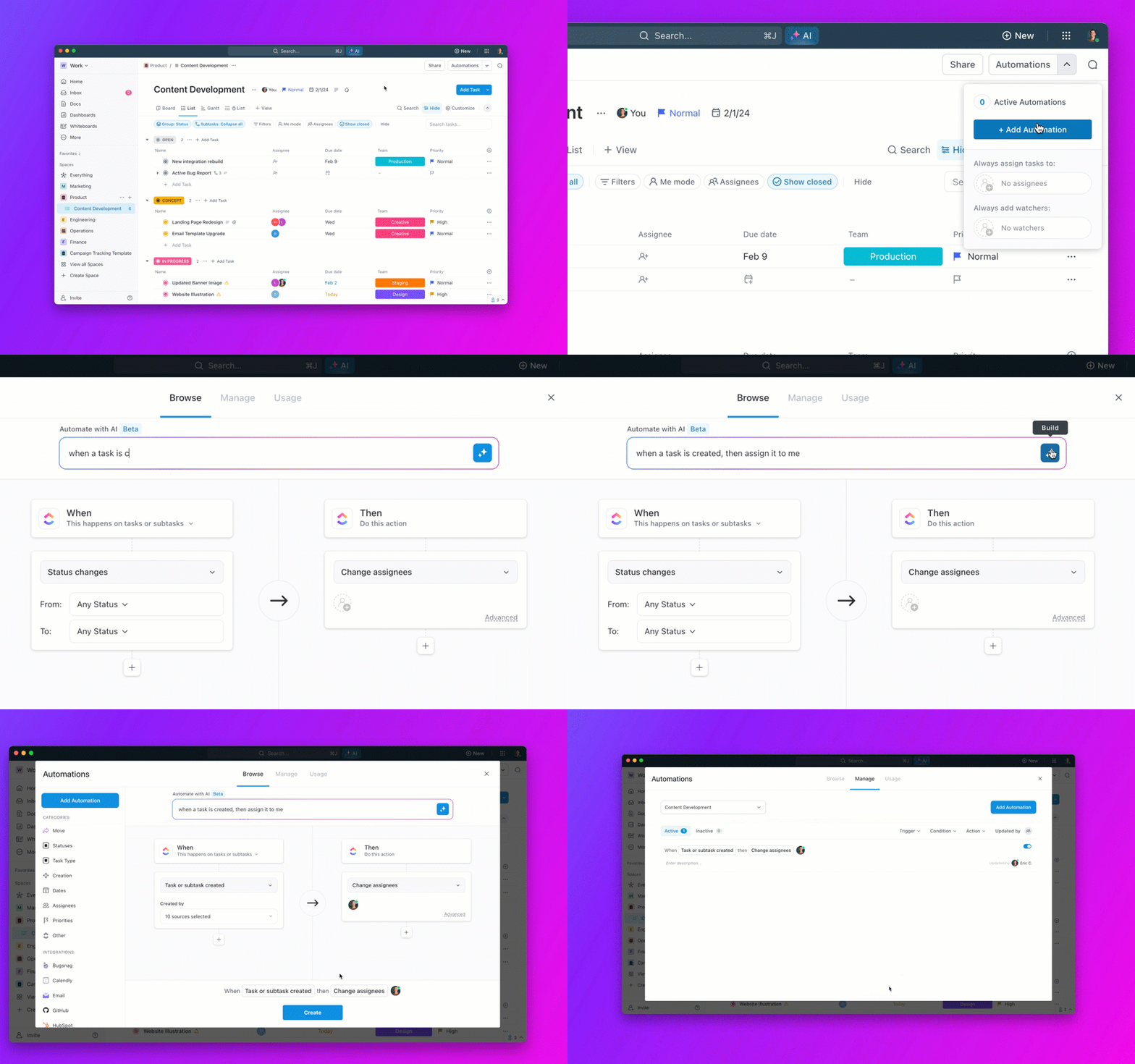
For instance, use ClickUp Reminders to manage important dates and deadlines. Whether you’re using it on your browser, desktop, or mobile, you can set alerts to ensure you never miss a scheduled interview or task. This feature helps you stay organized and align your preparation and workflow, from interview notifications to follow-up reminders.
The ClickUp Interview Process Template brings structure and consistency to your interview planning. It helps you organize each step, from creating a list of questions to collaborating with your team and tracking candidates efficiently, turning what could be a chaotic process into a smooth and productive experience.
With this template, you can:

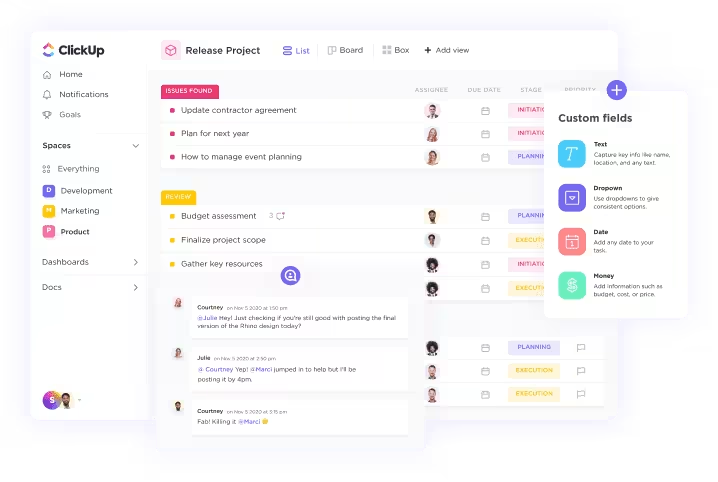
ClickUp Docs is the perfect tool for compiling and presenting your informational interview questions in a clear, organized manner. With the help of this feature, you can create an interview guide with nested pages for different sections, such as introductory questions, in-depth career insights, and wrap-up questions.
ClickUp Notepad is another powerful feature for organizing your thoughts, checklists, and key takeaways during your informational interviews.

With this feature, you can:
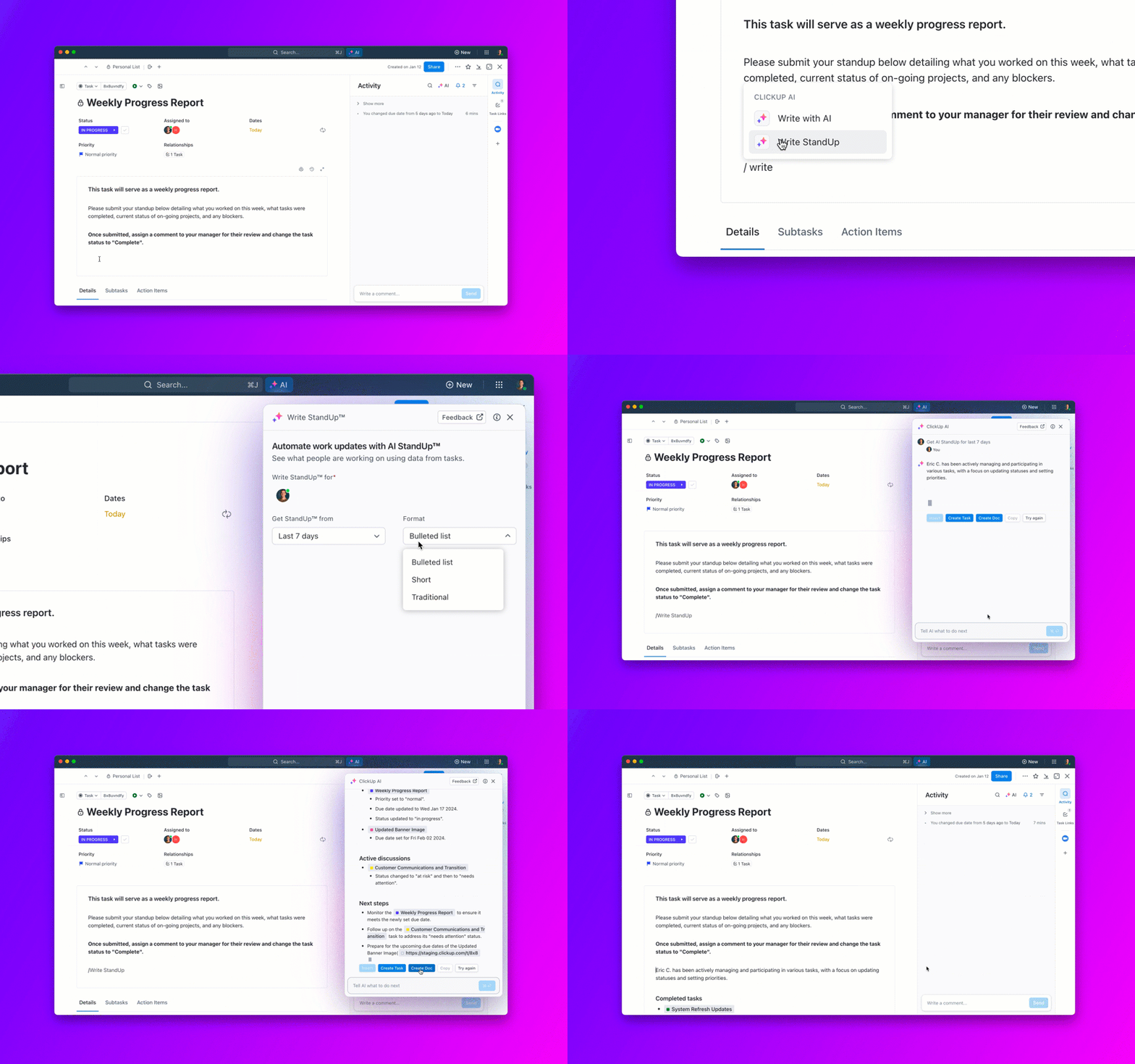
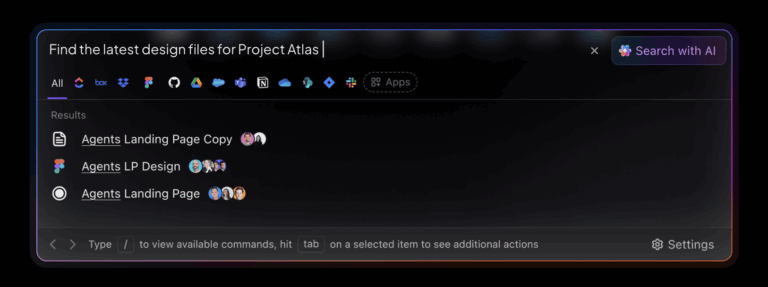
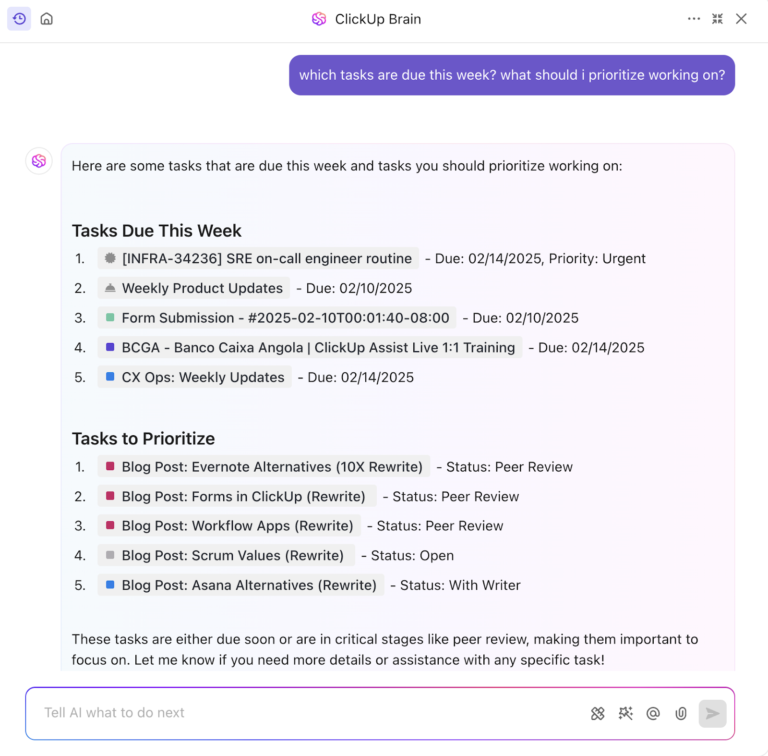
Additionally, ClickUp Brain optimizes work processes by providing intelligent, context-based assistance tailored to your professional needs. With its Knowledge Manager feature, you can quickly generate, review, or brainstorm informational interview questions.

For instance, you can input a prompt like, “Create 30 detailed informational interview questions,” and the AI will leverage its knowledge database to provide a comprehensive list of questions:
Prepare to introduce yourself in 1–2 sentences. Include your background, current interests, and why you reached out for this conversation.
Also, make sure you mention why you’re particularly interested in their perspective (e.g., similar career backgrounds, specific industry experience).
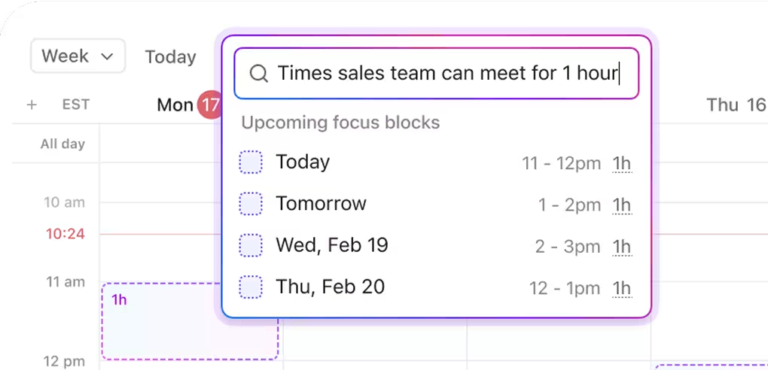
While most informational interviews take place via video call, consider offering to meet in person if they are local and open to it. Regardless of the format, be mindful of the other person’s time. Aim for a 20–30 minute conversation unless they offer to extend it.
➡️ Read More: How to Use AI for Interview Preparation
Here are 30 insightful informational interview questions that will help you stand out, build connections, and gain valuable knowledge. Ready to impress and learn from industry experts?
Let’s get into it then:
This question gives insight into the daily responsibilities and challenges of the job. It helps you understand what to expect and whether it aligns with your interests and skills.
Example: A project manager might describe a day filled with team meetings, progress checks, and cross-department collaboration.
This question helps uncover the pathways others have taken, offering inspiration and practical tips for your own career journey.
Example: The interviewee might share that they began as interns, took specific courses, or networked extensively to land their current role.
This question identifies essential skills that employers look for and allows you to assess if you need to develop or improve on them.
Example: A graphic designer might emphasize the importance of creativity, attention to detail, and proficiency in design software like Adobe Creative Suite.
Learning about the difficulties in a role prepares you for potential obstacles and helps you decide if you’re equipped to handle them.
Example: A software developer might mention tight deadlines and the constant need to learn new technologies as key challenges.
💡 Pro Tip: Ask them about a challenge they once struggled with and how they overcame it. The story behind their growth can reveal valuable insights into resilience and adaptability!
This question helps you understand how to build credibility and leverage positive client experiences to enhance your professional reputation.
Example: A marketing consultant might share strategies for requesting testimonials after successful campaigns, such as asking for feedback after project completion or offering incentives for referrals.
Knowing how experienced professionals keep up with changes helps you adopt similar strategies for staying informed.
Example: A marketing executive might mention attending webinars, following industry thought leaders on LinkedIn, or subscribing to relevant newsletters to stay informed.
Understanding work culture helps gauge if a company’s environment matches your work style and values.
Example: A tech company’s hiring manager could describe a collaborative and flexible culture with remote work options and regular team-building activities.
This question helps identify groups or communities that provide support, learning, and networking opportunities. Beyond formal associations, joining peer mentoring networks can be incredibly beneficial.
Example: A financial analyst might suggest joining associations like the CFA Institute for certification and networking.
💡 Pro Tip: Find your next career mentor by asking about the most impactful advice they’ve received—it could lead you to someone who’s shaped their success! 🌟
This shows how a profession evolves over time, giving you insight into potential future trends and skills to prioritize.
Example: A journalist might discuss how digital and social media platforms have transformed reporting compared to when it began.
Direct advice from an experienced professional can guide your initial steps and help you avoid common mistakes.
Example: A seasoned engineer could recommend gaining hands-on experience through internships and emphasizing problem-solving skills.
This question helps you understand the personality traits and work ethics that are valued in the industry or position, complementing what you might see in a job description.
Example: A sales manager might emphasize being proactive, resilient, and having strong interpersonal skills.
This question reveals common myths or misunderstandings, giving you a clearer picture of what the job is really like beyond what job descriptions might convey.
Example: An event planner might share that while the job seems glamorous, it involves a lot of behind-the-scenes stress and problem-solving.
This question helps you get a tangible example of day-to-day work and the kinds of tasks you might face.
Example: A UX researcher might describe a project where they conducted user research to understand pain points in a mobile app’s design.
This reveals the rewarding aspects of the job and helps you decide if these align with what you must seek in your job search.
Example: A teacher might express how seeing students understand new concepts makes the work fulfilling.
Understanding current challenges helps you prepare for issues you may encounter and shows awareness during interviews.
Example: A cybersecurity expert might mention the rapid pace of new threats and the constant need for updated security measures.
This question provides insight into how the industry is changing and what skills or technologies might be worth learning.
Example: A healthcare professional could talk about the increasing importance of telemedicine and personalized patient care.
💡 Pro Tip: Request to know about any unconventional sources of learning—like niche forums or less-talked-about podcasts. 🕵️♂️
This shows what performance metrics are valued and helps you understand what success looks like in that career.
Example: A product manager might measure success by the launch of a successful product and positive user feedback.
This question helps you gather information and potential pitfalls to avoid when beginning in the field.
Example: A writer might advise you to network consistently and not just rely on published work, as building a rapport with editors and fellow writers is key to advancing in the field.
Understanding how demanding a role can be helps you manage your expectations and assess if the job suits your lifestyle. This question also provides insights into how professionals maintain connections and relationships while working remotely, which is crucial for most jobs.
Example: A senior consultant might share that they prioritize time management, set clear boundaries for work hours, and use flexible scheduling to ensure they can balance client meetings with personal time, especially when working remotely.
🧠 Remember: If you’re wondering how to make friends at work, you need to do the following:
Knowing what tools or software are commonly used in the role can help you prepare by learning them ahead of time.
Example: A graphic designer might mention using Adobe Photoshop, Illustrator, and Canva as part of their daily work.
Understanding the structure and logistics of the interview helps you prepare better and manage your expectations. Asking about the interview format—whether it will be in-person, remote, or a mix—clarifies the approach and lets you tailor your preparation.
Example: An HR professional might explain that their company conducts an initial video interview followed by a panel interview, giving you insights on what to expect and how to prepare accordingly.
➡️ Read More: Remote Interview Tips to Prepare for Your Next Interview
This question taps into hard-earned wisdom and helps you understand key takeaways that could shape your career path.
Example: An entrepreneur might share that persistence and being open to failure have been essential to their success.
This question sheds light on the level of cross-functional work involved and how important teamwork is within the role.
Example: A product developer might explain collaborating frequently with marketing, sales, and engineering to ensure product alignment with market needs.
This provides specific guidance on additional education that can help bolster your qualifications and make you a more attractive candidate.
Example: A financial advisor might suggest earning a Certified Financial Planner (CFP) certification to enhance credibility and career opportunities.
This question helps identify the types of roles—entry-level roles, internships, or mid-senior-level experiences.
Example: A PR professional could mention that internships at PR agencies or experience in event planning can be highly beneficial for gaining relevant skills.
This question helps you understand the workload and time management strategies that are effective in the role.
Example: A project manager might explain how to use task management tools like Trello, Asana, or ClickUp and prioritize tasks based on deadlines and project impact.
This is useful for understanding if career pivots are possible and what paths others have taken to switch into the industry.
Example: A UX designer might share that many people transitioned from graphic design or psychology by taking relevant courses and building a strong portfolio.
This question explores the field’s longevity and potential growth, helping you assess its sustainability as a career choice.
Example: An IT professional might discuss the rise of artificial intelligence and automation, emphasizing the need for continued tech skill development.
This allows you to learn from others’ experiences and avoid common pitfalls that could delay or hinder your career progress.
Example: A journalist might warn against failing to build a diverse portfolio or not networking consistently within media circles.
This question points you toward helpful materials that can deepen your understanding and keep you informed about industry trends.
Example: A marketing expert might recommend books like “Contagious: How to Build Word of Mouth in the Digital Age” by Jonah Berger or suggest following industry podcasts like Marketing Over Coffee.
➡️ Read More: How to Find a Software Engineering Mentor
Approaching informational interviews with the right mindset can help you build genuine connections and gain valuable insights.
Here are some key best practices to keep in mind:
💡 Pro Tip: Wondering how to spot red flags in job interviews? Here are some strategies to follow:
Wrapping up an informational interview smoothly is just as important as starting it.
Here’s how to leave a positive impression:
Following up after an informational interview is essential for building professional relationships and making the most of what you’ve learned.
Here’s how to follow up thoughtfully and effectively:
You can also use ClickUp Tasks to create a clear follow-up action plan. Set up tasks for each follow-up step, such as sending thank-you notes or reflecting on key insights.
Custom statuses like “Drafting Thank-You” or “Career Strategy Updated” can help you stay organized and track your progress, ensuring you complete each step efficiently.
To make the most of your informational interviews, steer clear of these common pitfalls:
Informational interviews can be one of the most effective ways to gain industry insights, expand your network, and accelerate your career journey.
However, conducting a successful informational interview requires careful planning, time management, and follow-up. This is where ClickUp, the all-in-one productivity tool, can be a game-changer.
With ClickUp’s suite of features, such as Task Management, Reminders, and Templates, you can stay organized, prepare for interviews efficiently, and track all follow-up actions seamlessly. Whether it’s scheduling meetings, organizing notes, or tracking key takeaways, ClickUp helps you manage the entire process with ease and precision.
Ready to crush your informational interviews? Take the first step toward career success—sign up on ClickUp today! 🚀
© 2025 ClickUp