






Still downloading templates?
There’s an easier way. Try a free AI Agent in ClickUp that actually does the work for you—set up in minutes, save hours every week.
Sorry, there were no results found for “”
Sorry, there were no results found for “”
Sorry, there were no results found for “”
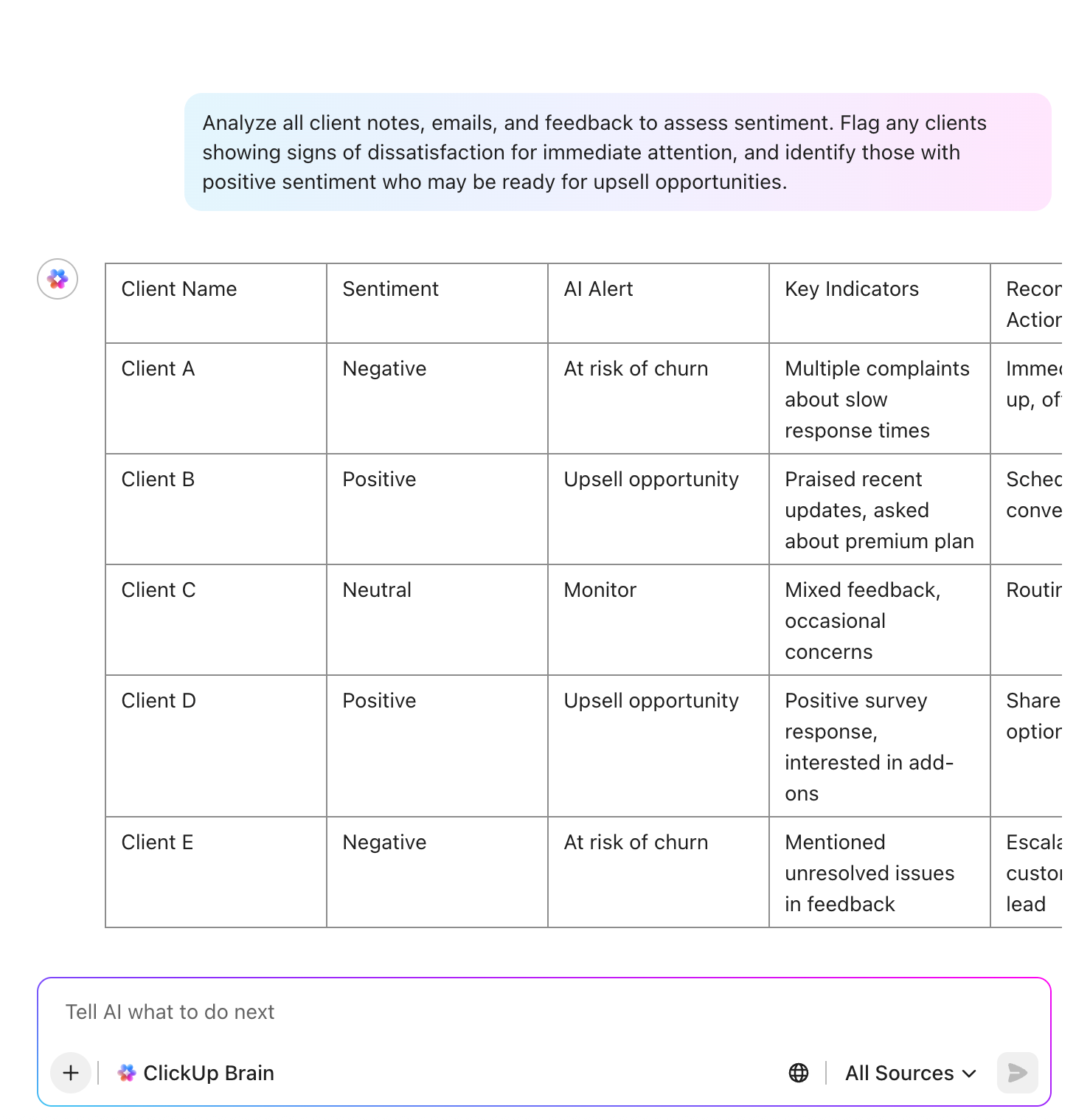
E-commerce support teams waste hours every day switching between apps—checking Shopify for order details, hunting through Slack for team answers, and digging through Google Drive for the latest return policy.
Meta AI can handle basic customer DMs on Instagram and Facebook, but it can’t pull order data, coordinate with your warehouse team, or track whether issues actually get resolved.
This guide shows you how to use Meta AI for e-commerce support, and ClickUp, world’s first Converged AI Workspace, to manage the operational workflows that solve customer problems.
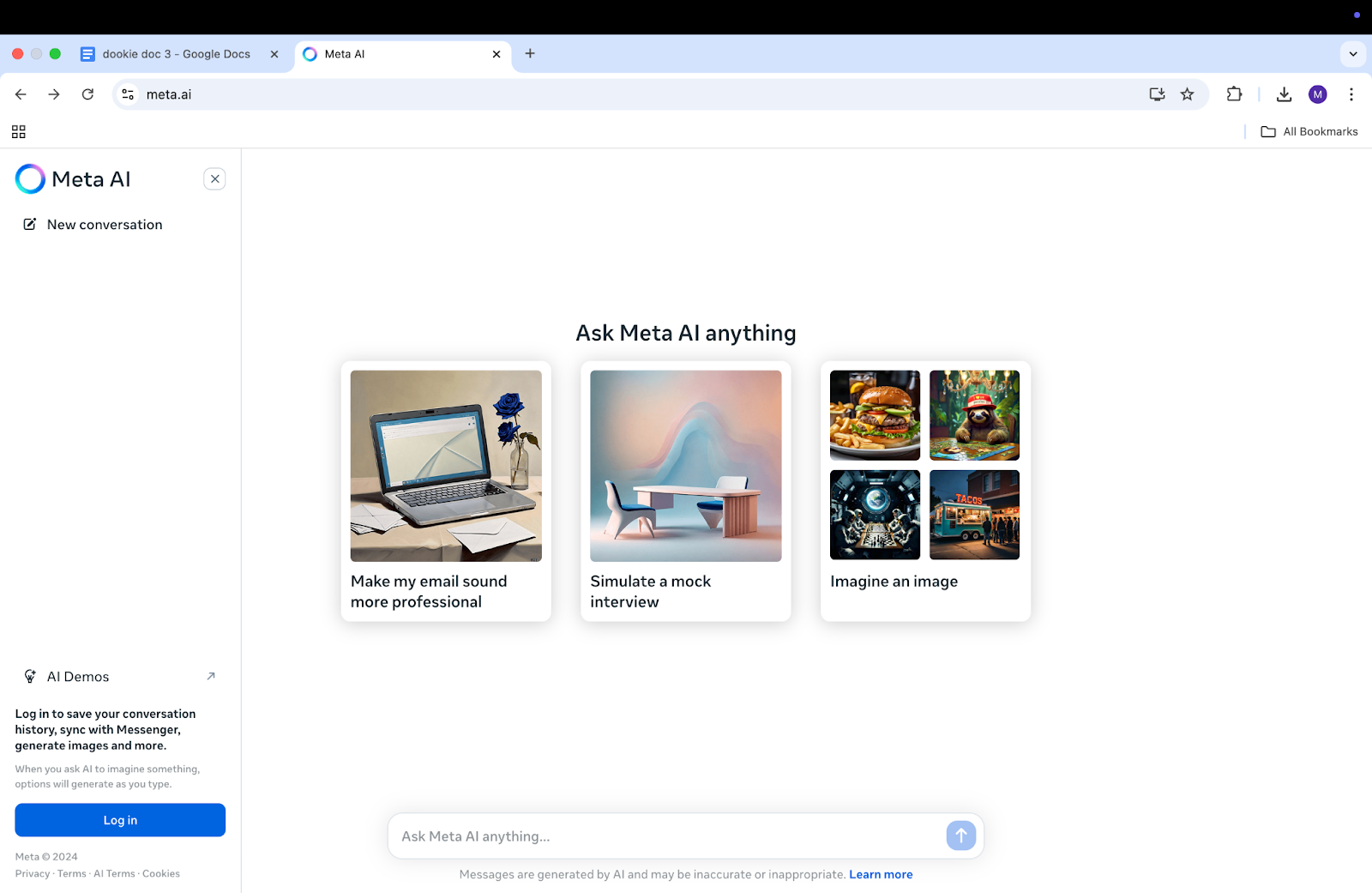
Meta AI is Meta’s generative AI assistant, built on its Llama model, that integrates directly into your messaging apps.
For your e-commerce business, it acts as an automated front-line agent. It’s designed to understand and answer common customer questions, provide product details, and guide shoppers through basic inquiries, all without needing a separate, complicated chatbot platform.
Instead of your team manually typing out the same answers all day, Meta AI uses natural language understanding to interpret what a customer is asking. When connected to your product catalog, it can pull specific details to give relevant, conversational answers. This frees your human agents to focus on the complex, high-touch issues that require their expertise.
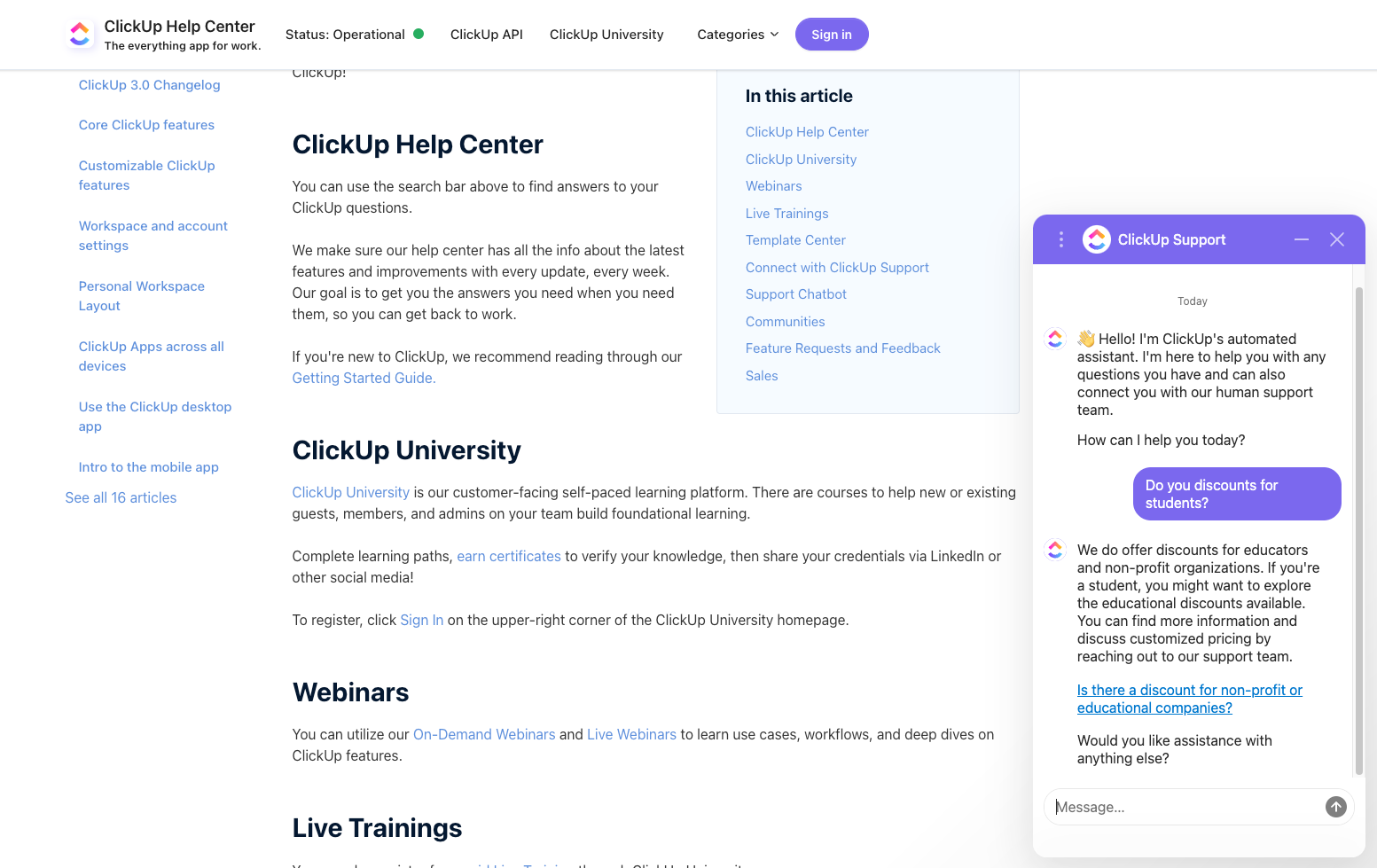
To visualize how an AI assistant can operate as a first-line support layer, here’s an example of an AI support chatbot experience in action:
To better understand how Meta AI fits works as an AI-powered tool for e-commerce businesses, this video provides an overview of various AI solutions that can enhance your customer support and sales operations:
You know your support operation is struggling to keep up, but it’s hard to pinpoint exactly why. The core issues often boil down to speed, availability, and efficiency. When these areas suffer, your business growth slows. The following benefits directly address the problems that most growing e-commerce teams face every day.
When customers have to wait for a response to a simple question about sizing or shipping, their frustration grows, and you risk losing the sale.
Meta AI eliminates the queue for these routine questions. It responds instantly, day or night. This immediate feedback improves the customer experience and prevents a backlog of messages from piling up during peak shopping times, like Black Friday or a new product launch.
📖 Also Read: How AI for Contact Centers Transforms Team Workflows
Your online store is always open, but your support team can’t be. This means questions from customers in different time zones or late-night shoppers often go unanswered for hours, leading to abandoned carts and a poor brand impression.
Meta AI acts as your after-hours team, providing instant assistance whenever a customer reaches out. Because it works across Messenger, Instagram DMs, and WhatsApp Business from a single setup, you can extend your support coverage around the clock without extending your payroll.
🧠 Fun Fact: The first secure retail transaction happened on August 11, 1994. A man named Dan Kohn sold a copy of Sting’s Ten Summoner’s Tales CD to a friend using a credit card and data encryption.
Your support agents are spending the majority of their day on repetitive, low-impact tasks.
Answering the same five questions over and over is a recipe for burnout. It also keeps your most knowledgeable team members from working on issues that drive revenue and customer loyalty.
Meta AI frees up your team’s mental energy and time by deflecting these common queries. This newfound capacity allows them to focus on what humans do best: handling complex escalations, providing personalized advice to high-value customers, and identifying emerging issues before they become widespread problems.
📮 ClickUp Insight: Only 10% of managers use a skills matrix to assign work, yet 44% say they try to match tasks to strengths and goals.
Without the right tools to support them, most managers are forced to make these decisions based on the immediate context, not data. This is exactly where you need a smart assistant!
ClickUp Brain can recommend task assignments by analyzing historical work, tagged skills, and even learning goals. With it, you can discover hidden strengths and surface the best person for the job, not just the available one.
💫 Real Results: Atrato saw a 30% faster product development pace and a 20% decrease in developer overwork thanks to ClickUp’s workload management.
A generic, one-size-fits-all response to a product question rarely closes a sale. Customers want to know if a product is right for them, but providing that level of personalized guidance to every single person is impossible to scale manually.
When you connect your product catalog, Meta AI can act as a personal shopper. If a customer asks, “I need a waterproof jacket for hiking,” the AI can search your catalog and suggest relevant options.
This generative approach allows for more natural, context-aware recommendations than a simple keyword-based chatbot.
If you deploy Meta AI for the wrong tasks, you’ll end up with frustrated customers and more work for your team. These four use cases are the proven sweet spots where Meta AI consistently delivers value. 🛠️
A potential customer is scrolling through Instagram, sees your product, and slides into your DMs with a question: “Does this come in blue?” or “Is this bag big enough for a laptop?” If they have to wait hours for an answer, their interest fades and they move on.
This is an ideal task for Meta AI. It can instantly pull information from your product catalog to answer specific questions about features, colors, materials, or compatibility.
Instagram DMs, in particular, are a high-volume channel for product discovery, making this use case incredibly valuable for any brand with a strong social media presence.
🔍 Did You Know? The first person to ever buy a book on Amazon was a computer scientist named John Wainwright. He bought a book about computer models and thought on April 3, 1995.
Manually looking up and responding to order management inquiries is a massive time sink for your support team.
Meta AI can be configured to provide your general shipping policies and estimated delivery windows automatically. While it can’t provide real time, package-specific tracking without a deeper integration, it can successfully handle the vast majority of general questions about shipping timelines. It frees up your team from this highly repetitive task.
🧠 Fun Fact: The term ‘Cyber Monday’ was coined in 2005 because retailers noticed a weird spike in sales the Monday after Thanksgiving. Back then, most people had slow dial-up internet at home, so they waited until they got to the office on Monday to use their company’s high-speed broadband connection to do their holiday shopping.
The returns process is often a point of friction for customers. They’re unsure of your return policy, don’t know if their item is eligible, or can’t find the instructions to start a return. This uncertainty leads to support tickets that require your team to walk them through the process.
You can train Meta AI on your returns policy to act as a first-line guide. It can explain the return window, clarify which items are final sale, and provide a link to your returns portal.
This self-service approach empowers customers to find the answers themselves and only escalates to a human agent if the situation is complex or requires a manual override.
A customer messages you with a vague request: “I’m looking for a gift for my dad.” A human agent would ask follow-up questions to narrow down the options, but that’s not scalable.
Meta AI can mimic this conversational customer discovery process. It can interpret the initial request and, based on the data in your product catalog, suggest relevant items. For example, it might ask, “What are his hobbies?” and then refine its recommendations based on the customer’s answer. This creates a better shopping experience than a static website recommendation engine.
Getting started with Meta AI isn’t overly technical, but it’s a process where skipping steps will lead to poor performance. A rushed setup results in an AI that gives wrong answers, frustrates customers, and ultimately creates more work for your team.
Follow this sequence to get it working correctly.
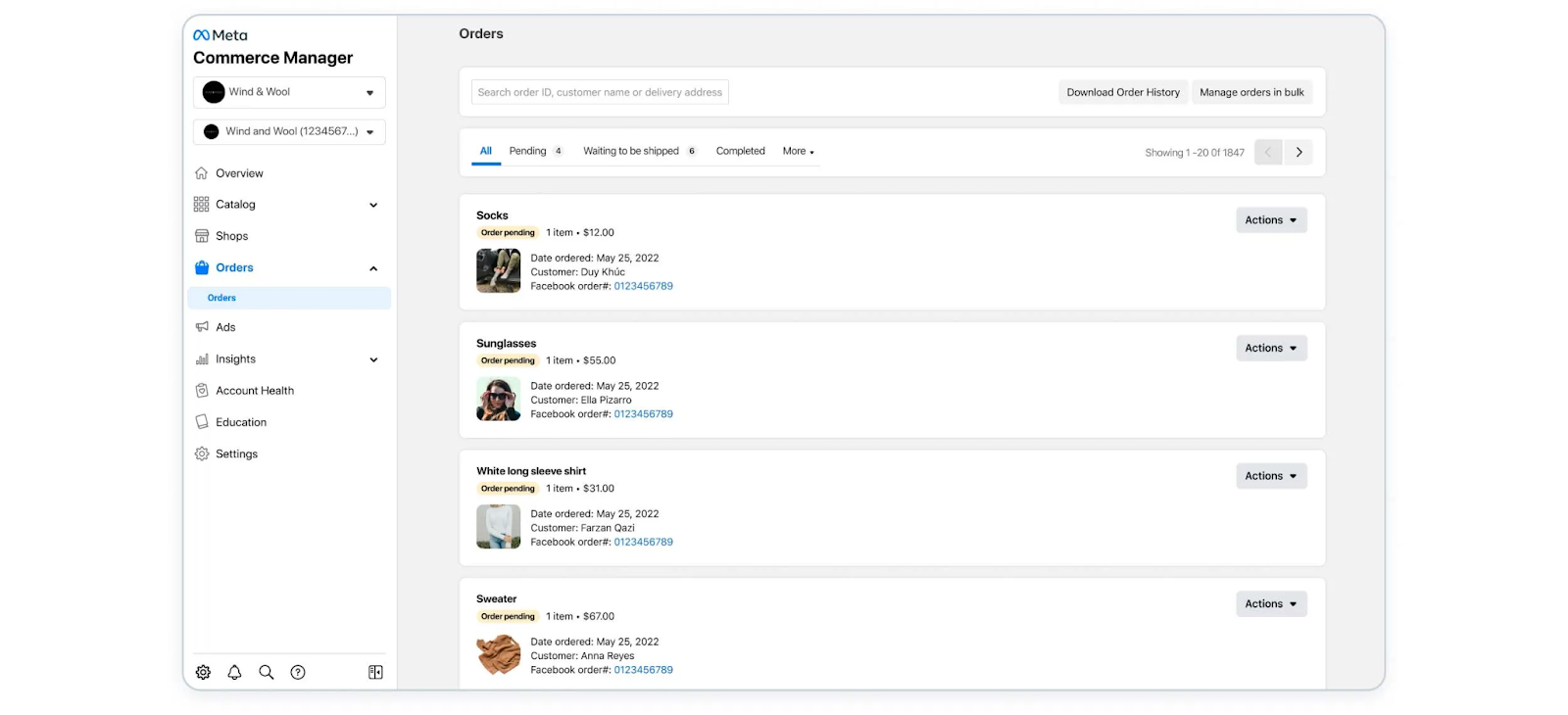
Your AI is only as smart as the information you give it. If it doesn’t know what you sell, it can’t answer questions about your products. The first step is to give it access to your inventory:
🧠 Fun Fact: Amazon patented 1-Click shopping in 1999. It was such a powerful competitive advantage that Apple actually had to pay Amazon to license the technology for the iTunes Store. The patent was based on the idea that reducing even a single click could increase total revenue by millions.
With your catalog in place, you can now start building the automation in Messenger:
A good practice here is to set clear expectations. A simple greeting like, “Hi! You’ve reached our AI assistant. I can help with most questions, but I’ll connect you with a human if needed,” goes a long way.
💡 Pro Tip: Use predictive AI to trigger ‘Check-ins’ based on browsing or shipping delays. For example, if a shipment is flagged as delayed in your carrier’s system, have your AI send a proactive apology email with a small discount code before the customer reaches out to complain.
Now, you’ll extend the same functionality to Instagram:
🚀 ClickUp Advantage: Ecommerce support rarely stays predictable. A price drop, delivery delay, or flash sale can push ticket volume up within minutes.
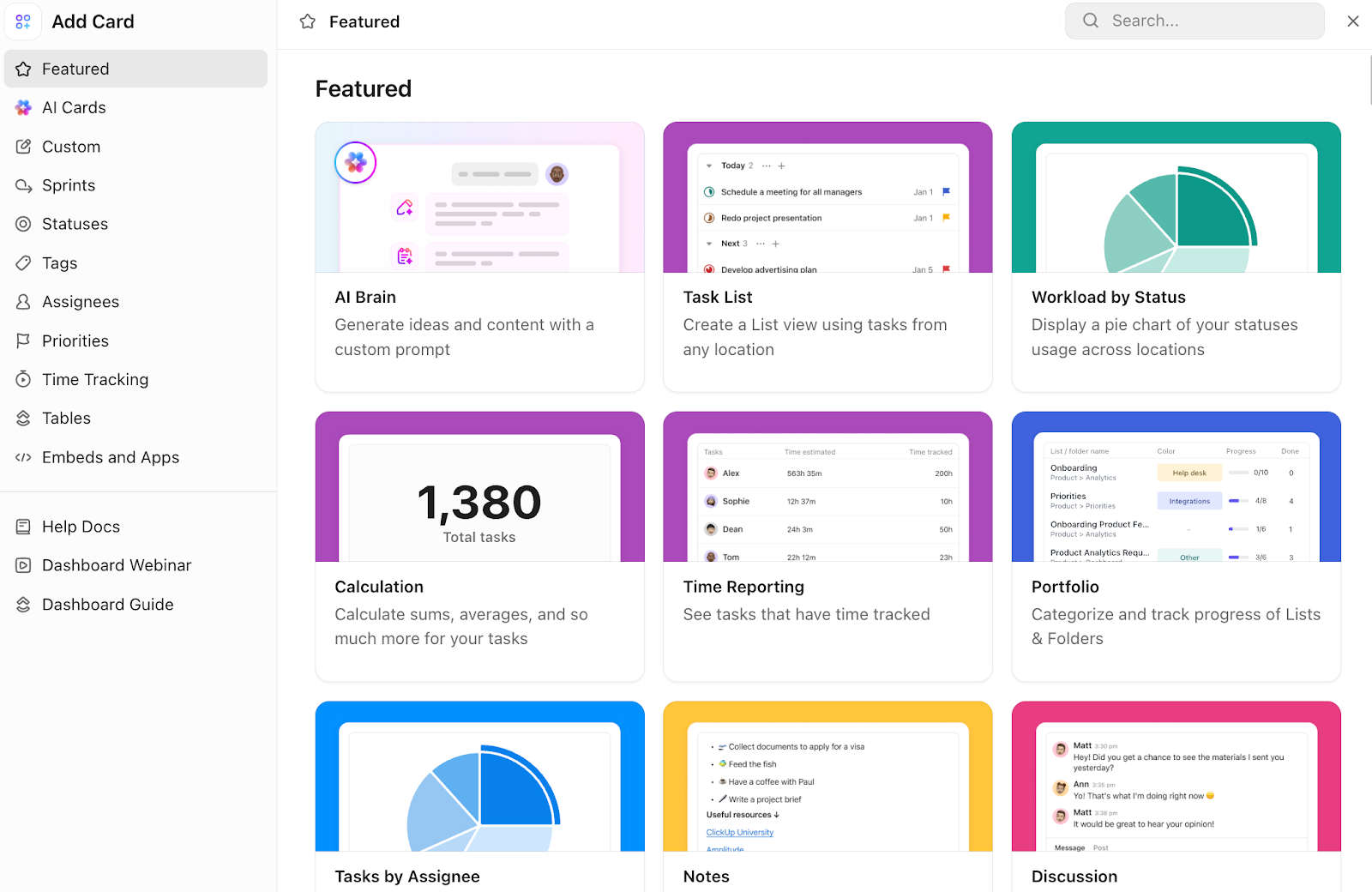
ClickUp Dashboards help you stay ahead because they turn live task data into visual insights that show exactly how the support queue behaves.
You can add Custom Cards to track ticket volume, resolution time, and agent workload so leaders understand performance without digging through hundreds of support tasks. ClickUp pulls this data directly from the workspace, which means every chart reflects real activity happening across the support pipeline.
Finally, you’ll configure WhatsApp, a critical channel for many businesses, especially those with international customers:
📖 Also Read: How to Automate WhatsApp Messages (Step-by-Step)
‘Set it and forget it’ is a myth when it comes to AI. Launching your Meta AI assistant is only the first step. Without ongoing optimization, its performance will degrade over time, and it will quickly become a liability instead of an asset.
These practices will ensure your AI remains a reliable and effective part of your support team.
An empty brain can’t answer questions. The performance of your Meta AI depends entirely on the quality and depth of the information you provide.
Start by creating a comprehensive FAQ document in ClickUp Docs that covers everything a customer might ask. This includes your policies on shipping and returns, sizing guides, and answers to common questions about your specific products.
Then, review your product catalog descriptions. Write them conversationally, using the same language your customers use, not just marketing jargon.
🔍 Did You Know? The digital shopping cart icon first appeared in 1995 on a site called Real Cart. It was a direct callback to the physical shopping cart, which was invented in 1937 by a grocery store owner, who realized people stopped buying things when their hand-held baskets got too heavy. He originally built the cart by putting wheels on a folding chair.
Your AI will inevitably encounter a question it can’t answer or a customer it can’t please. Trying to force the AI to handle every situation is a mistake that leads to extreme customer frustration. You need a clear plan for when to pass the conversation to a human:
Your customers’ questions and language will evolve over time. You need to regularly review how your AI is performing to catch issues and identify opportunities for improvement.
Set aside time each week to read through a sample of the conversations handled by Meta AI. Look for patterns. Where is it succeeding? Where is it failing or getting confused? Use these insights to update your FAQ document, add new automated responses, or adjust your escalation triggers.
When your Meta AI conversations are trapped inside Meta’s ecosystem, you createcontext sprawl, the fragmentation of work information across disconnected tools that forces teams to waste hours switching between apps and hunting for context.
Your support team has to switch between their primary helpdesk, your e-commerce platform, and Meta Business Suite just to get a full picture of a customer’s issue. This is inefficient and leads to mistakes.
💡 Pro Tip: Aim for 90% automation on Where Is My Order (WISMO) and How do I return queries. This frees up your human staff for the 10% of cases that require empathy, complex problem-solving, or high-value sales assistance.
Meta AI is useful, but it won’t solve every problem. Understanding its boundaries is crucial for setting realistic expectations and building an effective support strategy:
Many e-commerce support teams rely on separate tools for chat responses, ticket tracking, internal notes, and escalation workflows. Context scatters across systems, which slows resolution and creates inconsistent support experiences.
ClickUp addresses this problem through a Converged AI Workspace where conversations, ticket tracking, automation, and knowledge all live in one place. Support teams reduce SaaS Sprawl and eliminate constant context switching because tickets, internal collaboration, and AI assistance operate inside the same workspace.
Here’s a closer look at how ClickUp supports e-commerce workflows. 👀
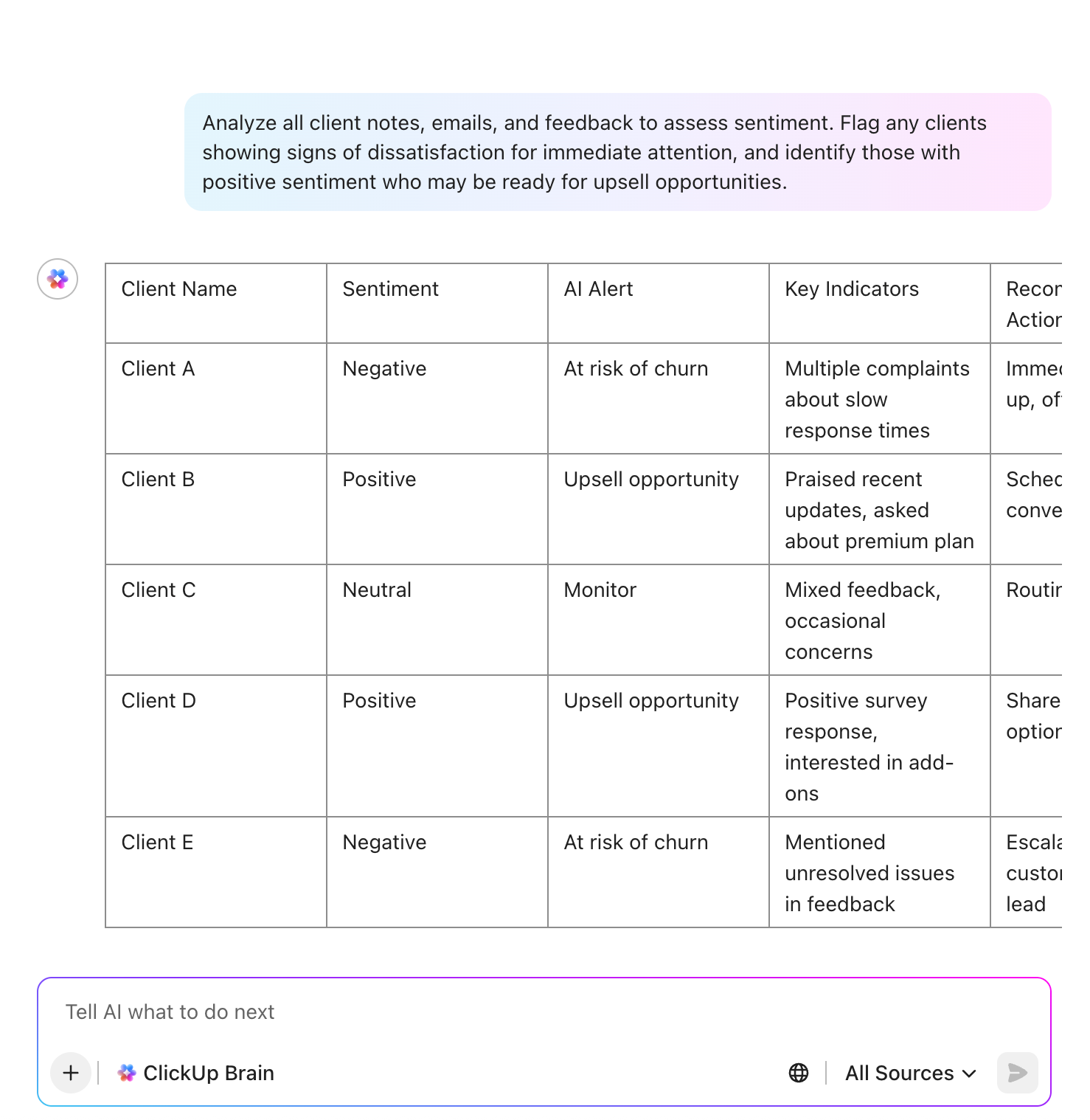
Customer support depends on fast access to information. Agents must quickly understand the issue, locate the right policy, and determine the next step. ClickUp Brain analyzes conversations, tasks, and documentation across the workspace so agents can resolve issues faster.
For example, a customer opens a chat about a delayed order. ‘My order #84521 still hasn’t arrived. It was supposed to arrive three days ago.’
The support agent can use this prompt with ClickUp Brain: ‘Summarize this support conversation and recommend the correct resolution based on our shipping delay policy.’
ClickUp Brain reviews the conversation, identifies that the order shipped through the standard shipping tier, and retrieves the internal escalation policy. It returns a summary and recommends offering expedited replacement shipping.
ClickUp Brain also helps agents handle high ticket volume through several specific capabilities:
For instance, a customer reports that a smart thermostat purchased from the store disconnects from Wi-Fi. ClickUp Brain analyzes the conversation and suggests an assignment to the technical support specialist who handles device troubleshooting, instead of the general order support queue.
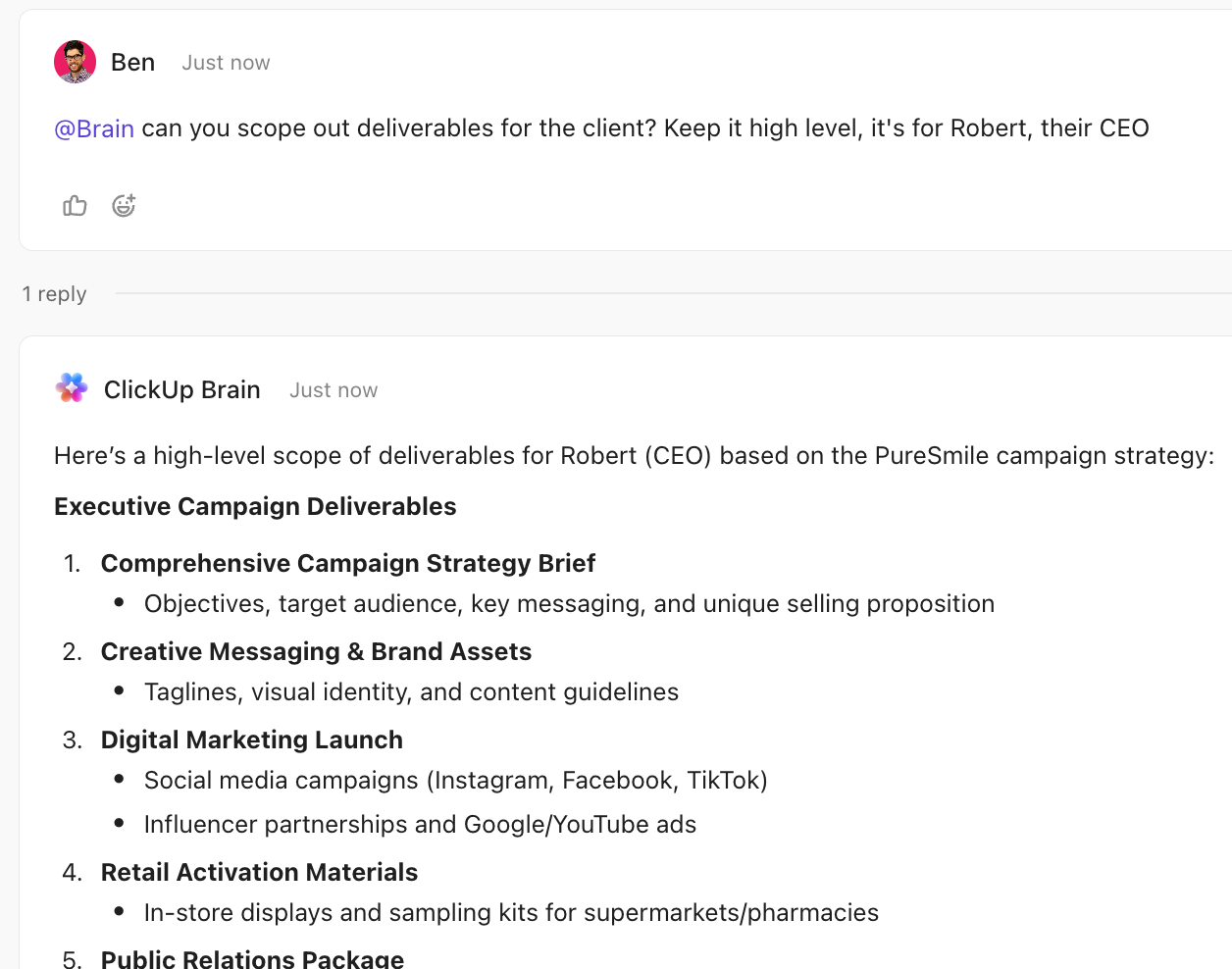
Many support tools rely on simple chatbots that answer frequently asked questions.
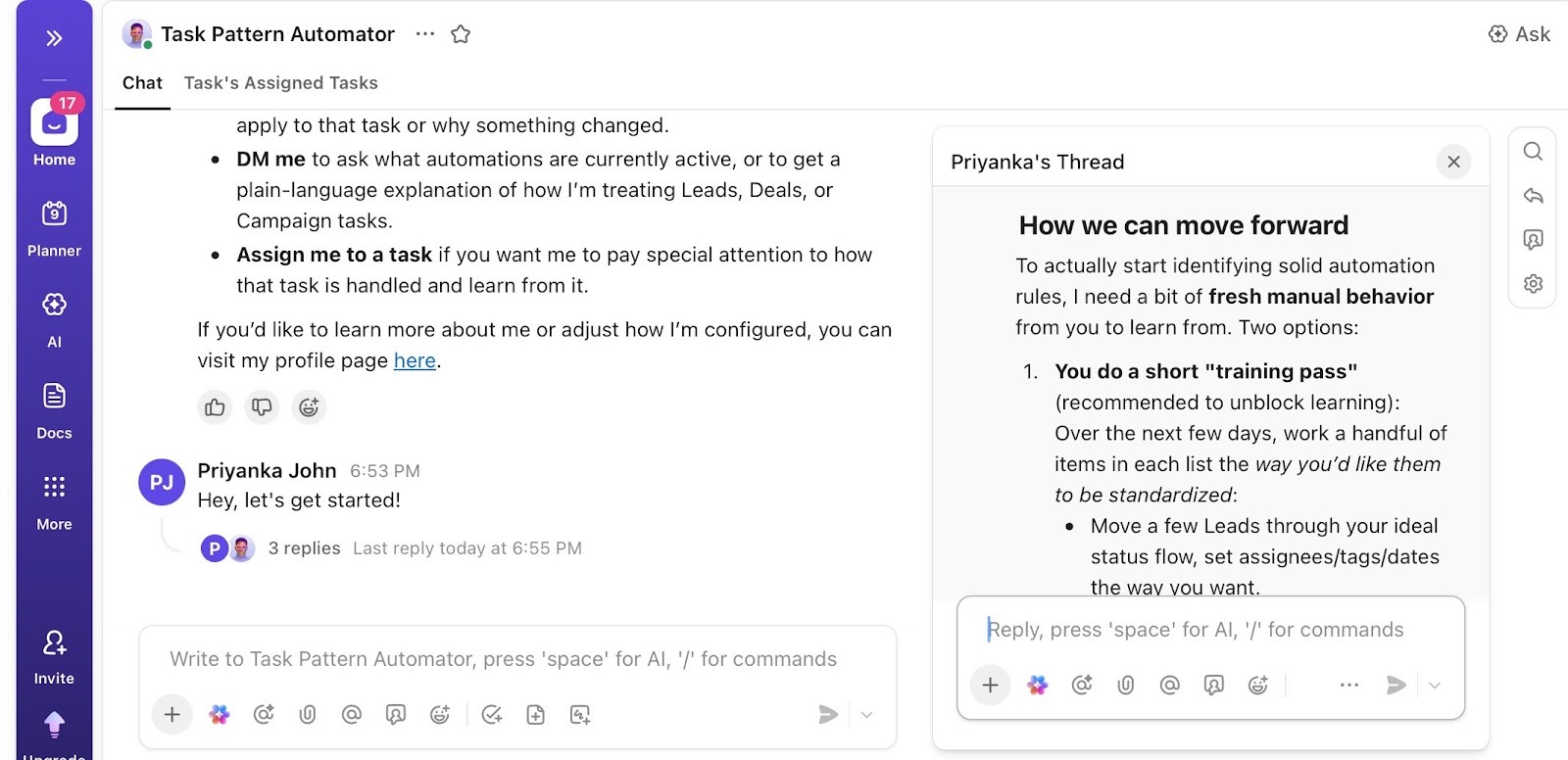
ClickUp AI Super Agents perform a different role. These AI agents function as autonomous teammates that monitor workflows, reason across workspace context, and execute tasks. They access tasks, conversations, documentation, and workflow data inside the workspace to run continuously and take action when patterns or conditions appear.
An e-commerce support team may configure several Super Agents to manage operational workflows.
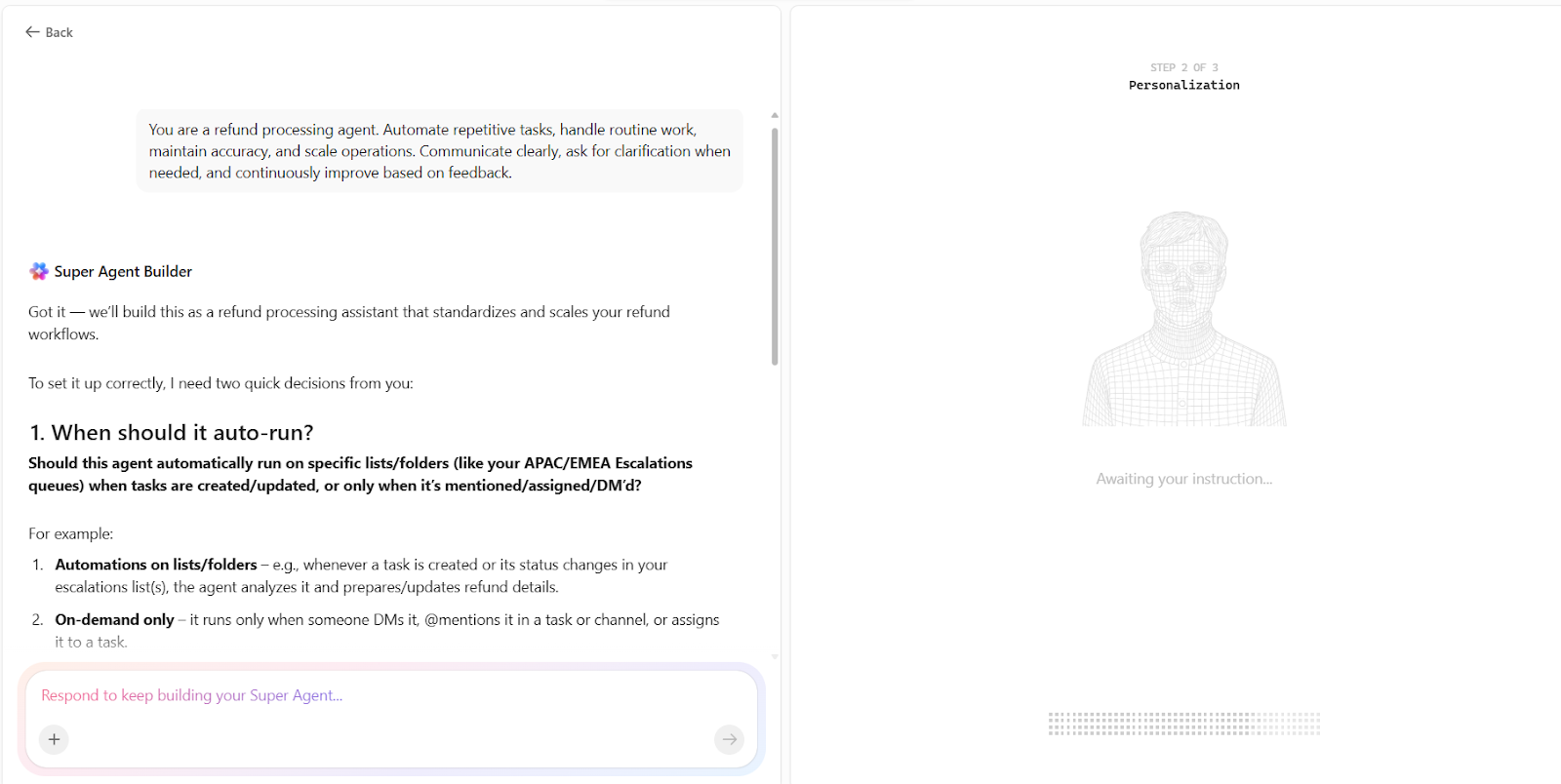
A Refund Processing Super Agent can:
Support managers can also interact with Super Agents directly. A team lead preparing for a support review meeting may ask the agent: ‘Analyze support tickets from the last 7 days and highlight recurring product complaints’.
These agents understand context, remember previous activity, and coordinate workflows across teams.
Meet your new AI teammate:
Once support tickets enter the system, routing and escalation rules determine how quickly issues reach the right team. ClickUp Automations move tickets through the support pipeline based on triggers and conditions.
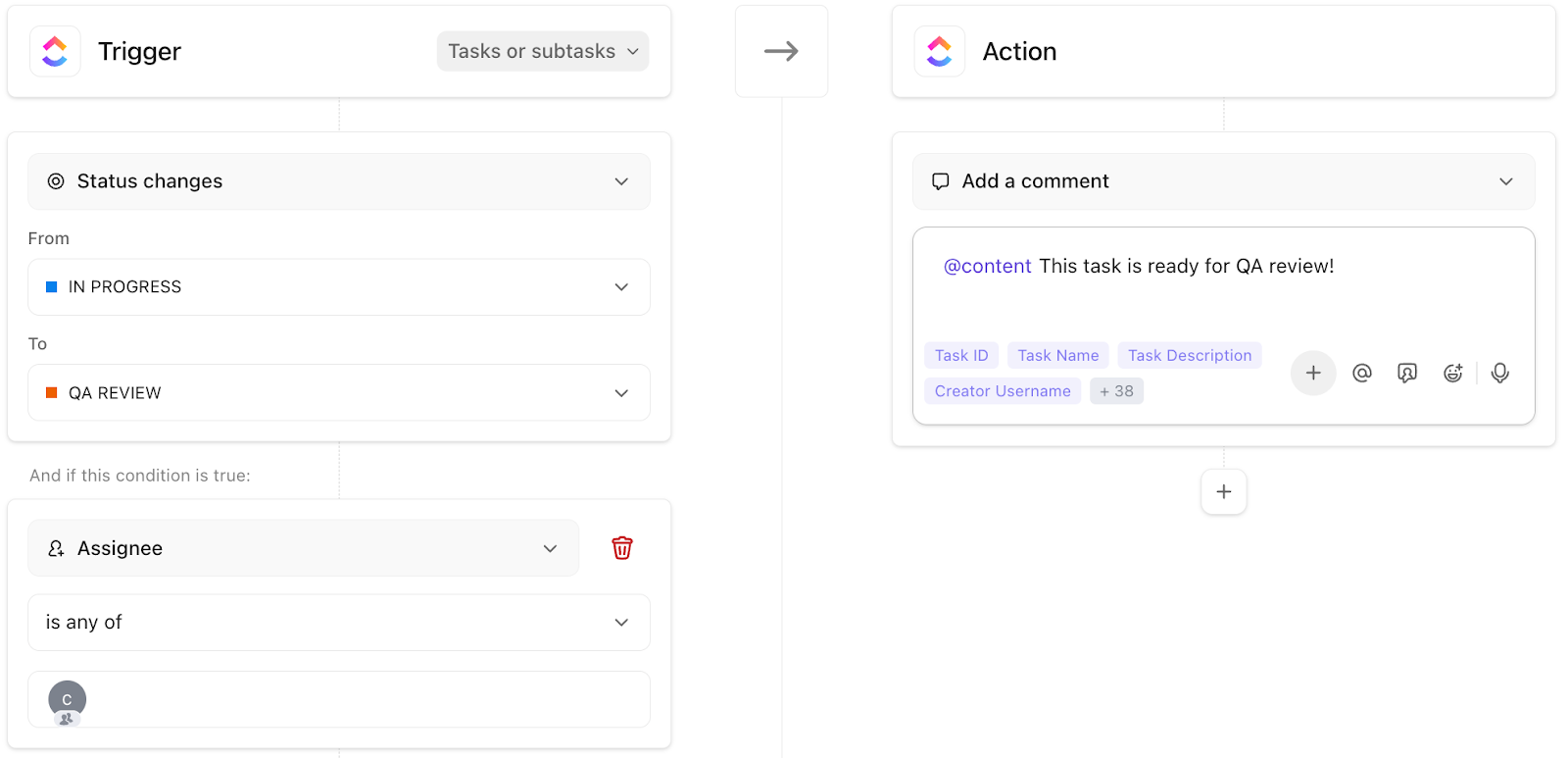
An e-commerce support workflow may include rules such as:
For instance, a customer submits a chat request for a refund due to a damaged item. The escalation generates a support task automatically. An automation assigns the task to the billing specialist and adds the refund approval checklist. If the ticket remains open past the SLA window, another automation alerts the support manager.
This structured routing process prevents tickets from sitting idle and ensures each issue reaches the correct specialist quickly.
Arnold Rogers, CS Manager at Launch Control shares:
Integration and automation have been an amazing way for us to reduce the time for all of our teammates as we have integrated with Intercom, Slack, Gmail, ChurnZero, ProfitWell, etc.
AI tools have changed how online stores handle customer conversations. Instant replies, automated answers, and product recommendations all help teams keep up with the constant flow of messages from shoppers. Meta AI handles many of these first-touch interactions well, especially across Instagram, Messenger, and WhatsApp.
However, customer support rarely ends with a single reply. Order issues require investigation, refunds require approvals, and escalations require coordination between teams. Support teams often spend more time chasing context than solving problems.
That’s where ClickUp changes the equation. Tools like ClickUp Brain, Dashboards, Super Agents, and Automations help CS teams analyze conversations, assign work, and move issues toward resolution without constant manual coordination.
Meta AI can answer the first message. ClickUp carries the entire support operation forward. Sign up for free today!
Yes, Meta AI can understand and respond in multiple languages, which is a significant advantage for businesses with an international customer base. However, the performance can vary by language, so it’s important to test it thoroughly for each market you support.
Basic AI-powered automated responses in Meta Business Suite are generally free. However, accessing more advanced capabilities through the WhatsApp Business API often involves costs from a third-party Business Solution Provider (BSP) and usage-based fees from Meta.
You have some control over the tone through the instructions and examples you provide during setup, but you can’t create a fully unique personality in the same way you could with some specialized chatbot platforms. The responses will generally align with the foundational tone of the Llama model.
No, Meta AI does not automatically learn and adapt from each individual conversation in real time. Improvements come from you manually reviewing conversations, identifying areas for improvement, and updating the AI’s training data and instructions accordingly.

© 2026 ClickUp

There’s an easier way. Try a free AI Agent in ClickUp that actually does the work for you—set up in minutes, save hours every week.