


Employees thrive when they have a space to connect, advocate for change, and grow together.
That’s exactly what employee resource groups (ERGs) provide—a platform for belonging, professional development, and workplace impact. But knowing how to start an employee resource group that lasts requires more than just good intentions.
From defining a clear purpose to securing leadership support, every step plays a role in making your ERG sustainable and effective. This guide breaks down everything you need to build an ERG that doesn’t just exist—but thrives.
How to Start an Employee Resource Group That Thrives?

 Summarize this article for me please
⏰ 60-Second Summary
Building an Employee Resource Group (ERG) that drives real impact requires strategy, leadership, and long-term commitment. Here’s how to get it right:
- Define a clear purpose by identifying employee needs and aligning with business goals to ensure long-term relevance
- Secure executive sponsorship to gain visibility, funding, and leadership support for stronger organizational backing
- Create a structured leadership team with defined roles to manage initiatives, recruit members, and drive engagement
- Keep ERG knowledge accessible using a centralized hub for documentation, past discussions, and onboarding new leaders
- Adapt and evolve initiatives based on participation trends, feedback, and real-time insights to keep engagement high
- Measure impact and demonstrate value by tracking growth, participation, and contributions to company policy and DEI initiatives
A well-structured ERG isn’t just a community—it’s a catalyst for workplace inclusion and meaningful change.
Summarize this article for me pleaseWhat Is an Employee Resource Group (ERG)?
An Employee Resource Group (ERG) is a voluntary, employee-led group designed to foster inclusivity, professional growth, and support within an organization.
These groups bring together employees with shared experiences, interests, or backgrounds to create a safe space, advocate for change, and improve the employee experience.
Picture a company where working parents struggle with balancing career growth and childcare. An ERG forms to provide resources, flexible work solutions, and mentorship.
Another group champions accessibility, influencing policies to make offices and digital tools more inclusive.
ERGs don’t just offer support—they drive meaningful workplace change.
How are ERGs structured?
Most ERGs follow a structured approach to stay effective:
- ERG leaders: Set goals, oversee activities, and maintain engagement
- Executive sponsor: Provides funding, leadership support, and advocacy
- Leadership committee: Assists with strategy, planning, and execution
- Group members: Participate in discussions, events, and initiatives
Also Read: How to Set Meaningful DEI Goals at Work
Why do ERGs matter?
Organizations with strong ERGs see increased employee engagement, professional growth, and retention. These groups act as a bridge between employees and company leaders, ensuring diverse voices shape company policy and workplace culture.
When backed by executive buy-in and clear goals, ERGs become a driving force for diversity, equity, and inclusion—helping both employees and businesses thrive.
Read More: Effective HR Strategies and Examples
Summarize this article for me pleaseBenefits of Employee Resource Groups
A strong employee resource group (ERG) creates an inclusive, engaging workplace while supporting employee growth and company success. Organizations that invest in ERGs see improvements across multiple areas.
Higher employee engagement and retention
Employees feel more connected when they have a safe space to share experiences and advocate for change. ERGs improve employee retention by fostering a sense of belonging and inclusion.
Professional growth and leadership development
ERGs provide access to mentoring programs, leadership training, and networking opportunities. Many ERG leaders gain hands-on management experience by organizing events and leading initiatives.
A stronger connection between employees and leadership
ERGs create direct communication channels between employees and company leaders. An executive sponsor helps align ERG goals with business priorities, ensuring real organizational impact.
A workplace that drives change
ERGs shape company policy, improve benefits, and support underrepresented groups. Many organizations see positive shifts in hiring practices, workplace accessibility, and professional development opportunities.
Impact beyond the workplace
ERGs collaborate with the local community, host ERG events, and support affinity groups. Their influence extends beyond the organization, reinforcing corporate responsibility and social impact.
Also Read: How to Combat Isolation in the Workplace?
With the right structure and support, ERGs become powerful drivers of change. But what types of ERGs exist, and how do they serve different employee needs?
Summarize this article for me pleaseTypes of Employee Resource Groups
Different ERGs serve different purposes, depending on company goals and employee needs. Some focus on professional growth, while others drive employee engagement and workplace inclusivity.
1. Identity-based ERGs
These groups support underrepresented groups by fostering a safe space and advocating for equitable opportunities. Many companies have:
- Affinity groups for women, LGBTQ+ employees, and racial or ethnic minorities
- Networks for working parents, veterans, or employees with disabilities
- Groups focused on religious or cultural diversity
2. Professional development ERGs
Employees looking for mentoring programs and career advancement often join ERGs centered around professional growth. These groups:
- Provide skill-building workshops and leadership training
- Connect employees with senior leaders for career mentorship
- Support internal mobility and networking across departments
👀 Did You Know? Mentors are promoted six times more often and mentees five times more often than those not in mentoring programs, highlighting the career-advancing benefits of being a mentor.
3. Interest-based ERGs
Not all ERGs focus on identity or career growth. Some bring together employees with shared passions, such as sustainability, mental health, or volunteer work in the local community. These groups boost employee interest and encourage cross-team collaboration.
4. Business resource groups
Some ERGs directly support company policy and business decisions. These groups work with executive sponsors and company leaders to:
- Improve customer outreach through diverse perspectives
- Influence company goals and internal DEI initiatives
- Strengthen partnerships with external organizations and affinity groups
Understanding the different types of ERGs helps organizations and HR departments plan and create inclusive, high-impact programs. But how do you start an ERG that drives real change? Let’s break it down.
Summarize this article for me pleaseHow to Start an Employee Resource Group?
A successful ERG starts with careful planning, strong leadership, and ongoing support. The goal is to create a group that not only fosters employee engagement but also aligns with business goals and drives real change.
Follow these steps to start an employee resource group that makes an impact:
Step 1: Gauge interest and identify the purpose
Before forming an ERG, it’s important to gather employee insights. Surveys, focus groups, or HRIS data can help determine what employees need most.
A well-planned ERG should:
- Support underrepresented groups and professional growth
- Align with company policy and DEI initiatives
- Address specific challenges employees face
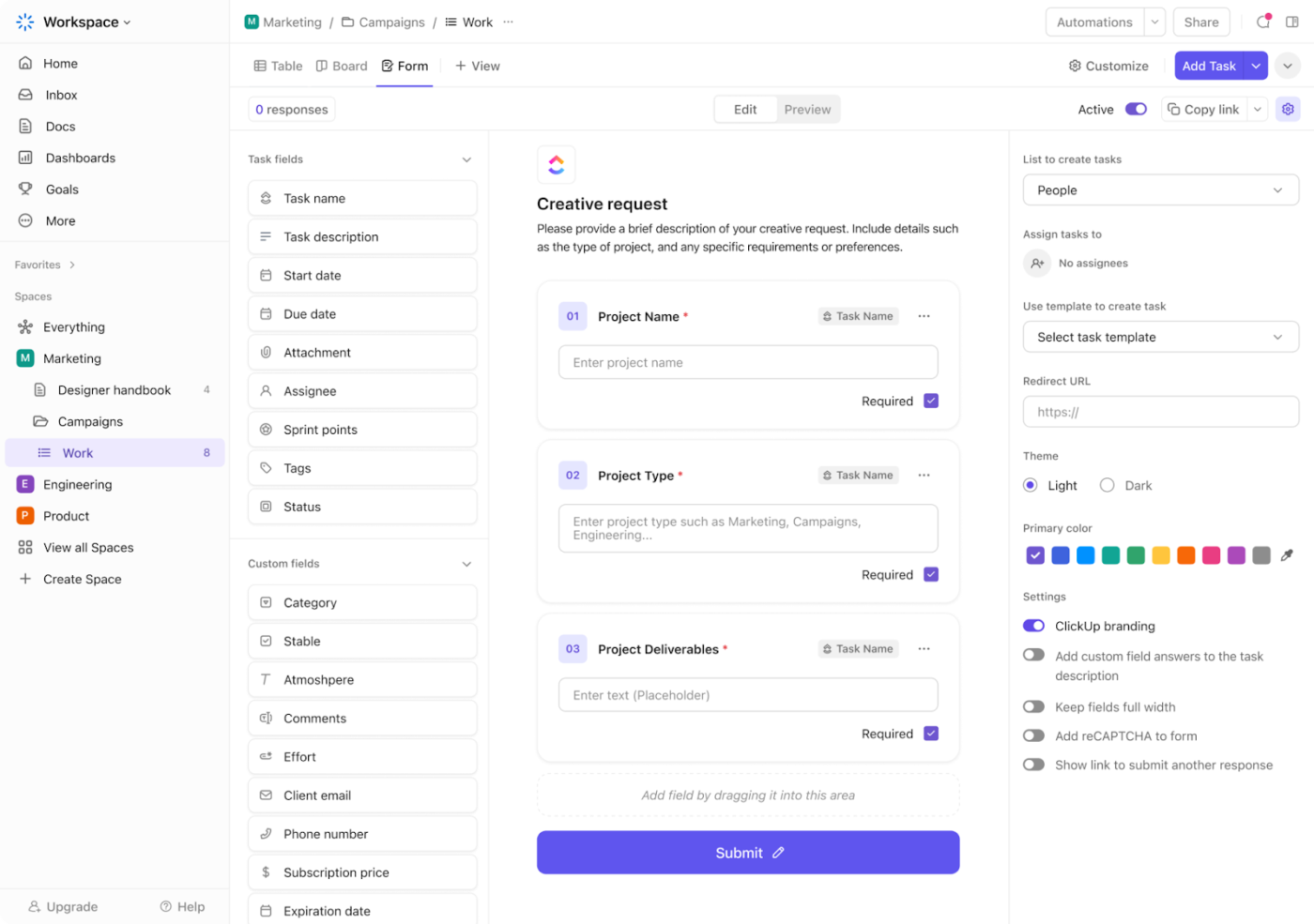
To streamline this process, ClickUp Forms can help collect responses and organize feedback, ensuring the ERG is built on real employee needs.
Step 2: Seek executive sponsorship and organizational support
For an ERG to create a lasting impact, it needs executive buy-in. Without leadership support, securing resources, influencing policies, or gaining visibility within the company can be difficult. A strong executive sponsor serves as an advocate, ensuring the ERG remains sustainable and aligned with business goals.
Key contributions of an executive sponsor:
- Visibility at leadership levels: Elevates the ERG’s initiatives, ensuring they are recognized by company leaders and not sidelined
- Funding for training, events, and programs: Supports career development, networking opportunities, and mentoring programs
- Strategic guidance: Helps ERG leaders align initiatives with company policy, DEI efforts, and long-term business objectives
A well-documented proposal increases the chances of securing organizational support. Using ClickUp Docs, ERG leaders can outline the group’s mission statement, expected impact, and resource requirements in one centralized place. Stakeholders can use Docs to collaborate seamlessly, add comments, and even assign tasks right from the Doc.

Step 3: Establish a leadership structure
A strong ERG needs clear leadership roles to stay organized and impactful. Without defined responsibilities, initiatives can lose direction, and engagement may drop.
Key roles within an ERG include:
- ERG leads: Set the vision, oversee engagement, and ensure alignment with company goals
- Leadership committee: Handles logistics, organizes ERG events, and manages resources
- Group members: Participate in discussions, mentor new members, and drive initiatives
Since ERG success depends on well-defined roles, ClickUp Tasks can help assign responsibilities, track progress, and ensure accountability.
Step 4: Define the ERG’s mission and create goals
A well-defined mission statement gives the ERG purpose and direction. It ensures alignment with company policy, DEI initiatives, and business goals while providing clarity on who the ERG serves and how it creates impact.
A strong mission statement should:
- Define the ERG’s purpose: Why does it exist, and what challenges does it address?
- Align with business objectives: How does it contribute to employee engagement and company culture?
- Set clear expectations: What type of ERG events, discussions, and programs will members participate in?
Beyond a mission statement, the ERG should establish measurable goals to track progress. These may include:
- Recruiting members: Expanding participation across departments
- Organizing mentoring programs and leadership workshops: Supporting professional growth
- Advocating for inclusive company policy and benefits: Driving meaningful workplace change
Since goal-setting is essential for long-term success, ClickUp Goals helps ERG leaders set measurable objectives, track milestones, and adjust strategies based on real-time progress.

Step 5: Plan a kick-off event and promote the ERG
A well-executed kick-off event generates excitement, encourages members to engage, and sets the tone for ERG initiatives. It’s the first opportunity to introduce employees to the ERG’s mission, leadership, and upcoming activities.
A successful kick-off event should:
- Present the ERG’s mission and leadership team: Clearly define the ERG’s purpose and who is leading the group
- Outline upcoming initiatives and engagement opportunities: Showcase planned ERG activities, networking events, and mentoring programs
- Provide an easy way for employees to sign up: Offer sign-up links, QR codes, or forms for immediate participation
Promoting the event through internal communication channels—such as company-wide emails, Slack, and town halls—ensures high visibility. To manage event logistics, ClickUp’s Calendar View helps ERG leaders schedule meetings, send automated reminders, and track attendance effortlessly. Because it integrates ALL calendars, you never have to worry about missing an event or being double booked.

Step 6: Keep members engaged and foster community
An ERG’s success depends on ongoing participation and engagement. Without consistent interaction, enthusiasm can fade, and momentum may slow.
Keeping members engaged requires creating a sense of belonging, providing valuable resources, and ensuring opportunities for collaboration.
Effective ways to sustain engagement:
- Monthly check-ins or all-hands meetings: Regular touchpoints help assess progress, address concerns, and keep members aligned
- ERG events such as panel discussions, networking, and leadership sessions: These provide professional development opportunities and strengthen connections among members
- Dedicated spaces for employees to share experiences and discuss professional growth: Encouraging open conversations fosters a stronger employee experience and sense of community
Since communication is key, ClickUp Chat helps ERG leaders keep discussions active, share updates, and ensure members stay connected—even between meetings.

Step 7: Track progress and continuously improve
For an ERG to remain impactful, it must evolve based on engagement levels, leadership feedback, and company policy changes. Regular evaluation helps refine strategies, ensuring the ERG meets employee needs and business objectives.
Key performance indicators (KPIs) to track:
- Growth in-group members and active participation: Monitoring attendance at ERG events and meetings helps measure engagement
- ERG influence on company policy and DEI strategies: Tracking workplace improvements linked to ERG initiatives highlights the group’s effectiveness
- Feedback from employees on ERG effectiveness: Gathering insights from members ensures the ERG remains relevant and beneficial
To streamline evaluations, ClickUp Dashboards provides ERG leaders with real-time data on participation trends, meeting outcomes, and the ERG’s overall impact—allowing for continuous improvement and long-term success.

With the right structure, an ERG can create a lasting impact. But sustaining momentum is just as important—let’s explore how to keep an ERG thriving.
Summarize this article for me pleaseHow to Sustain and Grow the ERG?
Building an ERG is just the first step. Sustaining its impact requires strategic leadership, accessible knowledge, and continuous evolution based on employee engagement.
Strengthen leadership and knowledge-sharing
Keep leadership actively involved
Ongoing support from executive sponsors and company leaders ensures ERGs stay aligned with business goals and receive the resources they need. Regular check-ins with leadership help reinforce the ERG’s impact.
Create a centralized knowledge hub
To avoid information loss as ERG leaders transition, all essential documents should be easily accessible. The ClickUp Knowledge Management System serves as a single source of truth, storing:
- The ERG’s mission statement and objectives
- Past meeting notes, decisions, and reports
- Event planning details and participation insights
This structure ensures new ERG leads can quickly onboard and continue progress without disruption.
To know more about knowledge management with ClickUp, check this out 👇
Evolve and measure the impact
Adapt initiatives based on engagement insights
ERG programs should reflect employee needs, not assumptions. ClickUp Brain provides AI-powered insights to analyze participation trends and suggest optimizations—helping ERG leaders refine events, discussions, and resource allocation.

Expand reach and demonstrate value
For ERGs to grow, they must recruit members, promote mentoring programs, and collaborate with other groups. Tracking ERG contributions to company policy and workplace culture helps showcase long-term impact.
Key metrics to measure:
- Growth in group members and participation levels
- Influence on business goals and DEI initiatives
- Employee feedback and engagement trends
Read More: How to Build an Inclusive Workplace Culture?
A well-supported ERG remains a lasting force for inclusivity and engagement. But what challenges do ERGs face, and how can they navigate them? Let’s explore.
Summarize this article for me pleaseChallenges and How to Overcome Them
ERGs create powerful change, but sustaining them comes with real challenges. Common obstacles include burnout, participation gaps, and unclear long-term direction.
Addressing these early helps ERGs stay impactful.
Leadership fatigue and inconsistent participation
Many ERGs start strong but lose momentum when leaders feel overburdened or members disengage.
Solutions:
- Rotate leadership roles to prevent burnout and bring fresh ideas
- Create structured succession plans so new ERG leaders can step in smoothly
- Introduce flexible participation levels to allow employees to engage at different capacities
Lack of visibility and measurable outcomes
Without clear visibility, ERGs risk being undervalued or seen as informal social groups.
To build credibility:
- Tie ERG initiatives to business goals to demonstrate long-term value
- Track engagement trends to showcase growth and effectiveness
- Regularly report impact to leadership to maintain executive buy-in
Balancing ERG efforts with company priorities
ERGs should enhance workplace culture without clashing with day-to-day business operations.
Ways to maintain balance:
- Integrate ERG activities into existing company initiatives to align efforts
- Encourage leadership to recognize ERG contributions in performance evaluations
- Set clear guidelines on time commitment to ensure participation remains sustainable
ERGs that acknowledge these challenges and adapt proactively will build a lasting presence. Now, let’s bring everything together.
Read More: 10 HR Challenges & Solutions for HR Teams
Summarize this article for me pleaseBuilding an ERG That Lasts
A strong employee resource group is more than just a short-term initiative. It is a driving force for inclusion, growth, and engagement. The most impactful ERGs adapt, evolve, and stay aligned with both employee needs and business goals.
By fostering a clear mission, leadership support, and a culture of continuous participation, your ERG can create lasting change in the workplace. Whether you’re launching a new ERG or strengthening an existing one, having the right tools makes all the difference.
Ready to take ERG management to the next level?
Sign up for ClickUp and streamline everything from goal-setting to collaboration today!


Everything you need to stay organized and get work done.

Recent Articles
8 Communication Strategies That Actually Fix Team Chaos 
8 Communication Strategies That Actually Fix Team Chaos
What Is Tacit Knowledge? Definition, Benefits and Examples
What Is Tacit Knowledge? Definition, Benefits and Examples
AI Workload Management: A Practical Guide for Teams in 2026 
AI Workload Management: A Practical Guide for Teams in 2026
