

We all tend to have unconscious biases that influence our behavior in our personal lives and even in the workplace. Proximity bias is one of them.
Let’s be honest. Even with the best intentions, sometimes we aren’t as fair at our workplaces as we’d like. Proximity bias can sneak in without us noticing—especially when we work remotely or with hybrid teams.
But what is proximity bias, to begin with, and how can we avoid it in the workplace? Let’s dig a little deeper.

 Summarize this article for me please
What is Proximity Bias?
Proximity bias is the human tendency to favor people or things that are physically close to us. It’s like our brains play favorites. We build stronger connections with people we often see in the office.
Proximity bias in the workplace manifests in several ways: preferential treatment, more flexible work arrangements, frequent recognition and promotions, and better access to projects and development opportunities for in-office team members.
It creates significant disparities in how remote employees are perceived and treated, leading to dissatisfaction and reduced team productivity. This also makes employee retention difficult.
Summarize this article for me pleaseUnderstanding Proximity Bias
Proximity bias is like that teacher who always seems to call on the students who sit in the front row, the ones they see and interact with the most. But why? It’s simple—familiarity breeds a sense of trust and comfort and influences how we perceive people in the workplace.
It’s our brain’s way of taking shortcuts. We naturally feel more comfortable and trusting of those in close vicinity, someone we see and interact with more often. This comfort can unfairly translate into better opportunities, promotions, or even more positive attention for those in that ‘inner circle’ than those working remotely.
Remote workers may get overlooked for promotions, exciting projects, or recognition simply because they are less visible than their in-office counterparts. When they feel their contributions are less acknowledged, it can stifle productivity and innovation. Feeling undervalued due to proximity bias can lead to disengagement, resentment, and decreased motivation among remote employees.
Proximity bias: Relationship with attribution (psychology) and cognitive bias
Attribution bias (Psychology)
Attribution theory explains how we justify our own and others’ behaviors. For example, you attribute the success or higher performance ratings of in-office employees to their work ethic or commitment to company culture, overlooking similar achievements by remote employees.
Cognitive bias
Cognitive biases are tendencies to think in ways that can lead to misjudgments or illogical conclusions. Think of them as optical illusions for our brains, distorting how we perceive and process information. In this case, the illusion is ‘familiar = good,’ which can lead to unfair advantages for those we see more often.
Real-life examples and scenarios of proximity bias in action
- Performance reviews: A manager might unintentionally give a glowing review to an on-site employee, while a remote employee doing equally great at remote work gets a standard evaluation
- Project assignments: Exciting new projects might always seem to go to an in-office employee who drops by the manager’s desk for quick chats
- Mentorship: Informal mentorship can easily become instances of proximity bias, where the employees who get coffee with the boss also get more career growth and advancement opportunities, advice, and support
- Team building: Even fun events can be affected! Those working on-site might build stronger relationships with their remote counterparts and staff due to equal access to casual lunch break chats that remote workers miss out on
Proximity bias vs. availability bias: Explanation and differentiation
Think of proximity bias as an invisible ‘cool kids’ club. People in this club are physically close to the decision-makers (the boss, the project lead, etc.). They tend to get more attention, better opportunities, and all-around favoritism, even if they might not deserve it.
But, proximity bias is often confused with availability bias, which is similar but not quite the same.
What is availability bias?
Availability bias is like our brain obsessing over the latest shiny thing. It’s when we make decisions based on what we remember the easiest, not necessarily what’s most accurate or important. So, if a coworker messes up right before their review, that might overshadow the objective record of all the good work they’ve done throughout the year.
Both proximity bias and availability bias lead to unfairness but have different impacts:
- Proximity bias: It’s about who you’re near. Employees who spend time in the office get more face time with decision-makers, potentially receiving opportunities even if they’re not the most qualified
- Availability bias: It’s about what you remember. One major success or a single mistake can loom larger in our minds over someone’s consistent good work
Summarize this article for me pleaseMitigating Proximity Bias
Understanding how to avoid proximity bias in the workplace is equivalent to superhero training for battling workplace unfairness! Especially now, with hybrid and remote work environments, we need special strategies to fight proximity bias toward remote staff to ensure everyone gets a fair chance, regardless of where they work.
Here are some concrete steps you can take to achieve your goals:
Create a more inclusive work environment
Inclusivity is the antidote to proximity bias. Here’s how to build an inclusive office environment and address proximity bias:
- Mix it up: Consider physical presence in quarterly town hall meetings or team-building sessions necessary for remote employees and occasional remote work days for in-office employees. This promotes inclusivity and empathy for different work styles
- Encourage virtual hangouts: Schedule team coffee breaks or virtual lunches that focus on getting to know each other, not just shop talk
- Champion remote workers: Publicly recognize the contributions of remote workers. Make their successes visible to everyone in the company. This way, you acknowledge all employees’ efforts and make them feel valued
Introduce objective performance management and rewards
Promoting fairness at the workplace needs a game plan! Here’s where clear metrics and performance tracking save the day:
- Set clear goals: Assess your team’s performance objectively. ‘Do good work’ is too vague. Define what success looks like in specific, measurable terms for each role, using Key Performance Indicators (KPIs) and creating Objectives and Key Results (OKRs)
- Track everything: Use tools to log accomplishments, no matter where someone works. It helps avoid proximity bias in the workplace when it’s time for promotions or project assignments
- Promote transparency in rewards: Explain why someone gets a bonus, reward, or promotion! Tie those rewards directly back to those super clear goals we talked about and encourage all team members to perform better
Establish remote-first policies and strategies
Providing an equal playing field to on-site and remote employees requires shifting our mindset and adopting a remote-first approach. Here’s how you can do it:
- Meetings for everyone: Set hybrid meeting etiquette (quality audio/video, equitable participation, no side conversations), prioritize remote-first meetings, and provide recordings/summaries for those who cannot attend live sessions
- Docs rule: Make project updates, notes, and key info accessible in writing. This way, everyone stays in the loop
- Embrace asynchronous communication: Use tools that let people work on their schedules. This is fairness in action, especially across different time zones! Use talent management software, document-sharing platforms, and chat tools that provide a separate channel for project discussions
Build proactive and inclusive communication practices
Communication with remote team members and on-site employees is the key to avoiding proximity bias. We need to make an extra effort to include everyone in the decision-making process:
- Conduct regular check-ins: Keep remote members involved by creating stand-up channels where each member can share their daily tasks. You can also schedule weekly or monthly one-on-ones with remote team members to discuss work, provide feedback, or brainstorm ideas
- Ask for input: Collect ideas from everyone using techniques like round-robin (where everyone gets a turn). Also, call on quieter members to share their inputs and provide avenues for written or asynchronous contributions
- Avoid creating categories: Avoid phrases like “people in the office” or “those separate workers” based on location
Summarize this article for me pleaseHow to Prevent Proximity Bias in the Workplace
Overcoming proximity bias requires consistent effort. Thankfully, technology makes the job easier! Let’s look at remote/hybrid team-specific tools and strategies to avoid proximity bias in the workplace:
Importance of adopting collaboration tools in a distributed workforce
- Instant updates: Use project management tools like ClickUp to keep everyone updated with clear task assignments, deadlines, and a record of progress. No more relying on who happened to be in the office when a decision was made
- Real-time communication: Use ClickUp Chat for instant messaging, quick discussions, and casual check-ins. It mimics the ‘lunch break chat’ without excluding remote folks. You can add resources, assign tasks using @mentions, share updates and projects, and create a Chat View to discuss tasks while working on them
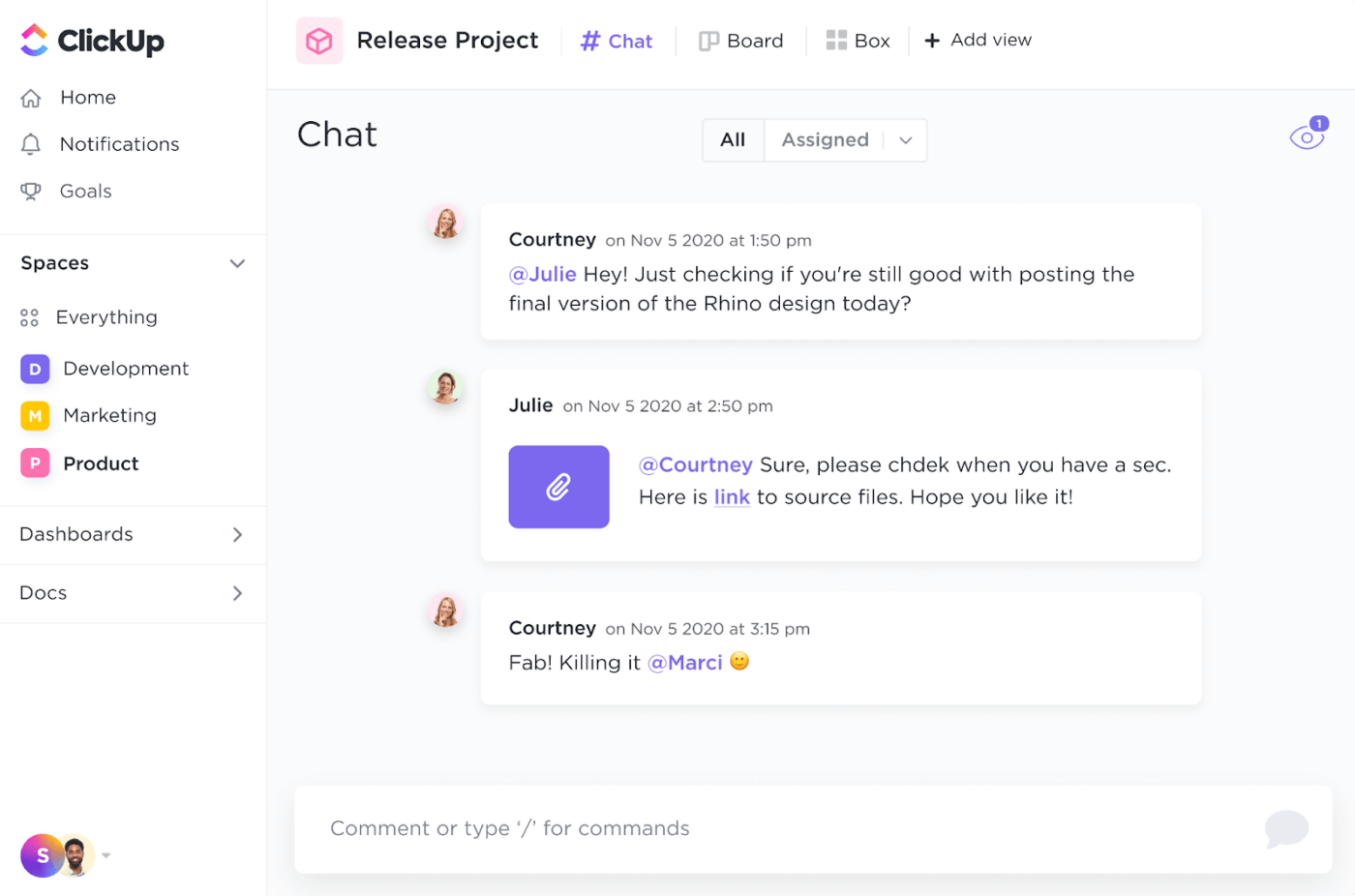
- Video conferencing with engagement boosters: Go beyond the basic meeting processes to boost engagement. Leverage collaborative features like ClickUp Whiteboards or shared documents to encourage real-time participation and collaboration, not just passive listening. You can track everyone’s activity, brainstorm ideas, and add notes

Utilizing educational technology for learning and development strategies
Upskilling should be available to everyone and not just the people in office. Tech makes it possible to overcome proximity bias within the workplace through:
- Learning Management Systems (LMS): Platforms like Coursera or Udemy provide access to courses, certifications, and skill development—no matter where an employee lives
- Mentorship platforms: Tools connect mentors and mentees regardless of location, combating the proximity bias that can plague traditional mentorship programs
- Microlearning opportunities: Short videos, articles, and interactive exercises can be sent to everyone, providing bite-sized learning that suits those working remotely
- Webinars and virtual workshops: These live learning events (with recordings available afterward!) bring expert knowledge directly to employees’ screens, ensuring location isn’t a barrier to development
Power up with ClickUp
Knowledge is power when fighting proximity bias! ClickUp’s HR Management Solutions can be your secret weapon for addressing proximity bias. By simplifying employee performance management, it ensures everyone on the team gets the visibility they deserve.

Build a workplace where everyone thrives. ClickUp’s HR tools support recruitment, onboarding, talent development, and employee management—wherever your employees are
Here’s how to avoid proximity bias in the workplace with ClickUp using the human resource management solution:
- Activity feeds for total transparency: Check who’s working on what, track task progress and team member contributions in one place with ClickUp Tasks. You can plan, organize, assign tasks, and collaborate with ease using customizable Task views

- Customizable workflows: Set up clear processes for tasks and projects. This eliminates any unfair advantage to in-office employees
- Communication within context: Attach discussions to specific tasks, keep notes organized, and ensure the decision-making history is accessible to everyone
- Resource management: Track employee availability to assign tasks fairly and avoid overloading any one individual, especially a remote worker
- Time tracking: Understand how long different tasks realistically take for better project planning and ensuring balanced workloads amongst your team
- Goals: Set clear team goals, track progress, and attach them to tasks. This ensures that everyone understands the big picture and how their individual work contributes to shared success
- Dashboards: Get customized views of project health, resources, and individual accomplishments with ClickUp Dashboards—the perfect way to track remote workers’ contributions and ensure their hard work gets the recognition it deserves

HR tasks made easier with ClickUp
HR departments can acutely feel the pain of proximity bias as they often see firsthand how physical presence can unfairly influence employee opportunities. ClickUp can streamline your processes, mitigate proximity bias, and promote fairness in person and across your entire workforce:
- Recruitment made easier: Track applicants, manage candidate feedback, and collaborate with hiring managers remotely, all in one organized place. No more losing out on great talent because they don’t live nearby!
- Onboarding without overwhelm: Create checklists, share essential documents, and track new hire progress so that remote employees feel welcomed and supported from day one
- Employee management reimagined: Simplify vacation requests, track performance goals, and store confidential documents—and yes, spot those potential patterns of proximity bias to keep your processes fair
- Enhanced talent development: Set up learning pathways, manage mentorship pairings, and track skill development remotely. Everyone gets access to the tools to grow their careers, regardless of location
- Goals and dashboards unified: Clearly outline company-wide objectives and create customized dashboards to track key metrics and ensure progress. This promotes alignment and transparency across the organization
- Enhanced collaboration: Engage in real-time collaboration, brainstorming sessions, document co-editing, and streamlined communication, dissolving those barriers created by location differences with ClickUp Docs and many more collaborative features
 Summarize this article for me please
Overcome Proximity Bias in the Workplace With ClickUp
We often don’t realize when proximity bias creeps in. However, with a little awareness, smart moves, and integrating tools like ClickUp, you can build a workplace where everyone feels seen and has access to a fair shot at success.
Remember, creating an inclusive team is a journey, not a sprint. So, keep at it, stay open, and choose a tool with transparency built right in.
Sign up on ClickUp for free to reduce bias, increase productivity, and transform your work environment!


Everything you need to stay organized and get work done.

Recent Articles
8 Communication Strategies That Actually Fix Team Chaos 
8 Communication Strategies That Actually Fix Team Chaos
ADHD Task Management: How to Build a System You’ll Still Use in a Month 
ADHD Task Management: How to Build a System You’ll Still Use in a Month
Managing Creative Teams: How to Lead Your Team to Success
Managing Creative Teams: How to Lead Your Team to Success
