

Sorry, there were no results found for “”
Sorry, there were no results found for “”
Sorry, there were no results found for “”
Most teams pick a text-to-speech platform based on a feature list, then realize too late they’ve optimized for the wrong thing. Lightning-fast response times don’t matter if your podcast sounds robotic, and studio-quality voices are useless if your chatbot lags by half a second!
This guide breaks down Cartesia AI vs. ElevenLabs across the metrics that actually determine whether your voice project succeeds or flops, so you can stop second-guessing and start shipping audio that works.
You need a text-to-speech (TTS) tool to generate AI voice audio, but figuring out which one is right for you can be confusing. The market is split between tools built for speed and tools built for quality, and choosing the wrong one can derail your project. This is the core of the Cartesia AI vs. ElevenLabs debate.
To make it simple, here’s a quick breakdown.
| Feature/Category | Cartesia AI | ElevenLabs |
|---|---|---|
| Primary strength | Real-time, low-latency voice interactions | Ultra-realistic, emotionally expressive audio |
| Best for | Voice agents, customer support, telephony | Audiobooks, podcasts, professional voiceovers |
| Latency | ~40ms (Sonic 3) | Higher (quality-optimized) |
| Voice library | Telephony-focused, clean 8kHz voices | Vast library with emotional depth |
| Voice cloning | Voice design tools | Professional Voice Cloning |
| Customization | Speed/volume control | Temperature, emotional control |
| Pricing* | Paid plans start at $5/month, billed monthly | Paid plans start at $5/month, billed monthly |
Our editorial team follows a transparent, research-backed, and vendor-neutral process, so you can trust that our recommendations are based on real product value.
Here’s a detailed rundown of how we review software at ClickUp.
The right choice depends entirely on whether you need speed for real-time interactions or emotional expressiveness for creating engaging content.
Before diving into the technical details, it’s helpful to understand how these text-to-speech platforms fit into the broader landscape of AI applications. Watch this video to explore various AI use cases and see how voice technology is transforming industries:
Cartesia AI is a text-to-speech platform designed specifically for real-time voice applications where minimal latency is critical. It’s the ideal choice for interactive voice AI, such as customer support bots, appointment schedulers, and phone-based assistants that need to feel responsive.
The stakes are extremely high for TTS because humans are keenly attuned to human speech. Every millisecond of delay makes a conversation feel unnatural and clunky, which can frustrate users and lead to high drop-off rates. Your bot ends up feeling, well, like a bot. 🤖
Voice agents need to respond instantly, with 85% of customer service leaders now piloting conversational AI in 2025.
That’s why you need a TTS platform built from the ground up for speed.
Here’s what makes Catesia AI so fast:
Cartesia trades some emotional depth for this incredible speed. The voices are clean and professional, but they may lack the nuanced expressiveness needed for storytelling or persuasive sales content.
Managing costs for a high-volume contact center can be a headache, especially with unpredictable per-character pricing. Cartesia uses a credit-based pricing model designed for teams with heavy usage.
The pricing structure generally includes:
This model is designed for teams with frequent API requests. As always, you should verify the exact rates on Cartesia’s website.
ElevenLabs is a text-to-speech platform celebrated for producing some of the most realistic and emotionally expressive AI voices available. It has become the industry standard for content creators, publishers, and marketers who need high-quality audio that engages listeners.
AI-generated voiceovers made with AI voiceover software, the kind used in some audiobooks and videos, can sometimes sound flat and robotic. It completely pulls you out of the experience. When your content needs to connect with an audience on an emotional level, a generic, lifeless voice just won’t cut it.
You need a TTS platform that prioritizes realism and emotional depth above all else.
Here’s why ElevenLabs is the top choice for quality content:
This focus on quality comes with higher latency, making it less suitable for real-time voice agents. However, for pre-recorded content like podcasts or video voice-overs, the unparalleled realism is worth the extra processing time.
📮ClickUp Insight: 92% of knowledge workers risk losing important decisions scattered across chat, email, and spreadsheets. Without a unified system for capturing and tracking decisions, critical business insights get lost in the digital noise.
With ClickUp’s Task Management capabilities, you never have to worry about this. Create tasks from chat, task comments, docs, and emails with a single click!
Investing in premium voice quality can feel like a big commitment, especially when you’re not sure how many characters you’ll use each month. ElevenLabs offers a tiered subscription model based on character limits, so you can choose a plan that matches your production needs.
The available tiers typically include:
The powerful Professional Voice Cloning feature is usually reserved for the higher-tier plans. The superior quality makes it ideal for any project where voice performance is key.
Here are the specific capabilities that matter most when choosing between these two platforms.
Each feature comparison includes a quick verdict to help you make a faster decision. 🛠️
When you’re creating audio, the voice is everything. A clear, professional voice might be perfect for a phone menu, but it would sound odd narrating a crime thriller!
🏆 The verdict: ElevenLabs wins on pure voice quality and naturalness. Choose Cartesia only when clarity in a noisy phone environment is more important than emotional depth.
For a real-time conversation, 500ms of latency increases speaker overlap and silences, making conversations feel unnatural. If your AI voice agent can’t keep up, users will get frustrated and hang up.
🏆 The verdict: Cartesia wins on speed, hands down. If you’re building a real-time voice agent or an interactive phone system, its low latency is essential.
Sometimes, a pre-made voice isn’t enough. You might need to replicate a specific person’s voice for brand consistency or create a unique voice for a character.
🏆 The verdict: ElevenLabs is the clear winner for voice cloning. If you need to create a custom brand voice or replicate a specific person’s speech, its technology is far more capable.
How much control do you need over the final performance? Some teams want a simple, reliable output, while others need to direct the AI voice like an actor.
🏆 The verdict: ElevenLabs offers more granular control. Cartesia is a better choice for teams that want reliable, consistent results without needing to tweak a dozen settings.
Does your project require multiple languages or specific regional accents? The size and diversity of the voice library can be a deciding factor.
🏆 The verdict: ElevenLabs has a larger and more diverse voice library. While Cartesia’s selection is sufficient for many business applications, teams needing specific accents or broad language coverage will find more options with ElevenLabs.
Real users offer a valuable perspective beyond feature lists.
One user on r/TextToSpeech, discussing using Cartesia for video games, said:
We’re building voice-to-voice video games, so latency and cost are most important to us, but there is a floor on quality we’d accept.
We use Cartesia Sonic. Sub 200ms latency, about $2/hr (much cheaper than a lot of commercial alternatives). Voice cloning based. Playback controls.
It’s the best we’ve found for our very specific requirements.
In contrast, a user on r/selfpublish shared their experience with a narration project:
I had to use ElevenLabs for a while at work and used the opportunity to test the tool with bits of my own writing.
The best praise I can give it is that it’s a spectacular tool for revision. I frequently use Microsoft Word’s text-to-speech features to have my chapters read back to me, and this helps me identify typos and awkward sentences that I wouldn’t have caught otherwise. ElevenLabs is many, many times better than Word in that regard.
The internet has reached a consensus. Developers building interactive systems praise Cartesia’s speed, while content creators who need high-quality, expressive audio almost always prefer ElevenLabs.
Choosing a TTS tool is just one piece of the puzzle. Your team is still stuck juggling scripts in one app, feedback in another, and project plans in a spreadsheet. This Work Sprawl—the fragmentation of work activities across multiple, disconnected tools that don’t talk to each other—creates a messy, disconnected workflow where context is lost, deadlines are missed, and frustration builds.
Eliminate Work Sprawl by bringing your entire content production process into ClickUp, the Converged AI Workspace: a single platform where projects, documents, and conversations live together, powered by contextual AI that understands your work.
Instead of just generating audio, you can manage the entire lifecycle of your content—from idea to publication—in one place.
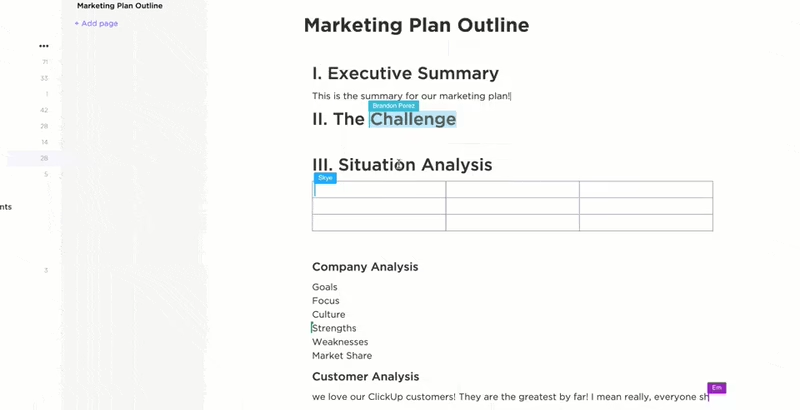
Eliminate scattered documents and collaborate in real time with ClickUp Docs. Write, edit, and collaborate on scripts and show notes in the same place you manage your tasks. With real-time collaboration, your writers, editors, and voice talent can work together simultaneously, and any comment can be turned into an actionable task so feedback never gets lost.
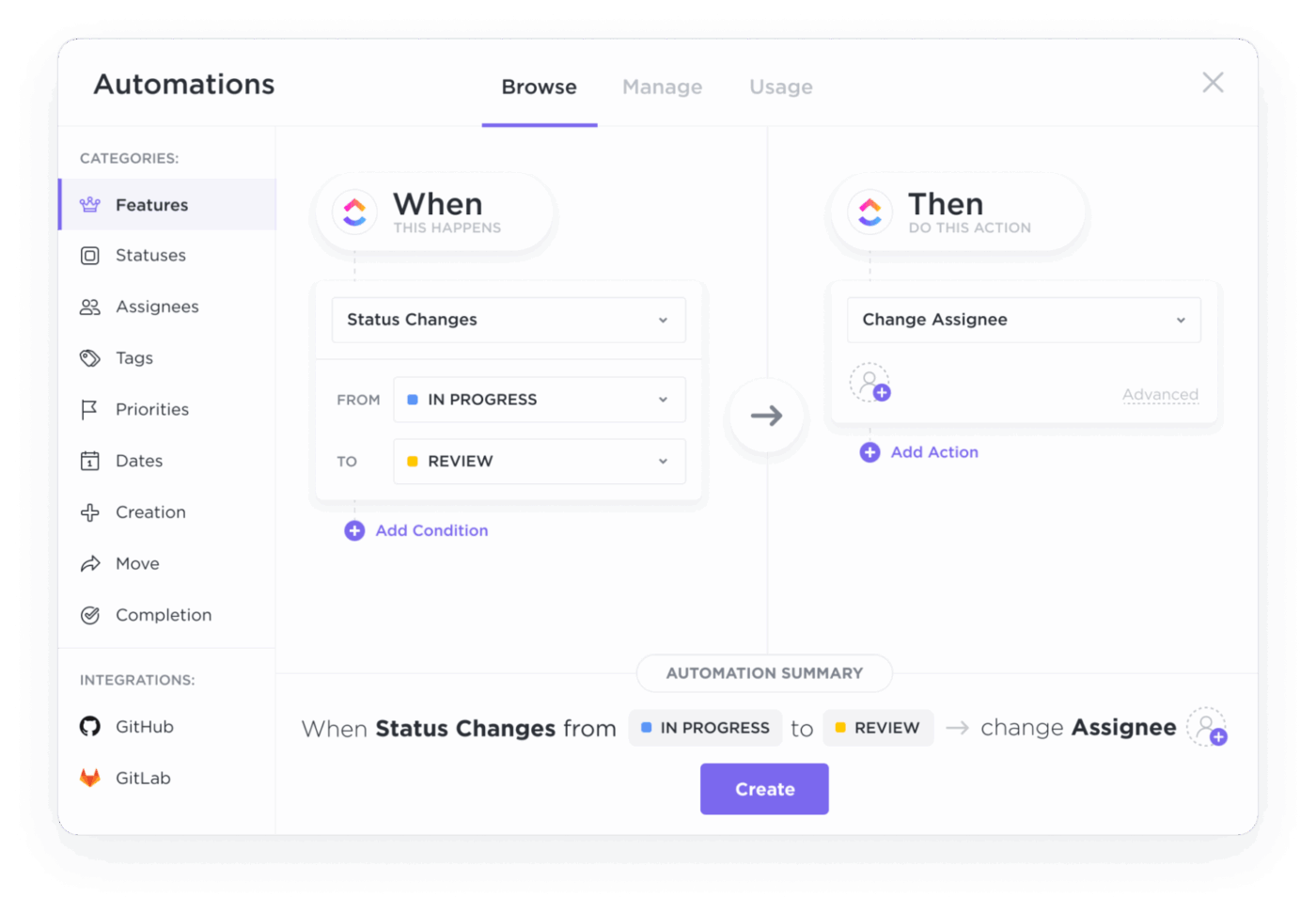
End the manual handoffs and constant status check-ins with ClickUp Automations. You can set up simple rules to automate your workflow. For example, when a script’s status is changed to “Approved,” you can automatically create a new task for the voiceover artist and notify the project manager.
Turn scattered meeting notes into structured action items with the ClickUp AI Notetaker. It can join your meetings, provide a full transcript and video recording, and generate a summary with key decisions and action items. Now, brainstorming sessions and script reviews are instantly captured and converted into tasks.
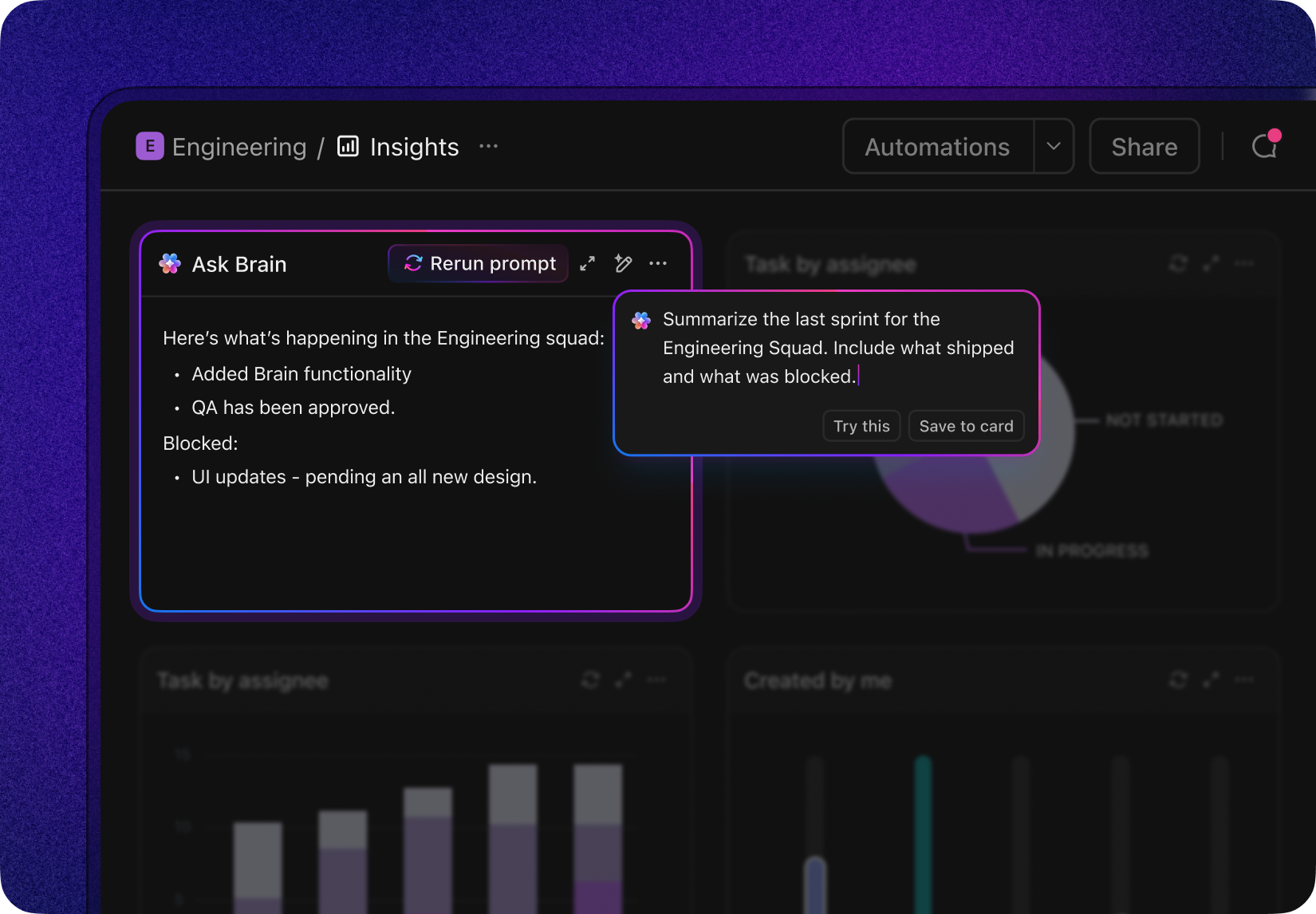
Get instant answers and draft content faster by asking ClickUp Brain. Because it has the full context of your tasks, docs, and conversations, it can help you draft scripts, summarize long feedback threads, or answer questions about a project’s status. You can even @mention Brain in a task comment, just like a teammate.
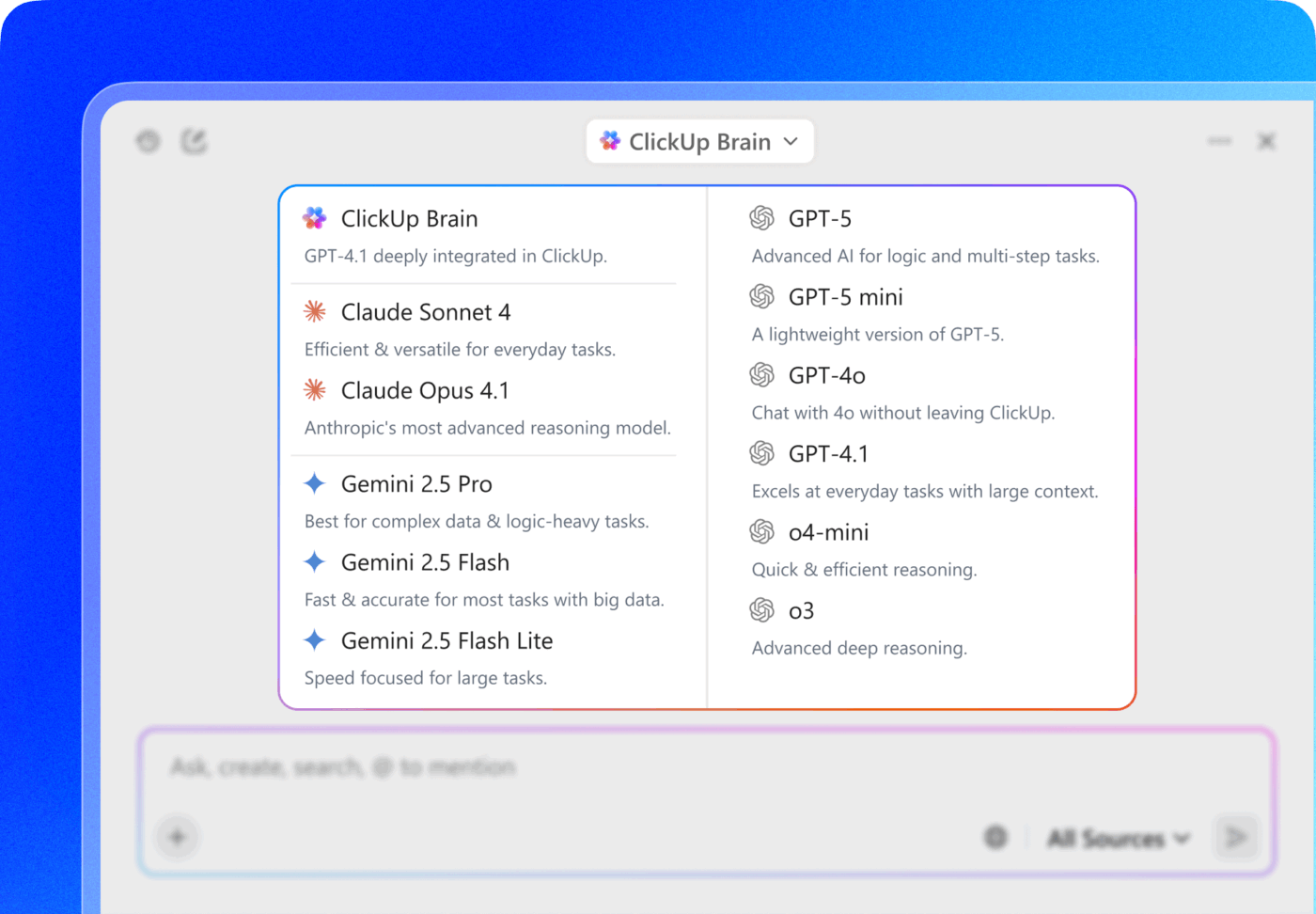
And the icing on the cake: ClickUp Super Agents.
Create a Super Agent with 100% work context to create a first draft of your audio script and assign it to your script expert. Generate your AI voiceover and then set up your agent to take the task ahead to production. when the status changes to ‘Voiceover ready”
ClickUp doesn’t replace your TTS tool; it gives your entire audio production workflow a home.
📮ClickUp Insight: 37% of our respondents use AI for content creation, including writing, editing, and emails. However, this process usually involves switching between different tools, such as a content generation tool and your workspace.
With ClickUp, you get AI-powered writing assistance across the workspace, including emails, comments, chats, Docs, and more—all while maintaining context from your entire workspace.
Here’s how to decide between the two platforms.
In many cases, a company might even use both—Cartesia for its customer service infrastructure and ElevenLabs for its marketing content.
Regardless of which TTS platform you choose, the surrounding workflow of script creation, feedback loops, and project tracking needs a central hub to keep everything organized. A powerful voice is only effective if the process behind it is seamless.
Bring all the work around your voice content into one place. Get started for free with ClickUp today.
© 2026 ClickUp



