
Sorry, there were no results found for “”
Sorry, there were no results found for “”
Sorry, there were no results found for “”
Ever walked out of a brainstorming session drowning in ideas but still stuck at square one? That’s because most people brainstorm ineffectively. And it’s costing the team and you big time.
Creativity fuels breakthrough businesses, yet 58% of employees feel their company doesn’t even value it. The problem? Brainstorming without structure leads to stale ideas, groupthink, and dead ends.
But don’t worry, we’ve got you covered. 🎯
This isn’t just another list of’ 10 brainstorming tips’. In this guide, we share a proven playbook packed with techniques, real-world examples, and tools to unlock creative solutions faster with productive brainstorming sessions.
Brainstorming is a creative technique used to generate a broad list of ideas in response to an initial question or problem. The goal is to produce as many ideas as possible, focusing on quantity over quality.
But to do it right, you need to understand the basics:
🧠 Fun Fact: Did you know that the term ‘brainstorming’ was popularized by advertising executive Alex F. Osborn in his 1953 book Applied Imagination? He developed this technique to help groups generate creative ideas by encouraging spontaneous thinking and deferring judgment.
Brainstorming is a powerhouse for innovation and teamwork. Let’s dive into its top perks 🌟
📮ClickUp Insight: 37% of workers send follow-up notes or meeting minutes to track action items, but 36% still rely on fragmented methods. Without a unified system, key insights can get buried in chats, emails, or spreadsheets.
With ClickUp, you can instantly turn conversations into actionable tasks across tasks, chats, and docs—ensuring nothing falls through the cracks.
Let’s discuss the 10 creative and effective brainstorming techniques that help generate ideas and inspire creativity:
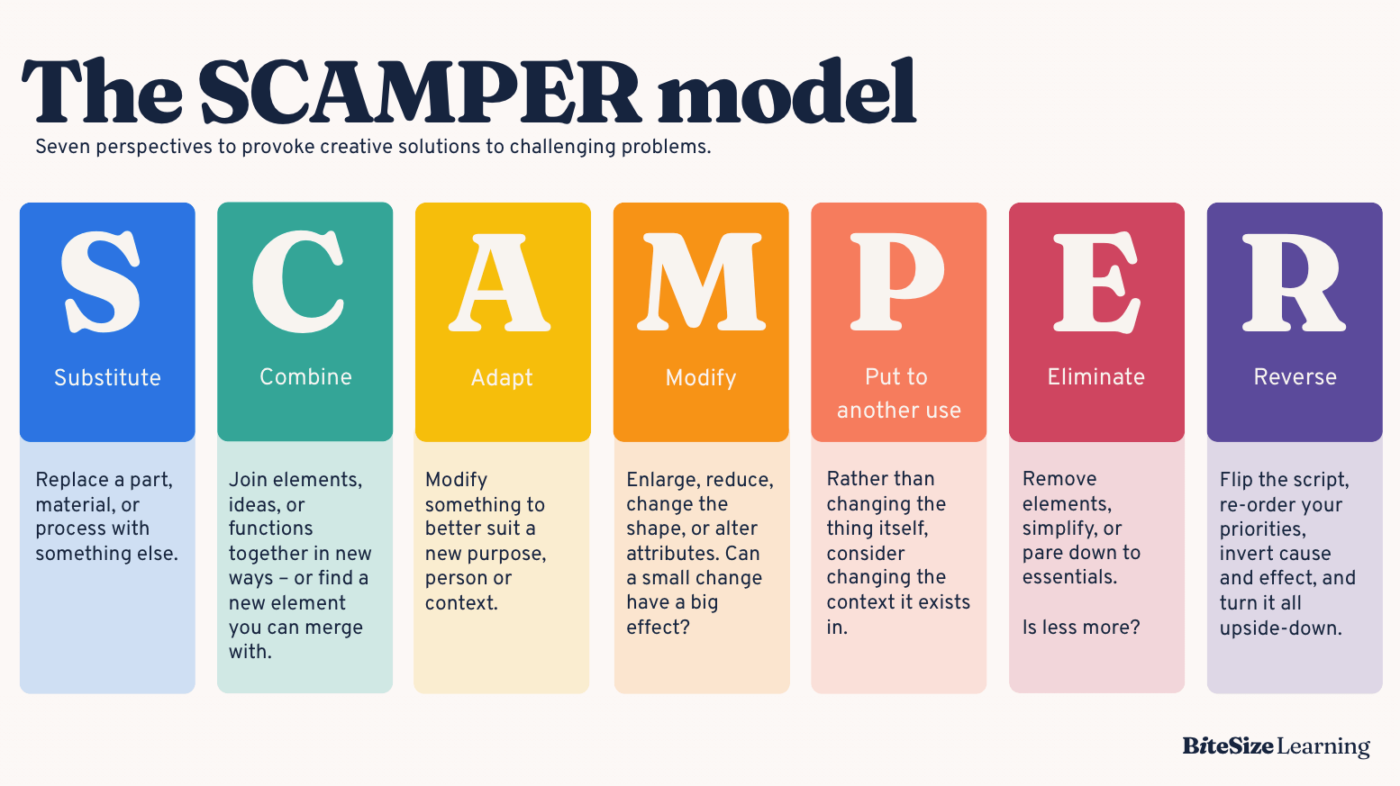
SCAMPER is a simple yet powerful brainstorming tool for rethinking and improving existing ideas or products. The name stands for Substitute, Combine, Adapt, Modify, Put to Another Use, Eliminate, and Reverse.
Each step challenges you to see your idea differently. Ask yourself, ‘What can I substitute?’ or ‘Can I combine two elements?’ The goal is to break free from conventional thinking and spark fresh solutions.
Example: A startup makes reusable water bottles. Here’s how they would approach it using the SCAMPER model:
🌟 Best for brainstorming new product features or revamping existing ones.
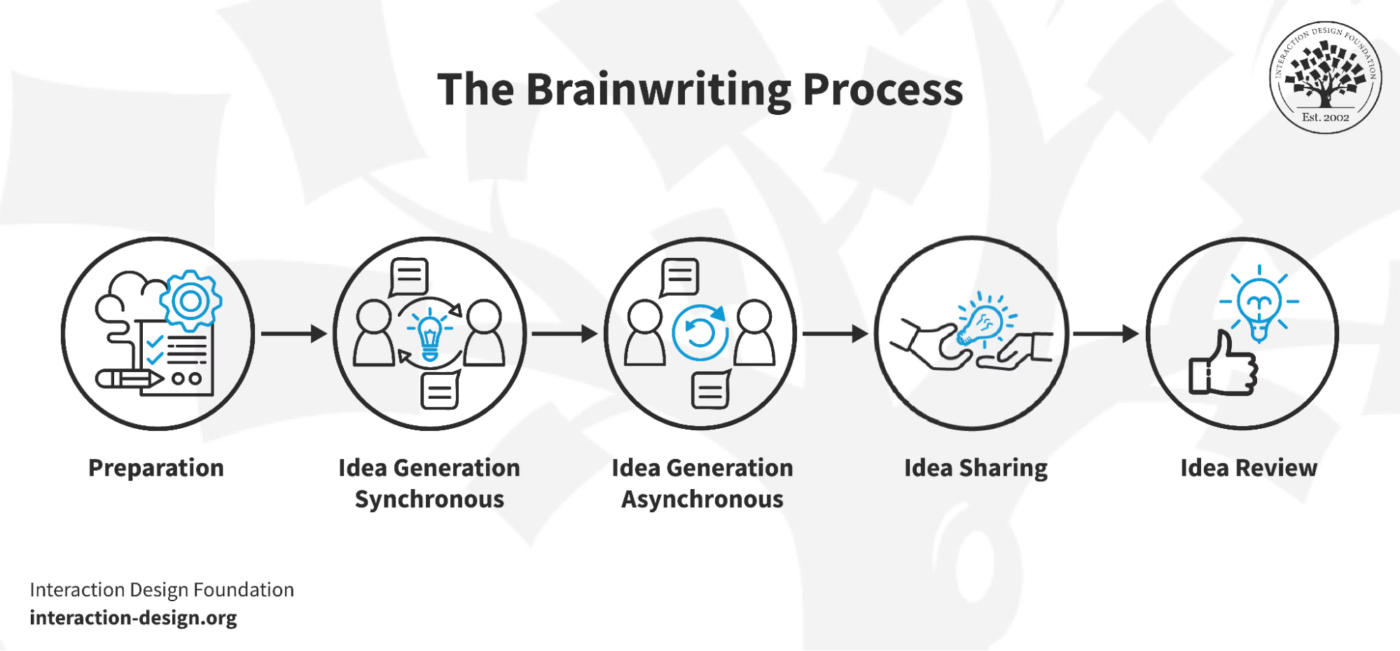
A low-pressure way to ensure all the ideas generated get heard. Instead of speaking out loud, team members write down their ideas, making this perfect for introverts or quieter voices. Then, the team reviews and builds on them together.
🌟 Best for team brainstorming sessions where inclusivity and idea variety are key
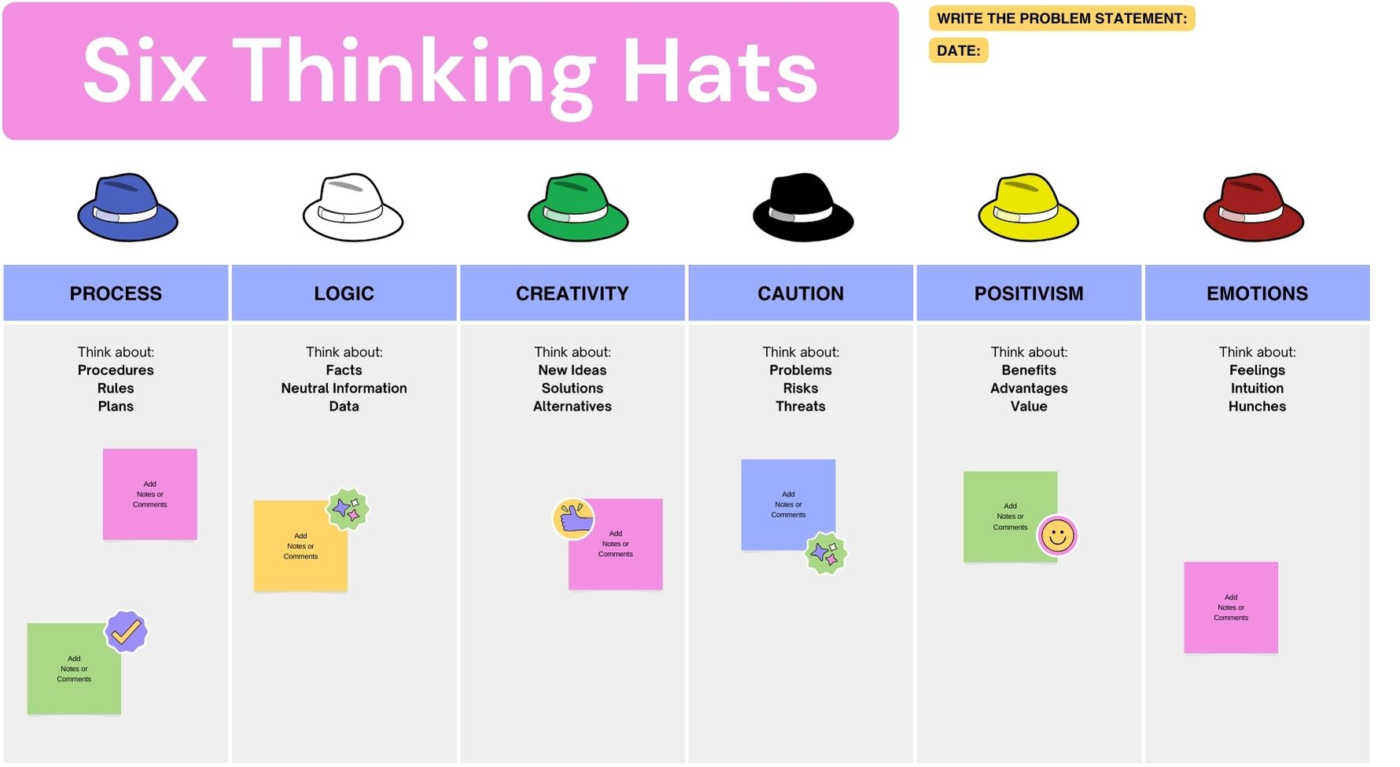
Edward de Bono’s method helps teams tackle problems from multiple angles to generate innovative ideas.
Each ‘hat’ represents a mindset:
🟢 Creativity: Think about new ideas, solutions and alternatives
🔴 Emotion: Use the lens of feelings, gut hunches, and intuitions
⚪ Logic: Think from the point of view of facts, data, and neutral information
🟡 Positivism: What are the potential benefits, added value, and advantages of the situation at hand
🟠 Caution: Wear a critical lens to brainstorm on problems, risks, and threats
🔵 Process: Brainstorm on improvement, analyzing the current procedures, rules, and plans
Wearing one hat at a time keeps discussions focused and structured. No more chaotic back and forth, as it’s like giving your brain a specific role to play!
🌟 Best for team decision-making and problem analysis
Role storming is a fun twist on traditional brainstorming.
It lets you step into someone else’s shoes, whether a customer, competitor or even a fictional character. Thinking from their perspective helps break usual thought patterns and sparks fresh ideas.
🌟 Best for understanding customer pain points and generating user-focused solutions
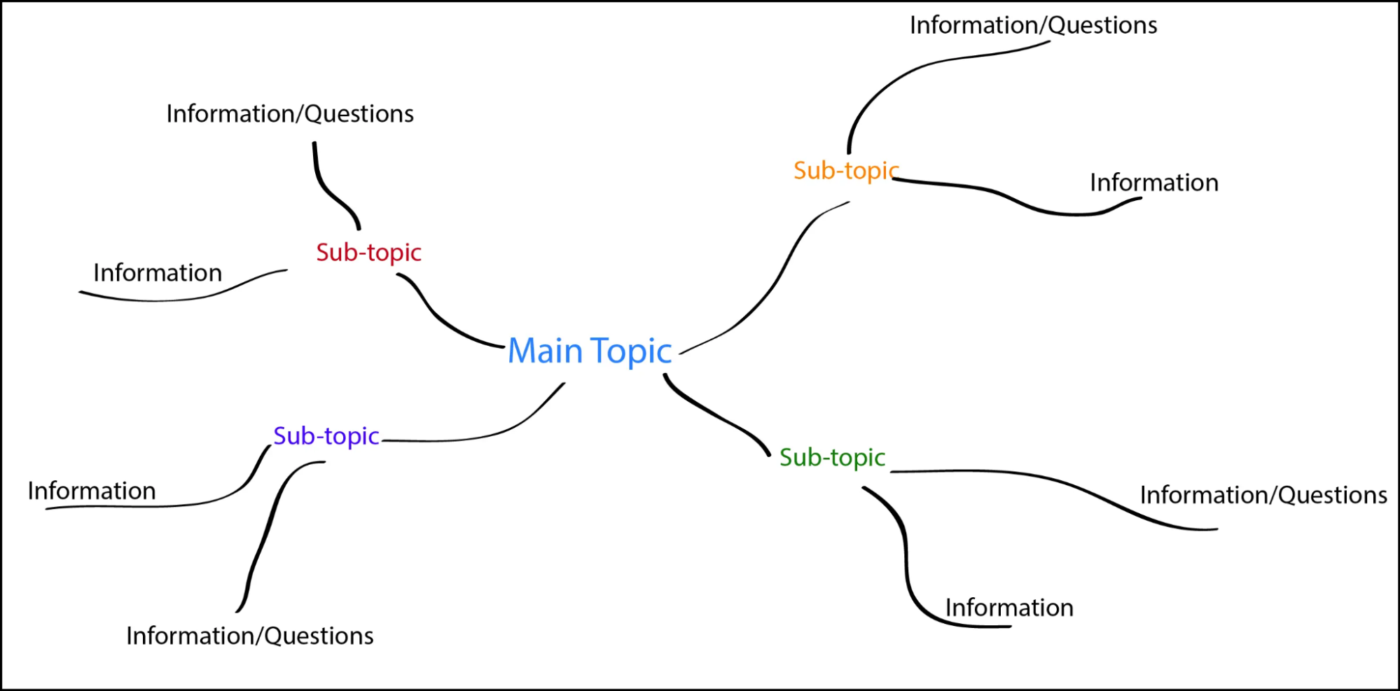
Mind mapping is like creating a visual roadmap for your thoughts. You start with a central idea and draw branches to related concepts, like a tree spreading its branches.
By laying everything out visually, you can spot patterns, gaps, or even new opportunities.
You can check out these mind map examples for inspiration.
🌟 Best for project planning or breaking down complex topics
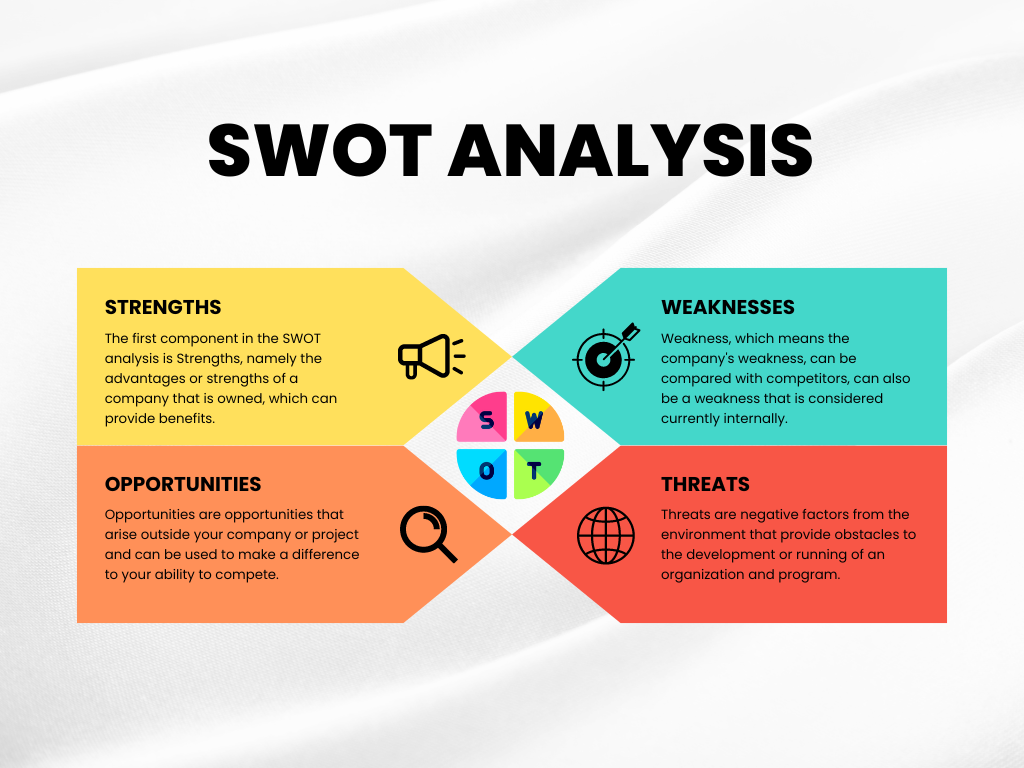
SWOT analysis is a structured way to assess Strengths, Weaknesses, Opportunities, and Threats. It helps you map out your position, identify challenges and advantages, and create a clear strategy for moving forward.
Here’s a breakdown of the four critical components of a SWOT analysis in project management:
🌟 Best for strategic planning or business evaluations
Reverse brainstorming flips the problem-solving process on its head by asking, ‘How can we cause the problem instead?’
It may sound counterintuitive, but this technique helps identify potential pitfalls and challenges you might overlook. Once the negative ideas are listed, you brainstorm possible solutions to prevent or fix those issues.
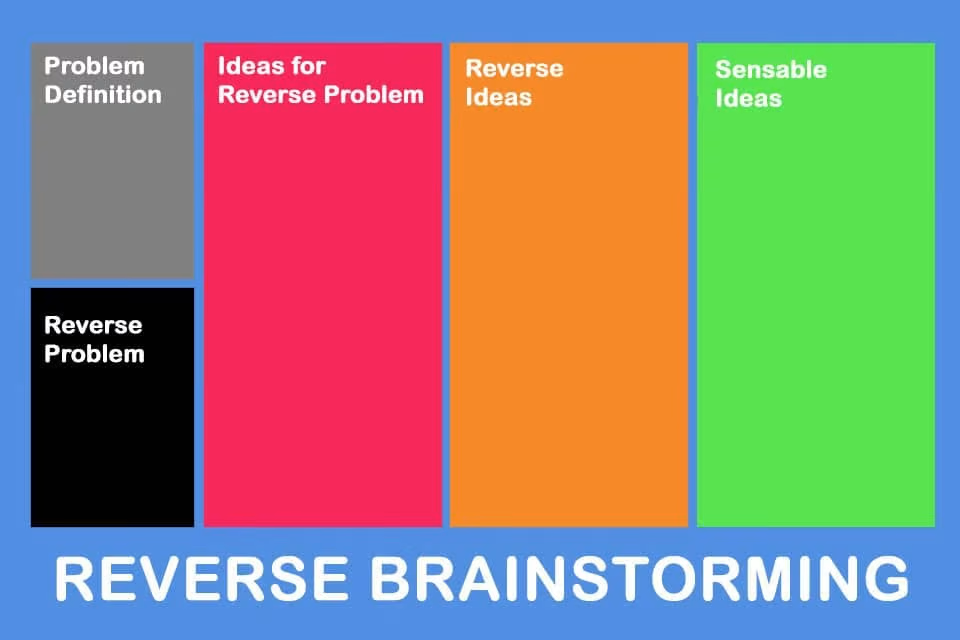
🌟 Best for risk assessment and project troubleshooting
Random word association sparks creativity by using unexpected words to trigger new ideas. You start with a completely unrelated word and brainstorm how it connects to your problem or goal.
It’s surprising how random connections can lead to innovative solutions you’d never think of otherwise! This technique is perfect for breaking out of mental ruts. It’s playful, spontaneous, and super effective for overcoming creative blocks.
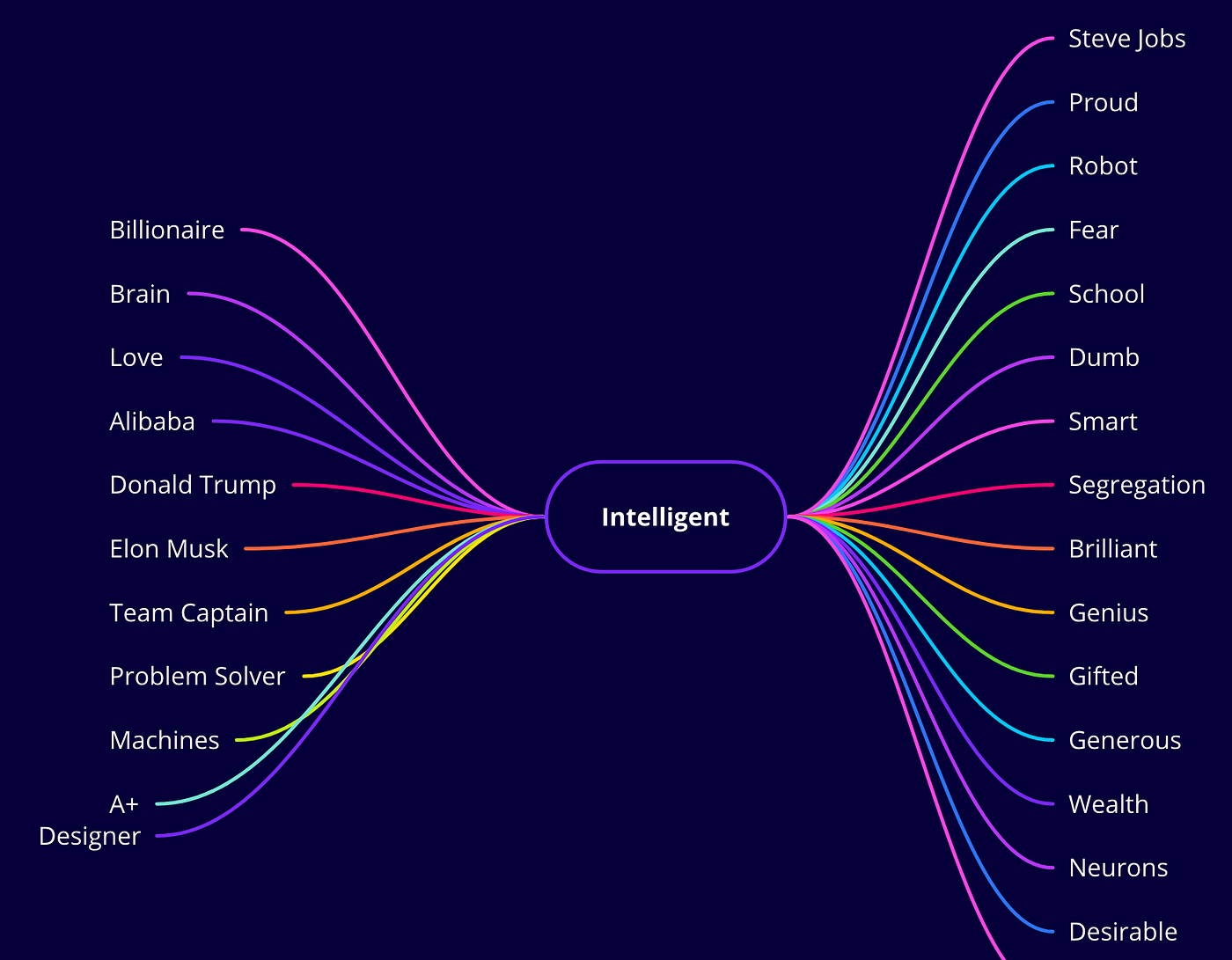
🌟 Best for generating fresh ideas for marketing campaigns or product names
Starbursting is all about asking the right questions before jumping to solutions. Instead of brainstorming answers, you focus on:
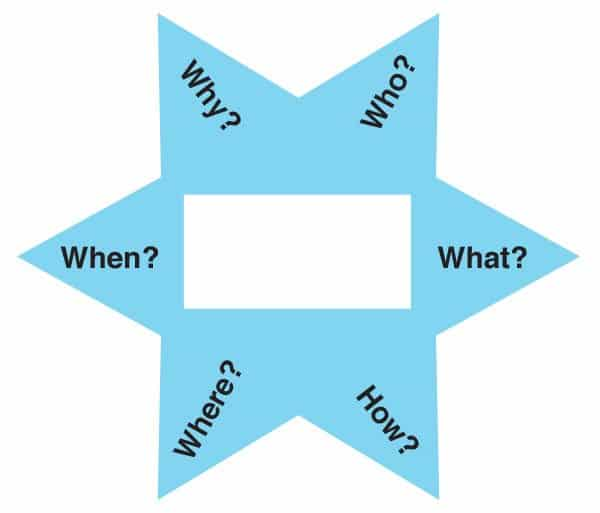
This technique ensures that every angle is considered before making decisions.
🌟 Best for planning product launches or business strategies
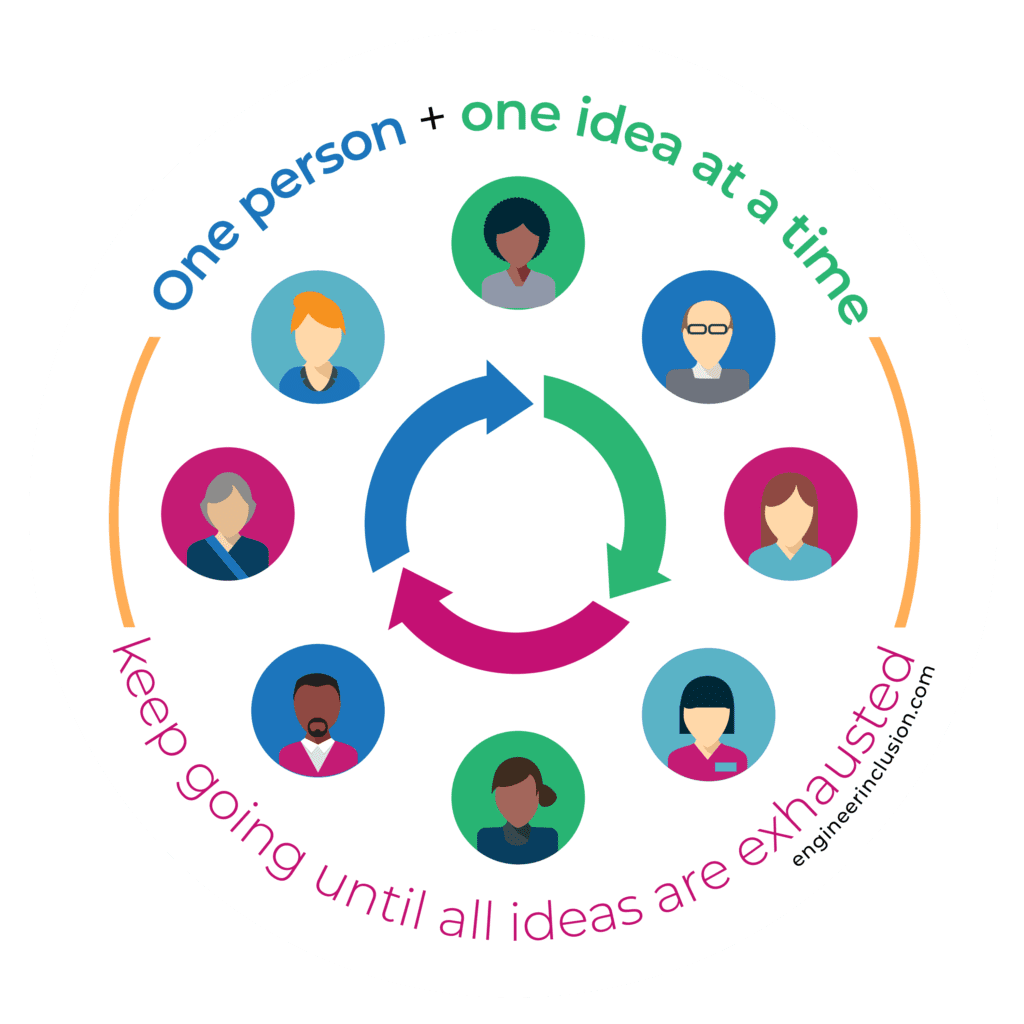
Round-robin brainstorming ensures everyone in the team gets a say.
Instead of one person dominating the discussion, each team member takes turns contributing an idea before the open discussion begins. It’s structured, inclusive, and great for gathering a variety of perspectives.
🌟 Best for team meetings where everyone’s input is valuable
Let’s explore ten examples of how brainstorming can drive better business and marketing decisions.
▶️ Scenario: Your team needs fresh ideas for a new feature but isn’t sure what users will love.
✅ Approach: Use the SCAMPER technique to spark creativity and rethink your project management tool.
🚀 Outcome: This structured approach unlocks innovative ideas, leading to a feature that’s both useful and game-changing.
▶️ Scenario: The marketing and sales teams often miscommunicate about lead quality, leading to frustration and lost deals. The team needs a better way to boost collaboration.
✅ Approach: The team tries brainwriting to tackle the issue:
🚀 Outcome: The teams implement a weekly sync and a shared CRM tagging system, reducing confusion and speeding up deal closures.
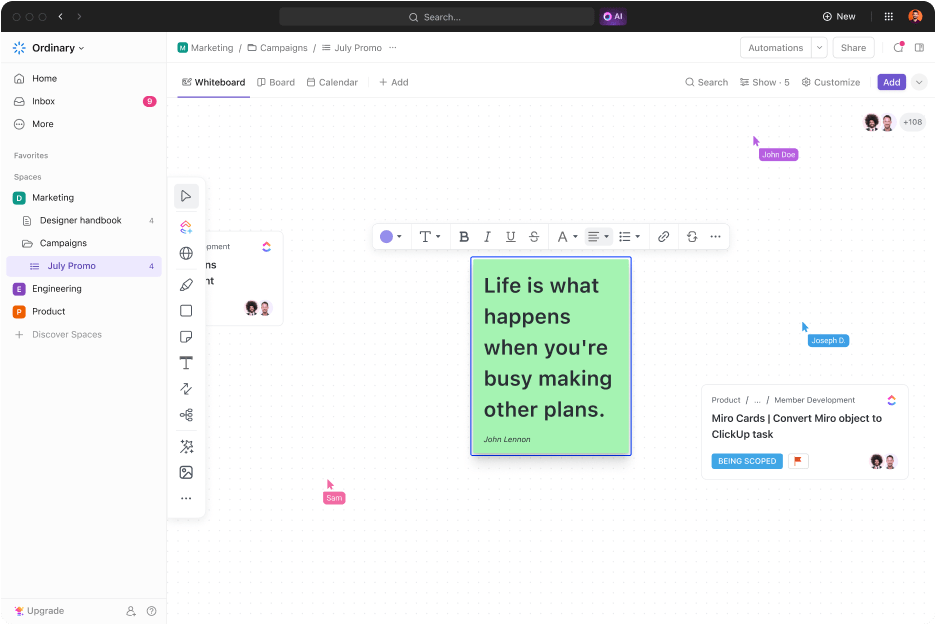
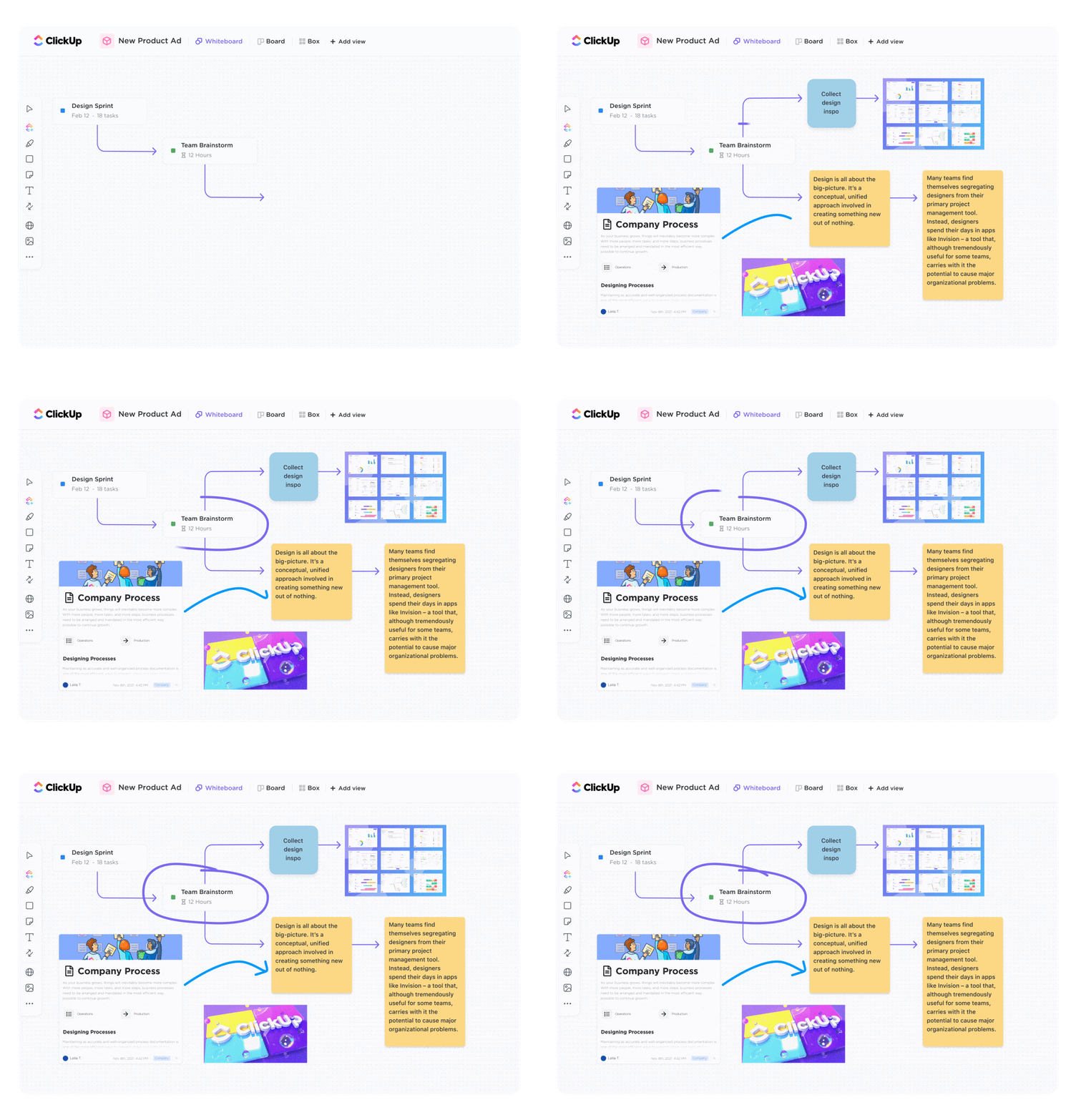
For a smoother and more interactive brainstorming session, use ClickUp Whiteboards. Team members can add, expand, and connect ideas in real time, making the process more engaging, structured, and collaborative.
▶️ Scenario: Your team is launching a new plant-based energy drink and needs a campaign that grabs attention and drives engagement
✅ Approach: The team uses the Six Thinking Hats technique to brainstorm:
🚀 Outcome: The campaign launches with viral Instagram engagement, high user-generated content, and strong brand awareness among health-conscious consumers
▶️ Scenario: Your company, a food delivery startup, wants to enhance customer service by identifying pain points and finding better solutions.
✅ Approach: Use role storming to step into the shoes of different customers. Here’s how:
🚀 Outcome: The team uncovers unique insights and creates a more personalized, effective strategy by seeing the service through different customer lenses.
▶️ Scenario: You’re a nutrition blogger, but every topic you think of feels overdone. You need a fresh way to generate creative blog ideas
✅ Approach: You grab a whiteboard and start mind mapping:
Second layer: Under “Common Myths,” you expand with:
🚀 Outcome: By the end of this content brainstorming exercise, you will have a full list of unique, research-backed blog ideas that stand out from the usual advice.
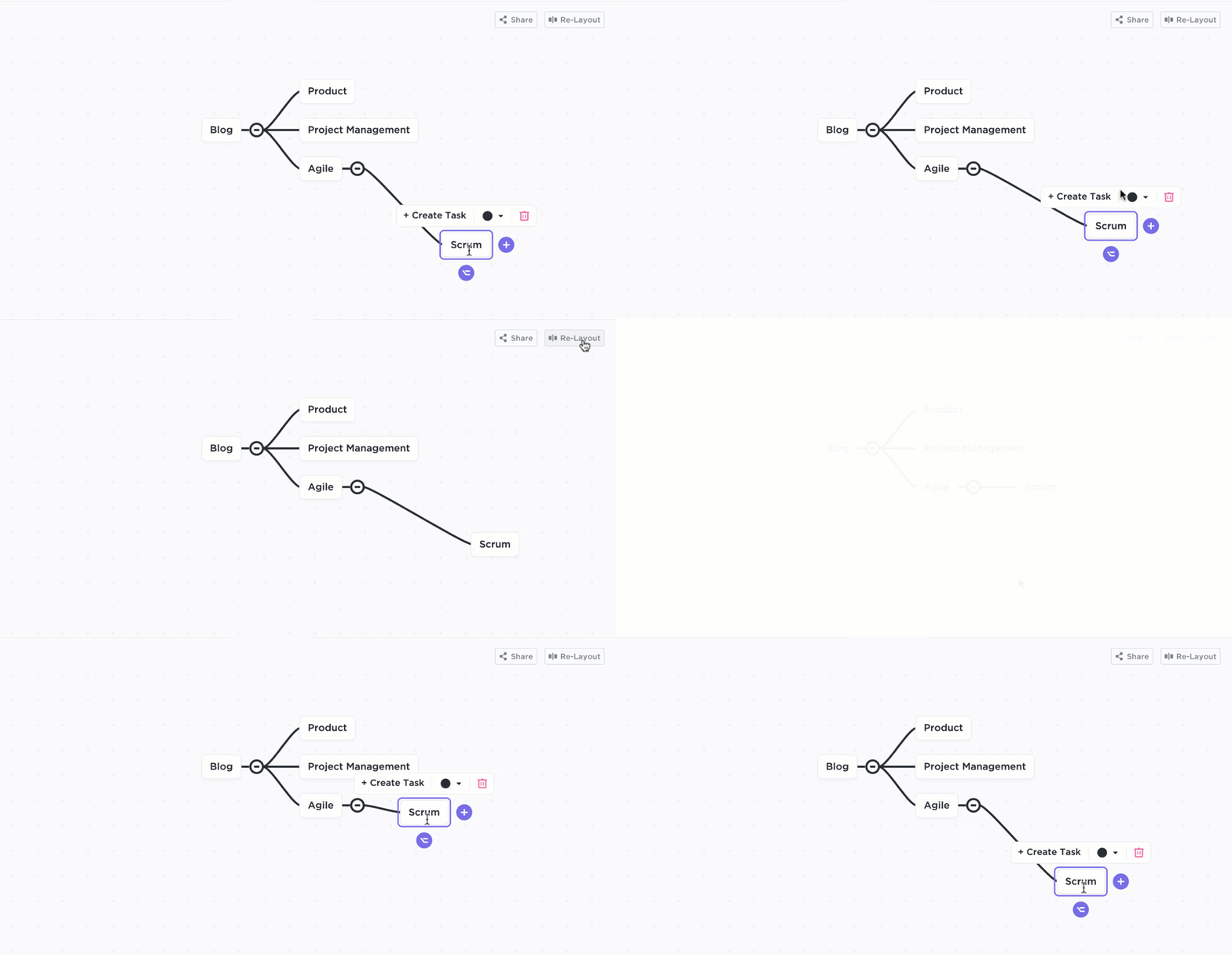
The drag-and-drop interface of ClickUp Mind Maps lets you visually connect ideas, reorganize branches, and even link tasks directly to your blog planning. The result?
Scattered thoughts turned into a structured content strategy.
▶️ Scenario: You’re launching a new AI-powered claims processing platform in the competitive insure-tech market. To carve out your niche, you need a sharp strategy.
✅ Approach: You run a SWOT analysis to define your game plan:
🚀 Outcome: With this insight, you focus on building trust through security certifications and transparent policies while leveraging speed as your key differentiator in marketing.
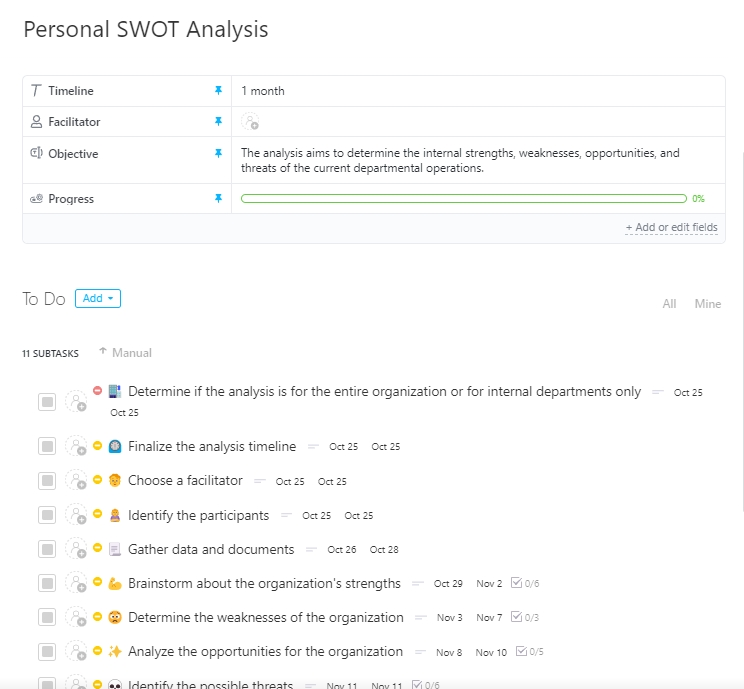
Use the Personal SWOT Analysis Template by ClickUp to clearly outline your strengths, weaknesses, opportunities, and threats for a well-rounded strategy.
▶️ Scenario: Your SaaS company is struggling with high customer churn, and traditional brainstorming isn’t leading to breakthrough ideas.
✅ Approach: You try reverse brainstorming to find hidden causes and solutions:
🚀 Outcome: Your team identifies previously overlooked issues, leading to a focused action plan that improves retention.
▶️ Scenario: Your smartwatch startup wants to design a truly unique interface, but every idea feels too similar to existing products.
✅ Approach: You try random word association to break out of predictable thinking:
🚀 Outcome: Your team moves beyond generic UI ideas, designing a futuristic, space-inspired interface that sets your product apart.
▶️ Scenario: Your team is gearing up to launch a new AI-powered note-taking app, but there are a million moving pieces to consider.
✅ Approach: You use starbursting to ensure a comprehensive launch plan:
1️⃣ Create a star diagram with “AI Note” at the center.
2️⃣ Label the six key questions and brainstorm answers:
Brainstorm answers:
🚀 Outcome: Instead of a scattered approach, your team builds a detailed, well-rounded launch plan that leaves no blind spots.
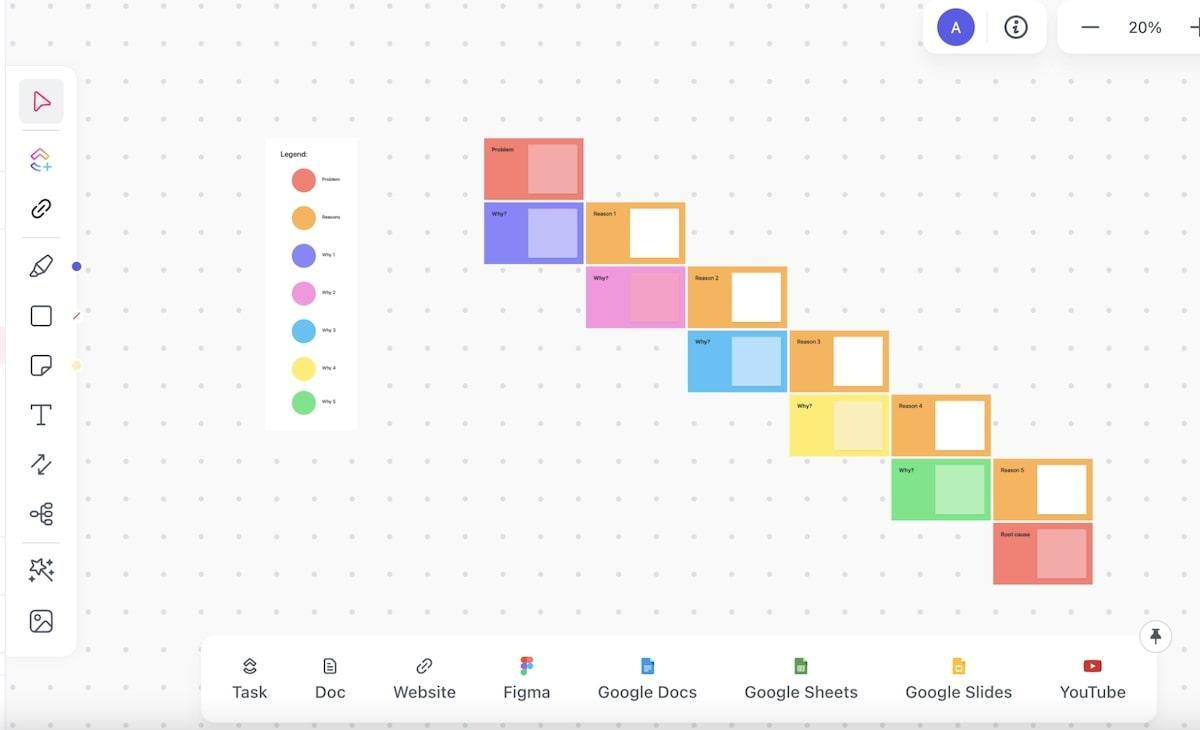
If you’re looking to dig deeper into challenges, try the ClickUp 5 Whys Brainstorming Template.
It offers a simple, stair-like step-by-step approach to identifying root causes. You can also explore a variety of other brainstorming templates here to fuel your creativity!
▶️ Scenario: Your company is struggling with low employee morale and wants fresh, practical engagement ideas that actually work.
✅ Approach: Use the round-robin brainstorming technique. Here’s how:
1️⃣ Form a group: Bring in HR, managers, and employees from different teams. 👥
2️⃣ State the problem: “How can we make work more engaging and meaningful?” 📝
3️⃣ One idea at a time: Each person shares one engagement strategy:
4️⃣ Keep going until the group generates 15-20 solid ideas.
🚀 Outcome: Instead of relying on generic engagement tactics, your company gets employee-driven solutions that feel authentic and effective.
Mastering these ideation techniques and understanding these brainstorming examples can elevate your brainstorming sessions and lead to breakthrough solutions.
Enhancing your brainstorming sessions with the right tools can transform your scattered ideas into actionable plans.
In fact, a Deloitte study found that 75% of surveyed individuals believed access to collaborative software would improve workflow, potentially boosting productivity by up to 20-25%.
ClickUp, the everything app for work, offers a powerful set of features and tools created to streamline and enhance your brainstorming process. Let’s explore its standout features:
Whiteboards are idea boards where your team can jot down creative ideas, draw connections, and collaborate in real time.
ClickUp Whiteboards provide this interactive space, enabling teams to brainstorm as if they’re in the same room, even when miles apart.
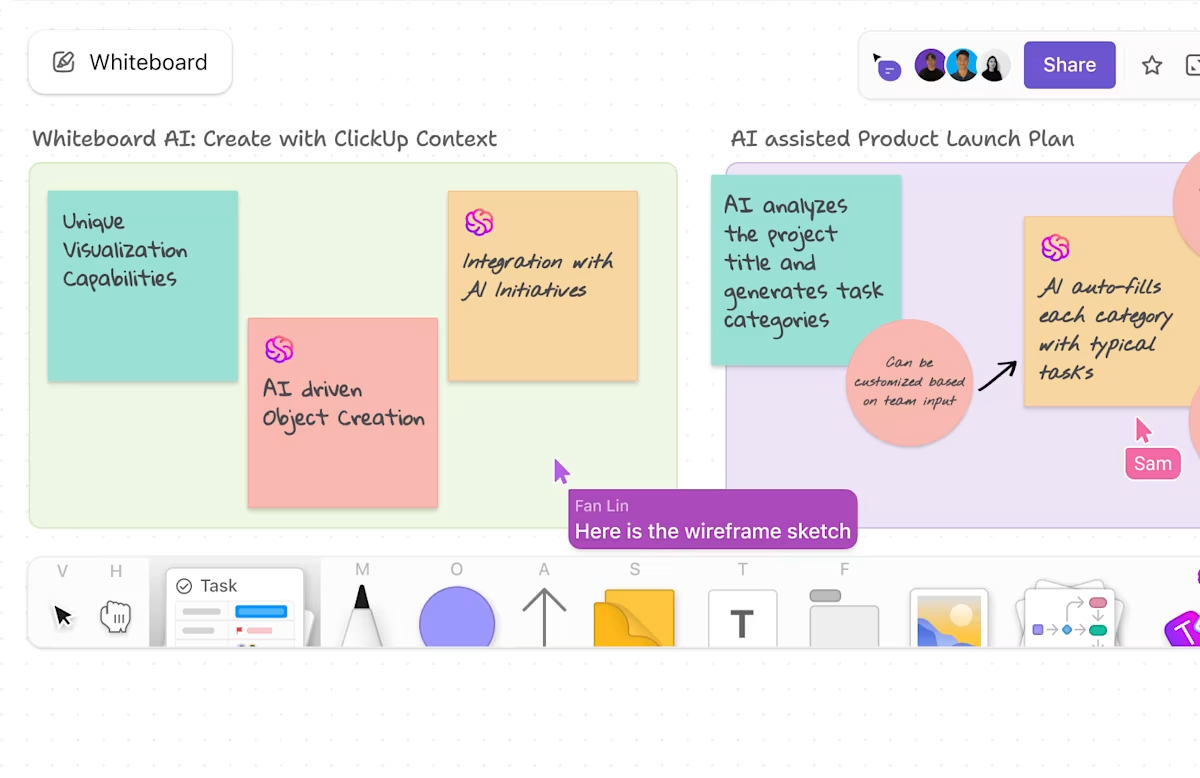
With a wide range of whiteboard templates, you can easily kickstart your sessions and add sticky notes, images, sketches, and more, making brainstorming dynamic and engaging.
For those who love structuring ideas visually, ClickUp Mind Maps are a gem. They help you transform fresh ideas into organized, beautiful diagrams.
Mind maps offer a clear visual outline whether you’re solving problems or planning a project so you can share them effortlessly with your team, ensuring everyone is on the same page. s.
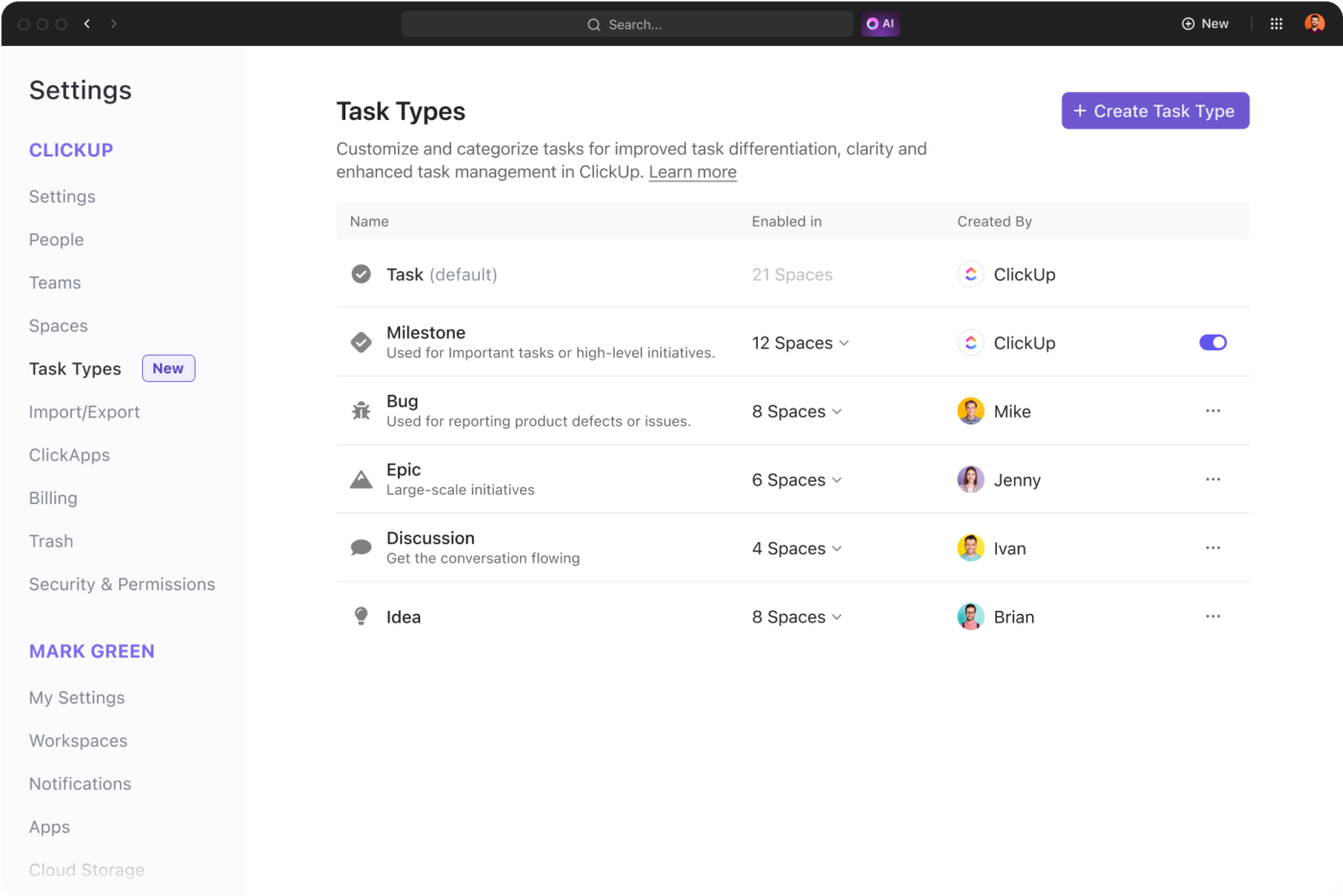
Brainstorming is just the beginning. Turning those ideas into actionable tasks is where the magic happens. With ClickUp Tasks, you can:
This transition from ideation to execution ensures that great ideas don’t just stay on the board but come to life.
Collaboration is at the heart of ClickUp Docs. Its integrated document features allow teams to:
By centralizing your brainstorming documents and collaboration tools, ClickUp Docs ensures that your team’s creative process is both efficient and effective.
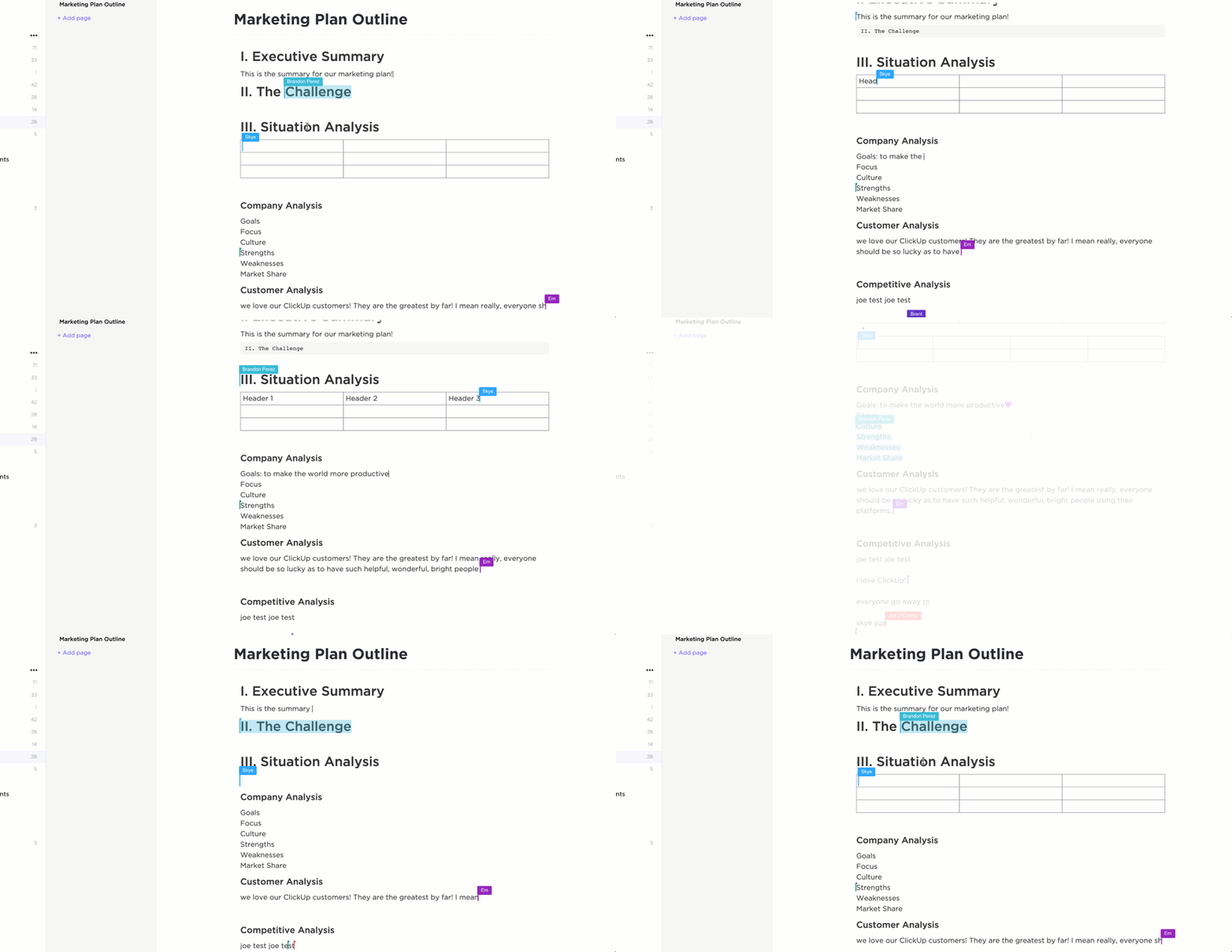
Effective brainstorming sessions can transform a simple idea into a groundbreaking solution. Here are some tips to make your session more productive and enjoyable:
Brainstorming sessions can get messy, with tons of ideas flying around. Instead of manually sorting everything, let ClickUp Brain do the work! 🧠✨
🔹 Summarize brainstorming sessions into clear takeaways
🔹 Auto-generate new ideas from discussions
🔹 Get AI-powered suggestions to refine ideas
📌 Example prompts:
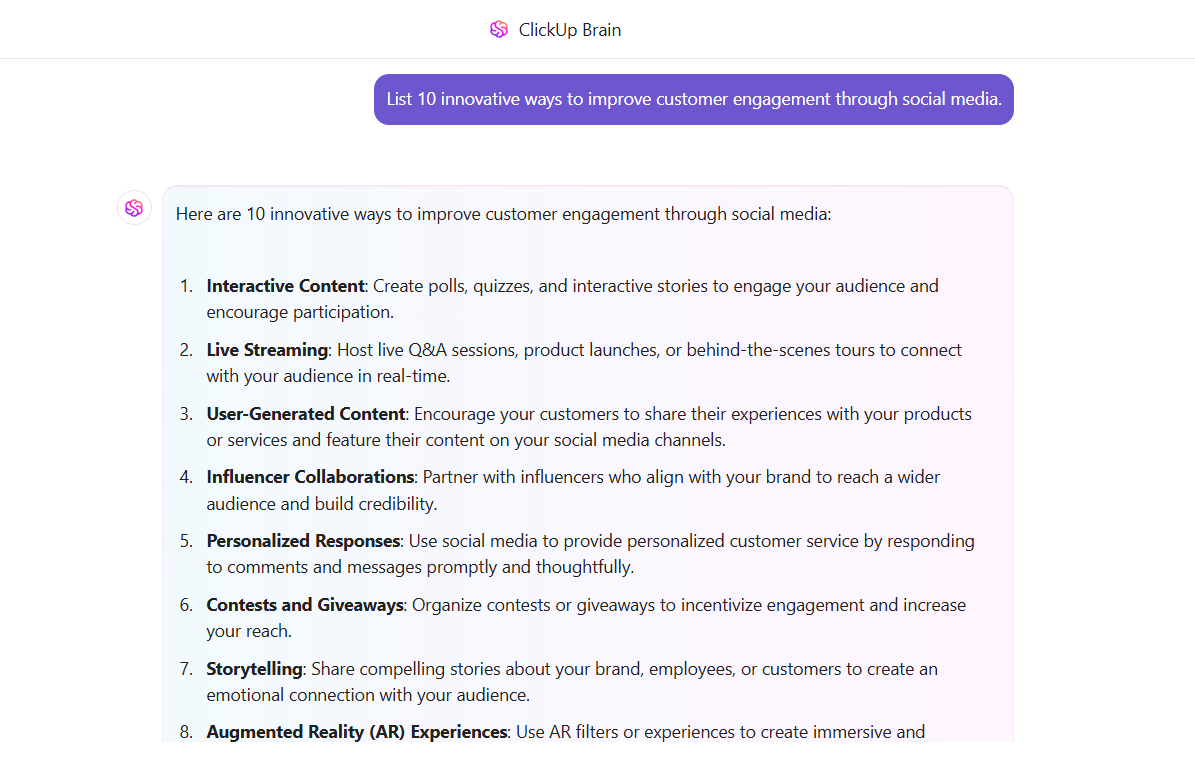
By using AI for your brainstorming process, you won’t lose great ideas—they’ll be instantly structured and ready for execution! 🚀
Brainstorming sessions spark brilliant ideas, but too often, they get lost in scattered notes, endless email threads, or forgotten whiteboards. Execution becomes chaotic, and momentum fades.
ClickUp turns ideas into action. It allows you to capture every thought, refine it with your team, and track progress—all in one place. Whether you’re planning a product launch, solving complex problems, or improving collaboration, ClickUp keeps everything organized and moving forward.
Don’t let great ideas go to waste. Sign up for ClickUp today!
1. How does brainstorming help with the writing process?
Brainstorming clears mental roadblocks and helps organize ideas before writing. Whether you’re creating a blog, book, or report, it sparks creativity, generates fresh angles, and structures your thoughts.
2. What are some brainstorming activities for team building and creativity?
Engaging in brainstorming activities makes the ideation process fun and productive! Try:
3. How do I encourage creative thinking during a brainstorming session?
Make it judgment-free—all ideas are welcome, even the wacky ones! Encourage diverse opinions, build on others’ thoughts, and use visual tools like whiteboards and mind maps to keep innovative ideas flowing.

Sudarshan Somanathan
Max 22min read
Sudarshan Somanathan
Max 23min read

Manasi Nair
Max 23min read

© 2026 ClickUp