


Sorry, there were no results found for “”
Sorry, there were no results found for “”
Sorry, there were no results found for “”
Mess up one bracket in JSON, and suddenly, nothing works. You squint at the screen, scan for the mistake, and wonder why you ever thought manual structuring was a good idea.
An AI JSON generator handles the formatting for you so you can focus on the actual work instead of fixing syntax errors. These tools take raw data and turn it into structured, error-free JSON in seconds.
Here are eight AI-powered JSON generators that make data structuring faster, easier, and a lot less frustrating. 🧑💻 (Our top picks are also covered in this video below!)
Here are our recommendations for the best AI JSON generators:
If an AI JSON generator slows you down, forces extra debugging, or limits flexibility, it’s not doing its job. The right tool makes implementing generative AI for JSON generation effortless. Here’s what to look for:
📮 ClickUp Insight: Artificial intelligence is already embedded in daily workflows, with 88% of survey respondents using AI tools in some way. More notably, 55% rely on AI multiple times a day for brainstorming, content creation, and data organization.
For developers, analysts, and teams working with structured data, an AI-powered JSON generator simplifies the process of creating, formatting, and refining JSON.
ClickUp helps generate accurate JSON structures, reducing manual work and ensuring consistency in APIs, automation, and data management.
Here are the top tools that make JSON generation effortless. 👇
Manually handling JSON is painful. One formatting mistake, and suddenly, an entire API request fails. Data mismatches lead to hours of debugging, and manually updating structured data is a time drain no one enjoys.
ClickUp is the everything app for work that combines project management, knowledge management, and chat—all powered by AI that helps you work faster and smarter. It removes these frustrations with AI-powered tools that generate, structure, and automate JSON handling.
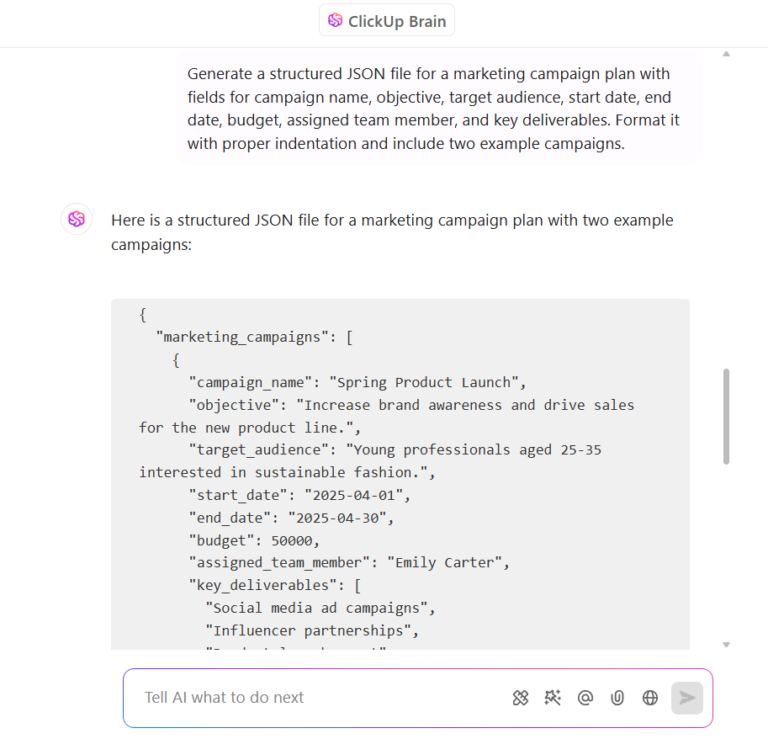
Manually creating JSON files might seem simple until small inconsistencies start causing big problems. That’s where ClickUp Brain makes a difference.
Suppose a developer needs a JSON object to define user roles in an application. Typing out key-value pairs, double-checking every bracket, and ensuring proper nesting can take time. ClickUp Brain generates a structured JSON file instantly.
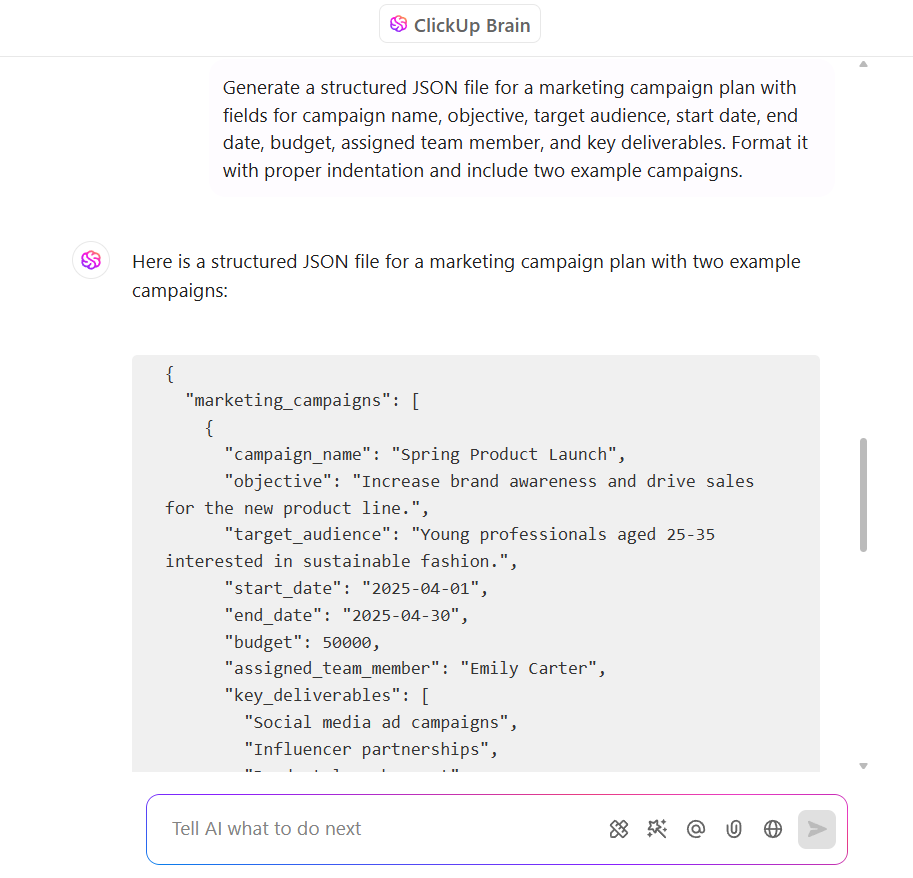
If permission levels or role definitions change later, it updates the JSON without breaking the structure. No need to start over.
Keeping JSON files consistent across multiple sources is another challenge, especially when different datasets use varying field names. Let’s say a data engineer pulls customer records from different databases. One file uses ‘user_id,’ another has ‘customerId,’ and a third lists ‘id’—a mess that can cause integration failures.
ClickUp Brain detects these inconsistencies, standardizes field names, and restructures everything automatically.
In addition, ClickUp Brain users can choose from Claude, GPT-4o, and other LLMs, right from their Workspace.
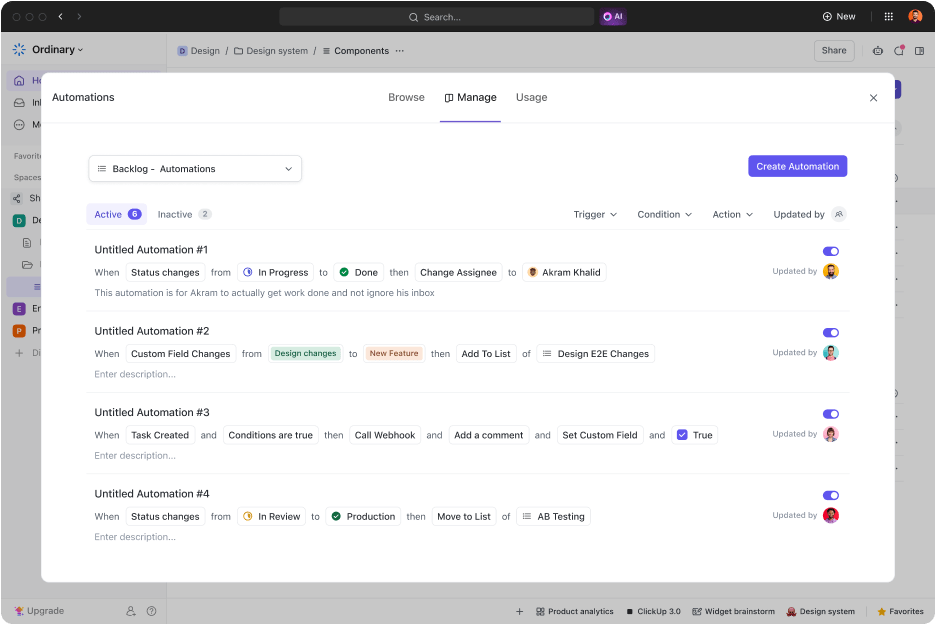
Further, ClickUp Automation simplifies recurring tasks, and AI makes setup even easier. You can describe what you need in natural language to get custom automation.
Suppose a project manager wants a JSON file generated every time a high-priority bug is reported. Typing a request like ‘Create a JSON file with task details when a critical bug is logged and store it in the API folder’ is enough.
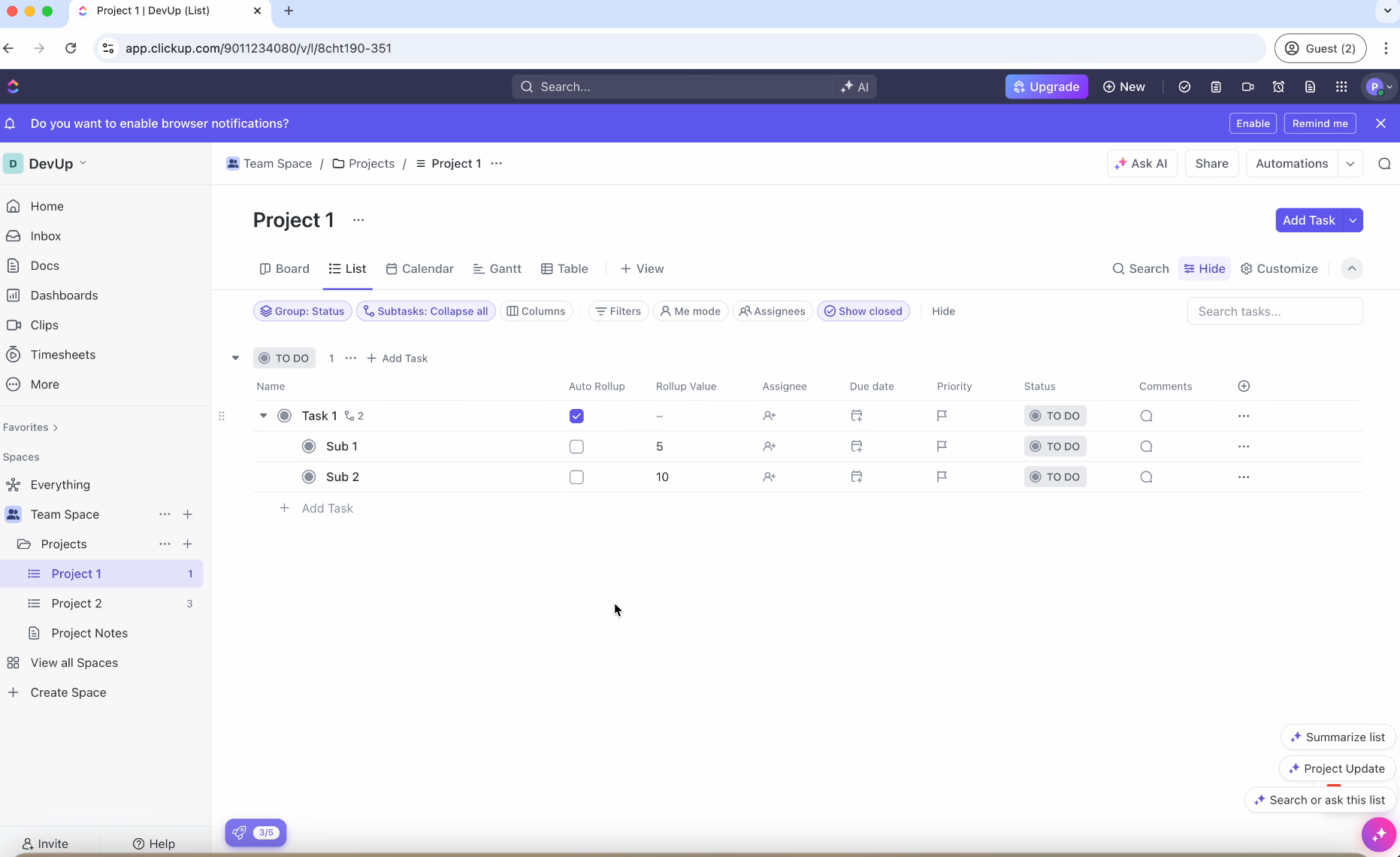
ClickUp’s API takes it a step further, making JSON imports and exports seamless.
Suppose an e-commerce company tracks product inventory in ClickUp and needs that data synced to an online store. The API pulls structured JSON directly from ClickUp and updates inventory levels in real time, removing the need for manual uploads.
🧠 Fun Fact: Douglas Crockford, a software engineer and computer scientist, popularized JSON in 2001 as a lightweight data format. It became an official ECMA standard in 2013 (ECMA-404).
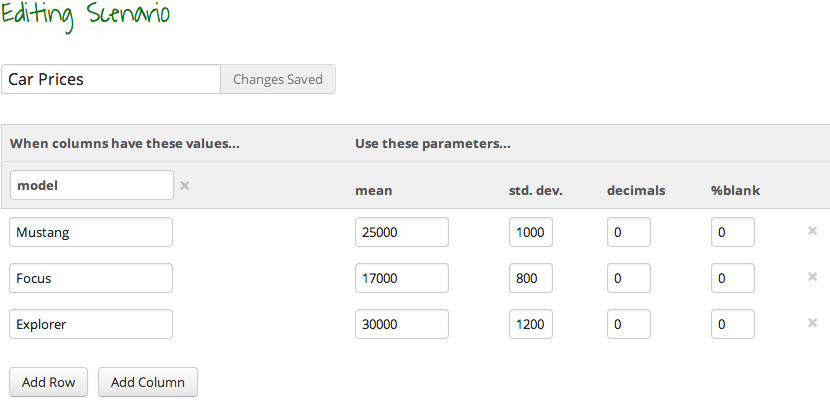
Mockaroo helps developers generate up to 1,000 rows of realistic test data in CSV, JSON, SQL, and Excel formats for free.
Need to populate your database with names that actually sound real? Mockaroo creates realistic data using algorithms that mimic patterns found in genuine information. The platform offers over 140 different data types, from basic options like names and addresses to specialized fields, including medical codes and geolocation coordinates.
You can even build custom data types or use formulas to create relationships between fields.
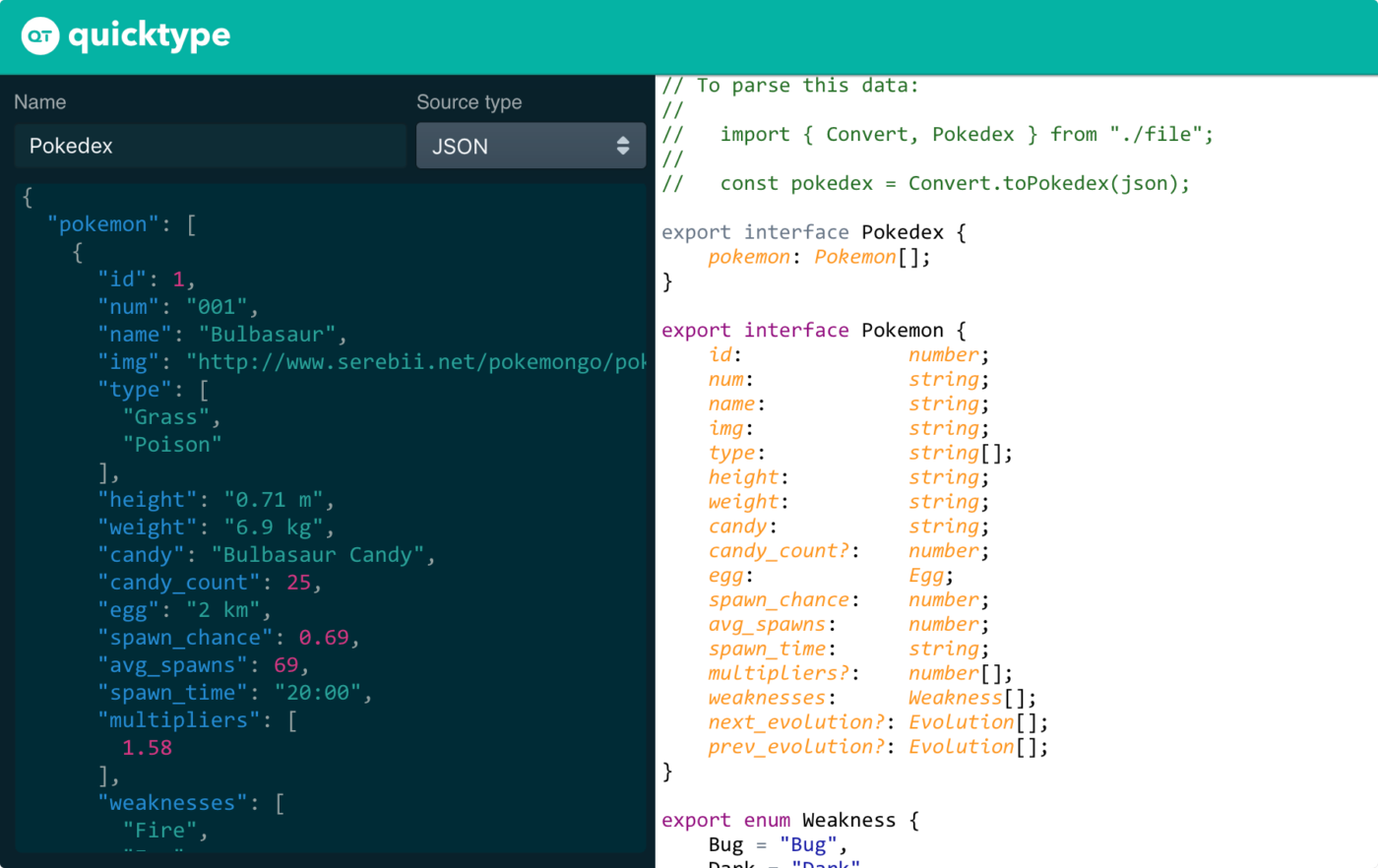
Quicktype flips the script on JSON generation by starting with existing JSON and converting it into type definitions. Paste your JSON sample, and Quicktype instantly creates models in TypeScript, Swift, C#, or many other languages. This saves hours manually writing interfaces or classes to match your API responses.
Developers appreciate how Quicktype handles edge cases like nullable fields and optional properties. The passion project of a small team, this JSON generator continues to add language support based on community requests and maintains impressive accuracy.
🔍 Did You Know? There’s no official pronunciation for JSON! Some say ‘JAY-sawn’, while others say ‘Jason’ (like the name). The debate continues among developers.
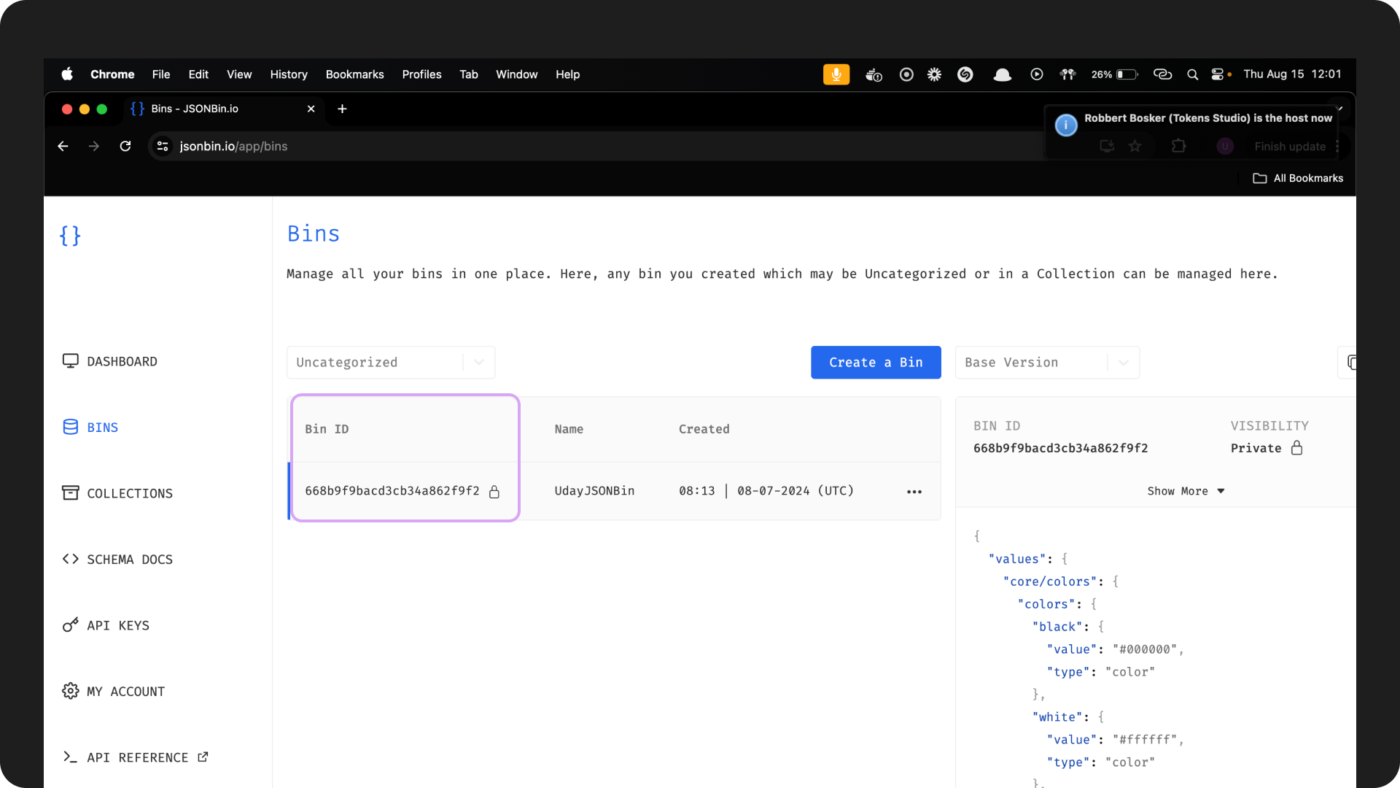
JSONBin.io serves as your personal JSON storage locker on the web. This tool creates shareable endpoints for data serialization in seconds, turning configuration files into accessible API endpoints.
Developers love how JSONBin eliminates the need to set up a server just to host JSON data during development. The platform includes version history, allowing you to track changes and revert when needed.
🧠 Fun Fact: Unlike JavaScript or other programming languages, JSON does not support comments. If you try to add // this is a comment, your JSON will break!
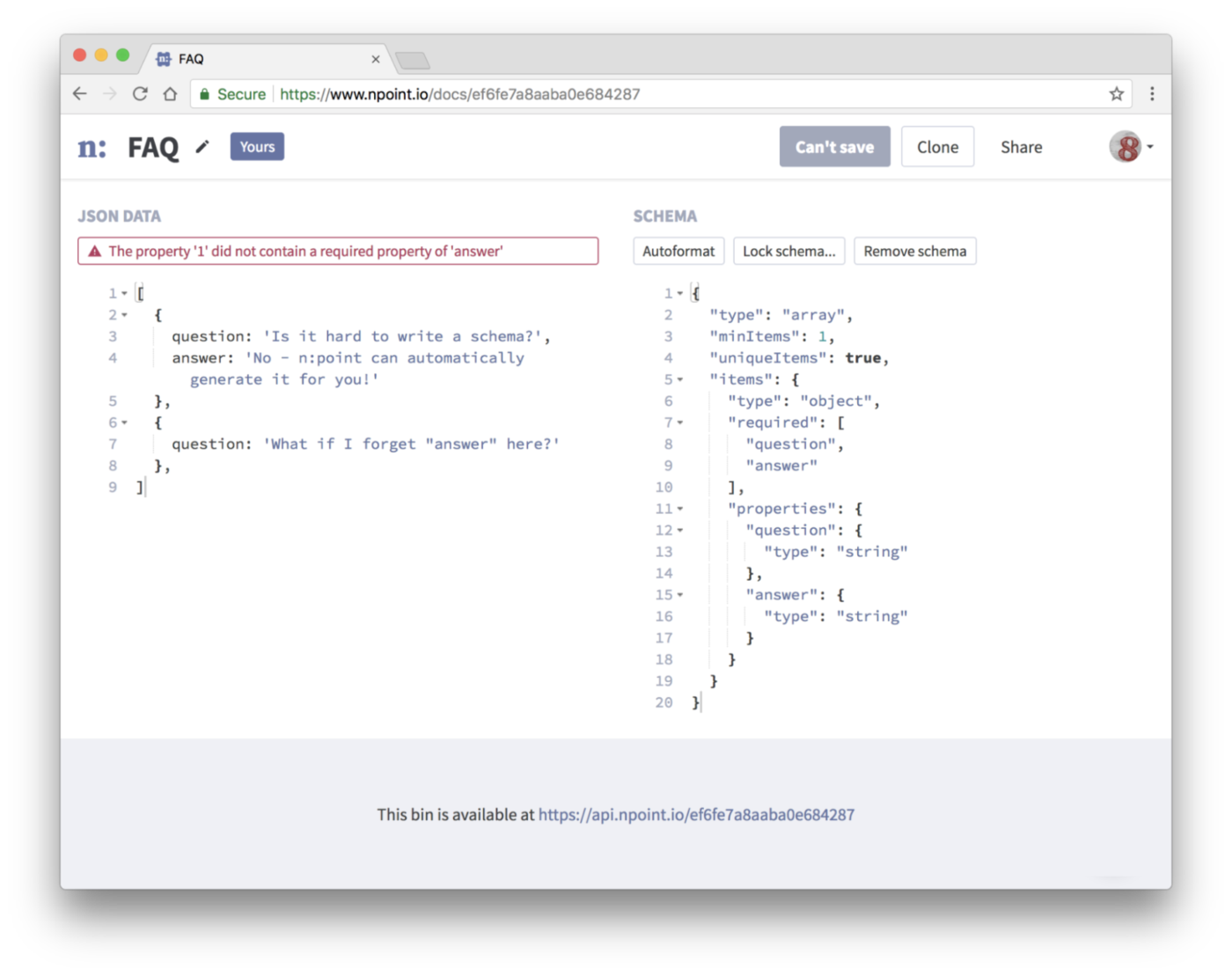
Npoint.io makes JSON editing a collaborative experience. This tool creates editable JSON documents with shareable links that anyone can access to use AI in the workplace.
It generates API endpoints for each document, allowing you to fetch the data programmatically. The platform strikes a nice balance between simplicity and functionality, offering just enough features to make JSON management painless without overwhelming users with options.
🔍 Did You Know? JSON has a cousin called BSON (Binary JSON), and it’s faster because it’s in a compact, unreadable format. Some developers joke that BSON is just ‘JSON but with extra seasoning.’
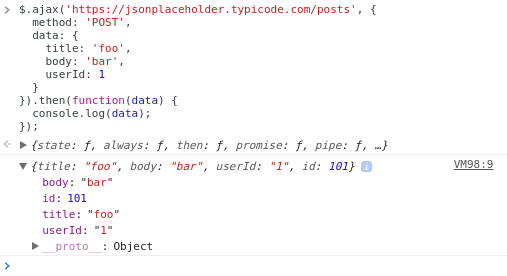
JSONPlaceholder helps front-end developers forge ahead without waiting for backend APIs. This free fake API service provides common resources like posts, comments, and users that respond to all HTTP methods.
It’s used to prototype applications, test HTTP clients, or write tutorials without setting up servers. While the data remains static, JSONPlaceholder mimics real-world API behavior by responding to POST, PUT, PATCH, and DELETE requests, making your interactions feel genuine even though changes don’t persist.
💡 Pro Tip: Watch out for inconsistent data types. AI can sometimes mix up numbers, strings, and booleans. A common mistake is “age”: “30” instead of “age”: 30 or “isSubscribed”: “yes” instead of “isSubscribed”: true. If your JSON structure needs to work in an application, double-check that all data types are correct.
Faker.js generates random data directly in your JavaScript code. This popular library lets developers create fake data without leaving their development environment.
Need names, addresses, phone numbers, or even lorem ipsum text? Faker.js generates all these and more through simple function calls. Unlike many other tools, Faker.js integrates directly into your test suites or seed scripts, automating data creation exactly where you need it.
The community maintains an extensive collection of data types that continues to grow, covering everything from basic personal information to niche categories like cryptocurrency addresses.
🧠 Fun Fact: JSON has numbers, strings, and booleans…but no official date format. So, different systems store dates in different ways, leading to endless confusion:
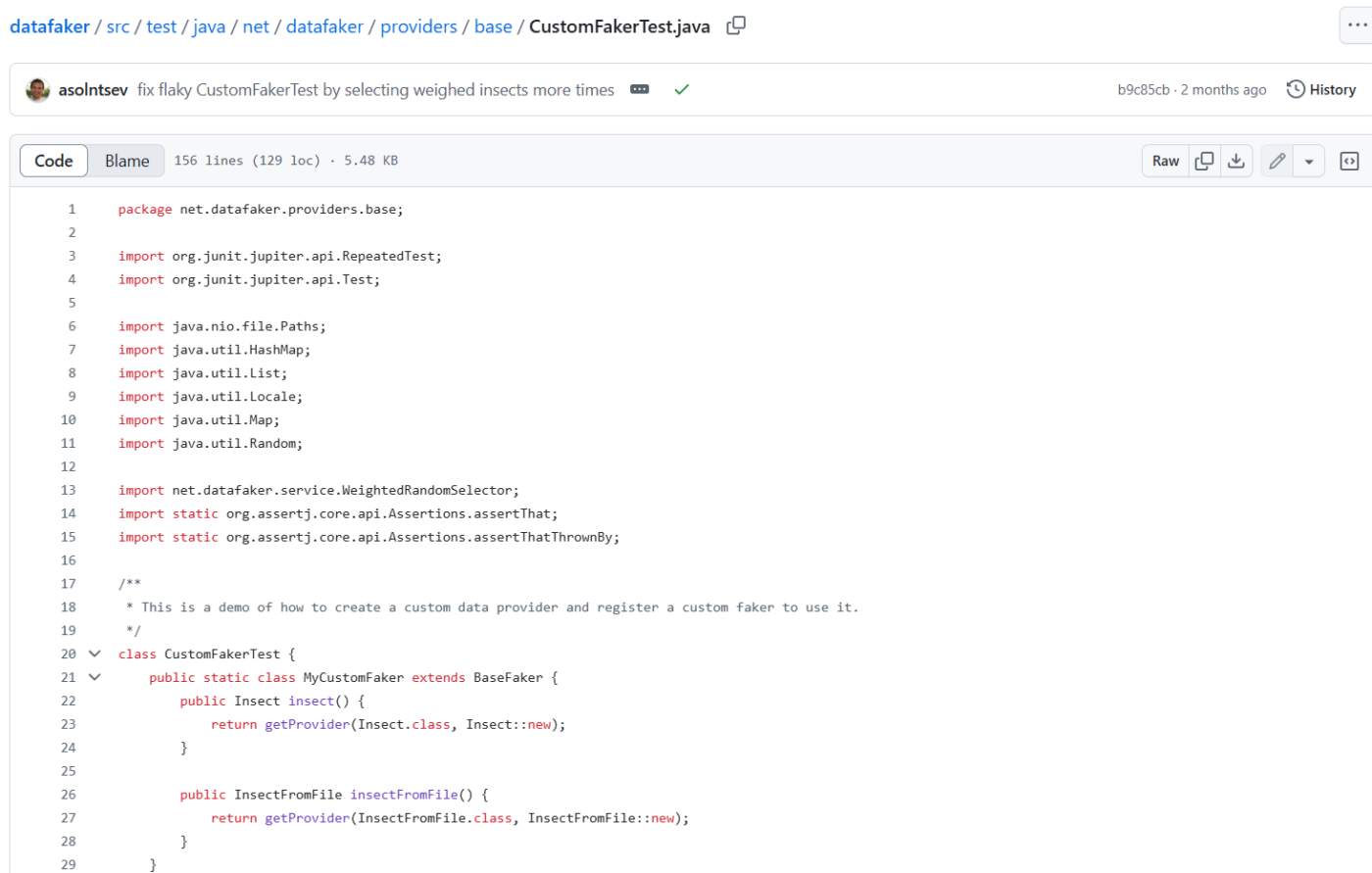
Datafaker brings sophisticated mock data generation to the Java ecosystem. This library evolved from the popular Java Faker project, expanding its capabilities for modern API development needs.
Java developers appreciate how Datafaker integrates seamlessly with JUnit and other testing frameworks to populate objects with realistic information. It requires minimal setup—just add the dependency to your project and start generating data. The fluent API design makes complex data generation readable and maintainable in your test code.
Messy JSON slows down your build. You fix one key, and another one breaks. You copy from one tool, then debug in another. And somewhere in the middle, you lose time you didn’t have in the first place.
AI JSON generators help you stay focused, structured, and accurate without rewriting the same object ten times.
ClickUp takes it a step further. You can generate JSON, store it in Docs, automate updates through task triggers, and sync it through the API—all in one workspace. No context switching. No disconnected workflows. Your data stays structured, traceable, and ready to use.
Sign up for ClickUp today! ✅

Arya Dinesh
Max 25min read

Praburam Srinivasan
Max 21min read

Manasi Nair
Max 16min read

© 2026 ClickUp




