






Still downloading templates?
There’s an easier way. Try a free AI Agent in ClickUp that actually does the work for you—set up in minutes, save hours every week.
Sorry, there were no results found for “”
Sorry, there were no results found for “”
Sorry, there were no results found for “”
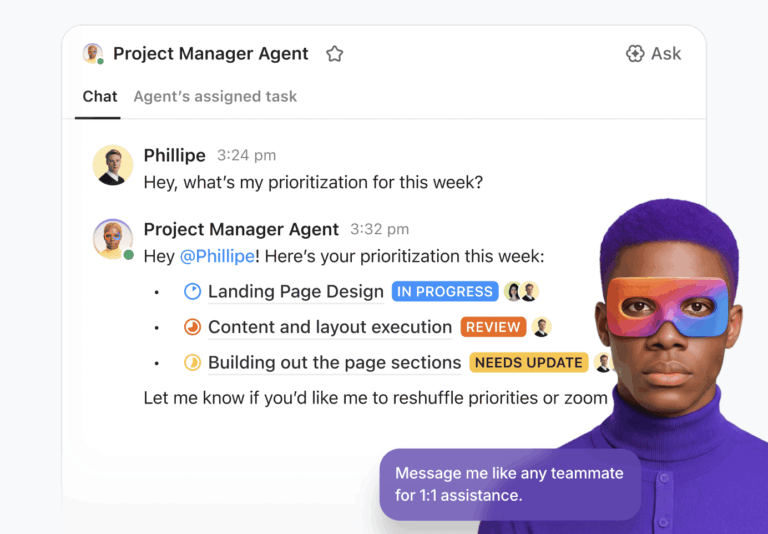
Generic AI assistants often give vague, unhelpful answers for real work tasks.
This happens because most AI tools operate in isolation, pulling from public data that knows nothing about your projects, your team’s communication patterns, or your operational history.
The result is a frustrating cycle of re-explaining context and heavily editing every output, which ultimately wastes more time than it saves.
According to a McKinsey study, organizations that deploy AI agents grounded in their own operational data see 3x higher task completion rates than those relying on generic models—yet most teams still treat AI as a content generator rather than an execution partner.
This article breaks down what proprietary agentic technology actually is, how it works through perception, reasoning, and autonomous action, and why your organizational data is the foundation that makes AI agents move from theoretical promise to measurable operational value.
Proprietary agentic technology refers to AI systems or autonomous agents built on an organization’s private data, workflows, and context. These agents are designed to autonomously perceive, reason, and act within your specific business environment.
Instead of operating as a detached assistant that responds to prompts, proprietary agents live inside your systems. They understand how your projects move, how your teams communicate, where approvals stall, what “urgent” actually means in your org, and which compliance rules quietly shape every decision.
This grounding changes everything. Because the agent is anchored to your ecosystem, it can:
In other words, it acts with context.
And that context is exactly what transforms autonomous agents from a novelty into an operational layer. A generic AI might draft a response. A proprietary agent can classify an incoming request, assign it based on capacity, update the status, notify stakeholders, log the decision, and surface risks before a human even opens the thread.
And once an agent understands your workflows, it can own outcomes, monitor SLAs, escalate when thresholds are breached, consolidate fragmented updates into a single source of truth, and continuously learn from patterns inside your organization rather than from abstract global averages.
The shift is subtle but powerful.
See how ClickUp’s Super Agents work with contextual understanding of your workflows!👇🏼
The term ‘agentic AI’ is frequently misused as marketing language for slightly improved chatbots.
This leads teams to invest in so-called AI solutions that don’t deliver on the promise of autonomy, resulting in wasted budgets and disappointment.
To know if a solution is truly production-ready, you need to understand the mechanics that enable it to move from passive assistance to autonomous execution.
Proprietary agentic technology operates through four interconnected capabilities that distinguish it from traditional automation.
Most AI assistants are often flying blind. They only know what you copy and paste into a prompt, which means it misses the entire history and web of connections within your actual work. This prevents AI tools from understanding what’s urgent, who’s responsible, or what’s blocking a project, making its suggestions feel out of touch with reality.
Perception in an agentic system solves this. It’s the AI’s ability to continuously ingest signals from across your entire work environment—tasks, documents, conversations, project status, and historical data. More than real-time access to data, this is about AI understanding the relationships between information.
This is where a grounded cross-platform approach becomes essential. The agent needs to “see” your organization’s actual, real-time state, not a generic approximation, to provide relevant help.
Simple if-then automation is brittle and prone to breaking. The moment a workflow changes, you end up spending more time fixing the automation than you save, creating more manual work for your team. This kind of static logic can’t keep up with the dynamic nature of modern work.
Agentic reasoning systems can help overcome this. They can break complex goals into a sequence of smaller, manageable steps while evaluating dependencies and constraints as they go. This is dynamic planning that adjusts as conditions change, not a rigid, pre-programmed set of rules.
McKinsey research shows that AI agents can now handle tasks lasting about 2 hours uninterrupted, with this time horizon doubling every 4 months.
Ofcourse, the quality of this reasoning depends entirely on the richness of the proprietary context gathered during the perception stage. An agent can only plan effectively if it understands your team’s actual workflows, approval chains, and resource availability.
Hesitant to let an AI actually do things because you can’t fully trust it? We get it.
What if it emails the wrong client or deletes a critical file? This fear turns the AI into a mere suggestion engine, forcing you to remain the human bottleneck and execute every single step.
Autonomous action, when done right, solves this. It means the agent can execute tasks without requiring human approval at every turn, such as updating records, creating deliverables, or triggering downstream workflows.
To prevent risk, production-ready agentic systems are built with guardrails. These include:
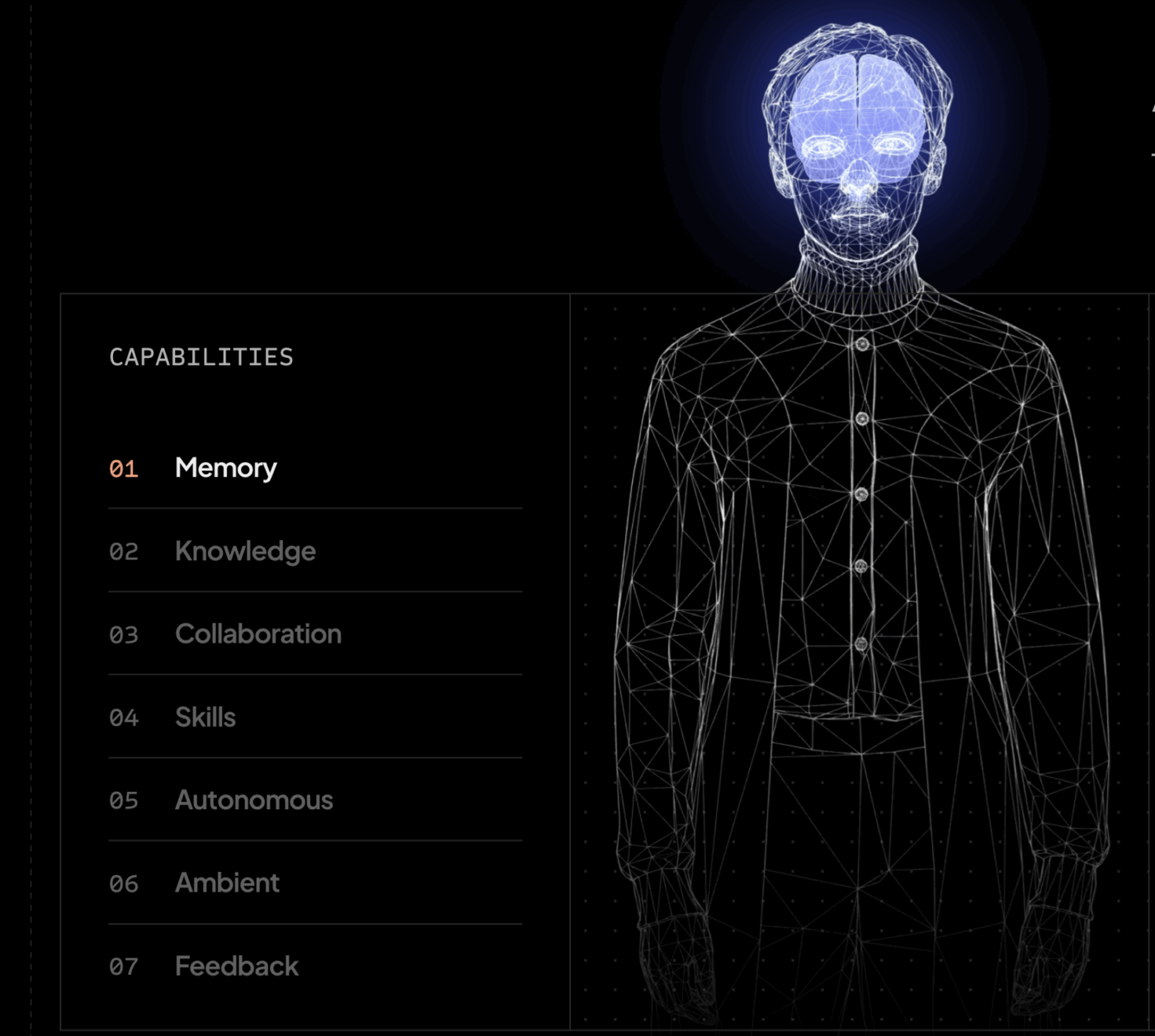
Here’s a quick breakdown of what you need in a proprietary agent to be effective:
Automations are pretty straightforward. They perform the same function today as they did a year ago, never getting smarter or adapting to how your team actually works.
This means workflows become outdated, and the automation grows less effective over time, requiring constant manual tweaks.
Effective agentic systems, however, are designed for learning and adaptation. They improve over time by observing outcomes and incorporating feedback directly from your work environment. This is operational learning, not just model fine-tuning.
But continuous improvement requires constant access to your proprietary data. The agent learns your team’s preferences, your organization’s norms, and the unique edge cases of your workflows. While static automation breaks when conditions change, an adaptive agent evolves with your business. ✨
Trying to use a public AI model for a specific business task often leads to hallucinations or generic advice that doesn’t apply to your company. This wastes time, creates the potential for costly errors, and erodes trust in AI tools.
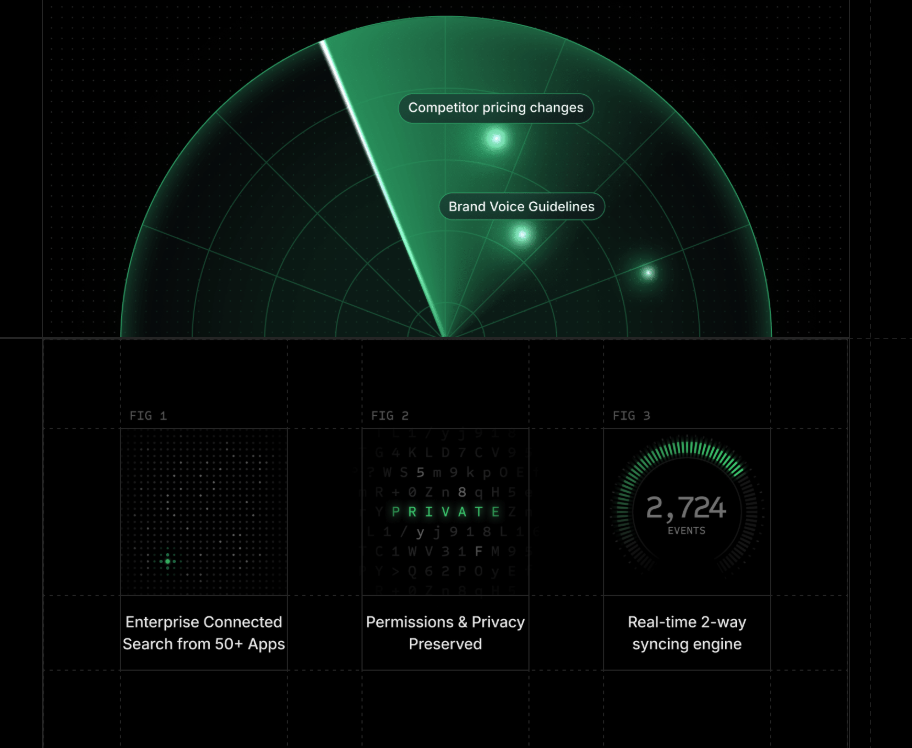
The problem of Context Sprawl—where organizational knowledge is scattered across disconnected tools—prevents agents from reasoning effectively because they only see fragments of the picture.
A Converged Workspace is the infrastructure that makes proprietary agentic technology viable by eliminating data silos and creating a unified source of truth.
This enables four key advantages:
✅ Contextual accuracy: Agents reference live project states, current deadlines, workload distribution, historical decisions, and linked documentation. They are reasoning from the same operational reality your team sees
✅ Appropriate autonomy: Actions are constrained by role-based permissions, approval hierarchies, compliance requirements, and internal norms. The agent knows what should be done within the boundaries of your governance model
✅ Meaningful learning: Feedback loops are tied to your specific workflows. If tasks are repeatedly reassigned, deadlines consistently shift, or certain approvals trigger escalations, the agent adapts to those patterns. It improves based on your operational rhythms, not abstract benchmarks
✅ Reduced hallucination: Grounding outputs in structured, authoritative data dramatically lowers fabrication risk. When an agent pulls from verified project fields, linked documentation, and recorded decisions, it has far less incentive or opportunity to invent missing details
Proprietary agentic technology delivers clear operational metrics and outcomes that directly address your specific pain points.
These benefits compound over time, as each improvement creates more capacity for high-value work, which in turn generates better data for agent learning.
Understanding what agentic systems do day to day requires concrete examples.
Without concrete examples, you can’t build a business case for it or identify where it would provide the most value in your own operations. These real-world use cases share a common thread: they all require deep organizational context that generic AI tools lack.
Example: A meeting workflow is a common place where agents can turn discussion into assigned, trackable work.
📮 ClickUp Insight: 24% of workers say repetitive tasks prevent them from doing more meaningful work, and another 24% feel their skills are underutilized.
That’s nearly half the workforce feeling creatively blocked and undervalued. 💔
ClickUp helps shift the focus back to high-impact work with easy-to-set-up Super Agents, automating recurring tasks based on triggers. For example, when a task is marked as complete, these agents can automatically assign the next step, send reminders, or update project statuses, freeing you from manual follow-ups. Here’s an example:
💫 Real Results: STANLEY Security reduced time spent building reports by 50% or more with ClickUp’s customizable reporting tools—freeing their teams to focus less on formatting and more on forecasting.
Implementing proprietary agentic technology can feel like a massive, complex IT project. Without a clear starting point, teams often delay implementation indefinitely. You can get started with a practical, non-technical path forward. 🛠️
The first step is reducing Work Sprawl.
Proprietary agents require a unified context. If your projects live in one tool, documentation in another, conversations in a third, and reporting somewhere else entirely, an agent cannot reason across the full operational picture. It will operate on fragments.
Consolidating into a converged workspace does not just simplify your tech stack. It creates a unified work graph that connects tasks, timelines, conversations, documents, metrics, and permissions. That unified context is the foundation agents rely on to act with accuracy and relevance.
Infrastructure is the most important prerequisite here.
Do not start with your most complex workflow. Instead, look for repetitive, rule-based processes that consume meaningful time but do not require nuanced human judgment.
Easier workflow automation examples might include intake triage, request routing, status updates, compliance checks, or recurring reporting.
These use cases offer three advantages:
Early wins build trust. When teams see an agent reliably handling structured work, resistance decreases, and expansion becomes easier.
Autonomy without guardrails is a risk. Before expanding an agent’s scope, define what it can execute independently versus what requires human approval. Clearly document escalation paths and ensure that actions are logged. Above all, clarify ownership if something goes wrong.
Your AI governance should address:
This is especially important given that only 23.8% of organizations report mature risk and governance coverage for AI agents. Autonomy must scale alongside accountability.
Resist the urge to deploy agents everywhere at once.
Once performance stabilizes and trust is established, gradually expand the agent’s operational scope.
Agentic transformation is not a single event. It is an iterative layering of intelligence into your systems. So here are the steps to follow:
The most important decision happens at the beginning. Agents built on fragmented data will always underperform those grounded in a unified organizational context. Architecture determines the ceiling.
📖 Read More: How to Create AI Agentic Workflows
Many AI tools sit adjacent to work. They draft, summarize, or answer questions, but they do not participate in execution.
ClickUp Super Agents are different because they are embedded directly inside ClickUp’s Converged Workspace. They operate within the same architecture that powers ClickUp Tasks, ClickUp Docs, ClickUp Chat, ClickUp Dashboards, Automations, and any other integrated third-party apps, which means they act on live workspace data rather than exported snapshots.
This native integration removes the need for complex external pipelines to shuttle data between systems.
Super Agents operate with visibility across the workspace they are deployed in, subject to the same permission model as any other user.
Because ClickUp structures work through its hierarchy of Workspace, Spaces, Folders, Lists, and Tasks, agents can reason across that structure. They can reference linked tasks, read associated Docs, interpret Custom Fields, evaluate task statuses, and understand relationships such as dependencies and assignees. They also have access to historical activity within the scope of their permissions, allowing them to factor in prior decisions and workflow patterns.
This contextual grounding allows agents to make decisions based on actual project state rather than assumptions derived from a single prompt.
Super Agents are designed to execute workflows, not just generate outputs.
Using configured instructions, triggers, and defined knowledge sources, they can initiate and complete multi-step processes inside ClickUp. For example, an agent can monitor incoming requests, create tasks in the appropriate List, populate Custom Fields, assign owners based on predefined logic, set due dates, and post updates in relevant Chat channels.
Because they operate within ClickUp’s automation and workflow framework, their actions can be tied to task status changes, form submissions, field updates, or other workspace events. This allows teams to move from AI-assisted drafting to AI-executed process orchestration.
Importantly, administrators define the scope of autonomy. Agents act within the rules and configurations set by the workspace, rather than independently redefining them.
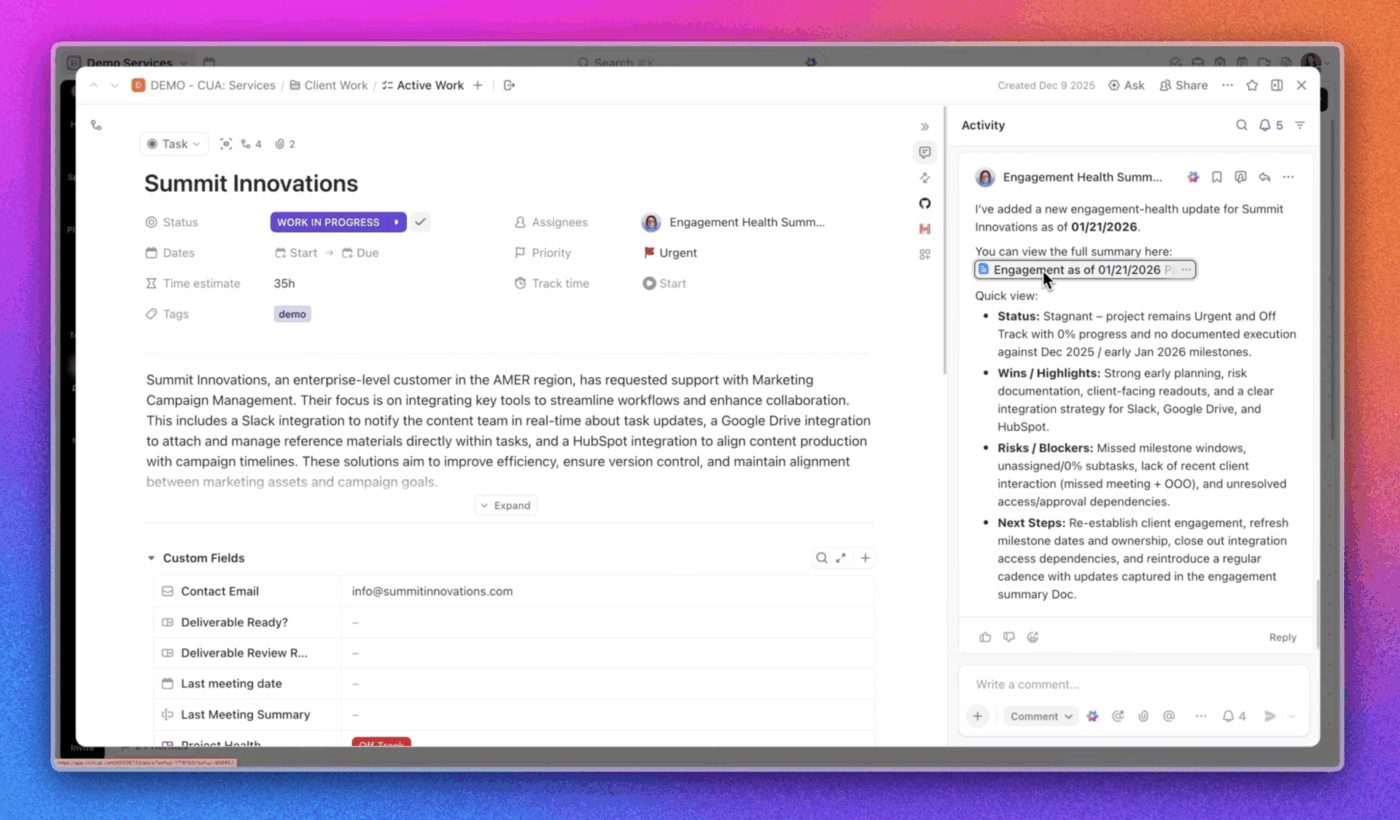
Super Agents are treated as workspace users, which means they inherit ClickUp’s role-based permission system.
They can only view, create, or modify items that their assigned role permits. If a Space or List is restricted, the agent cannot access it unless explicitly granted permission. This ensures that autonomy does not bypass existing governance structures.
Plus, all agent actions are logged. The Super Agents Audit Trail records what actions were taken, when they occurred, and which triggers initiated them. This level of traceability supports compliance, accountability, and operational oversight. Teams can review, validate, and refine agent behavior based on documented activity rather than guesswork.
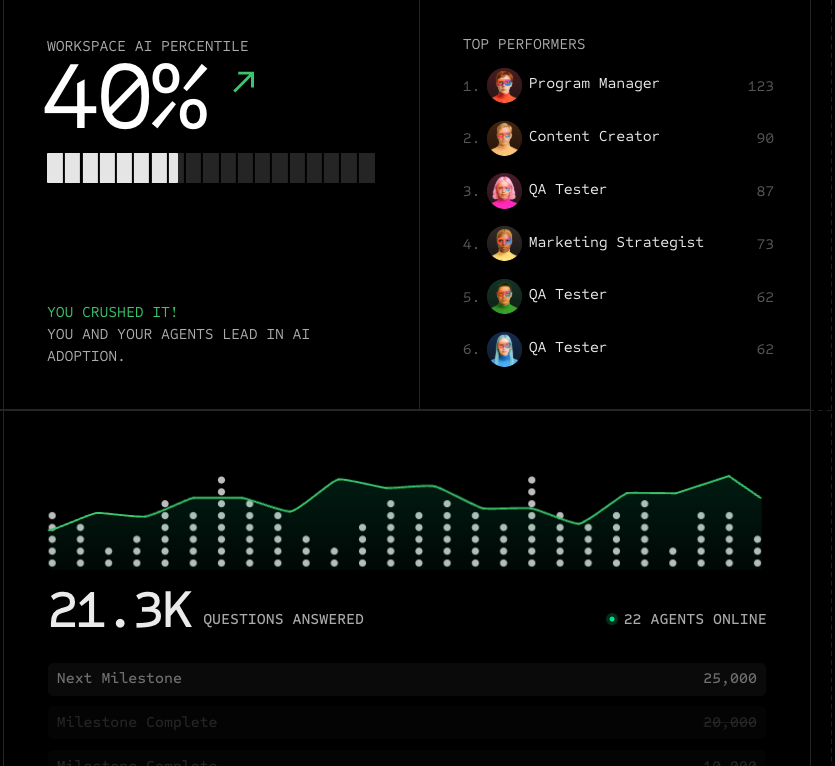
Super Agents are designed to adapt to the environment in which they operate.
Through episodic memory, agent preferences memory, short-term memory, and long-term memory, these agents retain contextual awareness of prior interactions and outcomes within their allowed scope. Over time, this enables more accurate task routing, more relevant summaries, and better alignment with established workflows.
This is contextual adaptation based on the specific patterns, structures, and feedback loops present inside your workspace. As teams interact with agents, provide corrections, and refine configurations, performance improves in ways that are directly tied to real operational behavior.
This is what distinguishes a production-ready agentic system from a theoretical framework.
Super Agents execute defined workflows inside a governed, context-rich workspace. They operate with live data, respect permissions, log their activity, and improve within the boundaries of your organization’s structure. Autonomy becomes practical because it is anchored to the same systems your team already relies on to run the business.
📖 Read More: Best MCP Servers for Agentic AI Beginners
When AI is disconnected from your actual systems of execution, it remains advisory.
The inflection point happens when intelligence is embedded inside a unified work environment, where projects, documentation, conversations, ownership structures, and historical decisions are structurally connected.
In that context, agents can perceive real constraints, reason across live dependencies, and act within defined permissions. Autonomy stops being theoretical and starts producing measurable operational outcomes.
If the goal is to move from AI that assists to AI that executes, the first step is to ground intelligence in the environment where your work actually happens.
Get started for free with ClickUp and put Super Agents to work in your environment.
General-purpose AI tools operate on public training data and only see what you paste into a prompt. Proprietary agentic technology is grounded in your organization’s actual data, workflows, and context, enabling it to take autonomous action rather than just generate text.
Proprietary agentic AI understands your specific project states, team structures, and operational history. This allows it to execute contextually appropriate actions instead of producing generic outputs that require heavy human editing.
Repetitive, multi-step workflows that require organizational context benefit most. Examples include status reporting, meeting preparation, cross-functional handoffs, and knowledge retrieval.
Not when using production-ready platforms with built-in agent capabilities. The key requirement is consolidated organizational data in a unified workspace, not custom development or AI engineering skills.

© 2026 ClickUp

There’s an easier way. Try a free AI Agent in ClickUp that actually does the work for you—set up in minutes, save hours every week.