







Still downloading templates?
There’s an easier way. Try a free AI Agent in ClickUp that actually does the work for you—set up in minutes, save hours every week.
Sorry, there were no results found for “”
Sorry, there were no results found for “”
Sorry, there were no results found for “”
Plans change. Deadlines shift. Priorities evolve.
In a world where change is the only constant, Adaptive Project Management (APM) is your cheat code to staying agile and crushing goals.
Forget rigid, old-school methods—APM is all about rolling with the punches, iterating fast, and turning uncertainty into your superpower. From software sprints to marketing madness, APM keeps your team nimble, focused, and ready to pivot on a dime.
Say goodbye to chaos and hello to clarity—it’s time to work smarter, not harder.

Project environments are unpredictable. Market shifts, stakeholder demands, and unforeseen roadblocks can derail even the best-laid plans.
Adaptive Project Management (APM) is designed to handle this uncertainty by continuously adjusting to evolving circumstances rather than following a rigid, predetermined plan.
Instead of sticking to a fixed roadmap, APM allows teams to modify objectives, workflows, and deliverables based on real-time feedback. This flexibility is particularly valuable in fast-paced industries like software development, product launches, and large-scale infrastructure projects where priorities shift rapidly.
Bonus: Keep scrolling to discover how to implement Adaptive Project Management in your team and unlock greater agility, efficiency, and success in your projects 🚀
| Aspect | Adaptive Project Management | Traditional Project Management |
| Approach | Flexible and iterative | Fixed and sequential |
| Planning | Adjusts based on evolving priorities | Follows a detailed, upfront plan |
| Risk handling | Proactive, with ongoing monitoring | Reactive, addressed at later stages |
| Feedback loops | Continuous stakeholder involvement | Limited checkpoints |
| Team structure | Cross-functional and adaptive | Defined roles and hierarchical |
| Project scope | Can change based on market conditions | Set at the start with little room for deviation |
By embracing an adaptive approach in project management, teams improve agility, increase responsiveness, and ensure project outcomes align with business needs.
No two projects unfold the same way. Market conditions, client expectations, and internal constraints constantly shift, making flexibility a necessity. Adaptive Project Management (APM) offers different approaches that help teams stay responsive while maintaining structure.
The effectiveness of adaptive project management depends on selecting an approach that aligns with the project’s complexity, team structure, and external factors.
Rather than forcing projects into rigid structures, an adaptive approach in project management ensures teams can respond to changing priorities, shifting market conditions, and stakeholder feedback.
This will lead to better risk management, continuous improvement, and stronger project outcomes.
Read More: Top Project Management Methodologies
Uncertainty is inevitable in project execution. Adaptive Project Management (APM) operates on core components that allow teams to stay flexible while maintaining control.
These components ensure that projects don’t fall apart when faced with changing priorities, client expectations, or evolving market conditions.
Instead of following a strict start-to-finish plan, adaptive projects unfold in short, iterative cycles. Each cycle builds on the previous one, allowing teams to integrate new insights along the way.
Example: A software development team releases a minimum viable product (MVP) instead of waiting for a fully polished version. Early users provide customer feedback, which helps refine future releases without overhauling the entire system
Frequent feedback is at the core of adaptive project management. Teams, stakeholders, and end users continuously review progress, ensuring deliverables stay aligned with business goals.
Example: A marketing team running a multi-phase campaign analyzes engagement data after each rollout. If a particular strategy isn’t resonating with the audience, they adjust messaging and creative elements before launching the next cycle
Risk isn’t something addressed at the end of a project—it’s accounted for in every phase. Teams actively identify, assess, and mitigate risks before they disrupt progress.
Example: A construction project using an adaptive project framework factors in weather conditions, material shortages, and regulatory approvals before breaking ground. Each phase includes risk assessments to prevent costly delays
Read More: Best Risk Management Software
Unlike traditional project management, where the project scope is locked in from the start, APM allows for controlled adjustments. This ensures that projects remain relevant even as priorities shift.
Example: A product development team starts with a clear vision but refines product features based on market research and competitor activity. Instead of delaying the launch, they adjust specifications and roll out updates post-launch
Adaptive projects thrive on knowledge-sharing and seamless coordination across teams. Departments work together rather than operating in silos, ensuring that shifting priorities don’t cause misalignment.
Example: A finance team and an engineering team collaborate to adjust budget allocations for a tech rollout. If development costs exceed estimates, financial plans are adapted in real time instead of waiting for the next quarterly review
Real-time data informs adjustments in adaptive project management. Teams track performance metrics, stakeholder input, and resource allocation to ensure they stay on the right path.
Example: A retail chain expanding into new locations monitors sales performance and foot traffic trends in pilot stores. If a particular strategy underperforms, they tweak pricing, promotions, or store layouts before scaling further
By integrating these components, an adaptive approach in project management ensures that teams can react swiftly to changing priorities, market conditions, and client expectations without compromising project success.
Projects rarely go according to plan. Deadlines shift, client expectations change, and unforeseen challenges appear.
Adaptive Project Management (APM) ensures teams don’t get stuck when this happens—it keeps projects moving forward, no matter the circumstances.
1. Faster response to change: Teams can adjust workflows, priorities, and deliverables in real time rather than scrambling to revise a rigid plan. This ensures that shifting priorities don’t derail the entire project
2. Better risk management: Potential risks are identified early, and teams build contingency plans for every stage. Instead of reacting to problems when they occur, they’re mitigated before they escalate
3. Higher efficiency: Work is focused on what adds value rather than following a predefined plan that may no longer be relevant. Resources, time, and effort are optimized to deliver the best possible outcomes
4. Continuous improvement: Every project cycle provides new insights, allowing teams to refine strategies, improve processes, and deliver stronger results in future iterations
5. More satisfied stakeholders: Frequent client checkpoints and stakeholder feedback loops ensure that expectations stay aligned. This reduces rework, last-minute surprises, and misaligned deliverables
👀 Did You Know? The term “stakeholder” originally referred to someone who held the stakes in a bet or wager
Today, stakeholders are the people or groups who have a “stake” in your project’s success—and keeping them happy is the ultimate win! 🎲✨
6. Greater adaptability across industries: Whether it’s software development, marketing campaigns, or large-scale operations, an adaptive approach in project management ensures that businesses stay ahead of evolving market conditions and customer needs
By integrating APM, teams gain flexibility without losing structure, mitigate risks before they become roadblocks, and continuously refine their approach for better project success.
Adapting to constant change requires more than just flexibility—it demands the right tools, workflows, and mindset to keep projects on track. Successful adaptive project management (APM) implementation depends on real-time collaboration, structured flexibility, and continuous optimization.
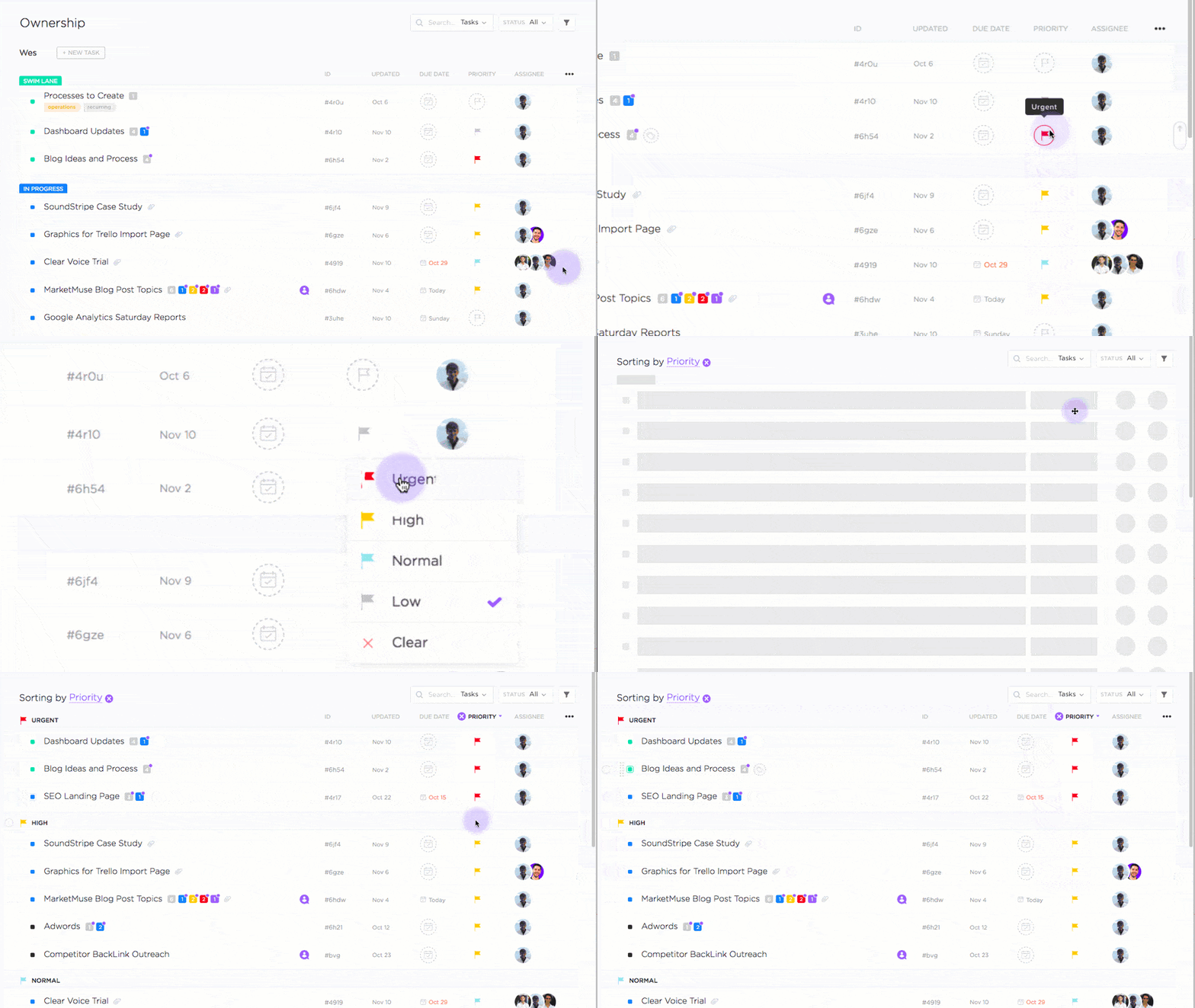
Managing projects with shifting priorities means teams must rearrange tasks, adjust timelines, and reassign responsibilities without losing sight of key objectives.
ClickUp Tasks makes this effortless by allowing teams to:

Get real-time insights with ClickUp Dashboards
A rigid project dashboard doesn’t work when the scope is evolving. You can use adaptive tools like ClickUp Dashboards.
It will provide you with:
When projects operate in iterative cycles, tracking progress is essential to refine workflows and maintain efficiency.
The ClickUp Time Tracking ensures that teams can:
To take reporting a step further, teams can use the ClickUp Project Reporting Template to consolidate insights in a structured format. This allows project managers to generate real-time reports on project performance, stakeholder feedback, and resource utilization—all within a single view.
Adaptive project management requires quick decision-making based on ever-changing factors. This is where ClickUp Brain can enhance team productivity by:

By integrating adaptive project management tools and automation, teams reduce friction, streamline processes, and ensure continuous improvement—all while staying responsive to change.
Adaptive Project Management (APM) isn’t about reacting to chaos—it’s about designing flexibility into your workflows so that unexpected shifts don’t throw projects off course.
The key is to balance structure with adaptability and make adjustments without losing focus on project goals.
Project needs evolve, and so should your priorities. Instead of treating initial plans as unchangeable, use them as a starting point that adapts to real-time insights and shifting business needs.
Waiting until the end of a project to gather feedback often leads to last-minute panic and rushed fixes. Regular check-ins ensure that adjustments happen early, not when it’s too late.
A static plan won’t tell you when a project is veering off track. Teams need live visibility into project updates, dependencies, and risks to make informed decisions quickly.
Instead of only assessing risks at the start, re-evaluate throughout the project. Priorities shift, new challenges emerge, and risks that seemed minor can escalate if left unchecked.
Manually adjusting timelines and dependencies every time priorities change slows teams down. Automating routine workflows ensures that teams focus on execution instead of admin work.
If you want to know more about how to improve your workflow with automations, check this out 👇
If your project documentation doesn’t evolve alongside your project, it becomes useless. Centralized, living documents help teams stay aligned and prevent outdated information from derailing progress.
How to do it: Use ClickUp Docs to keep everything in one place so teams can access the latest updates without sifting through scattered files.

Every adaptive project should end with a post-mortem—what worked, what didn’t, and how to refine processes for the next cycle. Without this step, teams risk repeating the same mistakes instead of improving.
By integrating these best practices, teams can move with change instead of against it, ensuring projects remain on track—even when the unexpected happens.
If you’re managing projects that never go exactly as planned, juggling shifting priorities, or working in fast-paced industries where change is constant, then yes—Adaptive Project Management (APM) might just be your new best friend.
But let’s be real, not every project needs an adaptive approach. Some thrive under strict timelines, fixed budgets, and well-defined deliverables.
So how do you know if APM is the right fit for your team?
Let’s break it down:
…then a traditional project management approach might be a better fit.
If your projects require agility, real-time adjustments, and stakeholder-driven progress, then Adaptive Project Management ensures you’re not stuck following a plan that no longer makes sense. But if your project demands predictability, a traditional approach may be the safer bet.
Ultimately, the best project management approach is the one that works for your team, your industry, and the type of work you do. If adaptability is the key to delivering better, faster, and smarter results, then APM is exactly what you need.
No project unfolds exactly as planned, but that doesn’t mean progress has to stall. A clear project overview statement paired with Adaptive Project Management (APM) equips teams with the flexibility to navigate shifting priorities, integrate feedback, and adjust strategies without losing momentum.
By embracing an adaptive approach, you can minimize risks, improve efficiency, and drive better project outcomes—no matter how unpredictable the road ahead may be.
Ready to streamline your workflows and keep your team aligned? Sign up for ClickUp today.

© 2026 ClickUp

There’s an easier way. Try a free AI Agent in ClickUp that actually does the work for you—set up in minutes, save hours every week.