
Sorry, there were no results found for “”
Sorry, there were no results found for “”
Sorry, there were no results found for “”
Mural is great for facilitated workshops. But the pricing climbs fast once a team outgrows the free tier, and the platform assumes every user needs deep workshop tooling. Boards can also feel heavy when the real work after the session (task assignment, reviews, delivery) still lives somewhere else.
That disconnect drives teams to look for a Mural alternative.
The tools below were compared on canvas flexibility, facilitation controls, AI capabilities, pricing structure, and how well each one connects brainstorming to whatever comes next. Mural alternatives break into a few camps: full workshop platforms, design-native boards, structured diagramming tools, and platforms that tie ideation straight to project delivery.
The right Mural alternative depends on what happens after the sticky notes come down. Choose Miro for the closest facilitation match with stronger integrations and scale. FigJam fits teams already designing in Figma. Go with ClickUp when whiteboard ideas need to become tasks with owners and deadlines.
Pick Lucidspark if brainstorms regularly graduate into formal diagrams. Stick with Microsoft Whiteboard for organizations deep in Microsoft 365. Conceptboard suits regulated or public-sector teams that need a traceable record. Whimsical handles fast product flows and wireframes. And Canva Whiteboards works best when session output turns into presentations, briefs, or branded visual content.
Teams leave Mural for four reasons: the three-editable-mural cap on the free plan, per-member pricing that charges occasional guests like full facilitators, boards that get harder to scan as they grow, and follow-up work that lives somewhere else.
Here are the eight tools, what each is best for, a standout feature, a starting price, and where each hits a wall.
| Tool | Best for | Standout feature | Starting price | Where it taps out |
|---|---|---|---|---|
| Miro | Scaling facilitated workshops | Miro Engage, Miro AI, 250+ integrations, voting, timers, and presentation controls | Free; paid from $8/member/mo | Large boards can get hard to scan, and costs rise when many users need full access |
| FigJam | Figma-native design teams | Jambot, FigJam AI, hidden voting, Spotlight, stamps, cursor chat, and Figma Design handoff | Free; paid from $3/user/mo for Collab seats | Less useful outside Figma-heavy teams, with lighter workshop governance than Mural or Miro |
| ClickUp | Turning boards into tracked work | Whiteboards, Mind Maps, Tasks, Docs, ClickUp Brain, and Whiteboards Hub in one workspace | Free; paid from $7/user/mo | More setup than a standalone canvas if you only need occasional sticky-note sessions |
| Lucidspark | Brainstorms that become diagrams | Breakout boards, Visual Activities, timed voting, Lucid AI, and Lucidchart handoff | Free; paid from $9/user/mo | Strongest inside the Lucid suite, and rough notes still need cleanup before becoming formal diagrams |
| Microsoft Whiteboard | Microsoft 365 teams | Teams access, Loop components, Follow mode, templates, Forms polls, and freehand ink | Included with Microsoft 365 Business, Enterprise, and Education plans | Too light for advanced facilitation, and personal account support is being retired |
| Conceptboard | Workshops that need traceable follow-through | Board Tasks, Kanban widgets, moderator tools, presentation mode, GDPR focus, and board history | Free; paid from €5/user/mo | Smaller app ecosystem and template library than Miro or Mural |
| Whimsical | Fast product diagrams and wireframes | AI-generated flowcharts, wireframes, mind maps, auto-layout, Mermaid support, and Docs | Free; paid from $10/editor/mo | Lighter than Mural for large facilitated workshops and complex session design |
| Canva Whiteboards | Turning workshop output into visual content | Canva AI summaries, Sort, Quick Flow, Magic Switch, media assets, and diagramming tools | Free; paid from $144/year | Too light for complex facilitation, breakout spaces, and detailed workshop management |
Our editorial team follows a transparent, research-backed, and vendor-neutral process, so you can trust that our recommendations are based on real product value.
Here’s a detailed rundown of how we review software at ClickUp.
The best Mural alternatives offer strong facilitation controls, a clear path from board to follow-up work, fair pricing as you scale, easy guest access, a good fit with your existing tools, and room for the work that comes after the session.
Eight tools earned a spot here after hands-on testing: Miro, FigJam, ClickUp, Lucidspark, Microsoft Whiteboard, Conceptboard, Whimsical, and Canva Whiteboards.
The key takeaway is to look past the canvas. Sticky notes are table stakes in 2026; what separates these tools is what they do with the notes once the session ends. Each entry below covers standout features, pricing, ratings, a real user quote, and where it taps out.
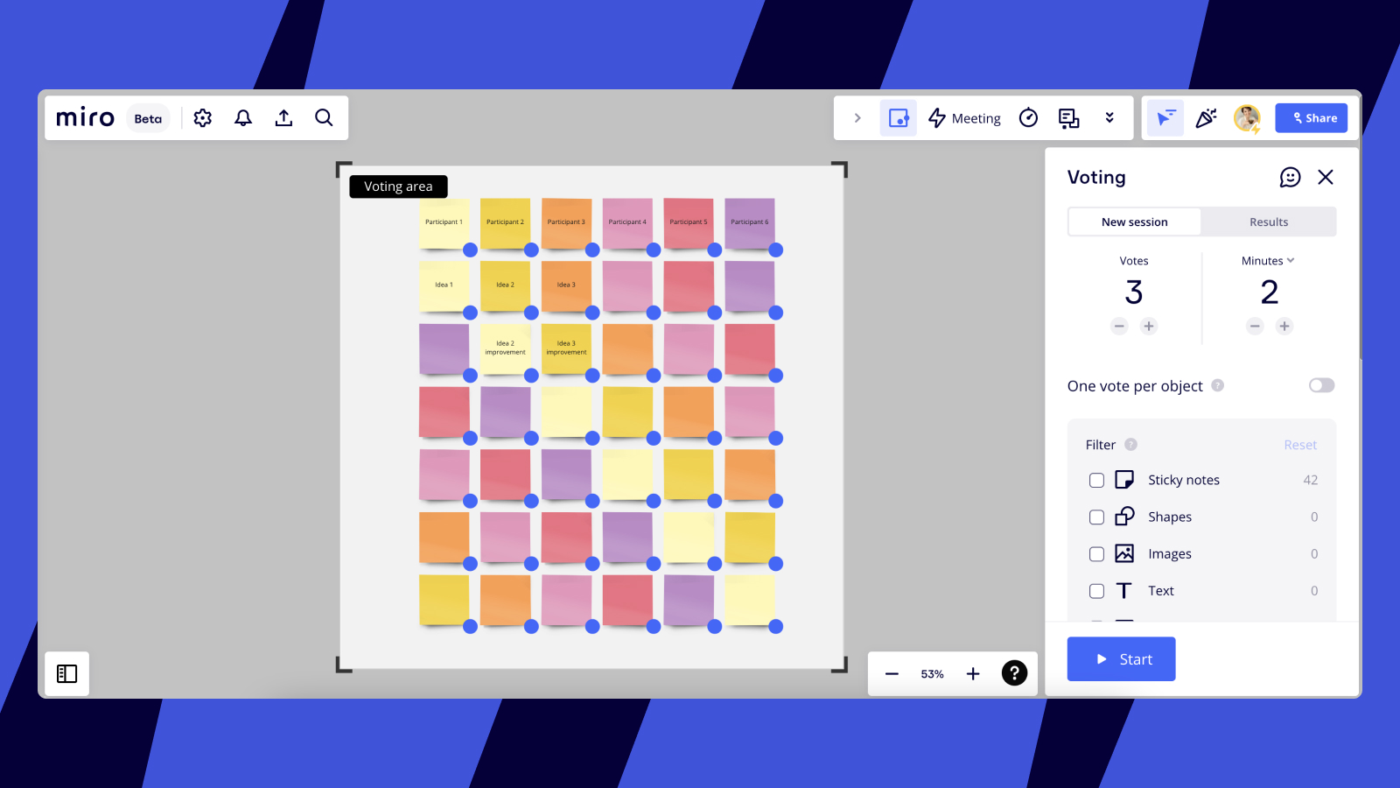
Miro is an online whiteboard and visual collaboration platform, and the most direct Mural swap on this list. But it has grown well past digital sticky notes. One canvas now holds whiteboards, slides, docs, diagrams, tables, timelines, and light project tracking.
Plus, you can split an agenda into frames and pull everyone to the same spot. Hide notes during sensitive exercises, run anonymous votes, and keep the pace with a shared timer. Presentation mode also lets the host jump between slide-like frames and open board exploration, all in one tool. That depth suits consultants, product teams, UX researchers, and agile coaches who run the same workshop again and again.
A G2 user described:
What I like best about Miro is its ability to bring everyone into a single collaborative workspace, regardless of whether they are internal team members, consultants, owners, or other stakeholders. It allows us to review designs, brainstorm ideas, perform QA/QC, track action items, and maintain live project schedules in real time. The visual and interactive format makes it easy for everyone to contribute, react to changes, and make decisions together, which improves coordination and keeps projects moving forward efficiently.
Where it taps out: A large Miro board can become difficult to scan once several workshops, diagrams, and project artifacts share the same canvas. Costs also rise quickly when many employees need full member access, though visitors and guests can reduce the number of paid seats on eligible plans.
Best for: Product, design, consulting, and agile teams that run repeatable workshops and need stronger facilitation controls than Mural offers.
Skip it if: You need a simple whiteboard for occasional brainstorming and you’re unlikely to use its presentation, AI, integration, or workshop management features.
Also Read: Miro Alternatives
Prefer to watch a rundown of the best Mural contenders? We have a video for you:
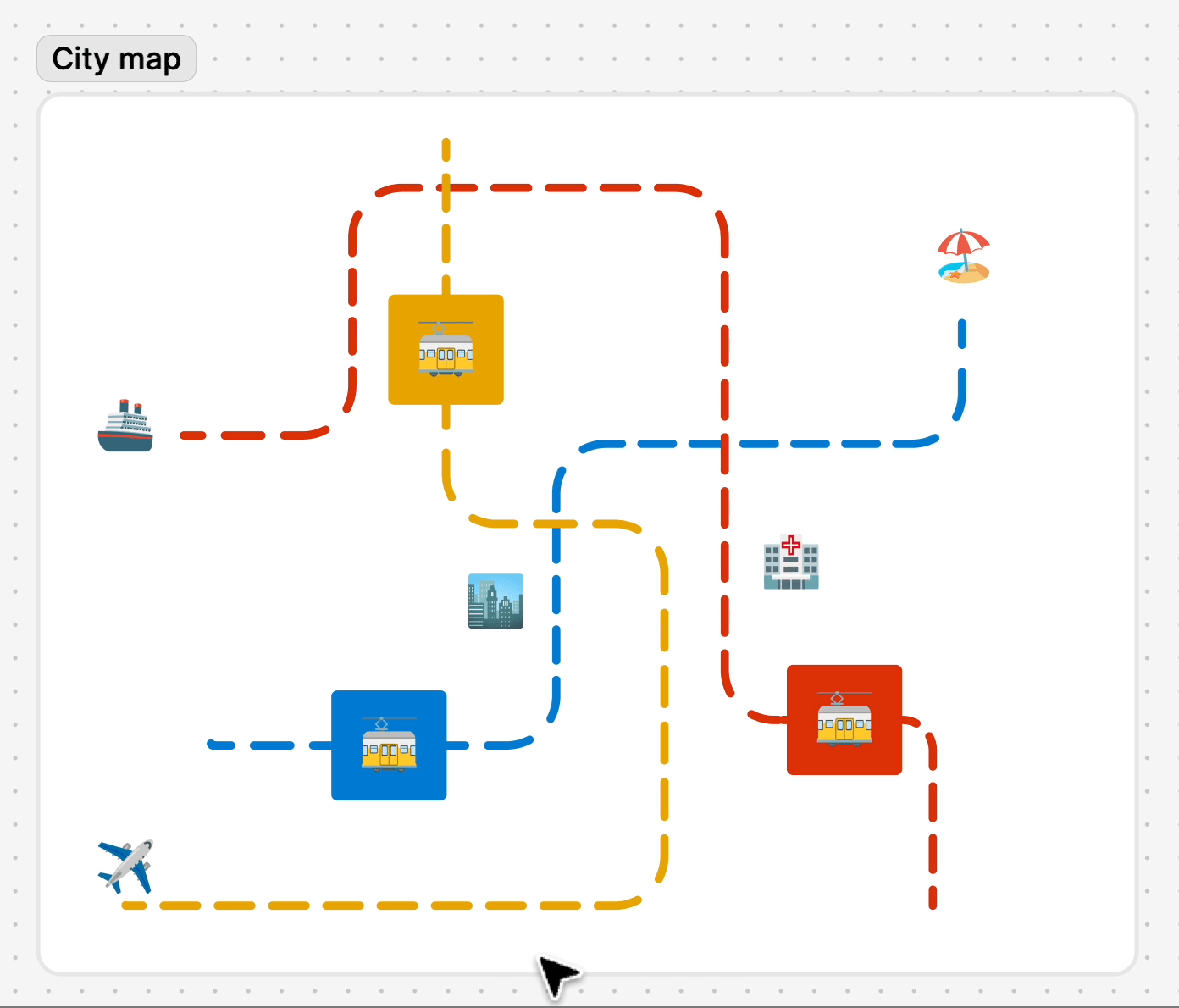
FigJam is Figma’s online whiteboard, built for the messy early thinking that happens before design starts. For teams that already plan and review products in Figma, it’s a natural alternative to Mural. Designers can copy objects between the two apps. Teammates can move from the whiteboard to the design work without learning a second tool.
That closeness pays off most during early discovery. A team can map a customer journey, sketch a rough screen flow, gather feedback, and carry the useful bits into Figma Design. The canvas stays light and informal.
Marketers, developers, and stakeholders can join even if they’ve never touched a design tool. Stamps, emotes, high-fives, cursor chat, and built-in music make it a fit for retros, critiques, and early workshops. Plus, under that playful surface sit real controls for running a remote session.
Same company, two different tools. Figma Design is where you build the real thing: high-fidelity screens, components, and production-ready UI. FigJam is the whiteboard for everything before that: brainstorming, mapping flows, running workshops, and collecting feedback. They live side-by-side, so the ideas you sketch in one carry straight into the other.
One G2 reviewer said:
FigJam is easy to use and makes collaboration feel natural. I like that teams can brainstorm, map ideas, leave comments, use templates, and turn rough thoughts into clear visual workflows quickly. The real-time collaboration is smooth, and the integration with Figma makes it especially useful for design and product teams. It feels lightweight, intuitive, and flexible enough for workshops, planning sessions, retrospectives, and quick ideation.
Where it taps out: FigJam covers brainstorming, diagramming, and smaller workshops well, but it doesn’t offer the same depth of workshop planning, content organization, or enterprise facilitation controls as Mural and Miro. The connection to Figma Design is also far less valuable for teams that don’t build digital products.
Best for: Product and design teams that want discovery workshops, user flows, and early ideas to sit beside their Figma design work.
Skip it if: Your organization doesn’t use Figma, or you need advanced workshop governance, detailed facilitation frameworks, and stronger organization across many boards.
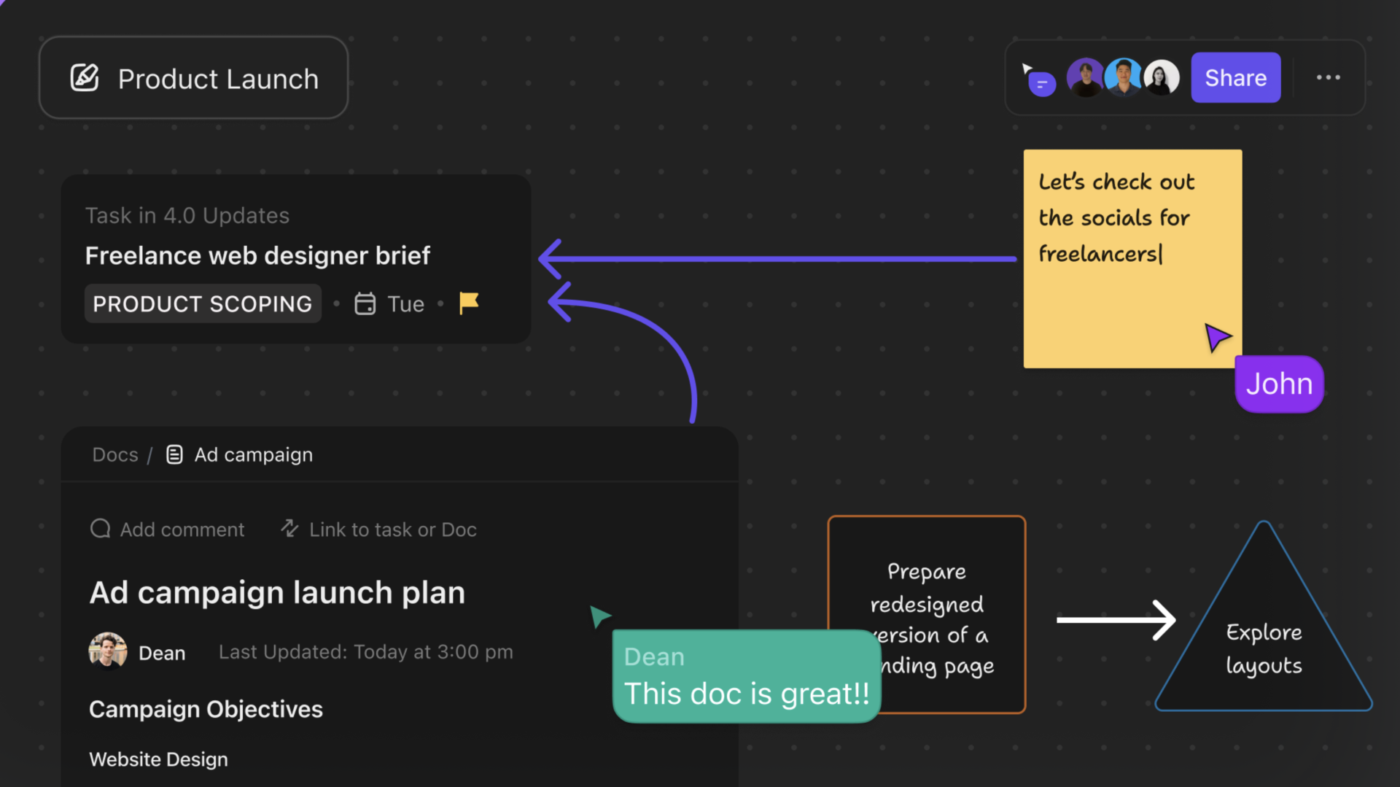
ClickUp is a converged work platform where planning, whiteboards, docs, tasks, and AI live in one place. ClickUp Whiteboards give you a free-form canvas for mapping campaigns, sketching workflows, collecting feedback, and planning projects in real time. Shapes, sticky notes, text boxes, tasks, and Docs all sit on the same board. Meaning the discussion stays tied to the work it affects.
ClickUp Mind Maps offer a more structured way to think through that same work. Teams can start from a blank map or build one from existing tasks. From there, they arrange ideas into branches that show sequence, ownership, or dependencies. That suits cross-functional teams shaping product roadmaps, content plans, and process design, or any brainstorm that needs a clear hierarchy before work begins.
Together, the two tools cover both loose ideation and organized planning. And because they sit inside ClickUp, nobody has to rebuild the outcome in a separate tool once the session ends.
A G2 user said:
I’ve been using ClickUp for a while now, and it’s become my go-to workspace for managing projects and creative tasks. The best part is how customizable everything is, from dashboards to task views; I can organize my work exactly how I want.
I also love that it combines so many tools into one platform docs, goals, chat, and whiteboards so I don’t have to keep switching between apps. It definitely saves time and helps my team stay aligned.
Where it taps out: ClickUp is a full work management platform, so it takes more setup than a standalone canvas. Teams that only need a place for occasional sticky note sessions may find its wider task and workspace structure more than they’ll use.
Best for: Cross-functional teams that want visual planning, task ownership, and project delivery in one workspace.
Skip it if: You only need a lightweight whiteboard and have no reason to connect brainstorms to ongoing work.
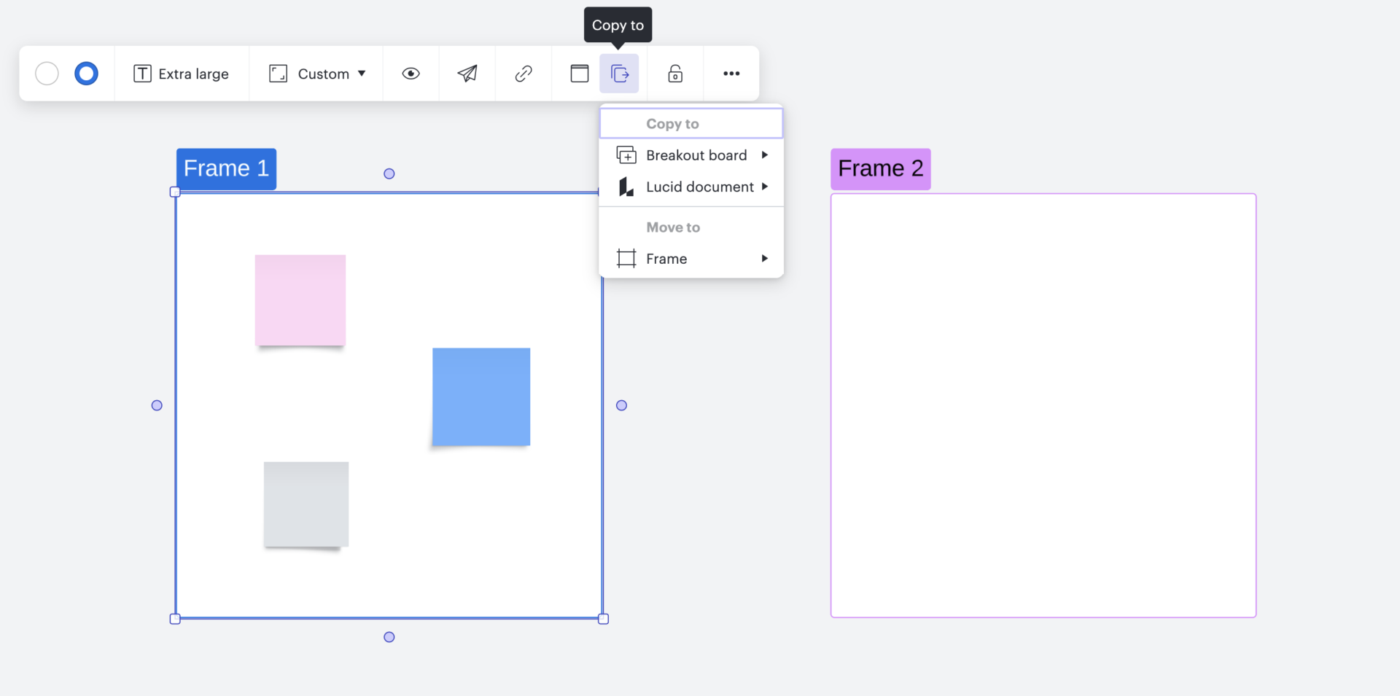
Lucidspark is an online whiteboard for group brainstorming and part of Lucid’s larger visual suite. It’s best when a session is a rough draft of a process map or system diagram. Teams explore a problem on the open canvas, sort the useful ideas, and then carry that work into Lucidchart for precise diagrams.
The two products serve different stages of the same work. Lucidspark handles sticky notes, sketches, research notes, and early flows. Lucidchart, on the other hand, adds shapes and controls to map a workflow, org chart, or customer journey that others can follow.
That mix suits analysts, ops teams, architects, and consultants who move from group talk to formal docs. Lucidspark can also stand on its own for retros, planning, and agile ceremonies.
Note: Lucid markets Lucidspark and Lucidchart through the broader Lucid Visual Collaboration Suite, so the exact price can depend on the product package and billing term selected. Confirm the final cost at checkout, especially when both applications are required.
A G2 reviewer mentioned:
What I like best is how easy it is to get started – the drag-and-drop canvas is intuitive, so I can go from a blank page to a clear diagram or whiteboard in minutes. The real-time collaboration is the biggest win for my team; multiple people can edit and comment on the same board live, which has replaced a lot of back-and-forth meetings. The template and shape libraries save me a ton of time since I rarely have to build things from scratch, and the integrations with the other tools we already use make it easy to drop diagrams where the rest of the team works.
Where it taps out: Lucidspark is strongest as part of the wider Lucid environment. Teams that only want a whiteboard may end up paying for a diagramming workflow they rarely use. And while content moves between Lucidspark and Lucidchart, rough sticky notes don’t automatically become a polished process map without some rebuilding and cleanup.
Best for: Business, operations, and technical teams that begin with group ideation and finish with formal diagrams or process documentation.
Skip it if: You want one self-contained canvas for brainstorming and delivery, with no need for Lucidchart or structured diagramming.
Also, check out: ClickUp vs. Lucidchart
Microsoft Whiteboard is a free-form digital canvas built into Microsoft 365 and Teams. For organizations that already meet, share files, and manage access through Microsoft, it’s the practical Mural alternative. A presenter can open a shared board straight from a Teams meeting, while participants can add notes, draw, or react.
The canvas covers everyday visual work rather than heavy facilitation. Teams get an infinite space with sticky notes, note grids, text, images, shapes, and freehand ink. A ruler and shape cleanup tidy up rough sketches. Because Whiteboard already sits in the tools people use each day, there’s less setup, fewer accounts, and less fuss getting everyone on the board.
A G2 user described:
Launching a whiteboard during team meetings is straightforward for everyone to enter their thoughts or ideas on a single board/page. Multiple options for entering stickies, changing colors, and drawing diagrams are provided. The best feature is that we can enter thoughts anonymously without revealing our identity.
Where it taps out: Microsoft is retiring Whiteboard for personal Microsoft accounts. Creating and editing will stop on August 22, 2026, and personal account boards will be deleted on September 5, 2026, so individuals and freelancers should plan around a business tenant.
Best for: Microsoft 365 teams that want a readily available canvas for meetings, retrospectives, planning, and lightweight brainstorming.
Skip it if: You need advanced workshop design, detailed facilitation controls, or a whiteboard that works equally well outside the Microsoft ecosystem.
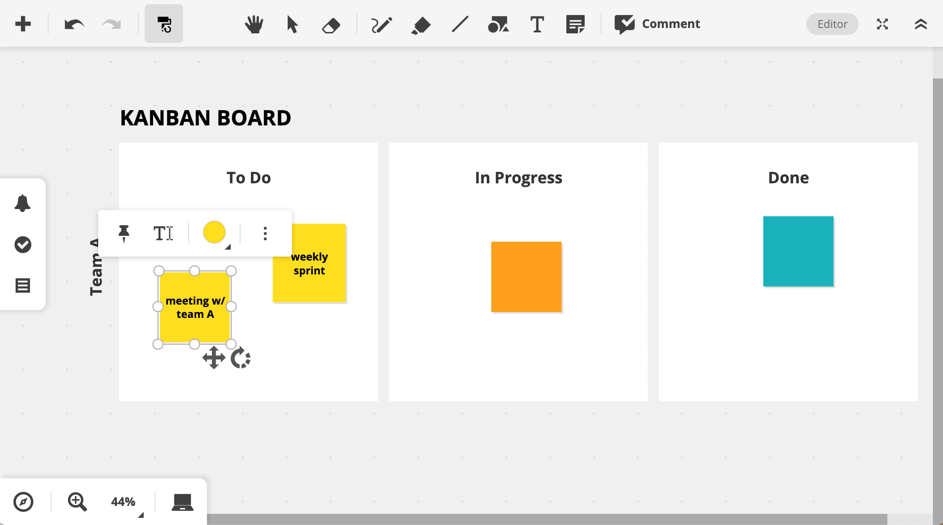
Conceptboard is an online whiteboard that doubles as a system of record. The board where you run a workshop is the same one that later tracks tasks, approvals, and version history. A facilitator guides everyone around the canvas with Moderator Mode. They gather input through voting and timers, then sort the results into sections. When the session wraps, that board holds assigned owners, approval decisions, updates, and a full log of how the work changed.
Where many boards focus on the live session, Conceptboard keeps the trail going through review and delivery. Access roles control who can edit, review, or read a board. Projects and tags help sort a growing pile of work. That mix suits public sector teams, consultants, product groups, and remote companies on longer efforts: change programs, research projects, planning cycles, or stakeholder reviews. German hosting, a GDPR focus, and a self-hosted option make it worth a look when those boards hold sensitive data.
A G2 user shared:
Conceptboard is a great collaboration tool for working with teams. It is intuitive to use, and participants quickly get the hang of it. I use it very often in online workshops and also in coaching to visualize topics, make them discussable, and work on them. The content can be creatively implemented and later easily exported and made available in a photo protocol. In addition, numerous pre-made templates are available, which can be quickly inserted and customized. Another advantage is that Conceptboard is GDPR compliant.
Where it taps out: Conceptboard has a smaller integration ecosystem and template community than Miro or Mural. Its strongest governance and hosting options also target larger organizations, so smaller teams may find the plan structure heavier than the core whiteboarding features warrant.
Best for: Teams that need facilitated workshops, assigned follow-up work, formal reviews, and a traceable board history in one visual workspace.
Skip it if: Your priority is a large workshop template marketplace, a broad app ecosystem, or advanced creative facilitation methods rather than structured follow-through.
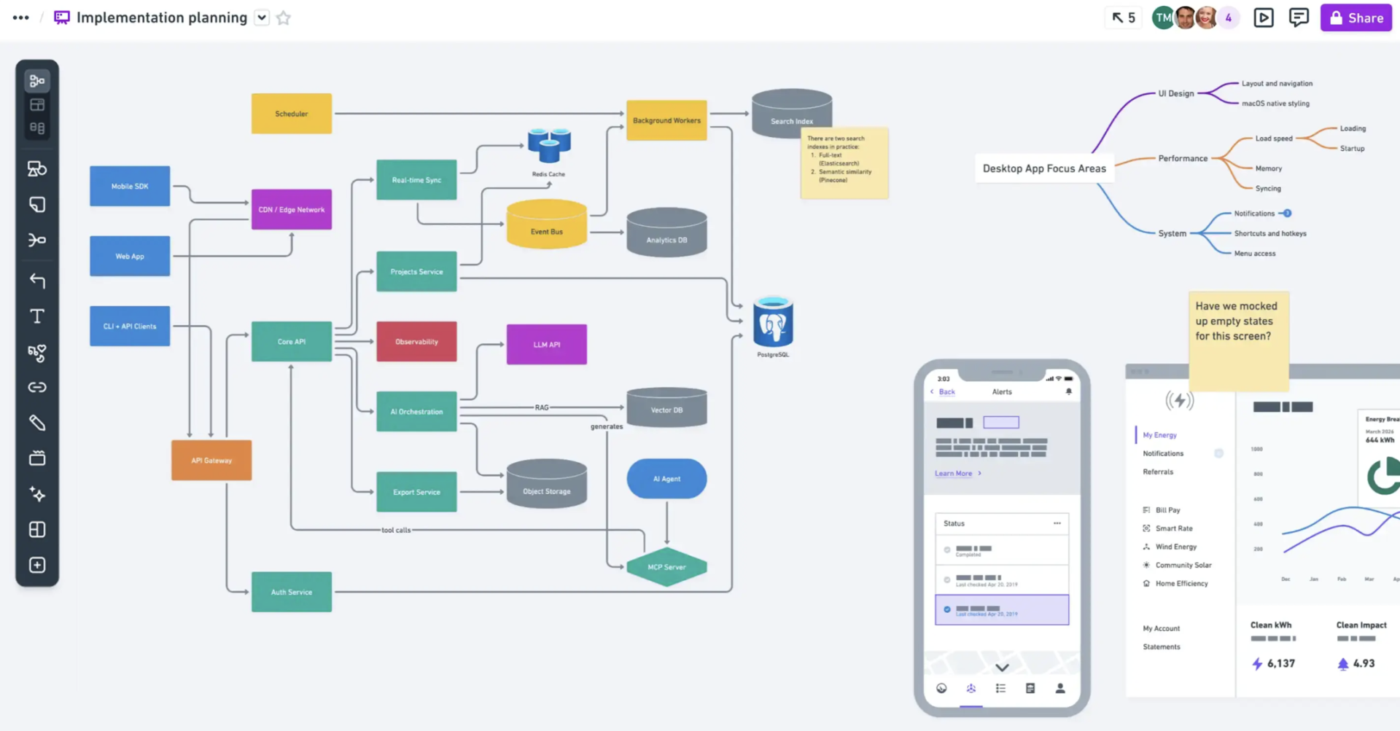
Whimsical is a product design tool where flowcharts, sequence diagrams, mind maps, and low-fidelity wireframes share one visual system. Where Mural hands you an open workshop canvas, Whimsical gives product teams a running head start.
The wireframing tools shine during early discovery. Product managers and designers sketch web or mobile screens from ready-made frames and parts. They can adjust states like buttons, tabs, menus, and status bars, then wire those screens into a flow. Engineers and stakeholders get enough detail to debate structure and behavior before anyone commits to full design.
Whimsical Docs hold the written side too: product briefs, technical notes, decision records, and specs. That combo fits product managers, designers, and engineers who think in flows and screens.
Note: Voting and timers begin on the Pro plan. Free public links are view-only, while Pro and Business users can give outside participants permission to view, comment, or edit.
A G2 user mentioned:
I like how versatile it is; you can create wireframes, do brainstorming, build org charts, make diagrams, and much more. It’s user-friendly, and the AI feature is really helpful too.
Where it taps out: Whimsical has voting and timer tools, but it offers less depth for large facilitated workshops than Mural. Teams will find fewer controls for breakout activities, guided participation, and complex multi-stage sessions. Its free plan also limits shared team work to three boards.
Best for: Product managers, designers, and engineers who need to create user flows, system diagrams, mind maps, and early wireframes quickly.
Skip it if: Your main use case is running large workshops with advanced facilitation controls, participant activities, and an extensive method library.
Canva is an online design platform for decks, docs, videos, websites, and branded assets. Canva Whiteboards extends the same editor into an infinite shared canvas. Teams tap Canva’s media library and design tools while they map out ideas, all in one place.
That wider design system gives Canva a clear spot among all other Mural alternatives. A prepared Canva deck can open into a Whiteboard when a meeting shifts from presenting to working. After it wraps, Magic Switch can turn the board into a doc, deck, email, or other format.
Canva Whiteboards also handles image-heavy work better than many older boards. Teams can drop photos, video, audio, charts, brand art, and more beside their notes and diagrams. It fits creative reviews, campaign ideas, storyboards, floor plans, and any session where visuals say more than rows of sticky notes.
A G2 user described:
I find Canva extremely versatile for digital asset creation, from images for email and social media to splash screens and video intros and outros. I really like the team collaboration feature, especially the whiteboard, which allows everyone to feel like they’re in the same room to work on a project together even if they’re not physically present. It makes it easy for us to meet up, look at the same presentation live, and make changes in real-time.
Where it taps out: Canva offers timers, reactions, templates, and AI cleanup, but it has fewer controls for carefully orchestrated workshops than Mural. Facilitators who depend on private contribution modes, breakout spaces, advanced voting, or detailed session management may find it too light.
Best for: Teams that want to turn image-rich workshops into editable presentations, briefs, storyboards, and other visual content.
Skip it if: You need a dedicated facilitation platform for complex workshops or have little use for Canva’s broader design suite.
Also Read: Canva Alternatives
Three questions settle this: what happens to the board after the session, how many people need edit access, and which tools your team already has open. Answer those and the list of eight narrows to two. Facilitation depth only decides it if you run workshops weekly.
The right choice is the one that fits the full path from contribution to decision to follow-through. Do not choose on canvas features alone.
Whiteboard pricing is hard to compare because almost nobody prices the same way. Use this table as your checkpoint (but remember to check the latest pricing on the tool’s website):
| Tool | Free tier | Entry paid plan | Next tier up | How it bills |
|---|---|---|---|---|
| Mural (baseline) | 3 editable murals, unlimited members and visitors, facilitation features included | Team+, $9.99/member/mo billed yearly | Business, $17.99/member/mo | Per member |
| Miro | 3 editable boards, unlimited team members, visitors view-only | Starter, $8/member/mo billed yearly | Business, $20/member/mo | Per member |
| FigJam | Starter: 3 FigJam files (co-edit with unlimited users) | Professional Collab seat, $3/user/mo | Professional Dev seat, $12/user/mo | Per seat type (Full / Dev / Collab) |
| ClickUp | Free Forever: 3 public Whiteboards, unlimited tasks and members, Collaborative Docs | Unlimited, $7/user/mo billed yearly | Business, $12/user/mo | Per user |
| Lucidspark | 3 editable boards, unlimited shapes per board, basic Visual Activities | Individual, $9/month | Team, $10/user/mo | Per user, inside the Lucid Suite |
| Microsoft Whiteboard | None after Aug 22, 2026 | Bundled with Microsoft 365 | Included at every business tier | Not sold separately |
| Conceptboard | 3 active boards, 100 objects per board | Starter, €5/user/mo: unlimited boards, 5 active projects | Advanced from €10/user/mo | Per user, in euros |
| Whimsical | 3 team boards, unlimited workspace members, 3 teams, 10 guests, 7-day version history | Pro, $10/editor/mo | Business, $20/editor/mo | Per editor; viewers are always free |
| Canva Whiteboards | Free tier includes Whiteboards, 5GB storage, 1 Brand Kit | Canva Pro, $144/year for one person | Canva Business, per seat with a 3-seat minimum | Per year, per seat above Pro |
Mural exports to PDF, PNG, PowerPoint (outline contents only), zipped HTML with data files, and CSV for sticky notes only. Only members, or Full Members on the tiered pricing model, can export at all. So step one is confirming you still have a member seat before you cancel.
What transfers cleanly is text. What doesn’t is structure.
If you’re moving to Miro, you have two paths. Copy-paste is the better one for anything with connections, like mind maps and flows, because it keeps those links intact. On the other hand, you have a bulk PDF import that handles volume. Miro’s importer reads shapes and coordinates from the PDF and rebuilds them as editable objects, but expect to nudge layout afterward.
If you’re moving anywhere else, plan on rebuilding. CSV gets your sticky note text into ClickUp, Lucidspark, or Conceptboard, which is usually what matters. The board layout rarely survives, and honestly, most layouts weren’t worth preserving.
Before you migrate anything, audit what you’re carrying. Teams routinely export three years of boards and open none of them later. Pull the decisions, the diagrams still in use, and the templates you run every quarter. Screenshot the rest into a doc and let it go. A migration is a good excuse to stop paying for the storage of done-and-dusted workshops.
One timing note: Export before your paid term ends, not after. Once a workspace drops to Free, you’re back to three editable murals, and export permissions get tighter.
Every tool on this list can host a good brainstorm. The difference is what survives afterward. If your team’s real complaint about Mural is the three-mural cap or the per-seat price, Miro, Lucidspark, or an ecosystem-native option will scratch the itch.
If the complaint is that great sessions keep evaporating into screenshots, the fix is a canvas that’s wired into the work.
That is the case for ClickUp. Its Whiteboards sit in the same workspace as tasks, docs, dashboards, and AI, so the sticky note you wrote at 2 p.m. becomes an assigned task by 2:01. For teams whose ideas keep dying on the board, that’s an alternative worth trying.
Get started with ClickUp for free.
Keep Mural if facilitation is your craft. Its free plan includes timers, voting, and private mode, which Miro, Whimsical, and Lucidspark all require you to pay for. The LUMA method library and structures like Areas and Outlines are built for people who design sessions deliberately, and nothing else here matches that depth. If your workshops consistently produce good decisions and the only friction is the three-mural cap, upgrading is cheaper than retraining your team on a canvas that facilitates less well.
Miro, FigJam, Lucidspark, and Canva all include some AI at no cost, and Mural does not. Mural AI requires Team+, Business, or a Member seat on Enterprise. Miro allots 10 AI credits per team per month on Free, rising to 25 per license on Starter. Figma’s Starter plan includes 150 AI credits per day, capped at 500 monthly. Lucid currently offers Lucid AI on its free tier, though it notes this may become paid.
ClickUp, because it gives every function the same source of truth. Marketing, product, and ops can ideate on a shared Whiteboard, then watch those ideas land in the Lists and Docs each team already works from, with no handoff or re-entry. Everyone sees the same status without adopting a new tool. That’s why it suits campaign planning, roadmap shaping, and process design, where the people in the session aren’t the only people who need the outcome.
Miro is broader; Mural is more disciplined. Miro ships 250+ integrations and 2,500+ templates, with Starter at $8 per member per month billed yearly. Mural’s Team+ runs $9.99 per member per month annually and centers on facilitation: LUMA-informed methods, Areas, Outlines, and private mode. One practical difference favors Mural: its free plan includes timers and voting, while Miro moves both to Starter. Pick Miro for breadth, Mural for facilitator-led work.
Conceptboard and Miro are the strongest fits. Conceptboard hosts in German data centers, holds ISO 27001, 27017, and 27018 certifications, and offers IONOS or StackIT hosting on Advanced, plus dedicated on-premises options on Special Plans. Miro provides EU data residency on every plan, with US and Australian residency only on Enterprise as a paid option. SSO arrives on Miro Business; SCIM and audit logs require Enterprise.
This is the limit agencies hit first. Mural’s Free plan allows only one workspace. Whimsical’s Free plan includes 3 teams and lets you create 2 free workspaces, rising to 6 teams on Pro and unlimited on Business. Miro’s Free and Starter plans support a single team, with multiple teams starting on Business. Conceptboard’s Starter caps active projects at 5, with unlimited projects on Advanced. If you keep client work separated, check this before pricing.
Switch plans if your only complaint is the board cap. Switch tools if your complaint is what happens after the session. Mural’s paid tier fixes board limits and unlocks AI, and staying costs you no migration, no retraining, and no lost facilitation muscle memory. But no Mural plan connects a board to task ownership and delivery, so if that’s the gap, upgrading buys you a bigger version of the same problem. Diagnose the complaint before you shop.
Probably not. Low adoption is usually a facilitation problem wearing a software costume. If sessions felt aimless or the output went nowhere, a new canvas inherits both issues. Switching helps in two specific cases: the tool sat outside your team’s daily software, so nobody opened it, or good decisions kept dying because follow-up lived elsewhere. Fix the process first, then pick the tool that supports it.

Manasi Nair
Max 24min read
Manasi Nair
Max 30min read
Manasi Nair
Max 28min read

© 2026 ClickUp





