
Workplace ABCs (Allies, Buddies, and Colleagues): A Guide on How to Make Friends at Work


Sorry, there were no results found for “”
Sorry, there were no results found for “”
Sorry, there were no results found for “”
A working adult life means little to no time for socializing—outside of work.
Between work, household chores, various commitments, and many more responsibilities—there’s hardly any time or energy to approach a person we find interesting, strike up a conversation, bond over mutual interests, and develop a friendship.
However, there’s a place where you can easily make new friends—your workplace.
A study by the Survey Center on American Life discovered that people are more likely to make friends at work than at any other place! After all, we spend a good part of our adult lives at work.
So, whether you’re starting a new job or looking to join pre-established groups, here’s your guide on how to make friends at work.
Work friendships don’t get enough credit. A recent Gallup research discovered how having a best friend at work is closely linked to higher productivity, improved morale, increased job satisfaction, and positive business outcomes. That’s not all; there’s a body of research proving the benefits of making friends at work.
Here are a few pointers that make our case on why work friends matter:
Here are a few easy ways for you to strike up workplace friendships (and sustain them):
Never underestimate the power of a ‘Hi, how are you?’
To make friends at the workplace, be prepared to put yourself out there and connect with people. Introduce yourself, ask people about themselves, and indulge in the occasional chit-chat.
If you’re new, stick to work-related questions first, such as how long someone’s worked at the organization, what they like about working there, their career path, and so on. After breaking the ice, you can slowly ease into the more personal stuff like hobbies and interests, music tastes, or weekend plans.
Such simple exchanges can pave the way for deeper and more meaningful conversations. Do remember that conversation is a two-way street. If someone does not wish to divulge information voluntarily or finds small talk awkward, let them be.
They say nothing is more musical to someone’s ears than their own name. Using people’s names in conversations is one of the most effective communication strategies to build an emotional bond.
Learn your coworkers’ names and use them as much as you can. From hellos and goodbyes to addressing people when in groups (or over a Teams call), use their names to acknowledge their identity. It’ll show them you’re interested in knowing more about them.
You know how we welcome new neighbors with freshly baked cookies or cake? Why not try the same at work? It doesn’t necessarily have to be baked goods. Get creative in the kitchen and bust out your family recipe. If cooking is not your cup of tea (or too much work), buy shareable packs of your favorite snacks. Alternatively, you could visit the local bakery or coffee place and pick out the bestsellers.
Hand out the snacks to co-workers or leave them in the break room with a small note. Either way, your colleagues will appreciate the thoughtful gesture and warm-up to you.

Speaking of break rooms, common areas are a great place to form workplace friendships.
Shared spaces like the cafeteria, lounge area, and water cooler offer a relaxed setting where co-workers can unwind, socialize, and connect. Whether grabbing a quick bite or stretching your legs, consider hanging out in communal areas. It also expands your social circle beyond your cubicle or floor, as you might meet people from different teams or departments.
It’s easier to make friends when you pass each other in the office hallways or eat lunch together. However, those working in remote positions don’t have this convenience. But that doesn’t mean they have to live a life of isolation!
Start or join a Slack channel with like-minded individuals to overcome this common struggle of missing that ‘personal’ touch. Bond over common interests, such as TV series, sports, books, recipes, or online games. You may even conduct virtual activities such as watch parties, book club meetings, bake-alongs, or tournaments.
Just check with your manager or supervisor to ensure the interest group does not violate any company policy.
A positive attitude is a magnet for work friendships. A warm and friendly demeanor at work will draw people to you. In return, you will meet positive, like-minded individuals who can pick you up when the going gets tough.
Positive work habits such as helping others, stepping up during challenging moments, and supporting your coworkers will show you to be a reliable team player.
Most organizations host team-building activities periodically. Many also include such ice-breakers during the onboarding stage for new employees. These periodic work events reinforce team spirit and belonging through shared experiences.
Whether a virtual game of charades or an outdoor hiking expedition, every team activity is an opportunity to make friends at work. You already have the common ground of shared goals and challenges. Plus, solving problems together means you’ll have to rely on each other and develop trust, strengthening the friendship.
The primary difference between team activities and after-work socializing is that the latter is not mandatory.
Showing up to after-work social events displays your commitment to making friends at work. Grabbing a drink during a virtual happy hour or attending a company dinner around Christmas allows coworkers to connect in a fun, relaxed, and informal setting outside of work.
You see your work friends as individuals and discover their hidden talents, interests, or hobbies. As conversations flow more freely and colleagues share laughs, you’ll make lasting memories and genuine friendships.
Celebrations can be a perfect opportunity to make friends at work. Express praise for a job well done and congratulate coworkers on their wins.
Whether a promotion or a great presentation, appreciating co-workers shows support and can be a conversation starter.
Of course, such praise should come from a place of authenticity. You want to celebrate their success as your own and recognize their strengths and contributions. Small tokens of appreciation, such as a thank-you note or even an eCard, can go a long way in boosting someone’s self-worth. And when your time comes, your friends will remember your kind gestures and treat you with the same enthusiasm.
Companies often offer employees opportunities to volunteer for a good cause. This is a great way to make work friends who are as passionate about the cause as you.
Whether your office is conducting a cleanliness drive, hosting a charity bakesale, or running a city-wide marathon, volunteering for such events is a chance to do good and bond with colleagues with similar interests.
Working towards a meaningful cause will also give you a sense of purpose beyond the workplace, as your contribution benefits communities and society.
Work friendships don’t form overnight. They take days, weeks, and months to materialize into something authentic.
Don’t expect to find your work bestie at the first office happy hour you attend. Just keep being yourself and interacting with coworkers. You also don’t want to force a friendship just to make friends at work. Find someone who puts in the same effort and energy, sometimes even going the extra mile to make you feel valued at work.
Also Read: How to network at a conference 🤝
Are you a shy or socially awkward person who wishes to make friends at work but is afraid of putting yourself out there? We see you. Here are a few quick tips for you:

You use a variety of online platforms at work for everything from team management to planning your week. However, did you also know that you can use these online platforms to build and nurture workplace relationships?
Here’s how.
Almost all organizations use various workplace communication tools, such as email clients, instant messaging tools, or video conferencing platforms. These help maintain efficient synchronous and asynchronous communication between team members regardless of location.
Use these channels and tools to get in touch with your workmates. Set up chat rooms and interest-based Slack channels, schedule virtual coffee catchups, or have a tete-a-tete with your new work friend. Connecting over shared interests, experiences, and challenges will lay the foundation for deep friendships.

Collaboration tools are often used in conjunction with internal communication software solutions. They provide a centralized location for teams to share files, create and edit documents, exchange ideas, and collaborate on projects. These efforts contribute to team building as everyone works towards a shared goal.
Use platforms like ClickUp to interact and cooperate with coworkers to solve complex problems. Overcoming challenges together will add more value to your friendship.
Connecting with work friends over social networking sites like Instagram may fall into a gray area for some. Of course, it entirely depends on your comfort levels and the depth of your friendship; however, not everyone may want coworkers on their social media feeds.
So, to sustain work friendships while keeping your personal life distinct, consider connecting over professional platforms like LinkedIn. Use it to network with peers, mentors, and leaders and expand your professional circle.
You and your colleagues can sign up for learning and skill development programs. Online learning platforms, upskilling projects, virtual events, and interactive webinars help enhance skills. Participating in these with coworkers can also strengthen relationships.
Helping each other attain professional goals and accelerate career progression enriches work relationships by making them more value-driven.
Most organizations use employee engagement platforms. These platforms can develop a feeling of belonging and build a community that enriches workplace relationships. From participating in team-building activities to celebrating professional achievements, these engagement portals offer a chance to bond and build positive and meaningful relationships.
Bonus: Communication plan templates
While making friends at work has its fair share of merits, you must also maintain professional boundaries to ensure a healthy and respectful work environment. Doing so takes skill, as you don’t want to come off as rude or standoffish while enforcing boundaries.
Here are some tips that could help you navigate this:

Making and sustaining friendships at work is not easy—but it doesn’t have to be complicated either, especially when you have tools like ClickUp.
ClickUp offers collaboration detection, allowing you to work with teammates on a shared project. You can create and edit documents together, add comments, and assign tasks to each other. You can also use ClickUp Whiteboards to bounce off ideas with your team, discuss possible solutions, build mindmaps and draw up workflows, and work collectively toward a shared goal.
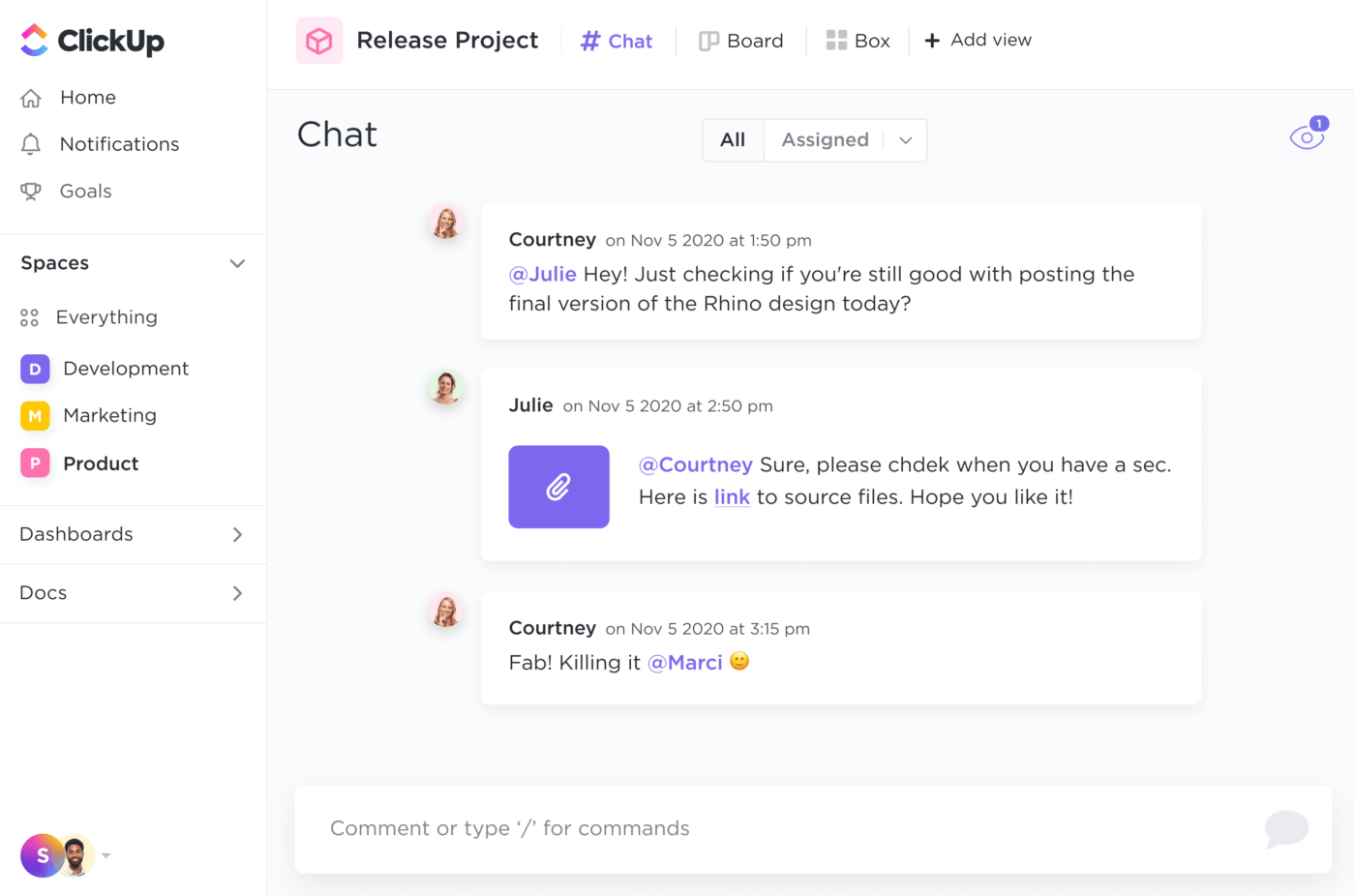
And then there’s ClickUp Chat View, which sorts conversations in threads so you can participate in multiple interactions while maintaining your sanity!
ClickUp checks all the boxes to be that one friend at work who will never disappoint you.
Learn how ClickUp helps you deliver your best. Sign up for free now!
If you’re new to the office and wish to make friends, consider introducing yourself to your colleagues, making small talk, attending work events, and participating in team activities to know your co-workers better.
Making friends at work develops a feeling of camaraderie and belonging. It is an antidote for isolation and loneliness while improving collaboration and communication among team members. It drives engagement, which improves morale and boosts workplace satisfaction. Further, it can unlock networking opportunities for personal growth and career advancement.

Manasi Nair
Max 20min read

Praburam Srinivasan
Max 14min read
Manasi Nair
Max 32min read

© 2026 ClickUp




