






Still downloading templates?
There’s an easier way. Try a free AI Agent in ClickUp that actually does the work for you—set up in minutes, save hours every week.
Sorry, there were no results found for “”
Sorry, there were no results found for “”
Sorry, there were no results found for “”
A Mercer research found that 91% of investment managers are currently using or planning to use AI within their investment strategy or asset-class research.
This article walks you through how AI is transforming wealth management—from automating compliance checks to personalizing client outreach—and shows you how to build AI-ready workflows your team will adopt.
A wealth advisor’s morning often starts with 45 minutes of CRM updates before the first client call. Between KYC documentation, quarterly report generation, and reconciling data across custodial platforms, the strategic work gets pushed to evenings—if it happens at all.
This keeps you from focusing on what actually grows your business—building relationships and providing strategic advice.
This operational drag means you’re always reacting to client needs instead of anticipating them. Opportunities to offer timely advice are missed, the client experience feels inconsistent, and the risk of burnout for you and your team is sky-high.
AI saves time and surfaces insights faster. Here’s what that looks like in practice:
However, these benefits only materialize when your AI tools can talk to the rest of your work.
Even promising new AI tools often just add another login and another silo, creating more AI sprawl—the unplanned proliferation of AI tools with no oversight or strategy—without solving the core problem.
Which is why you should replace scattered point solutions with a converged AI workspace—a single, secure platform where projects, documents, conversations, and analytics live together with AI embedded as the intelligence layer.
📮 ClickUp Insight: The average professional spends 30+ minutes a day searching for work-related information—that’s over 120 hours a year lost to digging through emails, Slack threads, and scattered files. In fact, 62% of knowledge workers say they spend “too much time searching for information” in their workday.
💫 Real Results: Teams like QubicaAMF boosted teamwork company-wide by 60% using ClickUp’s centralized productivity hub.
AI isn’t a single, monolithic tool; it’s a set of powerful capabilities that can be applied across the entire client lifecycle. Thinking about AI in terms of specific, practical applications helps demystify the technology and reveals a clear path to adoption.
From the first handshake to long-term portfolio management, here are the most impactful ways AI is being used in wealth management today.
Unexpected client departures often have warning signs that were buried in scattered emails, call notes, and CRM entries. However, manually tracking every client’s sentiment, life events, and communication history is impossible. This leads to generic outreach and missed opportunities to provide timely, personal advice that builds loyalty.
AI helps your team retain clients by predicting churn risk. It analyzes communication patterns and transaction history to predict which clients are at risk of churn, prompting you to reach out before it’s too late.
Generative AI can even draft personalized emails and meeting agendas based on a client’s recent activity or stated goals, saving you hours of prep time. Learn more in this video.
👀 Example: Morgan Stanley partnered with OpenAI to build an AI assistant that helps financial advisors quickly retrieve research and client information.
This allows advisors to prepare faster and respond more accurately—improving responsiveness without increasing workload.
💡 Stop letting important details fall through the cracks. Build a proactive engagement system with ClickUp:
@brain in a task comment. ClickUp Brain will instantly summarize all past interactions, notes from ClickUp Docs, and relevant tasks, so you walk into every conversation fully prepared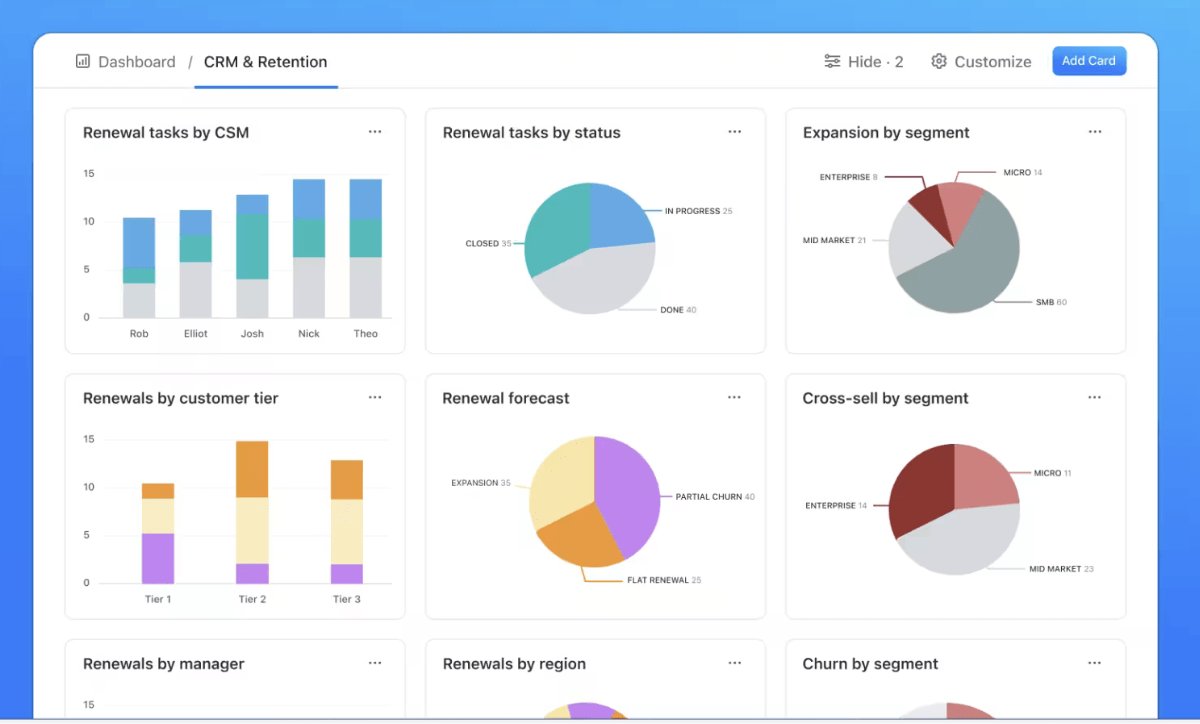
Building the perfect portfolio for each client is a complex puzzle. You’re balancing their risk tolerance, time horizon, and tax situation against thousands of potential asset combinations. Doing this manually is incredibly time-consuming, and the approval process for any changes—involving analysts, compliance officers, and yourself—is often a chaotic mess of email chains and missed follow-ups.
This workflow is slow, inefficient, and introduces the risk of human error or suboptimal allocations. Without a clear audit trail, it’s also a compliance headache waiting to happen.
AI models, like those pioneered by robo-advisors, can evaluate thousands of asset combinations in seconds to recommend optimal allocations. You review the AI-generated proposals, apply your human judgment, and make the final call.
👀 Example: Platforms like Betterment and Wealthfront use algorithmic investing, automated rebalancing, and tax-loss harvesting to optimize portfolios at scale.
💡 Manage this entire process in ClickUp to streamline approvals and reviews.
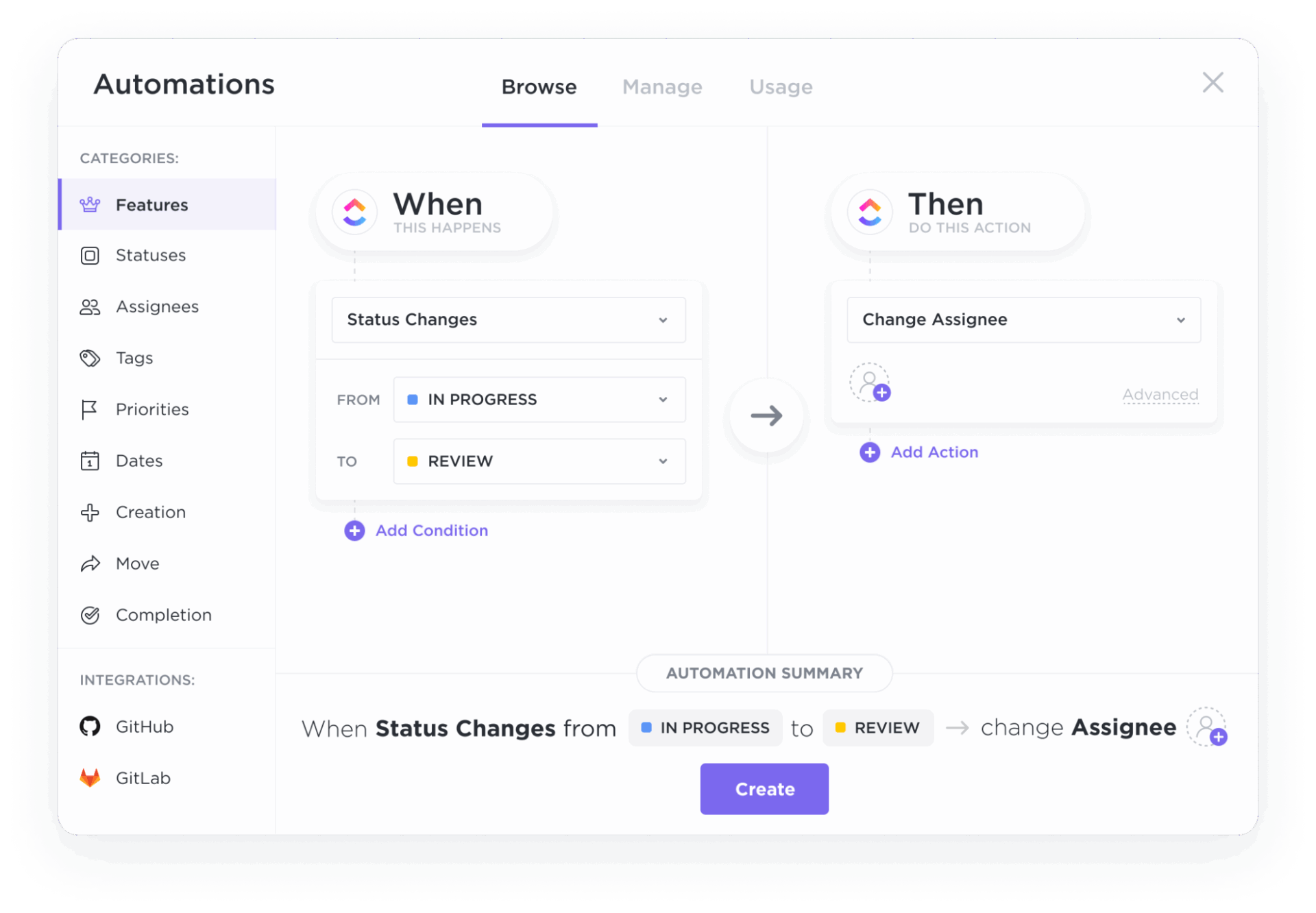
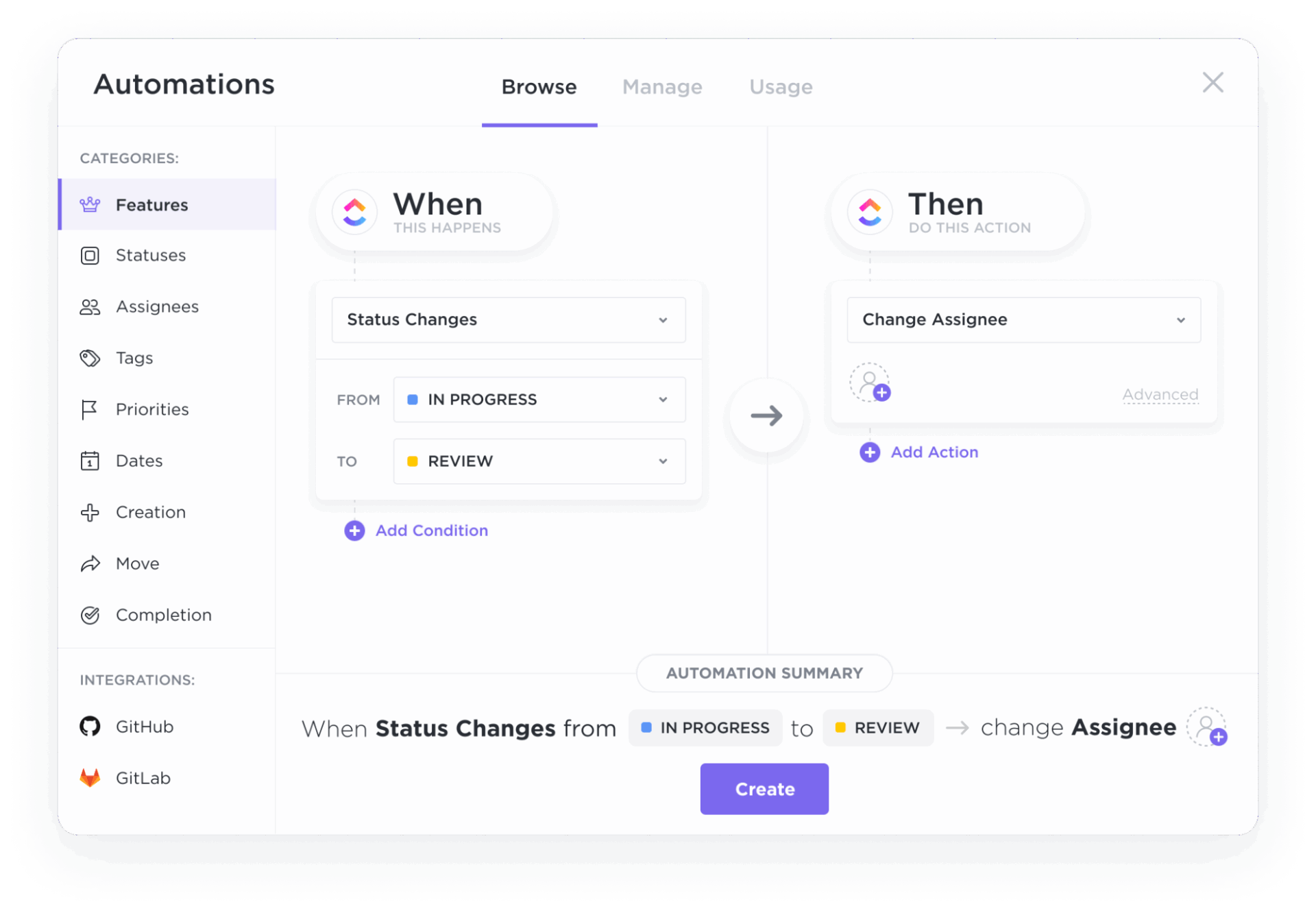
When an AI model suggests a portfolio change, an automation built using ClickUp Automations can instantly create a task, apply a template for the approval process, and assign it to the first reviewer.
Each stakeholder is notified when it’s their turn, and all their feedback and approvals are captured in the task’s Comments and Task history. This creates a bulletproof, time-stamped audit trail, transforming a chaotic email-based workflow into a smooth, compliant, and efficient process.
Your compliance team is fighting an uphill battle. They’re manually reviewing endless transaction logs and scanning communications for red flags, but by the time they spot an issue, the damage may already be done.
Alerts from various monitoring systems get lost in crowded inboxes, with no clear ownership or action plan, creating significant regulatory and financial risk.
AI fraud detection works by establishing behavioral baselines for each client—typical transaction sizes, login locations, communication patterns—then flagging deviations in real-time.
90% of financial institutions already rely on AI to detect and investigate emerging fraud schemes in real-time.
👀 Example: An AI system might alert compliance when a client who typically makes monthly $5,000 transfers suddenly initiates a $50,000 wire to a new international account, or when login attempts occur from an unusual geographic location.
💡 Connect your AI monitoring tools to ClickUp to close the loop between detection and resolution.
With workflow automation, you can set up a rule that instantly turns an AI-generated alert into a task, assigns it to the right compliance officer, sets a priority and due date, and attaches all relevant documents. Instead of alerts getting lost, they become actionable tasks tracked from start to finish.
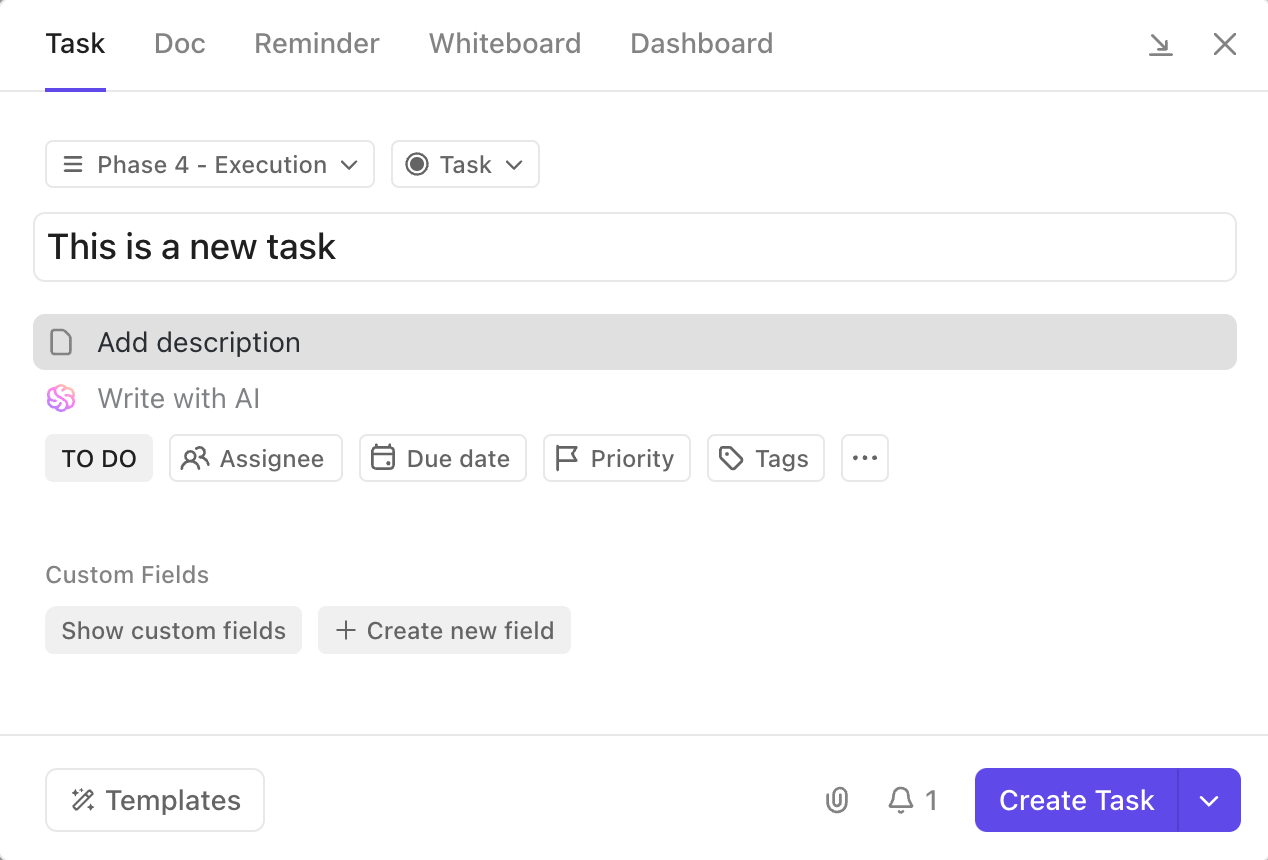
Watch this video to learn how you can save hours each week through task automation with AI!
Crafting a comprehensive financial plan requires pulling data from a CRM, running projections in a specialized tool, and then writing up the narrative in a word processor. The process is so time-consuming that you can only offer this level of service to your top-tier clients, leaving others with generic, one-size-fits-all advice.
Generative AI can accelerate this process dramatically. It can pull in client data, run retirement projections, and draft a narrative explaining the recommendations in plain, easy-to-understand language.
This allows you to deliver high-quality, personalized plans to more clients, making your advice feel more valuable and actionable.
💡 Create a single, collaborative space for this entire workflow with ClickUp Docs. Draft the financial plan, embed live charts from your analytics tools, and use ClickUp Brain to summarize the client’s history right within the document.
As you outline action items for the client, you can highlight the text and instantly convert it into a trackable task assigned to them. This transforms a static document into a living, breathing plan that connects directly to your team’s work.
Adopting AI introduces significant ethical and regulatory risks that firms must address. Firms are rightly concerned about using “black box” algorithms that can’t be explained to clients or regulators. This fear can lead to inaction, causing you to fall behind competitors, or worse, adopt tools without the proper guardrails in place.
The core of your fiduciary duty is to act in your clients’ best interests, and that responsibility extends to the technology you use. Here are the key ethical considerations you must address:
Ethical AI use requires radical transparency and meticulous documentation. You need a clear, unchangeable record of how AI-generated insights were reviewed, who approved them, and how they were communicated to the client. This is where a unified workspace becomes your best defense.
💡Document every decision automatically in ClickUp, tracking every change with a time-stamped log using ClickUp Task History. The ClickUp Task Comments capture the “why” behind each decision in a threaded conversation. You can also link supporting ClickUp Docs directly to ClickUp Tasks, creating a comprehensive and easily auditable trail that supports compliance and builds client trust.
📮ClickUp Insight: 22% of our respondents still have their guard up when it comes to using AI at work. Out of the 22%, half worry about their data privacy, while the other half just aren’t sure they can trust what AI tells them.
ClickUp tackles both concerns head-on with robust security measures and by generating detailed links to tasks and sources with each answer. This means even the most cautious teams can start enjoying the productivity boost without losing sleep over whether their information is protected or if they’re getting reliable results.
Many firms see AI implementation as a massive, expensive project and don’t know where to begin. This often leads to analysis paralysis, while more agile competitors gain a significant edge. The key is to start small and build momentum.
Here’s a practical, step-by-step path to get started with AI without overhauling your entire operation overnight. 🛠️
Connect all the dots throughout this journey with ClickUp Brain, the AI assistant that lives inside your work, ready to summarize client history, draft follow-up tasks, or answer questions about your projects without ever forcing you to switch tabs.
AI in wealth management doesn’t replace advisors; it frees them to focus on strategic, relationship-driven work. Successful firms use AI to automate repetitive tasks and personalize advice at scale. ✨
However, disconnected tools and manual processes create a friction-filled environment where AI alone can’t save you. The real transformation happens when AI operates inside a unified workspace like ClickUp, where your data, tasks, and communication already live together.
This is what eliminates the context sprawl that kills productivity and allows your team to move faster and smarter.
Teams that build AI-ready workflows today can more easily adopt future AI innovations.
Ready to build that foundation? Get started for free with ClickUp and bring your wealth management workflows into a single, converged AI workspace.
Traditional AI is built to analyze data and make predictions based on rules, like flagging a portfolio that has drifted from its target allocation. Generative AI, in contrast, creates new content, such as drafting a personalized client email or summarizing your meeting notes.
Create dedicated Projects for your AI rollout, assign tasks to owners, set milestones, and track progress visually in ClickUp—avoiding the scattered spreadsheets and endless email chains that typically slow down adoption.
It’s highly unlikely. AI is exceptional at data processing and automating routine tasks, but clients still crave human judgment, empathy, and accountability for major financial decisions. The advisor’s role will evolve from being a data wrangler to a strategic partner, using AI as a powerful assistant.
The most common obstacles are fragmented data living in legacy systems, uncertainty around regulations, a lack of in-house AI expertise, and general resistance to change. Overcoming these hurdles is easier when you start with a unified workspace and tackle one focused pilot project at a time.

© 2026 ClickUp

There’s an easier way. Try a free AI Agent in ClickUp that actually does the work for you—set up in minutes, save hours every week.