How to Avoid Miscommunication in the Workplace (With Common Reasons & Examples)

Sorry, there were no results found for “”
Sorry, there were no results found for “”
Sorry, there were no results found for “”
In a bustling tech startup, a simple email misinterpretation caused a product launch to be delayed by two weeks, costing the company thousands of dollars and a crucial market opportunity.
Poor workplace communication can easily derail even the best-laid plans and create a negative work environment.
For team leaders and HR managers, especially in remote or diverse environments, enhancing communication effectiveness is key to success.
In this blog, we’ll explore common reasons for workplace miscommunication, its impact, some examples, and strategies to avoid such communication mistakes.
Miscommunication in the workplace occurs when information isn’t conveyed or interpreted accurately. It leads to errors, misunderstandings, and disengagement among employees.
Here are some common root causes of miscommunication in the workplace:
Your organization will eventually face the aftermath of such communication problems. Miscommunication can lead to decreased productivity, financial losses from wasted resources, missed deadlines, and unaligned teams, ultimately harming your organization’s image. In addition, gaps in communication between individuals and teams can reduce collaboration, negatively impacting your workplace culture.
Apart from the root causes above, which have more to do with individuals, here are common reasons for workplace miscommunication at an organizational level:
Complex processes and workflows can create barriers to clear workplace communication. Employees may face trouble conveying and receiving information in organizations with multiple management layers, siloed departments, and unclear reporting roles.
Such environments typically make it harder for vital information to reach the right people in a timely manner. Chances are this could lead to disharmony between departments and jeopardize the structural aspects of businesses.
In highly hierarchical organizations, information often flows top-down. This can stifle open communication and feedback from employees at lower levels.
Your employees may begin to feel intimidated or reluctant to express their concerns. For example, they’ll avoid seeking clarification of doubts from their managers—which could be you! This undoubtedly leads to communication gaps and a lack of workplace alignment.
Additionally, messages transferred across a hierarchy of employees working on a project can become distorted. The game Telephone is an example.
Miscommunication due to technology is increasingly relevant in modern workplaces, mainly with the growth of remote work. Having workplace communication tools like emails, instant messaging, and video conferences isn’t enough; we should also be able to use them effectively.
Relying too heavily on specific internal communication software and inconsistently using different platforms can hinder workplace communication. While technical glitches are another threat, the lack of face-to-face interactions also makes your team miss essential verbal cues.
Generational and cultural differences influence how your team interprets messages, expresses themselves, and perceives authority.
For instance, some cultures may prioritize indirect communication in a polite tone, while others are more familiar with directness and brevity. Also, look at how younger employees prefer digital communication methods while older employees are more comfortable with in-person conversations.
Among the most common causes of workplace miscommunication is the lack of attention. Many employees juggle multiple tasks and face constant interruptions, which makes it hard for them to fully concentrate on a single task.
When your attention is divided, you miss or misunderstand critical details. For example, you may forget to look at the ’references’ section of a project brief, and your project plan may look entirely different from what is expected.
Be it stress, frustration, sadness, or interpersonal conflicts—all are capable of distorting workplace communication. When emotions run high, individuals may react impulsively or convey their thoughts in a way they hadn’t intended.
A stressed employee might read a neutral email as critical or hostile. An overworked manager may forget to update a client with the correct version of the final files. An anxious team member might miss an essential meeting because they were struggling to cope with multiple calendars and responsibilities
Mildly varied communication styles also cloud the way your team understands messages. Individuals who prefer detailed, written communication may struggle to adapt to someone who prefers brief verbal exchanges.
The whole play between assertive and passive communication styles can also confuse your team if they aren’t aware of each other’s preferred communication methods.
Packed schedules at your workplace often lead to short interactions that work on non-verbal signals.
Body language, facial expressions, hand movements, and eye contact are all non-verbal signals. They affect how we receive or interpret messages. In a virtual environment, we can easily miss these cues and fall prey to miscommunication.
Similarly, your tone of voice also plays a key role in expressing matters of urgency, lower-priority tasks, informal chats, and more.
A recent McKinsey report highlighted how employees more involved in comprehensive workplace communications are five times more inclined to experience better productivity.
Another report by McKinsey showed that improving communication and collaboration between teams through technological tools can increase overall productivity by 20% to 25%.
It’s a known fact that when messages aren’t clearly conveyed or understood, tasks are likely to be executed incorrectly. This culminates in inefficient rework stages and project delays.
Furthermore, this inefficiency diverts resources from necessary activities and reduces your team’s overall output. As a result, they aren’t as productive as they could be and start missing deadlines. This also stands true for those relying on hybrid workplace communication techniques.
Here are some other consequences to be wary of:
Here are some common examples of workplace miscommunication:
Keeping miscommunication to a minimum can considerably increase your team’s productivity.
We’ll share some practical tricks and strategies for setting clear communication goals and discuss how to avoid miscommunication in the workplace.
You want to set clear and concise communication guidelines so that everybody understands a message the same way. Have your team use straightforward language and avoid jargon or overly technical terms that confuse recipients.
Structure your messages logically, with a clear beginning, middle, and end. Also, break complex instructions into manageable steps and provide written summaries to reinforce verbal communication.
Additionally, set clear communication protocols within your team, such as specifying email response times or preferred communication channels for different message types.
Simply hearing what someone is saying isn’t enough. You need to understand the message’s intent.
Encourage your team to practice active listening by maintaining eye contact, nodding to show understanding, and providing verbal affirmations.
Techniques like paraphrasing what the speaker has said and asking clarification questions also ensure you properly retain the message’s details.
Effective feedback on communication should be specific and actionable. You can use the SBI model (situation-behavior-impact) to structure feedback and clearly outline the situation.
Incorporate tools like 360-degree feedback systems, where employees receive feedback from peers, subordinates, and supervisors to offer a comprehensive view of communication setbacks.
Consider conducting regular informal feedback sessions to maintain open lines of communication.
Introduce your team to a culture of inquiry. Train them to ask open-ended questions that require more than a yes or no answer. This constructive query resolution style offers deeper insights and prevents misunderstandings.
For example, instead of asking, “Do you understand the task?” you can ask, “Can you explain how you plan to approach this task?”
Similarly, avoiding assumptions is equally critical. Your team must clear ambiguities rather than assume they know the answers. Use collaboration tools to engage in real-time question-and-answer sessions to address doubts promptly.
Assumption is the mother of all mistakes.
Be crystal clear when defining goals, responsibilities, and deadlines in detail. The idea is to set explicit expectations during project kick-offs or planning sessions.
Project mapping tools that manage tasks and timelines offer pre-tested communication structures to keep everyone in the loop with the project’s flow.
Another way to tackle communication challenges at the workplace is to stick to:
Start your meetings with a clear agenda shared with the participants in advance. Make it a point to double down on summarizing the key points and decisions. You can designate a note-taker or AI assistant to document action items and distribute meeting minutes after the discussion.
Consider reserving 5-10 minutes at the end of the meeting for solving queries about its contents. To keep your team aligned, follow up with regular stand-up meetings or brief daily check-ins.
Remember that following up is a great strategy for resolving any discrepancies your team may have about the task’s scope or intent.
Decoding and respecting generational communication ethics can improve communication at your workplace. Recognize the preferences of younger and older employees to find a balance between different communication styles within your team.
Even better, promote training programs on digital communication tools to bridge any communication gaps and ensure your team is comfortable with the abundance of features.
Don’t hesitate to be a mentor who applies collaborative communication principles in a cross-generational team. Your goal is to acknowledge team members’ differences and instill a sense of adaptability.
Transparency builds trust. It guarantees everyone has ready access to the information they need to meet the project’s goals. Become an advocate for open communication by sharing your organization’s goals, project updates, and the status of performance updates.
Get into the habit of organizing Q&A sessions to offer opportunities for employees to voice concerns and ask questions.
Respecting your employees’ input creates an environment of ownership and involvement that reduces the likelihood of misunderstandings at the workplace.
Offering cultural sensitivity training helps your employees better empathize with different cultural norms and practices related to communication.
This includes being mindful of language barriers and using a universal language when communicating with colleagues from different cultural backgrounds.
Leverage communication management tools like ClickUp to resolve any communication loopholes in your projects. The platform facilitates centralized communication across small and large-scale projects through task-specific chats, document sharing, time tracking, and a range of collaboration features.
ClickUp’s Chat View offers a dedicated space for real-time communication with one or many team members. Unlike traditional, cluttered email threads, all discussions are easily accessible and organized. What’s more, you can use this centralized communication system and begin conversations within specific tasks and projects.
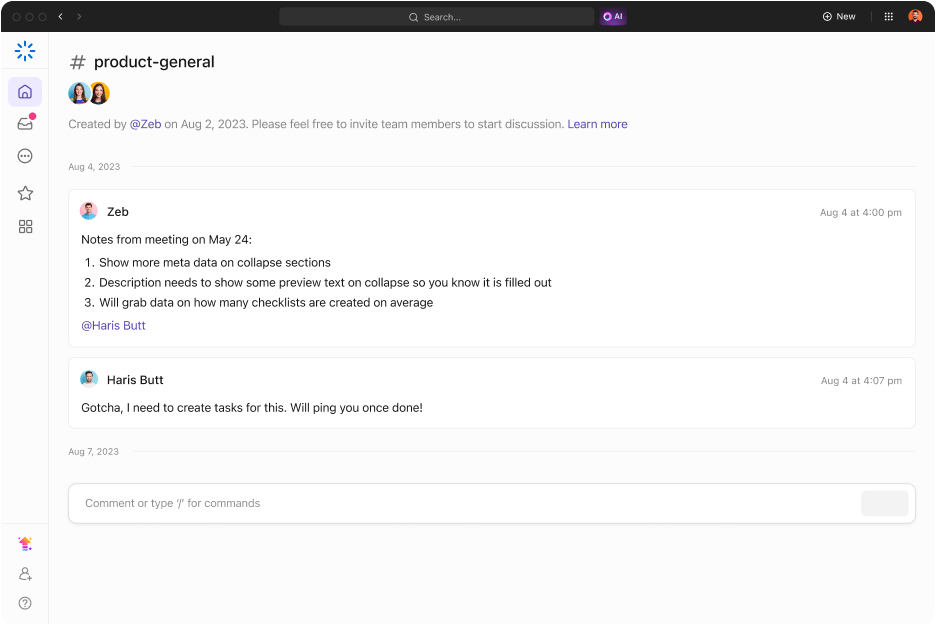
Such contextual communication erases the probability of misunderstandings as your team can refer to related tasks and updates directly within the chat. This feature also lets you:
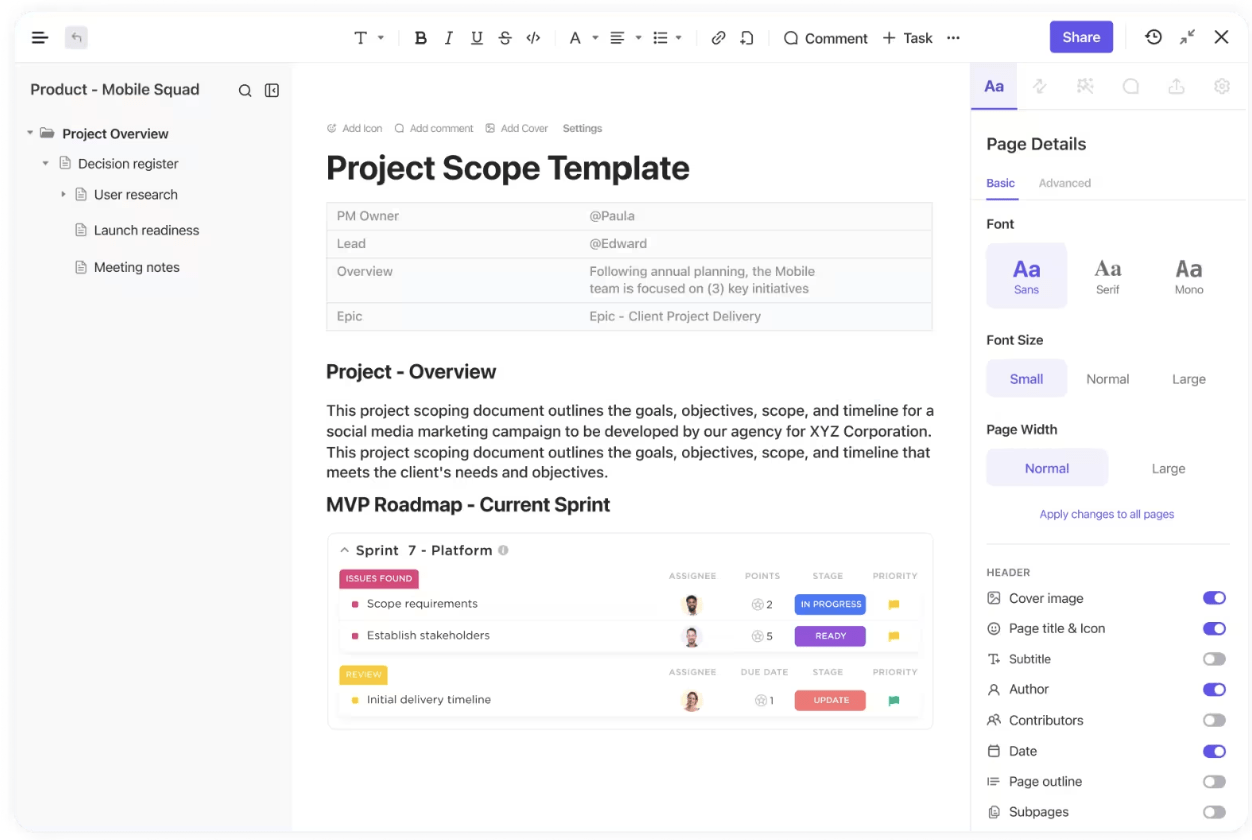
With ClickUp Docs, your cross-departmental teams can create, share, and collaborate on documents in real time. This makes it simpler to compile and update project briefs, meeting notes, and strategy documents.
You can embed tasks, links, and comments within these documents to ensure all required information is interconnected.
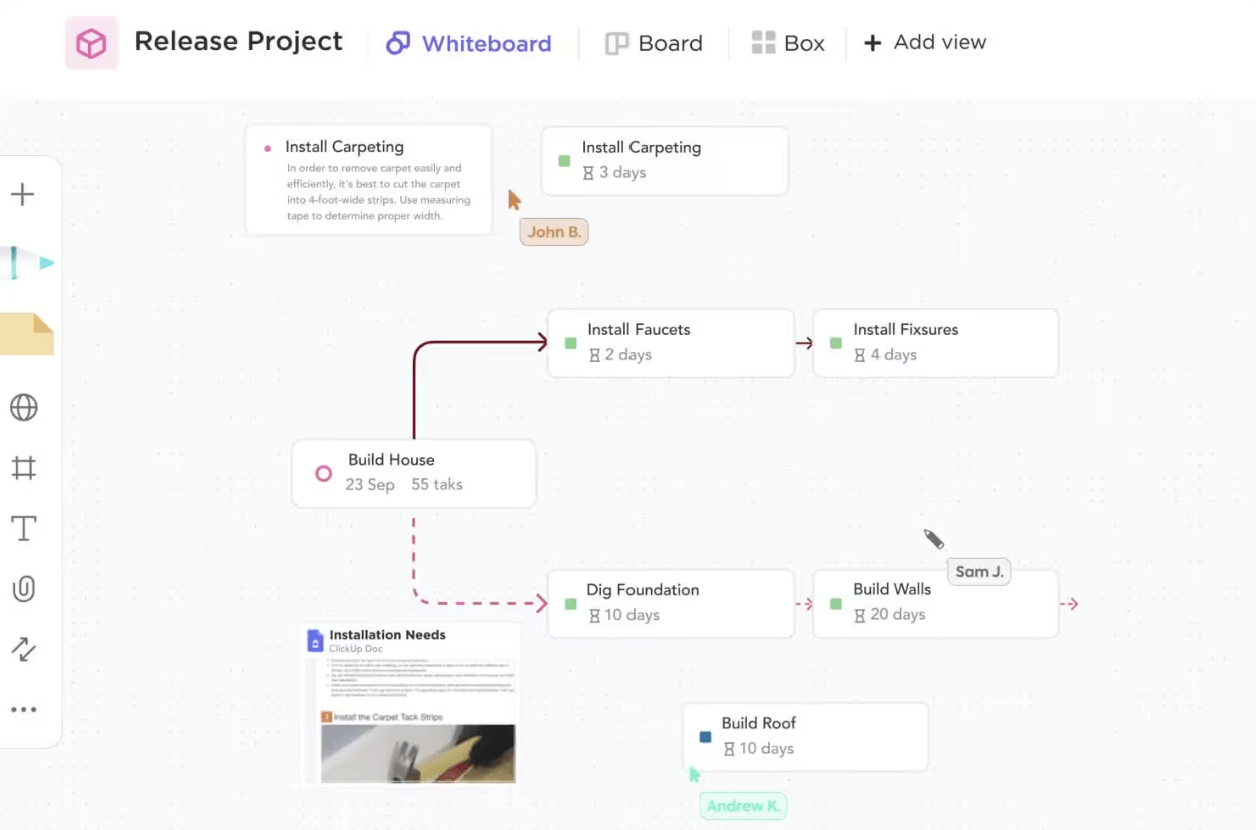
ClickUp Whiteboards is an easy-to-use visual and interactive tool for brainstorming and planning. It allows you to create mind maps to visualize ideas collaboratively and map out project workflows.
The addition of color-coded notes and comments helps your team with a shared understanding of the project’s direction without any miscommunication.
If you’re still struggling with how to avoid miscommunication in the workplace, ClickUp’s communication plan templates offer pre-built frameworks tailored to furnish your team’s communication etiquette.
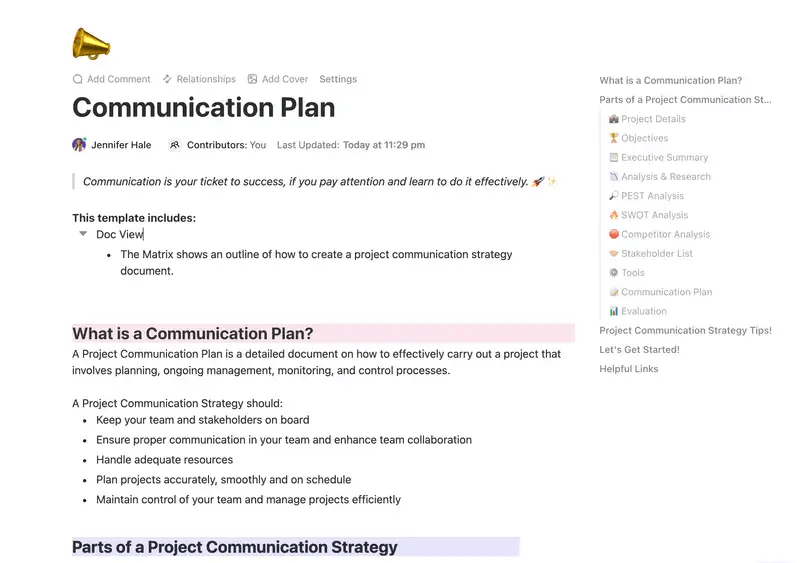
Try ClickUp’s Communication Plan Template to create a solid business messaging game plan for your teams. You can create internal and external communications processes per their duties and identify the most suitable channels to communicate effectively with your target audience.
The template includes measurable metrics to test the efficacy of your chosen communication strategies.
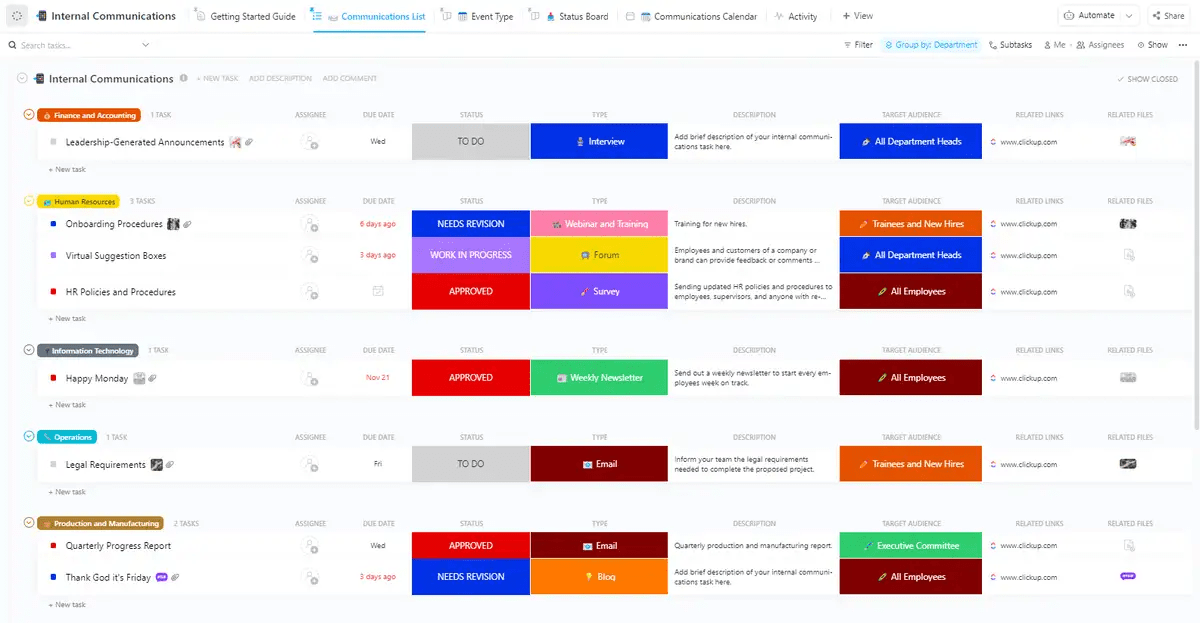
Use ClickUp’s Internal Communications Template to streamline communication within your organization. The template helps you sort conversations and documents in a filtered manner, enabling higher-level transparency between your teams.
This template can revolutionize how your team communicates internally, from preparing crucial internal communication documents to granting your team access to the latest and most relevant data.
Also read: How to improve group communication at work
Remote and hybrid work trends and the adoption of new technologies have transformed how we communicate and collaborate in the workplace. Knowing how to avoid miscommunication in the workplace is essential to maintaining team cohesion.
For instance, consider the shift to asynchronous communication, where teams collaborate across time zones without being online simultaneously. Flexible communication and project management tools like ClickUp help teams stay connected and informed in these situations.
ClickUp helps you address the underlying causes of miscommunication by applying practical tips to minimize errors. From customizable templates to features like Docs, Chat View, and Whiteboards, each functionality is designed to give your project and task-centric communication a sense of organization.

Sudarshan Somanathan
Max 22min read

Manasi Nair
Max 20min read
Sudarshan Somanathan
Max 17min read

© 2026 ClickUp