Sorry, there were no results found for “”
Sorry, there were no results found for “”
Sorry, there were no results found for “”
Ideas rarely follow a straight line.
They loop back, branch out, and collide in unexpected ways. The right note-taking tool makes it easier to keep up. Roam Research tapped into that need with its networked approach to notes, but it’s not the only tool built for nonlinear thinking.
If you’re curious about what else is out there, this roundup of Roam Research alternatives is for you. Here are the top options that bring their own take on connected note-taking. 📝
Here’s a quick look at the top Roam Research alternatives and how they stack up.
| Tool | Best features | Best for | Pricing* |
| ClickUp | Nested Docs with collapsible pages, ClickUp Brain for AI writing and scheduling, AI Notetaker for transcripts and action items, Whiteboards for mapping ideas | Individuals, small businesses, mid-market companies, enterprises | Free forever; customization available for enterprises |
| Obsidian | Local markdown storage, bidirectional linking between notes, plugin ecosystem, graph view for idea mapping | Individuals | Free plan available; paid plans start at $5/month/user |
| Logseq | Collapsible outlines, PDF annotation, advanced queries with filters and tags, daily journal system | Individuals | Free |
| Evernote | Web clipping from any device, OCR in images, audio notes, notebook and tag-based organization | Small businesses | Free plan available; paid plans start at $14.99/month/user |
| RemNote | Built-in spaced repetition, flashcard generation from notes, learning progress tracking | Individuals | Free plan available; paid plans start at $10/month/user |
| Joplin | End-to-end encryption, markdown editing, browser web clipper, plugin marketplace | Individuals | Free plan available; paid plans start at €2.99/month/user |
| Google Keep | Time and location-based reminders, voice note transcription, real-time syncing | Individuals | Free with a Google account |
| Fusebase (formerly Nimbus Note) | Rich formatting options, nested folders and workspaces, public share links with permissions, third-party app embeds | Small businesses | Free trial available; paid plans start at $39/month/user; customization available for teams |
| Workflowy | Infinite bullet nesting, mirrored content, hashtag filters, zoom-in focus view | Individuals | Free plan available; paid plans start at $8.99/month/user |
| Amplenote | Task prioritization using the Eisenhower Matrix, spaced review of ideas, jot system for quick note capture | Individuals | Free plan available; paid plans start at $5.99/month/user |
| Tana | Schema-based data structures, flexible views including tables and boards, smart queries, reusable templates | Small businesses | Free plan available; paid plans start at $10/month/user |
| Anytype | Offline-first with peer-to-peer sync, object-based note structure, dashboard customization | Individuals | Free plan available; paid plans start at $99/year |
| DokuWiki | Self-hosted plain text system, extensive plugin support, page version control | Small businesses | Free |
| Microsoft OneNote | Infinite canvas layout, drawing and handwriting tools, cloud syncing across devices, integration with Microsoft apps | Small businesses | Free with Microsoft 365; personal and business plans available |
| TiddlyWiki | All-in-one HTML file, atomic content chunks (tiddlers), full offline access, advanced filter and tag system | Individuals | Free plan available; paid plans start at $8/month/user |
Roam Research’s networked note-taking sparks creativity for connecting ideas, but its pain points can drive users to seek alternatives that better fit their workflows or budgets. 💵
Here’s why you might explore other note-taking apps:
🧠 Fun Fact: Moleskine notebooks became famous in the 1980s after travelers and creatives like Hemingway and Picasso used them to document their ideas and experiences. Today, they’re synonymous with creative note-taking methods.
Our editorial team follows a transparent, research-backed, and vendor-neutral process, so you can trust that our recommendations are based on real product value.
Here’s a detailed rundown of how we review software at ClickUp.
Explore these top Roam Research alternatives to find the right note-taking system that matches your thinking style, workflow, and setup. ⚙️
As the everything app for work, ClickUp offers a more structured approach to note-taking than standalone notes apps. It combines project management, knowledge documentation, and AI-powered tools in one workspace, making it a practical alternative to Roam Research that connects your ideas and tasks together.
Start with ClickUp Docs, a document editor that blends flexible writing with real organization.
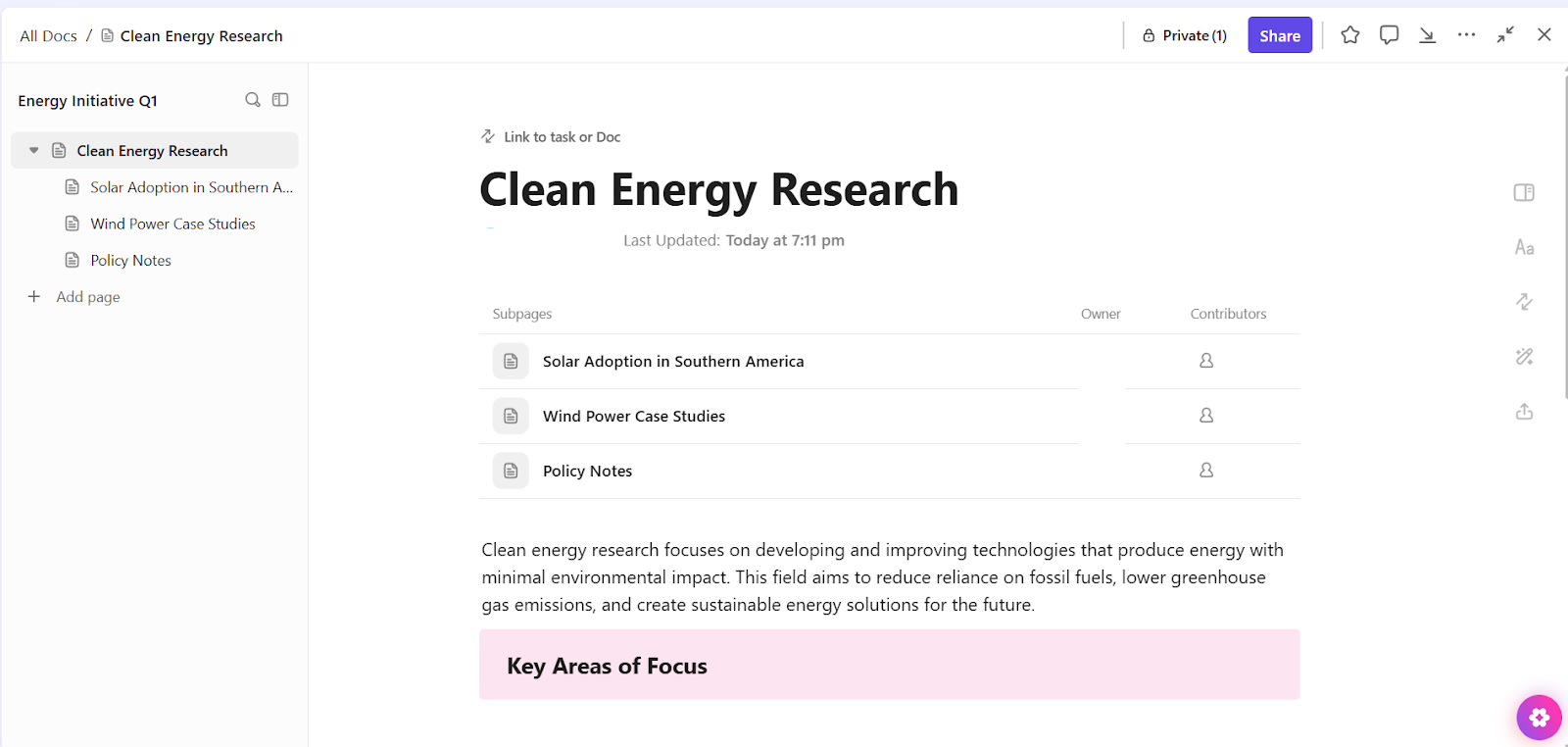
Unlike Roam’s flat web of links, Docs give you a clear hierarchy for organizing related ideas, topics, and themes through nested pages. You can expand or collapse these pages inside the master Doc to keep related content grouped while still being easily accessible.
Let’s say you’re building a research hub on climate tech. Your main Doc could be titled ‘Clean Energy Research’. Under that, you can add nested pages like ‘Solar Adoption in Southern America’, ‘Wind Power Case Studies’, and ‘Policy Notes’. This lets you zoom into specifics without losing the bigger picture.
You can format text richly, embed images and files, tag collaborators, and even turn any line of text into an actionable task. All of this makes Docs feel more dynamic and useful than a traditional note or an isolated Roam page.
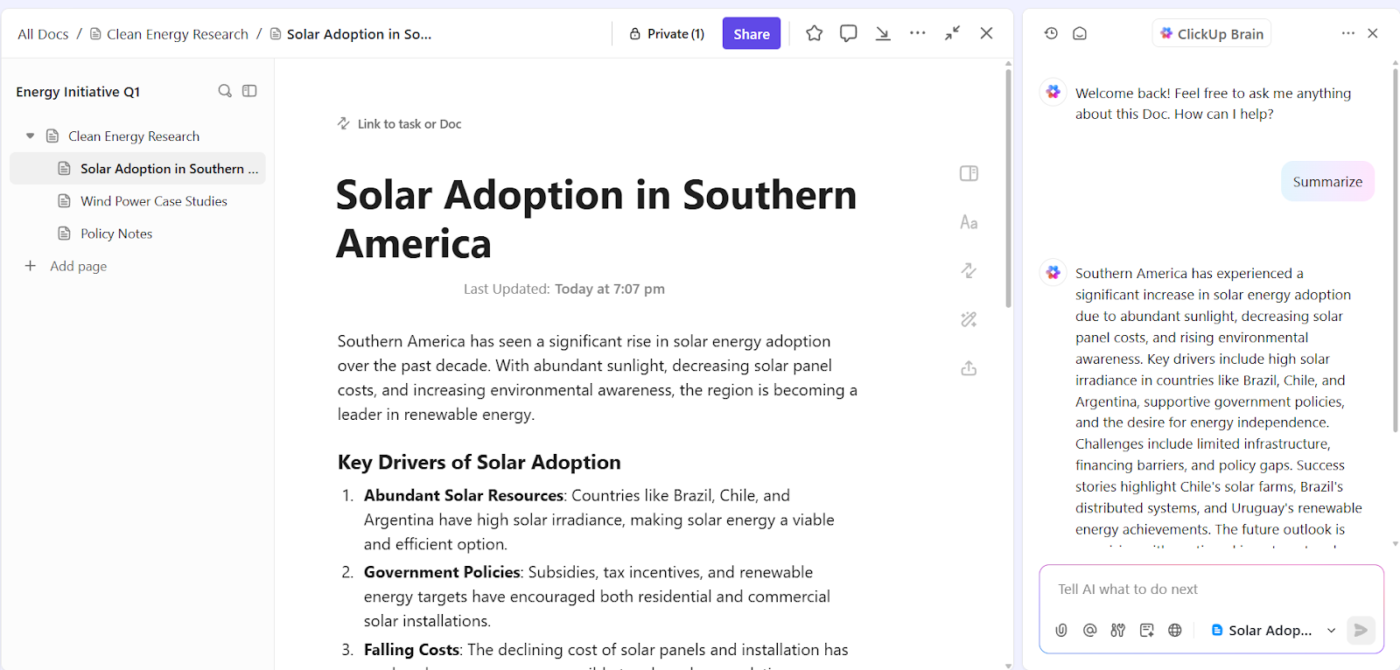
Now layer in ClickUp Brain, the world’s most complete and context-aware AI assistant that lives inside Docs. It’s built to speed up thinking and writing without pulling you out of flow. You can ask it to summarize a long block of text, rewrite dense content, or generate new ideas based on what you’ve written.
For example, if you’ve gathered several paragraphs of notes from five different sources on carbon capture tech, you can highlight the text and ask ClickUp Brain to create a summary or simplify the language.
💡 Pro Tip: Create Docs 4x faster than typing! Download ClickUp Brain MAX, your desktop AI companion, and turn on voice dictation with Talk to Text.
Speak your ideas and capture them into polished content hands-free. Whether you’re writing in Docs, composing emails, or creating tasks, Talk to Text turns spoken words into refined text instantly. You speak; it types, corrects, and structures—without lifting a finger.
Talk to Text works across desktop apps—think Gmail, Slack, and ClickUp itself.

Then comes the ClickUp AI Notetaker, which automates meeting notes so you don’t have to scribble while trying to listen. It joins your Zoom, Microsoft Teams, or Google Meet calls, records them, and generates a full transcript, action items, and key takeaways—then sends a neat Doc right to your ClickUp Inbox.
Suppose you’re interviewing an expert or hosting a team meeting about your research findings.
Instead of manually typing quotes or timestamps, the AI tool for meeting notes captures everything and drops the transcript into your relevant folder or Doc. You stay present in the moment and still walk away with polished notes.
Finally, the ClickUp Knowledge Base Template gives your notes a home. It’s designed for long-term use and includes a clean hierarchy, pre-built sections, and connected workflows so your information stays both browsable and actionable.
Let’s say you’re building a multi-month research project. The knowledge base template lets you create categories like ‘Raw Data’, ‘Interviews’, and ‘Draft Chapters’, each holding structured Docs with related nested pages.
If Roam helped you think in networks, but you need a tool that adds structure, collaboration, and execution, ClickUp gives you the best of both. This Roam Research alternative keeps your notes organized, searchable, and ready to turn into action.
This Reddit review really says it all:
Their Docs system has quietly replaced most of our Google Docs work. Everything just flows better when our documentation lives in the same place as our projects. The team adapted to it faster than I thought they would. I was on the fence about ClickUp Brain at first, just seemed like another AI gimmick. But it’s saved me from some tedious writing tasks, especially when I need to summarize lengthy client emails or get a draft started. Not perfect, but helpful when I’m swamped. The AI notetaker feature was the real surprise. We used to lose so many action items after meetings, but now it catches everything and assigns tasks automatically. Follow-through has gotten noticeably better…
📮 ClickUp Insight: The average professional spends 30+ minutes a day searching for work-related information—that’s over 120 hours a year lost to digging through emails, Slack threads, and scattered files. An intelligent AI assistant embedded in your workspace can change that. Enter ClickUp Brain. It delivers instant insights and answers by surfacing the right documents, conversations, and task details in seconds—so you can stop searching and start working.
💫 Real Results: Teams like QubicaAMF reclaimed 5+ hours weekly using ClickUp—that’s over 250 hours annually per person—by eliminating outdated knowledge management processes. Imagine what your team could create with an extra week of productivity every quarter!
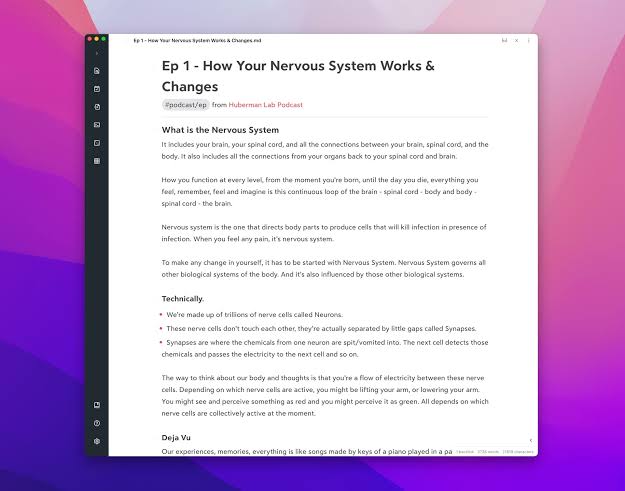
via Obsidian
Obsidian transforms Markdown files on your computer into an interconnected knowledge base. Your notes live on your device—not someone else’s server—giving you complete ownership of your data. The graph view maps connections between ideas, revealing patterns across your thinking.
Many users migrate to Obsidian after trying cloud-based alternatives since local storage eliminates subscription fees and internet dependency.
Its customization options allow you to create a personalized workspace through community themes and plugins. This flexibility attracts people who want control over both their notes and the tools they use to manage them.
This Reddit review caught our eye:
But notebooks, documents, they always turn into lost knowledge, and as time moves on i forget where they are. Obsidian helps me connect them, so they come back to me even by accident, it also takes down the anxiety of “i need to memorize this”. I know myself very well and how I think, so when I write down notes, I write in ways that I’ll connect the dots easily. This helps me reduce the time I was using for just struggling to keep a subject and not research again, but also write down behaviors I had through the day or progress I made on my life in general.
via Logseq
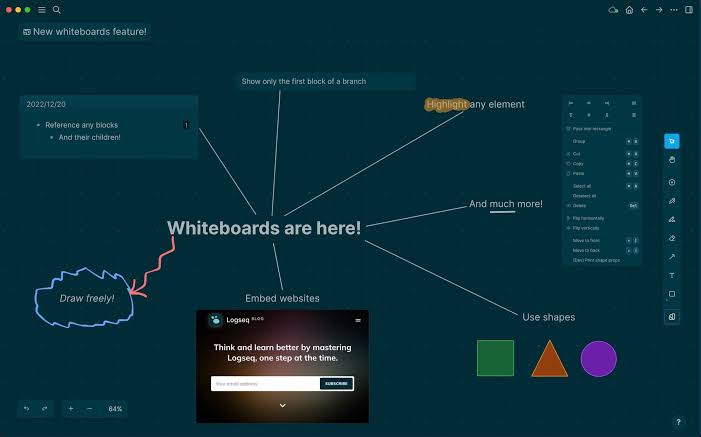
Logseq approaches note-taking with hierarchical outlines that expand and collapse on demand. This structure naturally organizes complex topics into digestible chunks.
As an open-source platform, Logseq eliminates subscription costs while maintaining active development. The journal feature automatically creates daily notes, making habit tracking and daily logs effortless. For programmers, the ability to embed code blocks with syntax highlighting adds practical utility that is missing in many competitors.
One Reddit user offers a helpful breakdown:
The concept of Logseq is extremely powerful. It wants the user to create a database where the user does not have to worry about searching for and organizing the information contained in the database. The journal style aims to make the practice of note taking as friction-less as possible. […] The biggest reason why Logseq falters is that the idea is not backed up by its robust implementation. The user interface is quite cozy once the user gets a hang of it. However, Logseq is simply inadequate for handling large amounts of structured data […]
via Evernote
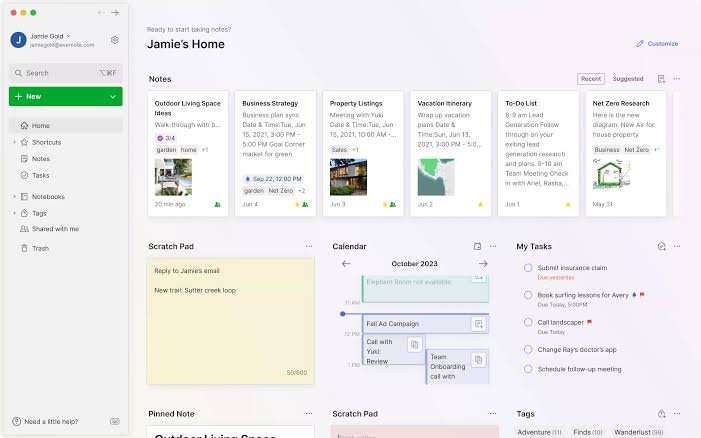
Evernote excels at capturing information from multiple sources—web clips, images, audio, and text all live together in organized notebooks.
Cross-platform synchronization happens automatically, making your notes accessible across devices without manual transfers. Evernote focuses on organization through traditional folders and tags rather than bidirectional linking.
The web clipper saves entire articles, removing ads and formatting them for easy reading later. Despite recent price increases, many users stick with Evernote for its reliable search and familiar interface.
Straight from a G2 review:
Consolidating note formation at an amazing rate has become much easier and efficient, which is fascinating. We have managed to maintain a high level of performance while keeping track of numerous notes for each specific event and organizing them using notebooks and tags to make pertinent information easier to find is prevalent. Keeping everyone on the same page and up to date with managing projects, meetings and daily activities is easy with Evernote.
⚡️ Knowledge in Action: NASA’s TechPort system, launched in 2012, is a centralized repository for the agency’s research and development efforts, ensuring efficient knowledge sharing and innovation tracking.
via RemNote
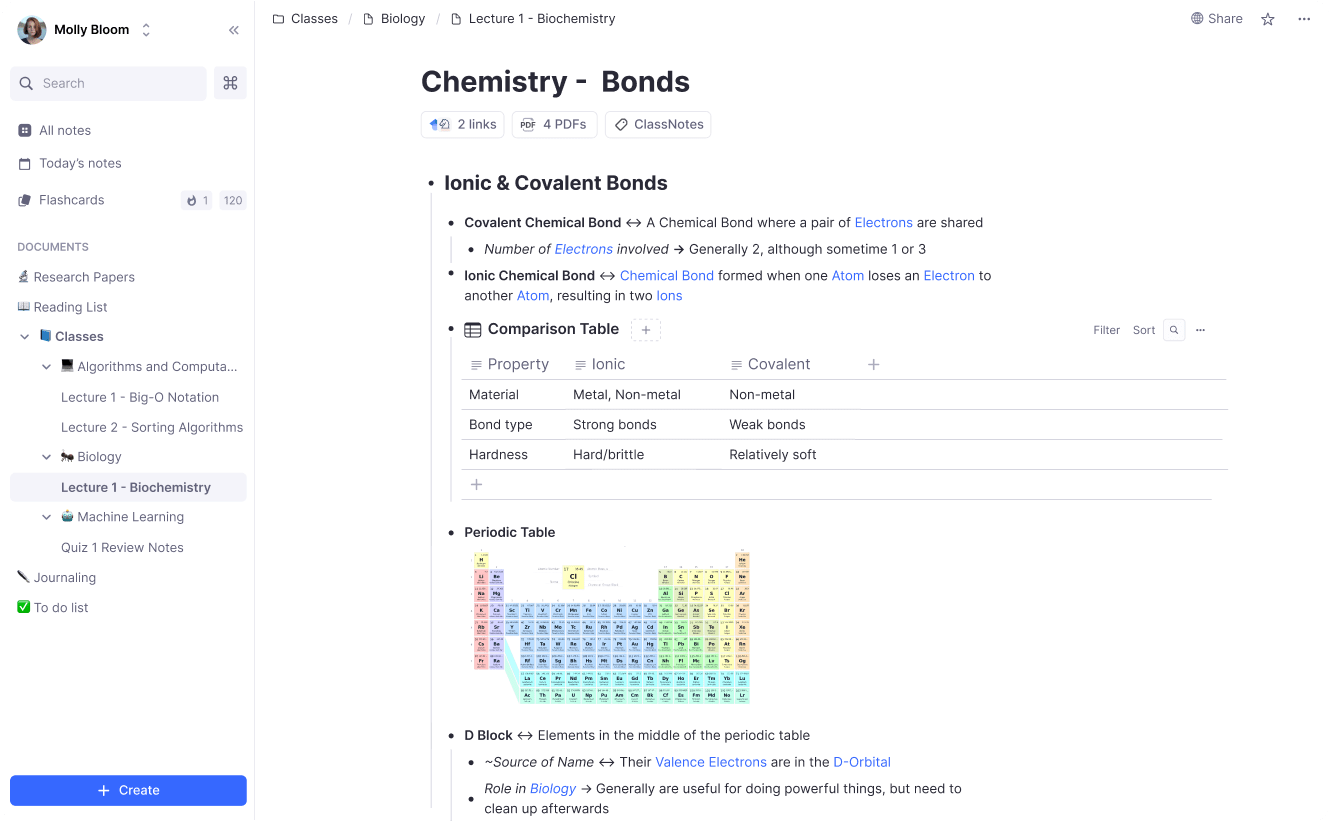
RemNote bridges the gap between note-taking and memorization by integrating spaced repetition. This personal knowledge management software automatically generates flashcards from your notes, helping you retain information long-term.
It organizes content hierarchically through ‘rems’, which are atomic units of knowledge that connect to form a network. Students particularly appreciate how RemNote transforms passive notes into active study materials.
The document-centric approach makes transitioning from traditional note-taking intuitive while introducing more useful organizational concepts.
One Reddit user puts it this way:
The best thing I liked about remNote is their flashcard feature and management. It is one of the best I found at free level directly connected with the notes. They actively working on that as well. For the note taking, is feel it’s okay.
🔍 Did You Know? Only 45% of employees at large companies actively use their knowledge management systems, according to IDC research. This highlights a major gap between implementation and actual engagement.
via Joplin
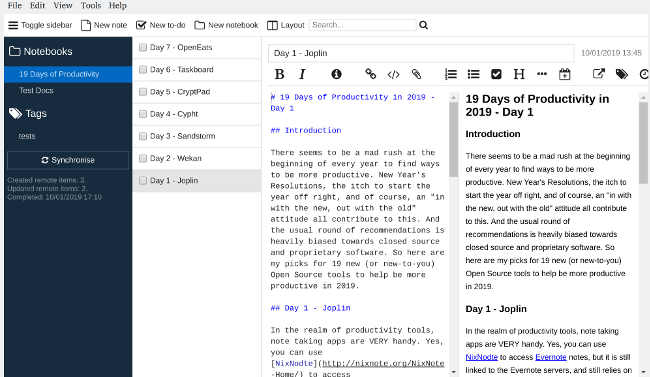
Joplin delivers open-source note-taking with end-to-end encryption that keeps your data private even when synced across devices. It stores notes in standard Markdown format, ensuring you can access your content without proprietary software.
The platform handles synchronization through your choice of services: Dropbox, OneDrive, NextCloud, or your own server. This flexibility gives you control over where your data lives.
Many users switch to Joplin specifically for the combination of privacy features and no-cost access to advanced functionality that requires subscriptions elsewhere.
A G2 review summed it up like this:
I love the organizational structure of the notes, where you can have notebooks and different notes within them. I also love that the notes are stored in Markdown, which allows for easy ready, because of the preview pane, and it also keeps the size very small for the notes, because it doesn’t store a huge bunch of unneccessary junk. I use it every day, and it is very easy to use and integrate into your daily life.
🧠 Fun Fact: Leonardo da Vinci’s notebooks are famously written in reverse or mirror script. The reason? To keep his ideas private, the text was legible only when viewed in a mirror.
via Google
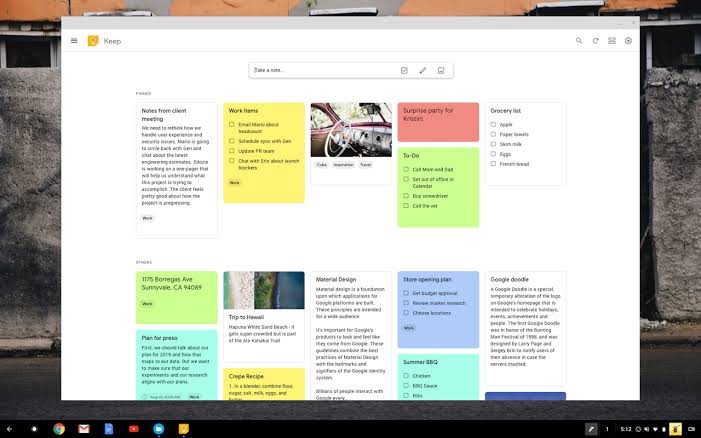
Google Keep takes a minimalist approach to note-taking through colorful cards that organize bits of information. It’s reliable for quick capture; jot down ideas, voice notes, or checklists that sync instantly across devices.
Integration with other Google services allows you to create documents from notes or set location-based reminders. Google Keep deliberately avoids complex features, focusing instead on speed and accessibility.
This simplicity makes it an ideal Roam Research alternative for capturing fleeting thoughts rather than building knowledge bases.
See what this Capterra reviewer had to say:
I love how Google Keep syncs across my devices or google account instantly, meaning I can take some testing notes on the go and have access to them later.
via Fusebase
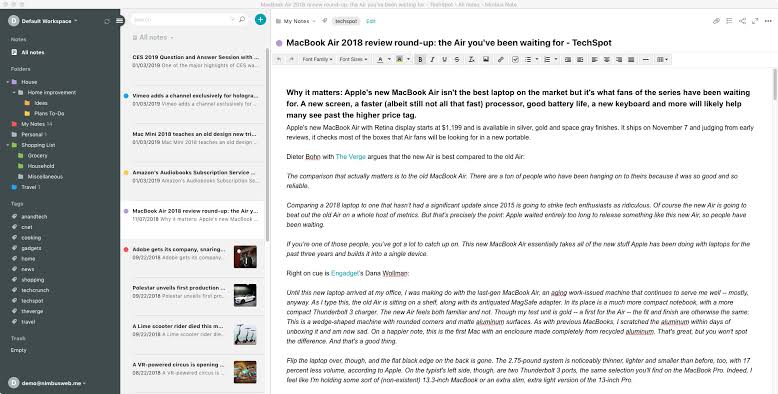
Nimbus Note (now Fusebase) combines document editing with knowledge management, delivering powerful organization tools without overwhelming complexity. The platform excels at structuring information through nested workspaces, folders, and subfolders.
Rich formatting options include tables, code blocks, and embeds—all searchable later. Nimbus appeals to users who need more structure than Roam’s free-form approach.
The web clipper deserves special mention for its flexibility, allowing you to save entire pages, simplified articles, screenshots, or selected text with just a few clicks.
This is how one G2 reviewer described their experience with this Roam Research alternative:
FuseBase has a powerful document editor combined with website-like portals. Nice option for reducing client onboarding time as we have centralised our training and guides. We are still learning and improving our wiki as the tool gets updates and new features every month. So far, so good – automated task reminders & step-by-step workflow editor are my favourites for now.
🔍 Did You Know? The Zettelkasten method, used by sociologist Niklas Luhmann, involved linking thousands of individual note cards together for better recall. He credited it for helping him write over 70 books.
via Workflowy
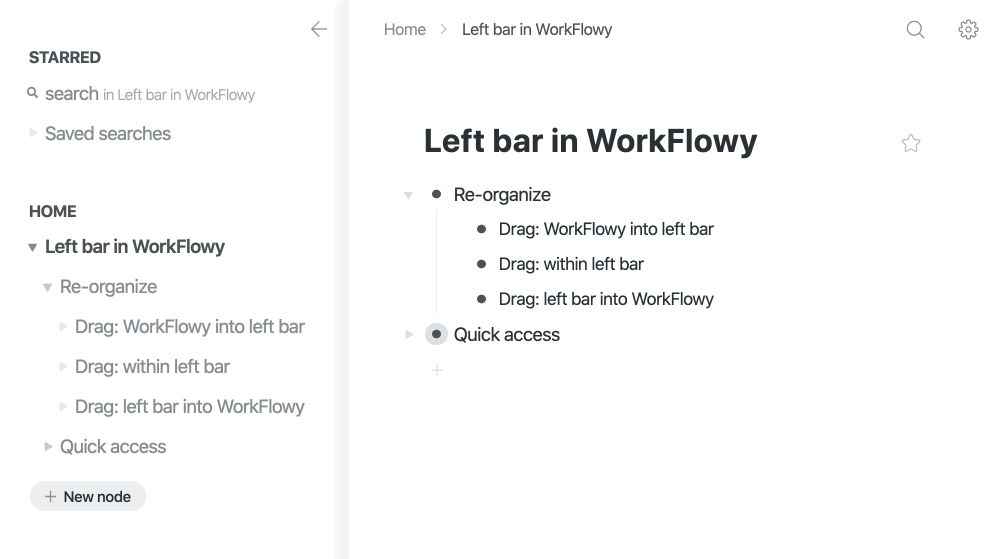
Workflowy distills note-taking to its essence: the outline. This focused approach creates a frictionless environment for capturing hierarchical information.
Every bullet point functions as both content and container, allowing infinite nesting that keeps related information connected. Zooming into any bullet makes it the temporary focus, eliminating distractions.
Workflowy appeals to users who value simplicity over feature bloat. The minimal interface deliberately avoids unnecessary complexity, letting you concentrate on content rather than controls or settings.
Here’s a firsthand perspective on this Roam Research alternative:
I love the fact that everything is just a bullet point list. Bullet points is how I typically take my notes and Workflowy empowers me to do it more efficiently.
⚡️ Knowledge in Action: Siemens’ digital platform, ShareNet, facilitates knowledge sharing among employees, enhancing collaboration and learning across the organization.
via Amplenote
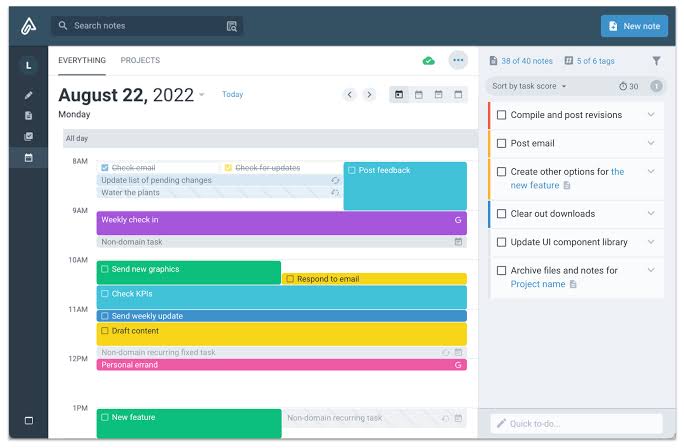
Amplenote combines note-taking with task management through a thoughtful integration of ideas and action items. Tasks extracted from notes automatically populate a unified task system with priorities based on urgency and importance. The Roam Research alternative introduces ‘Jots’, quick capture notes that later transform into permanent content.
It differentiates itself through ‘idea gardening’ features that resurface notes for review based on spaced repetition principles.
Here’s what a Reddit user said:
It’s a nice notetaking app, and there are functions to make it one big app for all productivity stuff but I guess you gotta try and see for yourself if it fits. One thing I don’t like is the fact that it auto-archive your notes after a certain period of inactivity. I think that’s weird but I haven’t got around to fix it yet.
via Tana
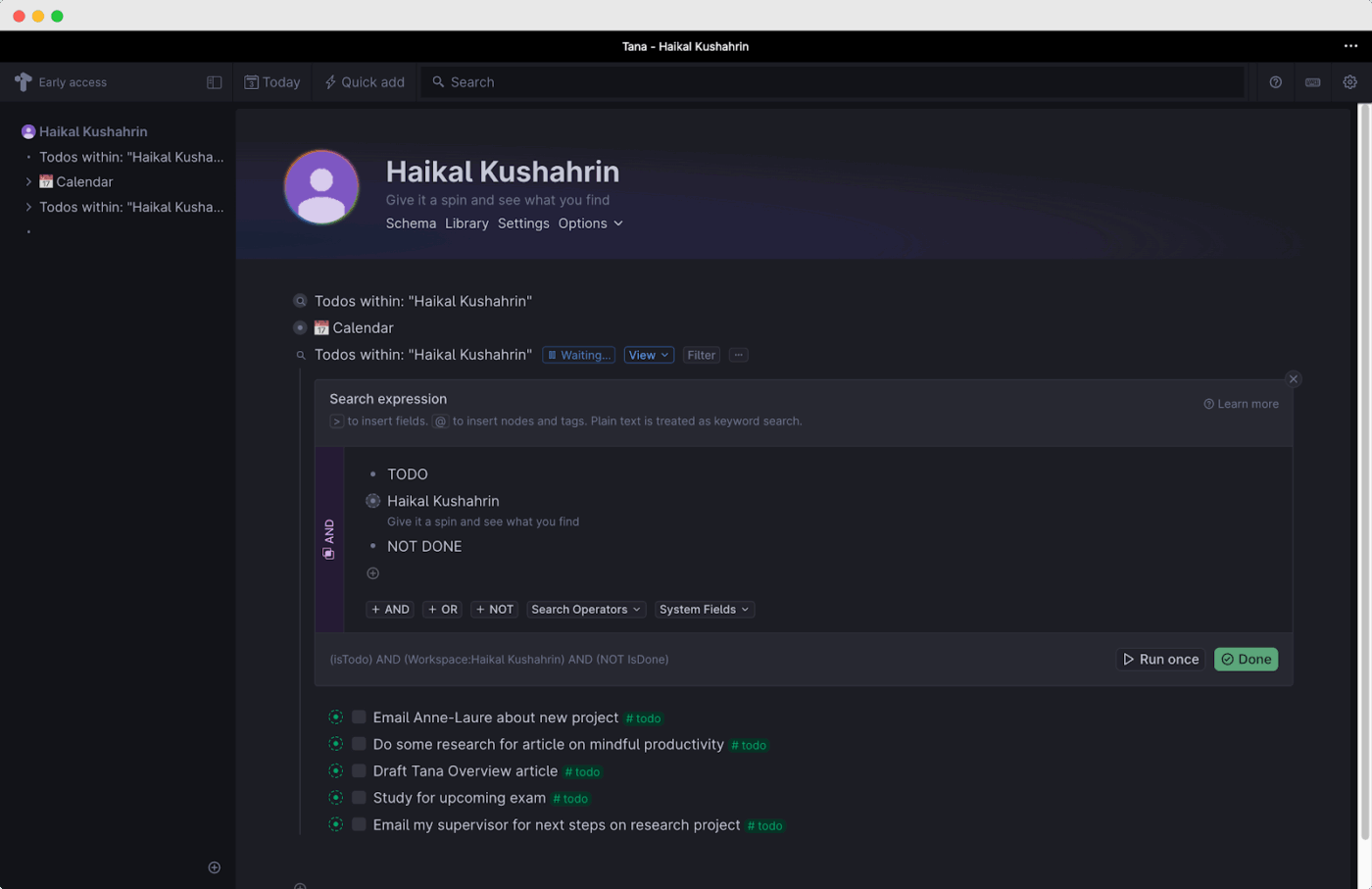
Tana treats information as structured data without sacrificing flexibility. Every piece of content becomes a node that can contain other nodes, with customizable properties that enable database-like functionality.
It embraces ‘schema thinking’ where information gains structure through consistent properties while maintaining the freedom of free-form notes. Tana appeals to users frustrated by the limitations of both traditional documents and rigid databases.
Let’s look at a Reddit review about this Roam Research alternative:
Tana allows me to just write content and apply a tag. I don’t have to think about folders or structure. I just apply a tag, and know that the information can be resurfaced easily! The biggest drawback for me currently is the absence of a true read/write mobile app. Don’t get me wrong, Tana Capture is great. But I’m always on the move and need to reference my content, too.
🔍 Did You Know? The act of connecting two unrelated ideas (a hallmark of linked note-taking) is called bisociation, and it’s been linked to creative breakthroughs in both art and science.
via Anytype
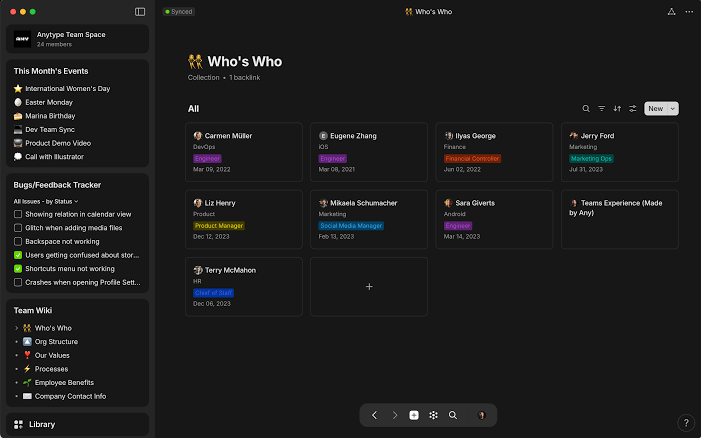
Anytype approaches knowledge management through object-oriented design, where each note functions as a distinct object with customizable properties. It stores all data locally with peer-to-peer sync, eliminating central servers entirely.
The object-relation model lets you create custom types—projects, tasks, people, books—each with specific attributes and relationships. Every piece of information becomes a building block that connects to others through meaningful relationships rather than just links or tags.
Here’s a Reddit user’s opinion on this Roam Research alternative:
As for the app alone, it is good. It’ the “offline-first” equivalent of Notion, because it’s database oriented. It is harder to understand the concepts behind it for a non-tech person, but not impossible (I mean here that they are using odd naming for their “things”, and that everything in there is “relation”). What I didn’t like there (but that may have changed, as I was using it 6 months ago) is that the iPad/iPhone app is more like a bare-minimum companion, not a fully fledged app that could be used instead.
via DokuWiki
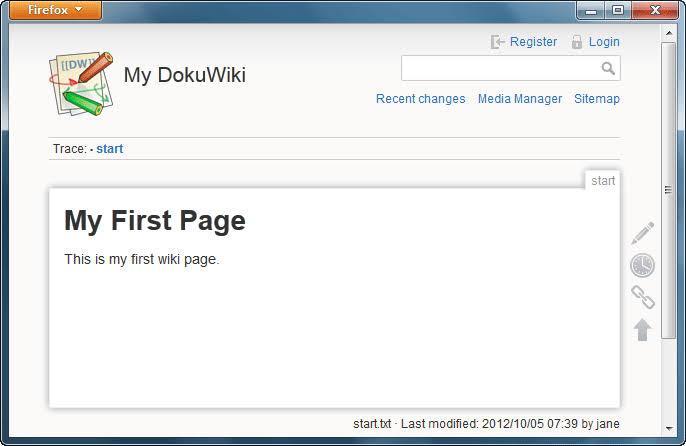
DokuWiki creates structured documentation without requiring a database backend. This plain-text wiki system stores pages as individual files, making backup and version control straightforward.
It stands out for its self-hosting options, which allow you to take complete control of your infrastructure. The extensive plugin ecosystem addresses specialized needs, from drawing diagrams to managing bibliographies, making it adaptable to nearly any documentation requirement.
A satisfied G2 reviewer has this to say:
I like that it is so easy to setup and maintain, no complicated database setup to deal with. It’s perfect for instances where you don’t need a huge multiuser wiki. It’s great for keeping notes for one person or a small workgroup or family. Because the web server user has to be able to write to disk, this presents a security concern. But proper configuration of network access and keeping things updated mitigates the risks.
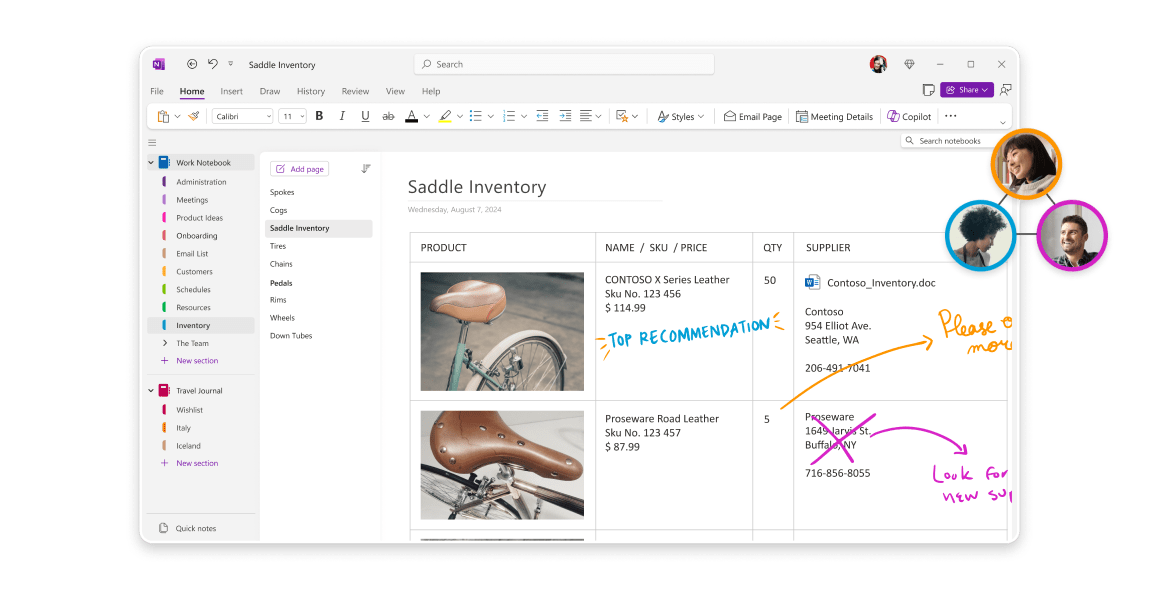
OneNote breaks free from the constraints of linear documents by offering an infinite canvas where information lives anywhere you place it. Text, images, tables, and drawings coexist on pages that mimic physical notebooks but exceed their capabilities.
This Roam Research alternative integrates deeply with Microsoft’s ecosystem, automatically connecting with Outlook tasks and storing notebooks on OneDrive. For visual thinkers who prefer spatial organization over strict hierarchies, OneNote provides unique freedom of placement.
For home
For business
This G2 review brings up an interesting angle:
I think the best feature of Microsoft OneNote is the flexibility and ease of use in organizing notes across different platforms. The flexibility to create many notebooks, sections, and pages creates a highly structured but highly adaptable means of structuring information. In addition, notes can be accessed on any device with the help of integration with other Microsoft tools and the cloud-based syncing feature-just making everything so much easier. I also really appreciate the rich media support, which allows me to attach images, audio files, and even files directly into my notes.
🧠 Fun Fact: Your brain actually processes spatial information faster than linear text, which is why graph-based note-taking feels so intuitive and ‘sticky’ for many users.
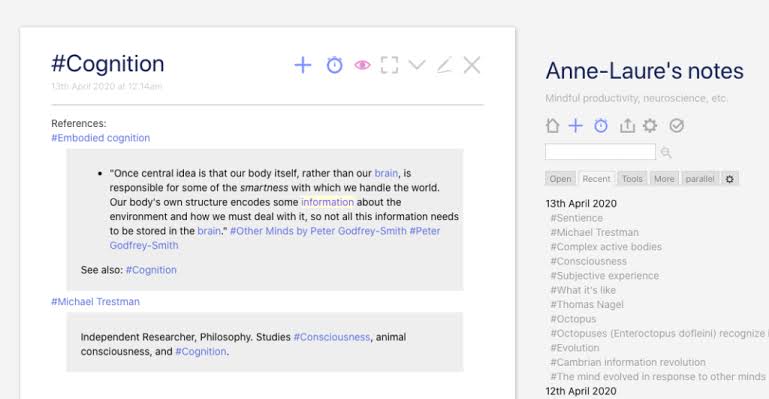
via TiddlyWiki
TiddlyWiki delivers a unique approach to personal knowledge management through a single HTML file containing your content and the application itself. This self-contained design allows unprecedented portability; simply save the file locally or on any web space.
It organizes information as ‘tiddlers’, small chunks of content that connect through links and tags. The extreme customization options appeal to users who enjoy personalizing their tools.
Despite the basic appearance, TiddlyWiki offers programming-like capabilities without requiring a server or installation.
A Reddit user shares what works (and what doesn’t):
I’ve used tiddlywiki forever (seriously: since 2005). And I keep coming back to it, because it does things that nothing else does, and allows you to actually think and gather information and turn it into knowledge in a different more fluid way than anything else I’ve ever used. It’s hard to scale, but I don’t write and js code.
📖 Also Read: Logseq vs. Obsidian: Which Note-Taking App is Best?
Roam Research changed how people connect ideas, but it comes with real limitations. If you’re hitting those walls, switching tools is a smart move.
That said, not all tools scale with your needs. Some are great for solo thinkers, others for structured teams, but few bring everything into one place.
ClickUp stands out by merging flexible documentation, AI-powered writing, and project execution into a single workspace. You can think freely in Docs, capture insights automatically with the AI Notetaker, and turn those insights into action—all without switching tabs or tools.
Sign up for ClickUp today! ✅

Manasi Nair
Max 14min read
Manasi Nair
Max 9min read

Arya P Dinesh
Max 17min read

© 2026 ClickUp