Sorry, there were no results found for “”
Sorry, there were no results found for “”
Sorry, there were no results found for “”
Some brands just get it. You read a tweet, an email, or even a product label, and you know exactly who it’s from without even seeing the logo. Their voice is unmistakable, like an old friend whose texts you can recognize instantly.
But creating a distinctive and consistent voice isn’t as simple as picking a few adjectives and calling it a day. It’s about knowing your audience, understanding your brand’s identity, and using language that reinforces both.
In this blog post, we’ll look at 13 brand voice examples, breaking down what makes them work and how to develop a voice that’s just as distinct. 🔊
A brand voice is how a company expresses its personality, values, and messaging across all platforms. It ensures consistency in communication and shapes how people connect with the brand.
Every brand has a voice, whether intentional or not.
A well-defined one strengthens your brand identity, making content, marketing, and customer interactions feel cohesive. It influences everything from ad copy to social media captions, reinforcing a company’s presence in a familiar and recognizable way.
🧠 Fun Fact: The Twinings Tea logo, created in 1787, is the oldest unaltered logo still used today. It’s a testament to how a strong, consistent brand identity can stand the test of time.
Brand voice shapes how the target audience perceives you. It’s your own tone, style, and personality that make your brand unique. But why is it so important? Let’s dive in. 👇
🔍 Did You Know? Blue is the most popular color used in branding and is often associated with trust, reliability, and professionalism. Brands like Facebook, X, and IBM use blue to build credibility and connection.
A strong brand voice makes a brand instantly recognizable. Some companies use humor, while others focus on clarity or confidence.
Here are 13 standout brands that have perfected their messaging. 💬
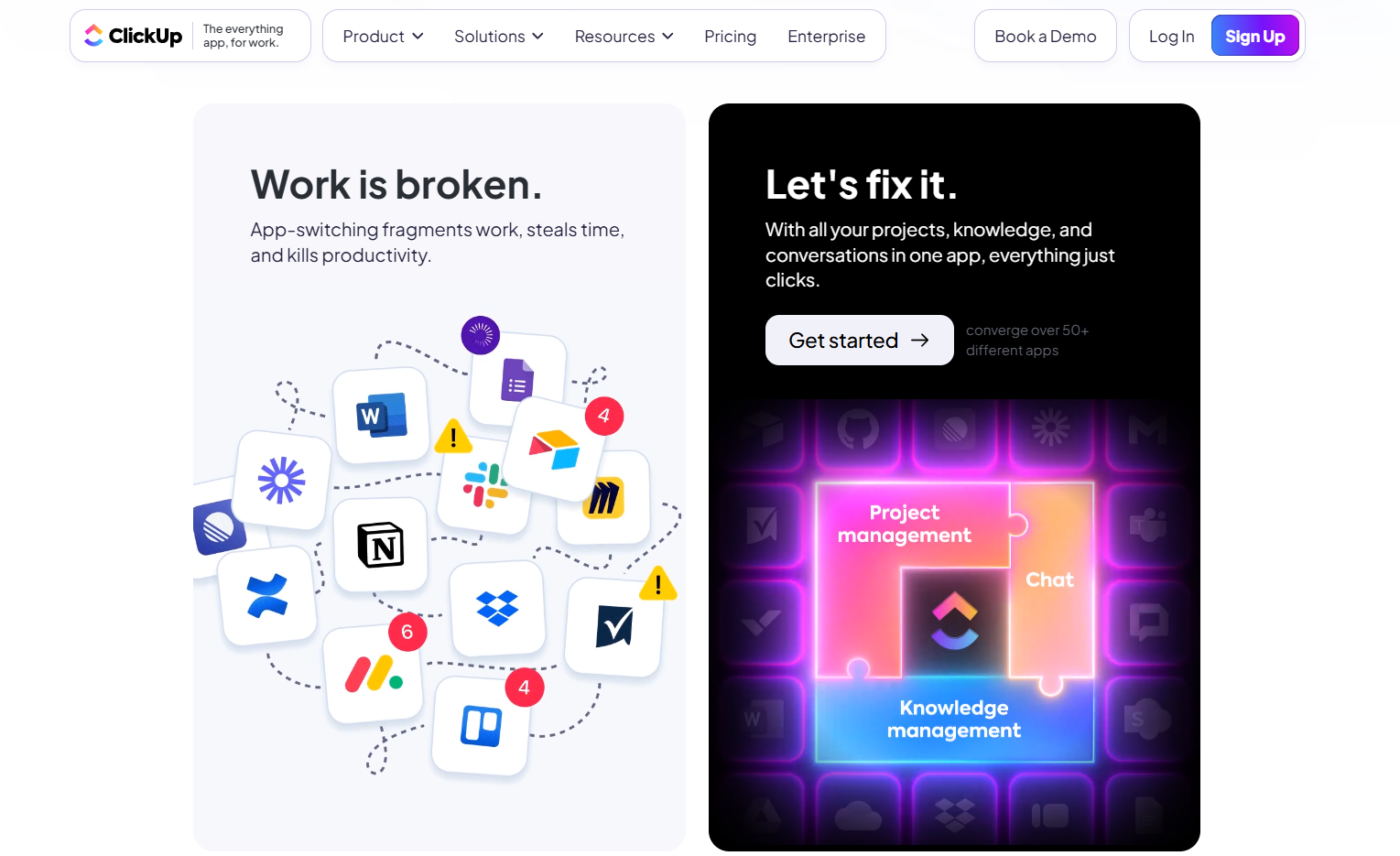
ClickUp keeps its communication precise and user-friendly.
It prioritizes clarity, ensuring users understand its features without corporate jargon. The brand voice remains approachable yet professional, helping teams stay productive.
ClickUp’s website, blog, and social media reinforce this no-nonsense approach. Messaging stays direct and action-oriented, making complex topics feel simple.

Duolingo turns language learning into entertainment. The brand voice feels friendly, engaging, and a little cheeky. Instead of a strict educational tone, Duolingo uses humor and pop culture references to make learning fun.
This lighthearted approach makes the app feel less like a classroom and more like a game.
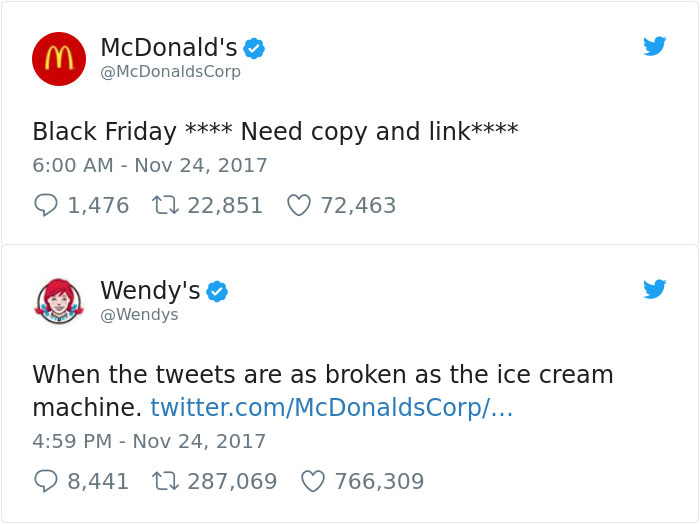
Wendy’s social media presence stands out for its sass. The brand is known for roasting competitors, engaging in playful banter, and keeping responses sharp and entertaining. This bold tone sets Wendy’s apart from traditional fast-food marketing.
The brand’s messaging remains confident yet approachable, striking the perfect balance between humor and promotion.

Triumph speaks to motorcycle enthusiasts who crave adventure. The brand’s messaging feels powerful, confident, and deeply rooted in its rich history.
Every campaign reflects a spirit of independence and exploration.
Triumph’s marketing blends heritage with innovation. The brand highlights its legacy while showcasing cutting-edge designs, making it relevant to longtime riders and new enthusiasts.
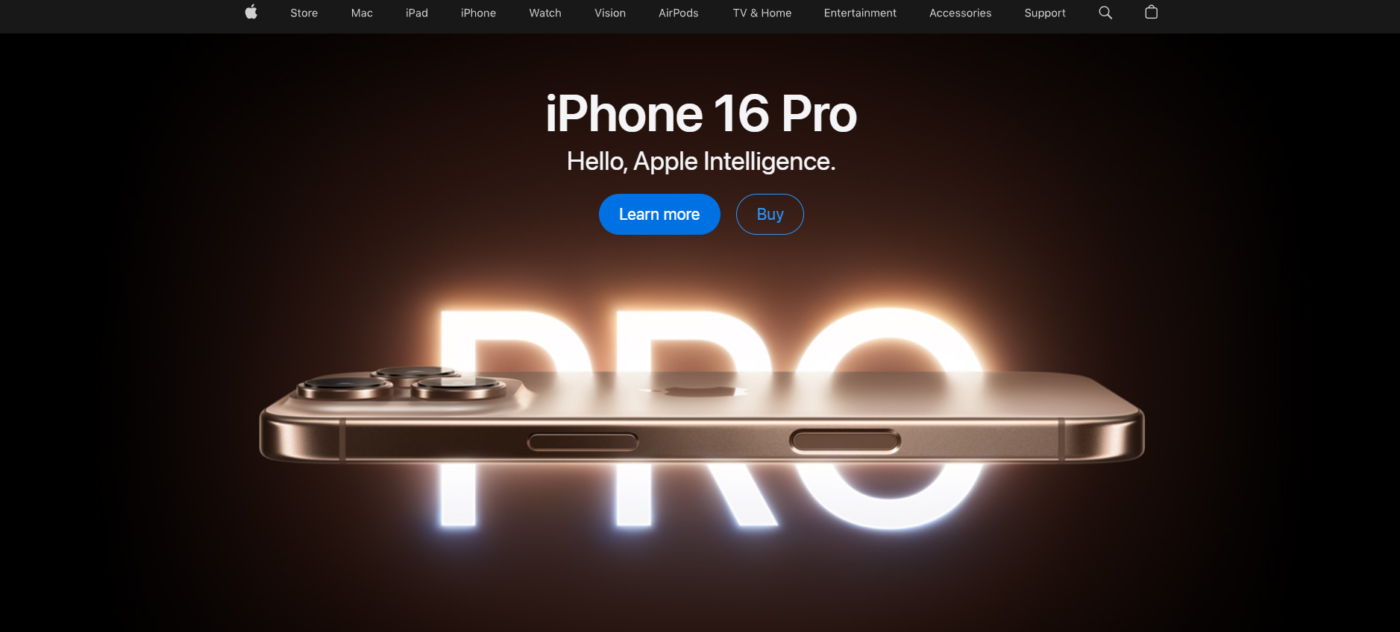
Apple’s messaging reflects its design philosophy—clean, precise, and impactful.
The brand avoids unnecessary words and focuses on clear, direct communication. Every message reinforces Apple’s premium positioning and innovation-driven identity.
Apple’s tone remains confident without sounding overly technical. The brand uses simple yet powerful language to highlight product benefits, making technology feel accessible and desirable.
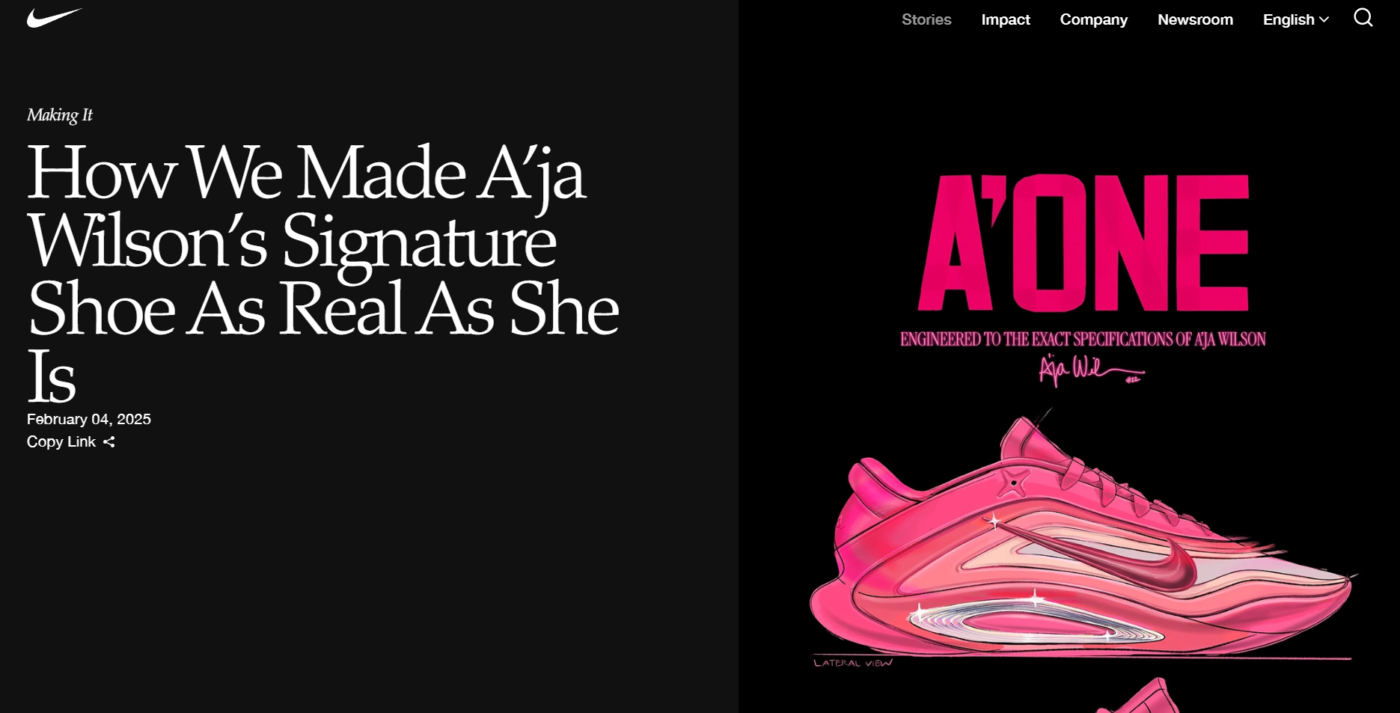
Nike’s brand voice is all about motivation. Through powerful storytelling and simple yet impactful copy, the brand pushes athletes of all levels to go beyond their limits. Every message feels bold and confident, always driving home the idea that greatness is within reach with the right mindset.
The brand’s communication stays direct and emotionally charged, often drawing from cultural moments and personal triumphs to create a deeper connection with its audience.
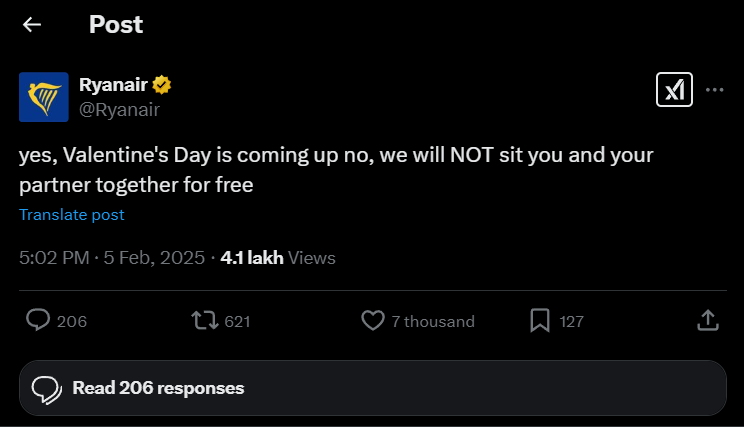
Ryanair embraces its no-frills reputation by leaning into humor and brutal honesty. Rather than dressing up its budget airline model, the brand highlights its affordability through sarcastic, self-deprecating messaging.
This approach differentiates Ryanair from its competitors. It turns potential negatives—basic service, cheap flights—into humorous selling points, making the brand more relatable and memorable.

Samsung positions itself as a technology leader through bold, forward-thinking messaging. The brand voice feels authoritative yet approachable, balancing cutting-edge innovation and everyday usability.
Samsung’s communication focuses on highlighting product benefits in a clear, engaging way. The brand avoids overly technical jargon, making even complex features easy to understand.

Surreal disrupts the cereal industry with its offbeat and humorous approach to branding. The brand rejects typical food advertising, opting for absurd, deadpan humor that draws attention.
Whether on packaging or social media, Surreal keeps its humorous tone consistent at every touchpoint. This unexpected voice helps the brand stand out in a crowded market filled with more traditional, predictable messages.

IKEA keeps communication simple, helpful, and engaging. The brand’s messaging focuses on making home design accessible, using a warm and inviting tone that makes customers feel empowered rather than overwhelmed.
It embraces storytelling in its marketing, making everyday home moments feel aspirational yet achievable. The brand’s conversational voice ensures customers feel understood and supported.
🔍 Did You Know? Intel’s signature ‘bong’ sound is one of the most recognizable audio logos in the world. It’s been described as a $1 billion sound due to its strong association with quality technology.
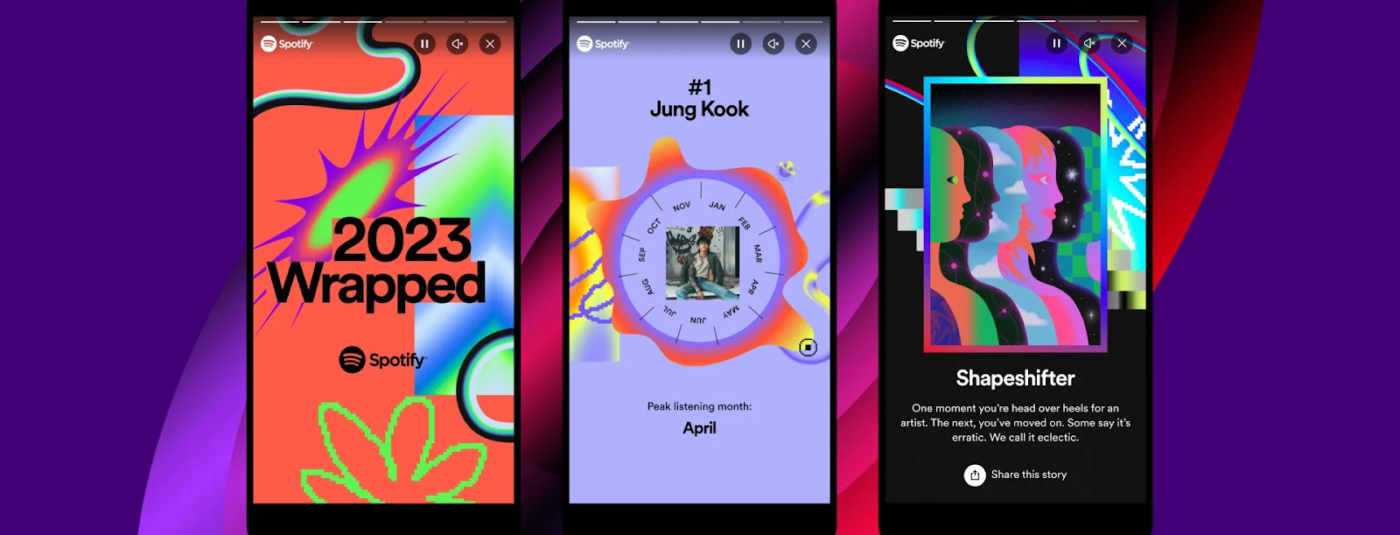
Spotify’s messaging thrives on creativity and cultural relevance. The brand constantly adapts its voice to fit trends, using humor, wit, and clever copy to engage users. Its ability to blend data with storytelling makes its campaigns stand out.
Spotify’s annual ‘Wrapped’ campaign is a prime example of how the brand turns user data into a fun and shareable experience. This playful and engaging approach keeps users excited about the platform.
📖 Also Read: Free Brand Strategy Templates

Red Bull speaks directly to thrill-seekers and adrenaline junkies. The brand’s voice is bold, inspiring, and full of energy, aligning perfectly with its extreme sports sponsorships and high-performance image.
It creates a lifestyle centered around adventure and pushing limits, turning their energy drink into a symbol of excitement and possibility. This message is reflected consistently across all platforms, establishing the brand as more than a product.

Netflix communicates in a way that feels like a friend recommending shows. The brand’s messaging is relaxed, humorous, and full of personality, making interactions feel natural rather than corporate.
Its social media presence thrives on pop culture references, memes, and witty responses. The brand speaks to its audience in an authentic way, keeping engagement levels high.
🔍 Did You Know? The first advertising slogan dates back to the 18th Century when Josiah Wedgwood, the father of modern marketing, used the tagline ‘Queen’s Ware’ to advertise pottery endorsed by royalty. Branding royalty, indeed!
Think of your brand as a person—how would it talk? Would it be professional and polished or quirky and playful?
Your brand voice is what makes your messaging feel distinct, authentic, and memorable. But how do you define it? Let’s dive into the steps to create a voice that sticks. 📃
Establishing a strong brand voice starts with defining core values and mission.
Every brand has a unique perspective, which should reflect in its messaging. Consider what the brand represents and how it should be perceived. A tech company focused on innovation might use a sleek, forward-thinking tone, while a sustainable clothing brand might emphasize warmth and eco-consciousness.
Ask key questions to refine this foundation:
The answers help create a foundation for consistent and authentic communication. A voice that aligns with brand purpose ensures messaging remains relevant and memorable.
A brand voice should connect naturally with its audience. Understanding customer preferences, behaviors, and expectations is crucial in shaping communication style.
Different demographics engage with messaging uniquely, so studying what resonates can enhance effectiveness.
Consider how audiences interact with similar brands. Analyze competitor messaging, social media engagement, and customer feedback. Look for patterns in what sparks conversations, drives responses, and fosters loyalty. A data-driven approach ensures the voice appeals to the right audience without feeling forced or disconnected.
User personas also provide valuable insights. A youthful, trend-focused audience may prefer casual and playful messaging, while a corporate decision-maker may respond better to a refined, authoritative tone. A voice that speaks directly to customer needs enhances engagement and brand affinity.
🧠 Fun Fact: Some brands use scents to reinforce their identity. For instance, Singapore Airlines has a signature fragrance called ‘Stefan Floridian Waters’ sprayed on its aircraft, crew uniforms, and hot towels, creating a unique sensory experience.
Brand voice and tone go hand in hand. While voice remains consistent, tone shifts based on context. A customer support response may require empathy and patience, while a marketing campaign might embrace excitement and enthusiasm.
Different tones create different impressions:
Brand voices should evolve without losing authenticity.
Monitoring audience reactions, engagement metrics, and social sentiment helps refine messaging over time. Customer, employee, and stakeholder feedback provides valuable insights into what works and what needs adjustment in brand management strategies.
Testing different messaging approaches can highlight what resonates best. A/B testing subject lines, social media posts, and campaign language can reveal patterns in audience preferences.
Flexibility keeps the voice relevant while maintaining brand identity. A well-crafted voice grows with the brand, ensuring long-term engagement and trust.
🔍 Did You Know? Tiffany’s iconic robin’s egg blue is so distinctive it has its own trademarked color called Tiffany Blue. You can’t use or replicate it without their permission!
Using the right tools helps document, refine, and implement brand guidelines effectively, keeping teams on the same page.
ClickUp, the everything app for work, is the perfect option. With the ClickUp Marketing Project Management Software, you get an all-in-one workspace where teams can document unique brand voice guidelines, collaborate on content, and ensure messaging aligns across departments.
Let’s explore its features and see how it can help streamline your marketing efforts.
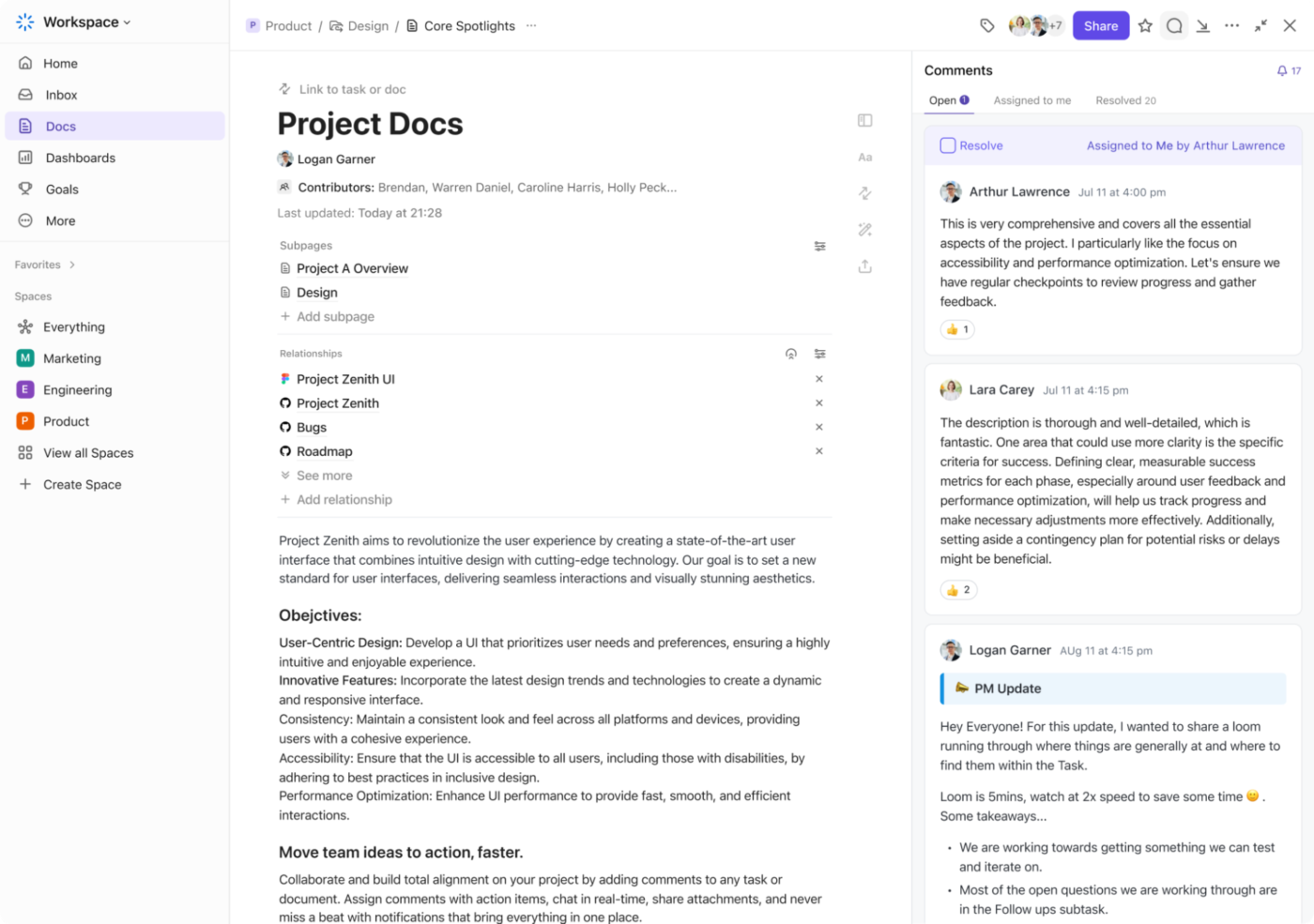
ClickUp Docs is a centralized knowledge hub where teams can outline brand voice principles, unique tone specifications, approved vocabulary, and formatting rules. Unlike static documents stored in multiple locations, Docs facilitates real-time updates, ensuring guidelines remain current and accessible.
Its core capabilities include:
📌 Example: A content writer drafting an email campaign quickly references ClickUp Docs to check approved terminology and brand tone guidelines. Instead of waiting for approvals or searching through scattered documents, they apply the correct phrasing instantly, ensuring alignment with brand standards.
ClickUp Brain is an intelligent AI-powered assistant that helps teams stay on-brand without manual intervention. It provides immediate responses to brand-related queries, suggests revisions to match brand tone, and ensures consistency across all written content.
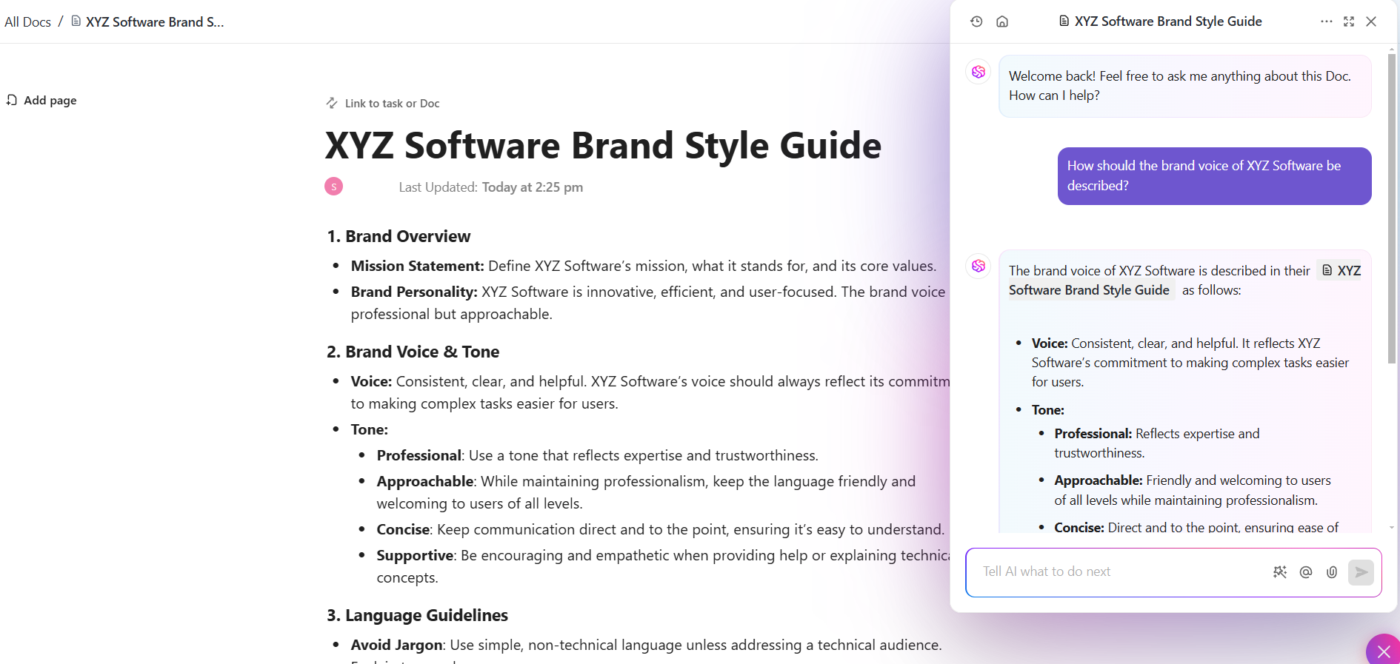
With AI-powered assistance, teams can get instant guidance on brand voice rules simply by asking a question. No more flipping through lengthy guidelines—just quick, context-aware answers that help everyone stay aligned.
It also fine-tunes wording to match predefined tone and style preferences, ensuring consistency across emails, social posts, blogs, and more.
Best of all, Brain works directly within ClickUp Tasks and Docs, eliminating the need to switch between tools.
📌 Example: A social media manager drafts a LinkedIn post but needs it to reflect the brand’s professional yet conversational tone. They ask ClickUp Brain for refinements, and the AI suggests tweaks that balance engagement with professionalism, ensuring the post aligns perfectly with brand expectations.
⚙️ Bonus: Try style guide templates to quickly outline your brand voice, tone, and visual guidelines.
Combining ClickUp with other software creates a more cohesive workflow. For instance:
💡 Pro Tip: Mapping out your brand strategy with a clear marketing roadmap helps maintain your brand voice across all channels and content. A detailed roadmap aligns your marketing efforts, guiding your team on when and where to apply specific tones, messages, and visual elements.
A well-defined brand voice strengthens identity and builds trust. Consistency across all marketing communications ensures customers recognize and connect with the brand, no matter the platform.
Implementing a brand voice requires a structured approach across both traditional and digital channels. Let’s see below.
Marketing communications should reflect the same tone, personality, and messaging guidelines everywhere. Aligning print materials, social media posts, emails, and website content with the brand voice creates a unified customer experience.
🧠 Fun Fact: Sweden created its own typeface, called Swedish Sans, to unify the country’s whole brand voice. It’s used across official documents and promotional materials for a cohesive national identity.
ClickUp’s branding templates ensure every piece of content aligns with the defined voice.
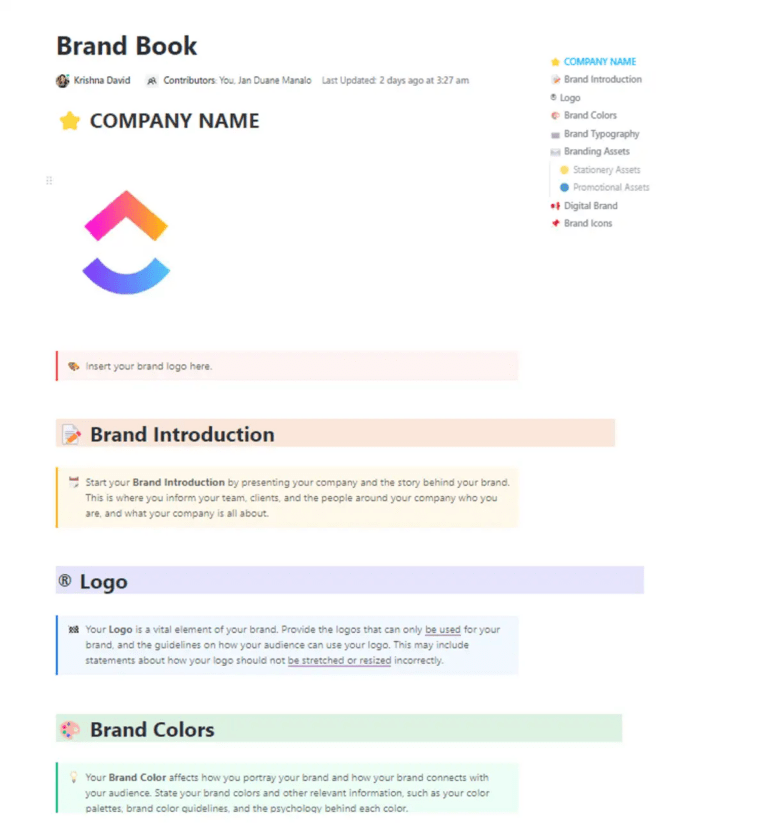
For example, the ClickUp Brand Book Template is a great tool for keeping your brand’s identity consistent. It includes everything from your company’s mission and values to logo usage, color palette, and typography.
Designed for businesses that want to maintain a clear, cohesive identity, the ClickUp Brand Guidelines Template goes beyond simple documentation. It serves as a living workspace where teams can collaborate, refine, and enforce brand standards in real time.
At its core, the template functions as a centralized brand hub, ensuring that every visual, message, and tone aligns with the company’s identity. You can document everything from your mission statement and core values to the exact color codes, typography rules, and logo variations used across different platforms.
The structured format prevents inconsistencies that can weaken brand perception, making it ideal for growing teams or businesses with multiple stakeholders handling marketing and design.
One moment, your messaging sounds polished and consistent; the next, it’s all over the place. Maybe different teams interpret tone differently, or content feels off-brand without a clear reason. Well, every challenge has a fix.
Let’s dive into some common hurdles and how to tackle them.
Many brands default to safe, neutral messaging that doesn’t leave a lasting impression. Without a distinctive voice, the content feels bland and interchangeable with competitors.
✅ Solution: Define key personality traits that reflect your brand’s identity. Is it bold and confident, warm and friendly, or witty and playful? Use real-world examples to bring these traits to life and ensure every piece of content reflects them.
Teams may want to experiment with fresh, engaging content, but without clear boundaries, they risk straying too far from the brand’s core identity.
✅ Solution: Encourage creativity within set guidelines. Provide examples of how to push boundaries while staying true to the brand voice. Use AI-powered suggestions to refine content without losing originality.
💡 Pro Tip: Ensure your brand awareness KPIs reflect how well your brand voice is resonating. Track metrics like social media mentions and engagement to see if your tone connects with your audience. Adjust your voice based on these insights to improve your reach and consistency.
What resonated with audiences a few years ago may feel outdated today. Failing to adjust can make a brand seem out of touch.
✅ Solution: Regularly analyze audience engagement and feedback. Test variations of your brand voice in different formats and channels and refine based on performance data while keeping the core personality intact.
Building a recognizable brand voice takes strategy, consistency, and the right tools.
Every interaction shapes how audiences perceive a business, making it essential to stay aligned across channels. A well-defined voice strengthens identity and creates lasting connections with customers.
ClickUp simplifies this process, ensuring teams stay on the same page while crafting messages that resonate. ClickUp Docs provides a structured space for brand guidelines, while ClickUp Brain keeps communication consistent with AI-powered suggestions.
Sign up for ClickUp today!

Sean Hardy
Max 26min read

Manasi Nair
Max 29min read
Manasi Nair
Max 22min read

© 2026 ClickUp