






Still downloading templates?
There’s an easier way. Try a free AI Agent in ClickUp that actually does the work for you—set up in minutes, save hours every week.
Sorry, there were no results found for “”
Sorry, there were no results found for “”
Sorry, there were no results found for “”
McKinsey reports that project cost overruns average 79% beyond original estimates, while project timelines extend 52% longer than planned.
These numbers reveal a reality many teams already experience—traditional forecasting methods often fail to capture the complexity and uncertainty of modern projects.
That’s why many organizations are turning to AI budget overrun prediction. Instead of relying on static spreadsheets or historical averages alone, AI-powered forecasting analyzes massive volumes of project data to detect patterns, risk signals, and emerging cost pressures.
For project managers, finance teams, and operations leaders, this means shifting from reactive budget control to proactive risk prevention. In the sections ahead, you’ll see how AI-driven forecasting helps teams predict overruns earlier and manage project costs with far greater confidence. We’ll also show you how ClickUp brings it all together.
AI budget overrun prediction uses machine learning and advanced analytics to forecast when a project is likely to exceed its financial limits. Moving beyond static spreadsheets helps organizations identify cost risks in real time.
These systems continuously monitor vast datasets—including timelines, resource allocation, and operational performance—to detect patterns that typically lead to overspending. They work on three aspects:
Unlike manual estimation, AI-driven analysis processes complex information far more quickly and consistently. This shift from reactive reporting to predictive foresight helps organizations maintain tighter control over their capital.
Modern organizations are moving toward AI-driven forecasting to gain a more granular grip on project spending. By integrating machine learning with traditional financial frameworks, these systems create adaptive estimates that evolve alongside the project.
This allows teams to identify patterns that influence project costs, improve forecast accuracy, and anticipate risks that may lead to cost overruns.
These predictions typically rely on a combination of bottom-up estimation, reference-based comparisons, and continuous monitoring of real-time data.
📖 Also Read: A Project Manager’s Guide to AI-Powered Execution
Bottom-up estimation focuses on understanding spending at the most detailed level of a project. Instead of predicting costs at a high level, AI evaluates individual activities, analyzing how each task contributes to overall project costs.
This allows teams to see where spending occurs and how adjusting scope or resource allocation may influence the final budget.
AI tools using machine learning algorithms can analyze large volumes of project data. By scanning performance metrics and durations from similar previous work, they calculate precise windows for task completion and associated costs.
AI strengthens bottom-up estimation in four key ways:
While this approach provides strong visibility into individual cost drivers, it may still underestimate final budgets if unexpected factors arise during execution. This is why organizations often combine it with broader forecasting models.
📮ClickUp Insight: Our AI maturity survey highlights a clear challenge: 54% of teams work across scattered systems, 49% rarely share context between tools, and 43% struggle to find the information they need.
When work is fragmented, your AI tools can’t access the full context, which means incomplete answers, delayed responses, and outputs that lack depth or accuracy. That’s work sprawl in action, and it costs companies millions in lost productivity and wasted time.
ClickUp Brain overcomes this by operating inside a unified, AI-powered workspace where tasks, docs, and chats are all interconnected. Enterprise Search brings every detail to the surface instantly, while AI Agents operate across the entire platform to gather context, share updates, and move work forward.
The result is AI that’s faster, clearer, and consistently informed, something disconnected tools simply can’t match.
In top-down estimation, rather than analyzing individual tasks, AI examines historical project data to determine how costs typically evolve.
This method, often called reference class forecasting, compares a new initiative with comparable past projects. By analyzing their datasets, AI models identify typical spending patterns, delays, and cost escalation trends. This allows organizations to forecast realistic budgets even for complex projects with high uncertainty.
This is vital for large-scale IT or infrastructure projects, which often suffer from “optimism bias”—the human tendency to underestimate risks. AI provides a reality check by anchoring plans in objective, historical outcomes.
This approach allows teams to:
📖 Also Read: Top AI Agents for Data Analysis for Smarter Insights
Once a project is live, a static plan is a liability. Predictive analytics serves as a continuous radar here, scanning live data from resource logs, schedule updates, and financial systems.
Using advanced AI forecasting models, the system monitors how spending evolves throughout the project. If a specific phase begins to lag or labor costs creep upward, the system flags the deviation immediately—long before it shows up in a monthly report.
Several capabilities enable this dynamic forecasting approach:
Over time, these systems learn from every project they analyze. This continuous feedback loop enables AI models to refine their predictions and support long-term improvements in budget management.
For project managers and finance leaders, the result is a far more proactive approach to financial planning. Instead of reacting to overruns, teams gain early visibility and can make informed adjustments that protect overall project performance.
📖 Also Read: Free Budget Proposal Templates in Excel and ClickUp
Traditional forecasting methods that rely on spreadsheets, manual assumptions, and fragmented information can’t keep up with increasingly complex modern projects.
AI-powered forecasting uses machine learning and predictive analytics to analyze patterns across large volumes of project data, giving teams a more reliable view of how budgets may evolve.
Over time, this leads to stronger budget performance, more reliable forecasting, and measurable cost savings.
Some of the most valuable advantages include:
✅ Pattern recognition: AI models analyze thousands of past initiatives and detect cost trends across historical project data, uncovering insights that manual analysis often misses.
✅ Real-time adaptation: As project data changes, AI systems automatically update budget forecasting, helping teams respond quickly to new risks or external factors.
✅ Risk prediction: Advanced models identify potential cost overruns early by evaluating signals from performance metrics, timelines, and evolving project conditions.
✅ Seamless integration: Modern AI tools connect with existing financial systems and operational platforms, allowing teams to unify data and gain clearer insights.
✅ Continuous learning: With every new project, AI models improve their predictions, increasing forecast accuracy, reducing errors, and delivering long-term competitive advantages.
As organizations invest more in artificial intelligence, these capabilities are becoming essential for managing budgets in complex, fast-moving environments.
While artificial intelligence and machine learning offer powerful capabilities for forecasting budgets, implementing these systems is rarely frictionless. Many organizations begin their AI adoption journey expecting immediate results, only to discover that success depends on data readiness, technology integration, and team alignment.
Here are some challenges project managers and finance leaders must understand to reduce implementation risks and ensure AI investments deliver meaningful results.
AI predictions depend heavily on the quality of historical data. When historical project data is inconsistent, incomplete, or poorly structured, AI models struggle to produce reliable forecasts.
🚩 Problem:
Many organizations store cost records across disconnected tools or spreadsheets, making it difficult to generate accurate project data for AI systems. Inconsistent formats, missing entries, and outdated performance data weaken forecast accuracy and reduce confidence in AI-generated insights.
✅ Solution:
Organizations strengthen their AI forecasting by improving the reliability of their data environment.
When these improvements are in place, AI models can analyze cleaner datasets and produce more reliable data-driven insights.
💡 Pro Tip: With ClickUp Brain MAX, teams can search budgets, project updates, files, and external context from one place, turning scattered project data into faster answers and earlier action on cost risks.
🎥 Struggling with messy data? Here are some of the best AI Agents that can help!
Integrating new AI tools with established operational platforms such as ERP systems, accounting tools, and project management software can create technical and operational complexity.
🚩 Problem:
Older legacy systems may not easily exchange data with modern AI platforms. Without proper integration, teams may resort to manual data transfers between tools, reducing efficiency and limiting the benefits of AI-driven predictive analytics.
✅ Solution:
Organizations typically address these challenges by modernizing how systems communicate and share data.
With stronger integration, teams gain faster access to real-time data, enabling more responsive budget planning and improved monitoring of project costs.
💡 Pro Tip: With ClickUp Integrations, you can bring in your data from all your other tools into one place, no coding needed!
Technology challenges are only part of the equation. The success of AI initiatives also depends on how well teams trust and adopt the technology.
🚩 Problem:
Many project teams initially hesitate to rely on AI predictions, particularly when budgets and strategic decisions are involved. Concerns about job displacement or unfamiliarity with AI technology can slow adoption and limit the effectiveness of new systems.
✅ Solution:
Organizations build trust by demonstrating how AI enhances—not replaces—human expertise.
When teams understand how AI systems support smarter financial planning, adoption increases significantly. Over time, organizations build stronger collaboration between human expertise and intelligent forecasting tools, enabling more reliable predictions and better cost control for projects.
🎥 Watch this video for tips on overcoming AI adoption challenges at your workplace.
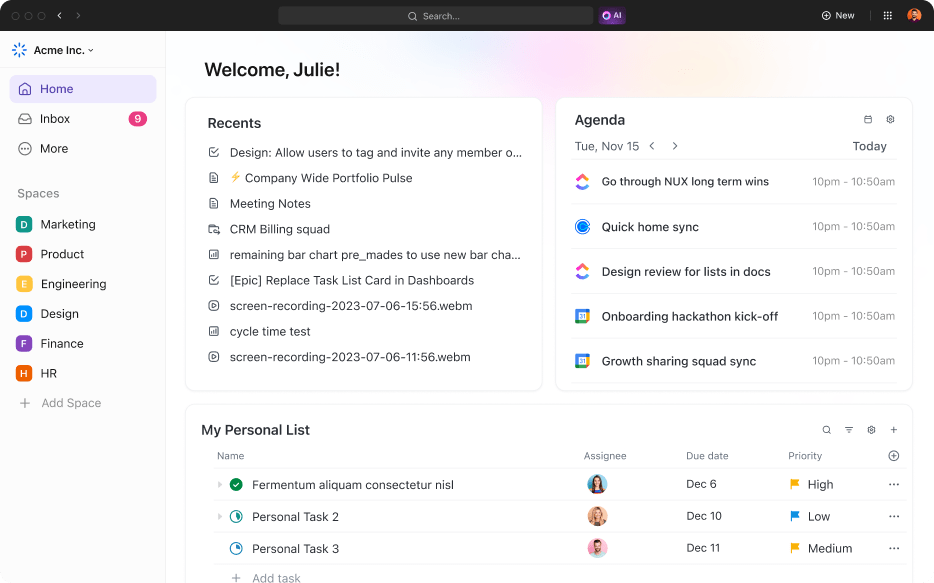
AI can predict budget risks—but predictions alone don’t save projects. Execution does.
This is where ClickUp stands apart. It doesn’t just surface insights—it operationalizes them across your entire workflow, so teams can act before overruns happen.
ClickUp’s converged AI workspace brings financial insights, task execution, and team collaboration into a unified platform, helping organizations move from reactive budget tracking to proactive budget forecasting and risk prevention.
Here’s an overview of what that means.
Most budget tracking happens outside the actual work—in spreadsheets, finance tools, or post-project reports. That’s exactly why overruns go unnoticed until it’s too late.
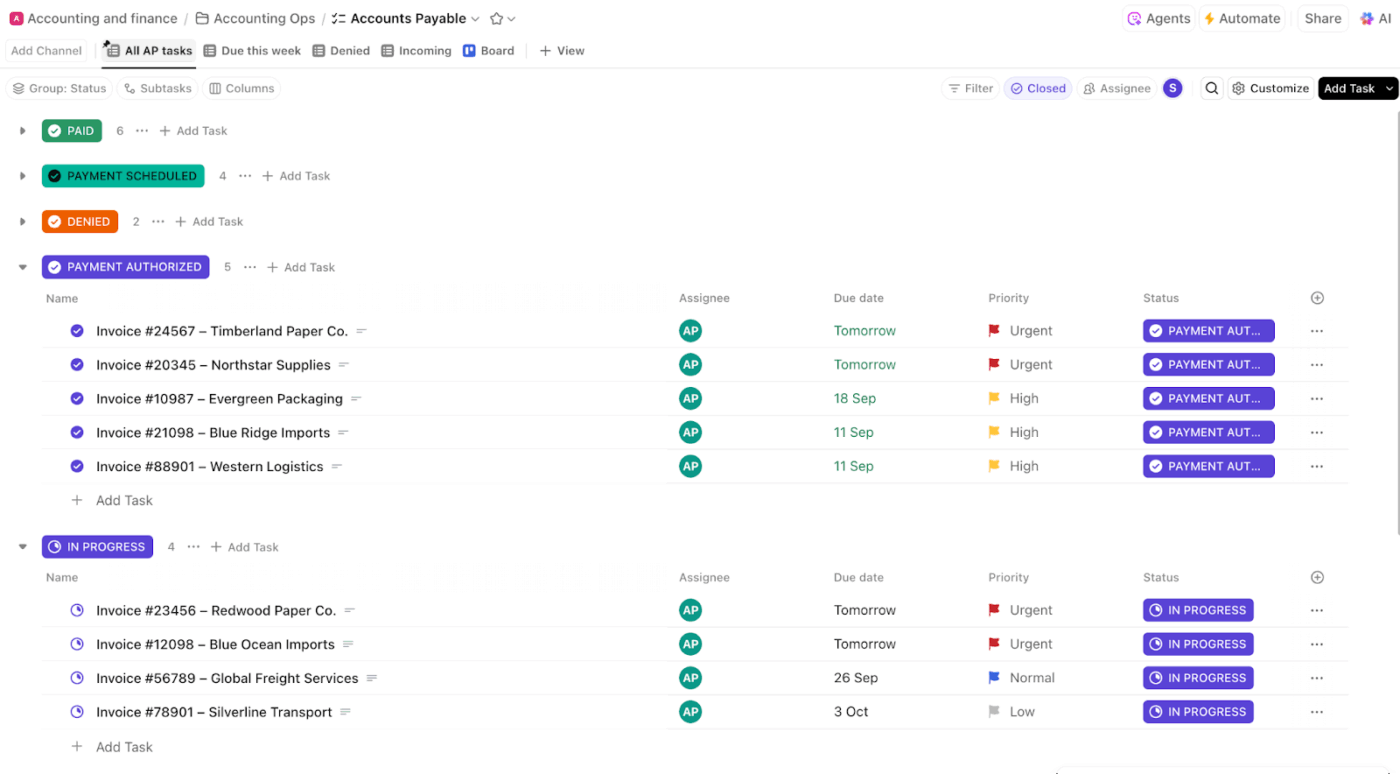
ClickUp Tasks brings budget tracking into the execution layer itself, so every task carries financial context in real time. With ClickUp’s Custom Fields, teams can track costs, billable hours, and expenses at the task level. Custom Field Rollups automatically aggregate this data across lists, folders, and projects—giving you a live view of total budget consumption without manual consolidation.
This means:
Impact: A single source of truth where work and budget stay perfectly aligned—eliminating blind spots that lead to overruns.
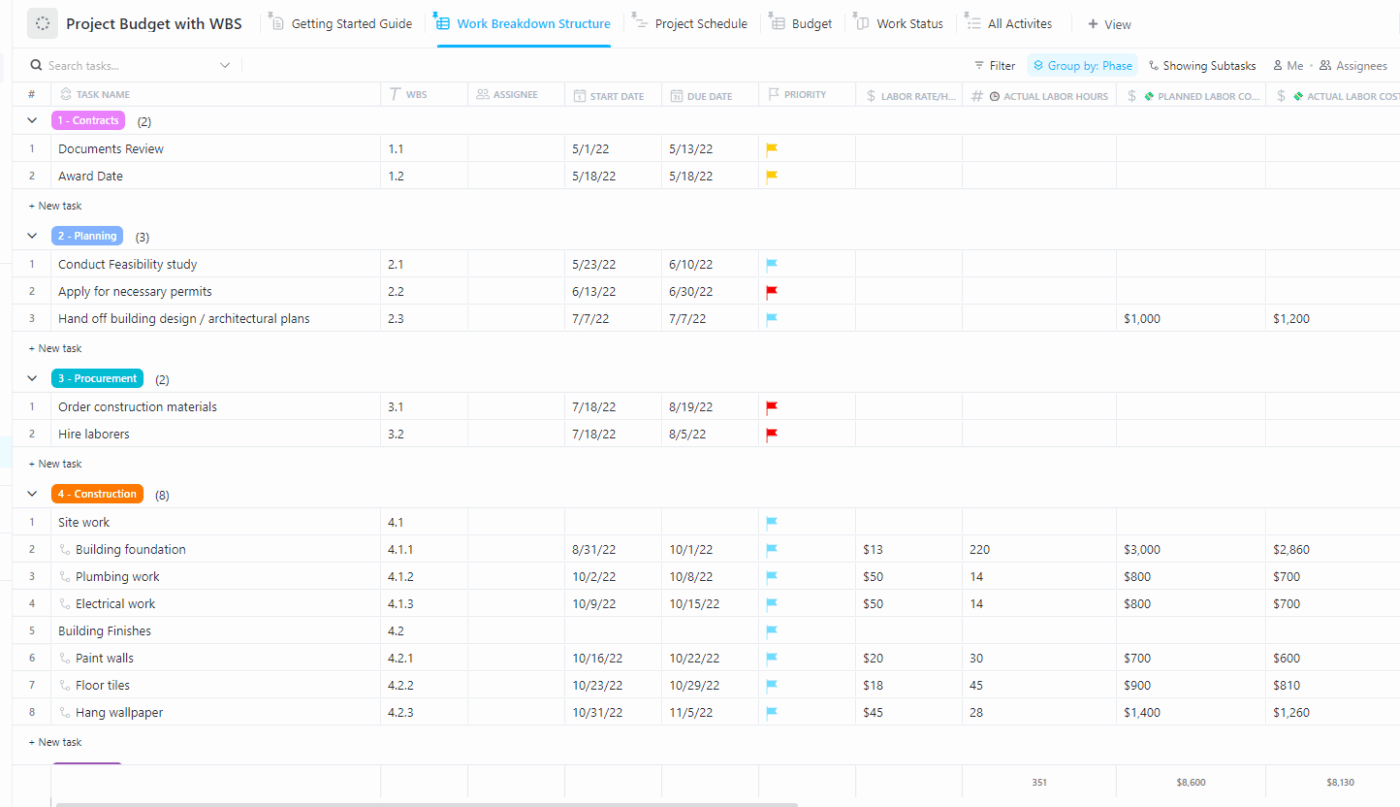
Use ClickUp’s Project Budget with Work Breakdown Structure (WBS) Template to bring structure and clarity to complex budget planning. It helps your team break large initiatives into manageable tasks while maintaining clear oversight of financial performance.
The template enables teams to:
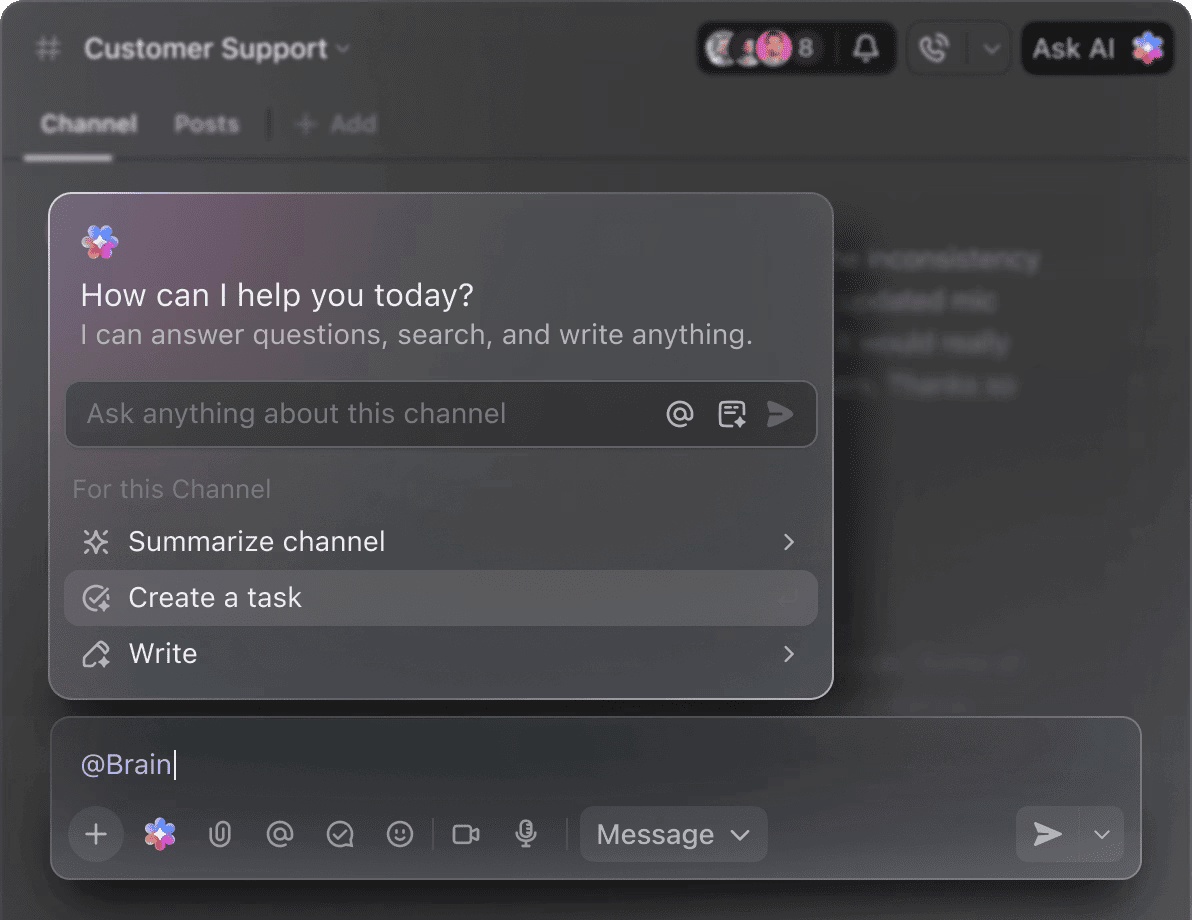
Budget overruns often stem from fragmented information—financial data in one tool, project updates in another, and risks buried in conversations.
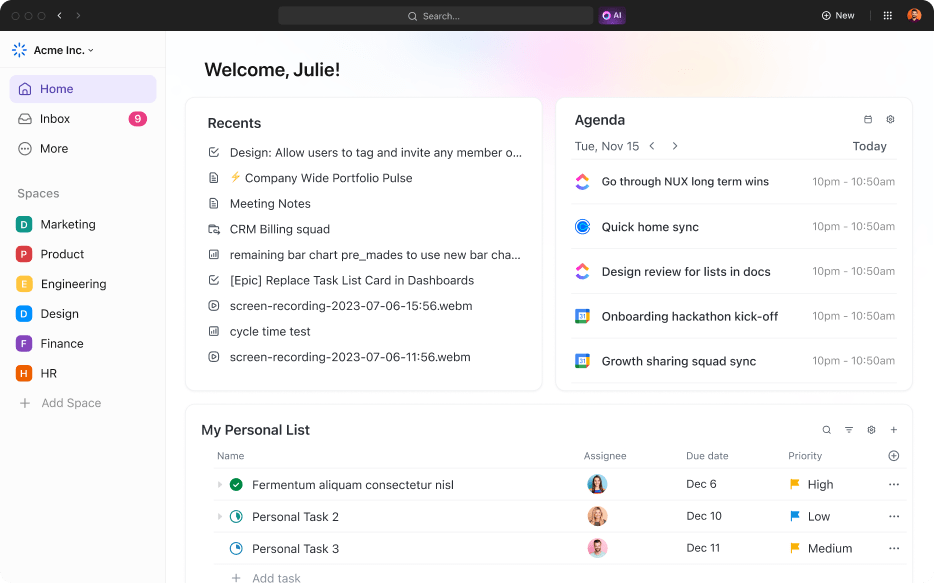
ClickUp Brain is the AI assistant that has the complete context of your workspace. It acts as a unified AI layer across your workspace, connecting tasks, docs, timelines, and financial inputs to give you instant answers to critical questions:
Instead of manually stitching together reports, teams get proactive insights and summaries—reducing the lag between risk detection and decision-making.
Impact: Faster, data-backed decisions before small deviations become major overruns.
Traditional dashboards tell you what happened. ClickUp Dashboards are enhanced with AI cards—they tell you what’s about to happen.
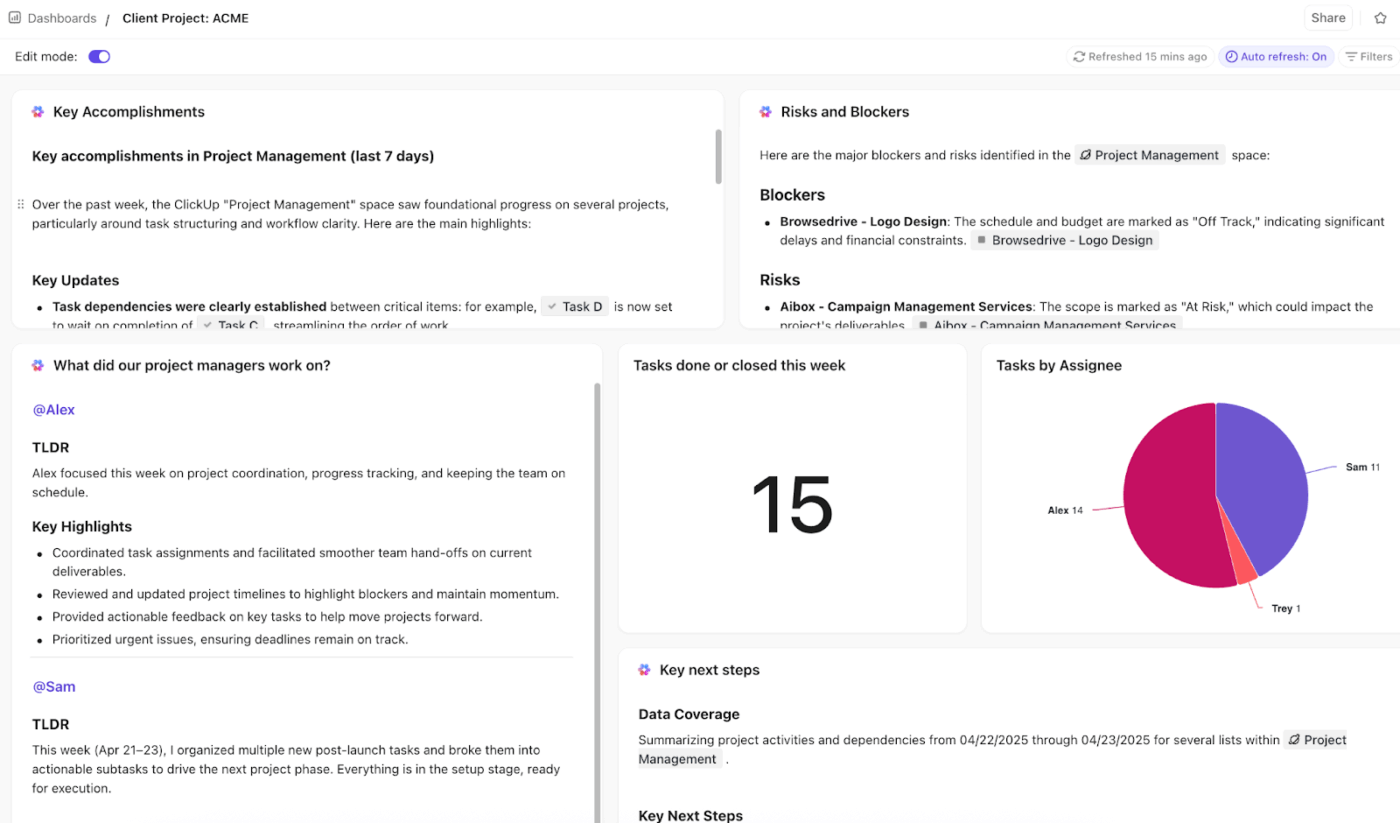
With customizable dashboards, you can:
Custom widgets allow you to track progress, monitor financial indicators, and generate real-time insights from your workspace data. AI cards automatically surface patterns like unexpected spikes in resource usage or slipping timelines that could impact budgets.
Impact: Early warning system for financial risks—without manual analysis.
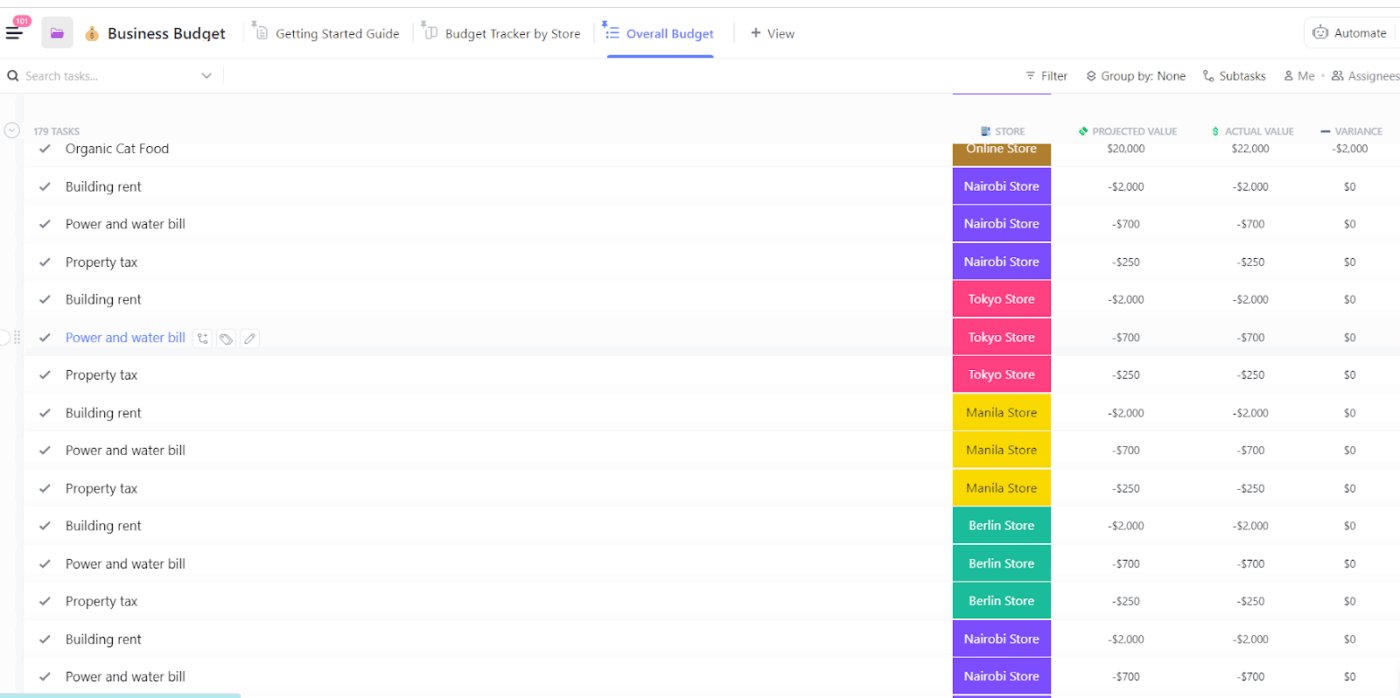
ClickUp’s Business Budget Template allows teams to compare planned spending with real results in a structured workspace. The result is stronger financial oversight and better control over project costs, especially when managing multiple initiatives at once.
Using the template helps organizations:
One of the biggest (and most overlooked) causes of budget overruns is poor resource allocation.
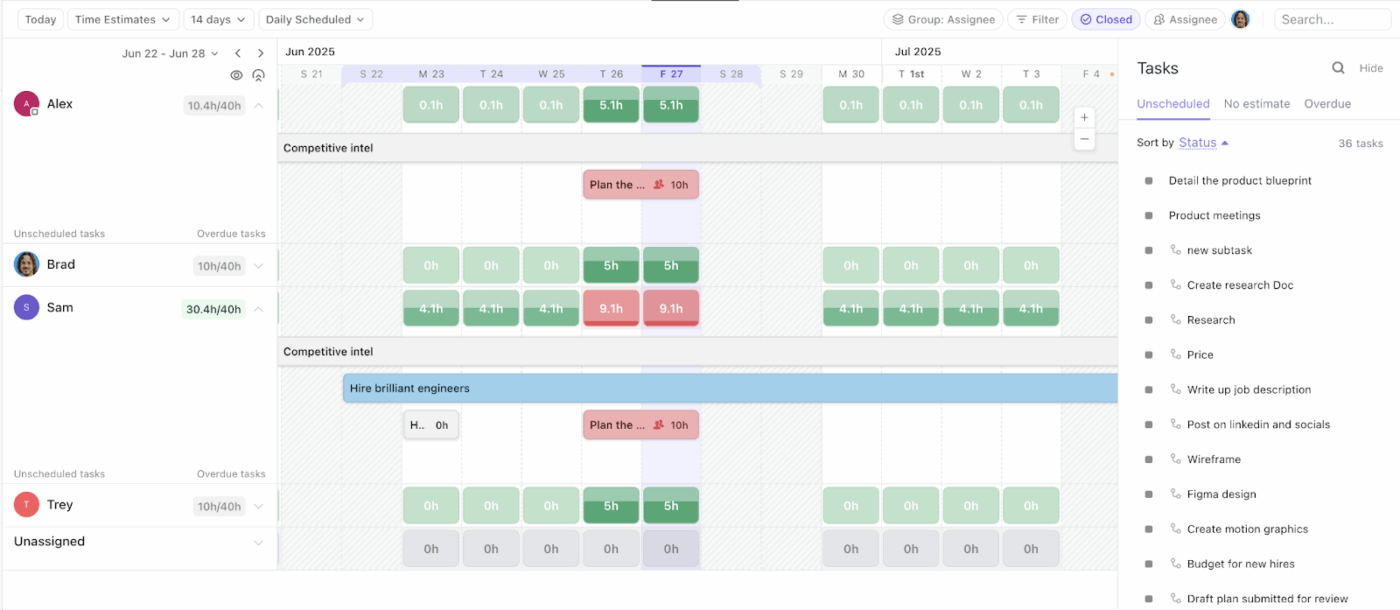
ClickUp’s Workload View gives teams a clear picture of who is overbooked, underutilized, or at risk of burnout—before it affects delivery timelines and costs.
This gives project managers a way to proactively balance resource allocation and avoid expensive last-minute staffing decisions.
Impact: Optimized resource utilization that keeps both timelines and budgets in check.
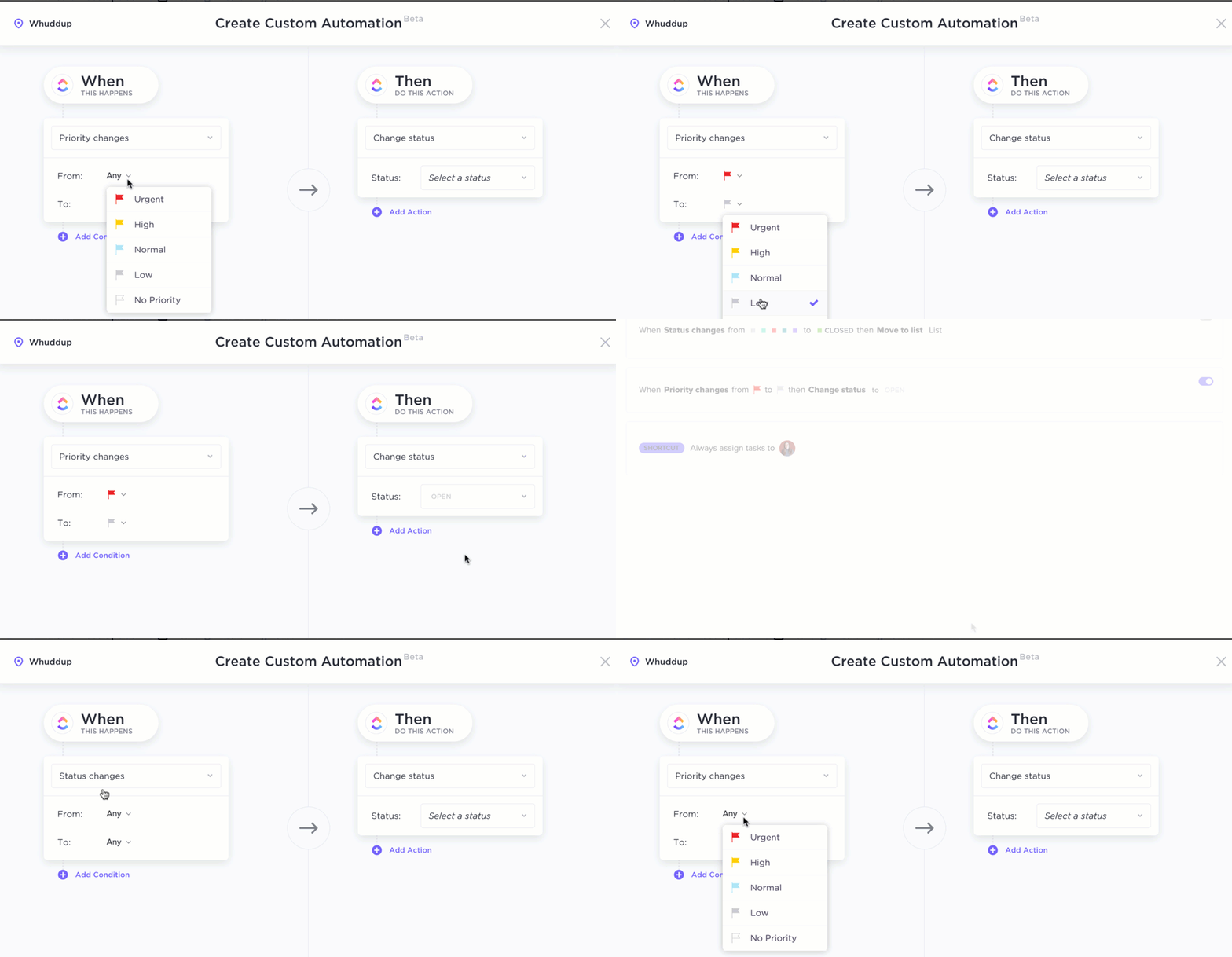
Manual processes introduce delays—and delays increase costs. ClickUp Automations ensure that critical workflows move forward without bottlenecks:
As a result, teams can respond to risks in real time rather than react after the damage is done.
Impact: Reduced operational inefficiencies that silently drive up project costs.
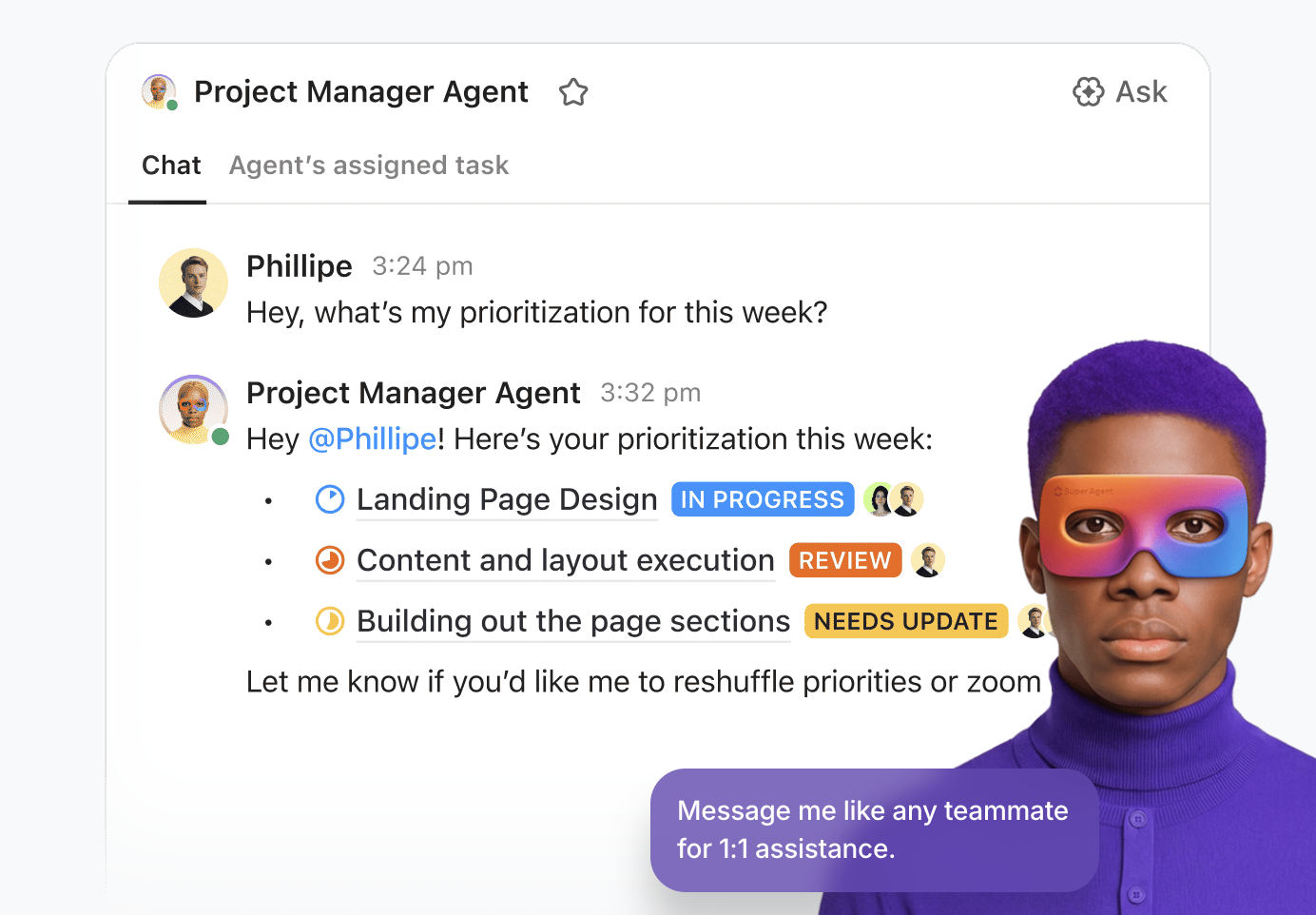
ClickUp’s Super Agents take AI from passive analysis to active execution.
Instead of waiting for teams to identify risks, Super Agents can:
This creates a system where risk detection and response are always “on,” even when teams are stretched thin.
Impact: Continuous, AI-driven oversight that prevents issues from slipping through the cracks.
🦸🏻♀️ Build a Budget Risk & Mitigation Super Agent to monitor task progress, workload, delays, and scope changes to spot early signs of budget creep. It can flag the biggest risks, recommend corrective actions, and help teams step in before small issues turn into major overruns.
Find your favorite from our list of 650+ prebuilt Super Agents!
By connecting work management with AI-driven predictive analytics, ClickUp helps organizations monitor financial signals, respond faster to changing project conditions, and maintain stronger budget control across even the most complex projects.
As projects become more complex, teams increasingly rely on AI-driven predictive analytics, machine learning algorithms, and richer historical data to anticipate risks before they escalate.
Throughout this guide, you saw how modern AI systems analyze project data, detect cost anomalies, and evaluate external factors to improve forecast accuracy and reduce financial surprises. The result is stronger budget forecasting, smarter resource allocation, and better control of project costs across evolving project environments.
ClickUp brings these capabilities together in one workspace, helping teams transform scattered data into actionable insights that support better financial decisions. Try ClickUp for free today and start building a more proactive, AI-powered approach to managing project budgets.
AI relies on historical project data, performance metrics, timelines, and financial records to detect cost trends. When combined with real-time data and external signals like market trends, machine learning algorithms generate more reliable forecasts and identify potential cost overruns early.
Traditional spreadsheets rely heavily on manual processes and fixed assumptions. In contrast, AI-driven predictive analytics analyzes large volumes of project data, adapts to changing conditions, and improves forecast accuracy by continuously learning from new data and past project outcomes.
Yes. Modern AI tools and cloud platforms make AI adoption accessible even for smaller teams. By analyzing project costs, timelines, and resource usage, AI can deliver valuable insights that help teams control budgets and minimize financial risks without complex infrastructure.

© 2026 ClickUp

There’s an easier way. Try a free AI Agent in ClickUp that actually does the work for you—set up in minutes, save hours every week.