

Your sales rep is using a parallel dialer, calling six prospects simultaneously.
Suddenly, someone picks up.
The rep has exactly zero seconds to prepare.
No time to check LinkedIn.
No time to scan Salesforce.
No time to do… anything. Just go.
How do you make those first 10 seconds count when everything you need to know about this prospect is scattered across different tools?
This was the exact challenge one of our SDRs, Adam Hebert, raised.
With parallel dialers like Nooks, reps jump into calls cold. Critical context, including product usage, past interactions, prospect data, and company news, is scattered across Salesforce, Pocus, LinkedIn, and other tools. None of it surfaces when it matters most.
This isn’t just a sales problem. It’s a work sprawl problem.
When Sales Reps Can’t Find What They Need: The Hidden Cost of Scattered Context
- The Real Cost of Fragmented Context
- Building Intelligence Into the Workflow
- What We Learned: Getting the Intelligence Right
- The Most Valuable Lesson: Build With Feedback Loops
- From Point Solutions to Ambient Intelligence
- Before Convergence: One Rep, Six Tabs
- Convergence Isn’t Just for Sales
- The Convergence Imperative
- Frequently Asked Questions

 Summarize this article for me please
The Real Cost of Fragmented Context
When information is scattered across tools, it slows everything down.
And this isn’t anecdotal. 62% of workers say they spend too much time searching for information during the workday, according to a Microsoft survey.
For sales teams working at the speed of a phone call, that fragmentation becomes a competitive disadvantage.
Our sales team was living this reality. Despite having advanced tools, rich CRM data, and AI features, none of them helped when they weren’t available in one place, at the moment of need.
So we built something better.
Work Sprawl is the default, not the exception
This isn’t an edge case.
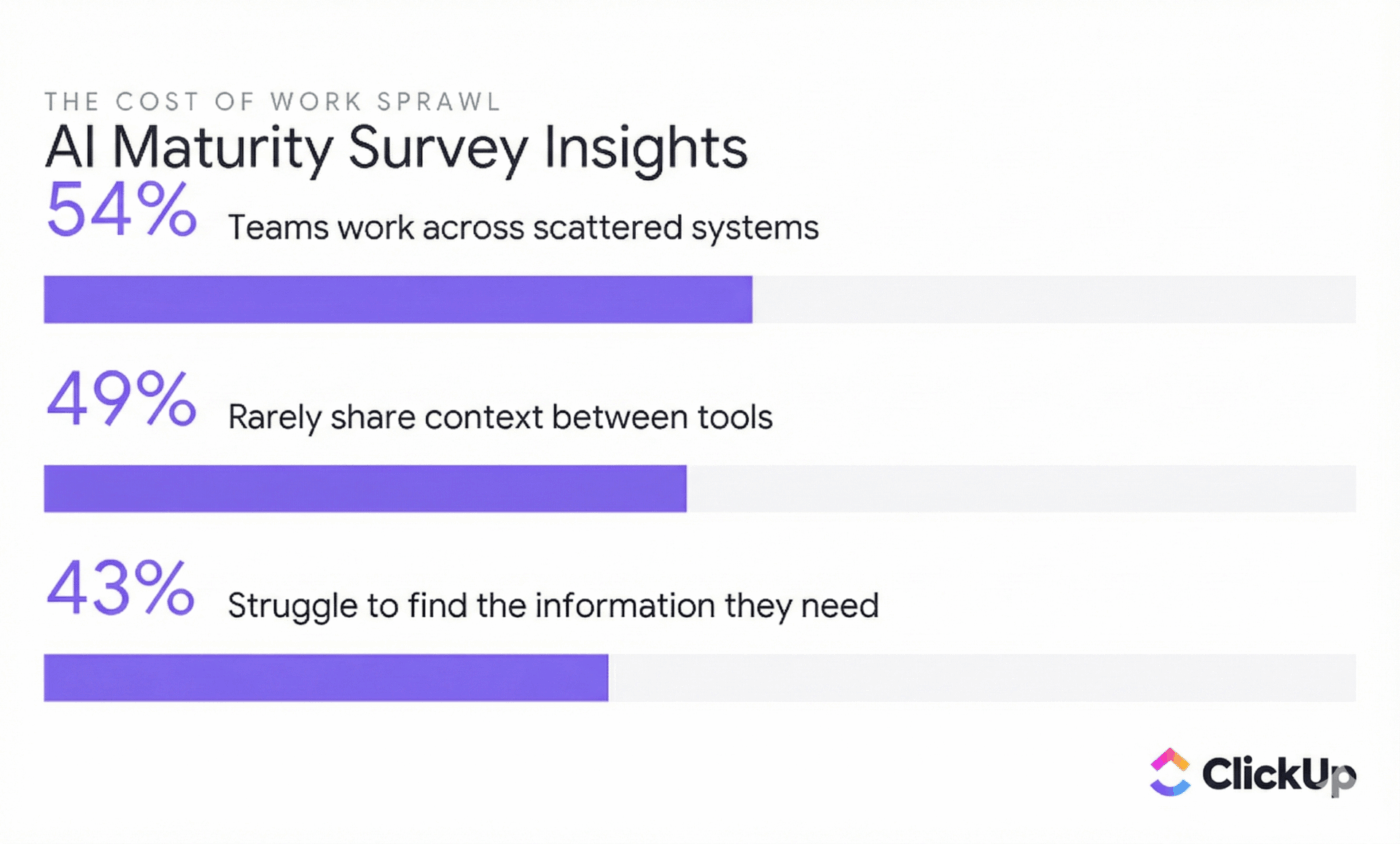
Our AI Maturity Survey shows that most teams work in fragmented environments, creating constant friction just to find basic information.
When this is the foundation, AI doesn’t fail because it’s weak.
It fails because it’s starved of context. Read more in the The State of AI Maturity report.
 Summarize this article for me please
Building Intelligence Into the Workflow
Working with our SDR Adam Hebert and technical support from Mike Slade, we built a workflow in Retool that demonstrates what becomes possible when you eliminate context sprawl.
The workflow fires off before the rep dials the prospect.
It pulls in everything from Salesforce activity to product usage data from our warehouse, firmographics, and even real-time company updates via Perplexity. This information is synthesized by a trained AI model and delivered directly to the dialer screen.
Now, when a prospect answers the phone, the rep’s dashboard instantly displays what matters: a tailored sales script, summarized context, and relevant details about the contact.
No rushing or toggling between tabs.
No more memory gymnastics.
No panic trying to figure out how to keep the prospect engaged.
The result? Just confidence and clarity from the first hello.
Since implementing this, we’ve seen a lift in conversion rates and call effectiveness. But building it taught us more than just technical lessons.
Summarize this article for me pleaseWhat We Learned: Getting the Intelligence Right
The technical implementation taught us important lessons about using the right tools for the job. In particular, choosing the right AI model was critical.
We tested multiple models for different use cases:
- Gemini performed best for structured, rule-based tasks
- GPT handled more creative prompts and flexible phrasing
- Claude had decent real-time performance, but still lagged
- Perplexity became essential when we needed up-to-date web context, like recent company initiatives or hiring news. No other model came close to freshness and relevance
Here’s the nuance: even the “right” model wasn’t enough without tight prompt design, accurate data queries, and live validation. Our first versions failed because of three consistent problems:
- Bad data queries from the warehouse
- Poor prompt engineering
- Misalignment between what reps needed and what the system delivered
For example, a prompt might tell a rep the prospect is on a free plan when they’re actually a paid customer. That’s a credibility-killer. And in a cold call, there’s no recovery from getting basic facts wrong.
We had to get meticulous about debugging—matching AI output with CRM records, testing query logic, and refining prompts until the results were trustworthy.
Summarize this article for me pleaseThe Most Valuable Lesson: Build With Feedback Loops
The biggest unlock wasn’t technical. It was cultural.
The system only got better because Adam and other SDRs gave consistent, honest feedback. They flagged inaccuracies, requested improvements, and stuck with the tool long enough to help us iterate.
Without that loop, we would’ve built something clever but useless.
With it, we delivered something reps actually rely on.
Adam summed up the adoption lesson in the simplest way I’ve heard.
In a recent post, he wrote:
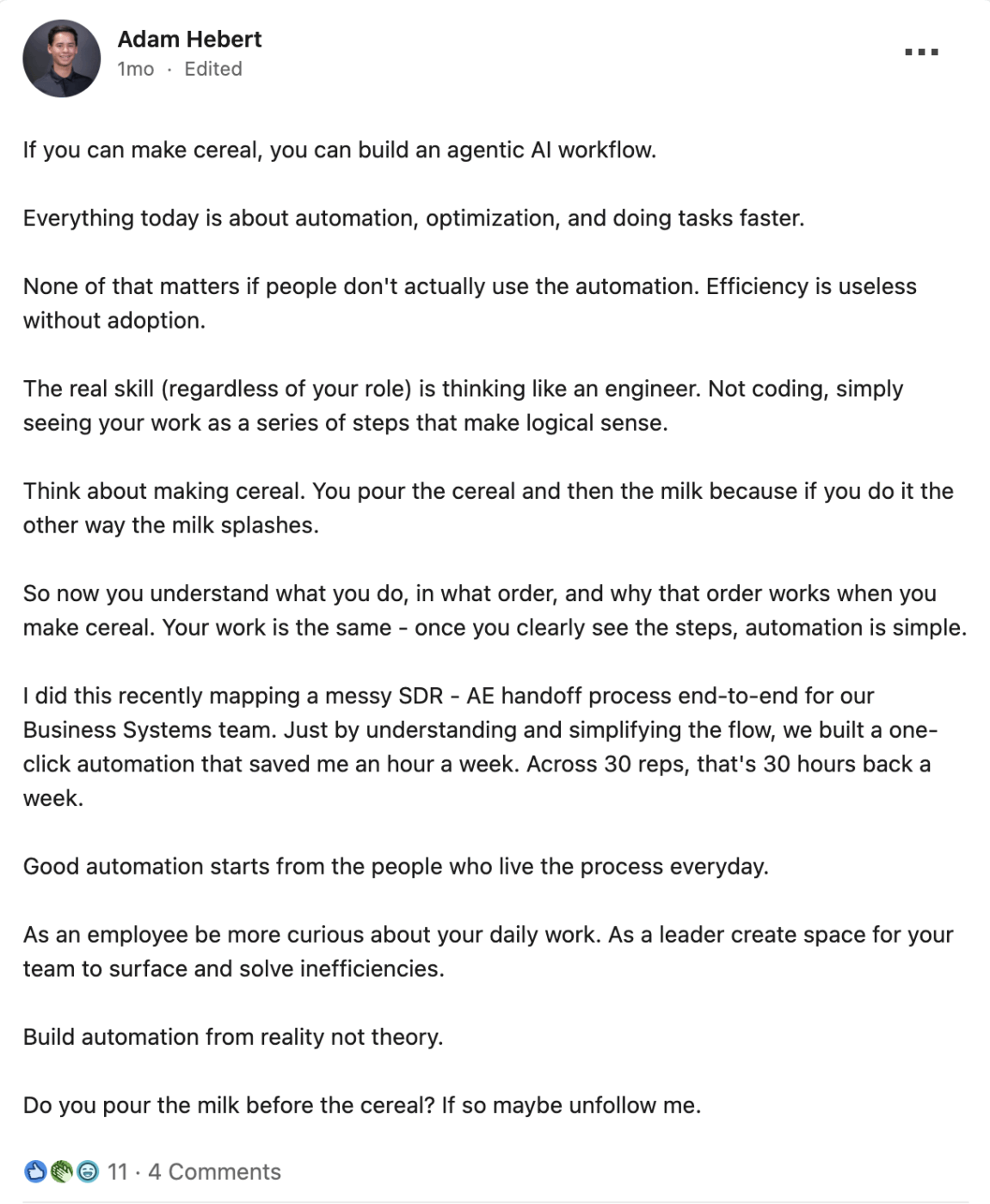
That mindset is precisely why this workflow was effective. We didn’t start with shiny AI. We started by mapping the real steps reps actually take, then tightened the loop with feedback until it earned trust.
Summarize this article for me pleaseFrom Point Solutions to Ambient Intelligence
This experience crystallized something fundamental about AI transformation.
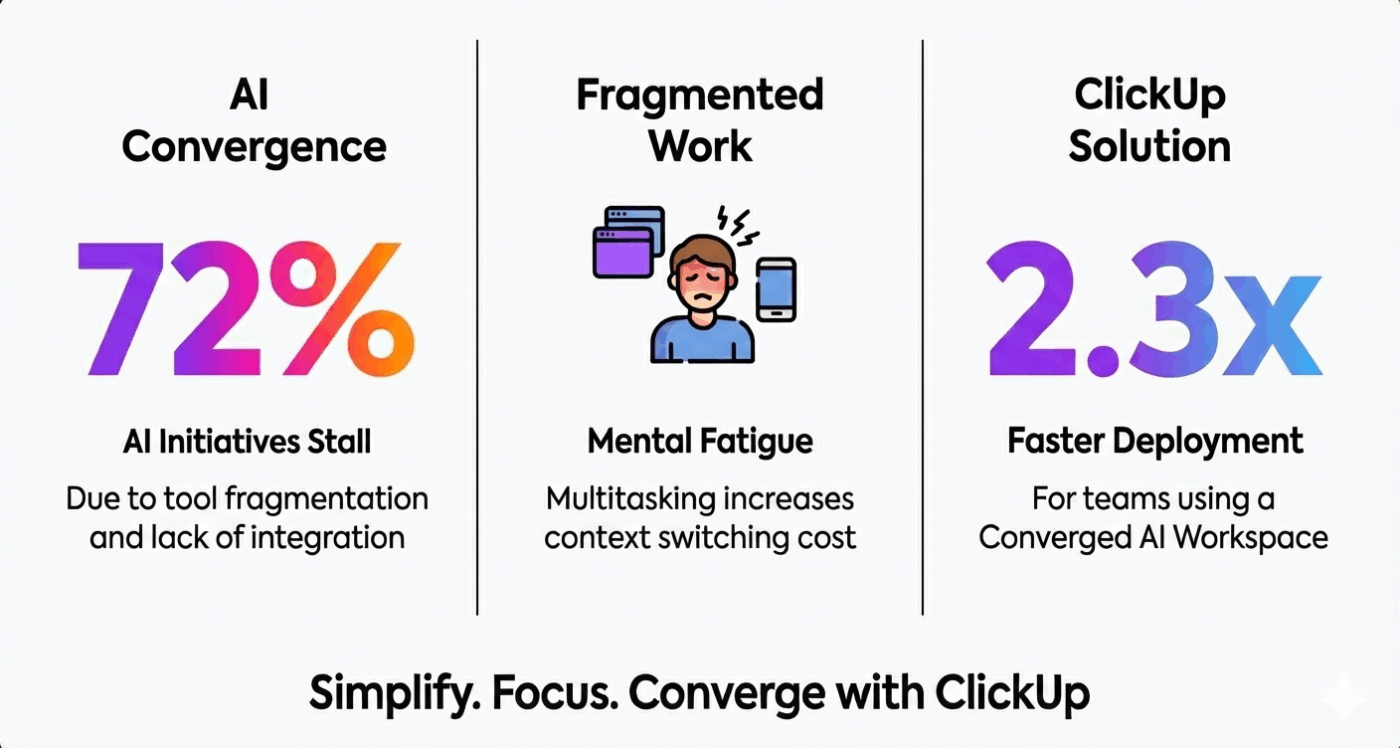
Most organizations treat AI as a feature added to existing workflows. They buy point solutions for specific tasks, creating what we call AI sprawl: multiple disconnected tools that teams eventually abandon because the effort required outweighs the value received.
Our sales context system works effectively because it operates on a unified information base.
The challenge was that our tools—Salesforce, the data warehouse, and the parallel dialer—didn’t communicate with each other. We had to design a unified workflow and build AI around it to connect everything.
When you converge your work, data, and collaboration in one environment, AI suddenly has the context it needs to actually help.
This is what unified context looks like.
This isn’t about a board report. It’s about what becomes possible when work, data, and knowledge live in one place.
ClickUp Brain isn’t guessing.
It isn’t working from a partial context.
It reasons across live work, including designs, code, and projects, without anyone stitching it together manually.
That’s the shift our sales team needed. Intelligence that shows up in the moment, built on converged context instead of scattered tools.
👉 See how fixing work sprawl unlocks real AI leverage.
How to fix work sprawl →
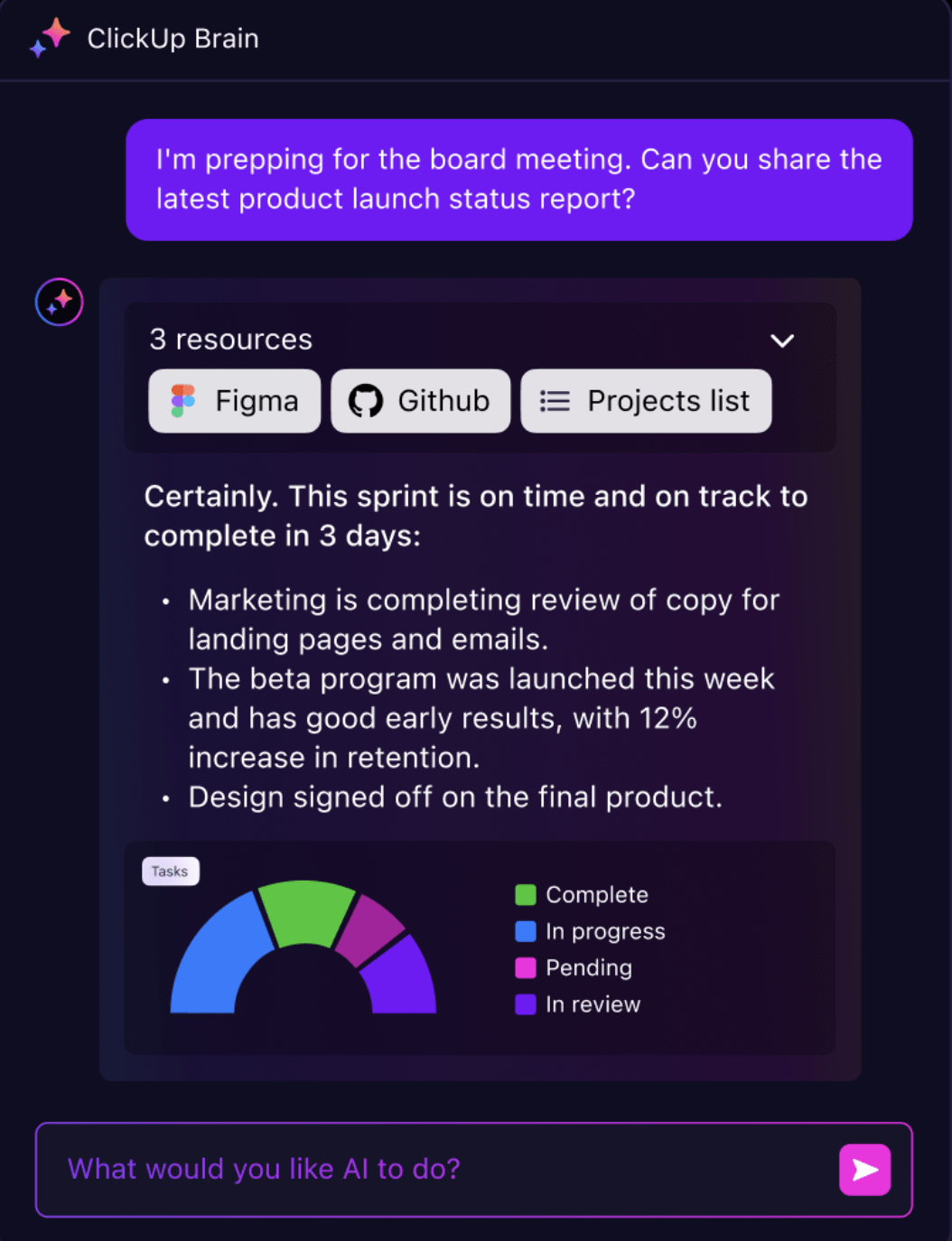
Instead of generic suggestions based on limited information, you get relevant insights derived from a complete understanding.
The result is what we call ambient intelligence: systems that work quietly in the background, with full context, surfacing exactly what you need without prompts or manual digging.
But this only becomes possible once you solve work sprawl.
Summarize this article for me pleaseBefore Convergence: One Rep, Six Tabs
That challenge exists even inside ClickUp. Here’s what a typical sales call looked like before:
- Salesforce open in one tab
- Pocus in another
- LinkedIn is in a third
- A company dashboard in a fourth
- Notes in a fifth
- And maybe a browser tab frantically Googling the latest company news
None of the tools shared context. Native AI assistants inside those tools had a limited scope and couldn’t draw from each other. The rep had to be the connective tissue between systems.
That’s a recipe for human error and missed opportunities.
Where intelligent assistance becomes truly useful
When teams finally solve work sprawl, something subtle but powerful becomes possible:
AI can stop behaving like a writing tool and start acting like part of the workflow itself.
That’s why we’ve been investing in agents and workspace intelligence at ClickUp.
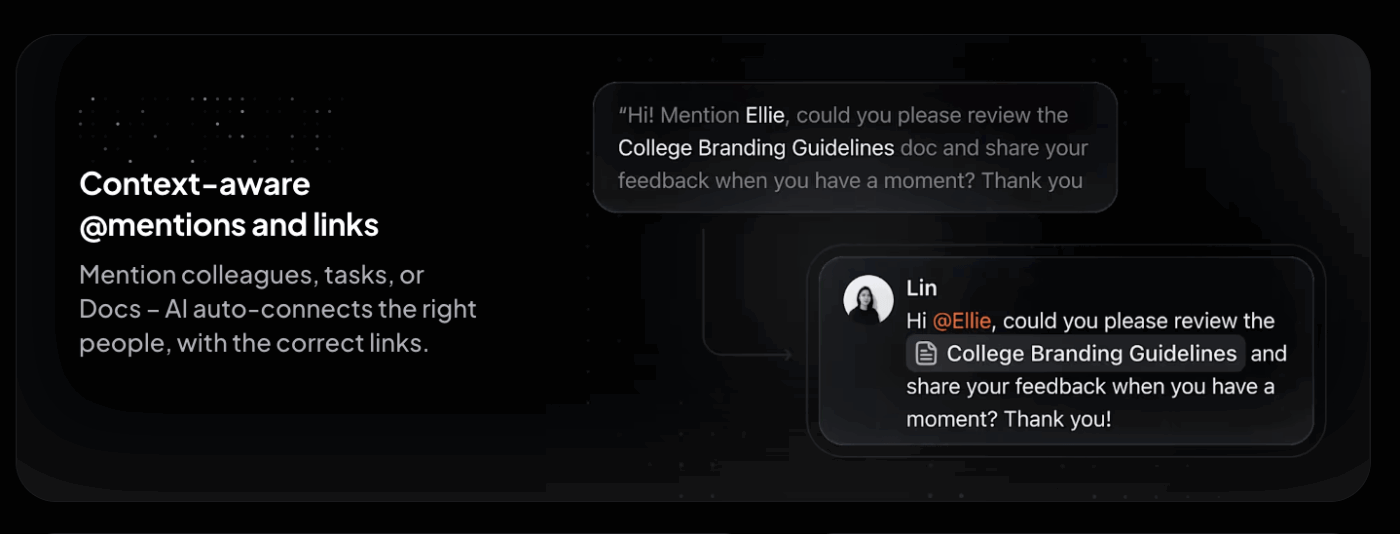
Inside a unified workspace, Super Agents can quietly support reps the same way your best cross-functional partners do by pulling the right context at the right moment, threading together signals across tools, and reducing the mental overhead that makes real-time work so draining.
And for the moments where speed matters more than clicking through five systems, ClickUp BrainGPT gives reps another advantage. With Talk-to-Text woven into the desktop experience, they can capture intel, update fields, or log insights mid-call without breaking conversational flow.
None of this works in a fragmented environment.
But once the context lives together, intelligence can finally meet the pace of real work.
 Summarize this article for me please
Convergence Isn’t Just for Sales
This doesn’t just affect sales teams, though. And the impacts are not just on time and productivity.
- For sales teams, scattered context means lost deals and missed opportunities
- For product teams, it means duplicated work and misaligned priorities
- For marketing teams, it means fragmented workflows, making it harder to access unified data, align strategies, and execute campaigns efficiently
- Executives make decisions based on partial views
It’s not just a workflow issue. It’s a decision-quality issue.
The ideal solution isn’t adding more tools or building more integrations. It’s convergence.
Summarize this article for me pleaseThe Convergence Imperative
Bringing your work, knowledge, and collaboration together in a unified workspace where context naturally flows, and AI can operate with complete understanding.
Organizations that solve work sprawl first will lead the AI era. Those still trapped in fragmented systems can’t unlock AI’s full potential, no matter how advanced their models are. True intelligence needs unified context—the foundation that makes every AI layer actually work.
When your sales rep answers that unexpected call, they shouldn’t need to be a human database, mentally assembling fragments from six different systems.
The intelligence should already be there.
Ambient. Accurate. Actionable.
And that only happens when you fix work sprawl first.
The Wrap
Before we built this system, reps had five tabs open—Salesforce, Pocus, internal dashboards, LinkedIn, and maybe Google—trying to stitch together a story mid-call.
Now? The story’s already there.
Delivered before the prospect even says hello.
Backed by a unified workspace.
Powered by context-aware AI.
That’s what it looks like when AI is actually useful.
That’s the unlock that makes every rep faster, smarter, and more effective.
Build your own sales context system.
Start by unifying the tools your reps already use.
Then layer AI where it adds real-time value.
ClickUp gives you one place to bring it all together.
Summarize this article for me pleaseFrequently Asked Questions
What does “fragmented context” mean in a sales workflow?
Fragmented context happens when important sales information lives across disconnected tools like CRMs, dialers, data warehouses, and internal docs. Reps are forced to switch tabs or rely on memory instead of seeing everything they need in one place.
Why is fragmented context especially harmful for outbound sales teams?
Outbound sales moves at call speed. When a prospect answers unexpectedly, reps have seconds, not minutes. If context is scattered, they start calls unprepared, which lowers confidence, call quality, and conversion rates.
Can AI fix fragmented context on its own?
No. AI can only work with the context it is given. If data is split across tools and systems, AI outputs are incomplete or wrong. Solving fragmented context requires unifying the workflow first, then layering AI on top.
What is “ambient intelligence” in sales?
Ambient intelligence means relevant insights appear automatically inside the workflow, without reps asking for them. Instead of searching tools or prompting AI manually, context is already there when the call starts.
Why do point AI tools often fail in sales teams?
Point AI tools usually operate on limited data from one system. This creates AI sprawl, where multiple AI tools exist but none have full context. The result is extra effort with little trust in the output.

Everything you need to stay organized and get work done.
