Sorry, there were no results found for “”
Sorry, there were no results found for “”
Sorry, there were no results found for “”
Most teams picking between Evernote vs. Google Docs end up needing both anyway—one for storing research, one for writing with teammates—which tells you everything about the gap neither tool fills on its own.
That fragmentation is the norm. An Okta report found organizations now average over 100 apps, up 9% year over year.
This article breaks down how Evernote and Google Docs compare across AI, collaboration, note organization, offline access, and task management, plus why ClickUp works better if you’re tired of juggling multiple apps. 👀
Evernote is a note-taking app built for capturing and organizing information across text, images, PDFs, and web clippings. Google Docs is a cloud-based word processor built for creating and co-editing documents in real time. They solve different problems, so the ‘better’ tool depends on whether you need to organize knowledge or co-write documents.
| Feature | Evernote | Google Docs | 😍 ClickUp |
| Best for | Individual note-taking and research organization | Collaborative document creation within Google Workspace | Notes, docs, and task management in one AI-powered workspace |
| AI | AI-semantic search, AI Transcribe (paid) | Gemini AI for drafting and summarizing | Get answers across tasks, docs, and comments with context-aware AI via ClickUp Brain |
| Collaboration | Shared notebooks; no simultaneous editing | Real-time co-editing with comments and suggestions | Real-time editing with nested pages, wikis, and task linking in ClickUp Docs |
| Note organization | Notebooks, stacks, and tags | Google Drive folders; tabs within documents | Quick capture via ClickUp Notepad; structured knowledge bases in ClickUp Docs |
| Offline access | Full offline on desktop and mobile | Limited; requires Chrome setup | ClickUp Offline Mode on desktop and mobile |
| Task management | Basic checklists and reminders | Comment-based @mentions only | Native task management with assignments, priorities, ClickUp Custom Fields, and multiple views |
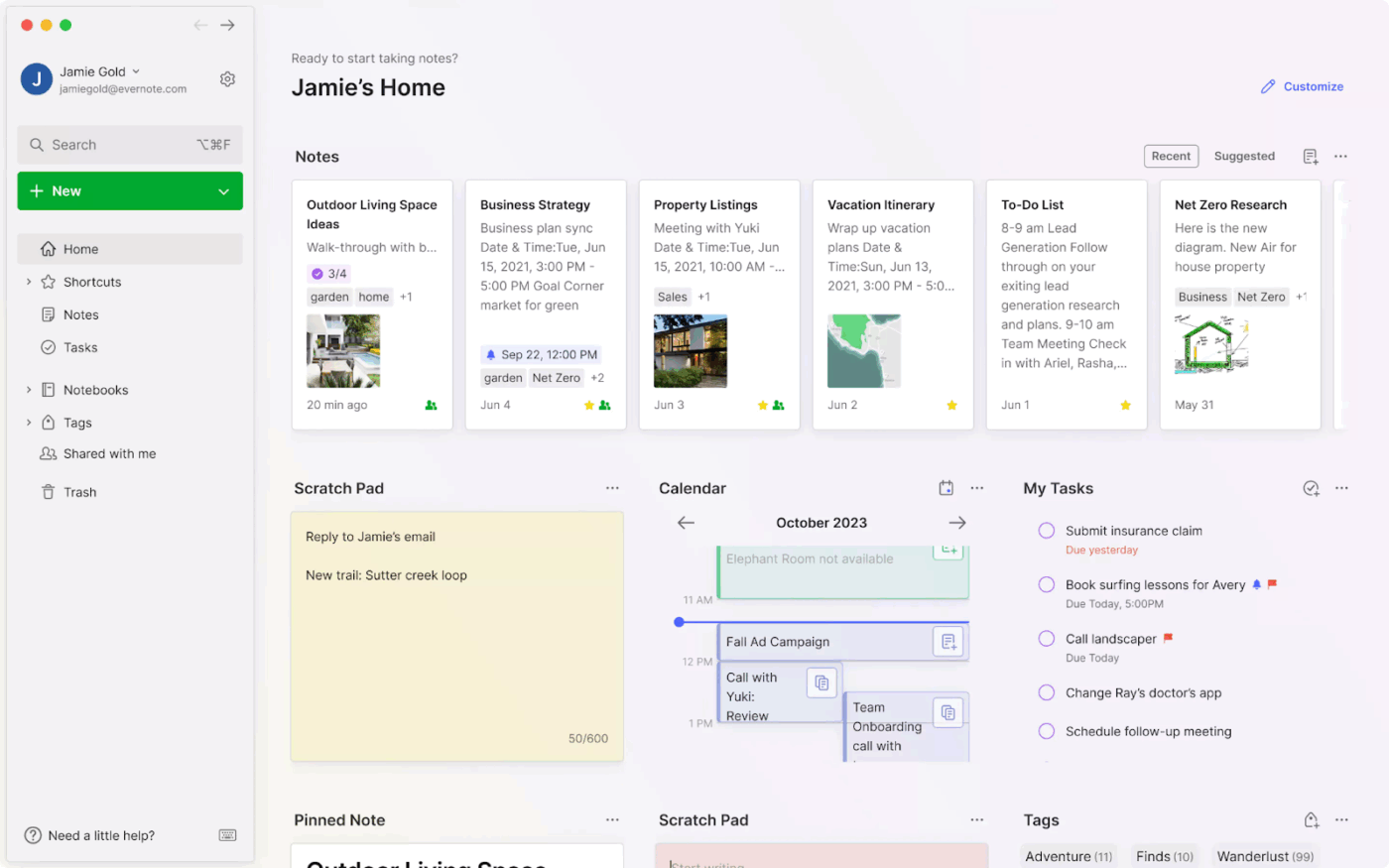
Evernote is a cross-platform note-taking and knowledge management app that’s been around since 2008. It’s designed to capture, organize, and search information across text, images, PDFs, audio, and web clippings. That has earned it a reputation as a ‘second brain’ for people who collect lots of reference material.
🔍 Did You Know? In Agile teams, documentation still matters a lot. Even in fast-moving environments, 98% of practitioners say documentation is important for estimating work, despite it often being deprioritized.
🧠 Fun Fact: Legal documentation shaped entire civilizations. The Code of Hammurabi (circa 1754 BCE) was one of the first recorded systems of laws, written and displayed publicly so people could reference rules consistently.
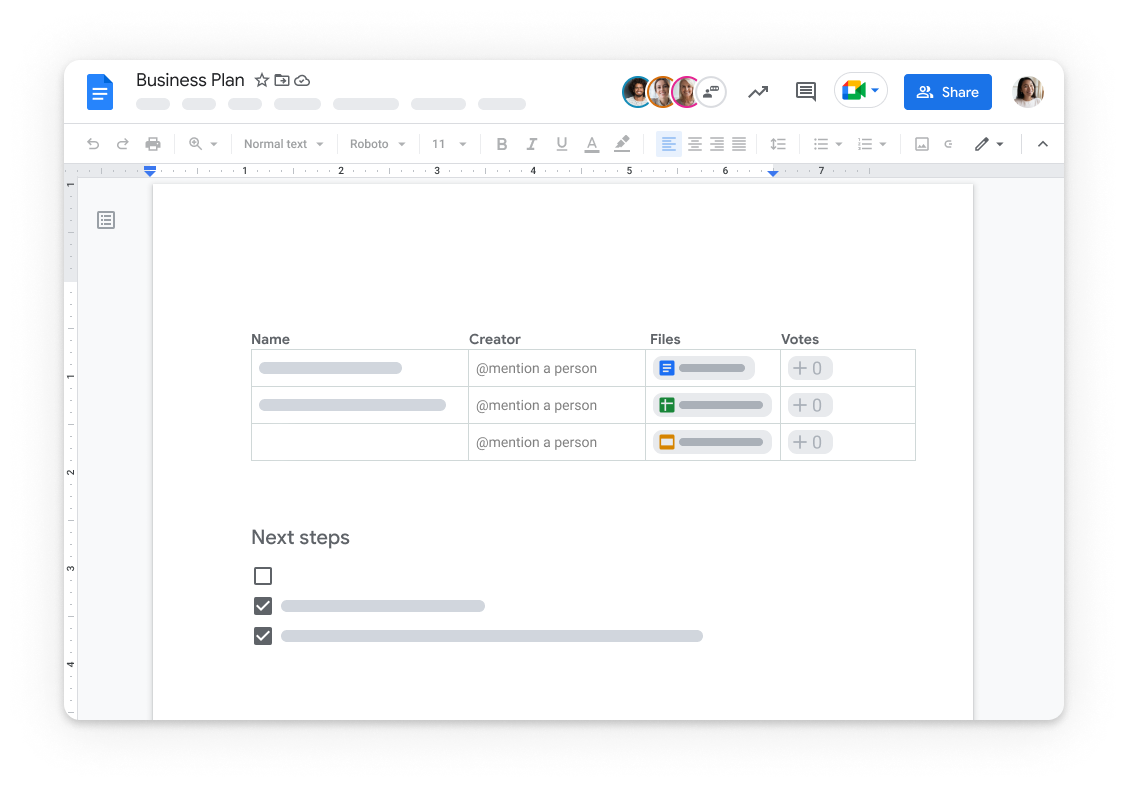
Google Docs is a cloud-based word processing tool developed by Google that allows users to create, edit, and share documents online. It supports real-time collaboration, meaning multiple people can work on the same document simultaneously from anywhere.
Google Keep is the Google Workspace note-taking app for quick captures, but Docs is the tool you’d use for longer-form writing and collaboration.
📮 ClickUp Insight: 1 in 4 employees uses four or more tools just to build context at work. A key detail might be buried in an email, expanded in a Slack thread, and documented in a separate tool, forcing teams to waste time hunting for information instead of getting work done. ClickUp converges your entire workflow into one unified platform. With features like ClickUp Email Project Management, ClickUp Chat, ClickUp Docs, and ClickUp Brain, everything stays connected, synced, and instantly accessible. Say goodbye to “work about work” and reclaim your productive time.
💫 Real Results: Teams are able to reclaim 5+ hours every week using ClickUp—that’s over 250 hours annually per person—by eliminating outdated knowledge management processes. Imagine what your team could create with an extra week of productivity every quarter!
🔍 Did You Know? Documentation directly impacts software adoption. Research shows developers rely heavily on documentation to decide whether to use a tool or API, making docs a key factor in product success.
Find the best Google Docs alternatives here:
Now that you know what each tool does on its own, here’s how they compare head to head across four main categories. 🛠️
First up, let’s talk about collaboration. Here’s how Evernote and Google Docs compare when it comes to working with your team.
Evernote
Evernote lets you share notebooks via email invitation, but its collaboration capabilities stop there. If two people try to edit the same note at the same time, Evernote creates two separate conflicting copies instead of merging changes. For a tool meant to be a team knowledge hub, that’s a significant gap.
Google Docs was built for collaboration. Multiple people can edit the same document simultaneously with live cursors visible throughout. Suggestions mode, threaded comments, and @mentions make it easy to give and receive feedback without losing track of changes.
🏆 Winner: Google Docs wins this round. Real-time co-editing is one of its core strengths, while Evernote’s collaboration limitations are a recurring frustration for teams.
Next, let’s look at how each tool handles organizing your information over time.
Notebooks, notebook stacks, and flexible tags let you build deeply layered structures where a single note can belong to multiple categories. OCR technology finds text inside PDFs, images, and handwritten notes, and the Web Clipper browser extension saves full web pages directly into your notebooks, ads stripped out.
Google Docs relies on Google Drive’s folder structure for organization, with no native tagging, stacks, or saved search filters. You can search by document title, but not body text across Drive. For teams building a serious knowledge base, this gets messy fast.
🏆 Winner: Evernote wins here. Its notebook and tagging system is purpose-built for organizing large volumes of information in a way Google Docs simply was not designed to match.
Now let’s see how each tool uses AI to help you work smarter.
Evernote offers AI-powered semantic search on paid plans, letting you ask plain-language questions to find notes. AI Transcribe is also available on paid tiers. These are useful features, but they are scoped entirely to your Evernote content with no broader workspace awareness.
Google Docs integrates Gemini AI for drafting, summarizing, and rewriting content directly inside documents. Being part of Google Workspace means Gemini can also pull context from Gmail, Drive, and Calendar, giving it a wider reach than Evernote’s AI tools.
🏆 Winner: Google Docs edges this one out. Gemini’s integration across Google Workspace gives it more useful context than Evernote’s search-focused AI approach.
Finally, let’s look at how well each tool supports actually getting work done beyond writing and storing notes.
Evernote offers basic checklists and reminders, but meaningful task management features like assignments, calendar views, and priorities are locked behind paid plans. It was designed as a capture and organization tool first, and task management feels like an afterthought.
Google Docs supports comment-based @mentions to flag action items for teammates, but there is no native task management to speak of. Creating and tracking actual tasks requires jumping to Google Tasks or another tool entirely.
🏆 Winner: Neither tool wins this one. Both fall short when it comes to turning notes and documents into tracked, assignable work, which is exactly the gap ClickUp fills.
Most teams comparing Evernote vs. Google Docs end up using both, plus a third tool for project management. That’s three apps with separate search systems and zero shared context.
ClickUp fixes that gap. A real-life user also adds:
ClickUp is an amazing all-in-one solution that replaces Docs, Excel, and other project management tools. It has allowed my team to get more organized and improve operational efficiencies, and provides more visibility into our work impact.
It is the world’s first Converged AI Workspace, where your docs, notes, and ideas stay connected to the tasks, projects, and workflows they support. Your processes evolve alongside your work, so updates happen in real time instead of getting buried in forgotten files.
Let’s walk through how each feature contributes to that. 💪🏼
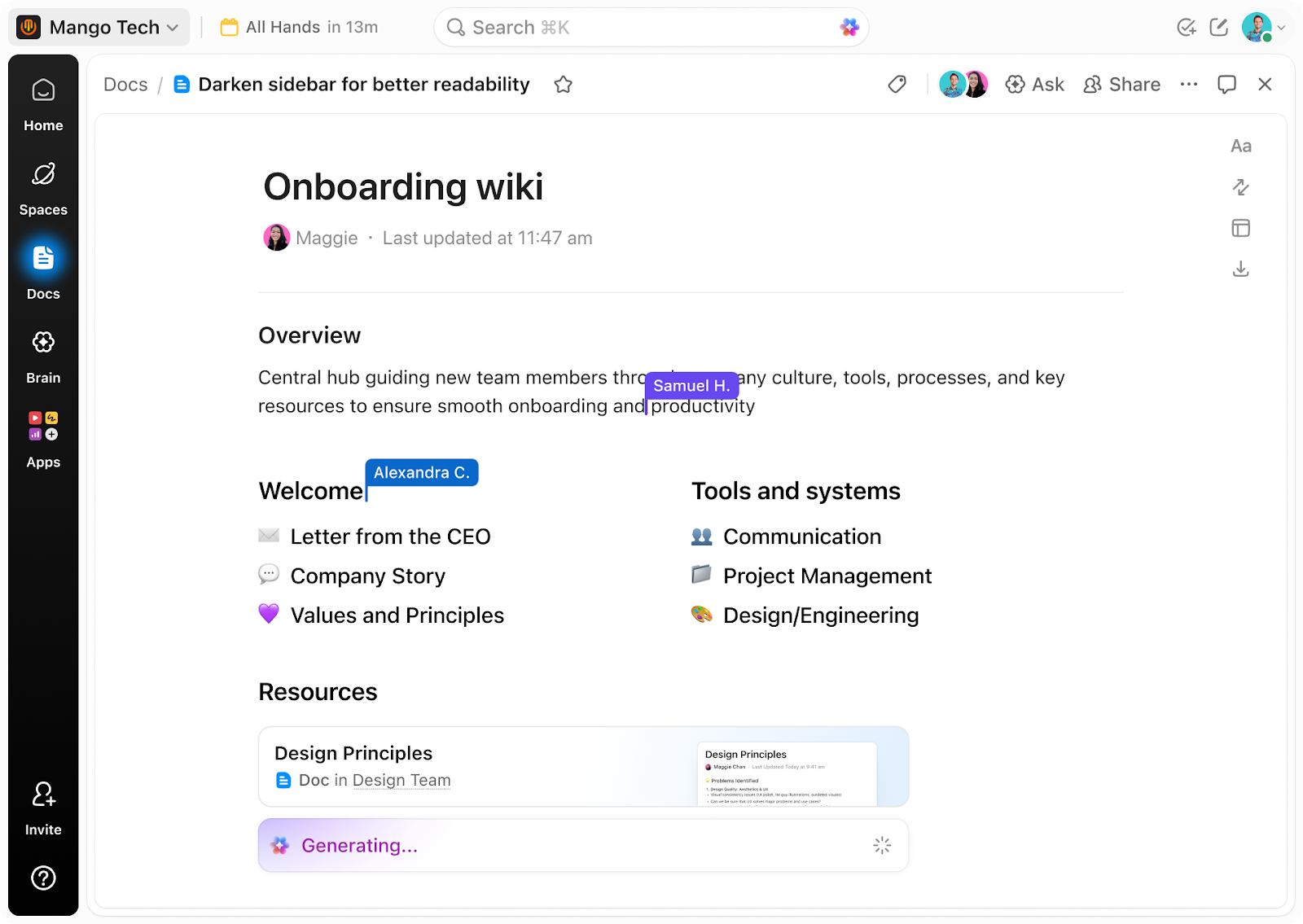
ClickUp Docs is where structured, collaborative writing happens.
Think wikis, project briefs, SOPs, meeting notes, and knowledge bases—all created directly inside the same workspace where the related tasks and projects live. Every Doc connects to actual work: you can link a product spec to a sprint, a campaign brief to a marketing project, or a wiki entry to a recurring workflow. When a task moves forward, the Doc tied to it moves with it.
For example, suppose your engineering team finishes a sprint review. Instead of pasting notes into a Google Doc that lives outside the project, they write the review directly as a Doc linked to that sprint.
Any action items the team identifies get converted into tasks on the spot, assigned with due dates, and tracked in the same space.
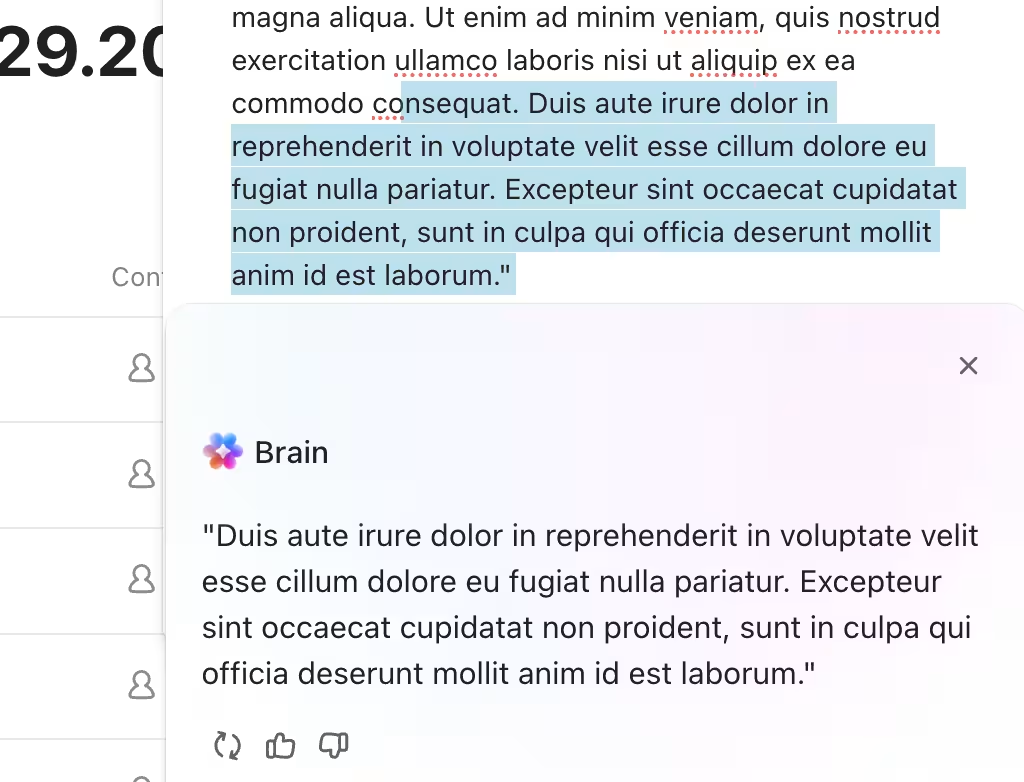
🚀 ClickUp Advantage: Add a Contextual AI layer that understands your entire workspace with ClickUp Brain. It connects tasks, docs, comments, and chat messages into a single, queryable knowledge graph, so you just ask ClickUp Brain a question and get a sourced answer pulled directly from your workspace.
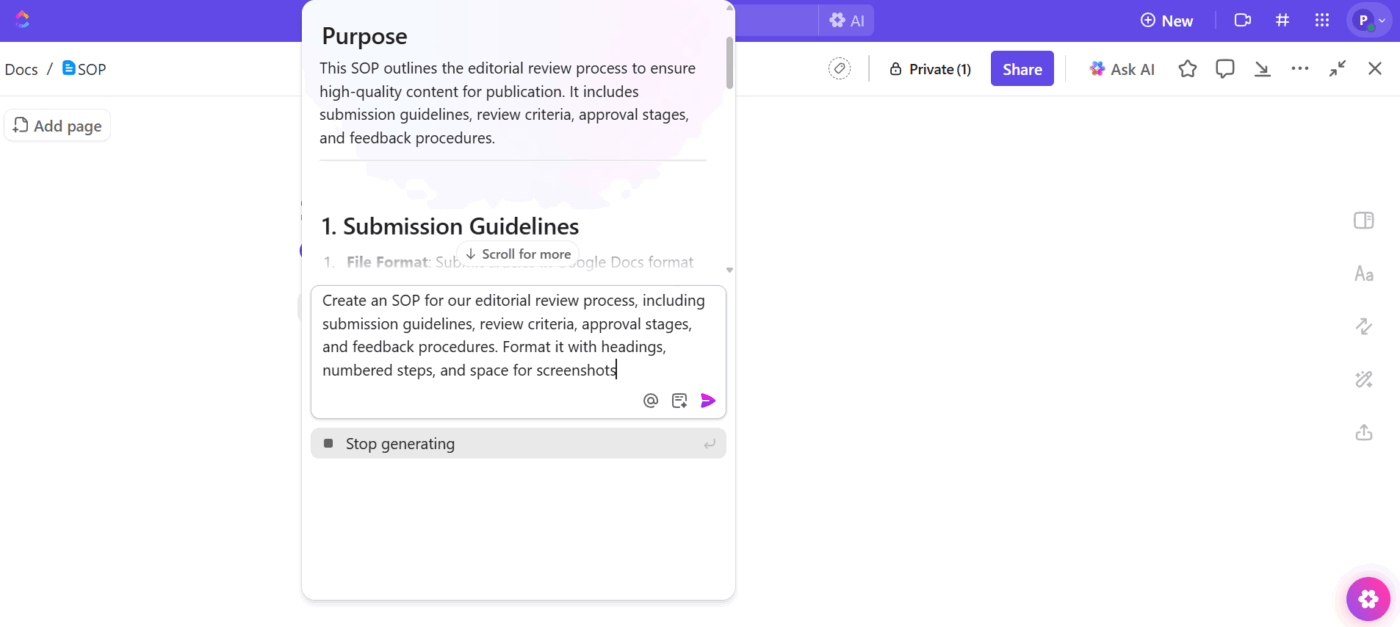
It drafts project plans, generates task descriptions, writes and edits content inside Docs, and summarizes long comment threads. You can also toggle between multiple premium AI models, like ChatGPT, Claude, and Gemini depending on what the task requires, all without leaving ClickUp.
Not every thought is ready to become a task or a full doc, and that’s exactly what ClickUp Notepad covers.
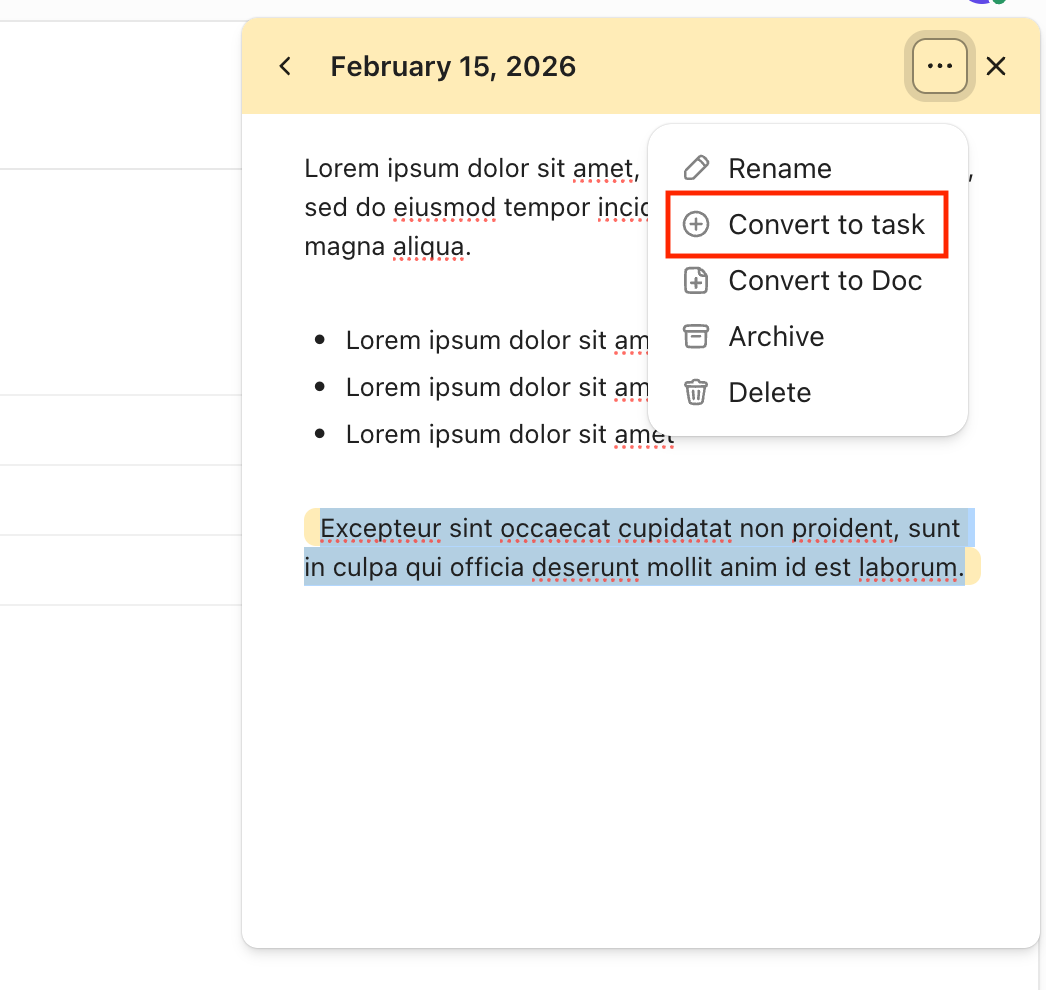
It’s a lightweight, always-accessible scratchpad built into the platform for capturing quick ideas, rough checklists, and fleeting observations before they disappear. Notes are private to the individual user, available across desktop, web, mobile, and the Chrome Extension, and sync automatically across all devices.
What separates Notepad from a standalone notes app like Evernote is what happens next. Once a note is ready to become real work, you convert it into a ClickUp Task in one click. The task inherits your note content and you immediately add a due date, priority level, assignee, and project location.
You can also convert a note into a Doc if the idea has grown into something that deserves structure and collaboration. ClickUp Brain works inside Notepad too, so you can refine rough notes into polished content or generate next steps directly from your jottings.
🧠 Fun Fact: The world’s first known technical documentation was for medicine. The Edwin Smith Papyrus (around 1600 BCE) documented surgical procedures, diagnoses, and treatments in a structured, almost step-by-step format.
ClickUp Super Agents are AI-powered teammates that live inside your workspace, understand how your work is connected, and execute multi-step workflows autonomously.
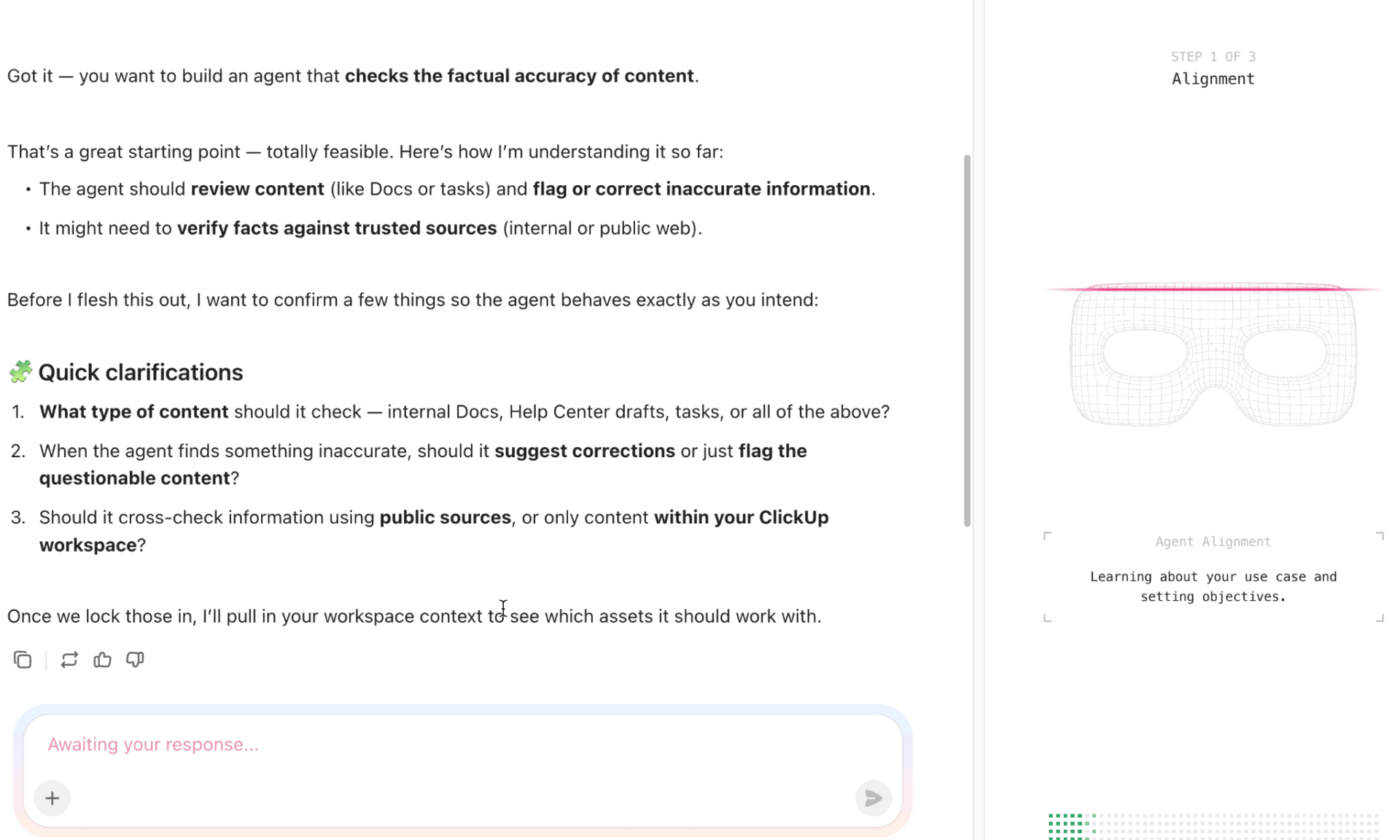
Unlike basic automations, which follow fixed ‘if-this-then-that’ rules, Super Agents apply judgment. You can @mention them in tasks, assign work to them directly, send them a DM, or put them on a schedule, and they’ll respond and act the way a real teammate would.
For example, suppose your team receives a new client project intake. A Super Agent that is set up to monitor your intake form will:
All of this happens before a project manager has even opened their laptop. Learn more about creating your own Super Agent in ClickUp here:
If your workflow is mostly solo research and knowledge capture, Evernote holds its own. If you need a reliable word processor for team writing and document collaboration, Google Docs gets the job done. But most teams end up needing both, and then a third tool on top to actually manage the work. That’s three separate apps, three search systems, and zero shared context.
That’s the real problem neither tool solves on its own.
ClickUp brings everything into one place. Notes, docs, tasks, AI, and team communication all live in the same workspace, so ideas connect directly to action without the constant app switching.
ClickUp Brain searches across your entire workspace the way neither Evernote nor Google Docs can, and ClickUp Docs gives you the real-time collaboration of Google Docs with the organizational depth of Evernote, all tied to your actual project work.
If you’re ready to stop stitching tools together and start working from a true single source of truth, ClickUp is the clear next step.
Sign up for ClickUp today!
Yes, but it’s a workaround. Google Docs lacks web clipping, tagging, and searching inside images or PDFs that you’d get from a dedicated note-taking tool.
Evernote supports a Google Drive integration that saves Drive file links within notes, but it’s a one-way link and you can’t search Drive file contents from within Evernote.
Google Keep is the closest note-taking app in Google Workspace, but it’s designed for quick sticky-note captures, not deep organization with notebooks, stacks, and tags.
Evernote’s Web Clipper, OCR search, and offline access remain strong, but leadership changes and a restricted free plan have pushed many users to explore alternatives that combine note-taking with collaboration and task management.

Arya P Dinesh
Max 18min read
Arya P Dinesh
Max 20min read

Praburam Srinivasan
Max 45min read

© 2026 ClickUp