

Mentorship is a unique and powerful way for an experienced professional to provide guidance and support to their less experienced mentee. It nurtures the mentee’s talent and helps them progress in their career. A mentor can play a vital role in helping promising talent advance in the industry by providing proper guidance and support.
An effective mentoring approach can benefit both mentor and mentee. Moreover, by creating a successful mentor-mentee relationship, you contribute to employee retention and smooth onboarding processes, which remain a significant part of organizational success.
However, mastering mentorship isn’t without its challenges. So, how do you overcome them to create a mutually fulfilling experience for yourself and for your mentee?
In this blog, we’ll explore the nuances of mentorship, including the roles and responsibilities, roadblocks, and best practices that show you how to be a good mentor at work.
How To Be a Good Mentor at Work: A Guide

 Summarize this article for me please
Understanding the Mentoring Role
A good mentor offers reliable advice and active encouragement to help their mentees achieve their dreams and ambitions.
Mentors usually help mentees deal with workplace challenges, like taking on new tasks, seeking that pending well-deserved promotion, and improving connections with teammates. A mentor-mentee relationship can be impactful even with a single meeting, or it can develop into an incredibly valuable long-term partnership that lasts a whole career.
Responsibilities and expectations of a mentor
Mentors fulfill several responsibilities depending on their mentees’ needs, such as building their capacity by developing and strengthening their skills and abilities. Here are some primary responsibilities of a mentor:
- Assisting with goal setting: Helps the mentee define clear objectives and explore diverse career paths
- Helping in leadership development: Assists the mentee to develop leadership abilities and increase their potential
- Identifying opportunities: Recommends career advancement and skill enhancement prospects
- Sharing industry knowledge and experiences: Offers insights and life lessons relevant to the mentees’ professional journey
- Offering encouragement and inspiration: Motivates and inspires the mentee to achieve their goals
- Connecting to resources: Helps with gaining access to relevant networks in the field, tools, and work opportunities
- Providing feedback: Gives constructive feedback to help the mentee grow and improve
- Supporting professional development: Reviews resumes, conducts mock interviews, and helps develop skills
Types of mentors
Mentorship comes in various forms, each with unique skills and approaches tailored to different needs. The three primary types of mentors are:
Career mentors
Career mentors act as advisors and advocates, guiding mentees on career trajectories and transitions. They may be senior colleagues within the same organization or professionals from different workplaces.
For example, mentorship in marketing offers targeted advice on industry trends, acquiring certifications, and personal and career growth strategies. Here, a marketing mentor might help a junior marketing manager develop effective campaigns and build a personal brand.
Peer mentors
Peer mentors are colleagues who are at a similar level in the company but have more experience under their belt. They’re like work buddies who’ve been there, done that, and are happy to share their knowledge to help you succeed. Peer mentors offer on-the-job training and support to new employees in the organization.
Life mentors
Life mentors use their personal experiences to support their mentees’ professional and personal growth. They can be family members, friends, or even colleagues, offering guidance on career goals, personal development, and how to balance life. However, life mentors cannot replace a professional career or peer mentor.
Characteristics of a successful mentor
Successful mentors possess several key traits that enable them to support and guide their mentees effectively. Some of them are:
- Achieving consistency: The best mentors meet personal and professional goals regularly, setting a strong example for mentees
- Communicating effectively: Committed mentors listen to the mentees with genuine interest and offer clear ideas with constructive feedback
- Demonstrating empathy and patience: An experienced mentor understands the challenges mentees face in their careers and offers emotional support and encouragement
- Encouraging collaboration: Mature mentors will create a cooperative and supportive environment that will sustain and endure
- Building relationships: Effective mentors can nurture positive, supportive connections with mentees
- Showing a commitment to learning: An exceptional mentor prioritizes continuous self-improvement and lifelong learning
Summarize this article for me pleaseGetting Started: Key Guidelines for First-Time Mentors
Becoming a mentor for the first time can be both rewarding and challenging. To ensure successful mentor-mentee relationships, it’s essential to follow some key guidelines.
Here are some crucial steps for first-time mentors to consider while they prepare to take on this role:
1. Help your mentee define their goals
One of the first steps in becoming a reliable and incredible mentor is helping your mentee understand, articulate, and define their goals.
Clear, achievable career goals provide direction and purpose and help create an effective mentoring relationship.
Here’s how to guide your mentee in defining their goals:
- Ask thought-provoking questions: Encourage your mentee to think deeply about their aspirations by asking questions about their long-term and short-term professional goals
- Identify specific needs of your mentee: Work with your mentee to identify specific areas where they seek growth, such as acquiring new skills for a job or navigating some role-based challenges
- Use the SMART goals technique: Help your mentee set Specific, Measurable, Achievable, Relevant, and Time-bound goals. This is called the SMART goals framework, and using it helps ensure that goals are clear and attainable

2. Set expectations at the onset
Establishing clear expectations at the beginning is vital for a productive mentor-mentee relationship. Ground rules prevent misunderstandings and ensure both parties are on the same page:
- Set boundaries: Discuss and agree on boundaries to maintain a professional and respectful relationship. This includes respecting each other’s time and confidentiality. Additionally, define boundaries around subjects you may not be comfortable discussing or areas outside your expertise
- Define roles and responsibilities: Clearly outline what is expected from both the mentor and the mentee. This includes the frequency of meetings, preferred communication methods (for example, email, phone calls, in-person meetings), response timelines, and the types of support the mentee needs
- Establish success metrics and milestones: Decide what metrics should be used to measure the success of your mentee. You may also create a roadmap with key milestones to track their progress and keep them motivated
3. Build rapport and establish trust
A strong and successful mentoring relationship is built on trust and mutual respect. On the other hand, building rapport with your mentee creates a supportive environment where open communication can thrive.
- Be genuine: Take a genuine interest in your mentee’s life and goals and ask about their interests and experiences. This will help you know them better and help them develop in their career
- Create a safe space: Your mentee should feel comfortable sharing their thoughts and concerns without fearing judgment. Encourage openness and honesty, and assure them that their confidentiality will be respected
- Share your personal story: Hearing their mentor’s professional journey, including successes and failures, can teach mentees a lot. Moreover, being transparent about your experiences can help you build trust
4. Practice empathy and active listening
Empathy and active listening are crucial elements of effective mentoring. These skills help mentors understand their mentees’ career challenges and provide support accordingly:
- Understand their perspective: You and your mentee come from different backgrounds and have different skills and life and career experiences. But with empathy, you can understand them better. Putting yourself in their shoes, acknowledging their concerns, and showing you care can help build a strong connection
- Respond with compassion: While mentoring is a professional relationship, you can make it a supportive one by being thoughtful and considerate. Offering reassurance and using an empathetic tone shows them you are there to support them through their professional journey
- Give your undivided attention: Listen actively—during conversations, focus on your mentee, avoid distractions, and maintain eye contact. This shows them they have your attention and time
Summarize this article for me pleaseBest Practices for Becoming Great Mentors
Being an effective mentor requires a blend of skills, insight, and dedication to guide mentees toward success in their professional lives. By learning to become a better mentor, one can also transition from individual contributor to people manager.
Here are some key best practices that incredible mentors follow:
1. Offer guidance, not directions
A good mentor encourages mentees to think for themselves and helps them develop problem-solving skills. Instead of offering direct instructions, ask questions that prompt them to explore different perspectives and eventually find their own solutions.
In mentorship programs, both parties should collaboratively decide on goals to ensure they’re aligned and achievable. Since you have expertise in the field, as a mentor, you must guide your mentees to make their own career decisions. This is because, ultimately, the mentee is responsible for taking action and achieving growth.
While this might not lead to immediate success, it will help them learn and become more confident in their decisions. A mentor should act as a sounding board and provide encouragement to the mentee instead of having all the answers.
2. Find a balance between candor and professionalism
Being honest and real is crucial in mentoring relationships. By providing honest opinions (without sugarcoating), a mentor helps the mentee learn and grow personally and professionally.
As a mentor, you must do both—recognize the mentee’s achievements and candidly show them areas needing improvement. It requires you to tackle tough topics and challenges directly. Moreover, your openness as a mentor will encourage reciprocal candor from your mentee.
On the other hand, you must also stay professional throughout the interaction— being punctual, prepared, respectful, and reliable.
This balance also helps you set clear boundaries between personal and professional matters. It ensures the mentor-mentee relationship stays focused on growth and achieving career goals.
3. Provide constructive feedback
Mentors can support mentees’ professional growth by giving them feedback without discouraging them. Here are some critical tips to provide feedback in a constructive way:
- Avoid rushing: Do not hurry to give advice; rather, evaluate what feedback will truly benefit the mentee. Take a pause if you lack sufficient information, and gather insights to deliver a more thoughtful response
- Tailor your approach: Understand each mentee’s preferences—some appreciate direct feedback, while others benefit from a gentler approach. Adjust your style accordingly to ensure your feedback is received positively
- Share personal experiences: Use instances from your own experience to make a point without directly criticizing the mentee. This method teaches them practical lessons while maintaining their confidence
- Be open and sensitive: Provide truthful but considerate feedback, avoiding both harsh criticism and excessive praise. Aim for a balanced approach that encourages growth without undermining confidence
4. Take a collaborative approach
By working together and deciding on mentoring goals, both mentor and mentee can achieve greater success. Here’s what a mentor can do to help their mentee:
- Suggest effective strategies: Offer practical strategies and tools to help the mentee address and overcome their blind spots. These could include steps such as setting specific goals, seeking additional training, learning new skills relevant to the industry, or adopting new habits. Additionally, you may use a communication plan template to plan and outline your strategies and goals effectively
- Monitor progress: Regularly check in with your mentee to discuss their progress in addressing and overcoming their weaknesses. To ensure continuous improvement, support and encourage the best
5. Leverage their network for the mentee
One significant advantage a mentor can offer is access to their professional network. This might involve connecting the mentee with someone experienced in their desired field or recommending relevant conferences, workshops, seminars, or training programs.
Also, if your mentee needs help in an area that falls outside your expertise, introduce them to someone in your network who can assist. For instance, if your mentee is a budding entrepreneur, introducing them to a business mentor from the professional world would be a great idea.
Similarly, if you learn about a new opportunity that might be a great option for your mentee, put their name forward, as it may enhance their skills and knowledge.
Summarize this article for me pleaseBuild Relationships & Mentor Effectively With ClickUp
Effective mentoring relies on clear communication and collaboration between the mentor and mentee. To achieve that, you must leverage a management and collaboration tool like ClickUp.
ClickUp is an excellent software solution for both mentors and mentees. It allows for organized knowledge sharing and offers essential features that enable mentors to guide their mentees toward success in the business world:
- Structured learning with ClickUp Docs: Mentees can use ClickUp Docs to take notes, allowing mentors to review, suggest changes, highlight key points, and tag important sections. With ClickUp Docs, both mentors and mentees can collaboratively gather insights and outline action items

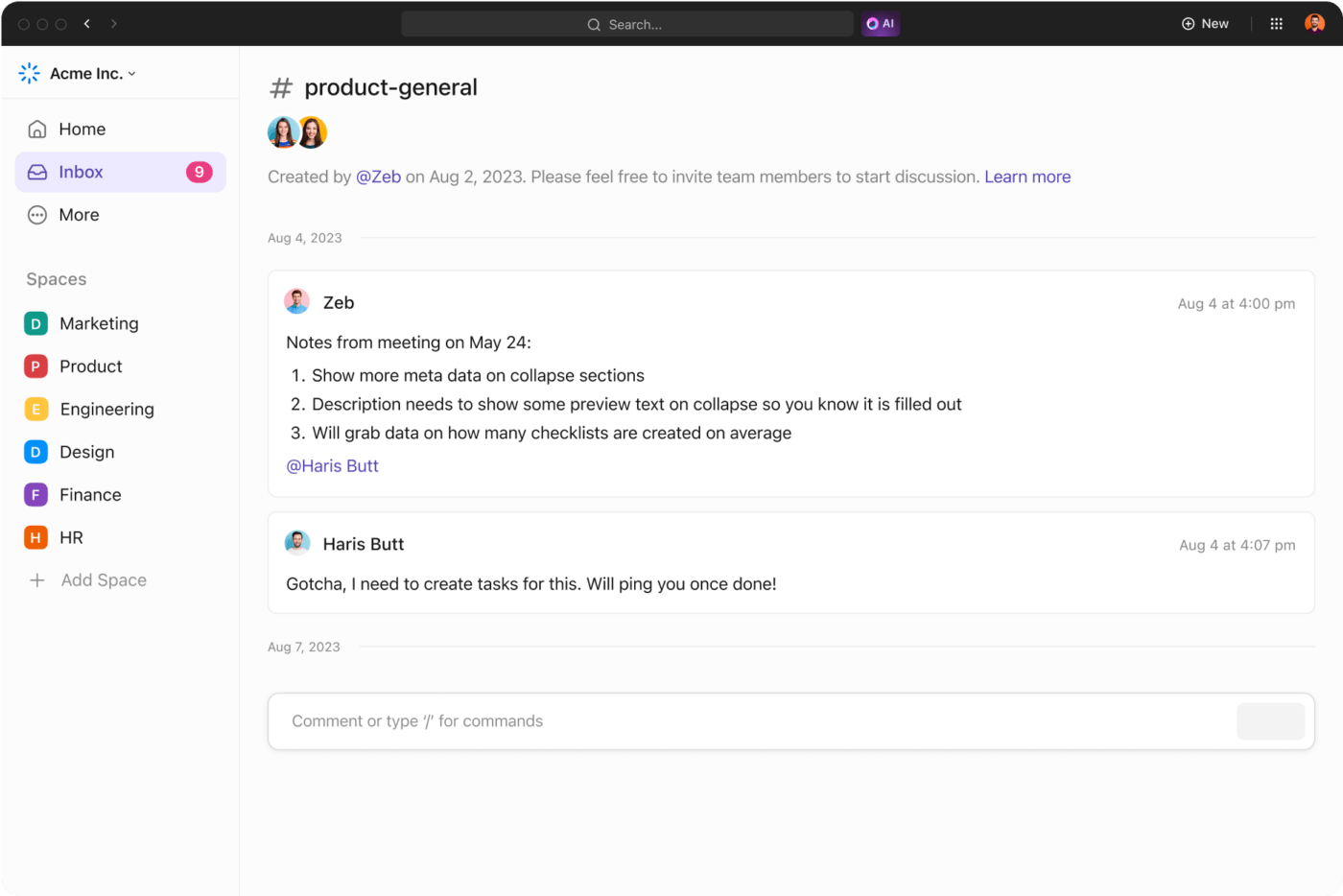
- Seamless communication with ClickUp Chat: ClickUp’s real-time chat functionality enables seamless communication between mentors and mentees. Mentees can ask questions, seek advice, and receive timely feedback directly within the ClickUp Chat
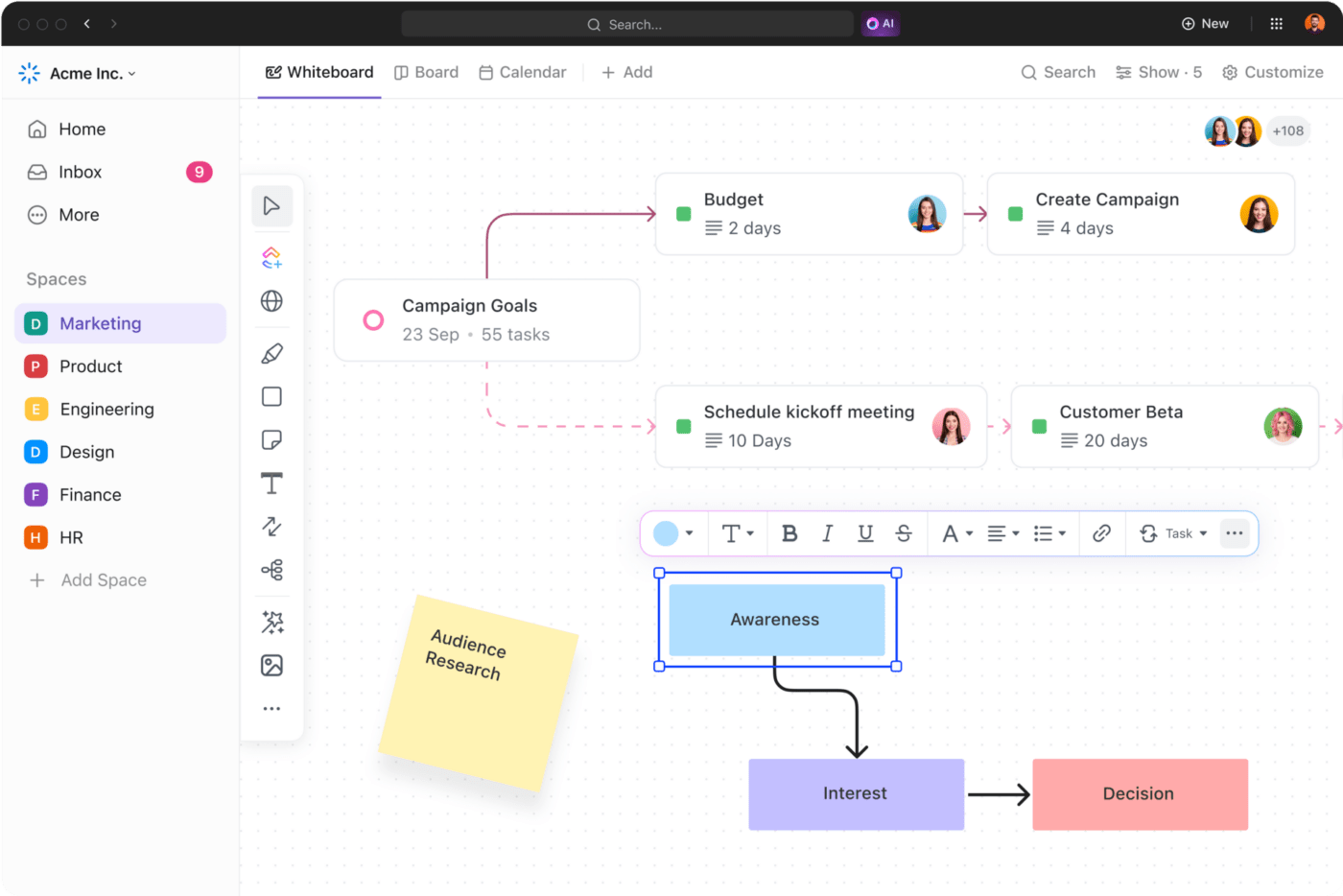
- Visualizing and brainstorming ideas with ClickUp Whiteboards: ClickUp Whiteboards offer a virtual canvas for brainstorming ideas and visual collaboration. Mentors can use Whiteboards to explain concepts, map out strategies, and visually present ideas to mentees. This increases understanding and engagement, making complex topics simpler to grasp
- Summarization with ClickUp Brain: ClickUp Brain acts as an AI-powered knowledge manager, summarizing meeting notes and insights with a single click. Mentors can quickly retrieve key information, track task progress, and provide informed guidance based on historical data available within ClickUp. This increases efficiency by eliminating the need for manual note-taking in mentoring sessions

In addition to leveraging these powerful features, you can also use ClickUp’s range of ready-to-use templates to become a better mentor. For instance, the ClickUp Career Path Template will help mentees define career goals, track progress, identify necessary skills, and set milestones aligned with their career aspirations.

You can create custom stages (such as Open, Complete, etc.), add details to each step (like skills needed), and view your progress in different formats (Start Here, Whiteboard). It also has project management features to organize your path effectively.
But that’s not all! ClickUp also offers several other career map templates that are worth checking out and sharing with your mentees.
Summarize this article for me pleaseChallenges in Mentoring and How to Overcome Them
Mentorship also comes with its share of challenges that can impact the effectiveness of the mentoring sessions for both you and the mentee. Some common obstacles include:
Communication barriers
Misunderstandings can occur due to differences in communication styles or expectations between mentor and mentee.
Solution: Establish clear communication norms from the outset, encourage open dialogue, and use tools like ClickUp Chat for real-time feedback.
Feedback effectiveness
The mentor may find it difficult to deliver constructive criticism without overwhelming and demotivating mentees.
Solution: Highlight achievements alongside areas for improvement and create a supportive environment for continuous growth. You can also use ClickUp Docs for feedback documentation.
Read more: All about radical candor in feedback
Time constraints
Mentors and mentees both often struggle to find dedicated time for regular interactions.
Solution: Schedule recurring meetings with ClickUp Calendar View by assigning dates and timelines to ensure consistency.

Mentor-mentee bandwidth
Sometimes, as a mentor, you can’t figure out how much mentorship you can realistically provide without sacrificing your own well-being and commitments.
Solution: Assess your available time and expertise—don’t overload yourself or overcommit. If a mentee’s needs exceed your capacity, have an open conversation. By managing your bandwidth, you create a space for a thriving and sustainable relationship.
If you cannot dedicate enough time or energy, respectfully communicate this to your prospective mentee upfront. You may recommend another career mentor for professional growth. It’s better to clarify expectations early on than to risk disappointing them later.
Summarize this article for me pleaseLeverage ClickUp To Optimize Your Role as a Mentor
We hope our detailed guide helped show you how to be a good mentor at work, which will be rewarding for both you and your mentees in the long run.
Additionally, you can leverage ClickUp to optimize your mentoring activities, like scheduling meetings, assigning tasks, tracking progress, making notes, and collaborating with mentees.
Ready to become an ideal role model for your mentees and lead them in the right direction? Get started with using ClickUp today!


Everything you need to stay organized and get work done.

Recent Articles
Managing Creative Teams: How to Lead Your Team to Success 
Managing Creative Teams: How to Lead Your Team to Success
20 SMART HR Goals & Examples for Real Results in 2026
20 SMART HR Goals & Examples for Real Results in 2026
25 Employee Satisfaction Survey Questions to Pulse Check Your Team
25 Employee Satisfaction Survey Questions to Pulse Check Your Team
