
Sorry, there were no results found for “”
Sorry, there were no results found for “”
Sorry, there were no results found for “”
Management is the opportunity to help people become better people. Practiced that way, it’s a magnificent profession.
Managing a team effectively is one of the most important and challenging tasks you’ll ever take on. Team management is a complex art and science that you can only master with time. You have to build up the experience and learn from struggling on the field.
But there’s something we can do to help you hit the mark faster, starting with this particular article. Read on to learn how to manage a team as a leader they trust.
Team management is a competency that all effective team managers share. It involves organizing, motivating, and guiding team members to be productive, efficient, and collaborative while creating a positive and supportive work environment.
Team management skills are a mix of knowledge, technical know-how, experience, and behaviors required to manage a team.
So what is a team manager? A team manager is responsible for leading and coordinating the work of a team so they achieve team goals in alignment with business goals.
After all, organizational operations are often complex and wouldn’t run smoothly without teams. But with the right strategies and methods, team leaders can keep everyone productive and effective. They organize those teams, kickstart teamwork, and then keep the ball rolling with their core management skills.
Team management is the force that drives progress in all team members’ tasks. For instance, by regularly meeting the team as a group and its members individually, team managers remove roadblocks to projects’ progress and unlock access to necessary resources.
But there’s much more to managing a team at work than coordination and control. Let’s break the concept down into smaller chunks—or skills!
The main difference between a team manager and a team leader is that the team manager focuses on managing tasks and workflows, while the team leader focuses on inspiring and guiding the team.
While both roles are essential for effective team management, it’s crucial to understand the distinct responsibilities of each. Team managers should possess strong organizational skills, be able to delegate tasks efficiently, and have a thorough understanding of project management principles.
Keep your team aligned by clearly defining roles, responsibilities, and workflows with ClickUp’s Team Management Plan Template. Set expectations upfront, improve communication, and track progress effortlessly. Try it for free!
Effective team management is crucial for the success and productivity of any organization. It ensures that tasks are completed efficiently, deadlines are met, and team members are motivated to work together towards a common goal.
Here are some key benefits of effective team management:
Autocratic management is characterized by individual control over all decisions with little input from team members. Leaders who adopt this style are typically decisive and lead by directives.
In contrast to autocratic styles, democratic management encourages decision-making through collective member agreement, promoting a sense of equality and shared responsibility.
Representing the hands-off approach, laissez-faire managers provide minimal direction and delegate decision power to team members, fostering an environment of autonomy and self-guidance.
Transformational managers aim to inspire and motivate team members, focusing on high levels of communication to raise engagement and drive positive change within the team structure.
This management type is based on a system of rewards and penalties to manage teams. Transactional leaders focus on performance, efficiency, and routine goal achievement, using formal authority and structure.
Servant leadership is an approach focusing on the growth and well-being of team members. These leaders prioritize the needs of the team and help individuals perform as highly as possible.
Read More: How to Implement Servant Leadership
A cross-functional approach involves assembling a team with diverse areas of expertise to achieve a common objective, fostering innovation and comprehensive problem-solving.
With advancing technology, virtual management has become more prevalent. Managers of virtual teams coordinate geographically dispersed members, relying heavily on digital communication tools.
Situational management suggests that no single management style is a fit for all scenarios; instead, leaders adapt their approach based on the task, circumstances, and individual team members’ needs. This dynamic leadership style requires a versatile manager who can swiftly change between directive and supportive behaviors as situations evolve.
Coaching managers focus on developing individuals, enhancing their skills, and boosting their performance through guidance and feedback. This style hinges upon a more personalized management approach where leaders invest time in mentoring their team members, setting developmental goals, and fostering an environment of autonomy and self-guidance.
Read More: How to Use a Coaching Leadership Style
Team managers shield their teams from disturbances in their work. But at the end of the day, team leaders must hold their team accountable.
This, in a way, makes team management a job of balance. Because while the leader is protective of their teams, they also expect results.
Now, achieving that balance is only possible by developing effective management skills. And quite frankly, that’s a melting pot of hard and soft skills.
💪These team management skills will help you be a better manager:
Effective team management allows the team leader to grow the team’s cohesion and promote teamwork. As a result, teams work well together and perform at their best.
However, the impact of effective team management goes further than the team. It lays the groundwork for a positive organizational culture, from hiring contributors to making them feel heard and appreciated.
Finally, each team member is unique in their work style and personality. And because different work styles and personalities make up a team, team management demands adaptability and flexibility.
A team leader must adjust their team management style to distinct people and team dynamics.
This is our list of team management tips for managing your team well.
If you’re stepping into team management, don’t underestimate the consequences of ineffective communication. It generates anxiety among your team as they don’t know what to do and where they’re heading.
Here are some helpful ideas you can keep in mind:
Openness and transparency help team members collaborate better with each other, which is much more productive than worrying about what tasks to do or why to do them.
Clear and timely team communication works both ways. It builds trust in managers, empowering teammates to innovate and be creative. Plus, it allows for solving problems as soon as they arise.
Open and transparent communication boosts employee motivation, satisfaction, and retention. However, it’s one of today’s virtual team challenges.
💡Pro Tip: Leverage easy-to-use communication tools like ClickUp Chat to streamline information sharing

There’s no way your team could keep their eyes on the prize if you didn’t disclose what that prize is. So, set team goals, whether you’re new to team management or keen to become better at it.
And your team will focus on a purpose and become less prone to deviate from it. Because let’s be honest: Distractions from goals at work are always one urgent request away.
But it’s up to you—the team manager—to set the example. Don’t give in to the temptation of solving problems or starting tasks that might compromise your team’s goals.
Instead, prioritize those goals and ensure your team works towards accomplishing them.
💡Pro Tip: Use ClickUp Goals to create trackable team goals and automatically monitor progress.

Continuous improvement is a pillar of any successful business, and constructive, actionable feedback is the way to achieve it.
Give your team constructive feedback to help team members grow. Tell them where they must improve, but also recognize a job done well. Hold frequent feedback sessions and appreciate your team members’ contribution to the team.
Also, take their feedback and try to make your team’s job easier and the work environment healthier. This could involve giving them access to new resources, mediating team communication, introducing team norms, or providing tips to plan their days more efficiently.
It’s an excellent strategy for improving team performance, building trust, and boosting morale. But it’s also a bulletproof approach to enhancing your projects’ health.
📮 ClickUp Insight: Nearly 20% of our survey respondents send over 50 instant messages daily.
According to research by ClickUp, this high volume could signal a team constantly buzzing with quick exchanges—great for speed but also ripe for communication overload.
With ClickUp’s integrated collaboration tools, like ClickUp Chat and ClickUp Assigned Comments, your conversations are always linked to the right tasks, enhancing visibility for all team members and reducing the need for unnecessary follow-ups.
💡Pro Tip: Try out ClickUp’s Performance Report Template to regularly report the overall progress of team projects and ensure feedback is clear and well documented.
One of the most critical skills of a team manager is the ability to delegate.
Your team members have competencies and experience, and you cannot handle every task yourself. Well then, it’s time to delegate!
You hired your team because they’re good at their job. That’s why you must trust their sense of responsibility and skills. But ensure you don’t overload them to the extent they can’t deliver on time with acceptable quality.
Keep track of your team members’ workload and know when to jump in to assist or track progress.
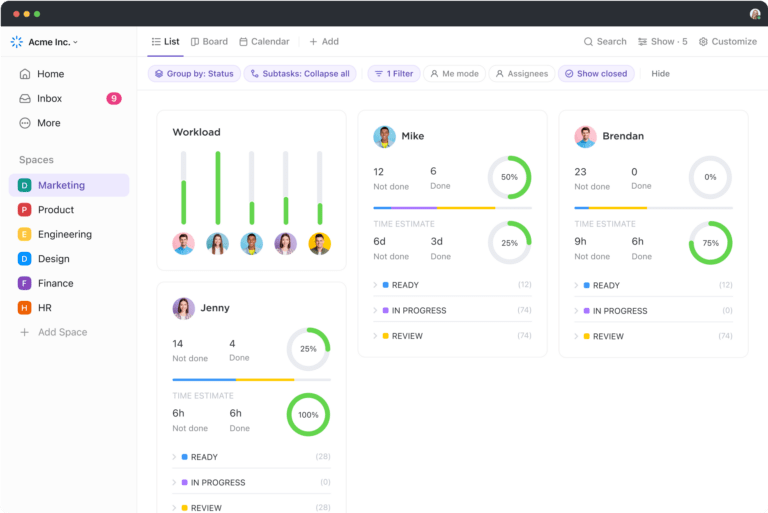
💡Pro Tip: ClickUp for Task Management makes delegation seamless, while the Workload view is remarkable for planning your team’s schedules, utilization, and capacity.

Effective team leaders are outstanding at managing their and their team’s time. They prioritize tasks, so each team member knows what to do first. They carefully plan the time to spend on each task for the best outcomes.
To manage a team well, you must start by managing your own time well. There are many tools and techniques that can help:
💡Pro Tip: Use ClickUp’s Time Tracker to test and refine your time estimates and use time management templates to manage your time better.

Truthfully, addressing work performance or behavior issues with team members can be daunting. And usually, conversations about these topics are nerve-wracking.
But there’s no team success or growth without a few tough talks along the way. Team management is all about settling these issues. Address conflicts and performance issues promptly and fairly to prevent miscommunication from escalating.
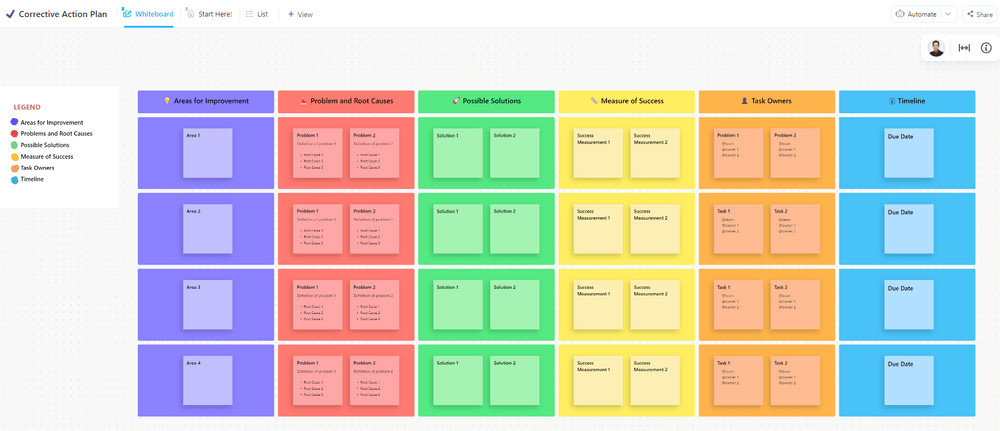
💡Pro Tip: ClickUp’s Corrective Action Plan Template is the perfect resource for managers to prepare and conduct those discussions. It outlines improvement areas, problems, root causes, and possible solutions to fix those problems.
Any team manager must hire new team members sooner or later. One part of that process is onboarding the new hires.
That’s when you welcome them to the team and integrate them into the organizational culture. It’s also when you introduce them to the materials and meeting tools they need to be productive.
Effective onboarding is an investment of time but it directly influences employee retention. It’s that strategic and impactful for your business.
💡Pro Tip: Systematize your new hire onboarding process by creating a shared knowledge base and process in ClickUp Docs. Share this with your new hires to help them find everything they need to learn in one place.
In a healthy work environment managers and team members hold positive dialogues. They discuss the management style, company core values, organizational culture, and anything that might affect each other’s performance and the team’s goals.
Create opportunities for team members to ask questions, provide feedback, or suggest ideas. Avoid dominating conversations; instead, promote collaborative dialogue that can lead to ideas for improvement. Also, ensure you help everyone feel heard and valued.
As a team manager, relying on a feedback template to collect opinions is quite handy. It’s also a great way to tackle complex topics such as salaries and benefits. You can also use feedback forms to run employee satisfaction surveys.
Managers must recognize their team members’ efforts and outcomes. Consequently, the team becomes more cohesive and resilient.
However, the benefits are also individual. Team members feel appreciated, and their sense of purpose at work strengthens, feeding their desire to reach higher goals. As a result, they progress in their careers, and everybody wins.
All good reasons not to wait for a time when you’ll be less busy! Make time to celebrate your team’s achievements. Additionally, dedicate a slot in your agenda to praise their results at least once a year. And in between, give positive reinforcement and proper feedback.
Nothing compares to team collaboration when it comes to raising employee engagement. Collaborative teams get more things done faster and with less drama.
Also, team members who brainstorm together and help each other are happier at work. And that happiness ignites their productivity and makes them feel safe about sharing problems.
Now, guess what that environment does for your team? That’s right! Your team members find creative solutions to overcome challenges faster and more efficiently.
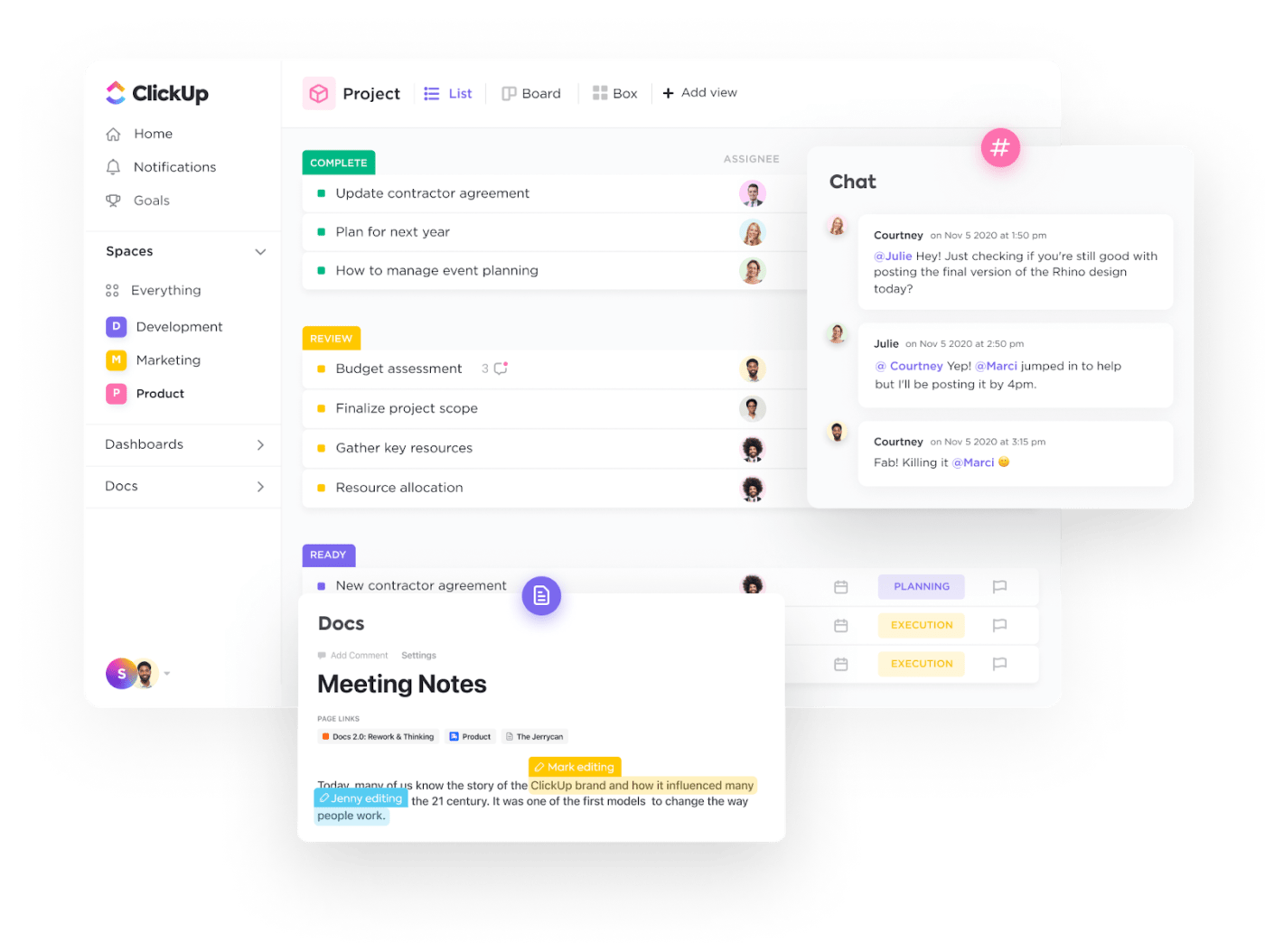
How can you help your team collaborate together more effectively? Give them the tools for it: shared team communication tools to stay connected, virtual whiteboards so they can share ideas and find solutions to problems together, and collaborative documentation tools so they can create plans and processes together.
All this (and more) is available to you in ClickUp!
Also Read: Best Online Collaboration Tools
Team management skills are valuable across a multitude of career paths. Whether you’re an aspiring manager or looking to enhance your leadership trajectory, here are some managerial roles where those skills are highly prized:
A Project Manager orchestrates the planning, execution, and completion of specific projects within an organization, ensuring these initiatives align with the company’s goals and objectives.
They are adept at allocating resources, managing budgets, and leading cross-functional teams to success while maintaining tight deadlines.
Check out our guide on a day in the life of a project manager!
Operations Managers are critical for maintaining the efficiency of the company’s everyday activities. They strive to enhance the quality of internal processes, ensure customer satisfaction, and work to improve the productivity of the company.
Their role often involves strategic planning and oversight.
Human Resources Managers are at the forefront of creating a thriving workplace culture. They oversee recruitment, manage employee relations, and design strategic plans for employee retention and development.
Their role is pivotal in nurturing the company’s employees and aligning staff performance with organizational goals.
Team Leads provide guidance, instruction, direction, and leadership to a specific group for the purpose of achieving a key result or group of aligned results. They play a central role in team dynamics, motivate team members, and assess performance while remaining a working member of the team.
Product Managers are responsible for the strategy, roadmap, and feature definition of a product or product line. They often lead cross-functional teams from a product’s conception all the way through to its launch.
Excellent communication and analytical skills are essential as they coordinate between various stakeholders to ensure the product meets the market’s needs.
Check out our guide on a day in the life of a product manager!
Effective team management is crucial to motivate team members and goes a long way for businesses. It lays the foundation for high-performance teams that communicate, collaborate, and innovate.
And it generates an atmosphere of trust and respect, keeping the team on track and moving forward. If you use the right tools, you’ll keep a strong focus on the tasks at hand, reduce employee turnover, and improve customer loyalty.
AI-powered team management software like ClickUp that integrates communication, collaboration, and work management into one everything app for work helps team managers be more effective.

Sudarshan Somanathan
Max 22min read

Manasi Nair
Max 23min read
Sudarshan Somanathan
Max 17min read

© 2026 ClickUp