






Still downloading templates?
There’s an easier way. Try a free AI Agent in ClickUp that actually does the work for you—set up in minutes, save hours every week.
Sorry, there were no results found for “”
Sorry, there were no results found for “”
Sorry, there were no results found for “”
Nov 01, 2025
8min read
Imagine waking at 2 a.m. to a critical bug blocking your team’s deployment. You describe the issue to Claude, and within minutes it executes diagnostics, patches three files, runs regression tests, and submits a pull request while you make coffee.
That scenario is no longer science fiction. Anthropic’s Claude agentic AI turns natural language requests into autonomous multi-step workflows, and enterprises are already reporting double-digit productivity gains.
Yes. Anthropic ships agentic AI under the Claude brand through two flagship products: Claude Code and Claude for Chrome.
Claude Code launched in March 2025 as a research preview and reached general availability by May, triggering a tenfold usage surge that pushed annualized revenue past $500 million within three months.
The Chrome extension arrived in August 2025 as a sidebar agent that books calendar slots, drafts email replies, and fills web forms without human handoffs.
Beyond standalone tools, Claude powers enterprise workflows. In October 2025 Anthropic and Salesforce launched native Slack support, letting Claude summarize channels and pull CRM data.
That same month Salesforce named Claude the core model for Agentforce, its platform serving regulated industries like finance and healthcare.
Claude’s agentic capability rests on a feature called computer use, introduced with Claude 3.5 in late 2024. The model can execute bash commands, edit files, browse webpages, and invoke APIs, all interwoven with chain-of-thought reasoning.
Developers access these functions through Anthropic’s Agent SDK, a REST-based toolkit that pairs Claude’s language understanding with tool permissions.
When you ask Claude to “refactor the logging module and update the docs,” it parses your intent, plans a sequence of edits, writes the code, runs tests, and commits the result without waiting for approval at each micro-step.
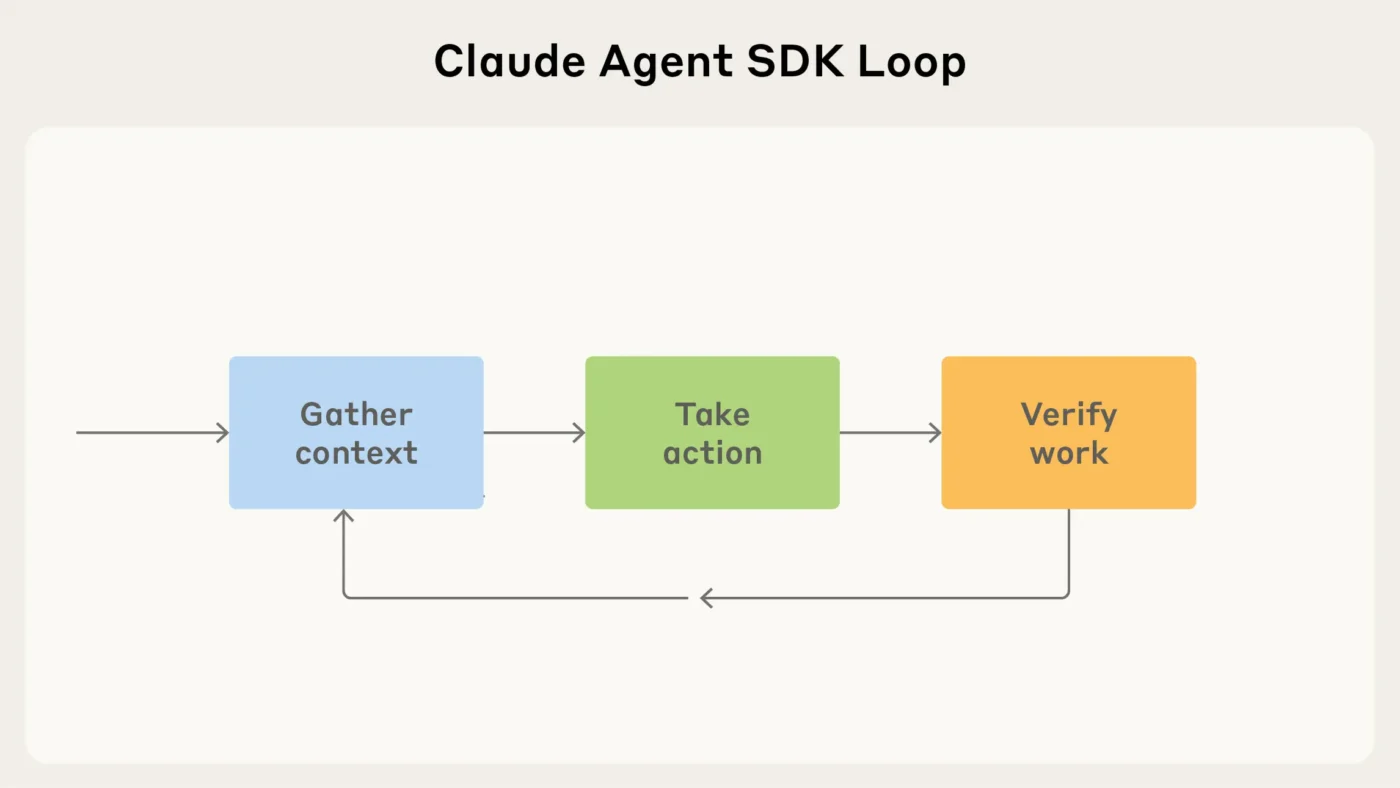
Integration happens at three layers. Anthropic’s API serves Claude directly, while Amazon Bedrock and Google Vertex AI host Claude inside their clouds for customers who prefer AWS or GCP infrastructure.
For enterprise teams, Slack’s native integration allows Claude to join channels, summarize conversations, and respond to questions by pulling live data from connected systems.
Salesforce’s Agentforce partnership takes this further, embedding Claude within the Salesforce trust boundary so all data stays on-platform and meets strict compliance requirements for regulated sectors.
| Core Component | Business Function |
|---|---|
| Command Execution | Automates coding tasks and file edits |
| Web Browsing | Fetches live data and navigates workflows |
| API Integration | Connects Slack, Salesforce, third-party SaaS |
| Agent SDK | Enables custom tool creation and domain logic |
This architecture lets Claude shift from passive assistant to active collaborator. Instead of generating a code snippet you must copy and paste, Claude opens the file, applies the change, verifies syntax, and updates related documentation in one sweep.
That difference matters because it removes context switching. A developer no longer toggles between chat, editor, terminal, and browser. Claude orchestrates all four, collapsing a ten-minute manual loop into a supervised thirty-second automation.
Last spring a senior engineer at a supply-chain analytics firm needed to migrate 200 API endpoints from a deprecated authentication library.
Manually updating each endpoint, running unit tests, and rewriting integration docs would have consumed three days. Instead, she invoked Claude Code with a one-line prompt describing the auth swap.
Claude scanned the codebase, identified every affected route, applied the new auth pattern, regenerated test fixtures, and updated the internal wiki. Total elapsed time: forty minutes.
Competitors like GitHub Copilot and Cursor focus on inline code suggestions, accelerating line-by-line authorship. Claude’s agentic model operates at a higher abstraction, handling entire tickets or refactors end to end.
Anthropic differentiates Claude through three pillars: enterprise trust, safety alignment, and extreme context windows.
While OpenAI and Google compete on raw benchmark scores, Anthropic built Claude for regulated environments where data leakage or toxic output can trigger legal liability.
The company’s Constitutional AI framework trains Claude to refuse unsafe instructions and surface uncertainty rather than hallucinate with confidence. In red-team tests, Claude’s prompt-injection resistance cut attack success from 23.6 percent to 11.2 percent after mitigation updates.
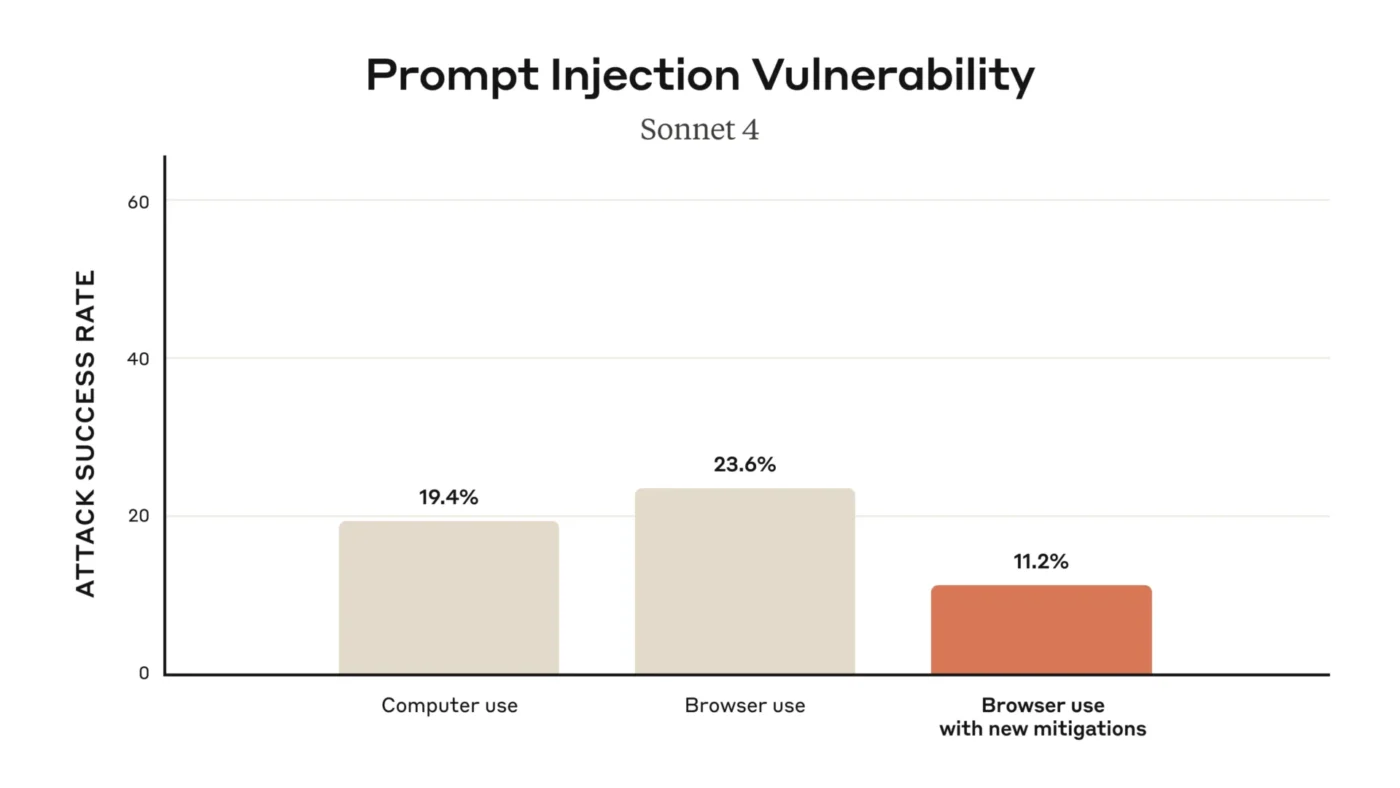
Enterprise customers also value Anthropic’s privacy guarantees.
By default, no customer data trains future models, and Claude can run inside isolated AWS or GCP environments with end-to-end encryption and audit logs.
Salesforce’s Agentforce keeps Claude fully on-platform, ensuring financial-services and healthcare clients meet data-residency mandates.
However, trade-offs exist. Some users report Claude can be verbose, generating thorough explanations when a terse answer suffices. Cost per token runs higher than lighter models, though prompt caching discounts repeated context by up to 90 percent.
Claude plugs into surrounding systems through native connectors, cloud marketplaces, and open APIs.
The tightest integration lives in Slack, where Claude joins channels as a bot, summarizes threads on demand, and fetches data from linked CRM or analytics platforms using Slack’s Model Context Protocol.
Teams report time savings on status updates and cross-functional question answering, reducing the need for synchronous meetings when Claude can synthesize decisions from async discussion threads.
Salesforce’s partnership extends Claude into CRM workflows. Agentforce agents built on Claude can update opportunity records, trigger email sequences, or generate executive summaries of pipeline changes, all while respecting role-based access controls.
AWS Bedrock and Google Vertex AI offer similar secure hosting, letting enterprises deploy Claude without exposing prompts or outputs to the public internet.
| Platform | Integration Details |
|---|---|
| Slack | Deep MCP support for channel summaries and CRM queries |
| Salesforce | Embedded in Agentforce for regulated-industry agents |
| Chrome Extension | Sidebar agent for calendar booking and form automation |
| AWS Bedrock | Hosted Claude with VPC isolation and compliance logs |
Beyond pre-built connectors, developers use Claude’s Agent SDK to wire custom tools into the model. A fintech startup might grant Claude read access to a proprietary risk database, letting it answer compliance questions by querying internal APIs mid-conversation.
These integrations shift Claude from a chatbot to an operational layer, reducing latency and human error.
Early adopters describe Claude Code as a step-change in coding velocity, though reactions vary by use case and expectations.
One Hacker News thread captures the split: power users report Claude handles multi-file refactors with minimal supervision, while skeptics note it occasionally commits confidently to wrong solutions before course-correcting.
Enthusiastic testers share specific wins:
What’s Claude Code?
byu/snehens inClaudeAI
Balanced critiques surface alongside the praise, with Claude’s verbosity topping the complaint list. This generated exhaustive explanations when engineers want terse confirmations.
Experienced users on Hacker News forums suggest toggling the extended-thinking mode on only for genuinely complex problems, leaving it off the rest of the time to preserve clarity and reduce costs.
Cost draws scrutiny too. One Reddit user reported burning $10 in API credits during a single intensive debugging session, though they concluded the time saved justified the expense.
That calculus shifts depending on team budgets and project timelines, but the consensus among early adopters leans positive for teams with clear use cases.
But above all, most users emphasize the learning curve. Effective prompting involves specifying constraints upfront and granting only necessary tool permissions to limit risk.
It seems that developers treat Claude Code less like a magic button and more like a junior engineer who needs clear direction, adjusting their workflow to match what the tool does best.
Anthropic’s roadmap hinges on compute scale, model iteration, and ecosystem expansion.
By late 2025 the company will leverage over one million Amazon Trainium v2 chips via AWS’s Project Rainier supercluster to train next-generation Claude models.
That infrastructure investment accelerates the path to Claude 5, expected around 2026 based on Anthropic’s annual release cadence.
Early signals suggest Claude 5 will push context windows further and introduce multimodal inputs like audio and video, potentially enabling third-party tool plugins that Claude can autonomously invoke.
Salesforce and Anthropic plan to bring the full Agentforce 360 capabilities into Claude by mid-2026, blurring the line between CRM workflows and AI agents.
The integration means Claude could natively execute Salesforce processes like updating records or launching customer outreach campaigns as part of its assistant skills, creating a more seamless enterprise assistant that works within Slack or Salesforce UI to directly drive business processes.
Cost and efficiency improvements remain on the roadmap as well.
Anthropic introduced prompt caching in 2025, cutting repetitive query costs by up to 90 percent. By 2026 expect tiered model options offering lower-cost, faster responses for lightweight tasks, making always-on AI agents more economically viable at scale.
Anthropic structures Claude pricing across individual, team, and enterprise tiers, each calibrated to different usage patterns:
Beyond subscription tiers, developers pay variable API costs based on which model they invoke. API pricing scales by model size.
Claude 3.5 Haiku runs $0.80 input and $4 output per million tokens for lightweight tasks, while Sonnet costs $3 input and $15 output for general work.
At the premium end, Claude Opus charges $15 input and $75 output per million tokens for complex reasoning where accuracy justifies the cost.
For those needing real-time data, web searches add $10 per 1,000 queries when using Claude’s browsing feature.
The rate card doesn’t capture compute intensity and integration overhead. Teams running Claude Code during active development may burn $50 to $100 weekly in API credits, while enterprises integrating with Salesforce or custom systems often require consulting hours for permissions and training.

© 2026 ClickUp

There’s an easier way. Try a free AI Agent in ClickUp that actually does the work for you—set up in minutes, save hours every week.