
Sorry, there were no results found for “”
Sorry, there were no results found for “”
Sorry, there were no results found for “”
Microsoft Access is officially on life support, and Microsoft is methodically pulling the plugs.
With the retirement of Office 2016 and 2019 in 2025, and Access 2021 following suit in October 2026, teams running these older versions are officially operating without a safety net.
While the company says the apps may continue to function, they will no longer receive timely security patches, bug fixes, or technical support.
Access 2024 is still available, and supported Microsoft 365 editions include it. But, if you notice that the database has become hard to share, tied to Windows, difficult to maintain, or dependent on years of VBA code, you need this list of alternatives.
The 10 tools below are ranked by how much of Microsoft Access they can replace, from the database itself to forms, reporting, and workflow logic.
TL;DR: With older versions of Microsoft Access losing support, many teams are outgrowing its file limits and lack of web or Mac access. Moving away from Access isn’t just about moving your data—you also have to rebuild your everyday forms, reports, and automated tasks. Whether you need a cloud database (like Airtable), a project tracker (like ClickUp), or a Microsoft upgrade (like Power Apps), the right choice depends on how your team actually works. Before you switch, make a list of the automated steps your current database handles behind the scenes, and test one complete daily task in the new tool to make sure it’s the right fit.
| Tool | Best for | Standout feature | Starting price* | Where it taps out |
|---|---|---|---|---|
| LibreOffice Base | A free, offline Access-style database | Tables, queries, forms, reports, Access2Base, scripting, and server database connections | Free and open source | Access forms, reports, and VBA won’t migrate cleanly, and shared editing gets harder as more people join |
| Microsoft Dataverse and Power Apps | Modernizing Access inside Microsoft 365 | Dataverse storage, Power Apps, business process flows, mobile apps, offline profiles, and Copilot-assisted app building | Free developer plan; paid from $20/user/mo | Moving the data is only part of the job because forms, reports, VBA, and some field types still need rebuilding |
| ClickUp | Replacing an Access tracker with a shared workflow | Table View, Custom Fields, Forms, automations, Custom Relationships, Formula Fields, and field-level permissions | Free tier available; Enterprise is custom pricing | It won’t replace a relational database engine for foreign keys, transactional rules, or complex SQL joins |
| Airtable | Moving an Access database into a cloud spreadsheet-style workspace | Linked records, lookups, rollups, forms, Interface Designer, Sync, scripting, and AI field agents | Free; paid from $20/user/mo | Precise paginated reporting usually needs another step, and edit-seat costs can rise with larger teams |
| Ninox | Mac teams building custom business databases | Native Mac and mobile apps, offline support, Ninox Script, reusable modules, multiple interfaces, and document generation | Free; paid from $31/user/mo | Heavy scripting and custom logic can make the system dependent on someone who understands the code |
| Claris FileMaker | Custom business apps with forms and reports | Custom layouts, scripting, print-ready reporting, FileMaker Go, WebDirect, external SQL sources, and AI features | Paid from $17.50/user/mo | Deeply customized apps can become proprietary and harder to migrate away from later |
| Baserow | Keeping database infrastructure under your control | Cloud or self-hosted deployment, linked tables, rollups, restricted views, editable forms, and Kuma AI | Free/open source; paid from $10/user/mo | Self-hosting adds operational work, while managed cloud row limits can become restrictive as data grows |
| Grist | Spreadsheet-style data with Python formulas and granular access rules | Relational tables, Python formulas, summary tables, cell-level access rules, custom widgets, and portable .grist files | Free; paid from $8/user/mo | Record and document-size limits can become restrictive for large related datasets |
| SQL Server Express | Keeping the front end you already built | ODBC-linked Access tables, transactions, row-level security, encryption, JSON, and full-text search | Free | Engine limits still apply, and it won’t modernize the desktop front end for browser or mobile use |
| NocoDB | Adding a browser front end to an existing database | Browser grids, Interfaces, Custom Sync, Page Designer, visual workflows, and JavaScript scripting | Free; paid from $12/editor/mo | SQL Server support requires an Enterprise add-on, and it doesn’t supply the database layer when you’re starting from a standalone desktop file |
Our editorial team follows a transparent, research-backed, and vendor-neutral process, so you can trust that our recommendations are based on real product value.
Here’s a detailed rundown of how we review software at ClickUp.
Teams usually start looking elsewhere when Access becomes harder to share, maintain, or extend. The pressure usually shows up in five places: concurrency, file size, maintenance, platform access, and the amount of business logic tied to one application. In more detail:
.accdb file can’t exceed 2 GB. Deleted records don’t immediately shrink the file either, which is why Compact and Repair become part of routine maintenanceNote: The 2 GB limit applies to the database file itself. Separately, Microsoft made the 32-bit version of Access for Microsoft 365 Large Address Aware, increasing the application’s addressable memory from 2 GB to 4 GB on 64-bit Windows. That gives complex applications more memory to work with, but it doesn’t increase the .accdb file-size limit.
The shortlist gets easier once you separate the database from everything built around it. Before comparing products, check whether the new tool can handle the forms, reports, relationships, automations, limits, and access controls your current setup depends on.
Governance deserves its own check because low-code and no-code systems can make it easy to rebuild an Access application quickly without improving its controls.
A CIO article cited Mark Driver, then a research director at Gartner, on the governance gap in low-code tools:
Compliance controls? Vendors over-hype them and the truth is that citizen developers are essentially ignoring regulatory and compliance issues.
Also note, moving from an old Access file to a cloud tool doesn’t automatically fix governance. You still need clear permissions, ownership, and auditability around the new system.
Here are 10 Microsoft Access alternatives worth considering, depending on whether you need stronger data handling, better forms, easier collaboration, or a more modern workflow.
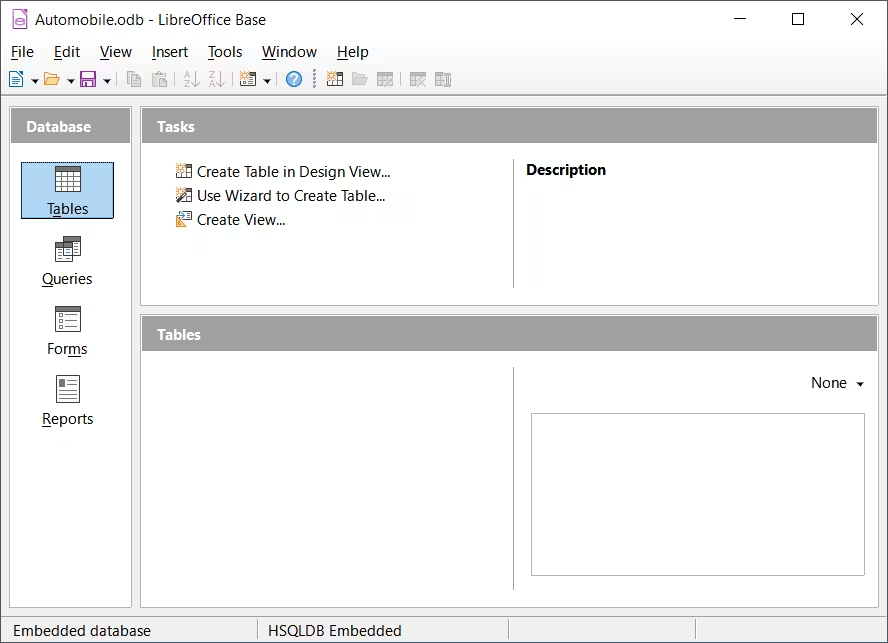
LibreOffice Base keeps the classic desktop-database model intact, much like Microsoft Access. Tables, queries, forms, and reports live in one application across Windows, macOS, and Linux. You can define relationships, build queries visually or in SQL, and create forms with list boxes, buttons, and subforms.
Base can also connect to MySQL, PostgreSQL, and other servers through JDBC or ODBC. In that setup, Base stays as the front end while the records live on a database server built for concurrent access. Smaller databases can use the embedded engine and keep everything inside a single .odb file.
The Report Builder groups records, calculates totals, sorts results, and controls the page layout. Because Base ships with LibreOffice, Writer can pull those records into mail merges, while Calc can read them directly into a spreadsheet.
Note: Capterra doesn’t rate LibreOffice Base separately. Base is LibreOffice’s database application, and LibreOffice is a project of The Document Foundation. To avoid presenting suite-level reviews as Base-specific feedback, the Capterra rating is omitted.
A user review says:
I love LibreOffice, but seems like quite a lot of work still needed to make it look ‘nice’.
Where it taps out: Moving an existing Access application takes more work than the similar desktop layout suggests. Tables come across, and queries convert to views. Forms, reports, and VBA need a rebuild, and shared editing gets harder to manage as more people work in the same setup.
Best for: Small teams and individual users who want a free desktop database with forms, reports, queries, and local storage.
Skip it if: Your next database needs to run primarily in a browser or support people working from phones and tablets.
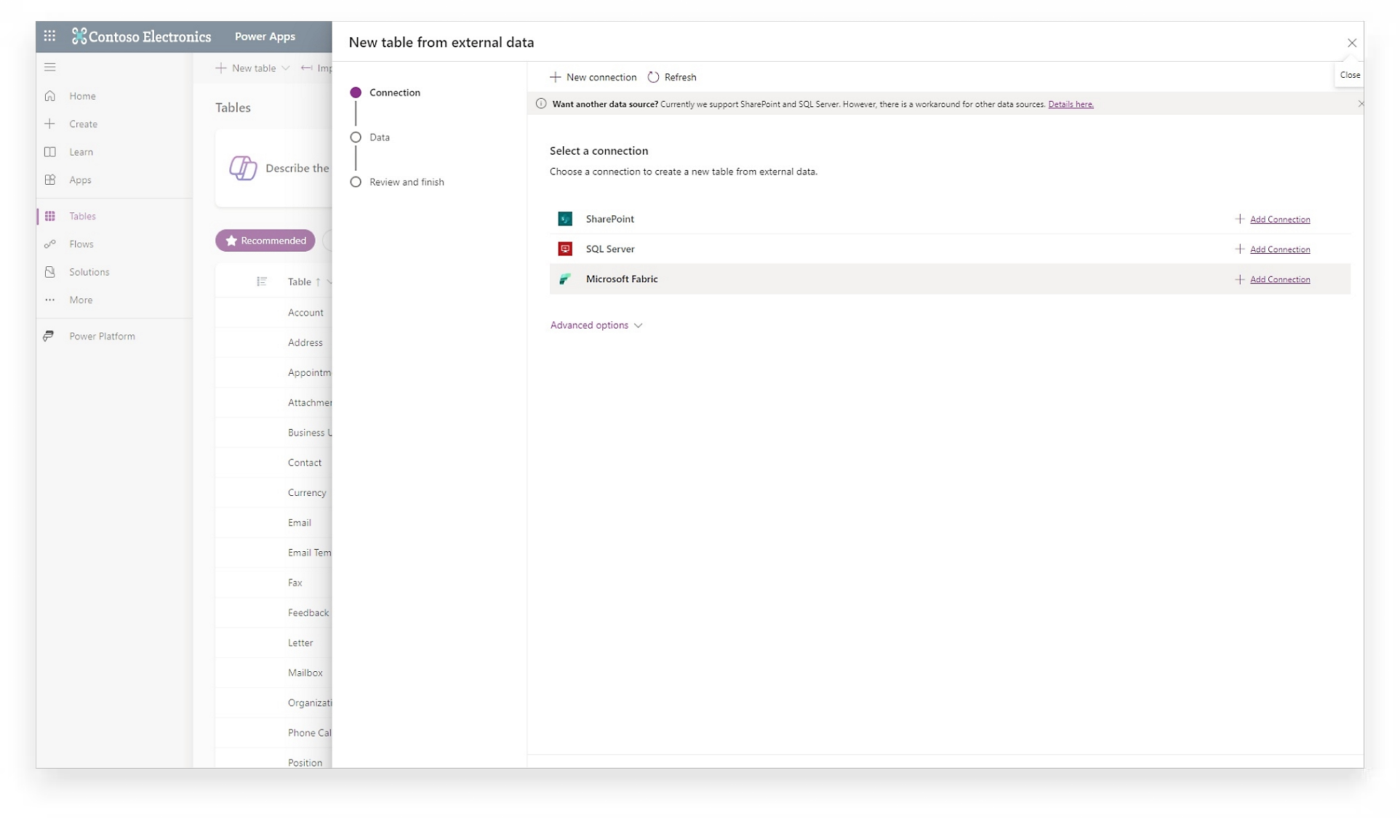
Dataverse and Power Apps are Microsoft’s cloud route for teams that want their data, identity, and application layer inside the same ecosystem. Microsoft can move existing tables into Dataverse while the desktop front end stays connected during the rebuild.
Dataverse holds the data, while Power Apps turns it into a working application. The same records can feed Power BI, Power Automate, Dynamics 365, and Teams, which keep reporting, automation, and collaboration inside the wider Microsoft stack.
IT also gets more control over the new setup. Dataverse supports role-based permissions, business rules, and centrally managed data. For orgs already using Microsoft Entra and Power Platform, admins can manage much of that access through tools they already know.
Power Apps also brings Copilot into the build process. You can describe the app or data structure you need in natural language and use the generated result as a starting point. Model-driven apps offer a more structured route, while canvas apps give teams more freedom over layout and interaction.
Note: Microsoft has announced that Power Apps Premium will rise to $22/user/month, and the 2,000-seat plan will rise to $14/user/month, on January 1, 2027. Current plans keep today’s price until renewal.
A Reddit user said:
My group has been using it for several months now. The PowerApps group is over the moon about it, but I’m using it like any other data source. Seems to work just fine.
Where it taps out: The move gets the data into Dataverse, but the Access app around that data still needs work. Forms and reports have to be rebuilt in Power Apps. VBA has to be rewritten as Power Fx or flows. Float, attachment, and multivalued columns need manual prep before they’ll migrate. A simple-looking move can turn into a broader rebuild, so test with real record counts first.
Best for: Teams already invested in Microsoft 365, Power Platform, Azure, or Dynamics 365 that want their Access data to stay inside the same sign-in, governance, and reporting stack.
Skip it if: You only need a light personal database and would rather avoid Power Platform licensing, admin work, and app-building overhead.
Also Read: Excel Alternatives
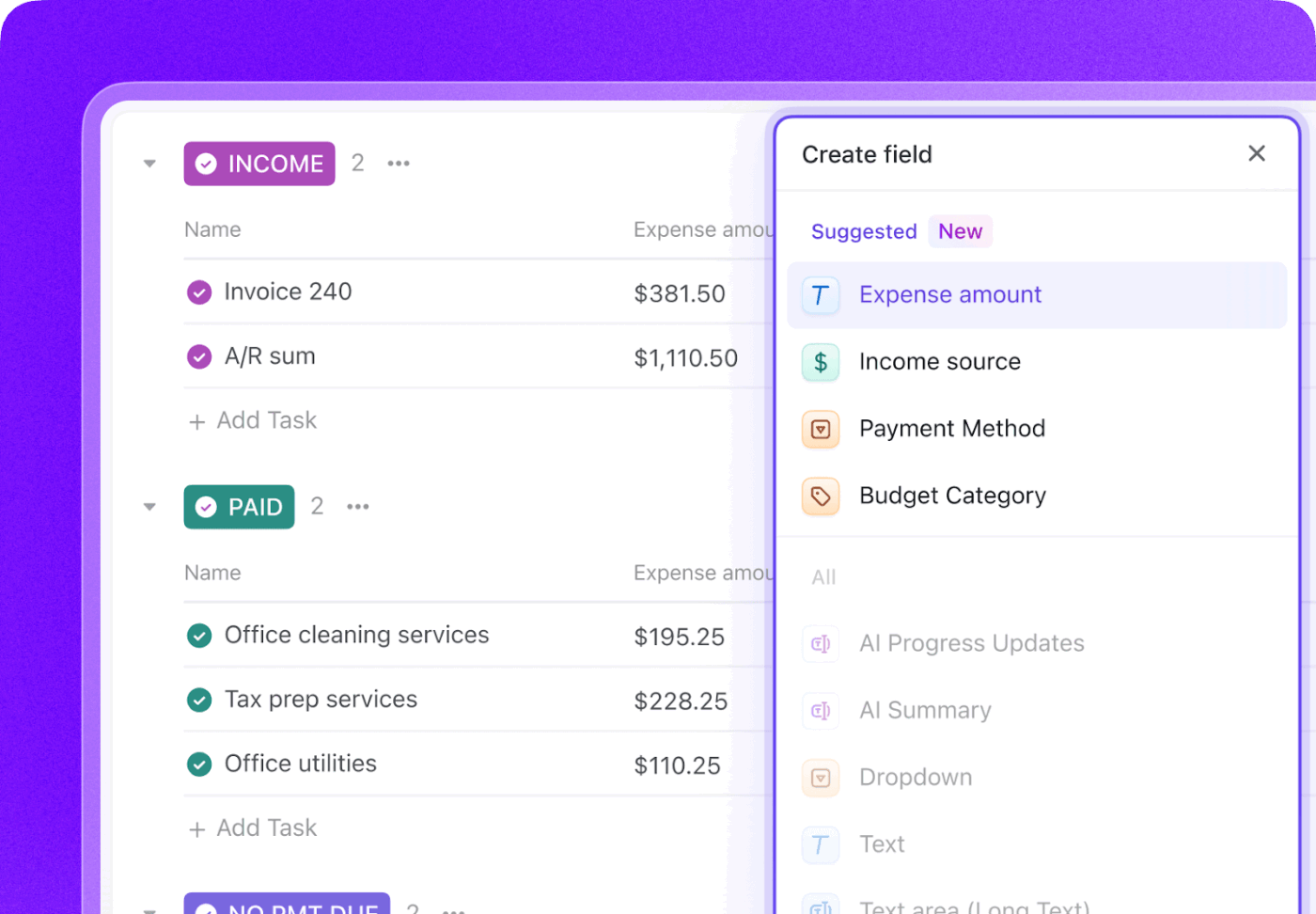
ClickUp makes the most sense when a database does more than store information. Think of a service request, an inventory update, or an approval flow with an assigned owner, defined statuses, and clear next steps.
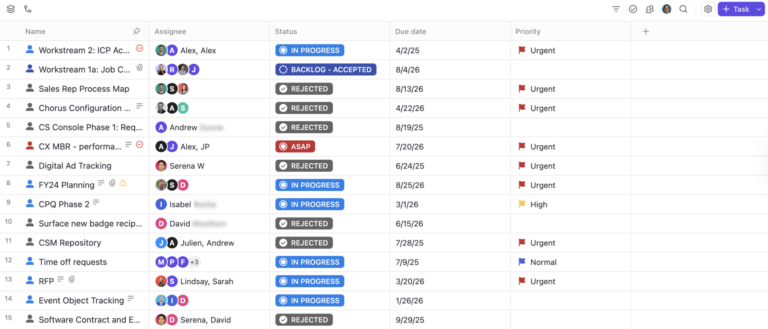
That information gets a familiar grid to work from with ClickUp Table View. Each row is a task, while ClickUp Custom Fields store the dates, numbers, dropdowns, locations, files, and other details attached to it. You still get the clarity of rows and columns, but the owner, status, files, and activity stay attached to the record.
ClickUp Forms handle the intake side. A submission becomes a task with critical data already mapped into its fields, which works well for requests, applications, issue reports, and other processes that would otherwise begin with manual data entry.
From there, automations or Super Agents can assign an owner, update a status, send a reminder, or route the task when something changes. That’s what separates ClickUp from a conventional database tracker. The record can move through the process without someone repeatedly deciding what happens next.
A G2 user said:
Honestly, the hierarchy it manages and connecting tasks from different lists with relational fields changed my team’s life for organizing development deliverables, synchronizing requirements, and not losing track of what each dev implements. Everything remains impeccable and visible.
Where it taps out: ClickUp’s relationships are built for connected work records. They don’t enforce foreign keys, transactional rules, or the kind of complex joins you’d expect from a relational database engine. An Access application with heavy SQL logic will still need a proper database behind it.
Best for: Teams using Access for trackers where each record leads to an owner, status, deadline, approval, or follow-up.
Skip it if: Your Access file mainly serves as a backend for another app, and users rarely treat the records as work items.
Pro Tip: Before rebuilding old Access macros one by one, separate the rules that only route work from the logic that genuinely needs code. Simple assignment, status, and reminder rules often work better as automations. Here’s how you can apply automations with ClickUp:
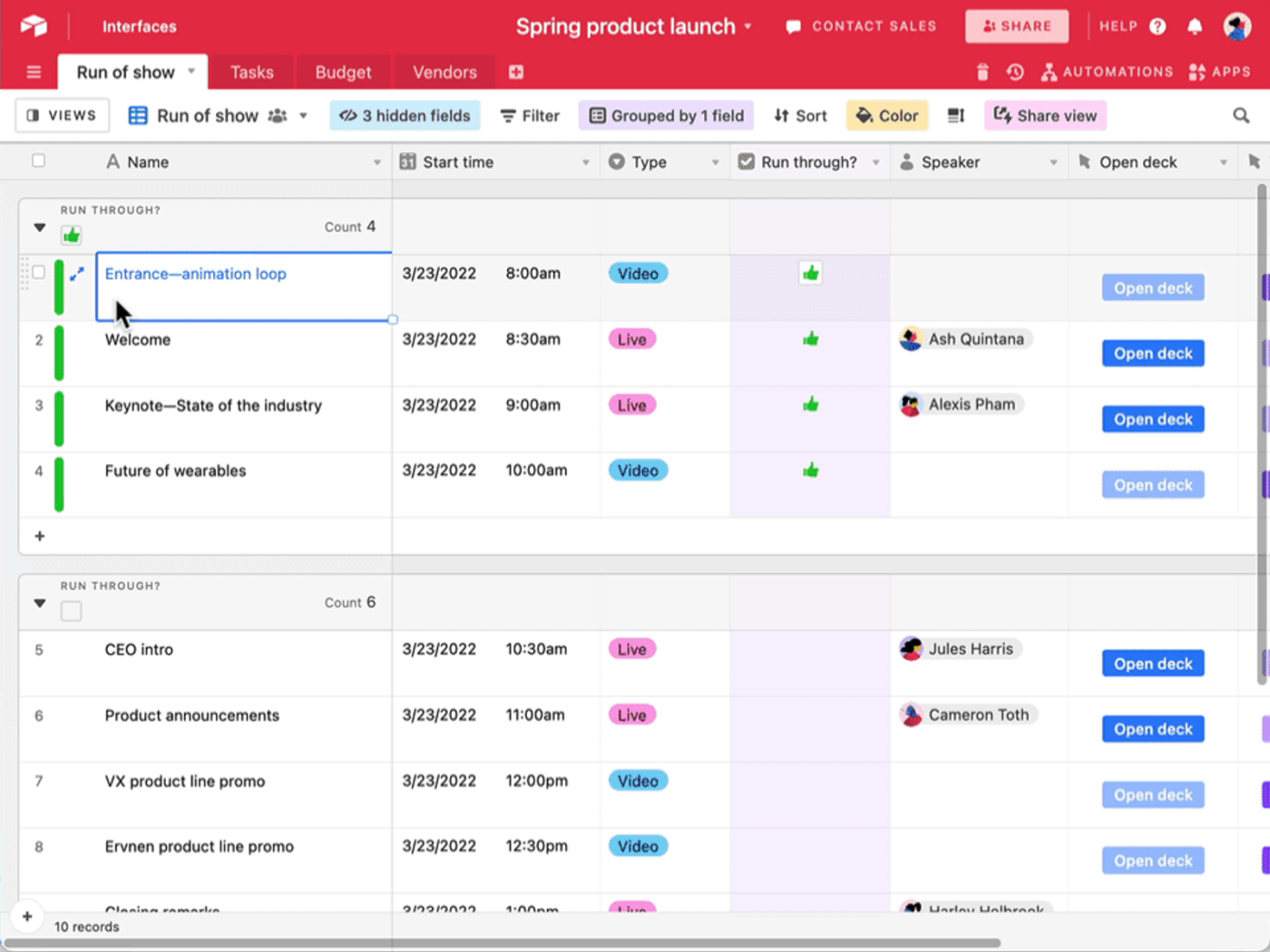
Open Airtable for the first time, and the spreadsheet resemblance is obvious. Under that familiar grid is a relational model that can connect records across tables.
A Customer table can link to Orders, for example, while lookup fields bring customer details into the order without copying them into another table. Airtable supports one-to-one, one-to-many, and many-to-many relationships, which cover the structure behind plenty of smaller business databases.
Forms handle new records, while Interface Designer gives people a cleaner way to view and update existing ones without opening the entire base. That makes the underlying tables less intimidating for teams that only need to work with a specific part of the data.
Airtable Sync covers the systems around that database. It can pull data from other Airtable bases and supported external sources, while higher plans add two-way and multi-source sync for workflows where records still need to move between platforms.
A G2 user said:
Airtable is an incredibly accessible and powerful database tool. Through interfaces I’ve been able to get my entire team to use the tool in a variety of ways and also improve their own systems and technology. The familiar spreadsheet style coding and back-end with a robust database behind it have been a game changer
Where it taps out: Airtable handles dashboards and on-screen views well. Paginated reports with grouped totals and fixed page layouts usually need another reporting step, like an extension or an export to Excel. Costs can also rise once a larger group needs edit access.
Best for: Small and midsize teams moving a shared Access database online while keeping linked tables, forms, and a familiar grid-based interface.
Skip it if: Your database depends on complex SQL queries or recurring reports that need precise print layouts.
Heads-up: Bending Spoons completed its acquisition of Airtable in September 2026. So far, there’s no news of any particular shutdowns or forced migrations. But do keep an eye on pricing and product updates as the new ownership settles in.
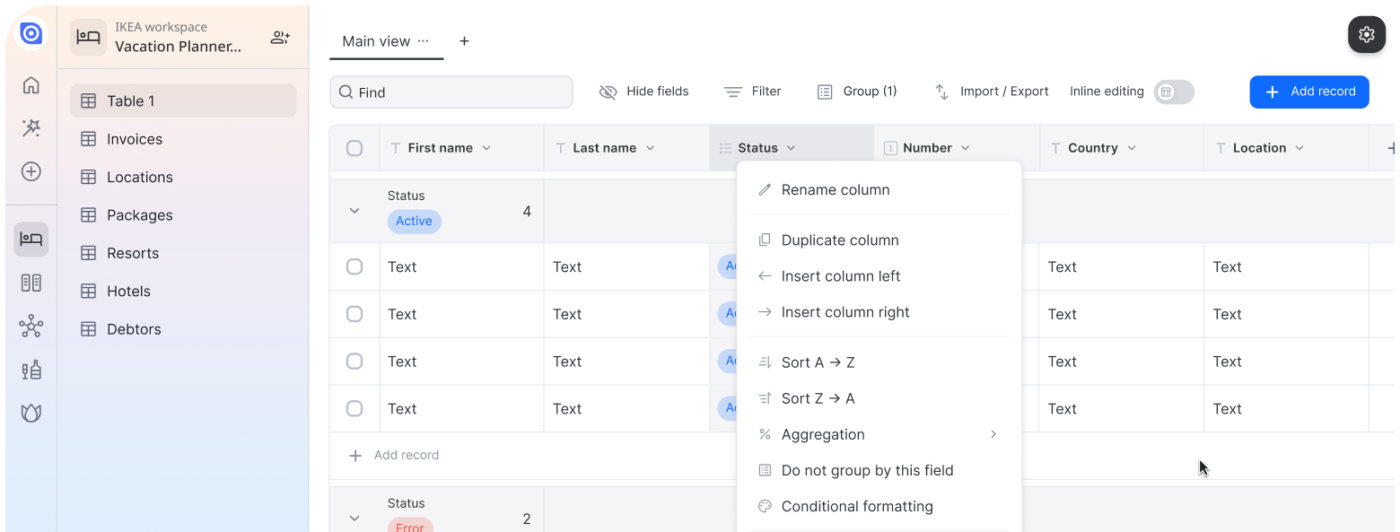
Ninox keeps tables, forms, relationships, formulas, and reports inside one database workspace. It runs in the browser and through native apps for macOS, iOS, iPadOS, and Android, with offline support in the installed apps.
For Mac teams, that removes one persistent headache. A database built around desktop forms and records no longer needs a Windows VM just to stay usable.
Ninox Script carries the business logic. Scripts can react to record changes, validate data, create related records, and run follow-up actions. Transaction blocks can group several operations together, and installed apps can continue processing local transactions when the connection drops.
The database doesn’t have to remain self-contained either. A REST API connects Ninox with outside systems, while Make and n8n handle broader workflows. Records can also feed directly into generated contracts, invoices, and reports.
A G2 user said:
Creating large data collections with this product is remarkably straightforward. All the information you need is always accessible, easy to analyze, and the interface offers a level of clarity and modularity that I haven’t found in any other similar product. Gone are the days of managing countless Excel spreadsheets buried in endless folders or struggling to locate them quickly.
Where it taps out: Ninox stays approachable while the database is mostly forms, relationships, and formulas. Once a solution leans heavily on Ninox Script, custom integrations, and complex business rules, changes start to depend on someone who understands the code behind it.
Best for: Mac-based teams that need forms, relational data, printable documents, and custom business logic in one database platform.
Skip it if: You want a mostly no-code system that a non-technical team can maintain without touching scripts or custom logic.
Also Read: Relational Database
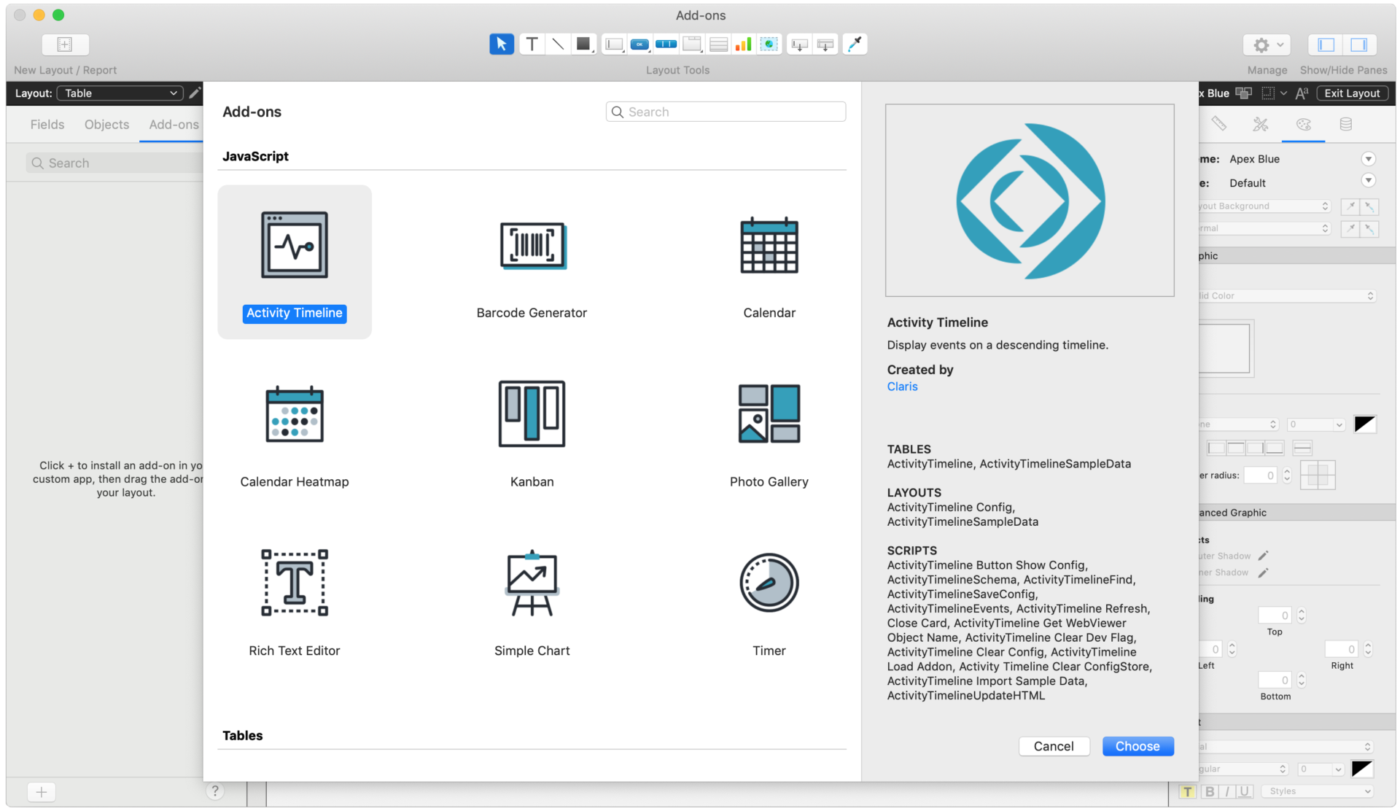
FileMaker is built for databases that have grown into full business applications. The data model, entry screens, scripts, and print-ready reports share the same environment. FileMaker Pro runs natively on Windows and macOS and is developed by Claris, an Apple subsidiary.
Its layout tools can group records, calculate subtotals and grand totals, add headers and footers, and control how each page prints. Finished reports can go directly to PDF or Excel, which makes FileMaker particularly relevant when formal documents are still part of the workflow.
The same application can run on iPhone and iPad through FileMaker Go or in a browser through WebDirect. Existing SQL infrastructure can stay in place, too. External SQL Sources give FileMaker live access to Microsoft SQL Server, MySQL, and Oracle data, and scripts can work with those records alongside local tables.
FileMaker 2026 also adds platform-level AI, including LLM connections, semantic search, RAG workflows, and support for Google Gemini.
FileMaker Cloud
FileMaker Server
A G2 user said:
Claris FileMaker is a powerful and flexible tool that truly supports cross-platform development for custom database applications. Its speed and ease of implementation make it an excellent choice for managing complex data in a range of sectors, such as research, academia, and finance. Beyond simple data management, it can function as a central data hub for organizations by integrating smoothly with existing databases.
Where it taps out: FileMaker can become quite proprietary once the app relies heavily on custom layouts, scripts, and .fmp12 files. The deeper the build goes, the harder it becomes to move that application logic somewhere else later.
Best for: Teams building a long-lived business database that needs custom screens, scripted workflows, formal reports, and access across desktop, mobile, and web.
Skip it if: You want an open, SQL-first stack that your developers can extend without relying on FileMaker-specific tools and scripting.
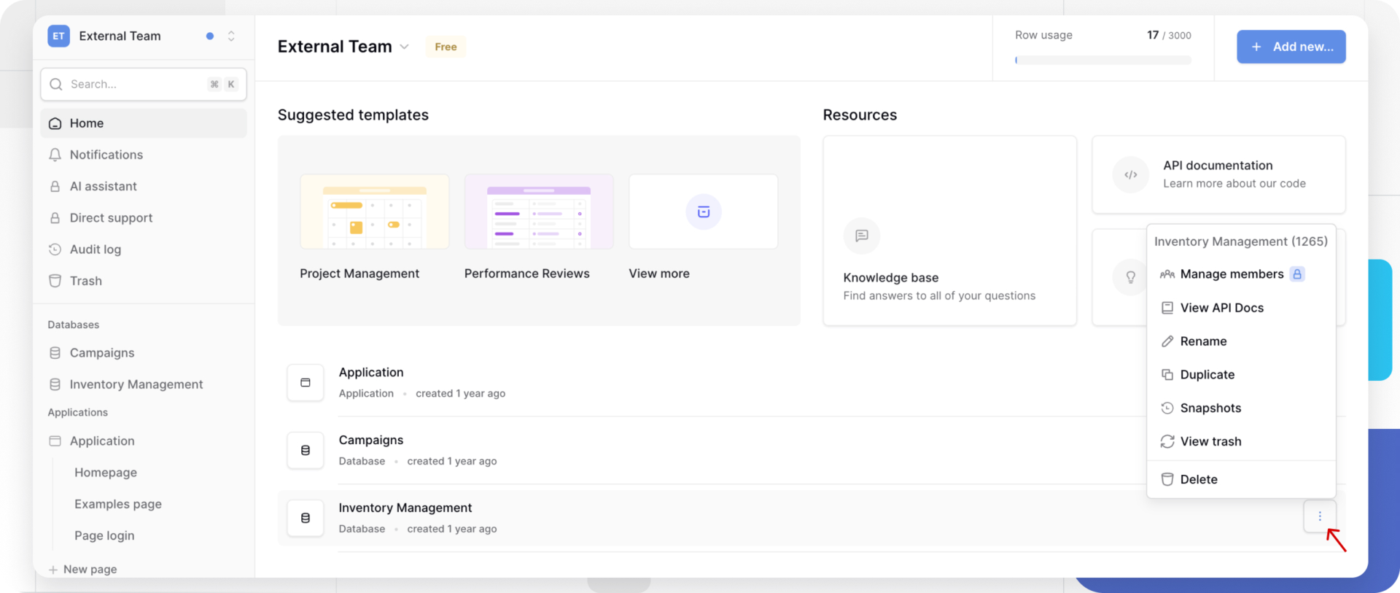
Baserow lets you decide where the database lives. You can use Baserow Cloud and leave the infrastructure to the vendor, or run the open-source version on your own servers. Self-hosting can sit inside a private cloud, an on-premises network, or even an air-gapped environment when data residency rules are strict.
Tables hold the records, and Link-to-table fields connect related data. Lookups can pull values across those links, while rollups handle totals, averages, counts, and other calculations.
Forms handle both new submissions and edits. You can require fields, apply conditional logic, and prefill known values before someone opens the form. Baserow can also generate a secure edit link for an existing row, loading the current values and writing any changes back to that same record.
For migration, Baserow imports CSV, Excel, JSON, XML, and pasted spreadsheet data. New-table imports currently support up to 5,000 rows at a time, so you may need to split larger exports into batches.
Baserow Cloud
Baserow Self-hosted
A G2 user said:
Baserow’s flexibility truly stands out. It offers a high level of customization in database management, all without needing coding skills. This means you can mold it to your exact needs, whether that’s managing project timelines, tracking client information, or organizing complex datasets. Plus, the collaborative features are a game-changer. Team members can work together seamlessly on shared databases, making it an ideal tool for team-driven projects. It’s essentially a tailor-made solution for efficient data management.
Where it taps out: Self-hosting gives you control, but your team owns the operational work. Updates, backups, monitoring, recovery, and capacity planning are all on you. The managed cloud removes that burden, though its row limits can become a constraint as tables grow.
Best for: Teams that need a collaborative database on their own servers or private cloud, especially when data location and fine-grained access control are part of the requirements.
Skip it if: Your database depends heavily on polished, paginated reports and desktop-style print layouts.
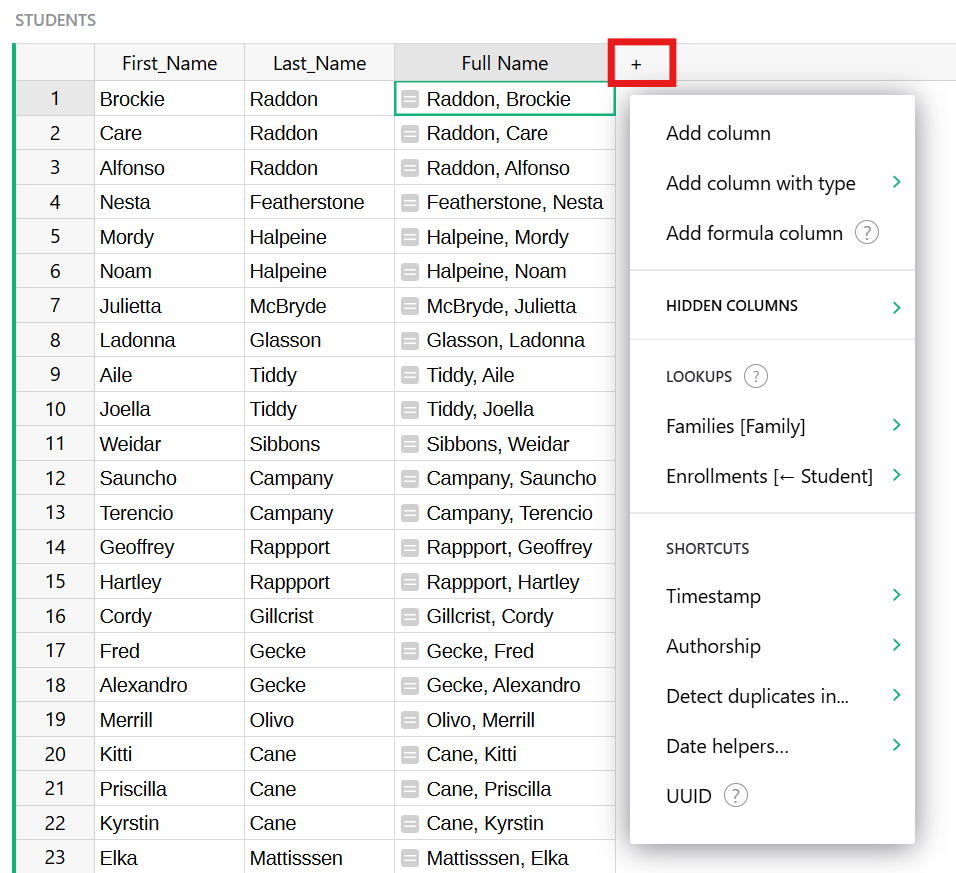
Grist keeps the spreadsheet as the working surface while adding relational tables and Python beneath it. Rows and columns stay familiar, but references and summary tables add structure to the data.
Formulas can use familiar spreadsheet functions or Python 3.11 with access to the standard library. A calculation that once needed a separate VBA function can live directly in the column where its result belongs. Grist runs that code inside a sandbox without persistent filesystem or internet access.
Reference and Reference List columns connect records across tables and support one-to-one, one-to-many, and many-to-many structures. Summary tables can then group those records for totals and analysis, much like a pivot table or SQL GROUP BY.
Access rules can target tables, rows, and columns. When those conditions overlap, the restriction can reach a single cell. For example, an employee directory could live in one document, while each person sees only the records they’re permitted to access.
.grist files: Download the full document as a SQLite-based file containing its data, attachments, layouts, metadata, and recent historyGrist Cloud
Self-hosted
A G2 user said:
Spreadsheet, but also a database—and a database that still feels spreadsheet-like. It’s very useful and makes it easy to connect data, which has improved my workflow a lot compared with using a traditional spreadsheet. At the same time, it remains intuitive for non-programmers who want to work with a database that looks and behaves like a spreadsheet.
I’ve tried several no-code database tools like Budibase, NocoDB, and NocoBase, as well as full ERP systems like ERPNext and Dolibarr. For my needs, I think Grist hits the sweet spot.
Where it taps out: Grist counts the record limit across every table in a document. The Pro plan tops out at 100,000 rows and Business at 150,000, while Grist recommends keeping document data around 20 MB for smoother performance. A database with several large related tables can hit those practical limits sooner than the headline row count suggests.
Best for: Analysts and operations teams that want relational data, advanced calculations, and detailed permissions without giving up a spreadsheet-style interface.
Skip it if: Your team wants a visual app builder with minimal formula work and very little technical setup.
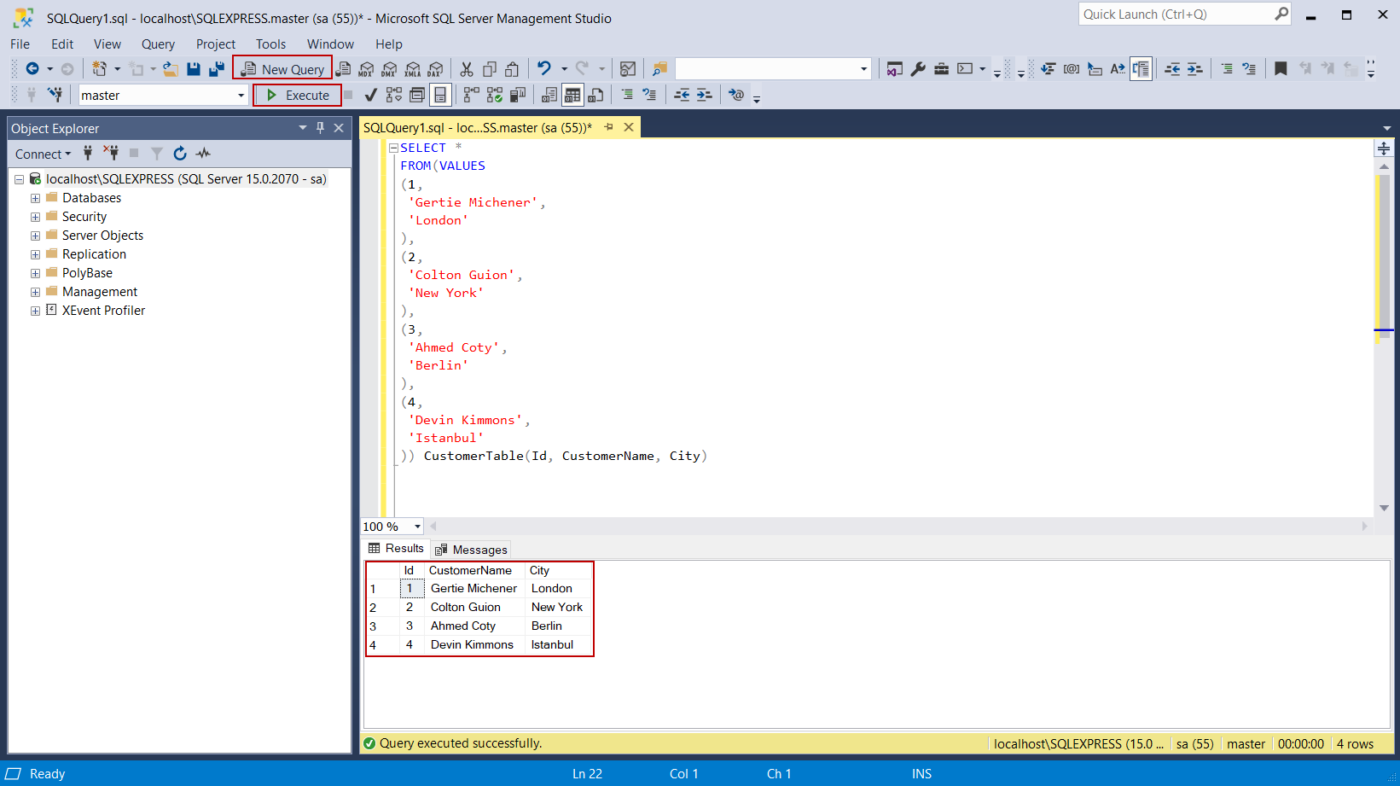
This is Microsoft again. SQL Server Express is the free edition of Microsoft SQL Server, and it solves a different part of the problem than Dataverse and Power Apps. Dataverse gives you a path toward a new cloud application. SQL Server Express lets you keep the desktop front end and move the data layer underneath it.
Tables move into SQL Server Express and link back through ODBC. Existing forms, reports, queries, macros, and VBA can keep working against those linked tables. Microsoft’s SQL Server Migration Assistant can handle much of the schema and data transfer during the move.
SQL Server now handles concurrent writes, transactions, locking, and storage. The existing desktop interface stays in place, while the shared data moves onto a database engine designed for heavier multi-user work. SQL Server 2025 Express also raised the maximum relational database size to 50 GB, giving smaller applications far more room than a desktop .accdb file.
Note: These ratings cover Microsoft SQL Server overall, not the Express edition on its own.
A G2 user said:
Microsoft SQL Server stands out for its stability and reliability when handling large volumes of data. Its integration with other Microsoft products, such as Power BI, Excel, and Azure, makes it very convenient to work with, especially within an existing Microsoft ecosystem. The extensive documentation and large community are also very valuable whenever you run into an issue. Additionally, built-in tools like SQL Server Management Studio make managing and optimizing databases straightforward, even in larger and more complex environments.
Where it taps out: SQL Server Express has firm engine limits: 50 GB per relational database, up to four cores, and 1,410 MB of buffer-pool memory in SQL Server 2025. It also excludes SQL Server Agent, so scheduled backups and maintenance jobs need another scheduler, such as Windows Task Scheduler.
Best for: Teams with a stable desktop front end they want to keep while moving the shared tables to a stronger database engine.
Skip it if: Your main goal is to rebuild the interface for browser or mobile use. This route preserves the existing front end, so it won’t solve that part of the migration.
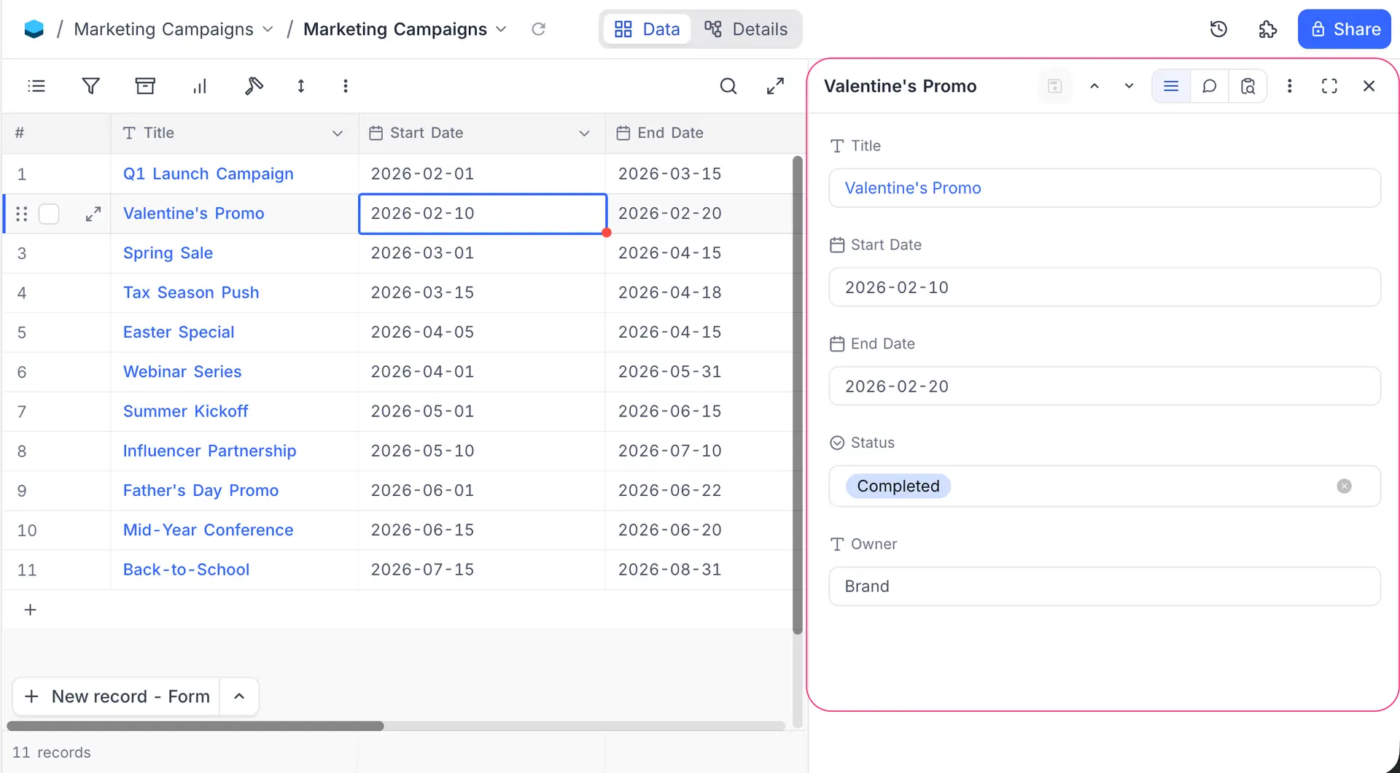
If your records are in PostgreSQL or MySQL, NocoDB can put a browser interface over that database without moving the data again. It reads the existing schema and turns the tables into editable grids while the backend stays where it is.
For teams that have already modernized storage, the remaining job is often the front end. NocoDB Interfaces can turn the same data into forms, dashboards, record-review screens, and detail pages without exposing the schema underneath.
Custom Sync covers cases where production data should stay read-only. Selected PostgreSQL or MySQL tables can be refreshed into NocoDB manually or on a schedule, giving people a working copy for lookup, review, or reporting while the source system remains untouched.
NocoDB Cloud
Self-hosted
A Reddit user said:
I’ve been a huge fan of NocoDB for a while now. In my opinion, it’s hands-down better than most paid alternatives. Until recently, I was happily using the March Community Edition (v0.301.5) with a Postgres backend to leverage the full potential of formulas, and it was a flawless experience.
Where it taps out: Connector support varies by database engine. PostgreSQL and MySQL fit NocoDB’s standard setup, but Microsoft SQL Server currently requires an Enterprise add-on. If you plan to keep SQL Server, that can make this route considerably more expensive.
Best for: Teams that already have a PostgreSQL or MySQL backend and need forms, browser-based screens, reporting, and workflows around that data.
Skip it if: You’re starting with a standalone desktop file and want the new tool to supply the database layer as part of the migration.
Choosing the right Microsoft Access alternative starts with identifying which part of Access you rely on most. It may be the relational database underneath, the forms people work in, the reports they send out, or the macros and VBA that keep the process moving.
The second question is just as important: how much of that setup do you want to preserve? Some migration paths let you keep the Access front end and replace only the backend. Others require rebuilding almost everything around the data.
| If this is what you need | Start with | What survives from Access? | What needs rebuilding? |
|---|---|---|---|
| A free desktop database that still feels familiar | LibreOffice Base | Tables and much of the underlying data can move over | Forms, reports, and VBA usually need rebuilding; queries may need conversion |
| A Microsoft-native cloud rebuild | Dataverse and Power Apps | Tables, data, and supported relationships can move to Dataverse; Access can stay linked during the transition | Forms, reports, macros, VBA, and some unsupported field types need separate work |
| Records that need owners, statuses, approvals, and follow-up | ClickUp | The record data can be imported into a new workflow structure | Access forms, reports, queries, and VBA don’t carry over directly |
| A cloud database with a spreadsheet-style interface | Airtable | Tables and record data can be moved into bases and linked tables | Access forms, reports, macros, VBA, and complex SQL logic need rebuilding |
| A custom database for a Mac-heavy team | Ninox | Core records and relational data can be recreated in Ninox | Forms, scripts, reports, and Access-specific logic need rebuilding |
| A full custom business app with formal reports | Claris FileMaker | Existing data can move into a new FileMaker data model | Layouts, scripts, reports, macros, and VBA need rebuilding in FileMaker |
| Full control over where the database is hosted | Baserow | Tables and records can be imported into cloud or self-hosted Baserow | Forms, reports, VBA, macros, and application logic need rebuilding |
| Spreadsheet-style work with serious calculations and permissions | Grist | Record data and relationships can be recreated in relational tables | Access forms, reports, VBA, macros, and queries need translating into formulas, rules, or new workflows |
| A stronger backend without rebuilding the existing desktop front end | SQL Server Express | Existing Access forms, reports, queries, macros, and VBA can remain while the tables move to SQL Server | Primarily the backend schema, links, and any incompatible queries |
| A browser interface for PostgreSQL or MySQL you already run | NocoDB | Your existing PostgreSQL or MySQL backend stays in place | An Access-only database must first move to a supported backend; the Access front end and VBA don’t carry over |
That distinction can change the size of the migration dramatically. Moving tables is often the straightforward part. Forms, reports, linked data sources, macros, and VBA are where years of business logic tend to accumulate.
Before you commit, inventory those pieces alongside the records themselves. A database with five tables and a dozen custom routines may take more work to replace than one with fifty straightforward tables.
Plan limits deserve the same attention. Grist, Baserow, Airtable, and other hosted options impose different limits on documents, workspaces, storage, or plans. If you’re unsure how much of the old setup needs replacing, prototype one representative workflow first. Build the records, intake form, relationships, and one report, then compare that with what the current database does.
Our guides to building a structured content database, an Excel database, and a Google Sheets database show you how those pieces translate outside Access.
Don’t start by exporting every table. An Access database can hide important logic outside the data itself. Queries feed forms and reports, while macros and VBA can control what happens when someone clicks a button, opens a screen, or changes a record.
Microsoft’s migration guidance treats those pieces separately because tools such as SSMA can move tables and some queries, but they don’t convert forms, reports, macros, or VBA. Here are some steps to follow:
Back up and document the current database. Start with tables, relationships, queries, forms, reports, macros, VBA modules, and linked data sources. Access includes a Database Documenter that can generate a report on selected objects, while the Object Dependencies pane shows which forms, reports, and queries rely on one another. That’s more reliable than deciding what looks unused from the Navigation Pane alone.
Run Compact and Repair before you size the migration. Access doesn’t automatically reclaim all the disk space left behind by deleted objects and temporary data. Compact and Repair removes that unused space, which means the resulting file size is a better starting point for estimating what you’re actually moving. Back up the database first and make sure you have exclusive access while the operation runs.
Rebuild one representative workflow before the whole schema. Pick a form people rely on every day and reproduce the full experience around it: data entry, required fields, validation, permissions, attachments, and whatever should happen after submission.
Test one report that people depend on. Choose something with grouping, totals, page breaks, or a fixed PDF or print layout. Access reports are built specifically to format and present data, which is why replacing the tables doesn’t automatically replace the reporting layer. Decide early whether the new tool can reproduce that output or whether reporting will need its own solution.
Give every query, macro, and VBA routine a destination. A query might become a view or formula. A macro might become an automation or workflow. VBA may need custom code, a scheduled job, or a redesigned process. Don’t assume these pieces will follow the tables automatically. Microsoft notes that SSMA converts only certain select queries, while forms, reports, macros, and VBA modules require separate work.
Migrate a test copy and validate the result. Compare record counts, relationships, required fields, dates, numeric values, attachments, permissions, and any calculated output that people depend on. Run the busiest workflows against that copy before scheduling the final transfer.
Cut over only after the replacement survives real work. Keep both systems available long enough to cover the recurring processes you care about, including reporting. Once the new system is signed off, freeze the old .accdb as a read-only archive rather than deleting it immediately.
If the original database has become more of a workflow in practice, consider whether you need another general-purpose database at all. A workflow app may suit request queues, approvals, or operational trackers better, while dedicated inventory software may make more sense for stock and asset registers.
Yes. Microsoft still offers Access 2024 as a standalone purchase and includes Access with several Microsoft 365 plans. The subscription version continues to receive newer features, including the Monaco SQL editor with syntax highlighting, autocomplete, and formatting.
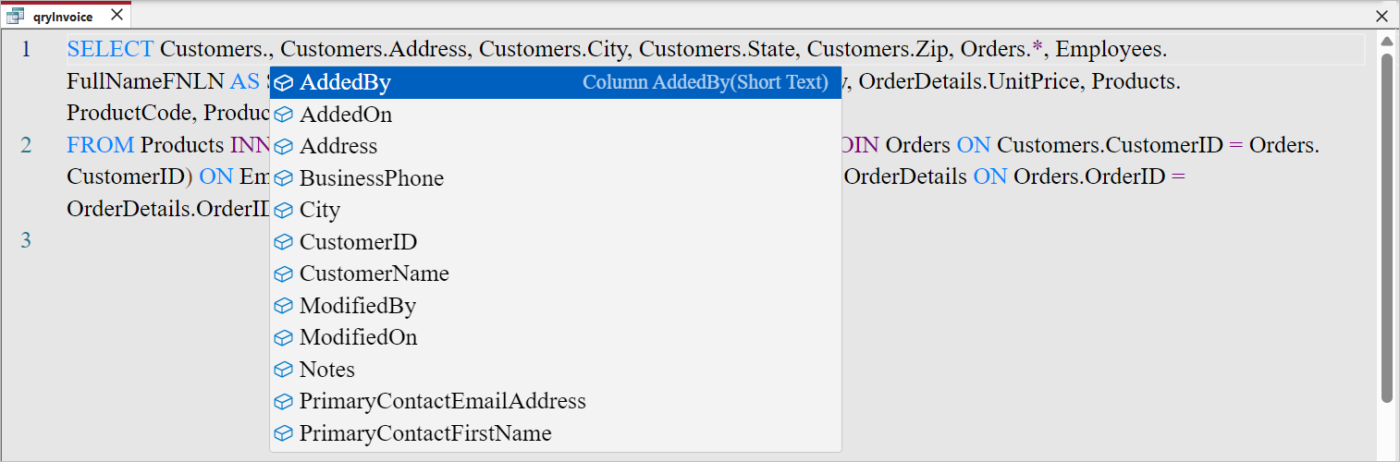
Microsoft has also added modern chart types and an Edge Browser Control to display web content within forms.
There is one important distinction. Some newer features, including the Monaco editor, are exclusive to Microsoft 365 and aren’t available in the perpetual Access 2024 release.
So, Access hasn’t been abandoned. But newer features don’t solve the reasons many teams look elsewhere, such as Mac support, browser access, mobile data entry, heavier concurrency, or centralized governance.
Microsoft has a built-in way to move Access data to Dataverse. It can migrate tables, data, and supported relationships, then link the Dataverse tables back to Access so the existing front end can keep working during the transition.
The catch is that this mainly moves the data layer. If you plan to retire Access completely, forms, reports, macros, and VBA still need their own migration path. Some data types also need preparation, particularly multivalue lookups and floating-point fields.
Power Apps Premium currently costs $20/user/month, with each license adding 250 MB of Dataverse database capacity. Qualifying tenants also receive 10 GB of default database capacity, while additional storage costs $40/GB/month.
That makes Microsoft’s migration tool useful, but the real cost depends on how much of the application around the data still needs to be rebuilt.
The tools in this guide cover what people want from a Microsoft Access alternative, including relational data, forms, reporting, browser access, self-hosting, stronger permissions, and a more reliable backend. The right choice depends on what your current database is doing.
There’s one case where it’s worth looking beyond another database.
If each record also needs an owner, status, deadline, approval, or next step, you’re managing a workflow alongside the data. That’s where a platform like ClickUp becomes worth testing because the record and the work around it can live in the same place.
Not for current Microsoft 365 users. Microsoft retired Access Services from Microsoft 365 and SharePoint Online, so there’s no modern web version of the Access desktop app. Microsoft points teams that need browser and mobile apps toward Power Apps and Dataverse instead.
Yes. Microsoft provides the Access Runtime for free, which lets people run an Access application without buying the full desktop product. Users can work with the forms and features you expose, but design tools such as the Navigation Pane aren’t available in Runtime mode. Microsoft also allows you to redistribute Runtime without a per-user limit.
.accdb and .mdb files?.accdb has been the default Access format since Access 2007 and supports newer features such as attachments, calculated fields, and multivalued fields. .mdb is the older format used by earlier Access releases and still has a few legacy capabilities that .accdb dropped, including database replication and the old user-level security model.
.mdb databases?Yes, if the file uses the Access 2000 or Access 2002–2003 .mdb format. Microsoft says you can still open and use those files normally in current versions of Access. Access 97 files are the exception. Access 2013 and later can’t convert them directly to .accdb. Microsoft’s documented route is to open the file in an older Access version, convert it to Access 2002–2003 format, and then convert that file to .accdb.
Usually, yes. Microsoft recommends splitting a shared database once more than a few people use it over a LAN. Each person gets a local front end containing forms, reports, and queries, while the shared back end contains the tables. This can improve performance and reduce the risk of corruption.
Sometimes, but opening the data and reproducing the Access application are separate jobs. LibreOffice Base can connect to Microsoft Access data, while other platforms may require you to export to CSV or Excel before importing. Forms, reports, macros, and VBA usually need their own migration plan. Moving the tables alone doesn’t reproduce everything built around them.

Manasi Nair
Max 23min read
Manasi Nair
Max 29min read
Manasi Nair
Max 14min read
© 2026 ClickUp