

Sorry, there were no results found for “”
Sorry, there were no results found for “”
Sorry, there were no results found for “”
On September 22, 2026, Anthropic released Claude Opus 5.5 while OpenAI expanded the GPT-6 family with Sol and Luna. The timing invited another round of benchmark comparisons across the tools.
But the problem is that neither Claude nor ChatGPT is one model anymore.
Claude now spans Fable, Opus, Sonnet, and Haiku, while ChatGPT routes different work across its own GPT models and modes. Benchmark tables often compare different members of those families under different settings, which makes a clean “Claude scored X, ChatGPT scored Y” verdict harder to defend.
That is the real state of the Claude vs. ChatGPT decision in 2026.
While raw capability still matters, the scoreboard alone is a weak buying signal. Practical differences include available models, features, usage limits, and the cost of upgrading. We’ve broken down everything you need to know in this blog post, from who it’s built for to where each one falls short.
TL;DR: Claude and ChatGPT are close on raw capability. The real differences show up in workflow, tools, and limits.

We benchmarked 6 AI tools on one real task: building an executable project plan from a brief. The winner wasn’t the best writer. It was the one with access to real work data.👇🏼
| Category | Claude | ChatGPT |
|---|---|---|
| Best for | Long coding sessions, large documents, research, and instruction-heavy writing | Research, writing, images, coding, files, voice, and multi-format workflows |
| Starting paid price | $20/mo for Pro, or $200/year (~$17/mo) | $8/mo for Go in the U.S.; $20/mo for Plus |
| Standout strength | Deep, context-heavy work that runs across many steps | Breadth of tools and formats in one product |
| Coding | Stronger fit for long refactors, migrations, audits, and repository-heavy work | Stronger fit for cloud execution and moving between desktop, IDE, CLI, and mobile |
| Writing | Better suited to long-form drafting, source-heavy editing, and detailed style rules | Better suited to structured writing that connects with research, files, images, and other formats |
| Usage limits | Shared allowance across Claude, Desktop, and Claude Code, with five-hour and weekly limits | Limits vary by model and feature, with separate allowances across Chat, Work, Codex, Voice, and other tools |
| Native image generation | No | Yes |
| Top-model API pricing | Opus 5.5: $4/$20; Fable 5.1: $10/$50 per 1M input/output tokens | GPT-6 Astra: $10/$50 per 1M input/output tokens |
| Main trade-off | Narrower toolset and restrictions around some cyber and life-sciences work | More complicated model access and limits across different parts of the product |
Our editorial team follows a transparent, research-backed, and vendor-neutral process, so you can trust that our recommendations are based on real product value.
Here’s a detailed rundown of how we review software at ClickUp.
Benchmark scores no longer settle the Claude vs. ChatGPT question. The evaluation version, reasoning setting, safeguards, fallback models, and test harness can all change the result.
Built by Zapier, AutomationBench tests whether an agent can complete real business workflows across connected apps. In OpenAI’s GPT-6 Astra announcement, GPT-5.6 Sol scores 18.1%. Just 19 days later, Anthropic’s Opus 5.5 announcement reports 28.8% for GPT-5.6 Sol, using Zapier’s leaderboard result.
That’s a 10.7-point gap for the same model on the same benchmark. Zapier notes that its private evaluation set can change between benchmark versions, and different agent setups can produce different results. The score needs its test conditions attached to it.
The benchmarks also show that OpenAI and Anthropic didn’t always test Claude under the same conditions:
Refusal behavior also becomes part of the comparison. OpenAI left Claude Fable 5 and 5.1 out of LifeSciBench Gold v1, GeneBench Pro v13, and MedChemBench because the models refused most of the questions. On HealthBench Professional, OpenAI used Opus 5 as a fallback when Fable 5.1 refused.
Needless to say, a model can have the underlying capability and still be a poor fit for a workflow if you can’t access it reliably. Anthropic acknowledges the broader problem itself, saying that “benchmark margins have become a less reliable guide to real-world differences.”
Anthropic’s September 2026 table gives us five direct comparisons between Claude Opus 5.5 and GPT-6 Astra.
| Benchmark | Claude Opus 5.5 | GPT-6 Astra | Higher score |
|---|---|---|---|
| Terminal-Bench 4.0 (agentic coding) | 66.4% | 57.9% | Opus 5.5 |
| GDPval-AA v2.1 (knowledge work, Elo) | 1846 | 1542 | Opus 5.5 |
| Humanity’s Last Exam (with tools) | 67.7% | 57.2% | Opus 5.5 |
| AutomationBench (business workflows) | 40.0% | 41.4% | GPT-6 Astra |
| Terminal-Bench-Science 0.1 | 58.7% | 64.6% | GPT-6 Astra |
Anthropic says Opus 5.5 used adaptive thinking at max effort unless noted.
Think of “effort” as how much time the AI is allowed to double-check its work. Anthropic let Opus use the maximum amount of thinking time on almost every test. For one coding test, Terminal-Bench 4.0, neither model ran at the maximum: Opus ran one step below it, and Astra’s score came from OpenAI’s own report at a lower setting. Anthropic says those were the settings where each model scored best. Just like people, an AI can overthink a problem, so more thinking time doesn’t always mean a better score.
Overall, Opus 5.5 comes out ahead on agentic coding, knowledge work, and Humanity’s Last Exam with tools. Astra scores higher on business workflows and agentic scientific research.
Claude is Anthropic’s family of AI models. The current lineup includes Fable 5.1, Opus 5.5, Sonnet 5, and Haiku 4.5.
Fable 5.1, Opus 5.5, and Sonnet 5 each support a 1-million-token context window, while Haiku 4.5 supports 200,000 tokens. Anthropic positions Fable for demanding reasoning and long-running work, Opus for coding and knowledge work, Sonnet as the speed-and-intelligence balance, and Haiku for faster, high-volume tasks.
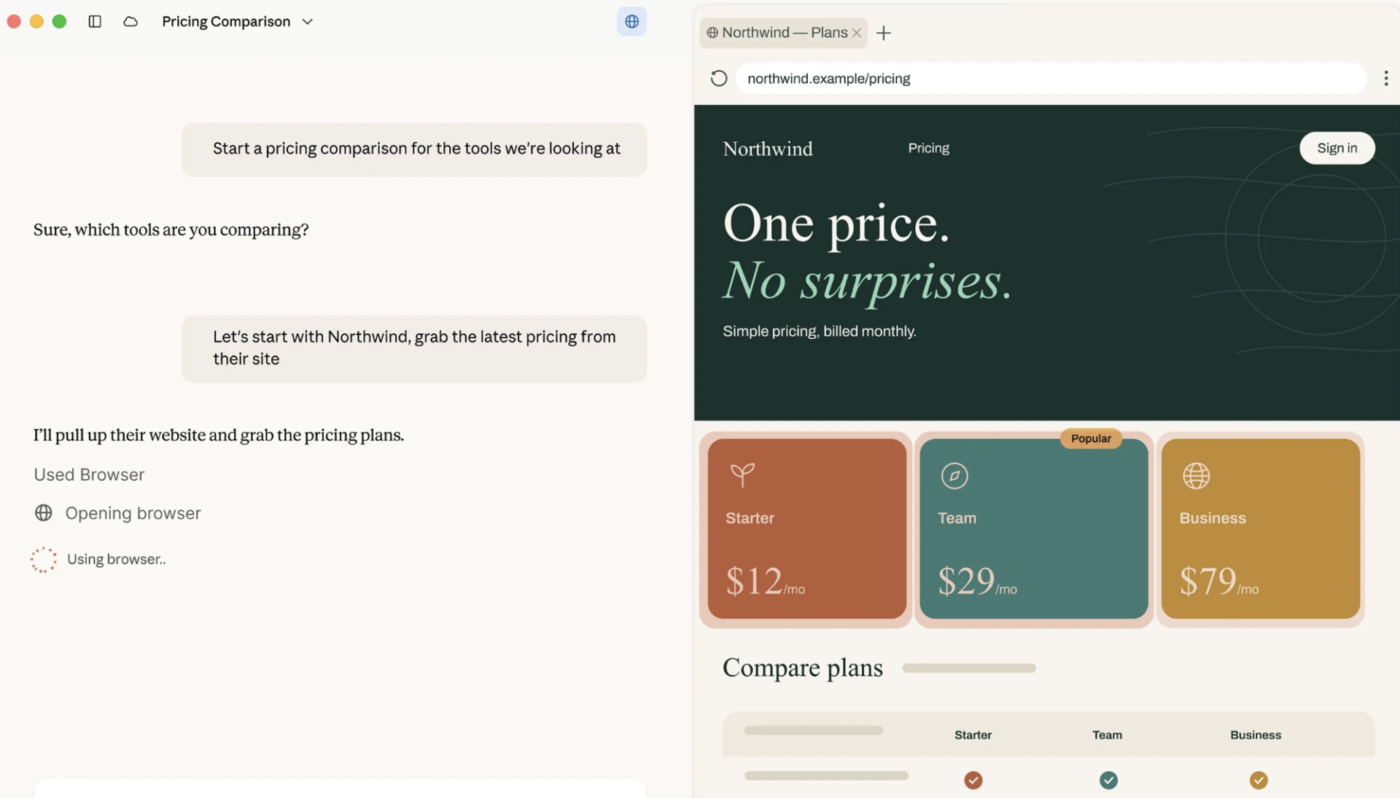
Claude is a strong fit for people who hand AI large, messy jobs rather than one-off prompts. That includes developers working across big codebases, analysts digging through long documents, researchers pulling together evidence, and writers or editors working with detailed briefs and style rules.
Put simply, Claude works best for tasks that need lots of context, several steps, or a long working session. That suits large files, long conversations, and projects that build on earlier work.
A G2 user said:
Of the many AI chat and agentic coding tools available, I find Claude’s performance and accuracy exceedingly impressive—especially when it comes to handling complex problems, understanding context, and consistently producing reliable, high-quality results. Claude Code is also extremely helpful for developing features, running tests, and fixing failures, as well as for automation and deployment. Overall, it feels far ahead of other vibe coding tools in accuracy, performance, and the time it takes to get to a solid outcome.
Claude still doesn’t generate photos or illustrations. It can analyze uploaded images and create charts, diagrams, and interactive visuals with HTML and SVG, but it doesn’t have a native image generator. If you want the same AI tool to write campaign copy and create the accompanying artwork, you’ll need another tool for the images.
Its safeguards can also affect advanced cybersecurity and life sciences work. Opus 5.5 may switch flagged cybersecurity requests to Opus 4.8, while Fable 5.1 can fall back to Opus models for some cyber and biology requests. Anthropic offers verification programs for legitimate research, though Cyber Verification access for Opus 5.5 is still in process.
Best for: Long coding and agent sessions, large-document analysis, research, and writing where you give the model detailed style or formatting rules.
Skip it if: You need native image generation or your day-to-day work relies heavily on restricted cybersecurity or life sciences tasks.
ChatGPT is OpenAI’s AI assistant, with separate models and modes for different kinds of work.
GPT-5.6 Sol powers the main paid Chat experience, while a lighter GPT model serves Free and Go users. GPT-6 Pro, powered by GPT-6 Astra, sits at the top end for eligible Pro, Business, and Enterprise users. Work and Codex add access to models such as GPT-6 Astra, Sol, and Luna, depending on the plan.
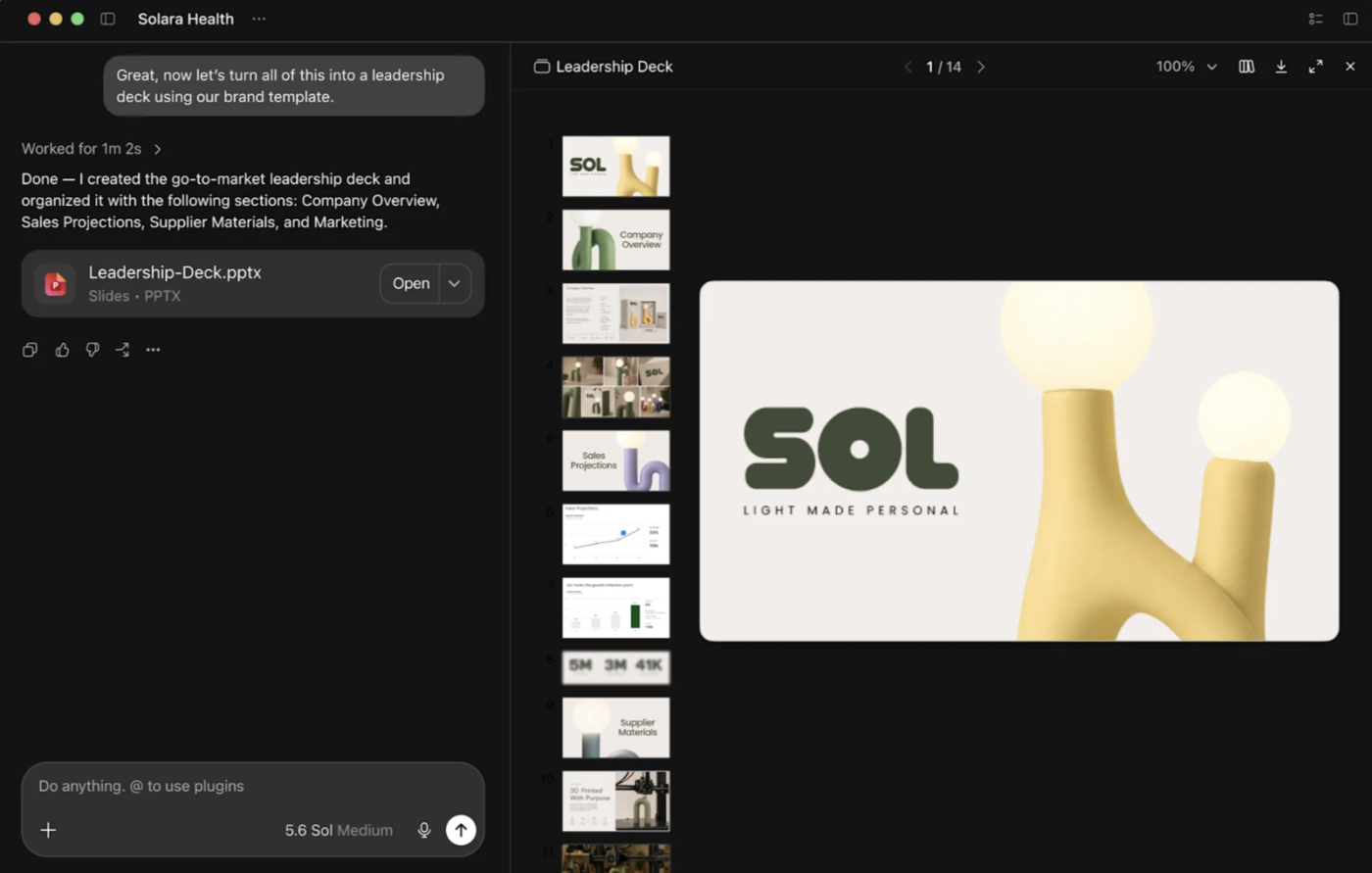
ChatGPT is built for people who want one assistant across different kinds of work. A marketer can generate images alongside copy, a researcher can build cited reports with Deep Research, an analyst can work through PDFs and spreadsheets, and a developer can move into Codex. It also covers everyday tasks such as search, planning, file analysis, and quick questions.
A G2 user said:
I love using ChatGPT for its amazing image creation capabilities, which I find to be the best feature in AI. The interactivity is another standout aspect for me. It helps me solve a lot of problems, like identifying which tasks are urgent and supporting me in content creation, script writing, and even emails. I appreciate how it assists in both professional and personal aspects of my life. Plus, the initial setup was very easy, just log in and start the conversation.
ChatGPT’s model lineup can get confusing. GPT-6 Pro, powered by Astra, is available in regular Chat on Pro, Business, and Enterprise, but not Plus. Plus users get Astra through Work and Codex. GPT-6 Sol and Luna also live in Work and Codex rather than regular Chat. The model you can use depends on both your plan and the surface you’re working with.
Astra’s extra safety checks can sometimes interrupt legitimate work, including defensive cybersecurity. In ChatGPT and Codex, a flagged task may pause for review before you continue. In the API, the task stops.
Best for: People who want one AI workspace for research, files, images, coding, voice, websites, and recurring tasks.
Skip it if: Your work is mostly long-running coding or document-heavy analysis and you’d rather optimize for deeper continuity than a broad set of tools.
Claude Code and Codex can both inspect repositories, edit files, run commands, test changes, and handle multi-step engineering work. The clearest difference is the workflow around the model.
On Anthropic’s published benchmarks, Opus 5.5 scores 66.4% on Terminal-Bench 4.0 against Astra’s 57.9%, while FrontierCode is much closer at 54.4% versus 53.3%.
Independent results are less one-sided.
Artificial Analysis measured Opus 5.5 at 59.6% on Terminal-Bench 4.0, level with Astra, while Endor Labs found Codex with Astra slightly ahead of Claude Code with Opus 5.5 on secure-code generation (34.6% vs. 33.5%).
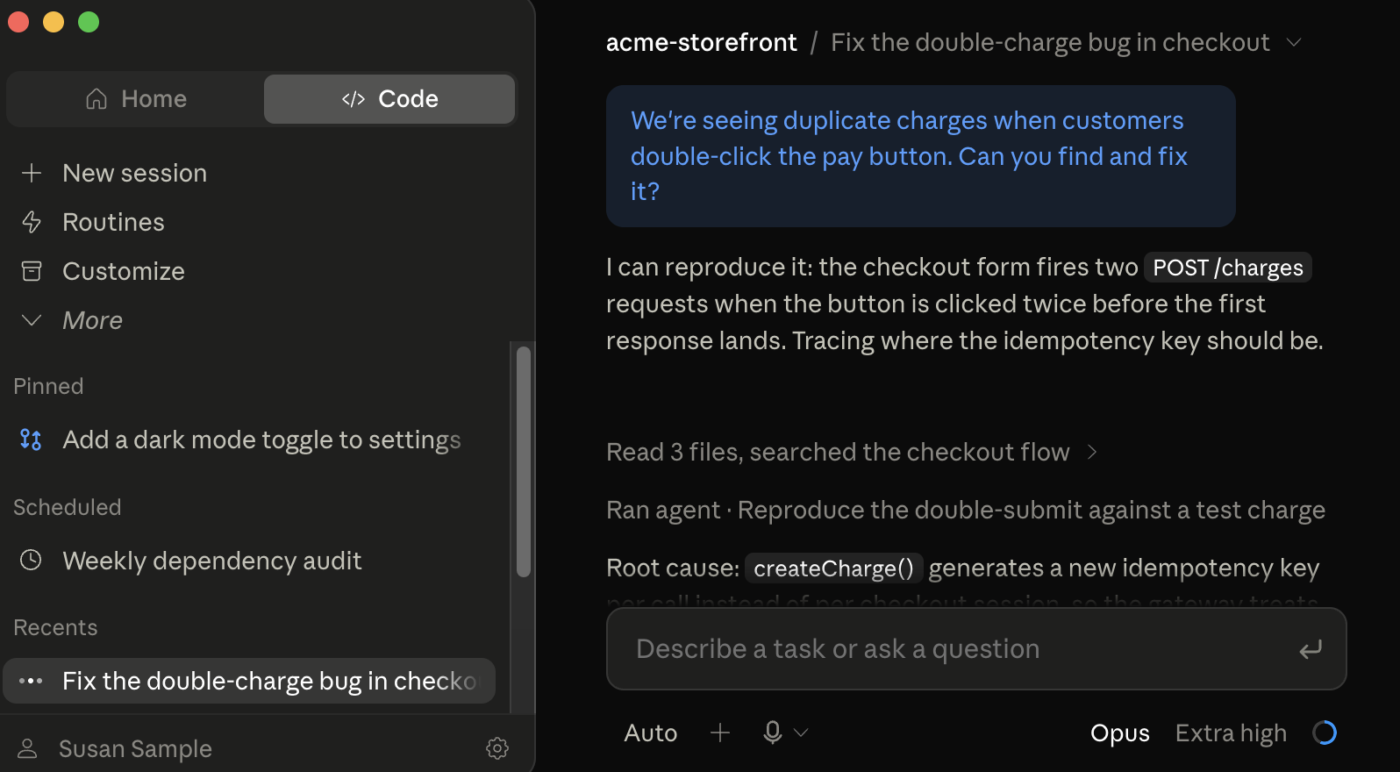
Claude Code is built around repository-level work. CLAUDE.md keeps project conventions available across sessions, while Skills store repeatable workflows and reference material. Subagents can work on separate tasks in their own contexts, and dynamic workflows can split larger jobs, like audits or migrations, across several agents.
Hooks give developers tighter control over what happens around those agents. They can run tests or linters after edits, block specific commands before execution, or trigger scripts and other tools at defined points in the workflow. Claude Code also supports language-server integration for symbol navigation and live type errors, plus MCP connections for external tools and data.
Checkpoints are useful when a large change starts going wrong. Claude Code can rewind tracked edits and conversation state to an earlier point, which helps when testing different approaches or recovering from a bad change.
Opus 5.5 is also priced lower than Astra at API rates, at $4 per million input tokens and $20 per million output tokens versus Astra’s $10 and $50. Anthropic says Opus 5.5 can match Astra’s Terminal-Bench performance at about 40% of the cost per task, though that cost comparison comes from Anthropic’s own testing.
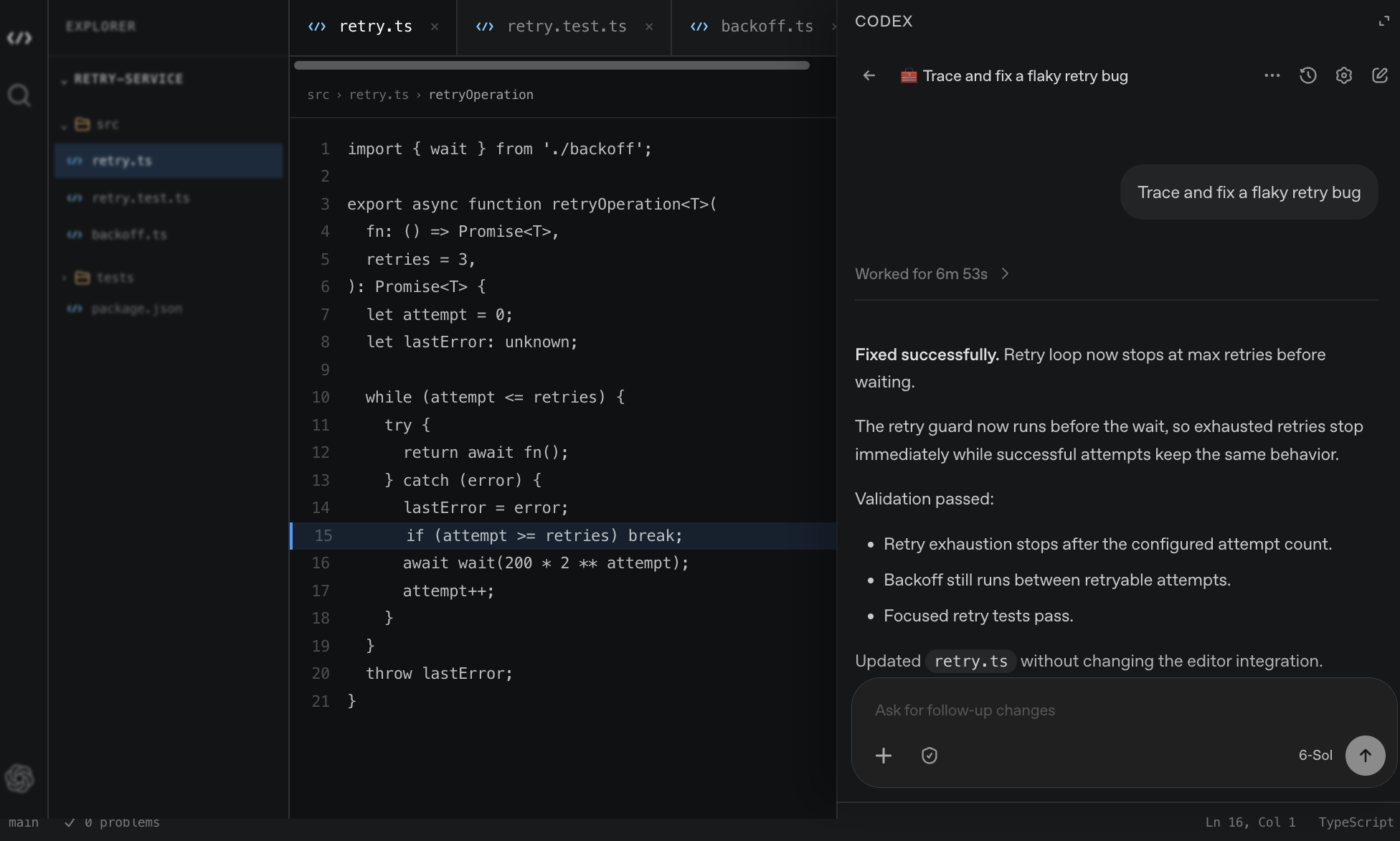
Codex focuses more on working across devices and environments. It’s available through the desktop app, CLI, IDE, and cloud, while Remote in the ChatGPT mobile app lets developers start, steer, review, and organize work running on another machine. Remote also supports worktrees, side chats, inline review, queued prompts, and task steering.
Goals are another useful part of the workflow. A Goal gives Codex an outcome to keep working toward across several turns, with a clear completion condition. OpenAI recommends them for work like dependency migrations, performance tuning, flaky-test investigations, multi-step refactors, and bug hunts where the next step depends on what Codex finds.
Astra also changes how Codex handles very long sessions. When the context window fills, it can keep notes across windows while leaving earlier messages and tool results searchable. That lets Codex retrieve an old requirement, failed fix, or test result without relying only on a compressed summary. OpenAI currently labels the feature experimental.
Codex has its own project instructions and reusable Skills too, and OpenAI’s agent stack now supports subagents and managed orchestration. That closes some of the tooling gap that once separated the two products.
Overall, Claude Code has the edge for coding, especially for long refactors, migrations, audits, and other repository-heavy work. Its project rules, hooks, checkpoints, subagents, and dynamic workflows give developers strong control over the code itself, while Opus 5.5 also costs less than Astra at API rates.
Codex is the stronger fit for developers who care more about mobility and cloud execution. Its desktop, CLI, IDE, cloud, and Remote workflows let you start work in one place and continue or review it elsewhere.
For debugging workflows, either can work well. But if coding is the main reason for choosing between Claude and ChatGPT today, Claude Code has the stronger overall case.
Claude and ChatGPT can both produce a solid draft. The difference shows up when the brief gets longer, the source material piles up, and you start asking for the fifth round of edits.
See below where each stands and falls apart:
Claude is a strong choice for a long article, a dense edit, or anything governed by a serious editorial brief.
It handles the kind of instructions editors give: keep this structure, preserve these terms, don’t touch this section, match this voice, use these sources, and carry those rules through another revision.
ChatGPT makes more sense when the draft is only one piece of the job
You can research the subject, work through supporting files, draft the copy, reshape it for another format, and create related visuals without stitching together several tools. Go for it when one source needs to become several outputs, such as a report, an email, a presentation, and a shorter summary.
And if you’re choosing between them as a writer or editor, skip the generic prompt test. Give both the same messy assignment you’d do at work, then see which draft makes your work easier.
Also Read: Claude Skills for Writing
ChatGPT has a cheaper paid entry point. Go costs $8 per month in the U.S., while Claude’s first paid individual plan is Pro at $20 per month. Claude also offers Pro for $200 per year, which works out to about $17 per month.
| Plan | Claude | ChatGPT |
|---|---|---|
| Free | Free tier available | Free tier available |
| Entry paid | None | Go, $8/mo in the US |
| Standard individual | Pro, $20/mo or $200/year ($17/mo effective) | Plus, $20/mo |
| High-use individual | Max 5x, $100/mo; Max 20x, $200/mo | Pro 5x, $100/mo; Pro 20x, $200/mo |
| Team/business | Standard, $20/seat/mo annually or $25 monthly; Premium, $100 annually or $125 monthly | Standard, $20/seat/mo annually or $25 monthly; Premium, $100 annually or $125 monthly |
| Team size | 2–150 users | 2–200 users |
| Enterprise | $20/seat/mo billed annually + usage at API rates | Contact sales |
| Compared API model | Opus 5.5: $4 input / $20 output; Fable 5.1: $10 input / $50 output per 1M tokens | GPT-6 Astra: $10 input / $50 output per 1M tokens |
| Cached input | $0.20 per 1M tokens | $1 per 1M tokens |
| Cache writes | $5 per 1M tokens | $12.50 per 1M tokens |
For individual users, the main price difference is at the lower end. At the team level, the standard and premium seat prices are the same.
API pricing varies by model. Opus 5.5 costs $4 per million input tokens and $20 per million output tokens. GPT-6 Astra costs $10 per million input tokens and $50 per million output tokens. Cache reads are $0.20 per million tokens for Opus 5.5 and $1 for Astra.
That doesn’t make Claude cheaper across its whole model range. Fable 5.1 costs $10/$50 per million input/output tokens, while GPT-6 Sol costs $2/$10 and GPT-6 Luna costs $0.10/$0.50. API cost depends heavily on which model you use.
Important: Pricing for these models changes often, and providers regularly adjust plan limits, token rates, and access tiers. Keep an eye on the latest pricing pages before you commit to a model for production use.
Usage limits are harder to compare than plan prices because neither product has one simple cap. Below, we’ve decoded the limits you’ll run into across Claude and ChatGPT, including chat, coding, premium models, and other tools.
Claude uses a shared allowance across Claude, Claude Desktop, and interactive Claude Code. How quickly you burn through it depends on conversation length, attached files, model choice, features, and reasoning effort. Pro and Max have a five-hour session limit plus a weekly limit, and you can track both from Settings > Usage.
One detail matters if you use Claude’s top models heavily. Fable 5 and 5.1 aren’t included in the regular allowance on Pro or standard Team seats, so they use paid usage credits from the start. On Max and premium Team seats, Fable is included, but the model can use up to 50% of your weekly allowance.
Anthropic has raised limits several times in 2026. It doubled Claude Code’s five-hour limits for Pro, Max, Team, and seat-based Enterprise plans in May, then raised five-hour limits again with Opus 5.5 in September. Subscription users also get a rate-limit reset they can save until they need it.
ChatGPT splits limits by model and feature. Free and Go include unlimited everyday text chats, while reasoning, file uploads, images, voice, and other tools have separate limits.
Higher-end models have their own caps, too. On the $100 Pro plan, GPT-6 Pro and GPT-5.6 Sol Pro share a weekly allowance of 50 messages.
Work and Codex use a different system again. Their usage depends on the model, task size, reasoning effort, context, and tools involved. Long coding or agent tasks can use more of your allowance than short ones.
Both products let heavy users keep going after the included allowance runs out. Claude offers usage credits billed at standard API rates, while eligible ChatGPT Plus and Pro users can buy credits for supported features such as Work and Codex.
The main difference is how it organizes limits. Claude uses a more unified pool across its main products, while ChatGPT spreads limits across chat, premium models, Work, Codex, Voice, and other tools.
Recent Reddit threads don’t settle on one tool. The split is mostly about the work: Claude gets more praise for understanding the job around a prompt, while ChatGPT gets credit for tighter writing in some workflows and a broader set of everyday tools.
A ChatGPT user who switched to Claude for Opus 5.5, Funny-Strawberry-168, described:
I subscribed to Claude because my Codex subscription had honestly become pretty unusable for me, and I also wanted to give Opus a try. I’m genuinely impressed. It really does feel almost magical.
It constantly notices things in the code I never even asked about, points out potential issues, understands how they relate to what I’m working on, and even offers to fix them separately in another worktree. Literally reads my mind, It doesn’t just follow the prompt. It feels like it’s actually building a mental model of the codebase and everything going on around the task.
I’ve been trying Claude on and off since Sonnet 3.5, and there’s always been something about these models that’s hard to describe. The situational awareness is just insanely good.
GPT models have always felt more lobotomized and overly prompt driven to me.
They added that it felt like Claude was “building a mental model of the codebase” beyond following the prompt. That lines up with a common theme in Claude threads: users value the model noticing dependencies and adjacent problems without spelling out every step.
That praise isn’t universal, even inside r/ClaudeAI. One Reddit user testing the newest models wrote:
I find them good for different things. Astra and GPT 5.6 Sol’s writing takes it, which is a huge part of my workflow. They stay on brand and on spec better. Opus 5.5 is great, but I can’t say I get the hype. That could be because my use case isn’t coding-related.
ChatGPT’s broader toolset comes up often when users explain why they keep it around. In a recent thread from someone switching over from Claude, Reddit user salmanhameed13 pointed to image editing as an easy example:
ChatGPT can actually generate and iteratively edit the image inside the conversation.
Claude can look at your uploaded photo, analyze it, describe it, write the perfect image prompt, etc.—but it currently doesn’t natively generate the finished image.
That’s probably the easiest 60-second demonstration of something ChatGPT can do that Claude simply can’t.
Claude can analyze the same image and help write a prompt, but it still can’t generate the finished image natively. For users whose day moves between text and visual work, that gap matters more than a small benchmark lead.
And some users don’t treat the choice as permanent at all. In one heavily discussed comparison thread, Spontanous_cat described their workflow this way:
My ride-or-die combo is to use Claude to do the work and ChatGPT to critique it. Then have Claude fix it. Claude can be a yes-man sometimes; that said, its work is good enough. ChatGPT is the perfect critic for it.
Other commenters in the same thread described similar splits between Claude Code and Codex, using one for implementation and the other for debugging or review.
Editorial takeaway: Reddit doesn’t reveal a clean Claude-or-ChatGPT consensus. Claude users keep coming back to context, instruction-following, and deeper work. ChatGPT users point to images, research, multimodal tools, and cases where its current models follow a tighter brief. And among heavier users, running both side by side is common enough to be its own workflow.
Treat that as user sentiment, though. The models and their limits are changing too quickly for a Reddit thread to serve as a lasting benchmark.
By this point, the choice is less about which model tops more benchmarks and more about what kind of work takes up most of your day.
| Your priority | Better fit | Why |
|---|---|---|
| Long coding sessions, refactors, migrations, or repository-heavy work | Claude | Claude Code gives you strong control over long-running engineering work, with project rules, hooks, checkpoints, subagents, and dynamic workflows |
| Research, files, images, coding, voice, and other work in one place | ChatGPT | ChatGPT covers a broader mix of work across one workspace, including research, file analysis, image generation, coding, and connected tools |
| Long documents, heavy editing, or detailed writing briefs | Claude | Claude tends to hold onto source material, editorial rules, and revision instructions well across longer sessions |
| Structured writing that also turns into presentations, images, analysis, or other formats | ChatGPT | ChatGPT makes it easier to move from drafting into other formats without changing tools |
| Cloud execution, mobile access, and moving between desktop, CLI, IDE, and remote coding workflows | ChatGPT | Codex is built around working across devices and environments |
| Lowest-cost paid entry point | ChatGPT Go | ChatGPT Go starts at $8 per month in the U.S., while Claude Pro starts at $20 monthly or about $17 per month when billed annually |
| Regularly using Claude for deep work and ChatGPT for its broader toolset | Both | Keeping both can make sense when the differences show up often enough in your real workflow to justify two subscriptions |
If you’re still unsure, test your real work first. Run the same documents, coding tasks, research questions, and everyday prompts through both free tiers for a few days. Benchmark margins depend too much on settings and test conditions to decide for you.
If one tool handles nearly everything you regularly do, there’s little reason to pay for the second. The case for keeping both gets stronger only when their differences show up repeatedly in your actual workflow.
Read More: ChatGPT Use Cases
There’s less setup work than before. Claude now has a built-in way to bring memory from another AI assistant.
Note: If you’re still comparing more broadly, the Perplexity vs. ChatGPT comparison covers the search-first alternative, while our guide to AI search engines looks at the wider category.
Claude and ChatGPT are good at what they do. Claude can reason across long documents and codebases. ChatGPT can research, generate images, build sites, write code, and move across a wide set of tools.
But the results you get from these tools are often left stranded, with no place to store them or, worse, act on them.
Take a simple question like, “What happened to the Phoenix project?” A helpful answer depends on the latest tasks, owners, comments, decisions, dependencies, deadlines, and changes. Claude and ChatGPT can access some of that through connected tools, but the project still needs a system to keep that context current.
This is when you should explore a platform like ClickUp that brings all your work projects together, with contextual AI layered on top.
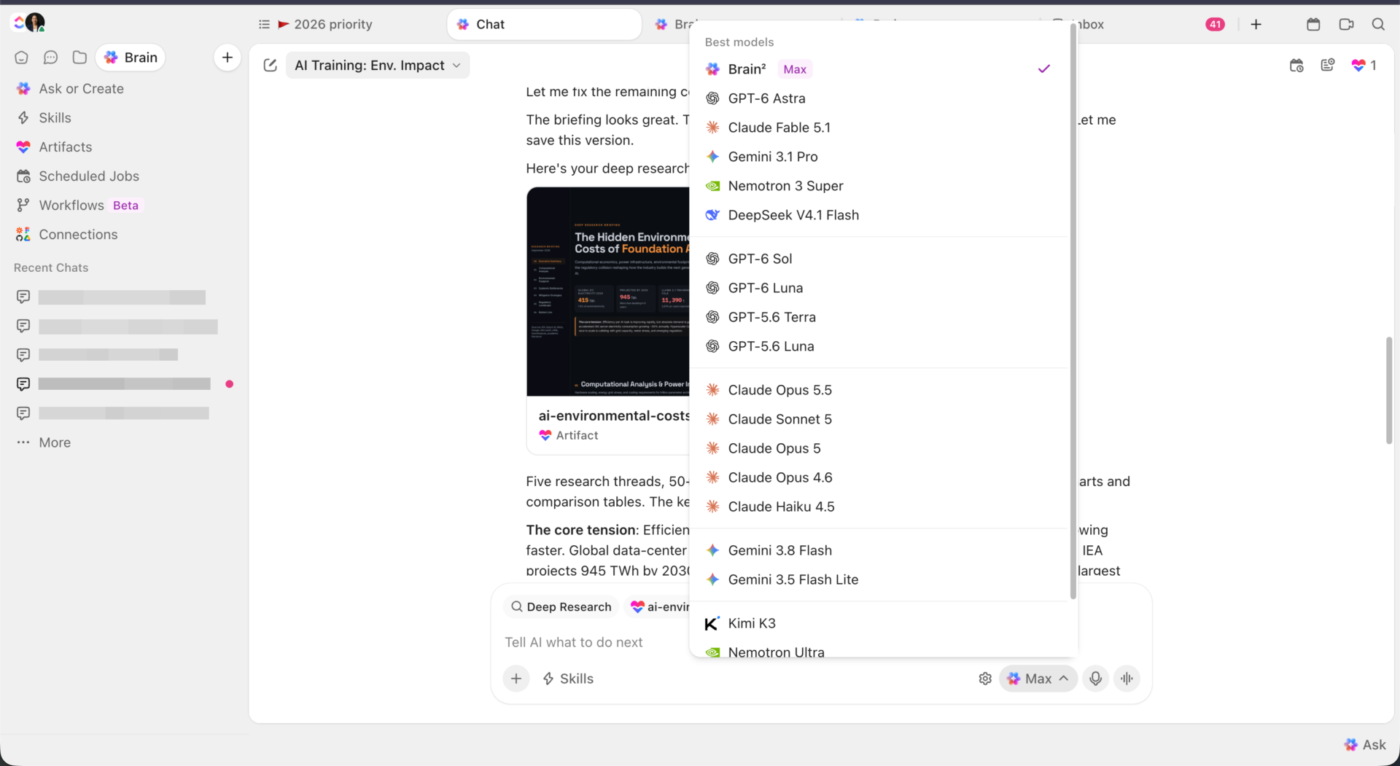
Brain² is ClickUp’s context-aware AI for work. It can summarize projects, draft content, research topics, analyze data, and create tasks and docs. And beyond that, it now also builds interactive prototypes, dashboards, slide decks, images, videos, and other assets.
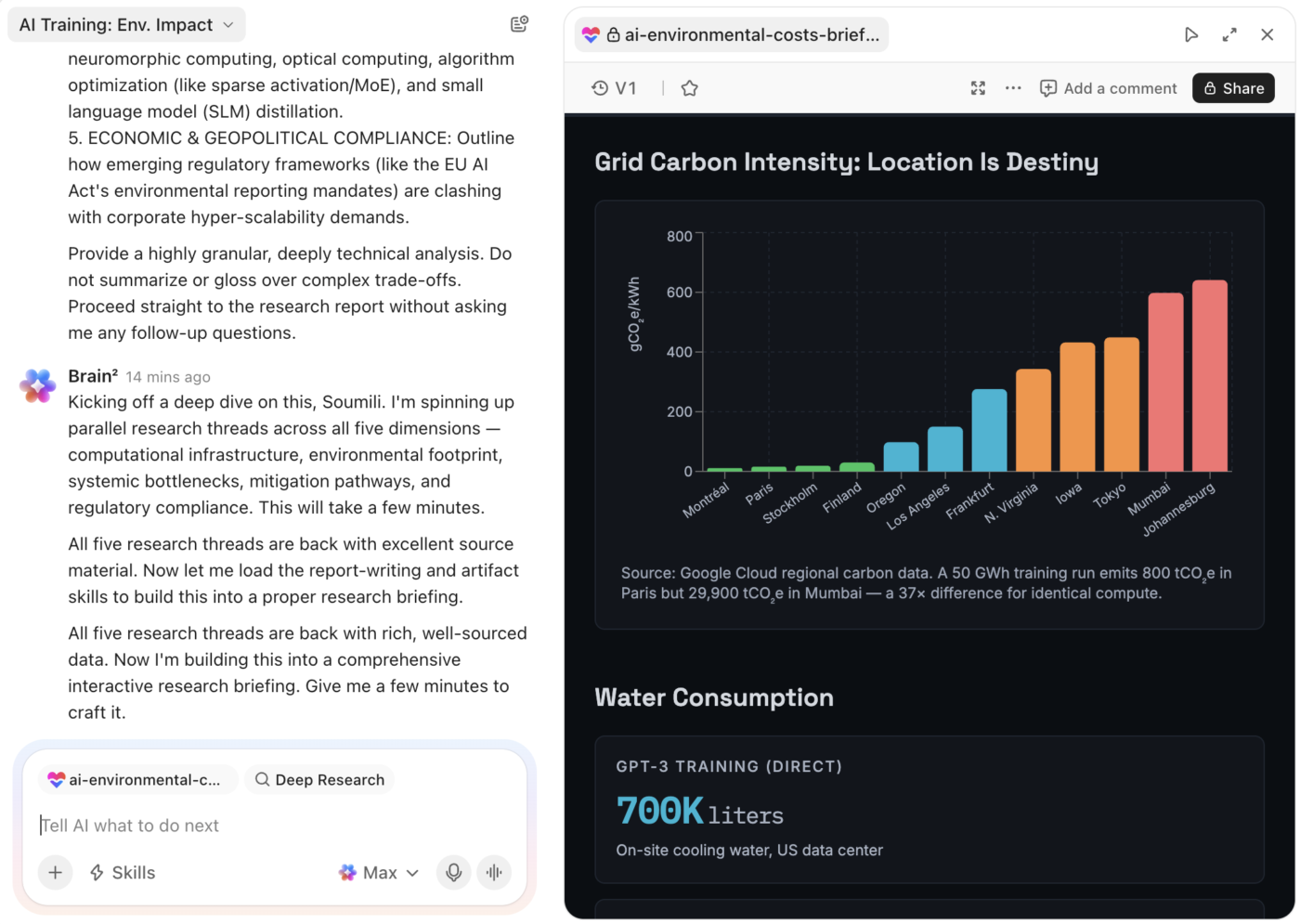
What sets it apart is the context behind those outputs. Brain² can work from the tasks, Docs, Chats, decisions, owners, blockers, and updates already inside your Workspace, so you don’t have to rebuild that context in every prompt. When the answer sits elsewhere, ClickUp Enterprise Search can search connected tools such as Google Drive, Figma, GitHub, and Gmail.
Brain² also gives teams access to frontier models from OpenAI, Anthropic, Google, and others in one place. You can switch between Claude, GPT models, Gemini, and other models while keeping the same work context, without maintaining separate subscriptions just to move between model families.
ClickUp Super Agents take that shared context further. These AI teammates can run multi-step workflows using the tools and data you allow them to access, with triggers, memory, and human approval for critical actions.
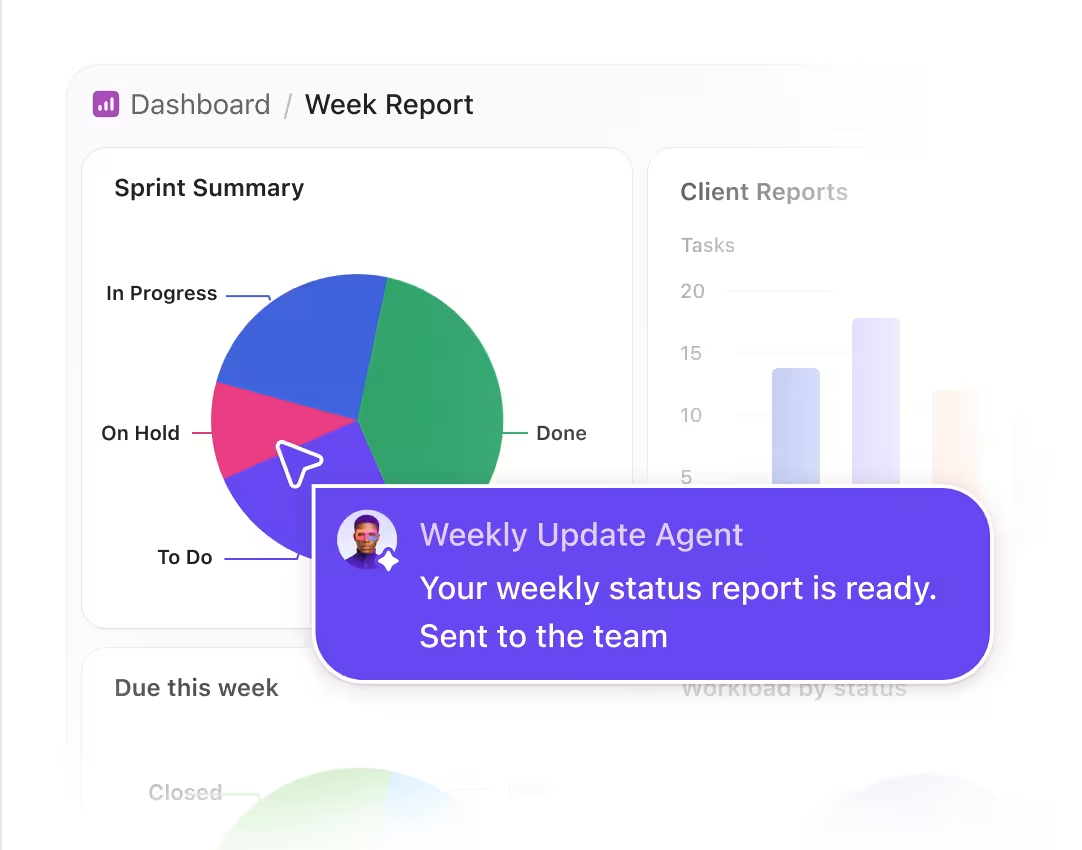
A project agent, for example, could research an issue, flag work that’s falling behind, update tasks, or notify the right people without someone rebuilding the context for every step. Even better, teams can create their own agents through a natural-language builder or start from a prebuilt agent template.
For software teams, Codegen by ClickUp connects the engineering task to the code that follows.
Assign a task to the Codegen Agent, and it can work from the task description, linked Docs, acceptance criteria, dependencies, and discussion already attached to the work. Teams can also @mention the agent for follow-up changes or trigger it when a task reaches a certain status. Codegen does all of it while a human takes charge of reviews and merges the resulting code.
Walkthrough: When you switch from a standalone AI assistant to a Work AI built around your team, the biggest change is continuity. The AI can work from shared projects, decisions, and owners, then help turn that context into the next task, brief, or workflow as the team grows.
Best for: Teams that already manage projects, docs, decisions, and collaboration in ClickUp and want AI to answer questions, create work, and act on that shared company context without rebuilding it in every prompt.
Skip it if: You mainly need a personal AI assistant for standalone writing, research, coding, or image generation, and don’t need a shared system for managing the work around those outputs.
For most people, the choice between Claude and ChatGPT comes down to the shape of their work.
Claude holds up better on long, context-heavy jobs like big codebases, dense documents, and briefs that have to survive several rounds of revision. ChatGPT covers more ground in one place, from research and images to voice and scheduled tasks, and it costs less to start.
Neither lead is permanent. Both companies ship new models every few months, and a gap that decides your pick today can close by the next release. Testing your own work on the tools will tell you more than any benchmark table will, including the ones in this article.
If your team ends up using both, the harder problem is keeping the work around them organized: the tasks, decisions, and files each answer feeds into. ClickUp gives you one place for that work, with Claude, GPT, and Gemini models available inside it.
Yes, on personal accounts, both give you control over this. In ChatGPT, turn off Improve the model for everyone under Settings > Data Controls. New conversations won’t be used to train OpenAI’s models, but they can still remain in your history. If you submit feedback on a response, the related conversation may still be used for training.
Claude has a similar model-improvement setting under its privacy controls. Turning it off stops new chats and coding sessions from being used in future model-training runs. Anthropic notes exceptions for conversations flagged for safety review or data you explicitly choose to share. For company accounts, defaults differ. OpenAI doesn’t train on ChatGPT Business, Enterprise, Edu, Healthcare, or API data by default, and Anthropic says the same for Claude for Work and its API.
Yes, although neither remembers every detail you’ve ever shared. ChatGPT Memory can draw on past chats, saved information, files, and connected apps when those features are available and enabled. What it can reference varies by plan, region, and workspace settings.
Claude can also build memory from previous chats. Memory is currently on by default for Free, Pro, and Max accounts, while Team and Enterprise owners control whether it’s available in their workspaces. Claude also keeps separate memory spaces for individual Projects.
Yes. ChatGPT’s Temporary Chat doesn’t appear in chat history, create or update memories, or train OpenAI’s models. OpenAI may retain a copy for up to 30 days for safety purposes. Claude has Incognito chats, which aren’t added to your chat history or Claude’s memory. Note that Incognito chats in Team and Enterprise can still appear in organizational data exports and follow the organization’s retention policy.
Both have voice conversations. Claude Voice is available across Free, Pro, Max, Team, and Enterprise on mobile, desktop, and the web. It can also use web search and connected tools such as Gmail, Google Calendar, Google Docs, and Slack while you’re talking. ChatGPT currently has several Voice modes. Live supports natural spoken conversations but doesn’t support video or screen sharing. Eligible subscribers can switch to Advanced on iOS or Android when they need live video or screen sharing.
If camera or screen sharing is important to your workflow, check which ChatGPT Voice mode your plan and device support before choosing.
No. A context window is the total amount of information the model can work with at once. Depending on the model, that budget can include your prompt, conversation history, tool results, reasoning tokens, and the model’s response. It isn’t the same thing as a file-upload limit.
The number can also change depending on where you use the model. Claude, for example, publishes different context-window details for Chat, Claude Code, and Cowork. OpenAI likewise separates total context from usable input in some ChatGPT modes. For example, it describes a 256K total window for manually selected Thinking as 128K input plus up to 128K output.
It depends on the work. Claude is the stronger choice for long coding sessions, large documents and writing that follows a detailed brief through several revisions. ChatGPT is the better pick if you want one assistant for research, file analysis, image generation, voice and coding, and it also has the cheaper paid entry point at $8/month for Go in the U.S. Benchmark scores won’t settle it, because Anthropic and OpenAI test each other’s models under different settings. Run the same real tasks through both free tiers for a few days, and pick the one that saves you more time.

Manasi Nair
Max 18min read

Arya P Dinesh
Max 26min read

Sean Hardy
Max 26min read

© 2026 ClickUp




