

Sorry, there were no results found for “”
Sorry, there were no results found for “”
Sorry, there were no results found for “”
The nine best Pumble alternatives split into three camps. Suite-bundled messengers (Microsoft Teams, Google Chat, Zoho Cliq) are free because they ship inside a subscription you already pay for. Standalone chat apps (Slack, Chanty, Twist) charge for messaging directly, and they earn it through their integration libraries. Self-hosted platforms (Mattermost, Rocket.Chat) keep messages on your own servers, but you pay for the infrastructure.
ClickUp sits between them: chat, tasks, and docs in one workspace, with a free plan and enough structure to replace multiple tools at once.
Two things decide whether your Pumble replacement is worth the switch: does the specific limit you keep hitting actually go away? And does the new chat app create a new limit you didn’t have before? No tool solves both, which is why we’ve evaluated the nine below across critera like cheapest marginal cost to most control over your data. Each one gets verified pricing, honest limitations, and the friction you will feel on day one.
| Tool | Best for | Standout feature | Pricing* | Where it falls short |
|---|---|---|---|---|
| Slack | Teams whose work runs on a wide third-party SaaS stack | App directory of 2,600+ integrations pipes GitHub, Zendesk, and Salesforce updates into the same channel where they’re discussed | Free; paid from $7.25/user/mo | Chat only, so decisions and tasks scatter across the connected apps around it |
| Microsoft Teams | Companies already paying for Microsoft 365 | Scheduled calls include recording, live captions, and speaker-labeled transcripts you can search instead of replaying | Free; Essentials from $4/user/mo | Free tier caps meetings at 60 minutes with no recordings, and Copilot recaps need an add-on license |
| ClickUp | Teams whose conversations keep producing untracked work | Any chat message converts into a task with the original thread linked, and replies sync both ways between task and channel | Free Forever; paid from $7/user/mo | More structure than a flat channel list, so single-purpose messenger habits meet a learning curve |
| Google Chat | Teams living in Gmail, Drive, and Calendar | Docs open in split view beside the conversation, and Drive permissions apply automatically to anything shared in a Space | Free; Business Starter from $7/user/mo | Summaries and auto-translation start at Business Standard, and the app library trails Slack’s |
| Chanty | Small teams that want Pumble’s feel with task boards built in | Teambook gathers every conversation, task, file, and pin into one searchable hub, and any message becomes a Kanban task | Free; Business from $3/user/mo | Thin integration library that teams relying on more than a few connectors outgrow fast |
| Mattermost | Regulated orgs that must keep messages on their own servers | Urgent messages with an @mention re-ping the recipient every five minutes until they respond or 30 minutes pass, so critical alerts can’t get buried | Custom pricing | Self-hosting means owning upgrades, backups, and scaling yourself |
| Rocket.Chat | Government and defense teams that treat data jurisdiction as a requirement | Matrix federation lets two organizations share channels in real time without guest seats or data leaving either’s servers | Custom pricing | Encrypted rooms can’t federate, and small teams inherit configuration overhead they don’t need |
| Twist | Distributed teams replacing real-time pings with async threads | Every conversation is a titled thread, and an inbox collects only the threads you follow instead of everything loud | Free; Unlimited at $6/user/mo | No built-in AI summaries or catch-up digests, so a week away means reading the backlog in full |
| Zoho Cliq | Companies whose CRM, HR, and projects already run on Zoho | Drag-and-drop bot builder turns approvals, standups, and ticket routing into workflows without code | Free; paid from $16.20/mo for up to 25 users | Without other Zoho apps, the native connectors that justify it disappear |
Our editorial team follows a transparent, research-backed, and vendor-neutral process, so you can trust that our recommendations are based on real product value.
Here’s a detailed rundown of how we review software at ClickUp.
Score every alternative against five criteria: history retention, group calling tier, guest access model, integration depth, and what the AI can actually do beyond summaries. Together, they separate a tool your team keeps from one you migrate away from inside a quarter.
Here are the nine picks: Slack, Microsoft Teams, ClickUp, Google Chat, Chanty, Mattermost, Rocket.Chat, Twist, and Zoho Cliq.
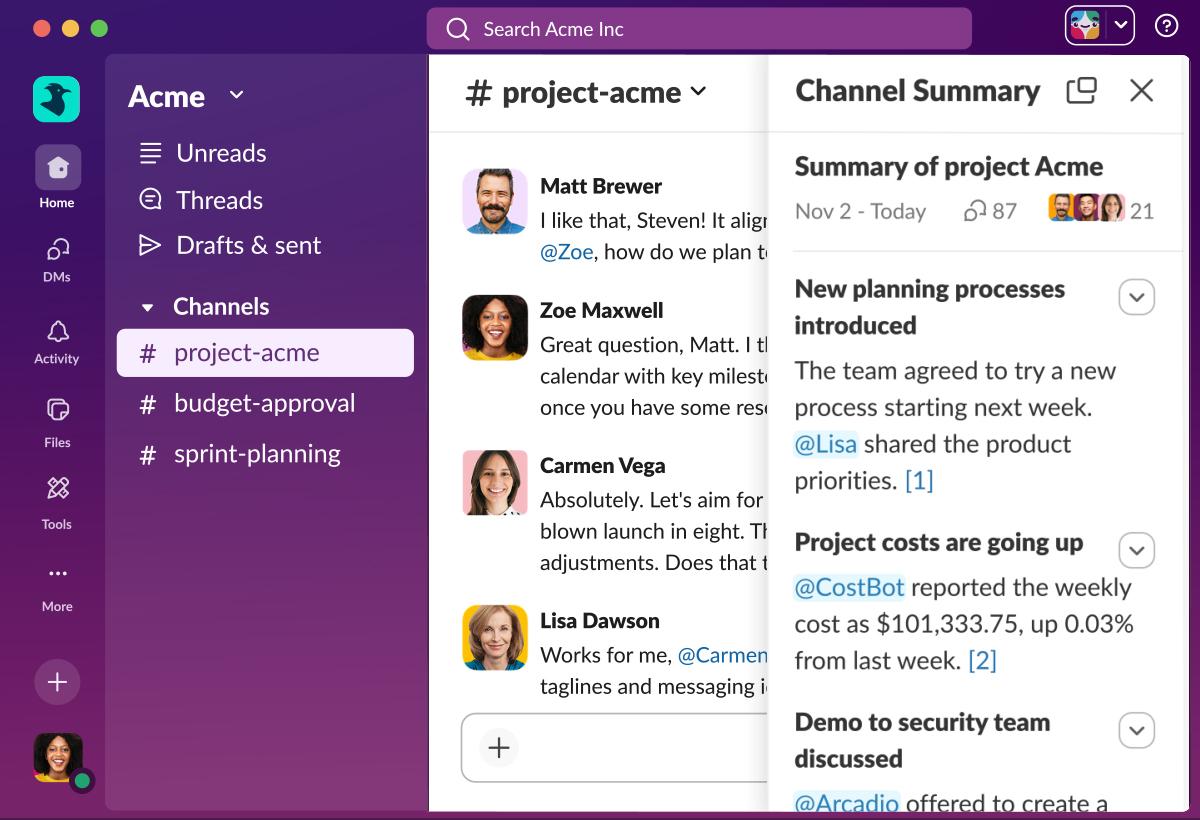
Slack’s app directory has over 2,600 integrations, the most of any team chat app. Connect the tools your team already uses, like GitHub, Zendesk, or Salesforce, and their updates arrive as regular messages in whichever channel you choose. A support team, for example, sees new tickets land in the same channel where they discuss them, so the conversation and the tickets stay together.
Huddles cover the moments when typing gets slow. Start one from any channel or DM, and it opens an audio or video call with screen sharing for up to 50 people. When the call ends, AI notes post the takeaways and action items to a canvas in that same conversation. If you’ve been away from a busy channel, an AI-generated summary catches you up on what happened and what was decided.
Where it falls short: Slack is a chat tool. Decisions, tasks, and documents live in other apps connected by integrations. The more tools you connect, the more work can fragment across places.
Skip it if: Conversations in your team regularly produce work that nobody tracks. Slack surfaces the discussion, but following through still means entering context sprawl.
Hear about Slack from a G2 reviewer:
Slack’s intuitive interface and smooth integrations have made it an indispensable part of our day-to-day workflow. The ability to connect apps like Google Drive, Jira, and GitHub directly within our channels significantly cuts down on context switching and keeps everything in one place. I also really value the threading feature, since it helps keep individual conversations organized without cluttering the main channel view.
Microsoft Teams comes bundled with Microsoft 365, so companies on Business Basic or higher already own it. For them, the question changes from which chat app to buy to whether the one they have is good enough.
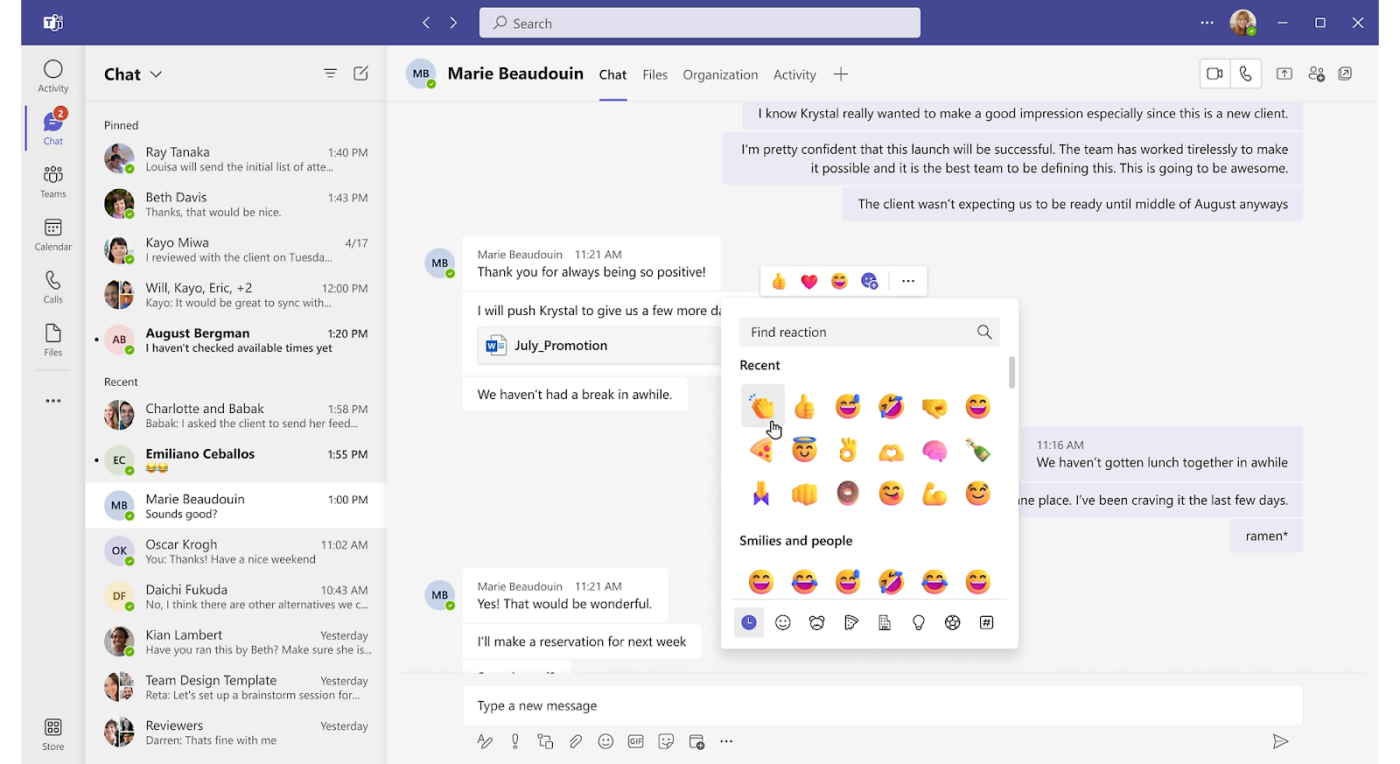
In MS Teams, a scheduled call comes with recording, live captions, and a transcript with speaker labels. Afterward, search who said what and avoid replaying an hour of video. With a Copilot license added, you can walk into a meeting ten minutes late and get a summary with action items and owners already pulled out.
Where it falls short: The free version caps group meetings at 60 minutes and 100 people, with no recordings, transcripts, or breakout rooms. Microsoft Copilot‘s meeting recaps also aren’t included in the base plans; they require a Teams Premium or Microsoft 365 Copilot add-on license.
Skip it if: Your team chats more than it meets. The Teams > Channels > Tabs structure and the meeting-first design pay off for organizations running on scheduled calls, and add weight for groups that mostly need quick back-and-forth.
This is what a G2 reviewer thinks:
Microsoft Teams stands out as a centralized collaboration platform. Its strongest features center around productivity, context retention, and system integration The value provided by Microsoft Teams aligns well with its pricing, provided an organization fully uses the broader Microsoft 365 ecosystem.
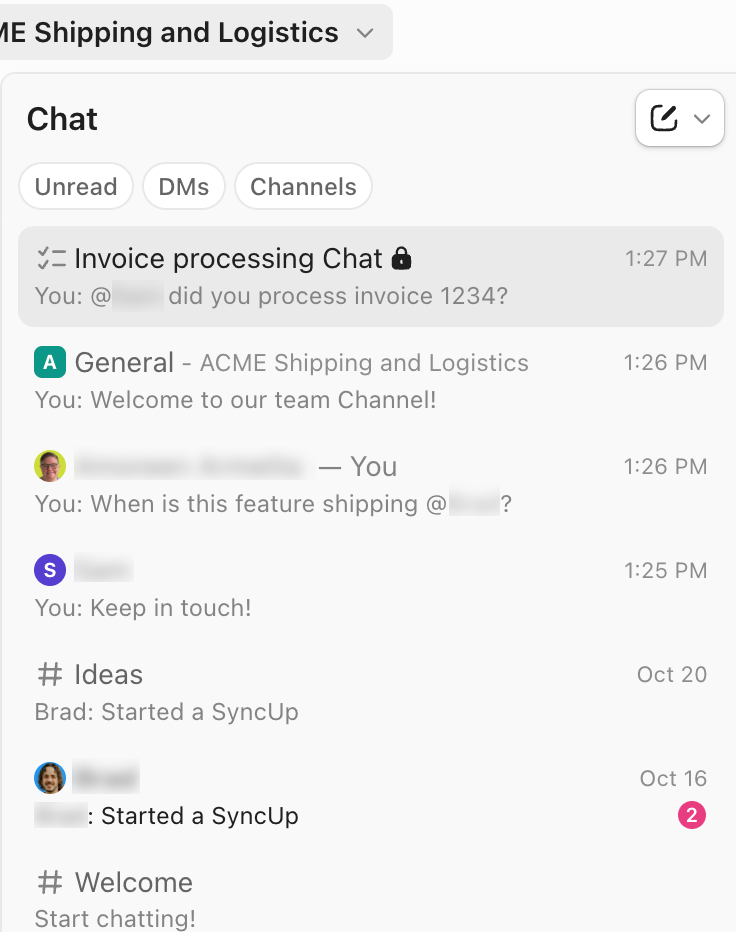
In Pumble, chat lives in one app, and projects live in Plaky, a different app from the same suite. ClickUp Chat removes that seam: channels run inside the same workspace that holds your tasks, docs, and dashboards. A decision made in conversation becomes tracked work without anyone copying and pasting it elsewhere.
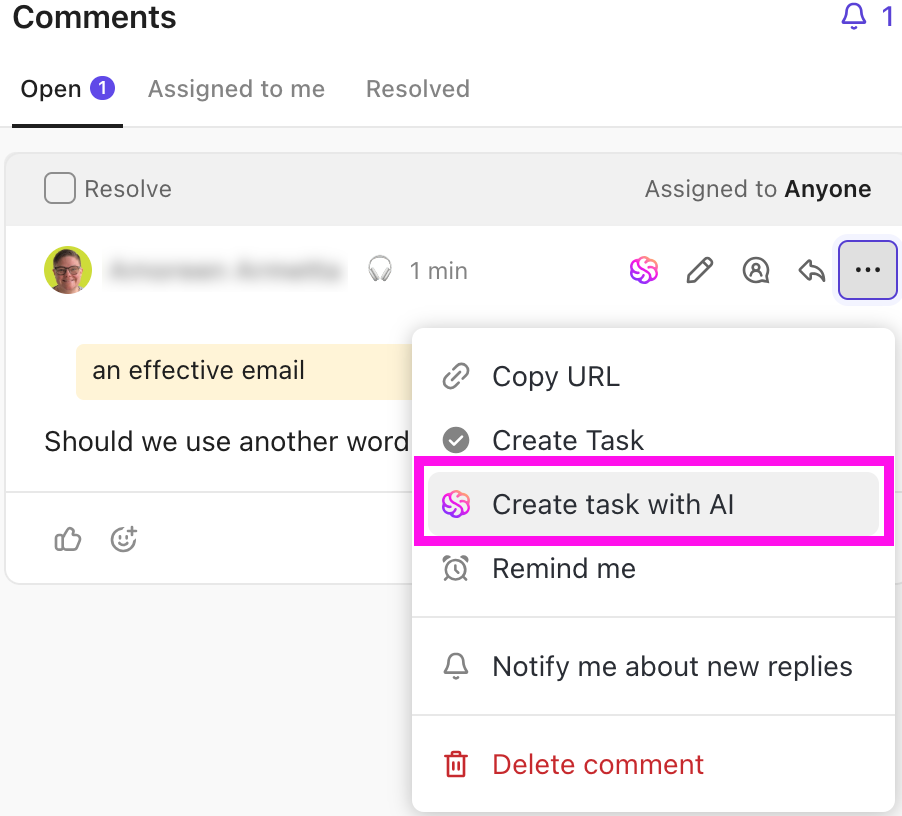
Highlight a message, select Create Task, and it lands in the right List with the original thread linked. The assignee opens the task and reads the conversation that produced it. The link works in both directions: a reply on the task shows up in chat, and a reply in chat appears on the task. When text isn’t enough, ClickUp SyncUps start a voice or video call from any channel. Follow-ups collect the messages waiting on your response, so requests don’t sink under new activity.
The AI layer covers the catch-up and the busywork. Ask ClickUp Brain what happened overnight, and it answers from your Docs, tasks, chat threads, and connected apps through Enterprise Search.
Where it falls short: ClickUp carries a learning curve for teams arriving from a single-purpose messenger. The workspace has Lists, Spaces, views, and custom fields around every conversation, which is more structure than a flat channel list.
Skip it if: You want messaging and nothing else. The value is that chat and work share one surface. If that’s not the problem you’re solving, a dedicated messenger gets you there faster.
See how ClickUp has performed per this G2 reviewer in terms of performance:
In terms of performance, ClickUp has been reliable for our day-to-day task and project management. The main value for us is having project information, task updates, discussions, and responsibilities in one place, which reduces the need to manage everything through separate spreadsheets or chat conversations.
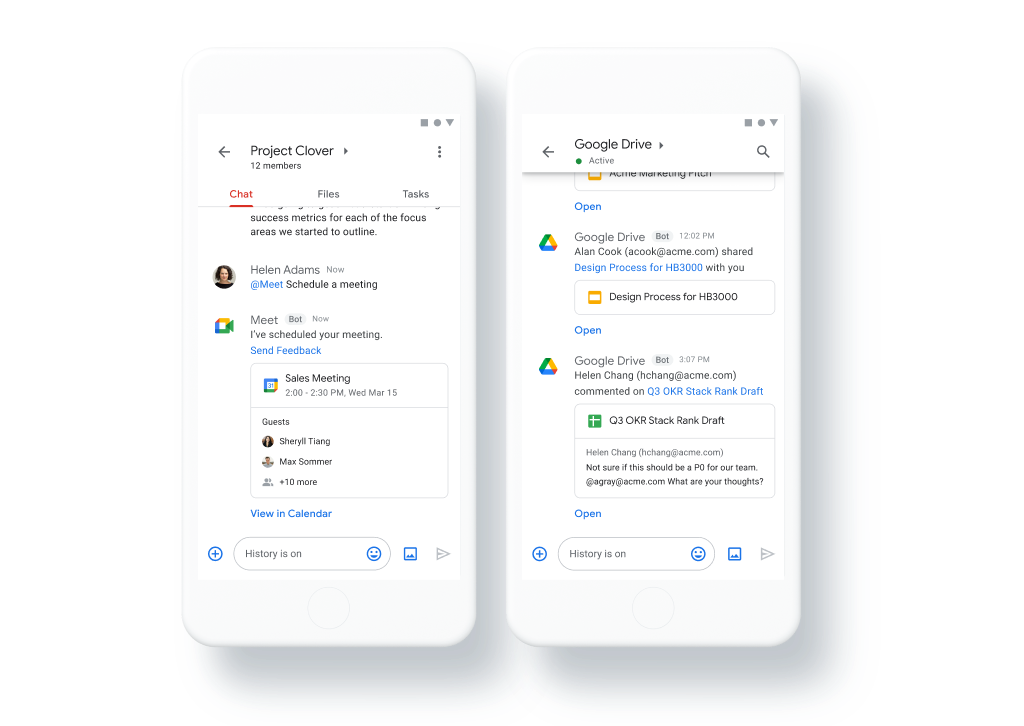
Google Chat comes included with every Google Workspace plan, so teams already using Gmail, Drive, and Calendar have it without a new contract or new logins. Permissions carry over too: share a Doc in a Space, and Drive access applies automatically, with no separate invite.
Spaces organize conversations by project or team, and each one holds more than messages. Members can, for example, assign tasks to each other that land in the assignee’s Google Tasks list. They can also browse every shared file in the Files tab and open a Doc or Sheet in a split view next to the conversation. This way, you can edit and discuss in one window. When typing gets slow, a huddle starts a voice call directly from the Space, and anyone can turn on their camera or share a screen mid-call.
Where it falls short: The third-party app library is smaller than Slack’s, and the AI arrives in tiers: conversation summaries and automatic translation start at Business Standard, not Starter. Teams that need workflow automation inside chat end up adding another tool.
Skip it if: Chat is your operational hub and you need deep connectors into CRM, ticketing, or CI tools. Google Chat works best as the messaging layer around Google’s own apps.
This is what this Capterra reviewer likes the most about Google Chat:
What I like the most about Google chat is the push notifications on my laptop and the fact that I can search my messages to find specific conversations I am looking for. I also like that it’s a free service especially because it’s so useful. I also like that big documents you send its in a separate Google Drive chat which makes it easy to find what you’re looking for.
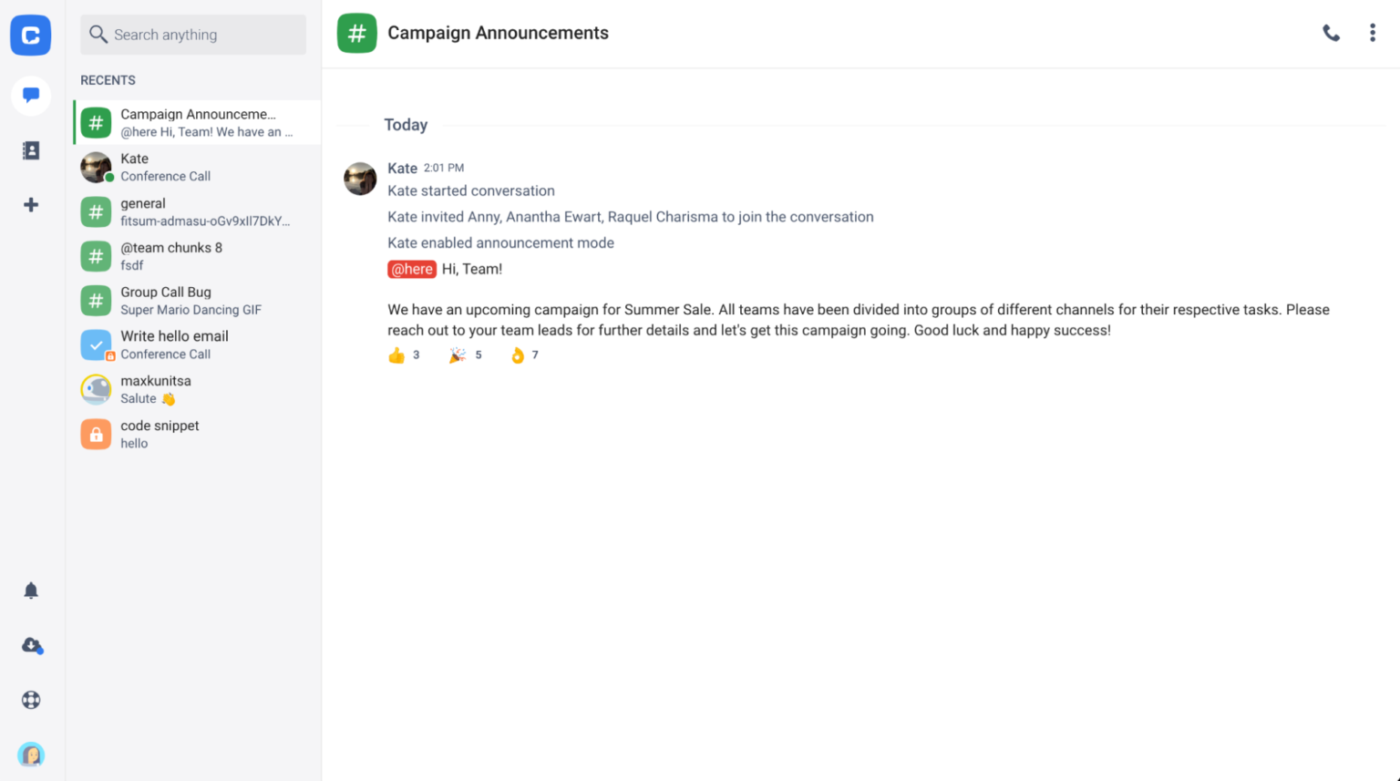
Chanty is the closest match to Pumble in feel: a clean messenger with built-in task management. If your team liked Pumble’s simplicity and wants to keep it, this is the natural first stop.
The left panel shows channels and direct messages. And the right side holds Teambook, a single searchable hub that collects every conversation, task, file, and pinned message your team has shared. Tasks tie directly into the chat: hover over any message, click Create task, and it gets an assignee, a due date, and a place on a Kanban board. Each task has its own discussion thread, so the follow-up conversation stays attached to the work instead of scattering back into the main channel.
Where it falls short: The integration library is thin. Teams depending on more than a handful of third-party connectors will outgrow it quickly.
Skip it if: Your workflow runs on deep SaaS integrations. Chanty works best as a simple messenger with basic task boards, not as the center of a wide tool stack.
This is why this G2 reviewer likes Chanty:
I use Chanty for streamlining communication and keeping my team aligned, which is great for both casual day-to-day chats and structured project communication. I love how chat and task management are seamlessly connected, ensuring important action items don’t get lost in conversation. The ability to instantly turn a message into a task and assign it to the right person without leaving the conversation helps with accountability and clarity.
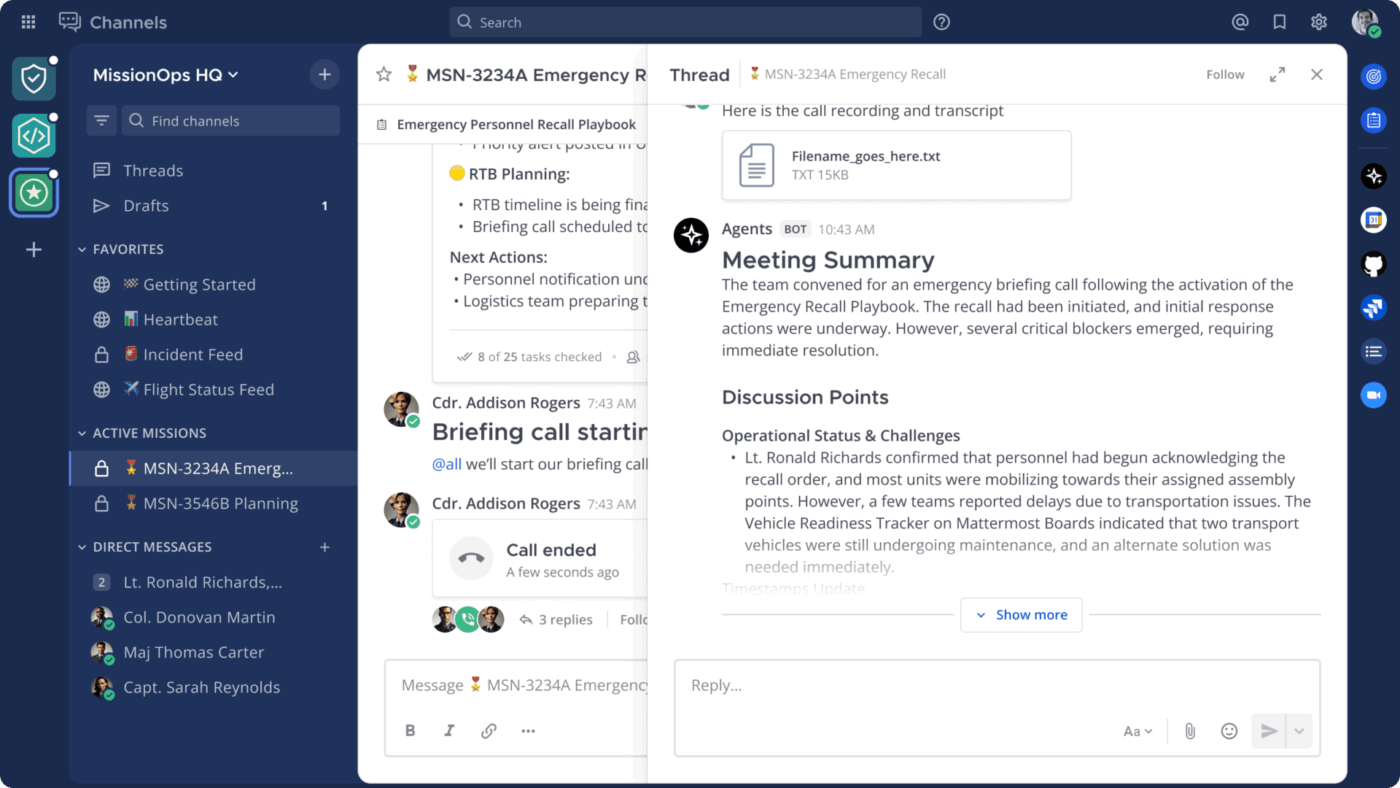
When messages have to stay on servers you control, cloud tools are out of the running, and Mattermost is usually what’s left. It runs on-premises, in a private cloud, or fully air-gapped, which is why it shows up in defense, critical infrastructure, and financial services. The core platform is open source, so your security team can audit the code before anyone sends a message.
Channels, threads, and message priority cover the basics. Mark an @mention urgent, and it re-notifies the recipient every five minutes until they acknowledge, reply, or react, with a 30-minute cap that admins can extend. A critical alert gets several chances to land, not just one. AI stays inside your boundary too. The Agents plugin connects to both self-hosted and cloud models. This means a model that never leaves your infrastructure can answer a catch-up request on an incident channel.
Where it falls short: Self-hosting means owning upgrades, backups, and scaling. The setup assumes you want to run a server, not just use a chat app.
Skip it if: Nobody on the team wants to manage infrastructure. Every cloud tool on this list removes that work entirely.
How this G2 reviewer uses Mattermost:
I use Mattermost at work for inside company communication, and I think it’s really easy to use. I like how it can send and receive every type of information, like text, photos, files, and zip files, which is super handy. It’s fast to use and I can choose between the desktop version, web, or mobile app, and they are all comfortable to use. I have also connected it with my job’s mailbox, allowing me to save every chat with my boss in my mailbox.
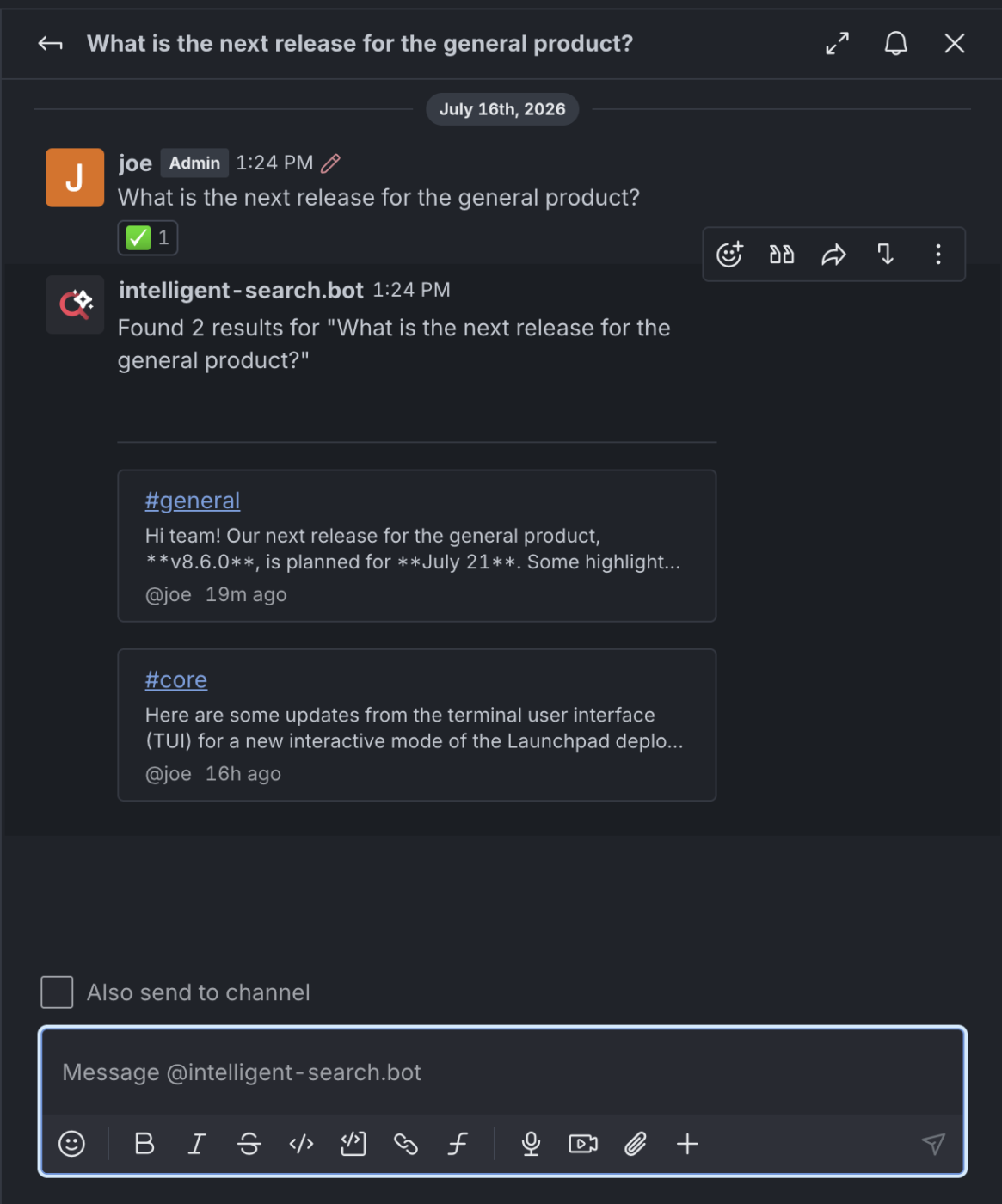
Rocket.Chat is an open-source platform (MIT license) built for organizations that treat data jurisdiction as a requirement. For example, government, defense, and regulated industries that must self-host. AI works as a paid add-on and runs against a model you host yourself. Neural Search answers questions across messages while respecting each user’s room permissions.
Cross-company work runs on federation over the Matrix protocol, built directly into the server. Two organizations share channels and direct messages in real time while keeping their own infrastructure. Nobody hands out guest seats or moves data onto someone else’s servers. Inside your own workspace, end-to-end encryption covers private rooms and DMs, and admins can make it mandatory so the server rejects any unencrypted private room.
Where it falls short: The product is weighted toward compliance-heavy buyers. A small team will find more configuration overhead than it needs. Encryption also has a boundary worth knowing: end-to-end encrypted rooms can’t federate, so cross-organization channels run without E2EE.
Skip it if: You want to sign up and start chatting today. Rocket.Chat is built for teams that scope the deployment before they begin.
Why Rocket.Chat stands out for this G2 reviewer:
I use Rocket.Chat every day as it acts as our main hub for both internal and client communications. I love its channel structure because we can create dedicated channels for every client project and department, which keeps everything organized and easy to follow. I appreciate its flexibility, offering essential features like real-time chatting, direct messaging, and simple file sharing without unnecessary complexity.
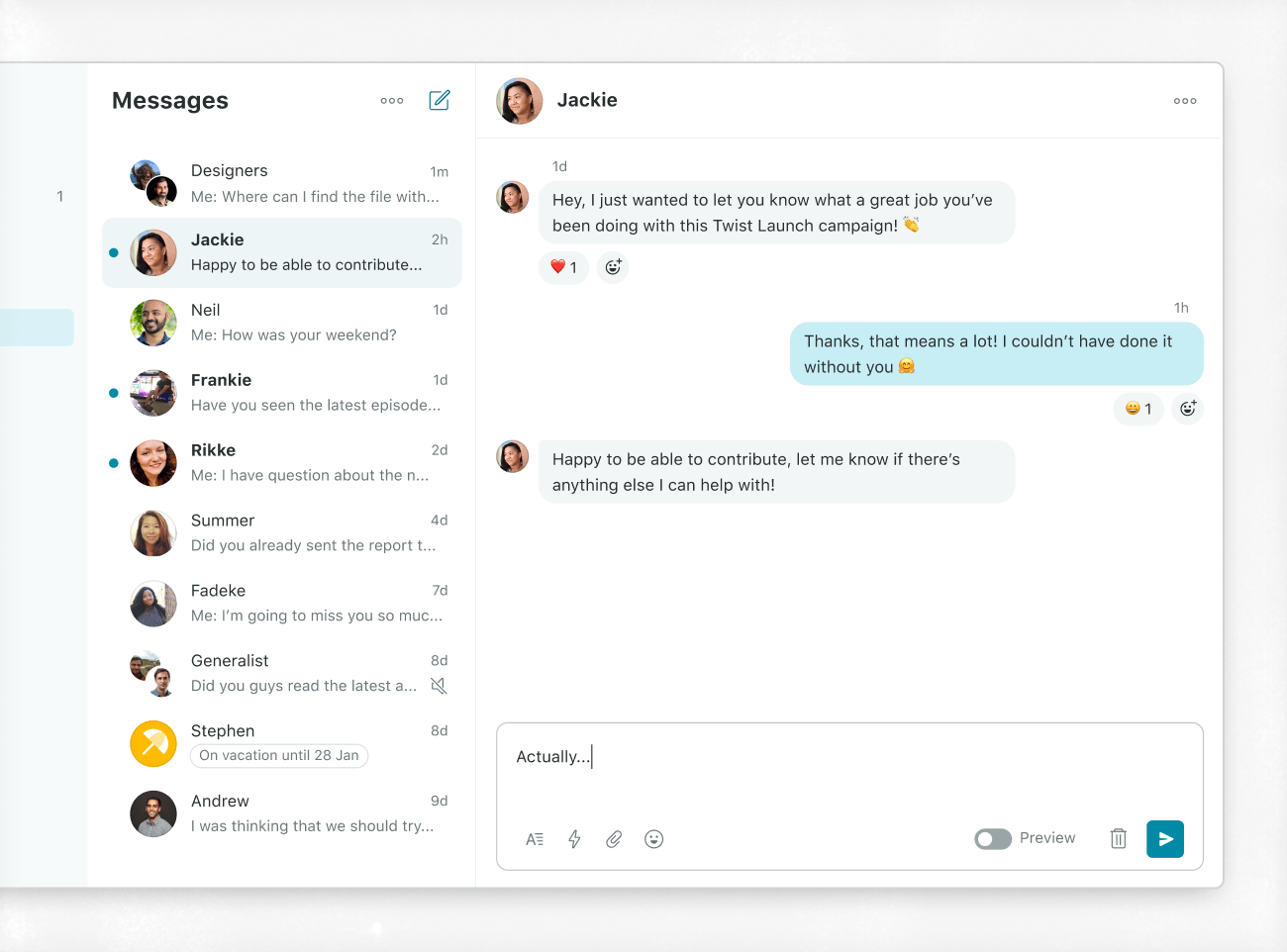
Twist, built by the team behind Todoist, argues against real-time chat entirely. Conversations live in titled threads, like a forum, and nothing in the design demands a reply within two minutes.
Open a channel and every conversation has a subject line. Threads stay readable for weeks because every discussion is structured from the start. An inbox collects only the threads you follow, so your attention goes where you choose instead of where it’s loudest. Guests fit the same calm model: clients and contractors join specific channels without seeing the rest of the workspace, and on the free plan, all guests are free.
Where it falls short: There’s no built-in AI in the product: no summaries, no catch-up digests, no meeting notes. Twist’s position is that well-titled threads shouldn’t need summarizing, but a backlog of long threads after a week away still has to be read in full.
Skip it if: You’ve come to rely on AI catch-ups to start your day. Every suite-bundled tool on this list summarizes what you missed; in Twist, the reading is the workflow.
This is how Twist helps a G2 reviewer:
Twist helps me to keep the conversations very structured with threads, making my inbox easier to have visibility on the discussions, not getting buried in the other conversations. They also provide a clean synchronous communication, which helps me to avoid interruptions. Their interface is also clean and intutive [sic], their organised channels help to keep track on real time chat tools.
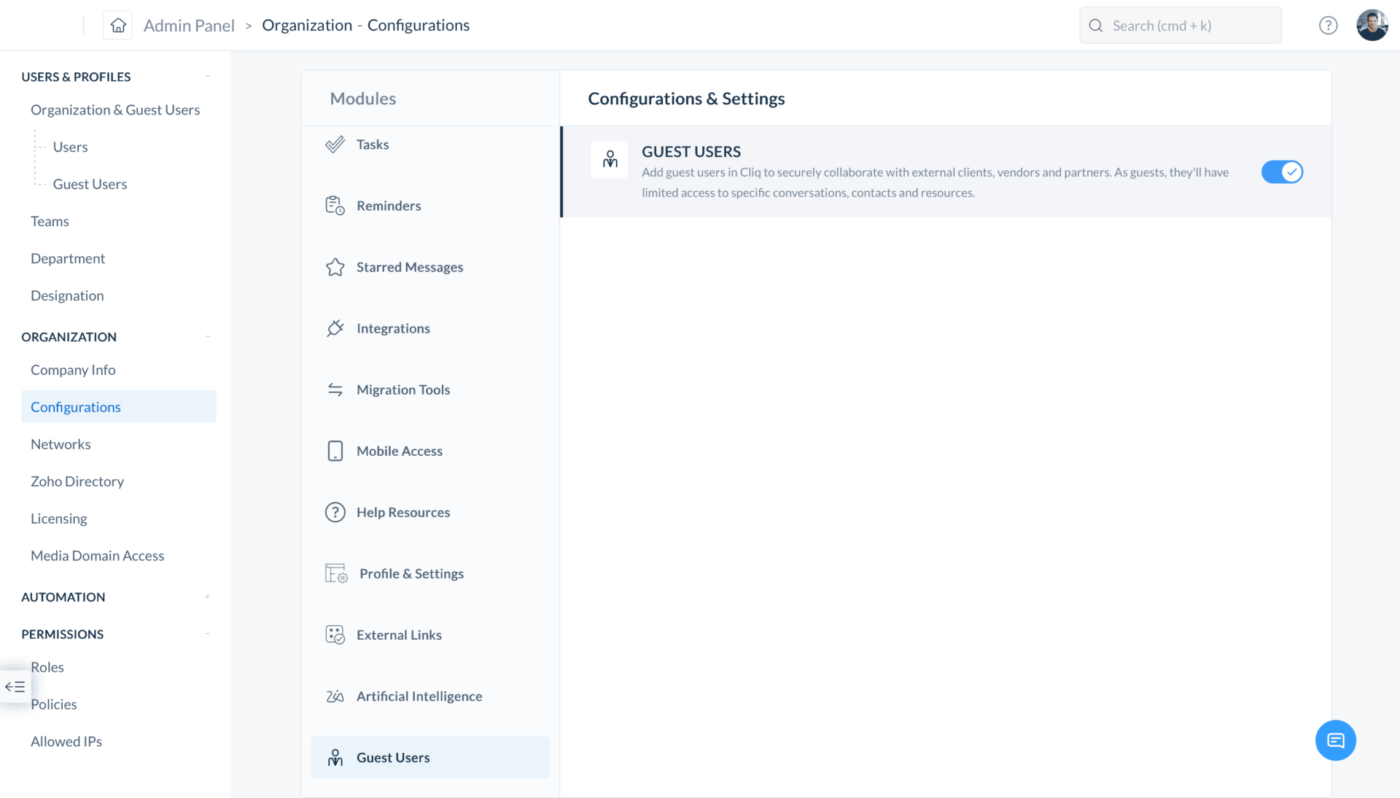
Zoho shops get Cliq almost by default: it ships inside Zoho Workplace and Zoho One and connects natively to the CRM, HR, and project tools already in place.
Cliq gives non-developers more automation than most bundled messengers. A drag-and-drop bot builder turns approval flows, standup prompts, and ticket routing into guided workflows without code. Teams with scripting skills can go further with slash commands, message actions, and custom functions. Zia, Zoho’s AI, helps you catch up: if you fall behind on a busy channel, ask for a summary and get a digest of unread messages. Recorded meetings also come with transcripts and summaries.
Where it falls short: Cliq is strongest inside the Zoho suite. Teams without other Zoho products lose the native connectors that make it compelling.
Skip it if: You don’t use any other Zoho products. The value is the ecosystem. Without it, Cliq is a capable but unremarkable messenger.
Hear about Zoho Cliq from this G2 reviewer:
I find Zoho Cliq to be a very good platform for internal team communication. It allows us to do check-ins, checkouts, and meetings, making it a cost-effective alternative to Slack. I particularly like the channels feature, which is similar to Slack’s, as it allows us to create specific channels for different departments like sales and marketing, HR, and admin, facilitating a collaborative way of interacting with our team.
One app if your conversations keep producing work that nobody tracks; three apps if chat is genuinely chat for your team. The real price of a bundle is rarely the subscription. It’s the coordination between the pieces.
Pumble makes this a live question because it ships as one piece of three. CAKE.com sells Pumble for chat, Plaky for projects, and Clockify for time tracking. The bundle costs well below what three standalone tools would cost. What it can’t remove is the seam: a decision made in Pumble still has to be retyped into Plaky, and the hours still get logged in Clockify.
Those seams have a measurable cost. In Microsoft’s survey of 31,000 workers across 31 countries, 48% said their work feels chaotic and fragmented. Telemetry showed the heaviest-pinged users were interrupted roughly every two minutes during core hours. Every extra app adds another stream of pings.
So the honest question is whether you want a chat app that connects outward to your other tools, or a workspace where conversation and work share a database. Chat apps are faster to adopt and easier to leave. A converged workspace eliminates tool sprawl, but it costs more setup time and requires a real internal communication strategy. Figure out which problem costs you more, and pick accordingly.
Export your data before changing anything, then plan to rebuild your channels by hand on the other side. Pumble’s export is a ZIP file holding public-channel messages, a user list, and links to shared files. Private channels and direct messages may require higher access. None of the nine tools here reads that format, so the export becomes your searchable archive while the new workspace starts clean.
That changes what ‘migration friction’ means. The question shifts from which tool accepts your data to how much structure you rebuild on day one.
| Tool | What you rebuild | Migration friction |
|---|---|---|
| Slack | Channels map 1:1 to Pumble’s flat list | Low: recreate channels, invite members, standard onboarding |
| Microsoft Teams | Channels nest under Teams, so the flat list needs grouping first | Moderate: hierarchy decisions before anyone chats |
| ClickUp | Channels attach to Spaces and Lists, worth mapping before invites go out | Low to moderate: workspace setup adds a step |
| Google Chat | Spaces replace channels, with Drive permissions to think through | Moderate: sharing model differs from Pumble’s |
| Chanty | Channels map 1:1 | Low: manual recreation, small surface area |
| Mattermost | Channels map 1:1 once the server exists | Low after setup: the infrastructure is the real work |
| Rocket.Chat | Channels map 1:1 once the deployment is scoped | Low after setup: same story as Mattermost |
| Twist | Channels become containers for titled threads | Moderate: the async model asks for new habits, not just new channels* |
| Zoho Cliq | Channels map 1:1, plus any Zoho connectors you wire up | Low: manual recreation |
Keep the original export in cloud storage indefinitely. Old decisions, links, and files live only in that archive now, and gaps usually surface weeks later when someone looks for a conversation that never made the move.
After the export, the messages need a system on the other side. IPM Software’s consultant describes how he set this up for a remote client in ClickUp. The team moved their standups, internal questions, and support requests into ClickUp Chat, with AI agents handling each one. Their daily alignment meeting dropped from twenty minutes to three, and lost support requests went from one in ten to zero.
Start with how your team uses chat today and what needs to happen to the conversations afterward.
The bottom line: If conversations keep producing work nobody writes down, the answer is a workspace where the message and the task share one database. Get started with ClickUp for free and import your existing channels to see whether that changes anything.
Pumble’s free plan includes unlimited users, unlimited message history, and unlimited channels, but not the full product. Group meetings, screen sharing, and guest access are on paid tiers starting at $2.49 per user per month billed annually, and free workspaces share 10 GB of total storage.
Pumble wins on free-tier value; Slack wins on ecosystem depth. Pumble keeps unlimited searchable history at $0, while Slack’s free plan retains 90 days. Slack counters with 2,600+ integrations and Slack Connect for cross-company channels. Cost-sensitive small teams usually pick Pumble; teams with a wide SaaS stack pick Slack.
Pumble covers standard business security, including data encryption and single sign-on on higher tiers, which suits most small and mid-size teams. Organizations with strict data-residency or air-gap rules usually need a self-hosted option like Mattermost or Rocket.Chat, where messages stay on infrastructure you control. Confirm that SSO, retention controls, and admin permissions sit on the tier you plan to buy before committing.
Yes. Pumble supports custom apps, scripts, and webhook event streams, with connected-app counts limited by plan: three on Free, ten on Pro, unlimited on Business and Enterprise. Native Clockify and Plaky integrations don’t count toward the caps.
Pumble is better for small teams that want a simple, low-cost messenger; Microsoft Teams is better for companies already paying for Microsoft 365. Pumble’s free plan gives unlimited users and unlimited message history. Teams bundles chat, meetings, and Office files into one client, but it is built around meetings more than fast messaging and loses value outside the Microsoft ecosystem. If you don’t already license Microsoft 365, Pumble is the cheaper standalone option.

Manasi Nair
Max 24min read
Manasi Nair
Max 30min read
Manasi Nair
Max 28min read

© 2026 ClickUp




