
Sorry, there were no results found for “”
Sorry, there were no results found for “”
Sorry, there were no results found for “”
Loom still records a screen and hands you a link faster than almost anything else. What changed is everything around that link. Its free Starter plan now caps you at 25 saved videos, 5-minute recordings, and 720p. The billing math shifted, too. Around February 2026, Atlassian retired Loom’s free Creator Lite role, and passive viewers who used to cost nothing got reclassified as paid seats. For some teams, this meant the bill had jumped from a few hundred dollars a year into the thousands.
That reopened a question most roundups answer badly. They rank alternatives on recording quality, but grainy footage rarely breaks a workflow. Video sprawl does: the walkthrough you record today that nobody can find next month.
So the real question was never “what records a screen.” Plenty of tools do that. What matters is which one fits how your team actually works, and whether the recording lands somewhere you can find it again.

Every async video tool solves recording. None solve the fact that your videos, tasks, briefs, and feedback live in separate tools. These 5 marketing setups bring them all together.👇🏼
Here’s a quick side-by-side look at the Loom alternatives we tested, what each one is best at, how pricing starts, and where each tool starts to feel less useful.
| Tool | Best for | Standout feature | Starting price | Where it taps out |
|---|---|---|---|---|
| Tella | Polished creator and founder videos | Clip-based recording, 4K export, layouts, subtitles, analytics, and AI-assisted editing | Paid from $13/user/mo | Not built for large internal video libraries or strict enterprise admin controls |
| Zight | Free all-in-one visual communication | Screenshots, GIFs, annotations, screen recording, instant links, and Zight AI | Free; paid from $12.95/mo | Better for quick capture than deep video editing or structured knowledge management |
| Vidyard | Sales and video prospecting | Viewer analytics, branded pages, CTAs, CRM integrations, and AI avatars | Free; paid from $59/user/mo | Expensive and too sales-heavy for simple internal recordings |
| ClickUp | Recordings tied to real work | Clips, transcripts, summaries, action items, timestamp comments, and Clips Hub | Free forever; Custom plans for enterprises | More than needed if you only want a lightweight screen recorder |
| Descript | Text-based editing and repurposing | Edit video by editing the transcript, with Studio Sound, captions, clips, and AI tools | Free; paid from $16/person/mo | Slower than Loom for one-off async updates |
| Camtasia | Polished tutorials and courses | Screen recording plus multi-track editing, cursor effects, quizzes, captions, and SCORM export | Paid from $39/yr | Too production-heavy for fast record-and-send updates |
| ScreenPal | Budget cross-platform recording | Screen, webcam, editing, hosting, captions, quizzes, and viewer analytics | Free; paid from $4/mo | Free plan has a 15-minute cap; not ideal for premium client-ready videos |
| Cap | Open-source and privacy-first recording | Self-hosting, S3 storage, local editing, transcripts, comments, and Loom importer | Free; paid from $8.16/user/mo | Requires more technical comfort and has limited third-party review data |
| VEED | AI video, avatars, and translation | Browser recording, auto-subtitles, avatars, dubbing, translation, brand kits, and social exports | Free; paid from $12/user/mo | Built for audience-facing content, not quick internal team updates |
| OBS Studio | Free power-user recording and streaming | Unlimited local recording, scene control, multi-source capture, and encoder settings | Free, open-source | No cloud hosting, shareable links, transcripts, permissions, or built-in analytics |
Our editorial team follows a transparent, research-backed, and vendor-neutral process, so you can trust that our recommendations are based on real product value.
Here’s a detailed rundown of how we review software at ClickUp.
The five things that separate Loom alternatives are how you share (instant link vs. export), editing depth, where the recording lives, free-tier caps, and platform coverage. Score every tool against these five before you commit.
Prefer to watch? Here’s a two-minute visual overview of the field before we get into the individual picks:
The 10 best Loom alternatives are Tella, Zight, Vidyard, ClickUp, Descript, Camtasia, ScreenPal, Cap, VEED, and OBS Studio. Below, we ranked the specific job each tool does best, from polished creator videos to sales analytics to recordings that live inside your work.
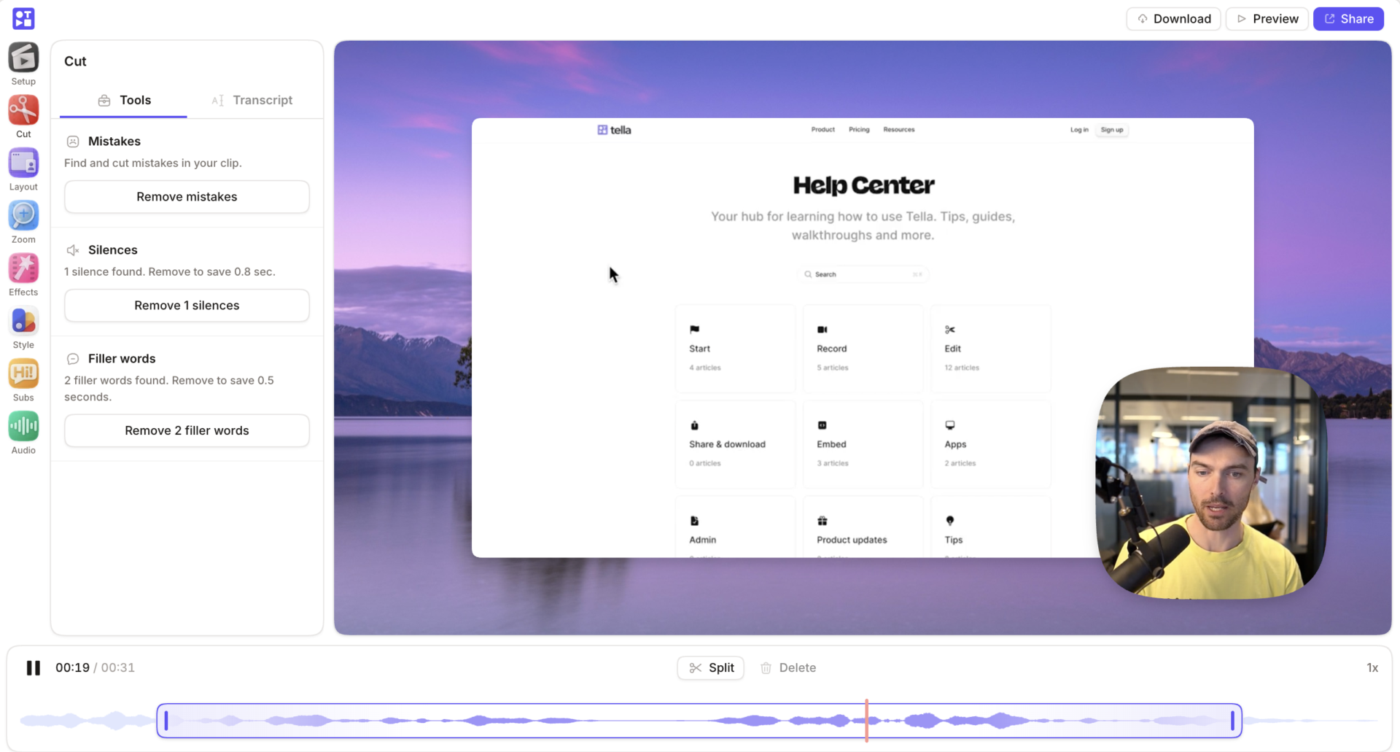
Tella is the Loom alternative to reach for when a video needs to look more produced than a quick screen share. It handles screen and webcam recording just fine, but the real draw is what happens after you hit stop.
You can clean up clips, switch layouts, add backgrounds, sharpen the audio, drop in subtitles, and ship the finished video, all without handing it off to a separate editor. That makes it a strong fit for founders, creators, course builders, and small sales teams.
Loom is still the better call for fast internal updates. But Tella wins when that same recording has to double as a product demo, a tutorial, a sales walkthrough, or a public course lesson. Its AI lives right inside the editing flow, generating titles, descriptions, chapters, documents, and transcription in 106 languages. Tools like Auto Cut and Studio Voice quietly smooth out the rough edges of a take.
Who it’s built for: Founders, creators, course builders, product marketers, and small sales teams that need polished external videos without hiring an editor.
Note: The public pricing page does not show a permanent free plan. It centers on Pro, Premium, and Enterprise. Pro includes unlimited videos, 4K export, team collaboration, analytics, and transcription in 106 languages. Premium adds custom domains, domain restriction, Tella branding removal, 60 FPS export, and advanced analytics.
A Capterra user writes:
I love Tella! I replaced Loom with it, and now I use it for both internal videos with my team and for content I publish on LinkedIn (and sometimes YouTube). It’s very fast to edit videos and add nice transitions and effects. Also, a big plus is being able to quickly adapt to different ratios (portrait, square, panoramic).
Where it taps out: Tella is more polished than Loom, but that polish asks for a bit more effort up front. It is not the right pick for a large company that needs a deep shared video library, strict admin controls, or heavy internal knowledge management. It is built for the person making the video first, not the org managing thousands of them.
Best for: Founders, creators, course builders, and small teams that want demos and tutorials to look sharp.
Skip it if: Your videos are throwaway internal updates that nobody will watch twice; the polish is wasted effort there.
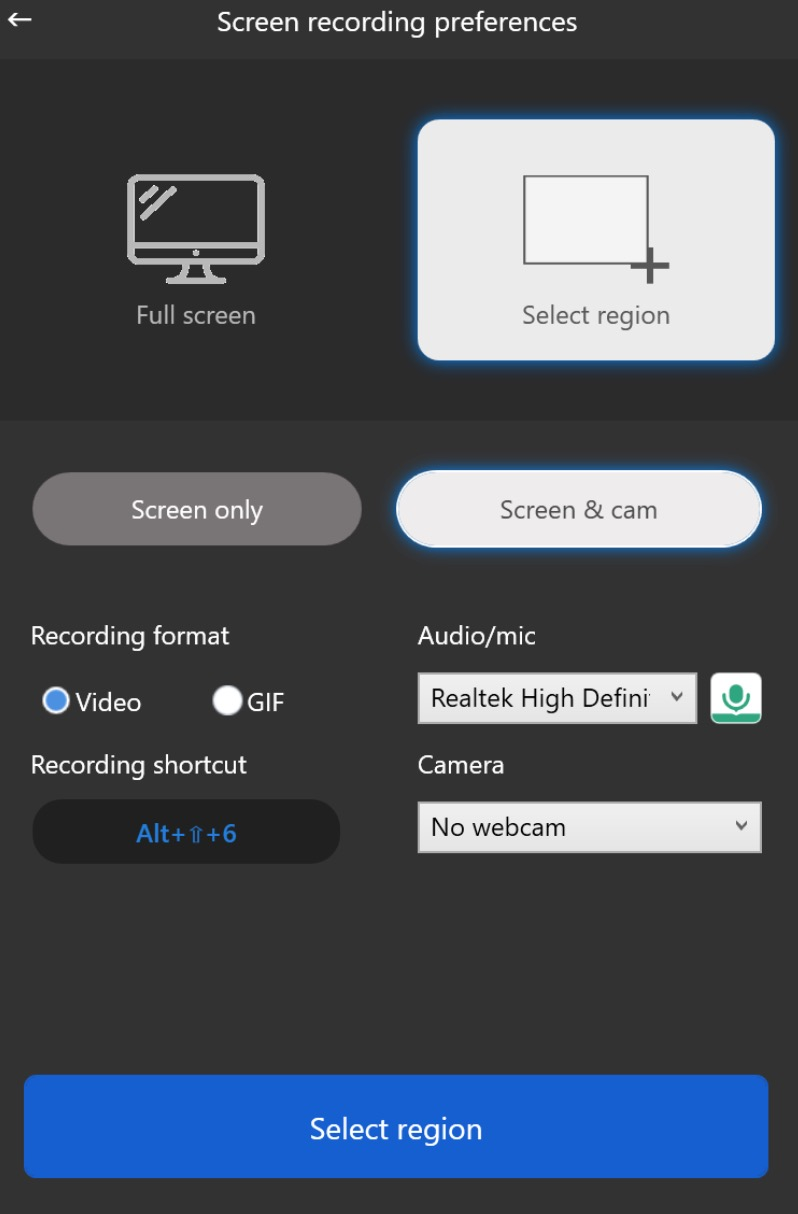
Zight, formerly CloudApp, is the Loom alternative to pick when a video is only one part of the job. It bundles screen recording, screenshots, annotations, GIFs, webcam recording, file sharing, and instant links into a single capture tool.
It shines when you need a marked-up screenshot rather than a full recording. Just snap a screen, drop arrows and text right onto it, and fire off an instant link, with no upload wait and no separate editor. Captures also land in shared collections with comments and privacy controls. So an async back-and-forth replaces the Slack thread that would’ve taken five more messages.
Simply put, Loom is cleaner if all you want is video messaging. Zight just hands you more visual formats in one place.
Who it’s built for: Support, product, QA, design, sales, and remote teams that want screenshots, GIFs, annotations, and screen recordings in one async communication tool.
A G2 user writes:
I use Zight mainly for sharing screenshots and small video files between team members. It makes it easy to copy something and get a shareable link, which is very useful for quick access and sharing in chats. I like that there is a platform where team members can add notes or comments directly on the pictures, which is very good for design work. The setup was really easy, just install and it automatically saves files, which then back up to the cloud and can be accessed by anyone on the team.
Where it taps out: Zight is a capture-and-share tool first, so it shines for quick visual explanations but leaves deep video editing to other tools. Sometimes, a large library can also get harder to organize as older content piles up.
Best for: Fast, visual async updates where a screenshot beats a paragraph, with added screen recording.
Skip it if: You want a polished video editor or a Loom-style library with deeper team knowledge management.
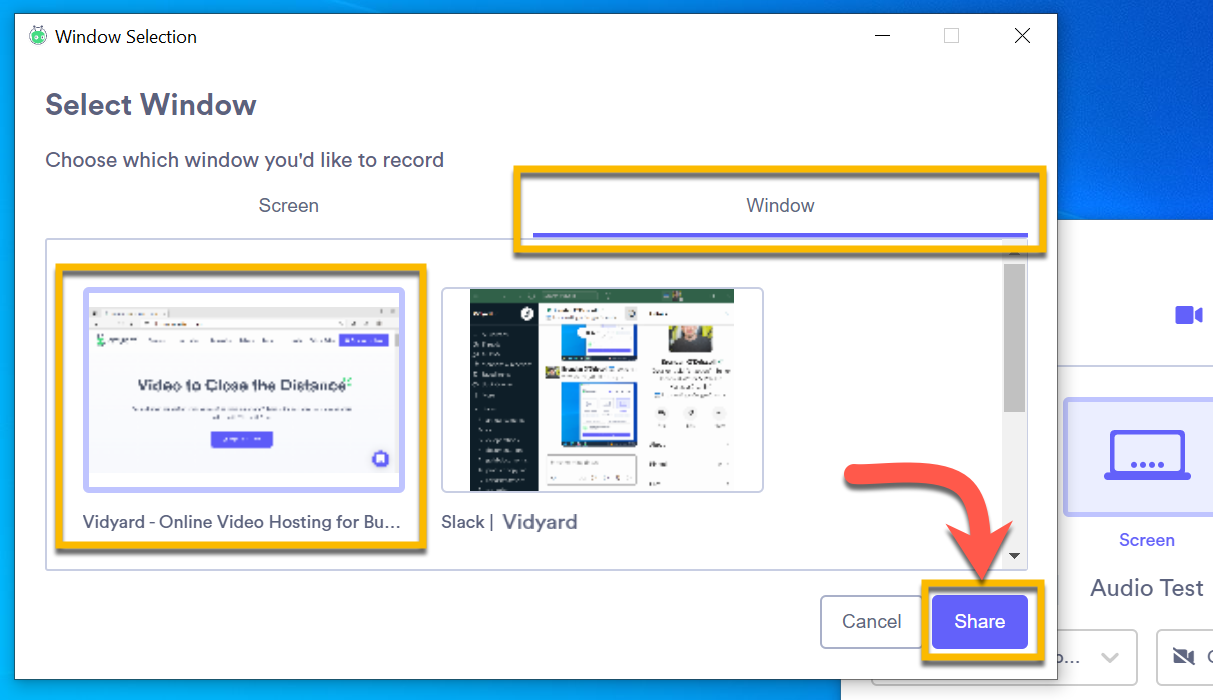
Vidyard is an AI-powered video platform built for sales outreach, marketing, and customer success teams. It records screens and webcams, hosts your video library, generates AI avatars, and tracks detailed viewer analytics. But that’s just part of what sets it apart. Meaning Vidyard treats a video less like a message and more like a tracked touchpoint in a deal, showing you who watched, how far they got, and where they dropped off.
That is what separates it from a plain async recorder. Send a short prospecting video to a lead, and the watch data flows straight into your CRM, so a rep knows a deal is warm before they even reach out. Marketing teams can host campaign videos, layer on CTAs, and connect the performance back to real pipeline.
Who it’s built for: Sales, marketing, and revenue teams that use personalized video for prospecting, follow-up, demos, proposals, and customer engagement.
A G2 user says:
The best thing I love about this platform is its easy access and user-friendly interface. This platform is extremely powerful as it can create personalized videos from a created avatar where the edited videos mimic the tone, voices, and expressions. This platform enhances the personalized touch for even interaction with clients without even actually being present but attending to the clients. This greatly enhances the experience of the clients. The onboarding process was also made very easy in this platform, allowing a better experience for the user.
Where it taps out: Vidyard is not the cheapest Loom replacement, nor the simplest. The cost makes sense when sales, marketing, or customer teams genuinely act on viewer data to follow up. If your team only records internal explainers, the analytics and sales tooling can feel like more platform than the job needs.
Best for: Personalized outreach where knowing who watched, and how much, shapes the next move.
Skip it if: You only need quick internal updates or a lightweight recorder.
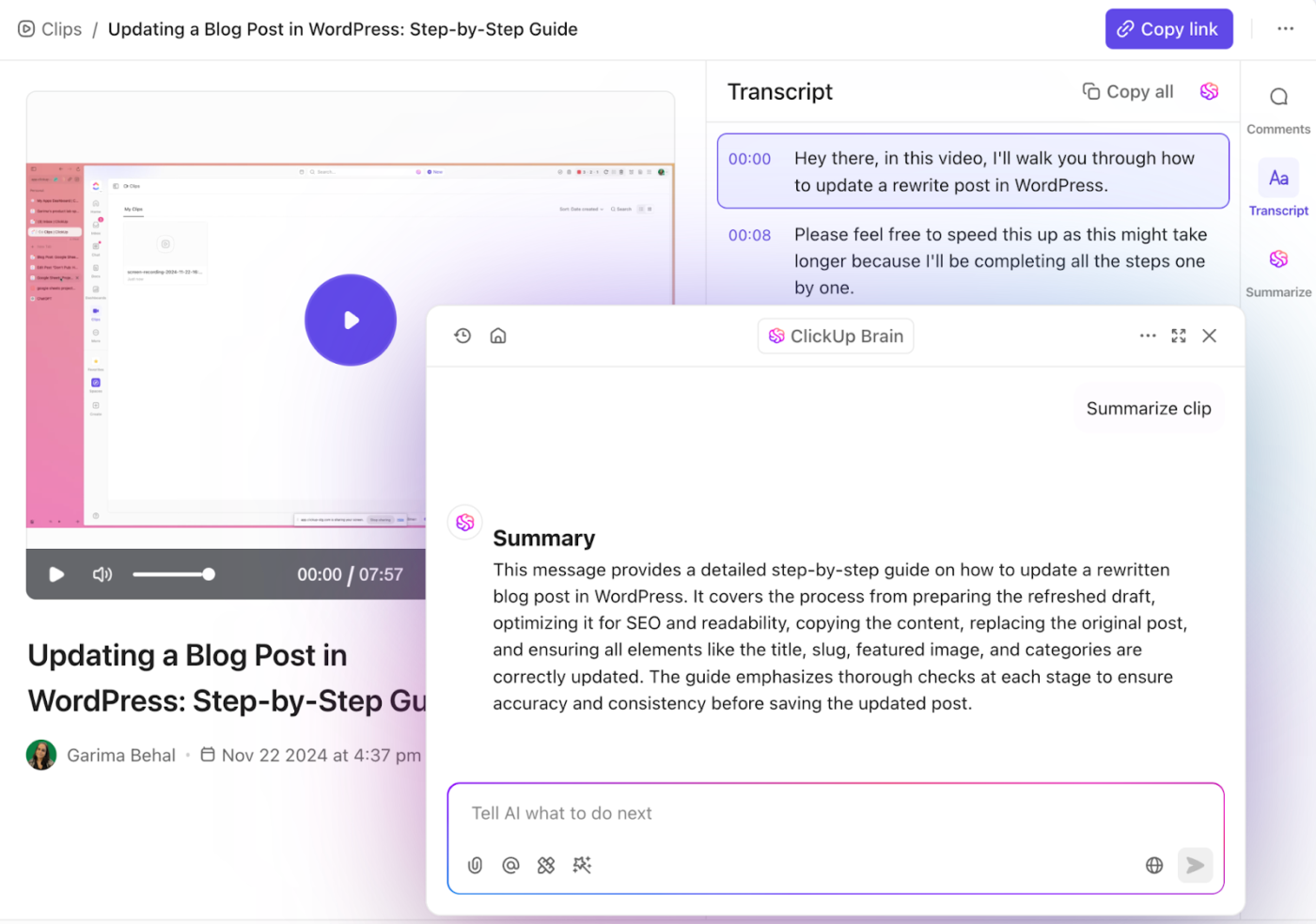
ClickUp is a converged AI platform with everything you need to manage your work and projects, from tasks and Docs to chat and dashboards. Its built-in recorder, ClickUp Clips, captures your screen and voice (no extensions or separate app needed), then drops the clip right onto the task, Doc, comment, or Chat that it explains. You can share it as a public link, too, but the point is that the video sits alongside the work.
ClickUp Brain does the heavy lifting after you stop recording. It transcribes the clip, pulls out a summary, and flags action items. Everything becomes searchable, so a teammate can jump to the exact moment you explained something. No scrubbing through ten minutes of video.
Who it’s built for: Product managers, engineers, designers, QA leads, support reps, and operations teams who want a converged PM tool with integrated recordings.
A G2 user says:
CU has been helping me to organize our thoughts, and workload, assign it to people, keep files in one place and share anything from any space with anyone. The screen record features help a lot as a replacement for Loom. The quote feature is best in order to avoid misinterpretation of anything. As most people are working remotely, CU helps us in managing our resources very effectively due to its features, especially deadlines by incorporating the due dates. There are a lot of good things that can be put in here, all I want to say is that it is a complete set of tools one need to manage the team.
Where it taps out: ClickUp is a work platform with built-in screen recording. But it’s not a dedicated recorder. That is a real advantage if your team already works there, but more than you need if you only want a quick capture tool.
Best for: Keeping async video attached to the relevant task or Doc, so it drives follow-up.
Skip it if: You don’t work in ClickUp already. A standalone recorder is less to adopt if video is all you need.
Also Read: Best Screen Recording Software
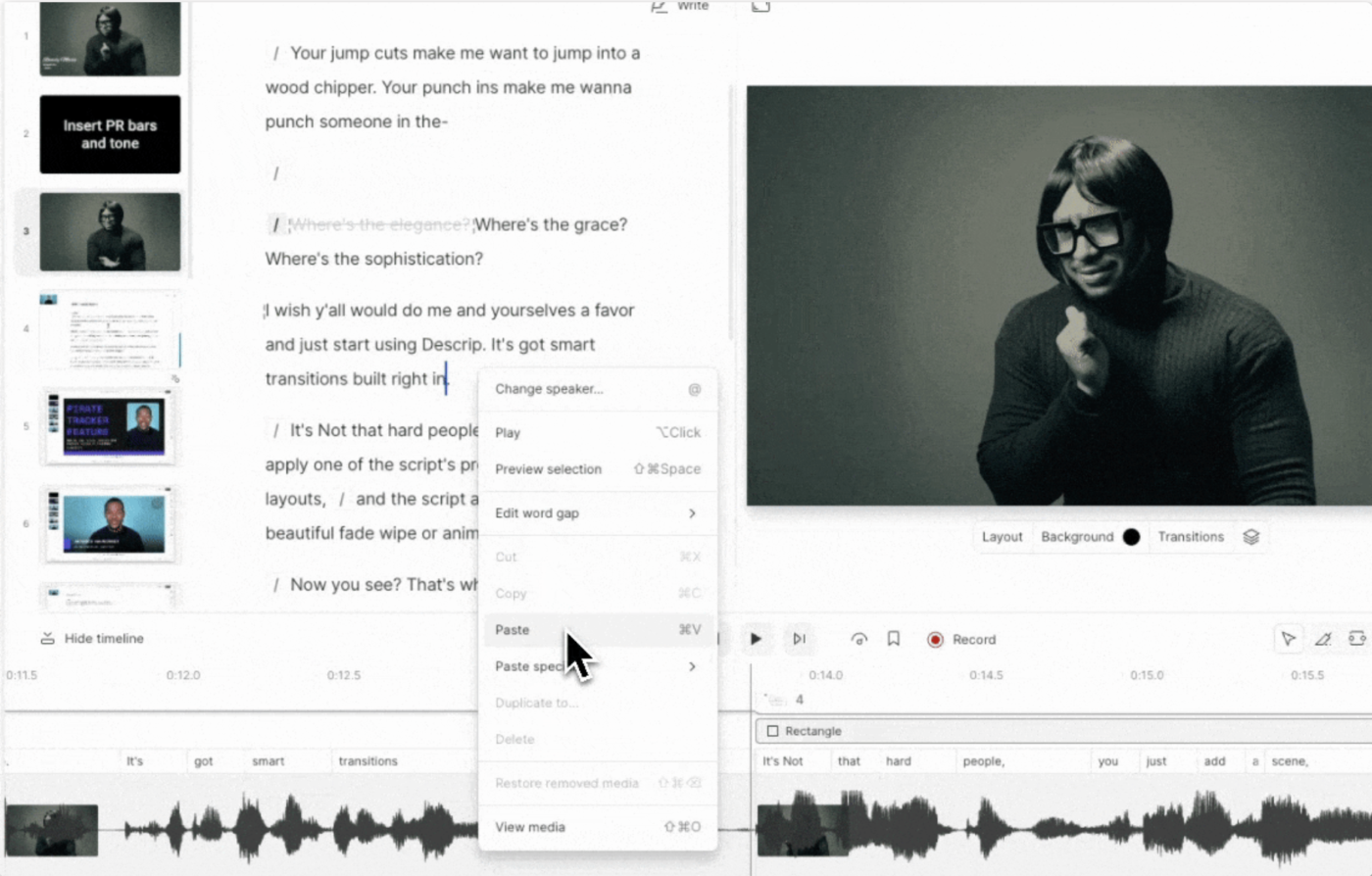
Descript is an AI-powered video and audio editor built around one clever idea: it turns your recording into a transcript, then lets you edit the video by editing the text. Delete a sentence, and that stretch of video disappears with it. Drag a line somewhere else, and the clip follows. It’s the closest thing to editing a video the way you edit a document.
That flips the whole workflow when the recording is really just raw material. Record a demo, then strip out the filler words, clean up the audio, add captions, and pull three short social cuts, all without ever touching a traditional timeline. Loom is better for a quick send-and-share update. Descript is better when the same recording has to be polished, reused, and shipped in more than one format.
Who it’s built for: Podcasters, YouTubers, course creators, customer education teams, and content marketers who turn long recordings into polished videos and clips.
Note: Descript’s paid plans are built around media hours and AI credits. Hobbyist includes 10 media hours and 400 AI credits/month, Creator includes 30 media hours and 800 AI credits/month, and so forth. This means the plan hinges less on “can I record” and more on how often your team edits, repurposes, and leans on AI.
A G2 user claims:
Hands down, the text-based editing. Being able to edit audio or video just by deleting words in a transcript makes the whole process feel like working in a Google Doc rather than wrestling with a complex timeline. It’s a total game-changer for speed and sanity.
Where it taps out: Descript is not the fastest tool for a one-off internal update. It earns its keep when editing matters more. The AI-credit model can also feel tight if your team runs Studio Sound, filler removal, clips, and translation every day. For a quick screen-recording link and nothing more, Loom will feel lighter.
Best for: Turning raw recordings into polished, multi-format content: podcasts, courses, and social clips.
Skip it if: You mainly send raw async updates and never touch editing.
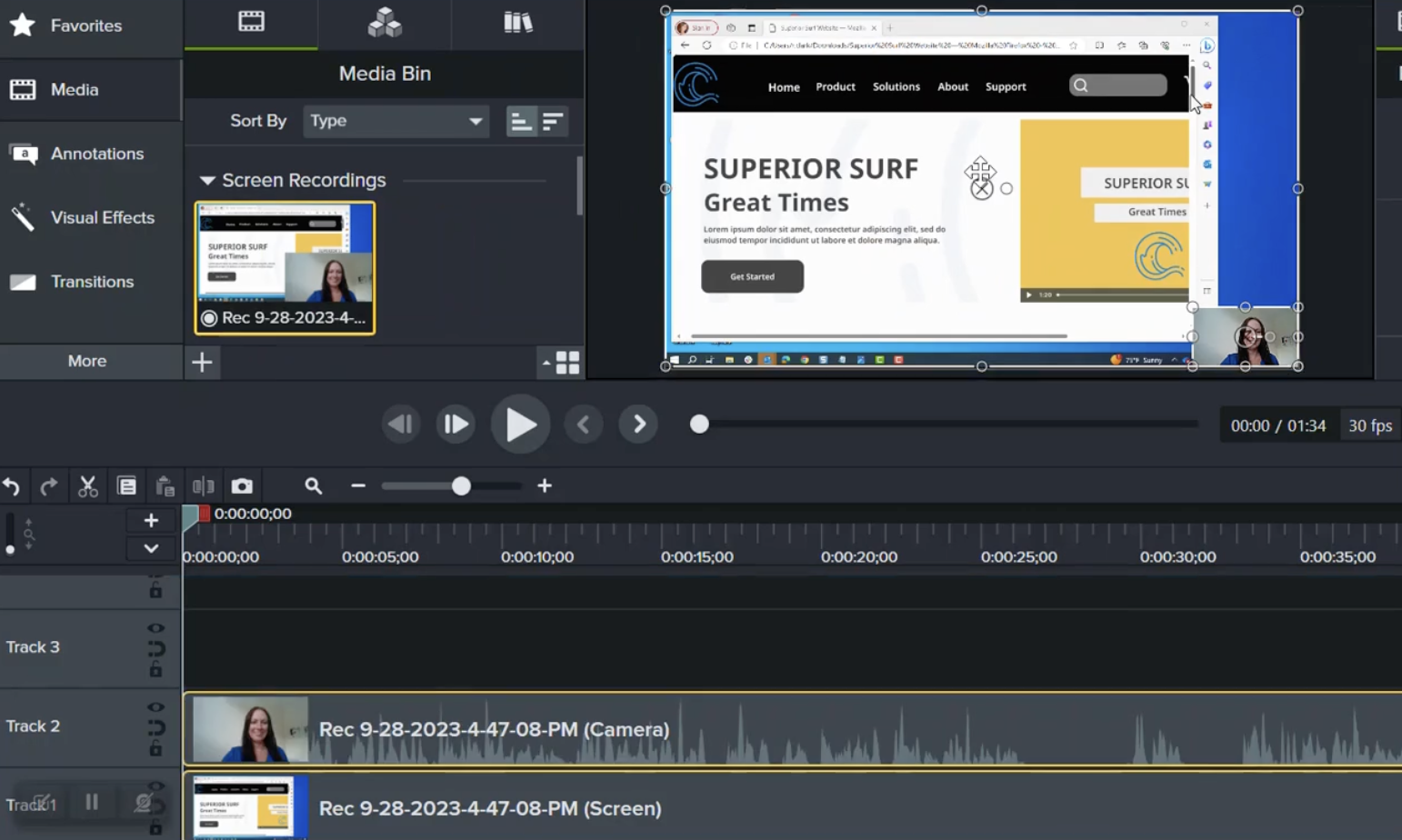
Camtasia is a screen recorder and full video editor from TechSmith, built for people who make training content for a living. You get screen capture, webcam recording, multi-track editing, cursor effects, transitions, and templates in one suite. It is a little slower than Loom by design, and that is the trade-off: far more control over how the finished lesson looks.
That control is what separates a polished module from a raw screen grab. Record a software walkthrough, then smooth the cursor path, zoom into the clicks that matter, drop in callouts, and clean the audio before export.
Who it’s built for: L&D teams, instructional designers, educators, customer education teams, and marketers producing polished tutorials, onboarding videos, and course content.
A G2 user says:
What I like best about Camtasia is how easy it makes screen recording and video editing in one place. The interface is beginner-friendly, but it still has enough powerful features like annotations, callouts, cursor effects, transitions, voiceover, and quizzes to create polished training or tutorial videos. It saves a lot of time because I do not need to switch between multiple tools for recording, editing, and exporting.
Where it taps out: Camtasia is a production suite, not a lightweight recording tool. You typically export a finished file and host or share it elsewhere, so it is slower for quick async updates. The editing depth is the whole point, which means a steeper learning curve, too.
Best for: Evergreen training content that people rewatch: tutorials, product walkthroughs, and course lessons.
Skip it if: You need a link in thirty seconds; the export-and-host step makes it too slow for quick messages.
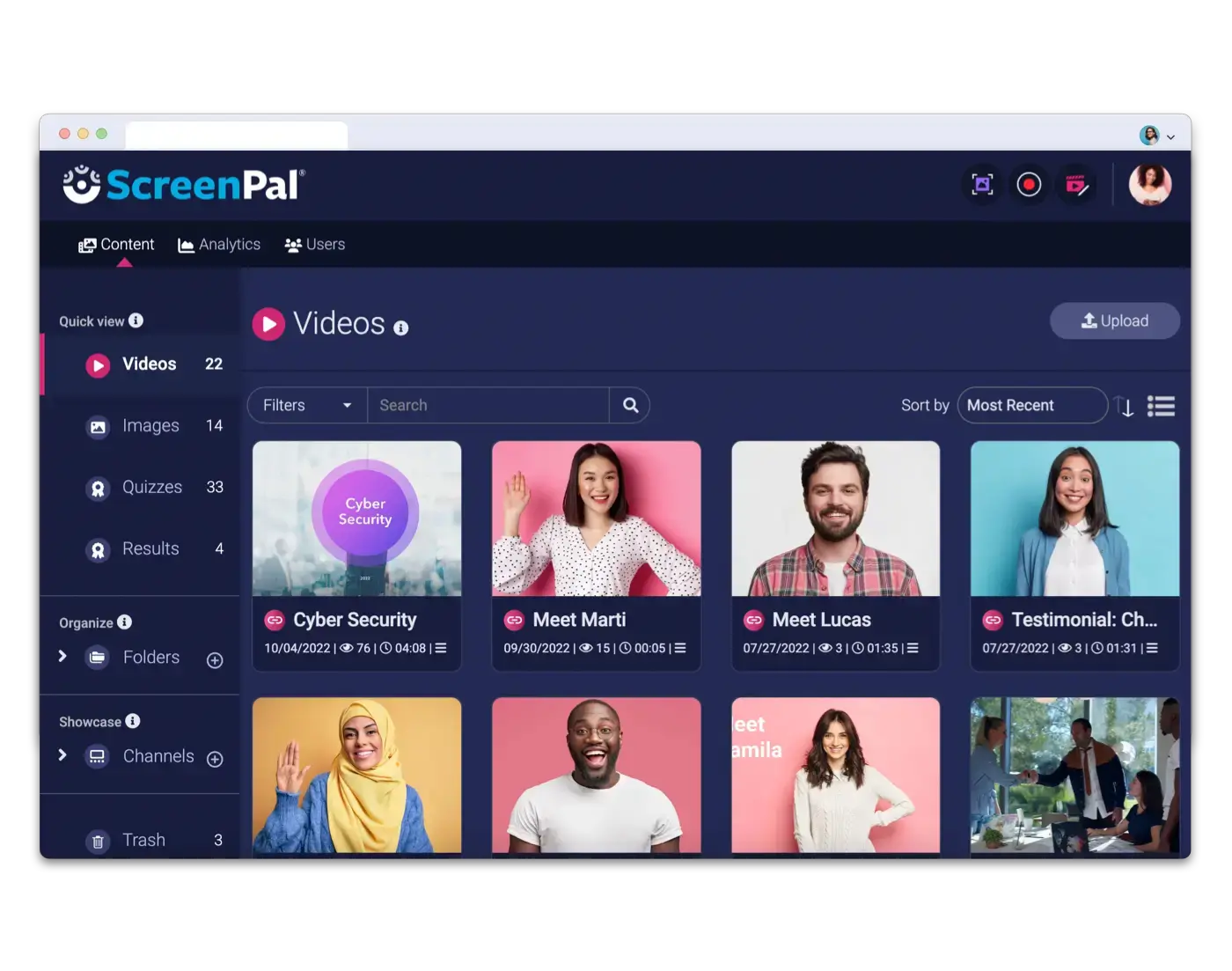
ScreenPal, formerly Screencast-O-Matic, is an affordable screen recorder and light video editor built for reach over polish. It runs on Windows, Mac, Chromebook, iOS, Android, and straight in the browser, so a school or a small team can roll it out in minutes with almost no setup. Record your screen, your webcam, or both, then trim and host the video without ever leaving the tool.
That combination is what makes it punch above its price. Everything from capture to a shareable hosted link lives in one place, so there is no stitching together a recorder, an editor, and a hosting service. While Loom feels slicker for async team updates, ScreenPal wins when low cost and broad device support matter more.
Who it’s built for: Teachers, students, trainers, nonprofits, and small teams that need affordable screen recording, simple editing, and shareable hosted videos.
A G2 user writes:
ScreenPal is incredibly user-friendly and perfect for quickly creating tutorials, demos, or training videos. I love how simple it is to record both screen and webcam simultaneously, add captions, and do basic editing right inside the tool without needing extra software. The cloud hosting option makes sharing videos effortless.
Where it taps out: ScreenPal is easy and mostly affordable, but it is not the pick for polished client videos or advanced editing. The free plan’s 15-minute cap gets in the way fast if you record full lessons or walkthroughs.
Best for: Classroom lessons and low-budget training videos across mixed devices.
Skip it if: You need advanced editing or premium, sales-ready production.
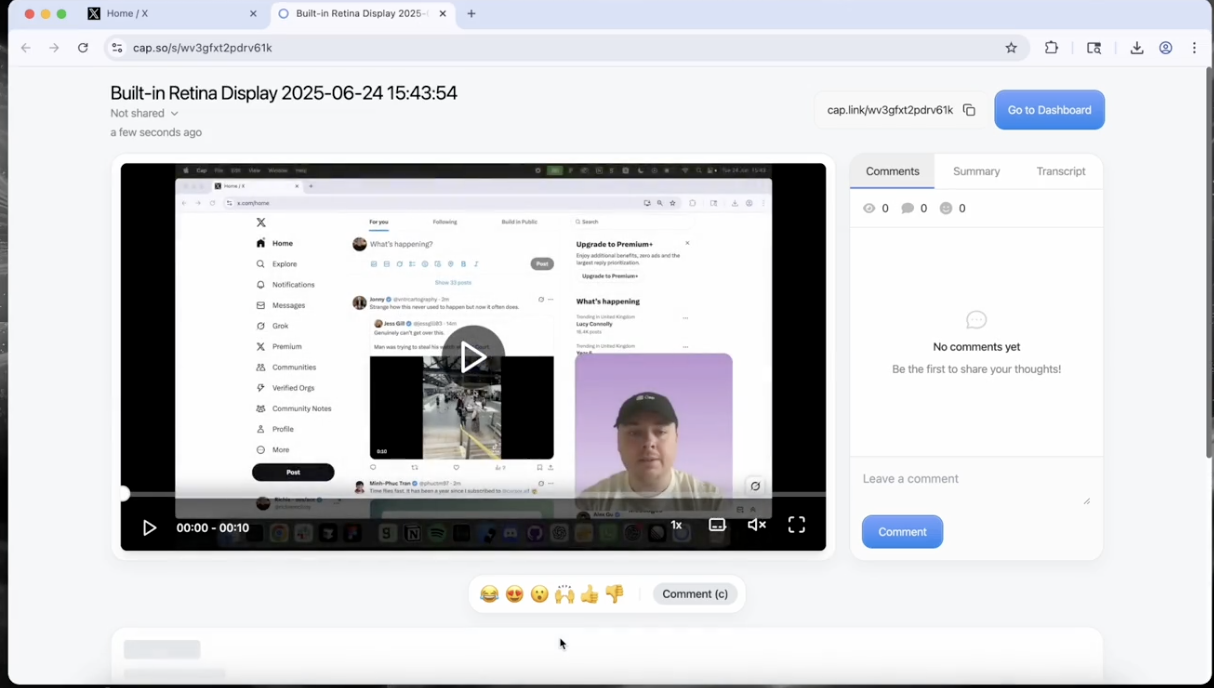
Cap is an open-source screen and webcam recorder for quick videos and polished walkthroughs alike. What makes it stand out is where your recordings can live. Lean on Cap’s cloud, or connect your own S3-compatible storage. You can even self-host the whole platform when your team wants full control of the footage. Along the way you get shareable links, local editing, transcripts, and comments.
That storage flexibility is what sets it apart from every other tool here. Most recorders keep your library locked inside their cloud. Cap lets you own the infrastructure outright, or not, depending on how technical your team is.
Instant Mode fires off a quick shareable link, while Studio Mode handles cleaner local edits. And a built-in Loom importer softens the switch if your team already has a library sitting in Loom.
Who it’s built for: Developers, startups, privacy-focused teams, technical founders, and IT-aware teams that want an open-source recorder with self-hosting or storage control.
A Product Hunt user writes:
Excellent product, truly a competitor to loom. The app loads instantly, records instantly, and uploads to a shareable link almost instantly. The freedom to change the camera frame and edit post-recording is great. The design and layout of the actual viewing page itself, tied with a custom domain, is unbeatable. The summaries, chapters, comments, and transcripts make things so much more delightful for the people who have to view the video, especially for more technical videos.
Where it taps out: Cap hands you more control, and with it more responsibility. Self-hosting, custom storage, and an open-source setup are a gift for technical teams and a chore for anyone who just wants a vendor to run everything. It also has far less third-party review data than older tools, so it is worth testing with real workflows before you move a big video library over.
Best for: Teams that need to own where their recordings are stored, not just how they are shared.
Skip it if: You want a vendor with deep admin support and a long review track record.
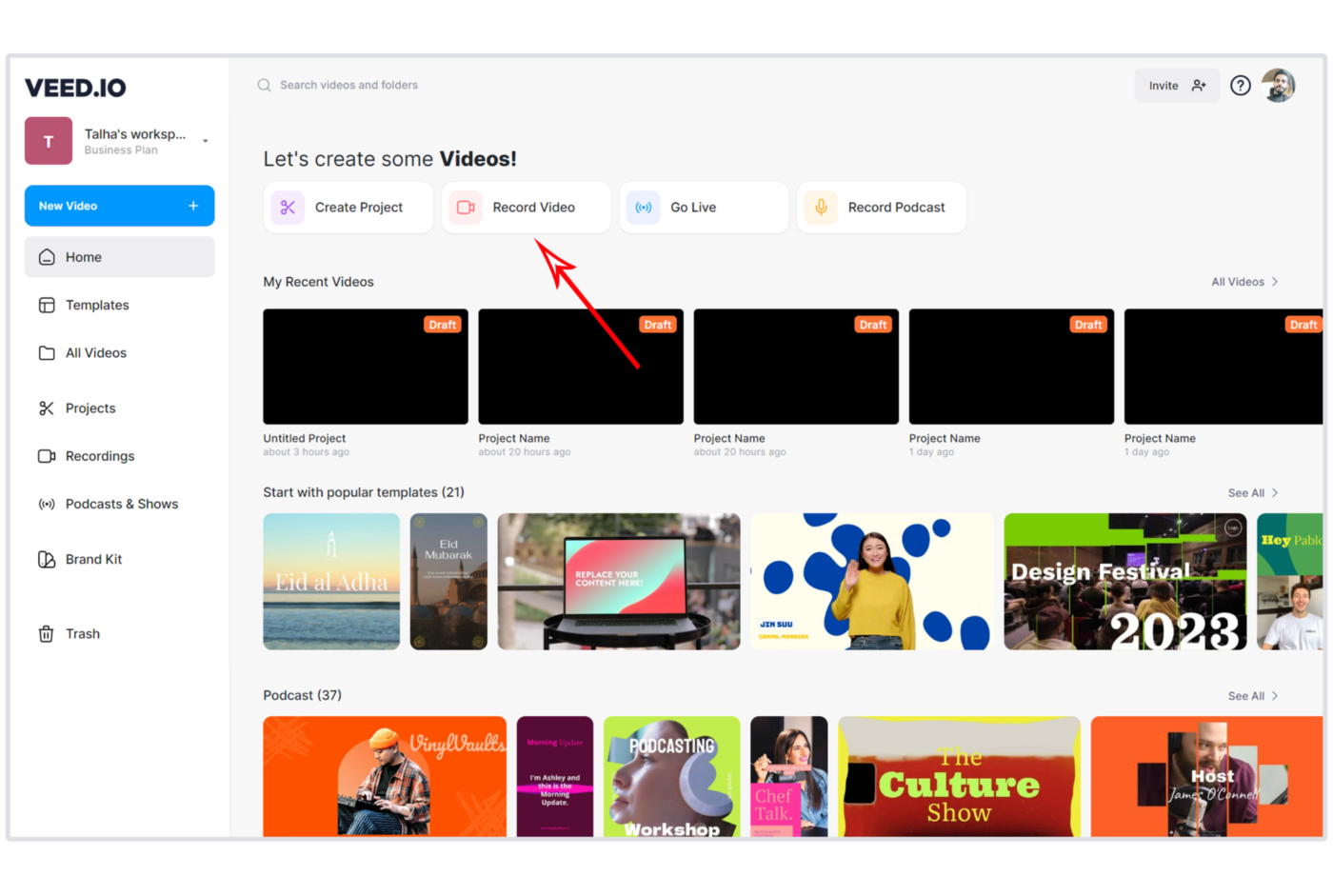
VEED is a browser-based video editor with recording and AI creation built in, aimed squarely at people making video for an audience. Record your screen or webcam, and the footage lands straight in a full editor. From there you can add captions, resize for a platform, clean the audio, translate it, or cut a social-ready version, all in the same tab.
Its real edge shows up when you would rather not be on camera at all. VEED can spin up AI avatars, dub your voice into another language, convert text to speech, fix eye contact, and strip a background. Its avatar library is free to try and covers 60-plus avatars across 120-plus languages.
Who it’s built for: Social media managers, creators, marketers, course teams, and small businesses that turn recordings into edited external videos.
A G2 customer says:
Everything about Veed is easy and simple to use. All the tools you need are built in, so you can create your narration video while also creating AI video and AI images within the same video. I would recommend VEED to anyone.
Where it taps out: VEED is a content and social video tool, not an internal comms platform. It doesn’t have the quick async-messaging feel Loom does, and it is not built around standups or lightweight team updates. The free plan also carries the usual creator tool limits.
Best for: AI-heavy production, avatars, subtitles, and translation for audience-facing video.
Skip it if: You mainly need quick internal recordings with simple sharing.
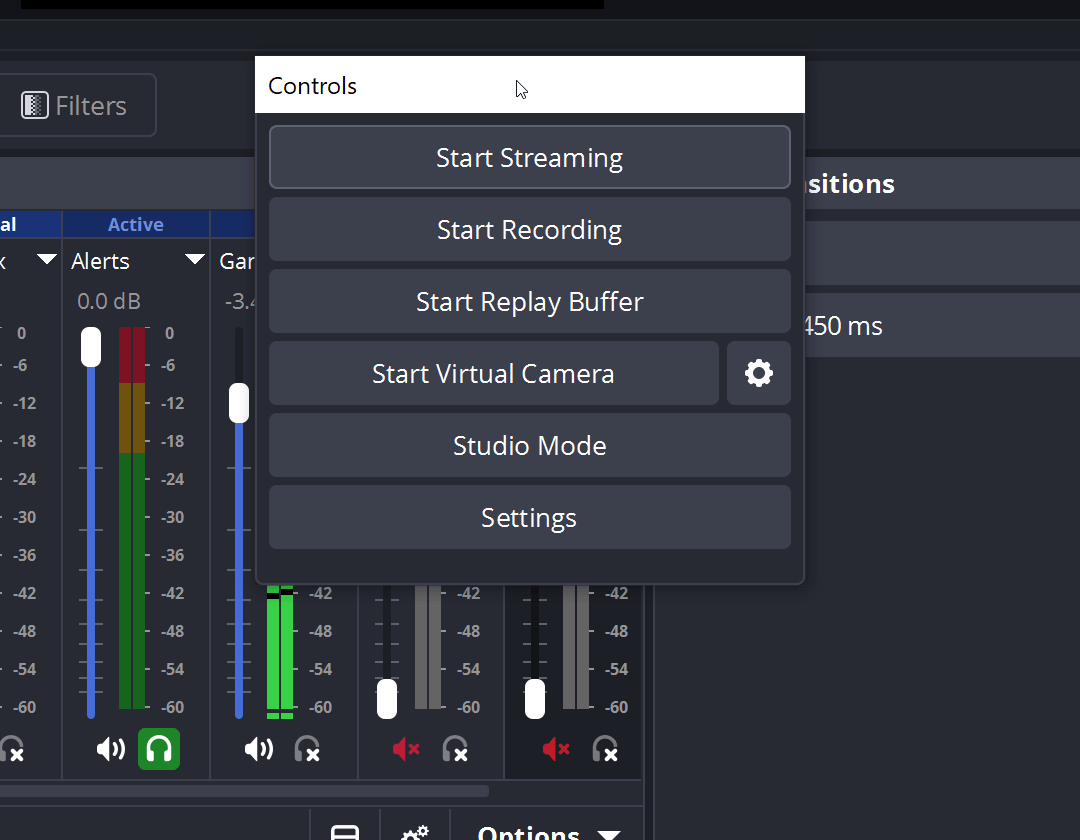
OBS Studio is a free, open-source recorder and live-streaming tool for Windows, macOS, and Linux. It captures your screen, webcam, browser windows, and audio sources with no watermarks or time limits, and it doesn’t cost a cent. For raw local recording and streaming power, nothing else on this list comes close to this price.
The trade for that power is a real learning curve. OBS lets you build scenes for different layouts, mix multiple audio and video sources, fine-tune bitrate and encoder settings, and stream straight to YouTube or Twitch. It is the kind of control a streamer or technical trainer loves, and a casual user rarely needs.
Who it’s built for: Streamers, YouTubers, Linux users, technical educators, and power users who want full control over local recording and live streaming.
A G2 user says:
What do I like most about OBS Studio? Honestly, where do I even start? It’s completely free, yet it still punches way above its weight. The setup is straightforward enough that you can be live or recording within minutes, but it’s also deep and flexible enough that professionals rely on it, too. Scenes, sources, filters, hotkeys everything is there, and it gives you real control without costing a rupee. If you’re serious about streaming or recording, OBS feels like the obvious choice. It’s a real beast in the content creation world.
Where it taps out: OBS is a recording studio, not a Loom-style messaging tool. There are no shareable links, cloud hosting, team permissions, transcripts, or viewer analytics out of the box, so you will pair it with a separate host to share. New users can also hit a wall of settings before their first clean recording.
Best for: Free, high-control local recording and live streaming, no hosting attached.
Skip it if: You want to record a quick walkthrough, paste a link into Slack, and move on.
Where a recording lives matters more than how it looks because video sprawl, not video quality, is what breaks async workflows. A clip attached to the task, Doc, or ticket that it explains stays findable months later; a link pasted into chat gets buried within a week.
Harvard Business Review researchers found that workers toggle between apps roughly 1,200 times a day. That toggling takes close to four hours a week just to reorient after each switch. Every async video stored in a separate tool from the work it explains adds one more switch, one more place to search, one more orphaned link.
Darren Murph, formerly GitLab’s Head of Remote, made the case for asynchronous communication at Turing’s Boundaryless conference:
Asynchronous is what I call the superpower of remote teams.
His point is that async only pays off when a team is deliberate about where work takes shape. A recording nobody can retrieve is the opposite of deliberate.
So the real question when picking a Loom alternative is: Where does the recording end up relative to the work?
Here is how the ten tools above handle that:
The lesson isn’t that every team needs a converged platform. It’s that for internal work, where context has to survive past this week, a recording that lives on the task will always beat one you have to go hunting for.
Choose a Loom alternative based on the job the video does after you stop recording: internal async, sales outreach, or audience-facing content. That single question narrows the field faster than any feature checklist.
If the recording goes to a prospect or customer, you need watch data that ties back to a deal. Vidyard integrates viewer analytics with your CRM (see our in-depth breakdown of Loom vs. Vidyard). Zight works if the outreach is more visual, combining screenshots and short clips into a single link.
If the recording goes to an audience, on social, in a course, or on YouTube, editing depth matters more than speed. Tella gives you polished layouts and backgrounds without a separate editor. Descript lets you cut by editing the transcript. VEED adds AI avatars, dubbing, and multi-format export for teams producing at volume.
If the recording stays internal, the goal shifts to async video communication that teammates can find later. Start here:
Before migrating off Loom, sort recordings by shelf life: keep reusable knowledge and unresolved work, archive what matters for history, and delete anything that only captured a passing moment. Most teams don’t need a bigger video library. They need a cleaner one.
Everything feels useful the moment you record it: a bug walkthrough, a weekly update, a client explanation, a sales demo. Six months on, though, half of them have gone stale, doubled up, or grown hard to trust. So before you move off Loom, decide what really deserves to come with you.
Keep videos that explain reusable knowledge, active customer context, or unresolved work:
Archive videos that matter for history but seldom for daily reference:
Delete or expire videos that only captured a passing moment:
Plenty of teams get this wrong; they export everything into a new tool and call it a cleanup.
This sorting maps cleanly to where each recording should go:
Loom made async video messaging mainstream, and for quick internal updates, it still does that job well. What’s changed is fit: the free plan’s caps and the post-Atlassian billing shift have more teams weighing other options. The good news is the field is rich, with strong picks whether you want lower cost, more polish, open source, a sales focus, or tighter ties to your workflow.
So don’t start from the recorder. Start from what the video has to do after you stop: reach a prospect, ship to an audience, or brief your own team. Match the tool to that job, and the shortlist picks itself.
If your recordings tend to be internal and tend to get lost, that’s where ClickUp fits: the walkthrough lives on the task it explains and stays searchable by AI and agents.
Get started with ClickUp for free.
Downgrading to the free Starter plan will not delete videos over the 25-video limit, and you keep access to all of them. You just cannot record anything new until you delete enough to drop back under 25. Deleting is the real risk here. Loom removals are permanent, with no trash bin or way to recover them. So download whatever matters as an MP4 first, or archive a video instead of deleting it if you might need it again.
Export your videos as MP4 files, then re-host them in your new tool before you deactivate Loom. The step most teams overlook is the links themselves. You have to locate every embedded Loom link across your help center, email templates, Docs, and Slack, and swap each one, because otherwise your viewers hit dead links later. Cap simplifies this with a built-in Loom importer that pulls videos from a single link or an entire CSV.
No, Loom is still running and accepting new sign-ups. But it is now fully integrated into Atlassian, which changed how billing and user roles work as of February 2026. The product itself is not going away, yet those revised pricing and seat rules are what push many teams to weigh other options.
Cap ships a native Mac app and lets you fully own your recording data. Tella and Descript run in the browser and on Mac when you want more polished video, while Zight covers Mac too and adds screenshots and GIFs alongside video. Camtasia and ScreenPal offer Mac apps as well, so nearly every tool here works. Your pick comes down to whether you want fast capture or deeper editing.
Most of these tools run on Windows, including Tella, Descript, VEED, Camtasia, ScreenPal, Cap, OBS Studio, and ClickUp. Linux is the real filter. OBS Studio is the standout there, since it is the only option on this list with full native Linux support. ScreenPal also runs on Chromebook, and any browser-based recorder like VEED or ClickUp Clips works on Linux through the browser.
Yes. Cap is open source with self-hosting and custom S3 storage, and OBS Studio is a free, open-source recorder and streaming tool. Cap is closer to Loom’s record-and-share flow with shareable links and transcripts; OBS gives you the most raw control but no hosting, links, or analytics out of the box.
It depends on the job you need done. Descript leads for editing, since you cut video by editing the transcript. VEED wins for AI avatars, voice dubbing, and translation. ClickUp Brain is strongest at turning a recording into a searchable summary, action items, and follow-up tasks. Vidyard aims its AI at sales, building avatars and scripts for outreach.
Yes. OBS Studio and Cap are free and open-source, and Zight, ScreenPal, VEED, Descript, and ClickUp all offer free tiers. Watch the caps: ScreenPal’s free plan limits recordings to 15 minutes, and most creator tools add watermarks or export limits. OBS Studio is the only option here with unlimited local recording, no watermark, and no time cap.
Recording with OBS Studio or ScreenPal and saving the file directly to Google Drive is the cleanest free path available. If you want an instant share link without the manual upload step, Zight’s free tier is considerably faster. Cap also lets you connect your own Google Drive or S3 storage on its self-hosted setup, so your recordings live in storage you already control.

Manasi Nair
Max 26min read

Arya P Dinesh
Max 18min read
Arya P Dinesh
Max 20min read

© 2026 ClickUp




