Sorry, there were no results found for “”
Sorry, there were no results found for “”
Sorry, there were no results found for “”
Product Hunt is well-known for helping people launch, discover, and talk about new products, especially among early adopters and tech enthusiasts.
But getting noticed on Product Hunt isn’t always simple. The platform is crowded, timing matters, and even excellent software products can get buried without the right network or push. For indie makers, small startups, or niche SaaS products, relying only on Product Hunt can limit how much valuable feedback you get from your target audience.
That’s why many founders and marketers look for other websites and communities to reach beta testers, connect with real users, and build traction step by step.
In this article, we’ll look at some of the best Product Hunt alternatives to help you reach the right audience, gather feedback, and grow your next launch more sustainably.
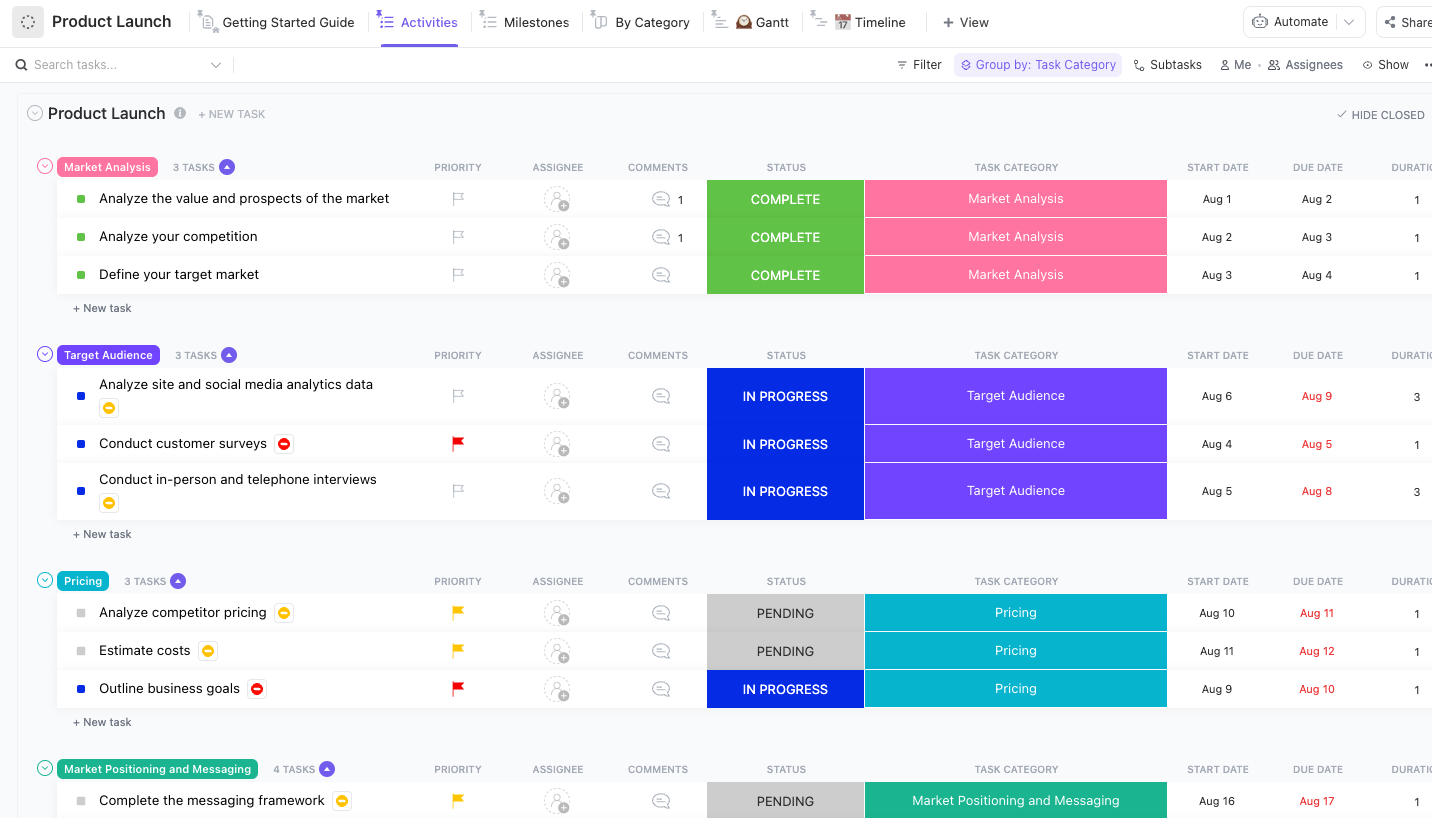
Want to launch your product confidently, knowing no detail is overlooked? ClickUp’s Product Launch Checklist Template is your single source for organizing timelines, tasks, and team responsibilities in one place.
Here’s a quick comparison of the top Product Hunt alternative solutions to help you choose the right fit based on a few key features, additional features, pricing, and user ratings.
| Tool | Best For | Key Features | Pricing* |
| BetaList | Early feedback and pre-launch traction | Beta user sign-ups, trending topics, daily digest, product pages | Custom pricing |
| Indie Hackers | Community support and peer feedback | Active forums, real case studies, Idea Board, and founder interviews | Free |
| Niche communities and raw user feedback | Focused subreddits, real-time comments, upvote visibility, wide audience | Free; Paid plans starting from $5.99/month per user | |
| AlternativeTo | Comparing software and winning switchers | User rankings, competitor listings, real reviews, crowd-sourced votes | Free |
| BetaPage | Showcasing startups to beta testers | Product listings, beta user community, newsletter features, roadmap insights | Free |
| Launching Next | Steady exposure and early traction | Daily startup features, newsletter placement, and tech community reach | Free; Paid plans starting from $99 (one-time) |
| Starter Story | Learning from real founder playbooks | 4,400+ case studies, community access, deep-dive reports, courses | Custom pricing |
| Betafy | Pairing startups with beta users | Beta tester pool, feedback collection, lead generation, discovery listings | Custom pricing |
| G2 | Trust-building and credible validation | Verified reviews, competitor comparisons, trust signals, large buyer community | Free |
| Capterra | Reaching business buyers for B2B software | Verified reviews, detailed product pages, PPC bids, trust-building features | Free |
| SaaSWorthy | Unbiased software shortlists | SW Scores, 75,000+ tools, verified ratings, curated lists, real quotes | Free |
When exploring Product Hunt alternatives, it helps to pick platforms that match your target audience and make it easier to get your software products in front of the right people.
Here’s what you should look for in the ideal tool:
📖 Also Read: Marketing Goals Examples to Achieve Your Objectives
Our editorial team follows a transparent, research-backed, and vendor-neutral process, so you can trust that our recommendations are based on real product value.
Here’s a detailed rundown of how we review software at ClickUp.
Businesses using cloud-based SaaS platforms often say they can bring new products and features to market 20% to 40% faster than before.
This means there is real potential for early access tools and tech products to reach a wider audience and disrupt the market when they have the right launch plan.
If you want to compare product launch software or tap into a fantastic community beyond Product Hunt, here are the best alternatives to help you connect with early adopters.
Ready to boost product adoption?

Gallup data shows that 80% of employees who receive meaningful feedback each week feel fully engaged. The same principle applies when you are building new products.
Without genuine input from early adopters and beta users, indie makers and small teams often miss opportunities to refine their creations. BetaList helps tackle such issues by putting your project in front of people who want to test new tools and give you valuable feedback before your full launch.
This early exposure can help you attract your first real users, build trust, and shape a product that fits your target audience from day one.
This Reddit review shared:
In the first 10 days, 209 visitors landed on the product website from BetaList and 53 of them signed up… As the first traffic for a new product, the volume seems rather positive to me.
🎥 Watch: How to plan your next product launch with a ClickUp template:
📖 Also Read: What is Customer Communication Management (CCM)?

Building a new product, side project, or SaaS tool can feel isolating, especially for indie founders working solo. Without an engaged community, it’s easy to miss out on ideas, connections, and valuable feedback that shape a successful launch.
Indie Hackers solves this by giving founders a space to share real stories and learn from others.
This open network helps you find early adopters, get practical advice, and connect with potential customers while staying motivated for the long run.
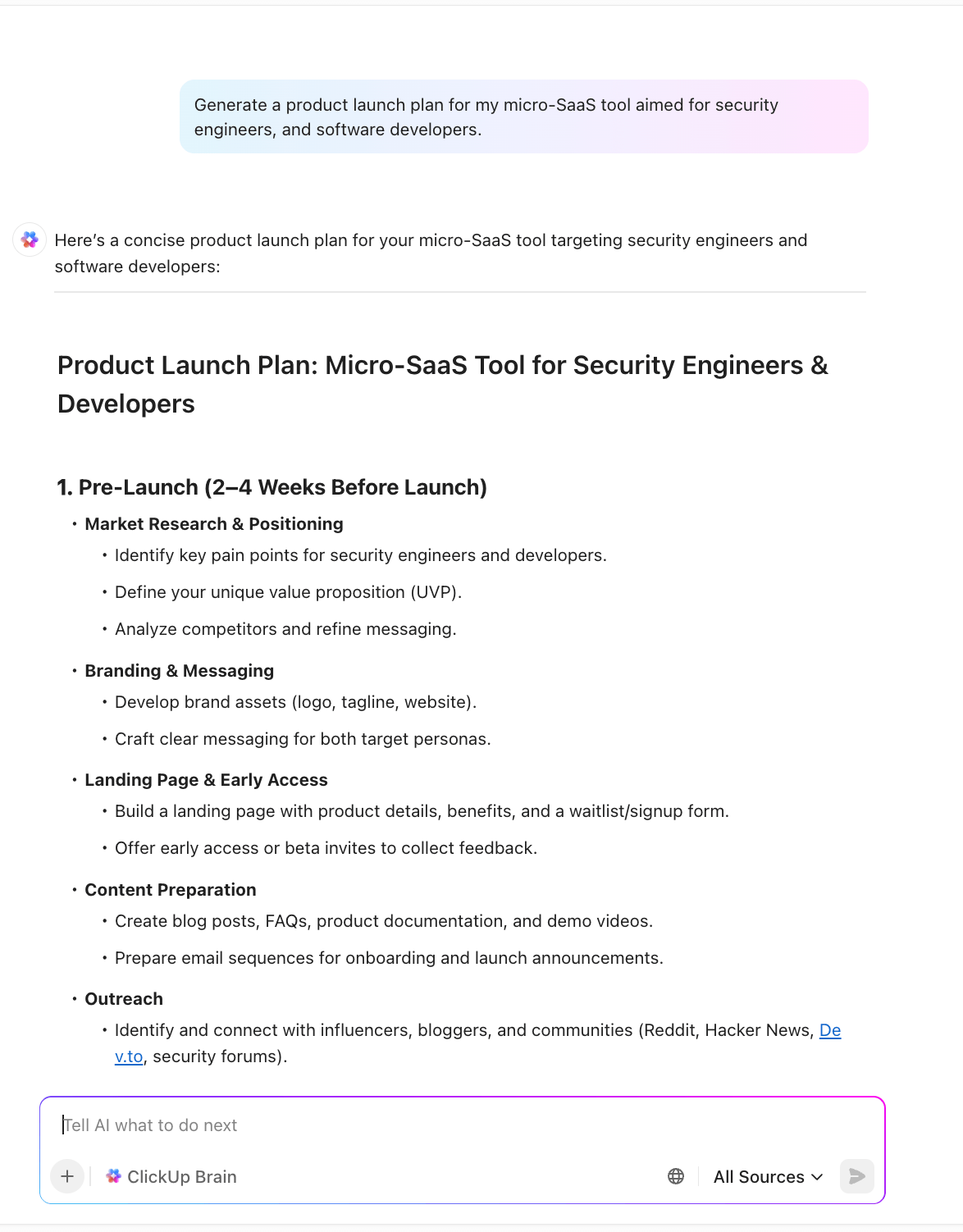
💡Pro Tip: Want help brainstorming an effective product launch plan? Fret not, ClickUp Brain, your AI personal assistant can help. It combines the power of LLMs like Claude, ChatGPT 5, Gemini, and more in one single place, so you don’t have to switch tabs or context.

Many startups and indie makers underestimate Reddit, but the right post in the right subreddit can drive giant traffic without spending a cent.
Unlike crowded launch sites, Reddit provides an advantage by enabling you to connect with your target audience at their preferred locations, such as r/SideProject for indie ideas, r/Entrepreneur for founders, or r/InternetIsBeautiful for clever tech products.
Done right, Reddit helps you gather raw, unfiltered feedback, attract early adopters, and build trust in a way polished launch pages alone can’t.
This G2 review captured:
Reddit is an outstanding social media platform that allows its users to join a community, post content, and engage in discussions with other users. Reddit makes it easy to create or join a community and connect with like-minded people.
👀 Fun Fact: The first iPhone launch in 2007 almost failed. Steve Jobs had to switch devices backstage because the prototype kept crashing during the demo.
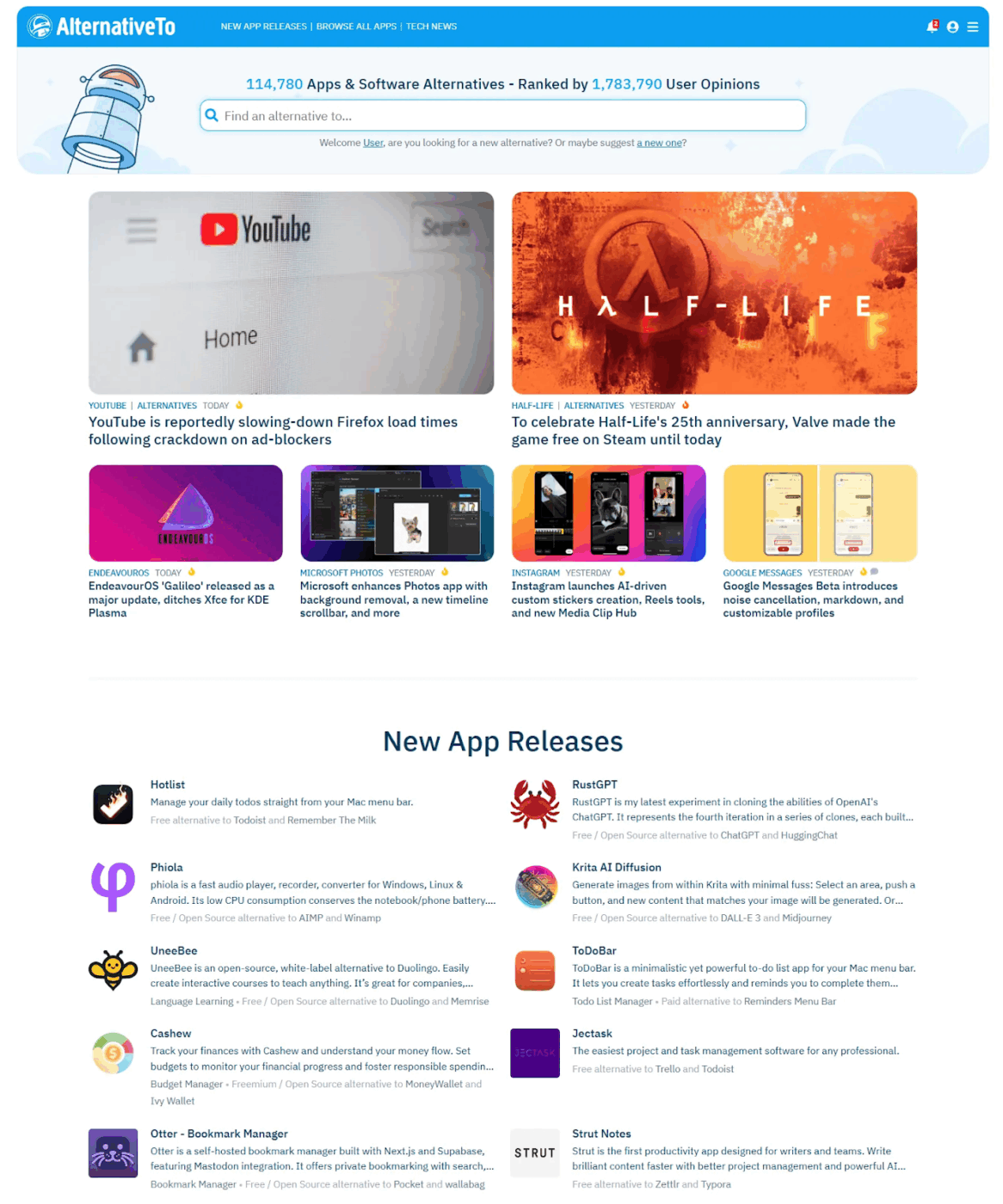
Getting your software products in front of people already searching for alternatives is a smart shortcut for driving traffic and finding early adopters ready to try something new.
AlternativeTo ranks tools based on real user votes and reviews, so when someone searches for an alternative to a big-name app, your new product can show up alongside more established names.
📮 ClickUp Insight: 88% of our survey respondents use AI for their personal tasks, yet over 50% shy away from using it at work. The three main barriers? Lack of seamless integration, knowledge gaps, or security concerns.
But what if AI is built into your workspace and is already secure? ClickUp Brain, ClickUp’s built-in AI assistant, makes this a reality.
It understands prompts in plain language, solving all three AI adoption concerns while connecting your chat, tasks, docs, and knowledge across the workspace. Find answers and insights with a single click!

A few years ago, Ray-Ban and Meta launched smart glasses called Ray-Ban Stories. The idea sounded futuristic: glasses that let you snap photos and videos with hidden cameras. However, the launch failed to connect with real buyers.
Less than 10% of the stock was sold, and over 13% was returned, proving how a new product can struggle when it misses its target audience and skips genuine feedback.
BetaPage helps indie makers and startups avoid this mistake by listing side projects, SaaS products, and tech tools where early adopters actually seek fresh ideas. It helps you attract beta users, gather valuable feedback, and test your pitch long before a big product launch.

Getting your startup in front of real users is often the hardest part of a product launch, especially when you are building side projects or niche SaaS products without a big marketing budget.
Launching Next allows you to list new startups and tech products daily, putting your idea in front of thousands of readers who are looking for fresh tools to try. It is a simple way to collect valuable feedback, connect with early adopters, and keep your momentum going beyond a single launch day.
🤝 Friendly Tip: Launching a new product is a high-stakes, fast-moving process. ClickUp Brain MAX acts as your AI-powered launch partner, helping you eliminate the chaos of disconnected, siloed work, or Work Sprawl, and stay ahead of the curve at every stage:
Try ClickUp Brain MAX—the contextual work AI super app that truly understands you, because it knows your work. Ditch the AI tool sprawl, use your voice to get work done, create documents, assign tasks to team members, and more.
📖 Also Read: Best Calendar Apps

Did you know that Google had to shut down its dedicated podcast app for US users in the middle of 2024 after failing to capture enough audience?
Despite having a global brand behind it, Google Podcasts only managed to become the top choice for about 4% of weekly listeners in the US, while YouTube attracted over 23%. A weak launch and unclear market can stop even the most innovative product or company from succeeding.
Starter Story exists for this reason—it helps founders avoid these blind spots by giving them thousands of real, detailed examples of product launch strategies and how founders can make their next venture count
📖 Also Read: How to Improve Your Product Marketing Strategy

When you launch something new, nothing stings more than silence. Without an engaged group of early testers, it’s easy to miss bugs, lose momentum, or build something no one really wants.
Betafy tackles this problem by connecting startups directly with real beta users who are eager to test and share feedback. It’s a simple way to spot issues, gather insights, and build loyalty before you go live.

Even the smartest product launches can fail if new buyers do not trust what you built. It’s one thing to promote your SaaS or tech products on Product Hunt, but it’s another to provide concrete evidence from actual customers.
G2 solves this gap by giving your software a visible, trusted space for verified reviews. This makes it easier to win over early adopters, compare yourself to big competitors, and turn valuable feedback into credibility that lasts long after launch day.
This G2 review shared:
G2.com has become my go-to platform whenever I need to evaluate new software or compare tools. I use it frequently—often several times a week—because it’s incredibly easy to navigate and saves me time during the decision-making process.
👀Fun Fact: Nike’s “Just Do It” slogan came from the last words of a convicted murderer, turning an unexpected origin into a billion-dollar marketing launch.

Amazon’s “Just Walk Out” checkout technology seemed futuristic during its launch, but it missed what customers really cared about: seeing savings, tracking receipts, and finding products in real time.
It’s a reminder that even cutting-edge launches fail if they don’t align with what real users want.
Capterra helps avoid this pitfall by connecting your software with buyers who trust peer reviews and side-by-side comparisons before they commit. It’s one of the easiest ways to put your tool in front of businesses actively looking for solutions just like yours.
This G2 review shared:
Capterra is a huge platform consisting of many software detailed reviews. Capterra has a very user-friendly interface I love to use Capterra because I work in a financial company and to run the organization smoothly we need different sets of software like, data analysis, video conferencing, etc.
📖 Also Read: How to Build a Product Development Process

A bad software choice can waste budget, drain time, and stall growth before your team even gets started.
With thousands of options available in every category, relying solely on intuition often leads to unfavorable outcomes. SaaSWorthy tackles this challenge by tracking over 75,000 software products and ranking them with clear SW Scores, so you can shortlist smarter and compare what really matters.
If you’re exploring more ways to get your product in front of early users and communities beyond Product Hunt, here are three great alternatives worth considering.
Getting featured on Product Hunt or similar platforms can grab attention for a day, but that is only one part of launching a product people actually want and keep using.
Every launch involves numerous components, and this is where ClickUp makes a difference for you and your team.
While ClickUp is not a direct listing site like Product Hunt, it offers product teams the world’s first Converged AI Workspace. This enables them to manage product launches, collect feedback, and build a community around their product using its robust project management, documentation, and collaboration features. Let’s explore them together 🚀

For any launch, product managers can break big goals into smaller product launch checklist tasks, set due dates, add owners, and map dependencies.
For example, when your designer finishes mockups, ClickUp Tasks can automatically alert the dev team that it’s time to build.
Here’s a quick guide on how to prioritize tasks using ClickUp:
Docs and wikis for product documentation and press kits

As your project takes shape, your team needs a reliable source of truth. ClickUp Docs and wikis make that happen. You can create a detailed product spec, upload your press kit, and link every doc directly to tasks. If your marketer needs to check the latest product description, they know exactly where to find it.
Here’s what Zel Crampton has to say about ClickUp:
I remember early 2021 we were trying to launch a whole bunch of products. We missed deadlines, we had issues. People were not communicating. We, we didn’t know who was like supposed to make decisions. We hired a few smart people, but I would say ClickUp has been sort of the backbone for the operation of the company, particularly for great workflows.
📖 Also Read: Free Gantt Chart Templates in Excel & ClickUp
Your product can never become its best version without proper feedback. ClickUp Forms let you gather beta tester insights or bug reports in minutes.

As soon as the feedback comes in, it turns into tasks for developers or QA, complete with comments and file attachments.

You can even use ClickUp’s Assign Comments feature to leave feedback for teammates directly inside ClickUp Docs, tasks, or feedback threads. This way, it’s clear who owns the next step, and everyone can see exactly where feedback came from and what needs to happen next.

Keeping this flow running means your calendar must adapt to change. ClickUp’s AI Calendar does the heavy lifting here. If your launch date shifts or a milestone moves, the calendar automatically reschedules tasks, blocks focus time, and keeps meetings organized.
It syncs with your Google or Outlook Calendar, so your day always reflects your true priorities.
🎥 Watch: Take your business to the next level with ClickUp, just like Vela Bikes
Bonus: If you hate switching tabs between your workspace and your communication tool, ClickUp solves that, too, with ClickUp Chat. This way, all your tasks, projects, and work stay contextual.

Our most recent appreciation of the collaborative impact of ClickUp was when working on a Content plan for a product launch. We were able to build and maintain a content repository using the docs tool, that included hierarchical structure, collaborative editing, and powerful embedding features.
For product teams using ClickUp, the system means that when launch day nears, everyone wants to know how things are tracking. ClickUp Dashboards make this simple. Build a dashboard with real-time views of sprint progress, open bugs, marketing readiness, and all KPIs that matter.

Looking to simplify your work? ClickUp’s product launch templates add a touch of convenience to your usual processes. You can utilize a product roadmap, product brief, or release notes template instead of creating your own.
For example, ClickUp’s Product Launch Checklist Template makes it simple to map out every task, timeline, and resource needed for a smooth launch.
This template gives your team one place to plan, track, and update progress in real time. From coordinating tasks to keeping everyone informed, you can easily manage your product launch with this handy checklist template.
Connect everything with ClickUp Automations and integrations
ClickUp doesn’t stop at managing your team alone.
You can also integrate ClickUp with your existing tools, so design files in Figma, pull requests in GitHub, and conversations in Slack all live in the same place. That means less tab switching and no more hunting down updates scattered across tools.

Finally, all those moving parts stay in sync thanks to automation. ClickUp Automations can automatically hand off tasks from one team to the next, change statuses when work is done, and remind owners of approaching deadlines.
Bringing a new product to market is one of the most exciting but complex challenges a team can tackle. While platforms such as Product Hunt play a significant role in gaining early traction, they are not a comprehensive solution.
To truly deliver a standout launch, you need to pair your launch platform with a tool that helps you plan every step.
ClickUp is built for exactly that. ClickUp unifies all your components, from tasks and timelines to feedback, content, collaboration, and automation, ensuring your product launches with maximum impact.
Ready to simplify your next launch? Sign up for ClickUp today

Manasi Nair
Max 26min read

Arya P Dinesh
Max 18min read
Arya P Dinesh
Max 20min read

© 2026 ClickUp