Construction Accounting: Key Principles, Best Practices & Software

Sorry, there were no results found for “”
Construction accounting is a world of its own, where every project, payment, and cost has its own rhythm.
Unlike traditional accounting, it’s shaped by moving timelines, shifting budgets, and the unpredictable nature of the construction industry itself.
If you run a construction business or oversee its finances, you already know: the numbers behind each project can make or break the next big opportunity. Keeping track isn’t just about following rules but building a system that works as hard as your crews do.
In this guide, you’ll uncover the core principles, smarter techniques, essential tools, and real-world strategies that make construction accounting the backbone of sustainable growth
Construction accounting stands apart from regular business accounting because of its need to manage constantly moving projects, shifting costs, and long-term contracts. Every project operates on its own timeline, with its own financial structure, making traditional methods ineffective without adjustments.
Construction companies that build their accounting systems around these realities gain better control over financial health, project profitability, and business sustainability.
📖 Read More: How to Start a Construction Company
👀 Did You Know? Over 4,500 years ago, Egyptian inspector Merer kept daily logbooks tracking the transportation of limestone for the Great Pyramid of Giza.
These papyrus records, discovered near the Red Sea, reveal early project management techniques including labor tracking, material logistics, and coordinated construction timelines.
Solid construction accounting is about building a financial system that reflects how projects move, shift, and evolve. Whether you’re reviewing your monthly financial statements or tracking material costs for a single project, understanding the core components is non-negotiable.
When these components work together, construction companies can track financial health more accurately and recognize revenue correctly. They can also manage project profitability more effectively and plan for sustainable growth across multiple accounting periods.
⚡ Template Archive: Free Construction Management Templates
Getting the basics right is important, but mastering advanced techniques is what separates financially strong construction firms from the rest. These practices help you forecast better, handle financial risks early, and protect project profitability even when projects don’t go as planned.
Construction financial managers who integrate these techniques into daily operations can strengthen financial health, minimize surprises at project completion, and make informed decisions across the entire project lifecycle.
To sharpen these practices even further, investing in professional development can make a major difference. Explore essential construction certifications that can help you build stronger financial, project management, and leadership skills for long-term success.
Construction accounting relies on precision, and the right software turns that precision into a daily habit. A strong system gives you real-time insights, tighter control over project costs, and fewer surprises during financial reporting.
Finding the right fit starts with understanding what features your business actually needs.
Choosing the right construction accounting software can define how efficiently you manage costs, recognize revenue, and maintain project profitability. It’s not just about basic bookkeeping; rather, your system needs to adapt to complex projects and shifting financial realities.
Look for these essential features:
Choosing software that combines these features ensures better financial management, accurate tracking, and stronger decision-making across every project you handle.
📖 Also Read: How to Use Project Accounting
No two construction companies operate the same way. This means that the best accounting software for your business needs to match your project scale, contract types, and financial goals.
Here’s what to focus on when choosing:
Choosing the right tool means balancing advanced functionality with everyday usability. So you stay focused on building, not wrestling with systems.
📖 Read More: Best Construction Project Management Software
Managing financial data across multiple projects gets complicated fast without the right tools in place. Delays, missed costs, and reporting gaps directly impact cash flow and overall financial health. That’s where a platform like ClickUp gives construction companies an edge. By offering real-time visibility and tighter control over job costs, budgets, and workflows.
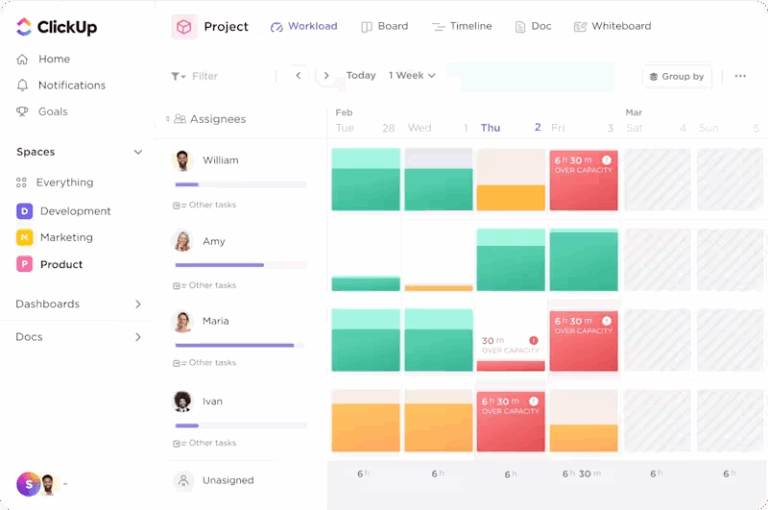
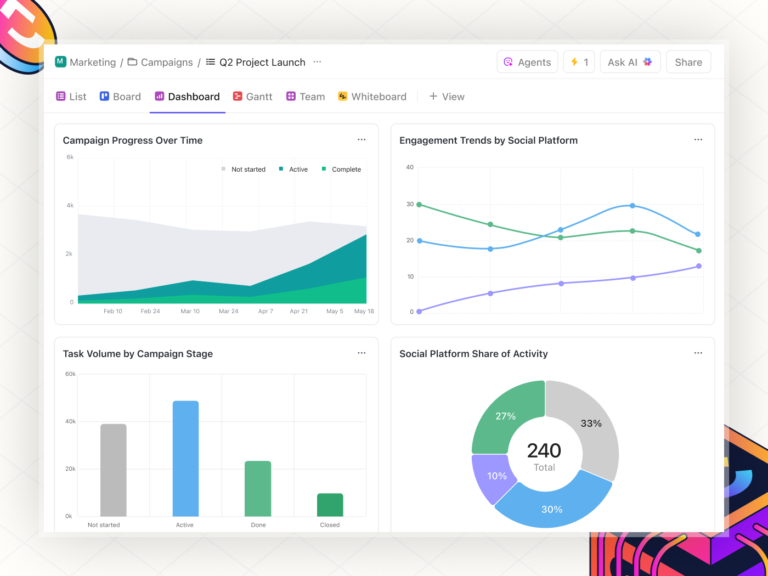
Keeping real-time visibility over project finances is crucial to prevent overruns and missed billing opportunities. Tools like ClickUp Dashboards help construction teams monitor project costs, cash flow, billing statuses, and estimated costs. All without relying on disconnected spreadsheets.
By connecting site updates to financial reporting, you can spot budget risks early, adjust forecasts faster, and protect project profitability at every stage.

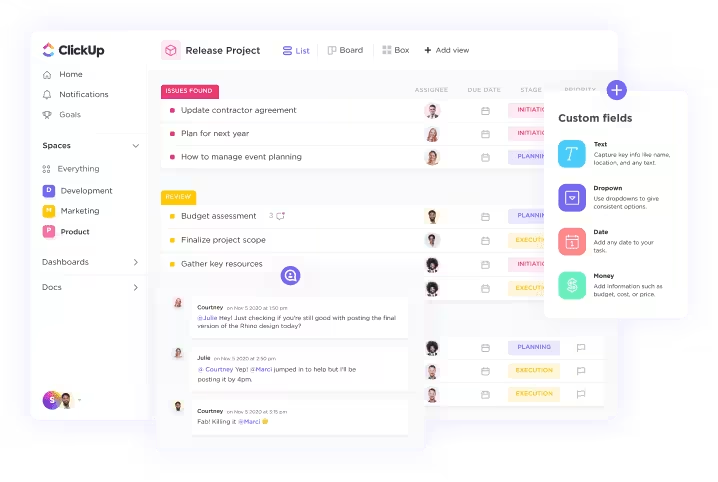
Managing construction finances gets messy when operations and accounting platforms don’t speak to each other. Using ClickUp Integrations, you can connect project management tools, time tracking apps, CRM platforms, and financial software, creating a centralized hub for project and financial data.
This seamless flow reduces data entry errors, improves financial reporting accuracy, and helps construction businesses make decisions based on a complete view of project operations.

📮ClickUp Insight: 92% of knowledge workers risk losing important decisions scattered across chat, email, and spreadsheets. Without a unified system for capturing and tracking decisions, critical business insights get lost in the digital noise.
With ClickUp’s Task Management capabilities, you never have to worry about this. Create tasks from chat, task comments, docs, and emails with a single click!
Accurate job costing starts with precise labor tracking. With ClickUp Time Tracking, field teams and project managers can log hours directly against specific projects and cost codes in real time.
This detailed tracking improves job cost sheets, supports better cash flow management, and gives construction financial managers a clear view of actual costs versus estimates before project closeout.

Even with strong systems in place, construction companies run into specific accounting challenges that can delay payments, impact profitability, or distort reporting. Addressing them early keeps financial operations clean, predictable, and sustainable.
Change orders can quickly derail budgets if they aren’t managed tightly. Each adjustment adds new material costs, labor hours, or project timelines that ripple across job cost sheets.
The smartest way to stay in control is to link approved change orders directly to your financial system. Update project budgets, billing schedules, and cash flow forecasts immediately as changes occur.
Tracking financial health on a single job is manageable, but doing it across five or ten projects gets complicated fast. Without consolidated dashboards and real-time financial reporting, overspending or billing delays can slip through unnoticed.
Construction companies can solve this by standardizing financial templates and using centralized tools. To monitor actual costs, project profitability, and revenue recognition across all active contracts.
⚡ Template Archive: Free General Ledger Templates for Accounting in Excel & ClickUp
Subcontractor delays in submitting invoices cause major headaches at project closeouts, often pushing revenue recognition and final project costs into later periods.
To prevent financial reporting issues, construction firms should enforce clear subcontractor billing deadlines tied to project milestones. They should also supplement billing with field-based cost tracking to record incurred but unbilled expenses in real time.
⚡️ Bonus Template: ClickUp’s Construction Management Template makes it easier for construction managers to manage their operations in one place with pre-built custom statuses, views, documents, and custom fields.
Strong construction accounting practices give you more than financial records. They drive project profitability, smarter cash flow management, and faster decision-making. Clear systems around job costs, financial reporting, construction contracts, and project tracking create more predictability in an industry built on moving targets.
Choosing the right technology and workflows helps construction companies improve project outcomes, strengthen financial health, and build more sustainable operations across every project they manage.
Try ClickUp today to simplify financial tracking, streamline project oversight, and support stronger construction operations.
© 2025 ClickUp