
Sorry, there were no results found for “”
Sorry, there were no results found for “”
Sorry, there were no results found for “”
With Medicare reimbursement covering just 83 cents for every dollar hospitals spend, structured project delivery is essential to protect already-thin margins.
This guide covers healthcare project management—from what it takes to be a healthcare project manager, to the biggest challenges teams face. We’ll also recommend the best practices to keep complex initiatives on track.
Healthcare project management involves planning, executing, and maintaining healthcare projects to improve an organization’s functioning. It applies structured methods to projects inside hospitals, clinics, and public health organizations.
The operating environment makes this entirely different from general project management. You have to navigate strict regulations like HIPAA (The Health Insurance Portability and Accountability Act) and Joint Commission standards while managing life-or-death stakes.
The most common healthcare project types include:
📚 Also Read: Best Healthcare Project Management Software
Healthcare project management isn’t just about keeping timelines and budgets in check. It directly affects patient outcomes, regulatory compliance, and how efficiently care is delivered. When projects fail here, the consequences aren’t minor. They lead to delayed treatments, overworked staff, and compromised patient care.
😷 Patient safety depends on it
Healthcare projects often involve changes to clinical workflows, equipment, or systems. If these aren’t planned and tested properly, the risks are immediate. Unclear processes can lead to medication errors, and system glitches can cause missed diagnoses or delays in critical care. Strong project management ensures every change is introduced safely, with minimal risk to patients.
🔀 Healthcare systems are inherently complex
You’re coordinating across doctors, nurses, admin teams, labs, and insurers—each with their own priorities. Without clear ownership and structured coordination, things fall through the cracks. Test results don’t reach the right doctor in time, discharge processes get delayed, and patients end up stuck in the system longer than necessary.
🚨 Regulatory compliance is non-negotiable
Healthcare projects must meet strict regulatory standards around patient data, safety, and reporting. Poorly managed projects can lead to data breaches, failed audits, or non-compliance penalties. This puts both patient trust and the organization’s license to operate at risk.
💰 Costs are high, and margins are tight
A delayed system rollout or a failed implementation isn’t just inconvenient; it’s expensive. Hospitals may end up paying for unused software, duplicating work, or extending vendor contracts. Inefficiencies increase operational costs without improving outcomes. Formal project management compresses timelines and keeps scope creep firmly in check.
👨🏼🔬 Technology adoption needs careful execution
Rolling out systems like EHRs or AI tools without proper planning can disrupt care delivery. Doctors may struggle with poorly designed interfaces, staff may revert to manual workarounds, and patient data can become fragmented. All this slows down decision-making when speed matters most.
🤝 Stakeholder trust is on the line
Patients expect reliable, timely care. Staff expect systems that support their work, not complicate it. When projects fail—like a system outage or a botched rollout—it erodes trust quickly. On the flip side, well-executed projects build confidence across patients, staff, and regulators.
📚 Also Read: Top Project Management Methodologies (+ Examples)
A healthcare project manager bridges clinical staff, IT, administration, and external vendors around a shared project plan. The role looks different depending on the organization. Some project managers sit inside IT departments, while others report directly to operations.
Here are some of the main responsibilities of a healthcare project manager.
Healthcare project managers own the project plan from initiation through closure. This means defining scope, setting milestones, identifying deliverables, and assigning resources.
Resource allocation is uniquely hard in this industry. Clinical staff cannot be pulled from patient care for project meetings without strict coverage plans. Budgets are often tied to rigid fiscal-year cycles, and equipment procurement involves months of vendor negotiations.
Core planning responsibilities include:
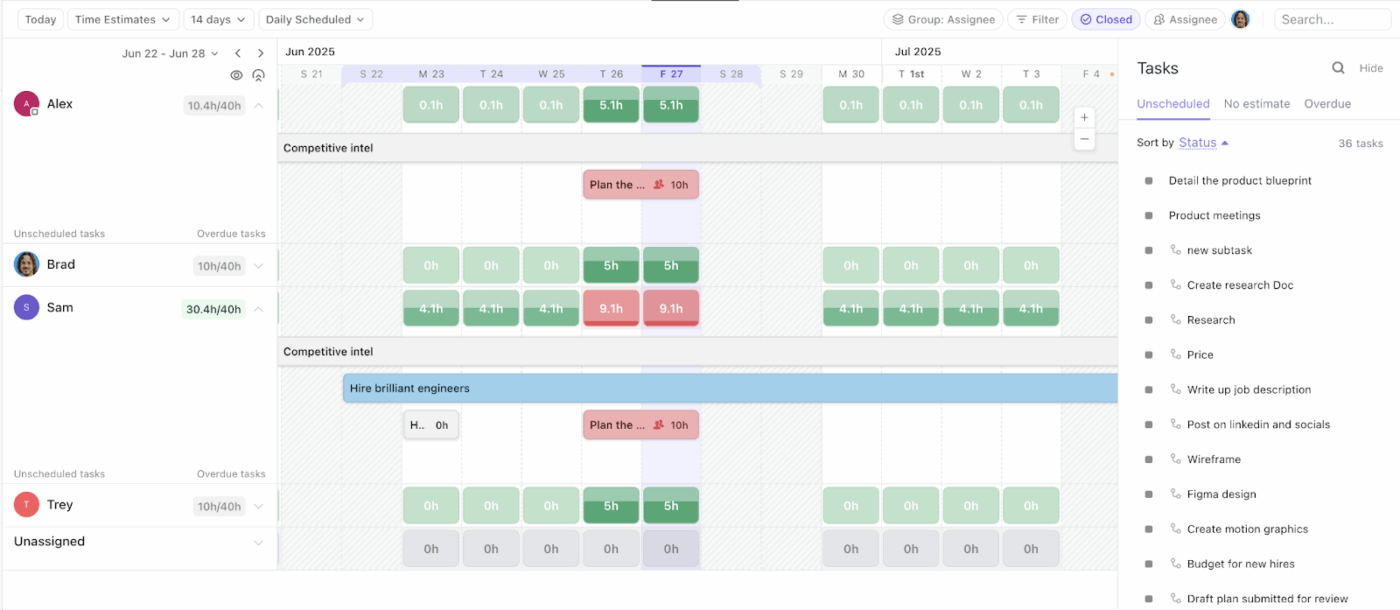
💡 Pro Tip: Protect your team’s bandwidth by managing capacity directly in ClickUp Workload View. You can pair this with ClickUp Time Tracking to see exactly how long specific project phases take. You gain clear visibility over your resources, ensuring no one is overworked while keeping the project moving forward.
Poor communication is the single most cited reason healthcare projects stall. It’s rarely an issue of budget or technology.
Healthcare projects involve stakeholders speaking entirely different professional languages. You’ll work with clinicians, IT engineers, compliance officers, and executives. The project manager’s job is to translate between these diverse groups. You must turn clinical requirements into technical specs and convert executive priorities into actionable tasks.
Communication responsibilities include:
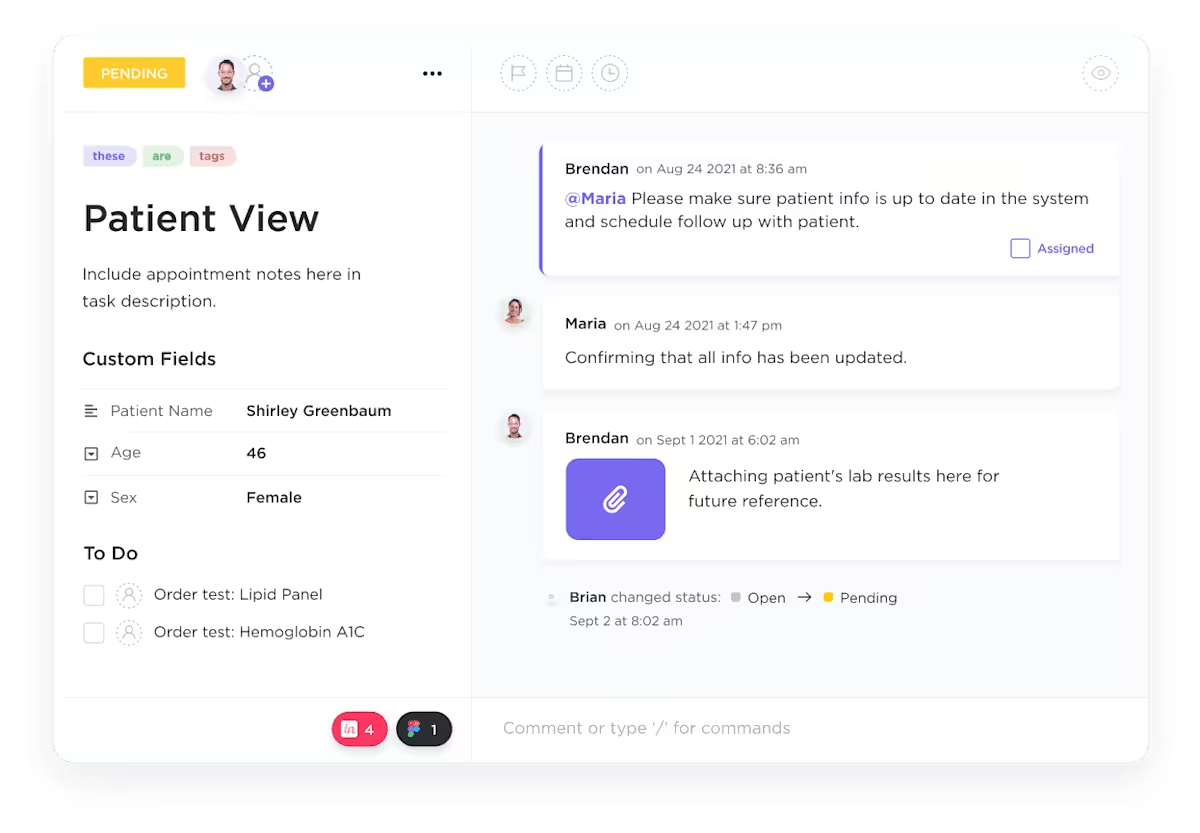
💡 Pro Tip: Keep everyone perfectly aligned by bringing your conversations into ClickUp Chat and tracking progress visually in ClickUp Board View. You can discuss updates right next to your work and drag tasks through clear stages of completion. Scope creep becomes easier to control when communication and execution live in the same place.
📮ClickUp Insight: A typical knowledge worker has to connect with 6 people on average to get work done. This means reaching out to 6 core connections on a daily basis to gather essential context, align on priorities, and move projects forward.
The struggle is real—constant follow-ups, version confusion, and visibility black holes erode team productivity. A centralized platform like ClickUp, with Connected Search and AI Knowledge Manager, tackles this by making context instantly available at your fingertips.
Risk management is deeply embedded in the regulatory environment. Project managers must identify, assess, and mitigate risks throughout the entire project lifecycle.
Project risks include timeline delays, resource gaps, vendor failures, and technology integration issues. Clinical and compliance risks involve patient data exposure, workflow disruptions, and failing to meet regulatory deadlines. Quality assurance means building strict validation checkpoints into your project plan.
Key risk management duties include:
💡 Pro Tip: Take total control over parallel projects by mapping them out in ClickUp Timeline View. You get a linear, visual schedule of all your tasks across different initiatives. Spotting overlaps and reallocating resources becomes straightforward, keeping every single project safely on track.
The skills that make someone effective in healthcare overlap with general project management. However, the weighting of these skills is very different. Clinical literacy and regulatory awareness matter more here than in almost any other industry.
Essential skills include:
Formal project management certifications like the PMP or CAPM can validate these skills. However, they’re never a substitute for hands-on experience in a real healthcare environment.
Every industry has project management challenges. Healthcare simply stacks unique, high-stakes constraints on top of the usual ones.
Common challenges include:
These are the practical habits that consistently separate healthcare projects that ship on time from those that spiral out of control.
Vague objectives are the root cause of most healthcare project failures. Stating that you want to improve the patient experience is a wish, not a project objective. A real objective specifies exactly what will change, for whom, by when, and how you will measure success.
Create a project charter or scope document that all stakeholders sign off on before work begins. This document must include project objectives tied to measurable outcomes and explicit out-of-scope items.
You also need to document assumptions, constraints, and clear escalation paths. In healthcare, scope creep often comes from well-intentioned clinical staff who want to add just one more workflow. Your scope document is your absolute best defense against this.
Watch this video to see how structuring your work in a project management database creates the centralized visibility and organization that healthcare teams need to coordinate complex initiatives effectively.
A communication plan is much more than a simple meeting schedule. It defines exactly who gets what information, in what format, and how often.
Tailor your communication by audience to keep everyone engaged. Executives need monthly high-level status reports with clear risk flags. Clinical leads require weekly task-level updates that highlight impacts on their workflows. IT teams need daily or sprint-based standups during active implementation phases.
The biggest communication gap in healthcare projects lives right between clinical and technical teams. Build structured touchpoints where both sides review progress together.
There’s a massive difference between reactive firefighting and proactive risk management. You must maintain a risk register from day one and review it at every single project status meeting.
Each risk should have a likelihood and impact rating, an assigned owner, and a clear mitigation plan. You also need trigger conditions that signal exactly when a risk is materializing.
Healthcare project managers most often underestimate vendor delays, integration failures with legacy systems, and mid-project staff turnover. Proactive risk management means building realistic contingencies into your timelines for regulatory reviews and complex approval cycles.
Many healthcare teams still try to manage projects through spreadsheets, email, and shared network drives. This works fine for small, one-off projects, but breaks down instantly when multiple initiatives run in parallel.
You need centralized task and document management to eliminate context sprawl. Context sprawl is inevitable when teams waste hours switching between apps, hunting down files, and repeating the same updates across different tools.
Look for customizable workflows that adapt easily to IT, facilities, or clinical project types. Also, real-time dashboards are essential for stakeholder reporting, alongside automation for repetitive updates.
Seeing how these practices play out in the real world makes the concepts much more concrete.
Real-world examples include:
In most health systems, a project manager runs two or three of these simultaneously. That’s exactly why structured tools and processes matter so much.
When project information, communication, and tasks live in different places, context gets lost, and critical details fall through the cracks.
Eliminate this tool sprawl with ClickUp’s converged AI workspace. This is a single, secure platform where projects, documents, conversations, and analytics live together, with AI embedded as the intelligence layer. By bringing all your work apps, data, and workflows into one secure platform, you give your entire team full context. This lets you execute complex healthcare projects with clear visibility.
Here are some of the ways ClickUp for healthcare teams is useful:
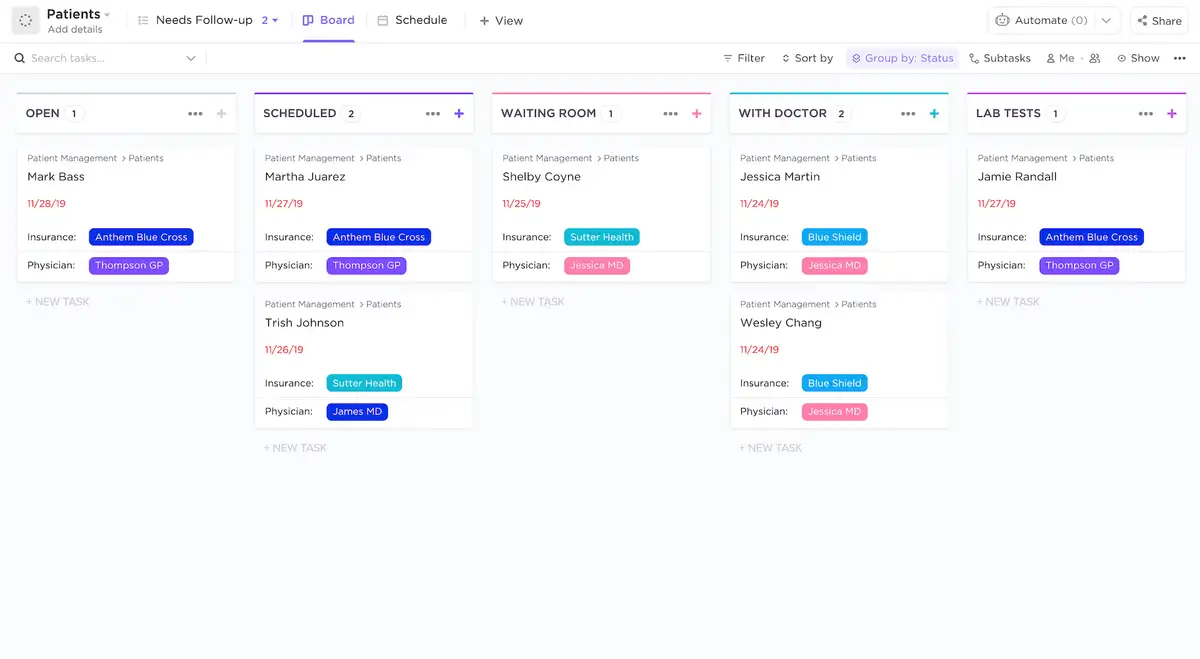
Healthcare project teams typically juggle separate tools for task tracking, documentation, and communication. This fragmentation steals time from strategic project work.
Healthcare project managers spend a disproportionate amount of time on repetitive administrative tasks, such as updating task statuses and generating reports. This manual effort steals time away from strategic planning and risk mitigation.
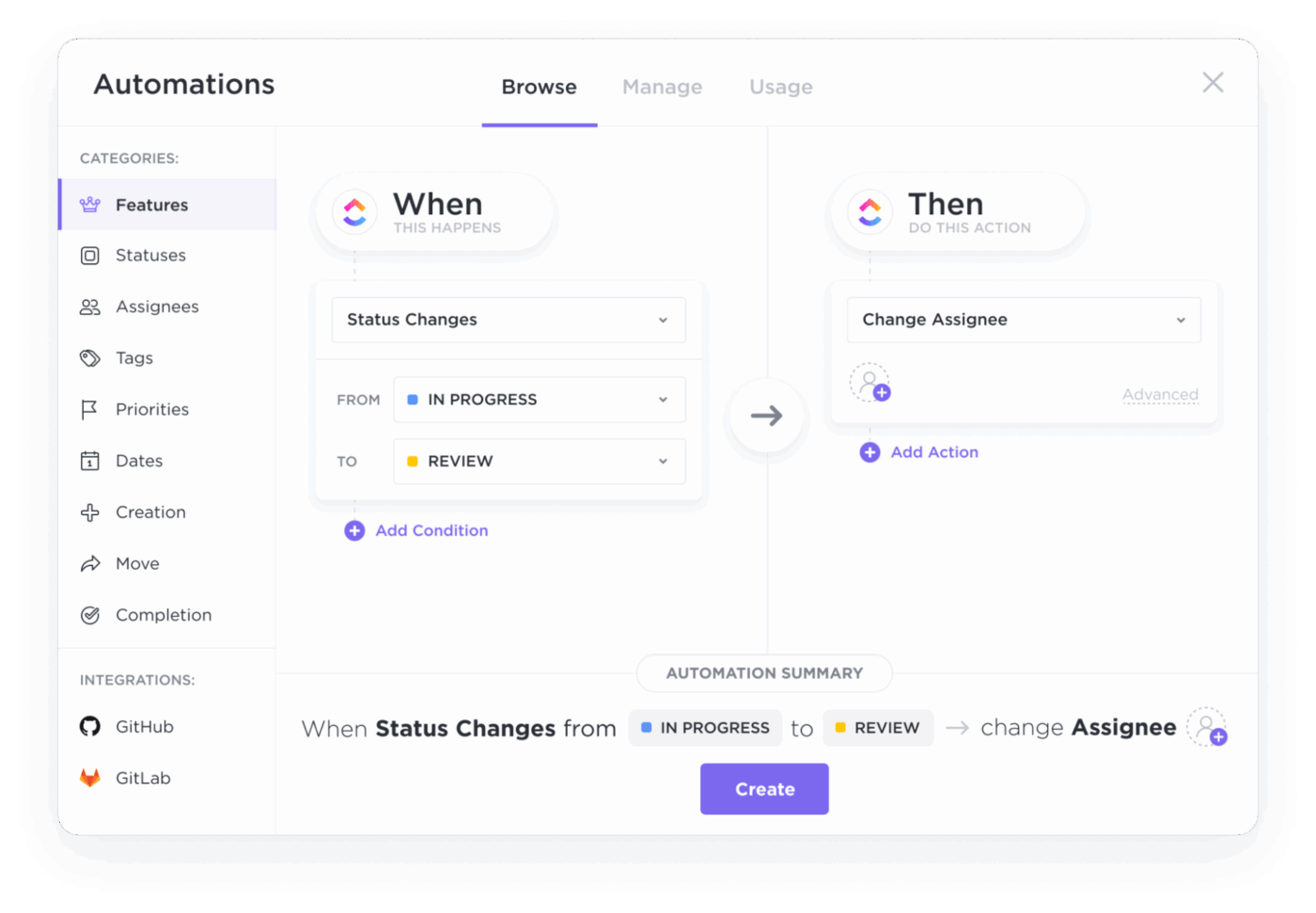
Automatically handle routine updates with rule-based triggers in ClickUp Automations. When a task moves to a review stage, the system can automatically assign it to the compliance officer and notify the project sponsor.
🎥 From automating email replies to generating weekly standup reports, see how AI can give you 23 working days back every year!
Draft project updates, summarize long document threads, and generate action items from meeting notes with ClickUp Brain, your built-in AI layer. It’s not a separate integration, meaning it has the full context of your workspace to answer questions like the current status of an EHR migration.
You spend less time on admin and more time making decisions that move projects forward.
You can also take this up another notch by building a team of Super Agents in ClickUp. These autonomous, ambient, contextual agents are like colleagues available 24/7.
Build a Project Status Reporter Super Agent that automatically provides daily or weekly updates on your healthcare initiative, highlighting at-risk tasks, overdue milestones, and blockers. Or a Priority Manager Super Agent that triages incoming requests based on urgency and SLAs.
Learn more about how you can leverage Super Agents to get more done in less time.
Any tool used in a healthcare environment must strictly support the organization’s compliance obligations. Teams simply won’t adopt a platform if it doesn’t meet their rigorous security and privacy requirements.
Protect sensitive data with enterprise-grade security features in ClickUp, including role-based permissions, SSO, two-factor authentication, and data encryption. You can easily control who sees what at the workspace, folder, and task levels.
This granular control is critical when projects involve sensitive patient data or pre-launch regulatory information. Project managers can safely share high-level status updates with executives without exposing task-level clinical details to the wrong audience.
💡 Pro Tip: Use ClickUp Brain MAX to search across all connected apps (Google Drive, SharePoint, etc.) to instantly surface compliance docs, regulatory guidelines, or project updates scattered across tools, without leaving your workflow. This is especially relevant for HIPAA-heavy environments.
Healthcare project sponsors want high-level visibility without sitting through weekly status meetings, while clinical leads need task-level detail. Project managers need to provide both views, but they shouldn’t have to build them manually every week.
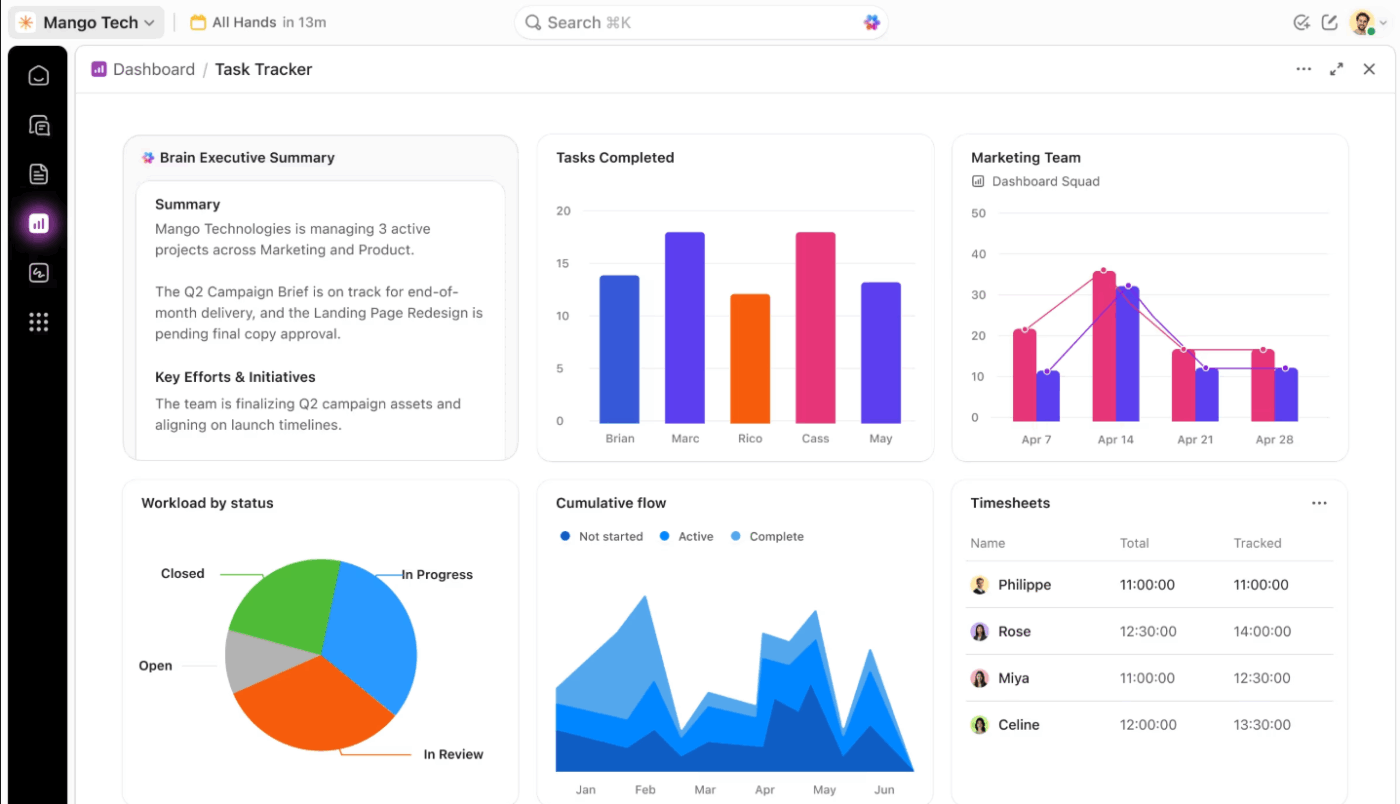
Build real-time reporting views with ClickUp Dashboards that pull live data directly from your tasks and Custom Fields. You can customize an executive dashboard for overall project health and a separate team dashboard for individual workloads.
These dashboards update automatically as work progresses, eliminating the need for manual report generation. Every stakeholder gets the exact visibility they need without turning the project manager into a full-time reporting machine.
Healthcare project management demands regulatory awareness, clinical literacy, and communication strategies built for multi-disciplinary teams. The biggest threat to these projects is fragmentation. When project information, communication, and tasks live in different places, context gets lost, and things fall through the cracks.
With ClickUp’s unified workspace, all your tasks, team chats, and patient updates live in the same connected space. You find yourself having more time to do the work that actually matters.
Get started for free with ClickUp and see how a converged AI workspace simplifies even the most complex projects. ✨
The most recognized certification is the Project Management Professional from PMI, which applies across all industries. Healthcare-specific credentials include the CAPM for entry-level roles and specialized certifications from organizations like HIMSS for health IT professionals. No single certification is universally required, as hands-on experience in a healthcare environment often carries equal weight.
The core methodologies remain the same, but healthcare adds intense layers of regulatory compliance and multi-disciplinary stakeholder groups. Project delays or errors in this field can directly affect patient safety. This is a severe constraint that most traditional industries simply don’t face.
Prioritize centralized task and document management, customizable workflows, and real-time reporting dashboards. You also need automation for repetitive updates and robust security controls like role-based permissions and data encryption. The right tool should reduce the number of platforms your team switches between rather than adding another one to the stack.

Praburam Srinivasan
Max 16min read

Sudarshan Somanathan
Max 23min read
Sudarshan Somanathan
Max 22min read

© 2026 ClickUp




